
H-Frame Wire Stakes: What Keeps a Yard Sign Standing in Wind


Tobias is our voice for cutting, binding and large format, built from the knowledge of our production team, with over 20 years in printing.
What an H-Frame Wire Stake Actually Is
An H-frame wire stake is a single length of galvanized steel wire bent into the shape of a capital H. The two long legs slide up into the hollow flutes of a corrugated plastic sign, the crossbar sits under the bottom edge and carries the weight, and the pointed ends drive into the ground. No screws, no drilling, no bracket. That is the whole system, and it is why a crew can plant fifty signs before lunch. The printed half of the pair is the panel: yard signs on 4mm white coroplast come in 12 by 18, 12 by 24 and 18 by 24 inches from $25 for one, and the configurator adds an H-stake to the same order, as it does for two sided real estate yard signs at 24 by 18 inches.
The design works because the sign itself becomes part of the structure. Once the legs are seated inside the flutes, the panel stops the wire from twisting and the wire stops the panel from folding. Pull either one out of the pair and you are left with something floppy. That is also the first clue about failures in the field, which almost always trace back to legs that never went fully into the flutes.
Sign shops call them H-stakes, wire H stakes, step stakes, or simply sign stakes, and the terms are interchangeable. What is not interchangeable is the hardware itself. A stake meant for a 12 by 18 inch real estate rider will not hold a 24 by 36 inch election sign through a storm, and a stake sized for a highway shoulder is overkill in a soft flower bed. Everything below is about matching the stake to the panel, the ground, and the weather it has to survive.
The three parts that decide performance
- The legs. Their length sets how much of the sign is braced and how deep the stake sits in soil.
- The crossbar. It transfers the sign weight to the wire instead of letting the panel sag onto the dirt.
- The wire itself. Gauge and coating decide whether the stake springs back after a gust or stays bent.
Shop the range
A-frame signs printing
Self supporting frames for the sites where a wire stake has nothing to grip.
H-Frame Stake Sizing Chart by Sign Size
Stake dimensions are always written as width by height in inches, and the width is measured leg to leg. The width has to be narrower than the sign so both legs land inside the panel, and the height decides how much of the stake is above ground bracing the sign versus below ground anchoring it. A good working rule is that roughly the bottom third of the stake belongs in the soil.
Use this chart as the starting point, then step up one size if the site is windy, sandy, or exposed on all sides.
- 10 by 15 inches. The standard for 12 by 18 and 18 by 24 inch yard signs on lawns, medians, and open house corners.
- 10 by 30 inches. The tall option for 24 by 18 and 24 by 36 inch signs, or any sign that has to clear tall grass and snow.
- 15 by 30 inches. A wide stance for 24 by 36 inch and larger panels where side to side rocking is the real problem.
- 30 by 30 inches. A heavy duty frame for 4 by 4 foot construction and development signs that face open ground.
- Short 10 by 10 inch stakes. Riders, arrows, and small directional panels that sit low and change position often.
One detail that trips people up: stake width does not have to match sign width, it only has to be comfortably narrower. A 10 inch stake under a 24 inch sign is normal and correct, because the flutes closest to the center are the strongest part of the panel. Going wider helps only when the sign is tall enough that the force at the top starts to lift one leg out of the ground.
Print picks
Three sign formats for staked and paved sites
Live prices, ready to configure with your artwork and quantity.
 FleX-Frame Signs $280.07 each A flexing sidewalk frame that bends in gusts instead of blowing over.
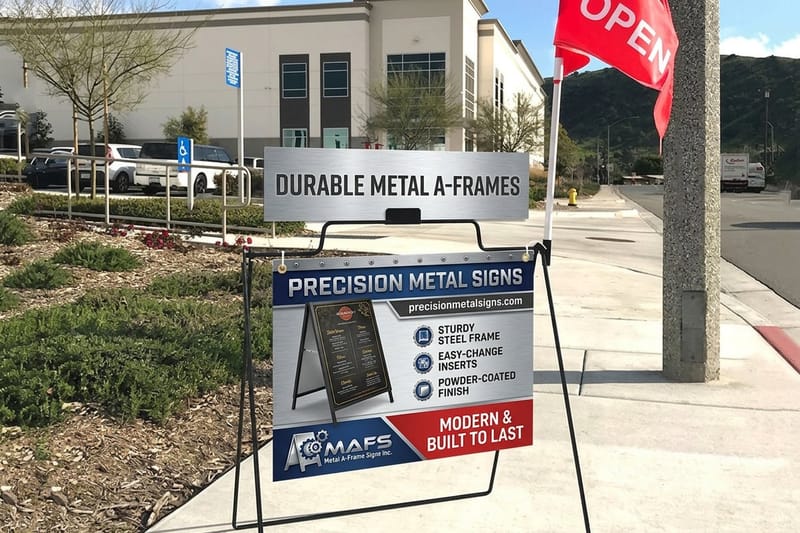
 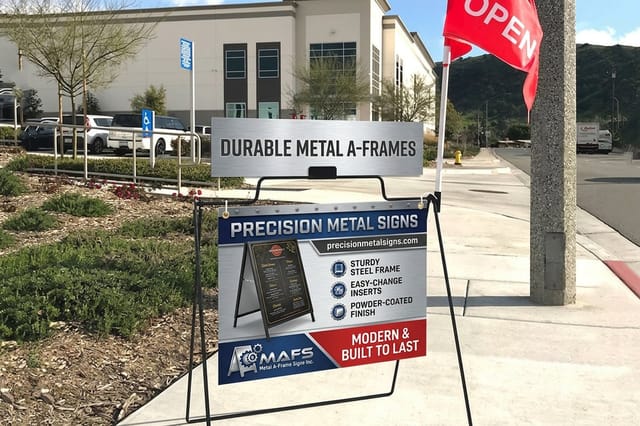 Metal a Frame Signs $65.90 each A weighted metal frame for pavement, where no stake will ever go in.
 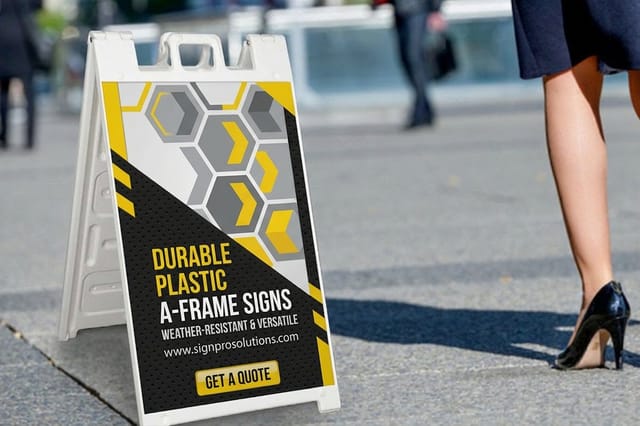 Plastic a Frame Signs $182.32 each Water fillable plastic frame you can move, drain, and stack off season.
 Wire Gauge, Galvanizing, and Why Cheap Stakes Bend
Gauge numbers run backwards, so a smaller number means thicker wire. Most quality H-stakes are 9 gauge, the value tier is usually 10 or 11 gauge, and the difference shows up the first time someone steps on a stake or a mower clips one. Thicker wire costs a little more per unit and saves the replacement trip, which is the expensive part of the job.
Galvanizing matters just as much. Bare steel that spends a season in wet soil pits and rusts at the ground line, exactly where the bending stress is highest, and rust stains bleed onto the bottom edge of a white sign. Hot dipped or electro galvanized wire holds up through repeated seasons of storage, planting, and pulling. If you rotate the same stakes through multiple campaigns, the coating is what makes that possible.
How to spot a stake that will fail
- Legs you can bend into an S with two fingers will do the same thing in soil under a wide panel.
- Blunt leg ends mean you will be fighting compacted ground instead of slipping through it.
- Uneven leg lengths make the sign sit crooked and put all the load on one side.
- Flaking or dull gray coating on new stock is a sign the galvanizing is thin and will not last a season.
Quantity and price
Metal a frame signs pricing and specs
Real configurator numbers. The more frames you run, the lower the unit price.
| Quantity | Price Per Unit | Total |
|---|---|---|
| 1 | $65.90 | $65.90 |
| 2 | $61.95 | $123.89 |
| 3 | $57.55 | $172.65 |
| 4 | $56.02 | $224.06 |
| 5 | $55.36 | $276.78 |
| 6 | $54.70 | $328.19 |
How to Install H-Frame Stakes Without Cracking the Panel
Installation is fast, but the order of operations is what keeps signs standing. Push the stake into the ground first, then seat the sign, and you will bend legs and tear flutes. Assemble first, then plant, and the sign does the work of keeping the legs parallel while they go in.
Step 1: match the legs to the flutes
Lay the sign face down and slide both legs into two flutes that sit an equal distance from the center. Push until the crossbar meets the bottom edge of the panel. If a leg stops early, you have hit a crushed flute, so move over one channel rather than forcing it.
Step 2: press with your foot, never the sign
Stand the assembly upright, put a foot on the crossbar, and press straight down in stages. Pushing on the top of the sign is what buckles panels and pops the legs back out through the face. The crossbar is there to take your weight, so use it.
Step 3: set the depth and check the face
Sink roughly the bottom third of the stake, then step back and look at the sign square on. A sign that leans away from traffic loses most of its readable time, and a quick heel tap on the high side straightens it in seconds.
Step 4: pull it back out the right way
At the end of the run, rock the stake side to side to break the soil grip and lift by the crossbar with the sign still attached. Yanking the panel alone is how flutes tear, and torn flutes mean the sign cannot be reused for the next campaign.
Wind, Soil, and the Fixes That Keep Signs Standing
A yard sign is a sail. The wind does not simply push it over, it pries one leg upward while pushing the other deeper, which is why failed signs are usually found lying flat with one leg still in the hole. Every practical fix works by resisting that lifting motion rather than by adding raw strength.
Soil decides your strategy. Damp loam grips well and forgives a shallow set. Dry clay resists the stake going in and then cracks open around it, so pre wetting the spot or using a starter hole gets you deeper with less bending. Sand and fresh mulch hold almost nothing, and that is where a taller stake or a second stake earns its keep. Frozen ground calls for a pilot hole made with a screwdriver or rebar, never brute force on the crossbar.
Field fixes that actually work
- Go taller before you go thicker. Depth beats gauge when the failure mode is lifting rather than bending.
- Angle into the prevailing wind. A few degrees of lean into the gust reads as straight and resists the lift.
- Punch relief holes. Two coin sized holes near the top corners cut the sail effect on large panels with almost no readability loss.
- Double up on exposed corners. Two stakes in one sign panel turn a hinge into a frame.
- Walk the route after the first storm. Ten minutes of resetting saves the whole placement value of the campaign.
Built for wind
FleX-Frame signs
A frame that flexes with the gust and returns upright instead of tipping over.
How Many Stakes You Need by Sign Size
Counting stakes is where orders go wrong, because people order one stake per sign by reflex and then discover half the panels need two. Work from panel width first, then add for exposure. The diagram below shows the pattern for the three most common yard sign formats.
- Up to 24 inches wide. One 10 by 15 inch stake, centered, is enough on lawn or soft soil.
- 24 to 36 inches wide. Two stakes set about a third of the way in from each edge, or one 10 by 30 inch stake on sheltered sites.
- 36 to 48 inches wide. Two 10 by 30 inch stakes minimum, three if the sign faces open ground or a highway.
- 4 by 8 foot panels. Three or more heavy stakes, and a rigid frame is usually the better answer at this size.
- Any exposed or coastal site. Add one stake per sign to the count above and order ten percent spares for storm resets.
The spares line is not padding. Stakes get bent by mowers, lost in tall grass, and left behind when a crew pulls signs in the dark, so a campaign that plants two hundred signs will quietly lose a handful of stakes every week. Order the spares with the signs and you never stall a route waiting on hardware.
Compare frames
Popular sign frames, side by side
Material, size, quantity, turnaround, and price lined up in one table.
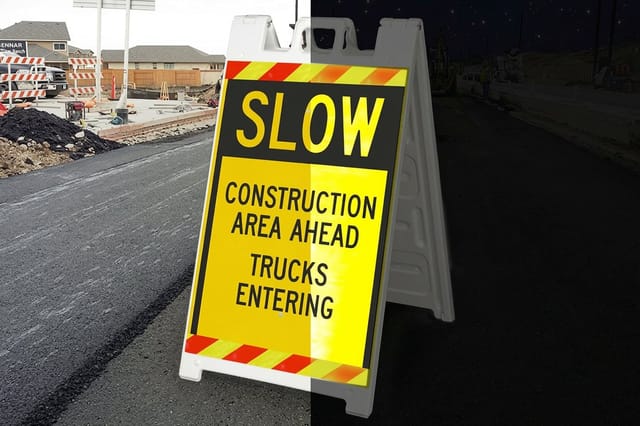 Reflective Signicade a Frame |  Signicade A-Frames | 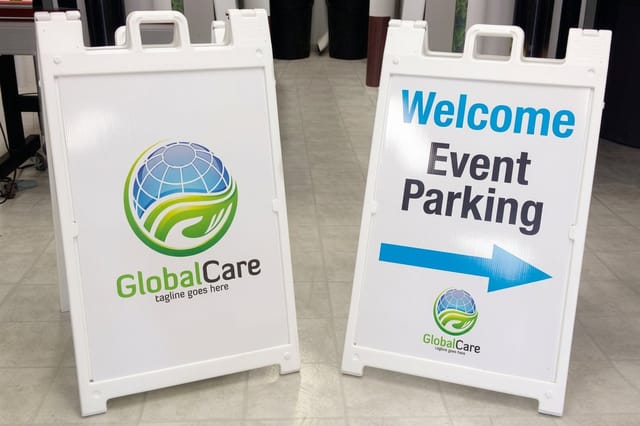 Signicade Deluxe A-Frames | 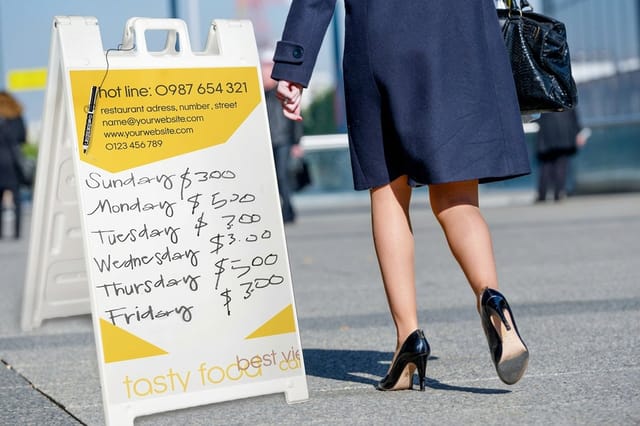 Dry Erase Signicade | |
|---|---|---|---|---|
| Min price | $163.67 | $182.32 | $196.60 | $185.63 |
| Paper / stock | Adhesive Vinyl | 4mm (3/16") Corrugated Plastic | 4mm (3/16") Corrugated Plastic | Adhesive Vinyl |
| Finish | Reflective Film | - | - | Dry Erase Lamination |
| Size | 25" x 45" | 25" x 45" | 27" x 46.125" | 25" x 45" |
| Default qty | 1 | 1 | 1 | 1 |
| Turnaround | 4 business days | 4 business days | 4 business days | 4 business days |
| Rating | ||||
| View & customize | View & customize | View & customize | View & customize |
When a Wire Stake Is the Wrong Tool
Stakes only work when there is ground to put them in. Sidewalks, parking lots, trade show floors, lobby entrances, and paved storefronts rule them out completely, and no amount of taller wire changes that. This is the moment to switch from a staked panel to a self supporting frame that carries its own base.
Frames also win where signs move daily. A cafe that rolls a sign out at open and pulls it in at close would destroy a wire stake in a month, while a weighted Metal a Frame Sign handles the same routine for years. On windy sidewalks a flexing frame outlives a rigid one, because it bends with the gust and pops back rather than tipping into traffic.
If your placement mixes both worlds, lawn positions plus paved positions, buy for both instead of forcing one solution. The A-frame signs range covers the paved half, and staked coroplast covers the rest. Comparing options against the big box alternatives is easy too, since we keep side by side breakdowns of the Staples A-frame sign alternative and the Vistaprint A-frame sign alternative.
No ground to stake
Plastic a frame signs
Fill the base with water for weight on pavement, drain it, and stack the frames off season.
Ordering Signs and Stakes Together
The cleanest way to buy is to treat the stake as part of the sign order rather than a separate errand. Decide the panel size, run the count from the chart above, add spares, and place one order so the hardware and the printed panels arrive together and match. Split orders are how a crew ends up on site with 24 by 36 inch signs and short stakes meant for riders.
Set your artwork up for outdoor reading while you are at it. Keep the message to a few words, put the strongest contrast between text and background, and leave at least a quarter inch of clear space at the bottom edge so the crossbar never covers a letter. If you are also producing display graphics for events, the step and repeat banner guide walks through the same legibility math at a larger scale. For a broader look at how printed materials work together in a marketing push, see the materials a marketing push needs.
A short pre order checklist
- Panel size locked. Every stake decision follows from width and height, so settle those first.
- Site survey done. Note soil type, exposure, and how many positions are paved rather than planted.
- Count plus spares. Use the size chart, then add roughly ten percent for losses and storm resets.
- Bottom margin cleared. Keep artwork out of the lowest quarter inch where the crossbar sits.
- Reuse plan set. Galvanized stakes and clean pulls mean the same hardware serves the next campaign.
Start fast
Sign templates and print-ready blanks
Free layouts plus exact-size blanks so your artwork lands inside the safe area first try.
By the numbers
4OVER4.COM signage at a glance
What we have printed, and the two stake heights that cover almost every yard sign.
- 10B+ Cards and print products, printed since 1999.
- 150,000+ Businesses served, across every industry.
- 2 Common stake heights, 15 inch and 30 inch.
- 99.8% On-time delivery, tracked orders.
Wally sizes your stakes for you
Right stake, right count, signs that are still standing next week
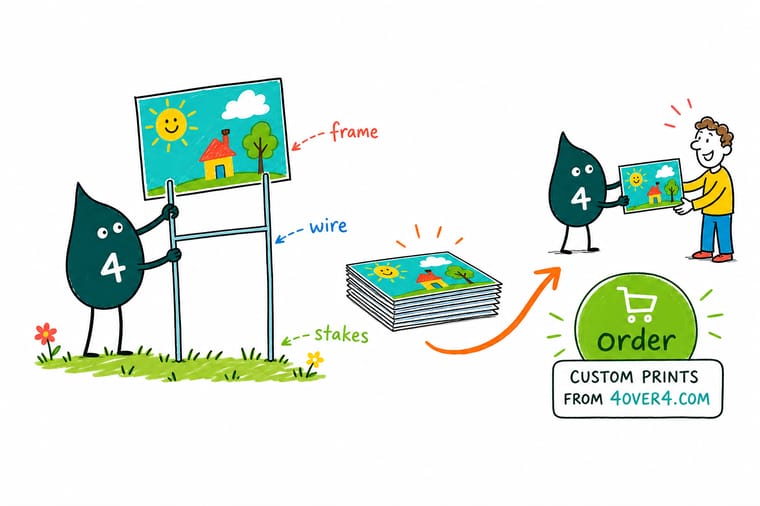
Measure your panel width first. Up to 24 inches takes one 10 by 15 inch stake, 24 to 36 inches takes two stakes or one 30 inch stake, and 4 by 8 foot panels need three or more. Add roughly ten percent spares for mowers and storms. If the spot is paved, skip the wire entirely and put the same artwork on a weighted or flexing A-frame instead.
Explore A-frame signs →Everything Above in Six Lines
Keep reading
Guides and articles that pair with signage
Four reads on the printed side: step and repeat legibility, a starter marketing kit, logo history, and how staked yard signs compare on price.
 Read next Step and Repeat Banner Guide Large format legibility, layout, and finishing explained.
  Read next Marketing Materials You Need The printed pieces that work together in a campaign.
  Read next 15 Cool Facts About Logos Why the mark on your sign carries more weight than you think.
  Read next Yard Signs and Stakes Alternative How our staked yard signs compare on price and stock.
 Explore more
More ways to get your message standing outside
For spots a stake cannot reach, metal A-frames start at $65.90, plastic A-frames at $182.32 and FleX-Frame signs at $280.07.
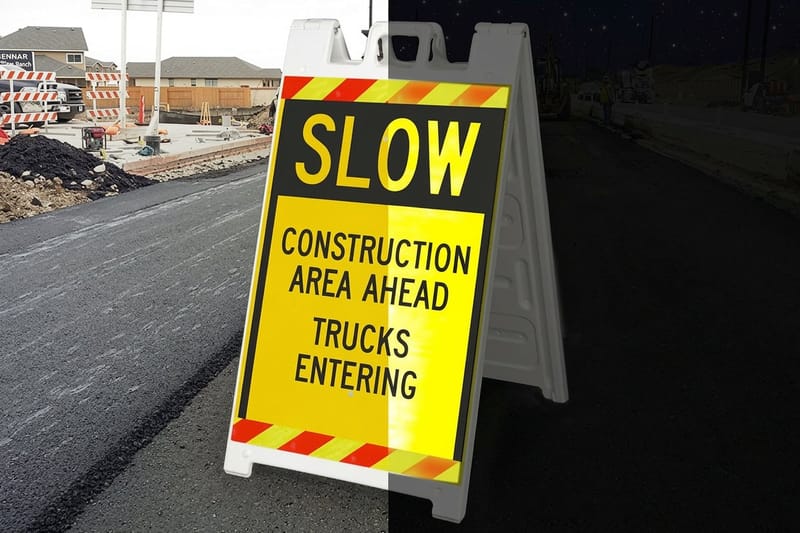 Shop A-Frame Signs Printing Sidewalk frames for every site a stake cannot handle. Product FleX-Frame Signs Flexes in the gust and springs back upright. Product Metal a Frame Signs Weighted metal frame built for pavement and daily moves.
 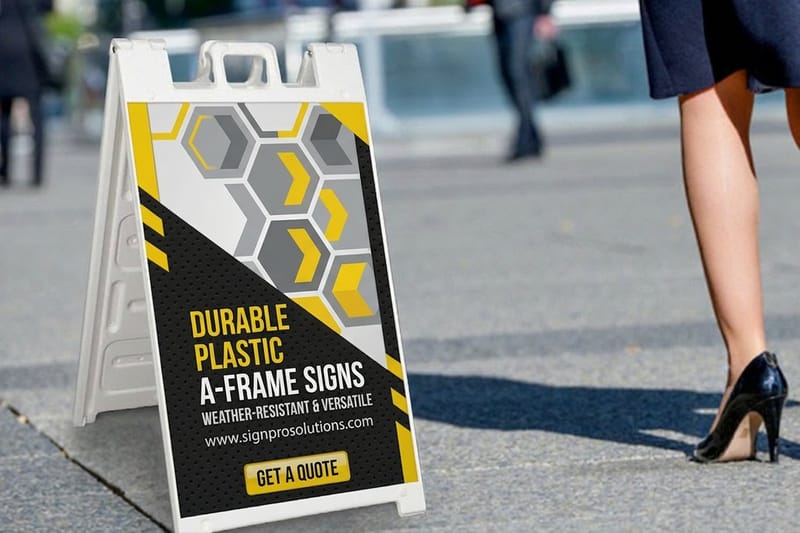 Product Plastic a Frame Signs Water fillable base you can drain and stack off season. Guide Step and Repeat Banner Guide Large format layout and finishing, start to finish. Article Marketing Materials You Need Build a print kit that works together, not in pieces. Article 15 Cool Facts About Logos Logo history and design lessons for better signage. Alternative Yard Signs and Stakes Alternative Staked yard signs compared on stock, price, and turnaround.
 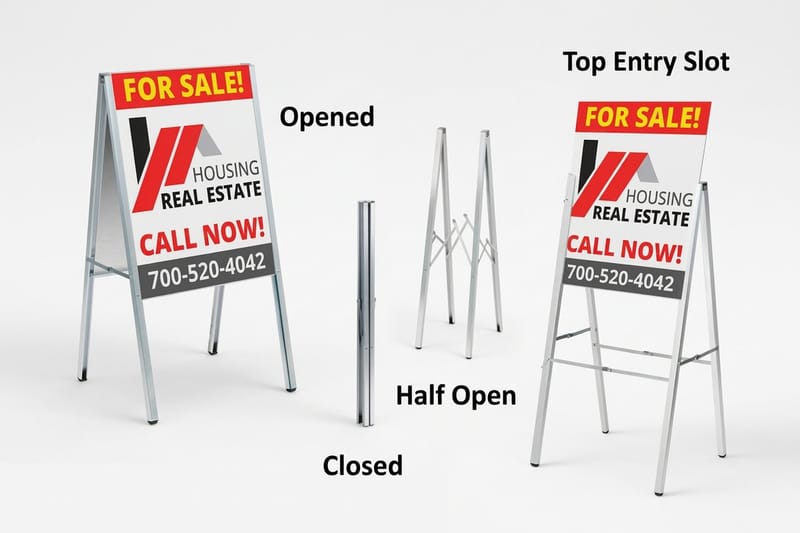 Alternative Staples A-Frame Alternative Where the two options differ on frames and printing. Alternative Vistaprint A-Frame Alternative Frame quality, sizes, and pricing side by side.
 Ready to put your signs where people will actually see them?
Lock the panel size, run the stake count from the chart, and order the frames for the paved spots in the same pass so your whole route goes up in one trip.
H-Frame Wire Stake Questions, Answered
What is an H-frame wire stake?
It is a galvanized steel wire bent into an H shape, with two legs that slide into the hollow flutes of a corrugated plastic sign and a crossbar that carries the panel weight down into the ground. The sign and the stake brace each other, which is why the pair is rigid even though the wire on its own is not. Sign crews also call them wire H stakes, step stakes, or simply sign stakes, and all of those names describe the same hardware.
How do I choose the right H-frame wire stake?
Start with the panel width. Signs up to 24 inches wide take a single 10 by 15 inch stake, 24 to 36 inch panels move to a 10 by 30 inch stake or two shorter ones, and anything larger needs multiple heavy stakes. Then adjust for the site: sand, mulch, and open exposure all call for a taller stake so more of it sits underground. Finally check the wire, since 9 gauge galvanized holds up where thin bare wire bends and rusts.
What do wire stakes and staked signs cost, and how is pricing set?
Stake pricing follows wire volume, so a 10 by 30 inch stake costs more than a 10 by 15 inch one and heavier gauge costs more than lighter gauge, with the per unit price dropping sharply as quantity climbs. Printed signage prices the same way, on size, quantity, and turnaround. For the frame side of a campaign, Metal a Frame Signs start at $65.90, Plastic a Frame Signs at $182.32, and FleX-Frame Signs at $280.07, with live pricing on each product page as you change the configuration.
What sizes and finishes are available for stakes and the signs on them?
Stakes ship in 10 by 10, 10 by 15, 10 by 30, 15 by 30, and 30 by 30 inch frames, usually in 9 to 11 gauge galvanized wire. The panels they carry are typically 4mm corrugated plastic in 12 by 18, 18 by 24, and 24 by 36 inch formats, printed one or two sided. Where ground stakes are not an option, the same artwork runs on metal, plastic, and flexing A-frames, so one design can cover lawns, sidewalks, and storefronts in the same campaign.
How long does printing and shipping take for staked signs?
Production time depends on the product, the quantity, and the finishing you select, and every option shows its own turnaround in the configurator before you check out. Larger frame products carry longer build times than flat printed panels, so order those first when a campaign has a hard launch date. Add shipping transit on top of production, and give yourself a buffer day for a site walk, since resetting a leaning sign the day before an event is far easier than reprinting one.
