
Free Online Learning Resources Teachers Actually Recommend


The free resources teachers name again and again are Khan Academy and PhET for maths and science, CommonLit and ReadWorks for reading, PBS LearningMedia for video, and the Library of Congress, Project Gutenberg and OpenStax for openly licensed source material. All of them are genuinely free for a classroom teacher, but they differ on the two things that decide whether you can actually use one next week: whether students need accounts, and what the license lets you print.
Free learning resources at a glance
| Resource | Best for | Grades | What the free tier covers |
|---|---|---|---|
| Khan Academy | Adaptive maths practice with short video lessons | K to early college | The whole library and the practice engine; the AI tutor is a paid add-on |
| PhET Simulations | Interactive science and maths simulations | 4 to 12 | Every simulation, in a browser, no account needed |
| CK-12 | FlexBook textbooks you can rearrange by unit | 3 to 12 | Full library; a free teacher account to assign work |
| OpenStax | Peer-reviewed textbooks, openly licensed | High school and up | PDF and web versions; printed copies cost money |
| CommonLit | Reading passages with text-dependent questions | 3 to 12 | Passages, questions and assignments; school data tools are paid |
| ReadWorks | Nonfiction passages and question sets | K to 12 | Everything, with a free teacher account |
| PBS LearningMedia | Standards-tagged video and lesson plans | PreK to 12 | The full library behind a free account, no ads |
| Library of Congress | Primary sources for history and civics | 4 to 12 | Open access, and most items are public domain |
| Smithsonian Learning Lab | Museum objects you group into your own collections | K to 12 | Browsing is open; an account saves collections |
| Project Gutenberg | Public-domain literature as ebooks and plain text | 6 to 12 | Everything, no account, and legal to reprint |
| Desmos | Graphing calculator and classroom activities | 6 to 12 | Calculator and the activity library |
| Scratch and Code.org | Block coding projects and full courses | K to 12 | All courses, projects and teacher dashboards |
Grade ranges are the bands each platform publishes for itself, and plenty of teachers use them a year either side of that. Check the license on anything you plan to duplicate, then print the keepers as large format posters once the design has survived a term on the wall.
What free actually means before you build a unit on it
Four different arrangements hide behind the word free, and they fail in different places. Fully free means a nonprofit or a public institution pays for it and nobody asks you for a card: Khan Academy, PhET, the Library of Congress, Project Gutenberg. Free with an account means the material costs nothing but you hand over an email and, sometimes, student rosters. Freemium means the useful half is free and the reporting is not. Free for verified teachers means you prove you work in a school and then get the paid product.
The one that catches people is freemium, and it catches them in week six rather than week one. A quiz tool caps a live game at a small number of players. A worksheet site watermarks the download unless you subscribe. A reading platform gives you the passages but locks the class report you were planning to show at a parent conference. None of that is dishonest, it just is not visible on the day you fall in love with the tool.
So do one check before you plan around anything: name the thing you will need in the middle of the unit, not on day one, and find out which side of the paywall it sits on. Two minutes there saves a rebuild later.
The account question decides how fast you can start
Anything that creates student accounts has to go through your district before students touch it, because student data triggers privacy review. That review can take a term. It is the single biggest reason a teacher finds a brilliant tool in September and still cannot use it in January.
Archives sidestep the whole problem. The Library of Congress, Project Gutenberg, NASA imagery and Smithsonian collections need no student login at all, so you can put a primary source on the board on a Monday morning without asking permission. That is worth more than a slightly better interface.
Ads, and what your class sees around the lesson
Nonprofit-funded platforms such as Khan Academy and PBS LearningMedia run without advertising. Consumer apps on a free tier usually do not, and a video embedded from a public video site brings its own recommendation panel with it.
If you are projecting, download the file or use a platform that strips the surroundings. It avoids the thirty-second detour that follows an unfortunate thumbnail.
The resources teachers name most, subject by subject
The list below is grouped by what you are teaching rather than by brand, because that is how you will look for it at half past seven on a Tuesday morning.
Maths and science
Khan Academy is the default for practice that adjusts to the student and reports back to you. PhET, built at the University of Colorado Boulder, runs physics, chemistry and maths simulations straight in a browser, which matters when your devices are Chromebooks. Desmos gives you a graphing calculator that costs nothing and an activity library where the class works on the same problem at once. CK-12 lets you take a textbook apart and put the chapters in the order you actually teach them.
For older students, OpenStax from Rice University publishes peer-reviewed textbooks under an open license. That license is the interesting part: you can excerpt a chapter, put it in a packet and hand it out, which you cannot legally do with a commercial textbook.
Reading, writing and the humanities
CommonLit and ReadWorks both give you levelled passages with question sets already written, and both are genuinely free for a classroom teacher. Project Gutenberg holds tens of thousands of public-domain books as clean text, which is the easiest way to get a full class set of a novel without a budget line.
For source work, the Library of Congress and the Smithsonian Learning Lab are hard to beat. A photograph, a letter and a newspaper page from the same week teach argument and evidence better than a summary does, and the Learning Lab lets you gather the set into one collection you can reuse next year.
Making, coding and creating
Scratch from MIT and Code.org cover coding from kindergarten upward with courses that need no installation. Canva for Education is free once your school status is verified, and it is where most teachers now build posters, worksheets and slides. PBS LearningMedia sits behind all of it as the video library with lesson plans attached and no advertising.
One habit is worth forming here. When you make something good in a free design tool, export a print-quality PDF at the same time as the screen version. Future you will want it on the wall, and going back to rebuild a poster at size is the job nobody enjoys.
Printing what you find, and the license that decides whether you can
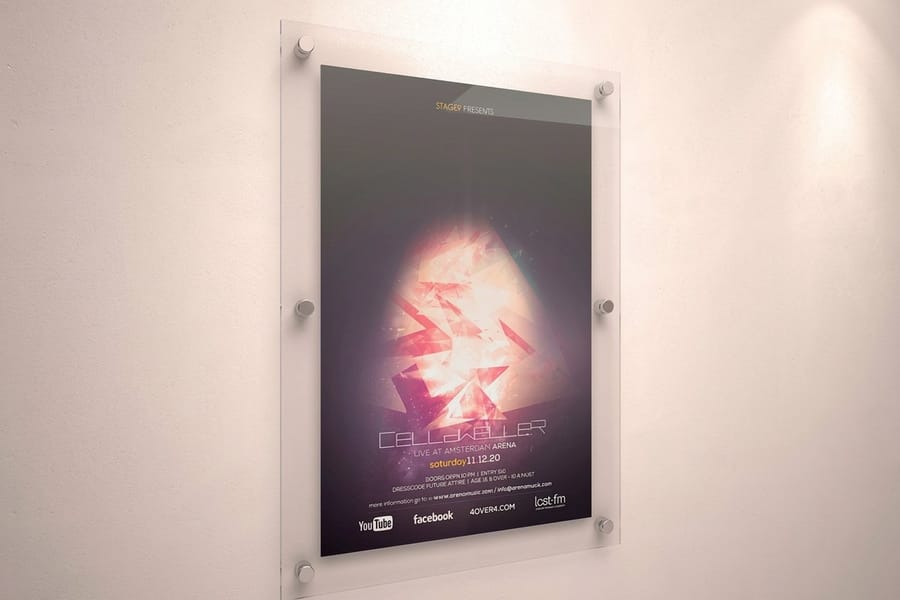
The download button tells you nothing about your printing rights. The license does, and the four you will meet behave very differently. Public domain, which covers most Library of Congress items, NASA imagery and everything on Project Gutenberg, means print it at any size in any quantity forever. A Creative Commons license with attribution means print freely and keep the credit line on the artwork. A non-commercial clause means you may not sell it, which is fine for a classroom and not fine for a fundraiser. And a great many teacher-marketplace freebies carry a single-classroom license, so copying the file to the other four teachers on your grade team is outside the terms even though nobody paid anything.
Then there is the technical side. A worksheet drawn to fit letter paper contains just enough pixels for letter paper. Blow it up to 24 by 36 inches and every edge goes soft, because you have asked roughly six times the area out of the same file. Print posters from vector artwork, or from a raster file built at the finished dimensions at 300 DPI, and the difference is visible from across the room.
When it is time to put the good ones on the wall, large format posters start at $25 at 4OVER4.COM. If you are weighing that against the copy shop down the road, our comparison of local print shops and online printing walks through where each one wins.
Sizes that work on a classroom wall
Match the size to the reading distance, not to the wall space. An 18 by 24 inch chart works at a table group where students are a few feet away. A 24 by 36 inch poster is the standard front-of-room size and stays readable from the back row. Anything for a corridor, where people are walking past at a distance, wants to be larger and to carry fewer words.
The old signage rule of thumb still holds: roughly one inch of letter height for every ten feet of viewing distance. A room twenty feet deep therefore needs about two-inch type on the key line, which is a lot bigger than it looks on a laptop screen. Print one at size, tape it up, and stand at the back before you order the set.
Laminate the ones you will use every year
Anchor charts, alphabet lines, number lines and procedure posters get touched, taped and moved. Those earn a heavier stock or a laminate. A seasonal display that comes down in six weeks does not, and paying for durability you will throw away is the most common way a classroom print budget disappears.
The teacher side of the job, printed
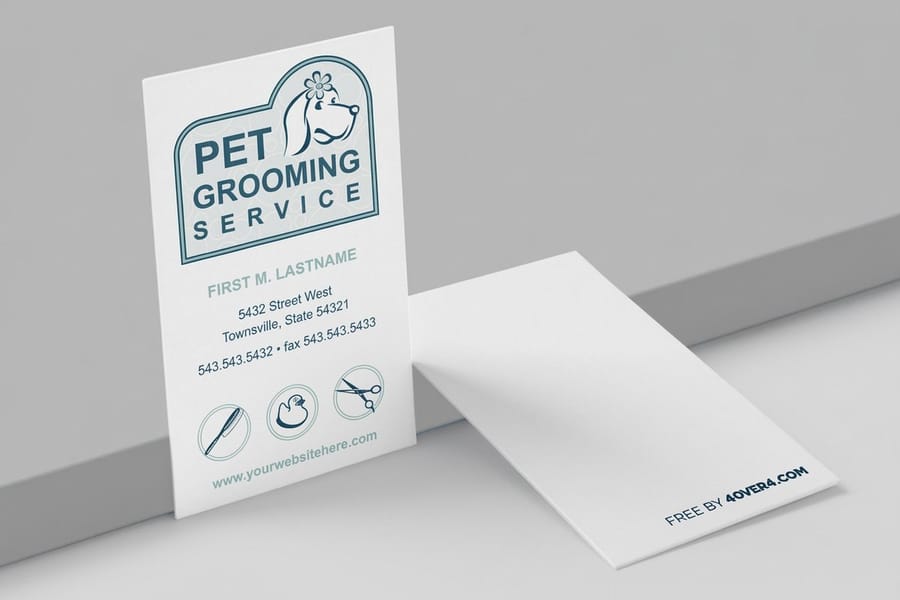
Free online resources solve the lesson. They do not solve the parent evening, the field trip, the tutoring sideline or the first week at a new school where nobody has your email. A small printed card does, and it is the cheapest professional item a teacher owns: name, role, room number, school email, and the address of your class page. Hand it over once and you stop writing your email on the corner of a sticky note.
4OVER4.COM lists free business cards at $0.00, so a first set costs you the half hour it takes to lay it out. If you want to think about stock and finish before you order, the local card printer against online printing comparison covers what changes between the two, and these free fonts for business cards will save you the font hunt.
The same logic runs through the rest of the printed year. Reading incentives get further with a bookmark than with a certificate, and our free bookmark templates guide has the sizes and the bleed already worked out. Open house and orientation handouts fold neatly into a trifold, which the free brochure templates guide covers. Reward stickers are the same file problem as any other die-cut art, and these free printable sticker designs show how the artwork should be set up.
What to put on a teacher card, and what to leave off
Put the school email on it, never the personal one. Put the room number on it, because that is the thing parents actually forget. Leave the phone number off unless the school issues you one. Everything else is decoration, and on a card measuring three and a half by two inches decoration costs you legibility.
Poster pricing and specs at 4OVER4.COM
Poster cost moves with size, stock, finish and quantity, and the per unit price falls as the run grows. A single anchor chart and a set of twelve for the whole grade team are very different orders. The numbers below come from the live configurator, so you can size a request before you take it to whoever holds the budget.
Quantity and price
Large format poster pricing and specs
Live configurator numbers, where ordering the set costs far less per poster than ordering them one at a time through the year.
| Quantity | Price Per Unit | Total |
|---|---|---|
| 1 | $25.00 | $25.00 |

Who uses what, from kindergarten to tutoring
The same platforms get used very differently depending on who is in the room, and so does the printing that goes with them.
- Elementary classrooms. Khan Academy Kids, ReadWorks and Storyline-style read-alouds cover most of the day. The printing that matters is the wall: alphabet lines, number lines and procedure charts, sized to be read from the carpet.
- Middle school. PhET and Desmos carry maths and science, CommonLit carries reading. Anchor charts get replaced by reference posters students consult while working.
- High school. OpenStax, Library of Congress primary sources and Code.org courses. Printing shifts toward reference material, project boards and event handouts.
- Homeschool families. Open licenses matter more here, because you are the one duplicating material. Project Gutenberg and OpenStax let you print full sets legally.
- Tutors and specialists. A free platform for practice plus a contact card that survives a handbag. Repeat business comes from parents who can still find your email in March.
Print it
A teacher card that costs nothing
Name, room, school email and your class page, in a format parents keep.
Whatever the age group, the printed pieces fall into two buckets. Things that stay up for a year earn real stock and a proper print: reference posters, procedure charts, word walls. Things that come down in six weeks do not. Getting that split right is most of the difference between a classroom print budget that lasts and one that runs out in October. If you are choosing between a nearby shop and ordering online, the local versus online printing guide lays out the actual trade-offs on turnaround, proofing and cost.
Wally checks the license before he prints the class set
Free to download does not always mean free to reprint
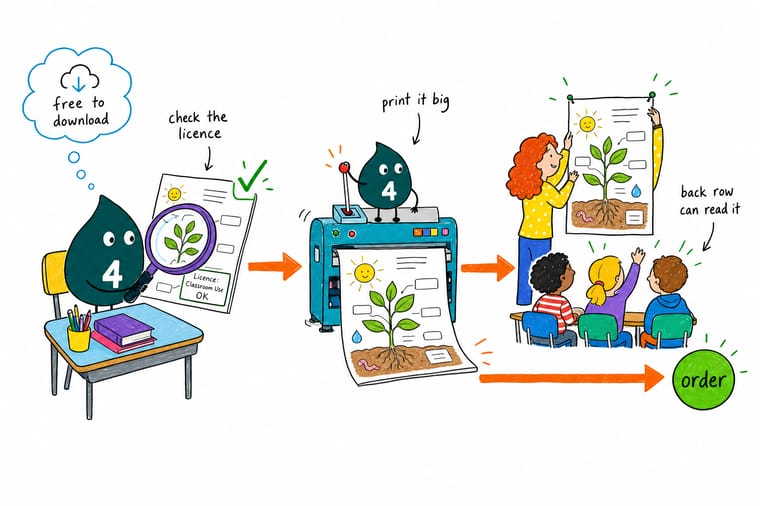
Public-domain material such as Library of Congress images and Project Gutenberg books can be printed at any size in any quantity. Openly licensed work needs the credit line kept on the artwork. Single-classroom freebies cover your own students and not the grade team. Build wall posters at final size at 300 DPI or in vector, allow about one inch of letter height per ten feet of viewing distance, and 4OVER4.COM prints them large enough for the back row.
Order classroom posters →What to remember about free classroom resources
How to vet a free resource in five minutes
- Find the paywall first. Name the feature you will need in week six, then check which side of the line it sits on. Free on day one tells you nothing.
- Check whether students need accounts. Student logins mean district privacy review, which can take a term. Open archives can be on the board tomorrow morning.
- Read the license, not the download page. Public domain, attribution, non-commercial and single-classroom licenses all allow different things once a printer is involved.
- Test one item end to end. Assign one passage or one simulation to one class before you plan a unit around the platform. Interfaces disappoint faster than content does.
- Export a print version while you are there. Save the print-quality PDF at the same moment you save the screen version, so the poster exists before you need it.
Explore more
More ways to print for the classroom
Large format posters print in 2 business days, which fits between a lesson plan and a Monday.
 Product Large Format Posters Classroom-scale posters printed from your own artwork.
  Product Free Business Cards A teacher contact card for parent nights and tutoring.
  Guide Best Places to Print: Local vs Online Where the copy shop wins and where online printing does.
  Guide Free Bookmark Templates Sizes and bleed for reading incentives that get used.
 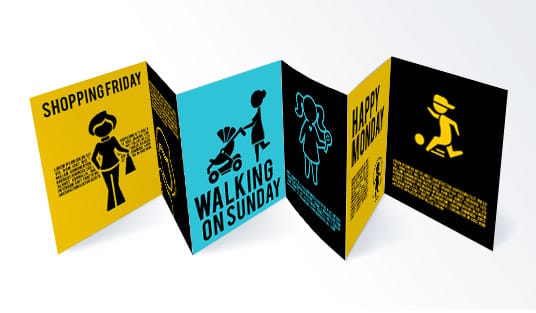 Guide Free Brochure Templates Trifold layouts for open house and orientation handouts.
 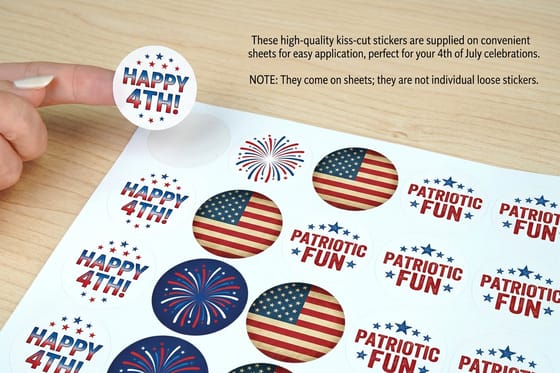 Article 20 Free Printable Sticker Designs How die-cut sticker artwork should be set up before printing.
 Ready to put the good ones on the wall?
Pick your size, upload the artwork you built at final dimensions, and 4OVER4.COM prints it sharp enough to read from the back row.
Common questions about free learning resources
Which free resources can I use without setting up student accounts?
PhET Simulations, the Library of Congress, Project Gutenberg, Smithsonian Learning Lab collections and OpenStax textbooks all work without students logging in to anything. You open the material, project it or hand out a printed copy, and no personal data leaves the room. That matters because any platform that creates student accounts has to clear your district privacy review first, and that review is measured in weeks or months rather than days. If you need something usable on Monday, start with the open archives and save the account-based platforms for the tools you plan to use for a whole year.
Can I legally print a free worksheet for my whole grade level?
It depends entirely on the license, not on whether you paid. Public-domain material, which covers most Library of Congress items and everything on Project Gutenberg, can be printed in any quantity for anyone. Openly licensed material such as OpenStax textbooks can be copied and shared as long as you keep the attribution. But a large share of free downloads from teacher marketplaces carry a single-classroom license, which permits copies for your own students and not for the other teachers on your team. The license text is usually on the download page or inside the first page of the PDF, and reading it takes less time than the conversation that follows if you skip it.
What resolution does a classroom poster need?
Build the file at the finished size at 300 DPI, or use vector artwork so resolution stops being a question at all. The common failure is taking a worksheet or a slide designed for letter paper and enlarging it to 24 by 36 inches, which asks roughly six times the area out of a file that never had the pixels. Text edges go furry and photographs go soft, and it shows from further away than people expect. If your only copy is a screen-resolution file, redraw the headline as text in the layout rather than scaling up the image of it.
How big should a poster be for the back of the classroom?
For a standard room, 24 by 36 inches is the size that works from the back row, and 18 by 24 inches is right for a chart students read at a table group. The useful rule of thumb comes from signage: allow about one inch of letter height for every ten feet of viewing distance. A room twenty feet deep therefore needs roughly two-inch capitals on the key line. Print a single copy first, tape it to the wall, and read it from the last seat before you order a set, because two-inch type looks enormous on a laptop and modest on a wall.
What is the cheapest way to print a class set of something I found online?
For text, print it yourself in black and white or use the school copier, because openly licensed books and passages hold up under plain reproduction. For anything that is going on a wall and staying there, the copier is a false economy: the color drifts, the paper curls, and you reprint it twice. Send those to a printer once, on stock heavy enough to survive tape. Large format posters at 4OVER4.COM start at $25, and free business cards are listed at $0.00, which covers the two printed items most teachers actually need.
