
Debossing That Presses Your Logo Into Premium Stock


Emma is our prepress and print production voice, built from the knowledge of our production team, with over 20 years in printing.
Press your logo, monogram, or brand mark into premium stock for a finish people can feel. Blind, ink-filled, and foil debossing on business cards, invitations, folders, and covers, printed and pressed in-house at 4OVER4.COM.
Debossing is a finishing process that presses a custom die into the stock so your design sits below the surface. It is embossing in reverse. The impression can be left blind with no ink, filled with a single color, or finished with metallic foil. It looks its best on thick, premium materials like heavy covers, cotton stocks, and rigid plastic cards, where the recess stays crisp and the piece has real heft in the hand. Wherever you order from, Shaker Heights included, the die is cut and pressed in-house at 4OVER4 and the finished pieces ship to you; 30 mil plastic cards, the base stock on this page, start at 250 for $226.11.
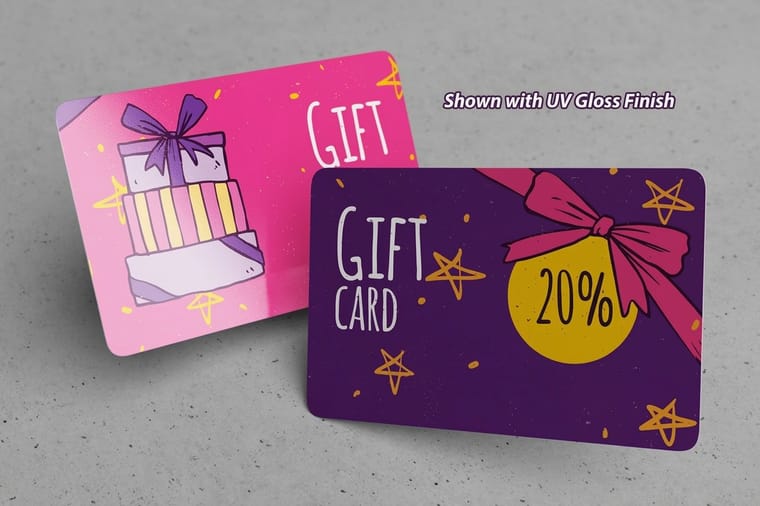
Start here
What pressing a design into the stock changes
Debossing presses your design into the stock instead of printing it on top, leaving a recessed impression you can feel. It is the reverse of embossing, it works best on thick premium cards and covers, and it comes in blind, ink-filled, and foil finishes. Used on the right piece, a deboss makes print feel considered before anyone reads a word. Here is what it is, where it shines, and how to order it at 4OVER4.COM.
Why a deboss makes print feel expensive before anyone reads it

A debossed card announces itself before anyone reads a word on it. Hand someone a 30 mil plastic card, credit card thickness at 2.125 by 3.375 inches, and their thumb finds the logo first, pressed down into the stock as a shallow dip. That small tactile cue reads as care, and as budget, and ink alone cannot give it.
Debossing is one of the finishing touches that turns an ordinary print run into something people keep. It works because touch is hard to fake. A pressed monogram on a business card, a recessed logo on a folder, a name sunk into a heavy cover: each one signals that the piece was made on purpose.
This page explains exactly what debossing is, where it looks its best, how to prepare artwork for it, and how to order it at 4OVER4.COM. If you already know you want it, our print experts can spec the die and stock with you directly.
What is debossing?

Debossing is a finishing process that presses a custom metal die into paper, card, or rigid plastic so your design sits below the surface of the stock. It is embossing in reverse: where embossing pushes an image up into relief, debossing drives it down into the material, leaving a clean recessed impression you can read with your fingertips.
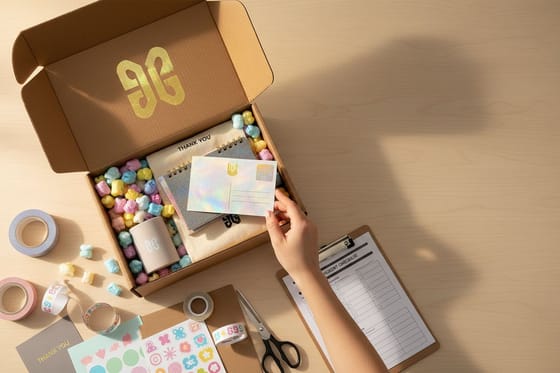
The effect suits anything meant to feel considered. A debossed logo turns thick white plastic cards into a membership piece, a recessed monogram dresses up greeting cards, and a pressed brand mark gives notebook covers a premium hand. If you are producing a full set, our kitting and fulfillment team can assemble and ship the finished pieces so a launch box arrives ready to hand out.
Because the impression comes from a die rather than ink, a deboss never smudges, fades, or peels. It is part of the material now. That permanence is why it shows up on the pieces a brand wants to last: cards, invitations, folders, and covers.
Blind, ink, or foil: the finishes you can choose

Every deboss starts from the same pressed impression, and then you decide how to finish it. That choice sets the mood of the whole piece.
Blind debossing uses no ink or foil at all. The design shows up purely as a recess in the stock, catching light and shadow, and it looks its best on dark or textured paper. Ink-filled debossing drops a single color into the recess, so the pressed shape also carries your brand color. Foil debossing combines the impression with a metallic or matte foil, giving you a recessed shape that also shines, which is the most dramatic of the three.
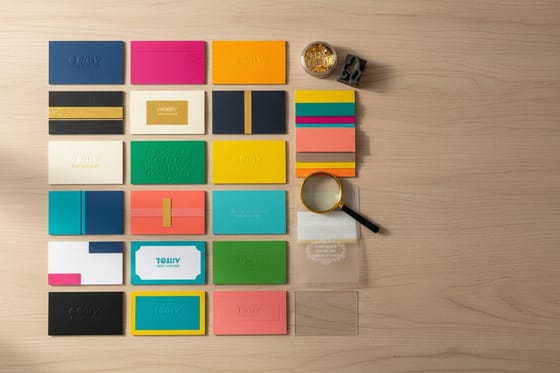
There is also registered debossing, where the die is aligned to printed artwork so the impression falls exactly on a shape you already printed. It takes more setup, and the payoff is a design where the flat art and the pressed art line up perfectly. If you are not sure which finish fits your stock, order free paper samples first so you can feel the difference before you commit.
The stocks and products that deboss beautifully
Debossing is a physical process, so the material decides how good the result looks. The rule is simple: the thicker and softer the stock, the deeper and crisper the impression. Heavy uncoated covers, cotton stocks, and rigid plastic take a deboss cleanly. Thin text-weight paper does not, because the die can crush the sheet or show through the other side.
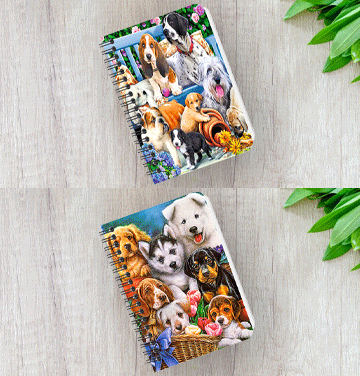
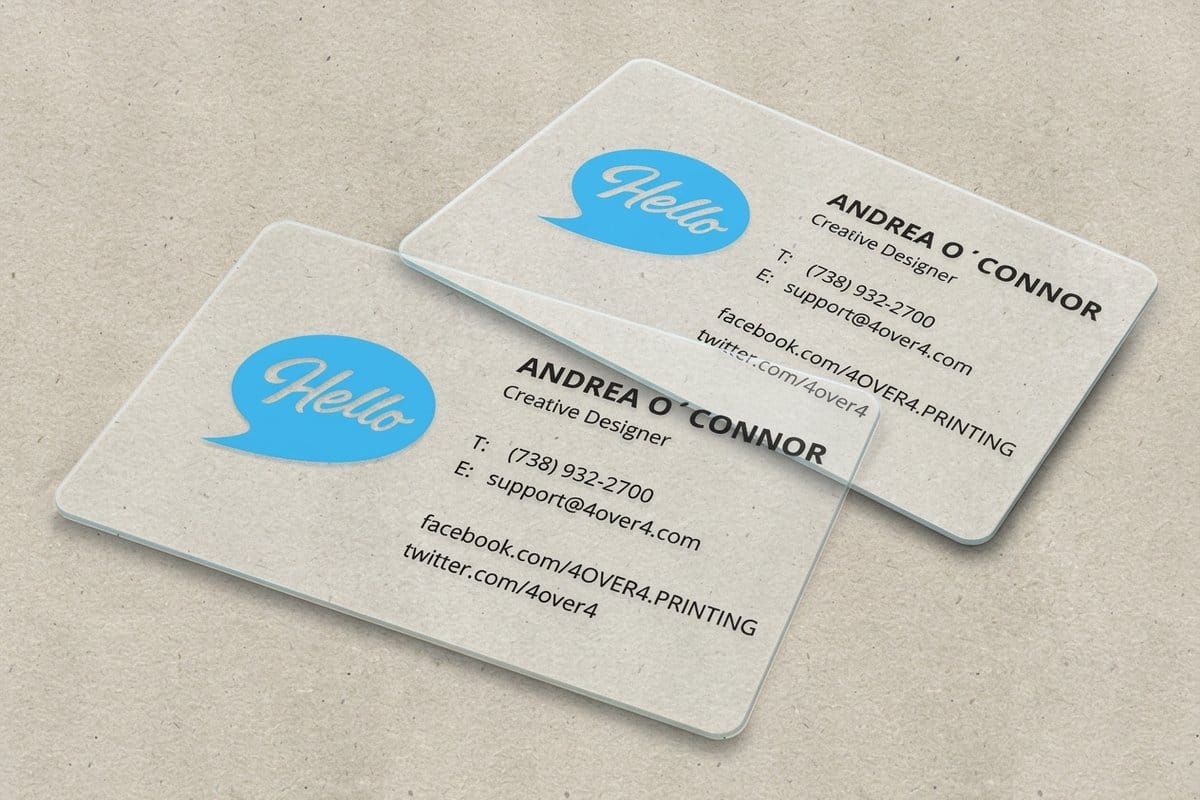
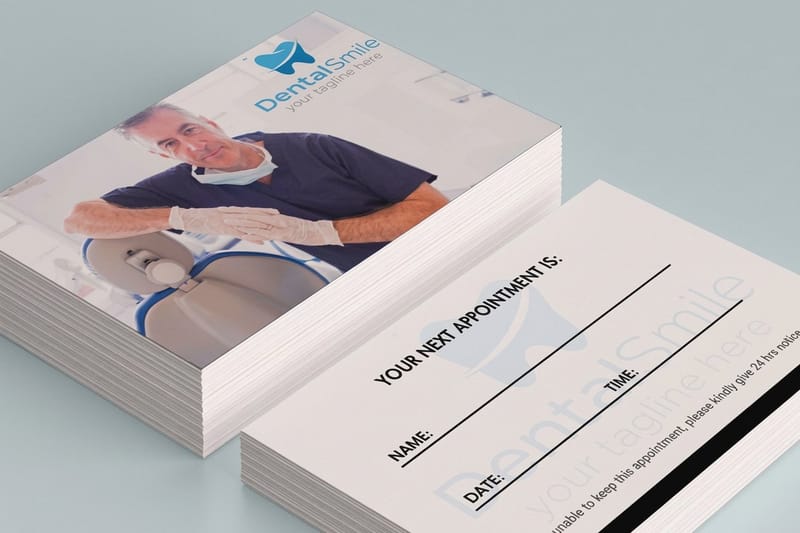
Among our most popular products for debossing, 30mil white plastic cards hold a razor-sharp recess and feel solid in the hand, while frosted and clear versions add a modern, translucent twist. For paper goods, notebook covers and premium greeting cards give the die enough body to press into. Browse the full business card range to see which stocks are heavy enough to carry a clean deboss.
If your project needs a stock you do not see listed, talk to our team. Across its whole catalog, 4OVER4 prints more than 1,000 products on 60+ premium papers and finishes, so we can usually match a debossing-friendly stock to your design.
Designing the art and placing the order
Good debossing starts in the artwork. Keep the design bold and simple: solid logos, monograms, short words, and clean line work press cleanly, while fine detail, thin hairlines, and type below roughly 8pt tend to disappear into the recess. Supply the deboss area as a single-color vector shape on its own layer so our team can cut the die to match it exactly. If you are new to print-ready files, our printing terms glossary defines the vocabulary you will run into.
Ordering is straightforward. Choose the product and stock, tell us the finish you want (blind, ink-filled, or foil), and send the artwork with the deboss layer marked. Because debossing uses a custom die, these projects are quoted per job rather than priced from a slider, so the fastest route is to send your files to our print experts for an exact quote and turnaround. You can watch base product pricing update live in the configurator, then add the debossing finish on top.
Once the pieces are printed and pressed, our kitting and fulfillment service can pack, store, and ship them for you, which is handy for membership cards, event invitations, or a branded welcome kit going out in volume. See why 150,000+ businesses print with 4OVER4 before you send your first file.
Deboss vs emboss
Debossing or embossing: which way should your design go?
Both press a custom die into your stock, and both need a sheet with body, like the 30 mil plastic and 31pt lenticular covers on this page. The difference is direction, down into the stock or up out of it, and it changes how the finished piece feels in the hand.
| What to compare | Debossing | Embossing |
|---|---|---|
| Direction | Pressed down into the stock, recessed below the surface | Pushed up off the stock, raised above the surface |
| How it feels | A subtle dip you find with a fingertip | A raised relief you can both feel and see |
| Best on | Dark, textured, or heavy stock | Lighter, smooth stock |
| Common uses | Cards, folders, invitations, covers | Cards, certificates, letterhead |
| Add ink or foil | Yes, ink-filled or foil deboss | Yes, though relief is often left blind |
| Shows through the back | Minimal on thick stock | Can leave a reverse impression |
For most premium print, debossing is the safer, more modern choice: it stays clean on dark and textured stocks, resists showing through the back, and pairs naturally with foil. Reach for embossing when you specifically want a raised, catch-the-light relief. Not sure which way to go? Send both ideas to our print experts and we will help you pick.

Infographic
Your debossing options at a glance
One frame, from the finish you choose to the stock that holds it: three finishes (blind, ink-filled, foil), art with no type below roughly 8pt, and a stock with the body of 30 mil plastic or a heavy cover. Save it as a checklist before you send your next print job.
The finish sets the mood, the stock makes it possible, and bold, single-color artwork gives the die a clean shape to press. Get those three right and the impression looks sharp on every piece.
Specs and pricing
Start with a debossing-friendly stock
Debossing itself is quoted per job, but it starts from a base product. Here are the live specs and price-per-unit for our 30mil white plastic cards, a heavyweight stock that holds a crisp impression, straight from the configurator.
| Quantity | Price Per Unit | Total |
|---|---|---|
| 250 | 90.4¢ | $226.11 |
| 500 | 55.3¢ | $276.63 |
| 1,000 | 37.8¢ | $377.68 |
| 2,000 | 34.7¢ | $693.46 |
| 2,500 | 35.3¢ | $882.94 |
| 3,000 | 33.6¢ | $1,009.25 |
| 3,500 | 32.4¢ | $1,135.55 |
| 4,000 | 31.5¢ | $1,261.87 |
Deboss these
Products that were made for a pressed impression
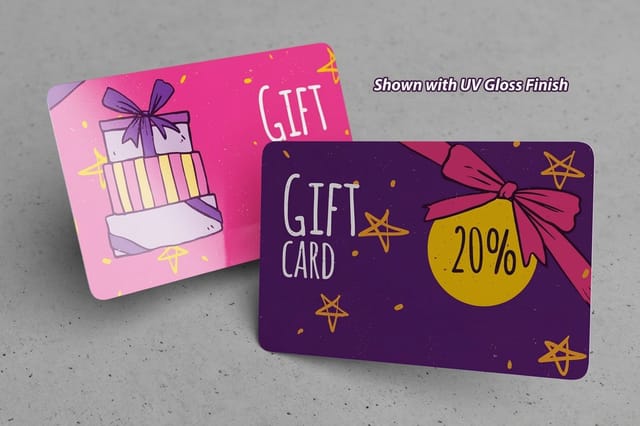
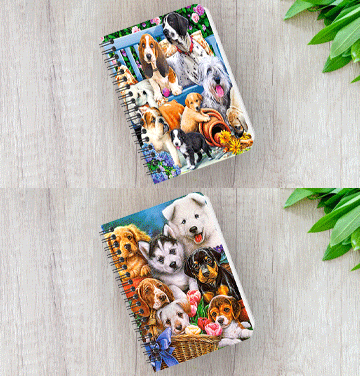
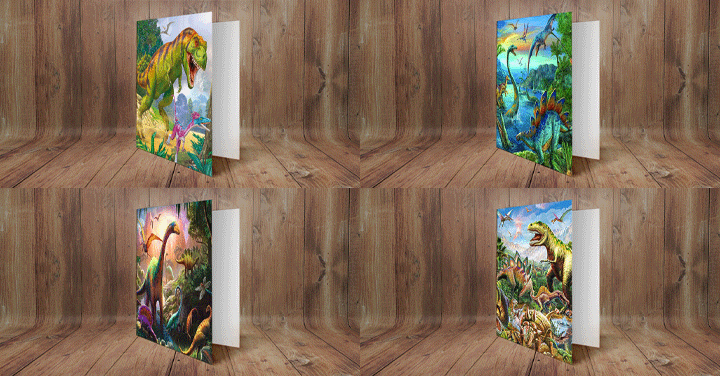
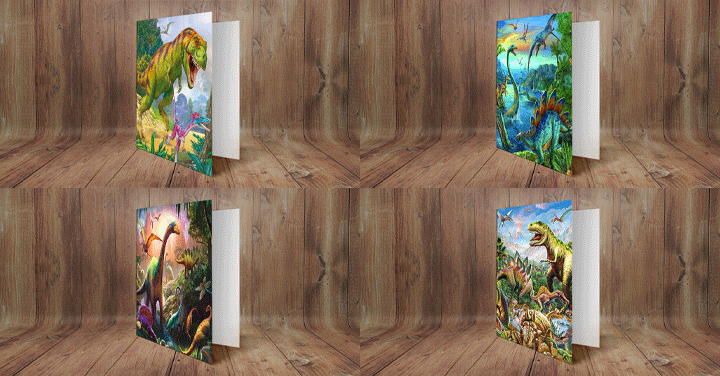
Three bases with the body a die needs: 30 mil white plastic cards at 2.125 by 3.375 inches, 3D lenticular notebooks with a 31pt cover in four sizes from 4.25 by 5.5 to 8.5 by 11 inches, and lenticular greeting cards on 31pt lens stock that fold to 5 by 7 or 6 by 6 inches.
Wally explains debossing
The finish you notice with your fingers, not your eyes
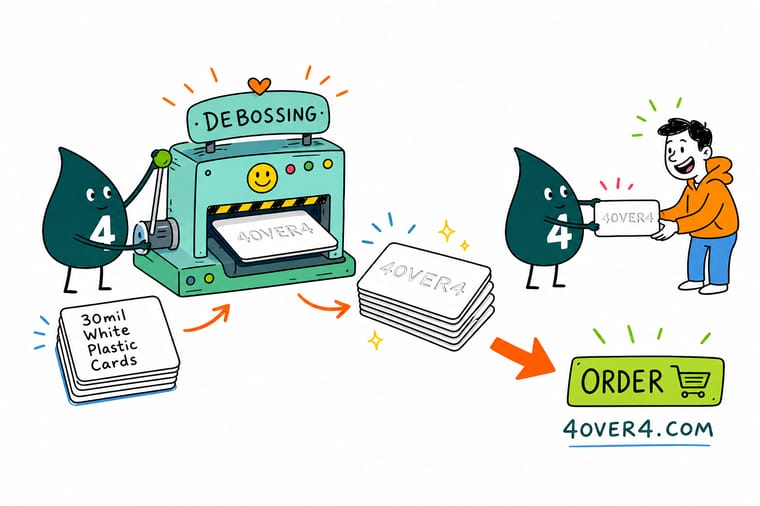
Wally likes to say a deboss is design you can feel in the dark. Instead of adding ink on top, a metal die presses your logo down into the stock, so the shape lives in the paper itself. Keep it bold and simple, pick a stock with some body, and choose blind, ink, or foil to set the mood. Then let 4OVER4 cut the die and press it clean.
Talk to a print expert →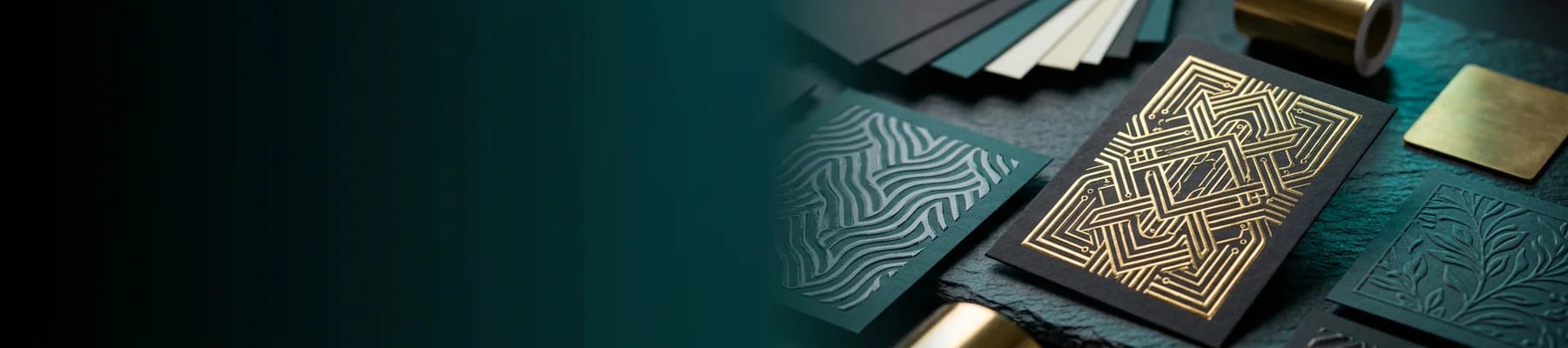
Get Started
Ready to add a deboss to your next print run?
Send your artwork to 4OVER4.COM and we will cut the die, press it into the stock you choose, and finish it blind, in ink, or in foil. Feel the difference on every piece.
Explore more
Where to go next
Six next steps for a debossed job: kitting for a finished run, the card finishes gallery, the business card range, the guides, a glossary that defines deboss, emboss and foil, and the 30-point review every job passes.
By the numbers
The tooling and press behind a clean deboss
Common Questions
Common questions about debossing
What is debossing?
Debossing is a finishing process that presses a custom metal die into paper, card, or rigid plastic so your design sits below the surface of the stock. The result is a recessed impression you can feel with your fingertips. Because the shape comes from a die rather than ink, a deboss never smudges, fades, or peels. It is used to give business cards, invitations, folders, and covers a premium, tactile feel.
What is the difference between debossing and embossing?
They are opposites in direction. Debossing presses the design down into the stock, so the shape is recessed below the surface. Embossing pushes the design up, so the shape stands in raised relief above the surface. Debossing tends to look its best on dark, textured, or heavy stock and resists showing through the back, while embossing gives a bolder, catch-the-light relief on lighter, smooth paper. Both use a die, and both can be left blind or finished with ink or foil.
What materials work best for debossing?
The thicker and softer the stock, the deeper and crisper the impression. Heavy uncoated covers, cotton stocks, and rigid plastic cards such as our 30mil cards take a deboss beautifully. Notebook covers and premium greeting cards work well too. Thin text-weight paper is a poor match, because the die can crush the sheet or leave a reverse impression on the other side.
Can you fill a deboss with color or foil?
Yes. Every deboss starts from the same pressed impression, and then you choose how to finish it. Blind debossing leaves the recess bare so it reads through light and shadow. Ink-filled debossing drops a single color into the recess. Foil debossing combines the impression with a metallic or matte foil for a recessed shape that also shines. You can also register the deboss to printed artwork so it lands exactly on a shape you already printed.
How should I set up artwork for debossing?
Keep the design bold and simple, and supply the debossed area as a single-color vector shape on its own layer so our team can cut the die to match it exactly. Solid logos, monograms, and short words press cleanly, while fine detail, hairlines, and type below roughly 8pt tend to disappear into the recess. If you are new to print-ready files, our printing terms glossary covers the vocabulary, and our print experts can review your file before the die is made.
How much does debossing cost?
Debossing is quoted per project rather than priced from a fixed slider, because it uses a custom die cut to your artwork. The cost depends on the size of the debossed area, the stock, the quantity, and whether you add ink or foil. The most accurate way to get a figure is to send your files to our print experts for a quote. The base product itself, such as the cards or covers, prices live in the configurator, and the debossing finish is added on top.
Legal Disclaimer
Gold Standard guarantees apply to all standard orders placed through 4over4.com. Price match requires verifiable proof of a competitor's published price for an equivalent product with matching specifications and turnaround time. Satisfaction guarantee covers manufacturing defects and print quality issues. Contact support with order number and documentation.
