
Professional Binding for Booklets, Catalogs, and Calendars


Emma is our prepress and print production voice, built from the knowledge of our production team, with over 20 years in printing.
A catalog that reads, a manual that lies flat, a calendar that hangs, a pad that tears clean: four different spines, four different behaviors. Binding is choosing the right one and building the file for it. This page covers each method and how to order it at 4OVER4.COM.
Binding is the finishing step that turns printed pages into a usable multi-page piece: saddle stitching staples folded sheets into booklets, spiral coil and Wire-O thread punched pages so the book lies flat, and glued padding bonds sheets into tear-away pads. The method decides the behavior, reading, working flat, hanging, or tearing, and it constrains the file: multiples of four pages for stitched work, a punching strip for coil and wire, single pages in reading order for everything. Each binding ships as part of its product, printed, bound, and trimmed in one job.

Start here
The spine is chosen by how the book gets used
Binding turns printed pages into a working piece, and the method is chosen by behavior: saddle stitching for booklets and catalogs that get read, spiral coil and Wire-O for manuals and calendars that must lie flat or hang, glued padding for notepads consumed sheet by sheet. Each method carries file rules, page counts in multiples of four for stitching, a protected punching strip for coil and wire, single pages in reading order always. Print, binding, and trim ship as one job at 4OVER4.
Why the spine decides how print gets used
A 60 page stitched catalog, a 300 page coil manual open on a workbench, a 26 page Wire-O calendar on a wall hook: each one works because its spine suits the way people use it. The binding is the mechanism that decides how, where, and whether the piece gets used. A stitched booklet invites linear reading. A coiled book works open-handed on a counter. A padded form waits to be torn.
That is why binding is chosen at the start of a project, not the end. The method constrains the page count, the margins, sometimes the stock, and it should be matched to the behavior you want from the reader: browsing a catalog, following a recipe, flipping a calendar month by month on a wall.
4OVER4 binds as part of the bound products themselves, booklets, spiral coil books, Wire-O calendars, and notepads, so the binding, the printing, and the trimming ship as one job. This page walks the four methods, when each wins, and how to build a file that binds cleanly.
Saddle stitching: the booklet default
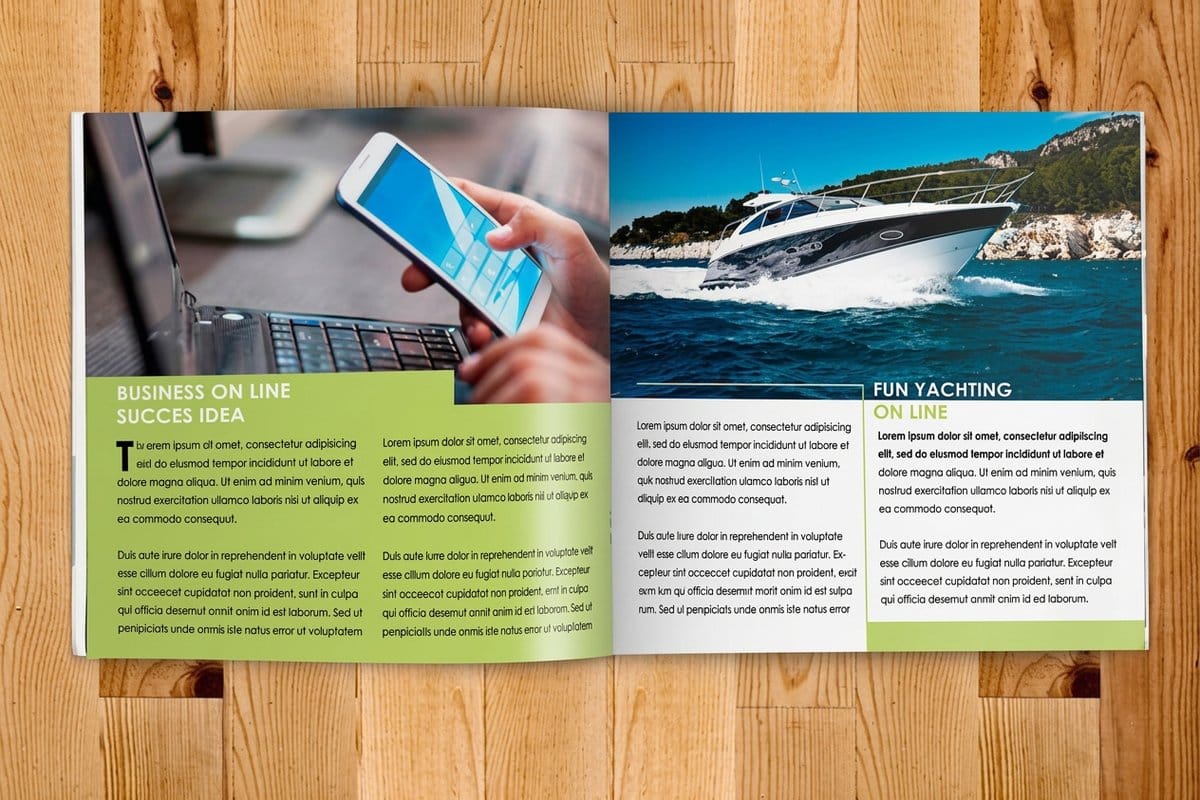
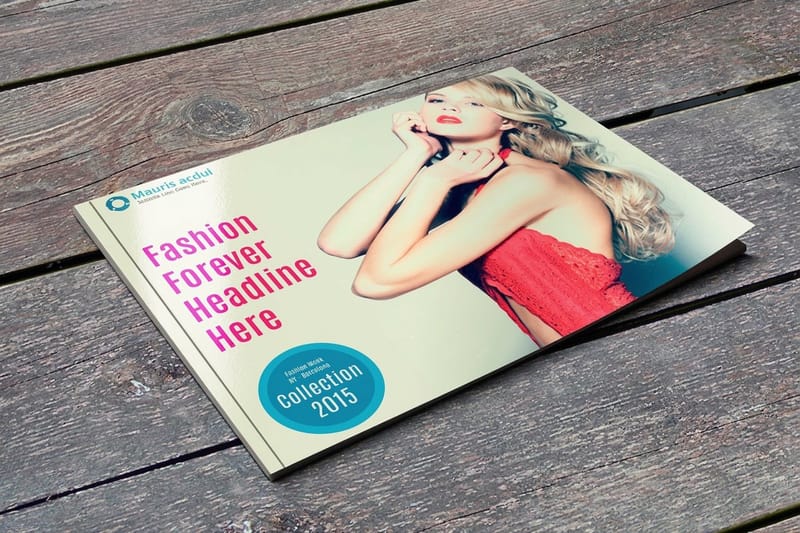
Saddle stitching is folded sheets stapled through the fold. The printed sheets are folded in half, nested one inside the next over a saddle, and two wire stitches close the spine. It is the fastest and most economical true binding, which is why the bulk of the world's catalogs, programs, lookbooks, and marketing booklets are stitched.
Its geometry brings two rules. First, page counts run in multiples of four, each folded sheet contributes four pages, so plan content to land there or design deliberate blanks. The guide to pages vs sheets in printing and how booklet page counts really work shows the arithmetic. Second, thickness has a ceiling: past a moderate page count the booklet stops folding flat and inner pages creep outward at the face trim. Inside those limits, stitched work is clean, light, and cheap to mail.
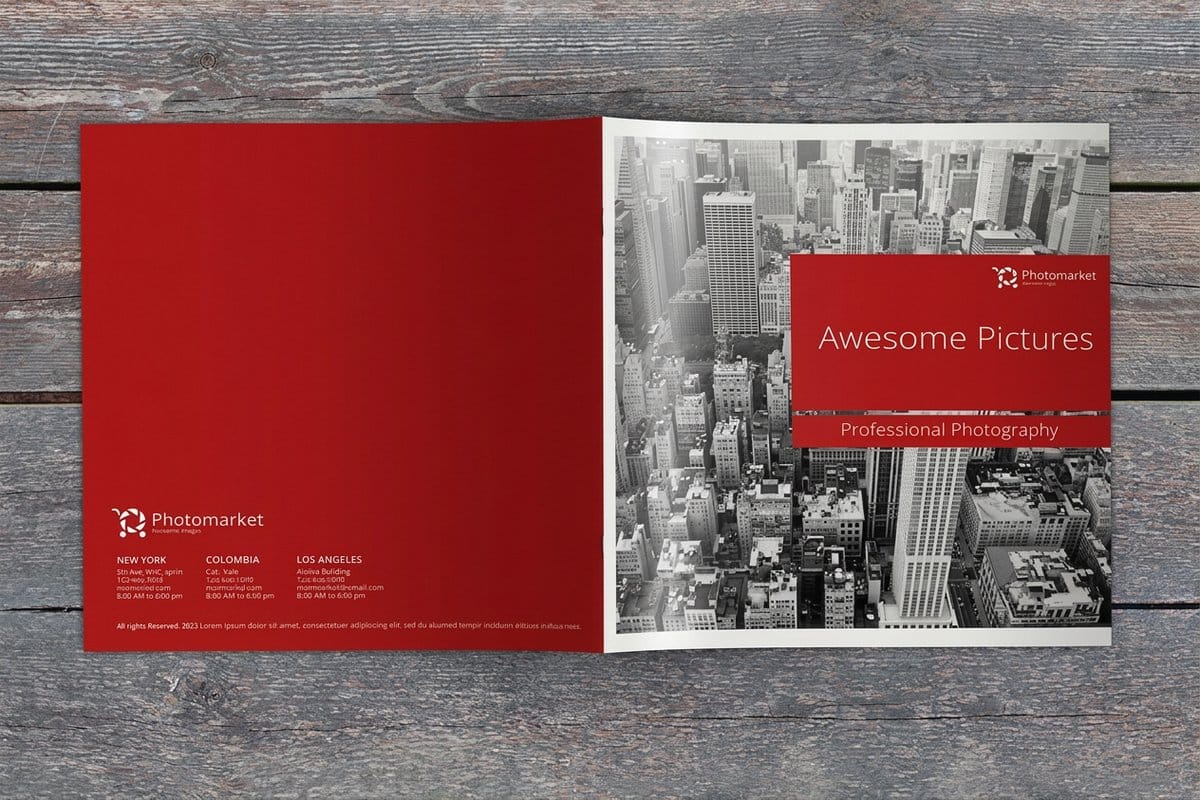
Design-wise, stitched booklets reward spreads, facing pages that share an image or a layout, because the low spine tension lets the piece open generously. Keep critical content out of the innermost quarter inch at the spine, and let covers work: a heavier cover stock over lighter text pages lifts the perceived value of the whole piece for a small cost.
Coil and Wire-O: books that lie flat and stay flat

Some documents are used, not read: manuals on a bench, workbooks under a pen, cookbooks next to flour. For those, the binding must let go, pages rotating a full 360 degrees, the book lying dead flat without a hand holding it. That is the mechanical job of coil and Wire-O, and no stitched or glued spine can do it.
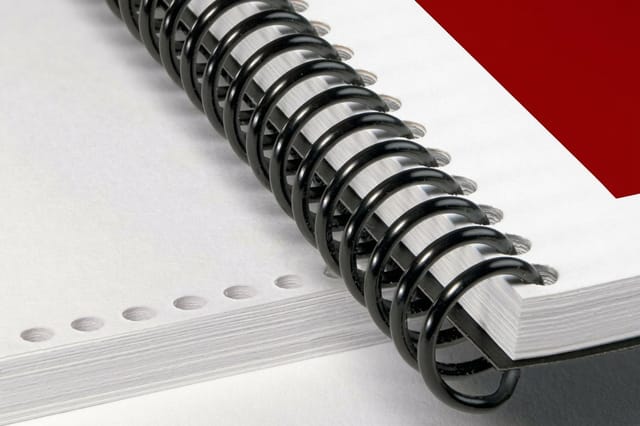
Spiral coil threads one continuous plastic spiral through a row of punched holes. It is durable, slightly casual, shrugging off drops and bag life, the right personality for training materials, field guides, and anything that works for a living. Wire-O closes paired wire loops through similar holes: crisper, more formal, and it holds facing pages in alignment, which coil's spiral geometry cannot.
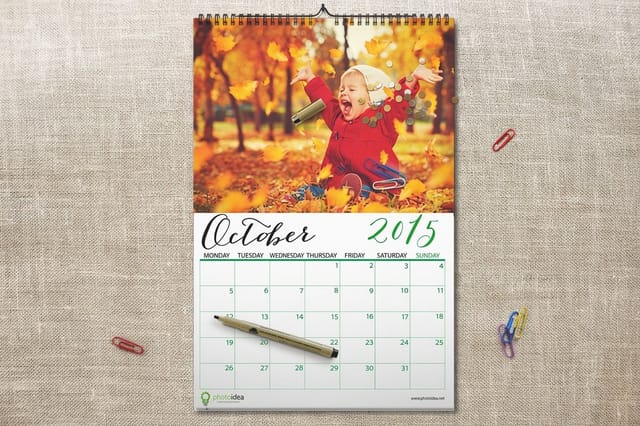
Wire-O's alignment and hang-flat behavior make it the calendar binding, twelve months flipping over a wall hook, and the choice for client-facing reports and proposals. Every calendar format 4OVER4 prints is gathered on the printed calendars page. Both methods bind single sheets, so page counts are free of the multiple-of-four rule, mixed stocks and tabs are welcome, and thick books stay usable. The cost is a punching strip: keep content clear of the bound edge.
Glued padding: the tear-away bind

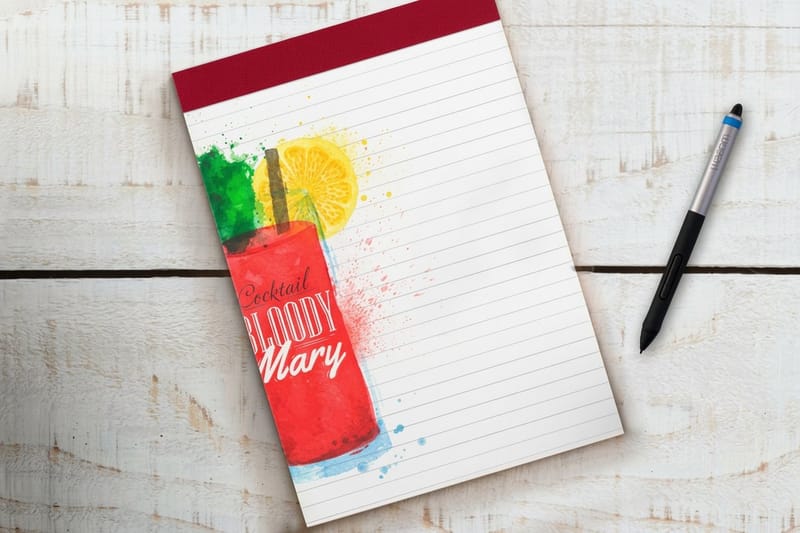
Padding is binding meant to be undone. Loose printed sheets are stacked, clamped, and bonded along one edge with a flexible adhesive, usually backed by a chipboard stiffener. The result holds together on a desk and releases one sheet at a time with a clean tear, no stubs, no ragged edge.
The form factor is the everyday notepad, and it is quietly one of the best branding surfaces in print: a pad by the phone or on the counter is looked at daily for weeks, far longer than most marketing lives. Order pads, prescription-style forms, waiter pads, and checklists use the same construction where the sheet leaving is the whole point of the piece.
Design for the tear: keep content away from the glued edge, put the brand where it survives on every sheet rather than only the cover, and if sheets will be handed to customers, treat each sheet as a standalone piece with your contact block on it. For multi-copy forms where each transaction needs duplicates, carbonless forms are the padded product built for exactly that.
Choosing the binding: a decision in three questions

How is it used? Read cover to cover or browsed: saddle stitch, 8 to 60 pages with the cover. Used flat, written in, worked from: coil, 40 to 300 inside pages, or Wire-O. Hung and flipped: Wire-O, 26 pages for 12 months or 38 for 18. Consumed sheet by sheet: padding, 50 or 100 sheets a pad. The use pattern eliminates most options before aesthetics enter the conversation.
How thick is it? Booklet counts up to 60 pages sit happily in stitching. Thick documents, mixed stocks, or tab dividers push you to coil or Wire-O, which treat every page as an independent sheet. A four-page piece is not a binding job at all, it is a folded piece, and our folding service covers it.
Who sees it? Mailed marketing favors stitching, flat, light, economical postage. Client-facing proposals and calendars justify Wire-O's crisper hardware. Internal manuals take coil without apology. When two methods survive all three questions, price the real quantities in the configurators, booklets and coil books price live, and let the number decide.
Building a file that binds cleanly

The universal rule: export single pages in reading order, not spreads. Imposition, arranging your pages onto press sheets so they emerge in order after folding and binding, is done here, and files supplied as printer spreads usually have to be taken apart. Standard bleed on all four edges of every page, covers included.
Respect the spine side for your method. Stitched booklets want inner margins generous enough that content does not drown in the fold, and page counts in multiples of four. Coil and Wire-O consume a punching strip along the bound edge, roughly half an inch where holes will land, so nothing essential lives there, and remember the strip is on the right side of left-hand pages.
Number your pages in the file and let the covers count in stitched work, cover, inside cover, and onward. If terms like imposition, creep, or bleed are unfamiliar, the printing terms glossary defines them plainly and our printing guides walk the full file-prep process. Prepress checks the page count, margins, and spine setup against your chosen binding before anything prints.
Page count and quantity move the price, not the method

Binding prices into the bound product, and the levers are page count, quantity, size, and stock more than the method itself. Saddle stitching is the economy leader at booklet scale. Coil and Wire-O add the punch-and-bind pass, justified the first time a user needs the book to stay open on its own. Padding prices per pad and per sheet count. For a sense of the floor, spiral coil books start at 10 for $423.28, Wire-O calendars at 25 for $812.59 and notepads at 25 for $93.37; the booklet ladder is in the pricing panel below.
Ordering is the normal product flow: configure booklets, spiral coil books, Wire-O calendars, or notepads with your pages, size, stock, and quantity, upload the single-page file, and watch the live price move as you adjust. The pricing panel below shows real numbers for the booklet product on this page.
If the piece pairs binding with other finishing, a scored heavy cover, a laminated jacket, tabs, or drilling for a binder, the services hub maps what ships together on one order. Bring the use case and we will bind for it.
Compare the options
The four bindings side by side
Four bindings, four page ranges: saddle stitching takes 8 to 60 pages, spiral coil 40 to 300, a Wire-O calendar 26 or 38, and a glued pad 50 or 100 sheets. Here is what each one does and where it wins.
| Binding | What it does | Best for |
|---|---|---|
| Saddle stitching | Folds sheets into a booklet and staples through the spine fold, the standard bound-booklet method. | Booklets, catalogs, programs, and magazines up to moderate page counts, in multiples of four. |
| Spiral coil | Threads a continuous plastic coil through punched holes, so pages rotate fully and the book lies flat. | Manuals, workbooks, cookbooks, and notebooks that get used open on a surface. |
| Wire-O | Closes double loops of wire through punched holes, the crisper, more formal cousin of plastic coil. | Calendars, reports, and presentation documents that hang or flip page over page. |
| Glued padding | Bonds loose sheets along one edge with flexible adhesive, so each sheet tears away cleanly. | Notepads, order pads, and forms consumed one sheet at a time. |

Infographic
Four spines, four behaviors
From single pages in reading order to a spine that matches the job, a bound piece comes together in four stages. Production takes 7 business days for stitched booklets and notepads, 5 for spiral coil books and Wire-O calendars.
Pages print, collate, and meet their spine in one job, stitched, coiled, wired, or padded to match how the piece will be used.
Specs and pricing
Booklet pricing, straight from the configurator
Binding ships as part of the bound product, so the whole piece prices out in the configurator. Booklets, the highest-volume bound product, come at 5.5 by 8.5, 8.5 by 11 or 11 by 11 inches, 8 to 60 pages, on 100# gloss or silk text inside with a 14pt or 80# gloss cover. Here are their live specs and price-per-unit, straight from 4OVER4.COM.

| Quantity | Price Per Unit | Total |
|---|---|---|
| 25 | $9.62 | $240.55 |
| 50 | $6.04 | $302.06 |
| 100 | $3.61 | $361.37 |
| 200 | $2.22 | $444.85 |
| 300 | $1.65 | $495.38 |
| 400 | $1.29 | $515.14 |
| 500 | $1.06 | $531.61 |
| 600 | 91.5¢ | $549.19 |
Bind these
Products that ship bound
Booklets stitch 8 to 60 pages at up to 11 by 11 inches, spiral coil books bind 40 to 300 pages in a black or white plastic coil, and Wire-O calendars hang 12 or 18 months, with a thumb cut and hanger as an option.

Wally explains binding
Pick the spine by how the piece will live.
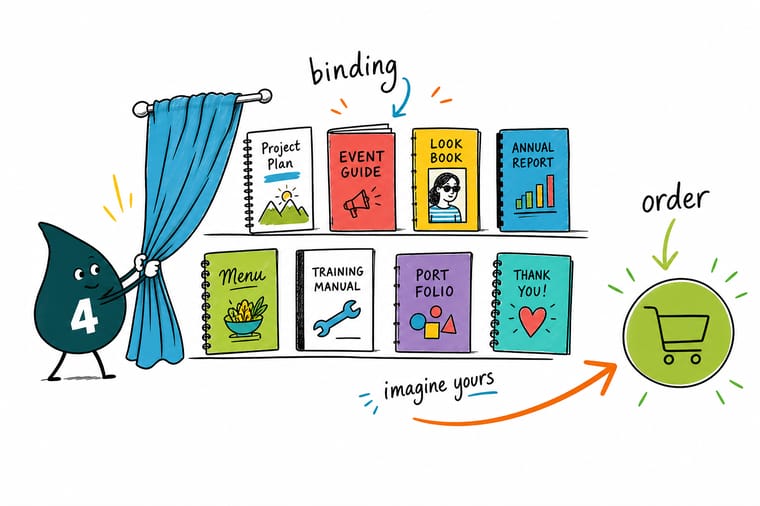
Wally chooses bindings by watching hands: readers flip, so catalogs get stitched; cooks and technicians need both hands, so manuals get coiled; walls need a hinge, so calendars get Wire-O; counters eat one sheet at a time, so pads get glued. Send single pages in reading order, keep the spine side clear, land stitched work on a multiple of four, and 4OVER4 prints, binds, and trims it as one job.
Start a binding project →
Get Started
Ready to give your pages the right spine?
Bring your booklet, manual, calendar, or pad to 4OVER4.COM and ship it printed, bound, and trimmed in one job. Configure your piece and watch the price update live.
Explore more
Where to go next

By the numbers
Collated in order before anything is bound
Common Questions
Common questions about binding
What binding options does 4OVER4 offer?
The working set covers the four behaviors a multi-page piece can have. Saddle stitching folds and staples sheets into booklets, catalogs, and programs. Spiral coil threads a plastic coil through punched holes for books that lie flat, and Wire-O does the same with double-loop wire for a crisper look, our calendars use it to hang and flip. Glued padding bonds sheets into tear-away notepads. Each ships as part of its product: booklets, spiral coil books, Wire-O calendars, and notepads.
What is saddle stitching, exactly?
Saddle stitching is the classic booklet bind: printed sheets are folded in half, nested one inside the next over a saddle-shaped support, and stapled through the fold line, usually with two stitches. The staples become the spine. It is fast, economical, and lies acceptably flat at low page counts, which makes it the default for catalogs, event programs, lookbooks, and marketing booklets. Its one hard rule: because each folded sheet contributes four pages, the page count must be a multiple of four.
Should I choose spiral coil or Wire-O?
They solve the same mechanical problem, pages that rotate 360 degrees and lie dead flat, with different personalities. Spiral coil is a continuous plastic spiral: durable, slightly casual, available in colors, and forgiving of hard daily use, the pick for workbooks, manuals, and kitchen-facing cookbooks. Wire-O is pairs of wire loops that close through the holes: crisper, more formal, and it keeps facing pages aligned across the spread, which is why calendars and client-facing reports prefer it. Function first: hung or presented leans Wire-O, worked and abused leans coil.
Why does my page count need to be a multiple of four?
Only for stitched work, and the reason is physical: a saddle stitched booklet is built from folded sheets, and each folded sheet yields exactly four pages, two on each side of the fold. A 22-page document cannot be folded into existence; it becomes 24 pages with two blanks wherever the layout leaves them. Plan content to land on a multiple of four, or design intentional blank or notes pages. Coil, Wire-O, and padded pieces bind single sheets, so they carry no such rule.
How do I set up my file for a bound piece?
Export single pages in reading order, page 1 first, not printer spreads; imposition, the arranging of pages onto press sheets, is our job and doing it yourself usually inverts it. Keep standard bleed on all edges, and respect the spine side: stitched booklets need inner margins that account for the fold, and coil or Wire-O pieces lose a punching strip along the bound edge, so nothing important should live within roughly half an inch of it. Page one faces right, and covers count as pages in stitched work.
What page counts and sizes work for each binding?
Saddle stitching works from 8 pages up to moderate thickness, roughly the point where the booklet no longer folds flat and pages begin creeping outward, typical catalogs and programs live comfortably inside it. Coil and Wire-O handle thicker books gracefully since each page is independent, and they accept tabs and mixed stocks. Padded notepads run to your sheet count per pad. Sizes follow the product configurators, and the specs panel on this page shows the live options for booklets.
How much does binding cost?
Binding is priced into the bound product rather than quoted separately, and the drivers are intuitive: page count, quantity, size, and stock move the number more than the binding method itself. Saddle stitching is the most economical at booklet scale; coil and Wire-O add the punch-and-bind step; padding is priced per pad. Configure the product, booklets, spiral coil books, or Wire-O calendars, in the live configurator and the price updates as you change pages and quantity.
Legal Disclaimer
Gold Standard guarantees apply to all standard orders placed through 4over4.com. Price match requires verifiable proof of a competitor's published price for an equivalent product with matching specifications and turnaround time. Satisfaction guarantee covers manufacturing defects and print quality issues. Contact support with order number and documentation.
