
Interior Design Referral Marketing Set: The 3 Pieces That Turn Clients Into Introductions
Interior design is a referral business that most studios run by accident. This set makes it deliberate with three printed pieces that cover the three places a recommendation is born: the finished room, the dinner party held in it, and the showhouse where strangers meet your work for the first time.
The interior design referral marketing set is three pieces that work together: interior design business cards your clients can hand to the guest who asks about the room, a wine bottle shaped wine gift set that closes each project with a gesture people talk about, and two sided blockout banners that put your studio name in front of every visitor at a showhouse or model unit. Order all three and print them as one brand.
The picks
Cards, a banner and a wine gift set, from $15.00 for the gift
Start here. These are the three products the set is built from. Cards leave in 3 business days and the banner takes 4, so start the banner first if a showhouse date is fixed.

Design and print help
One studio identity on card stock, vinyl and a gift
The set only works if a prospect recognizes the same studio on a banner, a card and a gift tag. These tools make matching the palette, the type and the finish across three very different formats a short job instead of a project.
How they work together
Print in the order the referral happens
Each piece owns one stage of how an interior design client becomes two. Print them in this sequence and every stage has something physical carrying your name forward to the next one.
Claim the showhouse entrance, the model unit and the trade booth so people walking both directions read your name and see the work you did.
Every client should leave the reveal with a small stack to pass along, because the neighbor question always arrives when you are not standing there.
Send the gift at project close, tuck a card beside it, and let the first dinner in the finished room do the recommending for you.
1. Interior design business cards: the piece that travels without you
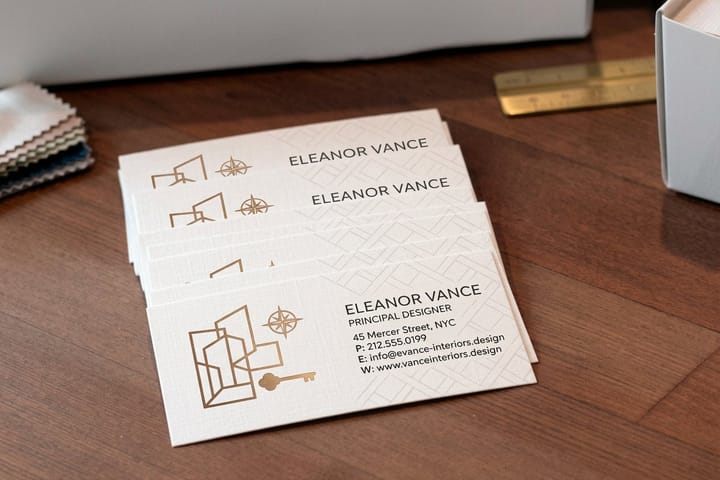
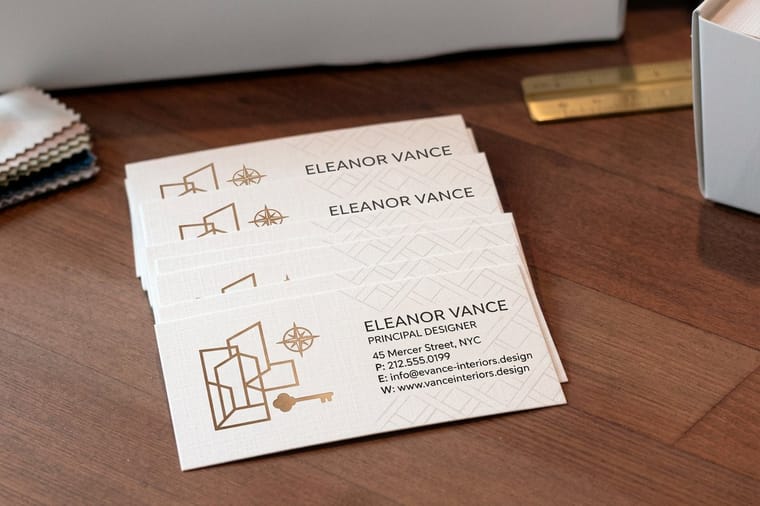
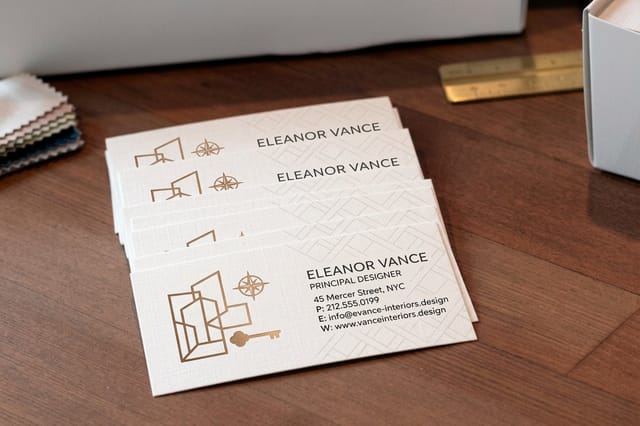
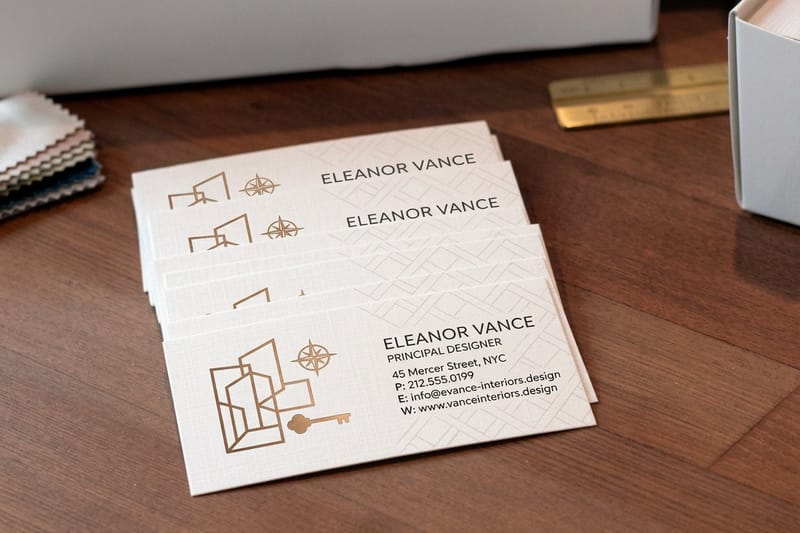
Almost every interior design referral starts with a question you are not present to hear. A guest walks into a finished living room, asks the host who pulled it together, and the answer either arrives as a card or as a half-remembered first name. The card is what makes the difference between a lead and a lost conversation, which is why it is the first thing to print.
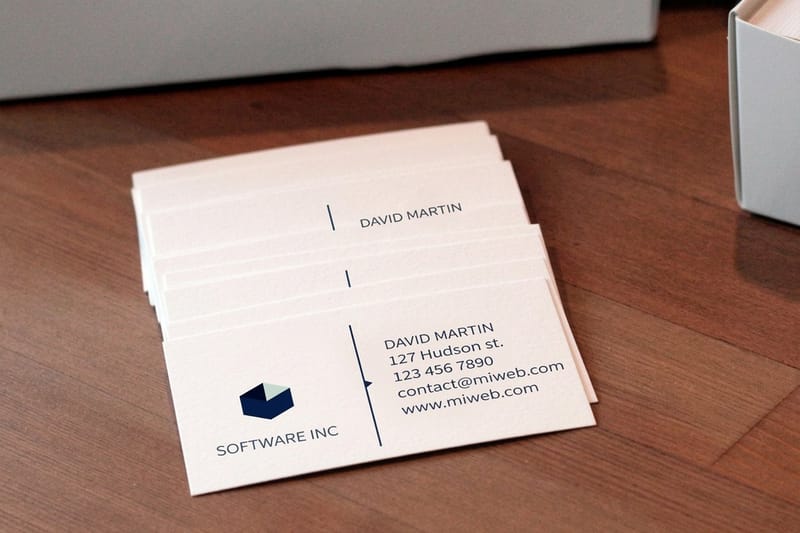
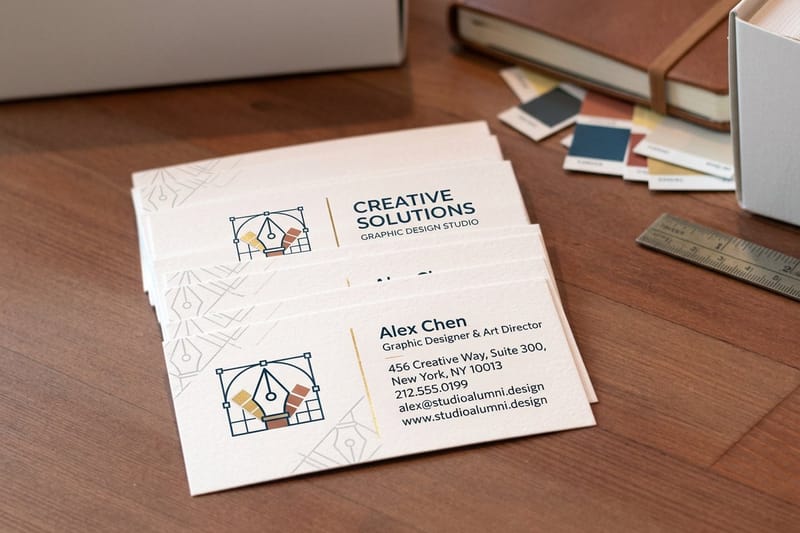
Give the card a reason to be kept. Designers get more out of a heavy uncoated stock with a soft finish than a glossy one, because the card is meant to feel like a material sample rather than an ad. Put the studio name and the one line that describes what you do on the front, leave the back clean for a single project photograph, and stop there. Anything else competes with the room.
Hand a small stack to every client at reveal. Referral work is a distribution problem before it is a design problem, and clients are your best distributors. The referral marketing benchmarks make the case plainly enough.
2. Wine bottle shaped gift set: the thank you that starts the conversation
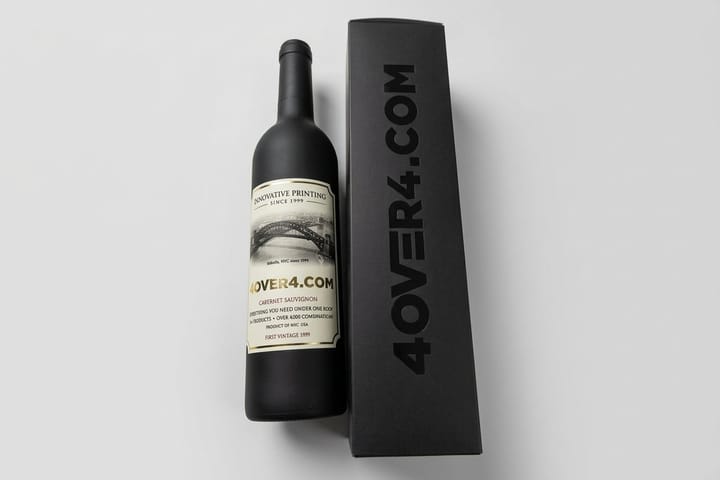
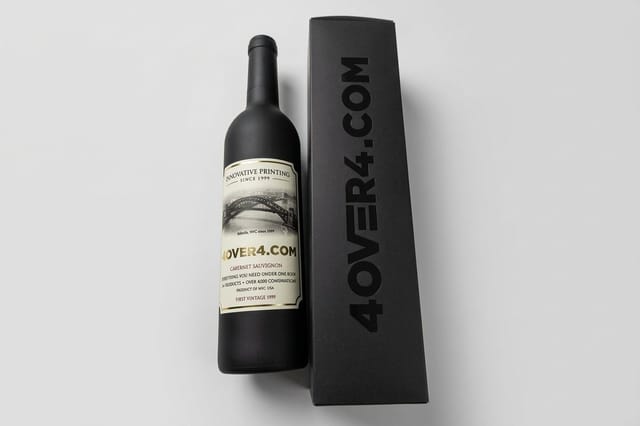
This is the piece that manufactures the referral moment instead of waiting for it. A wine bottle shaped gift set delivered on the day a project closes lands while the client is still proud of the room and still showing it to people. It gets opened at the first dinner in the new space, which happens to be the exact evening when someone asks who did the work.
Design it as a keepsake, not a coupon. Print your mark small, your project name or the address nickname if the client will enjoy it, and one short line of thanks written like a person wrote it. Leave a slot or a tucked pocket for a business card so the two pieces arrive together and stay together on the counter.
Budget one gift per completed project and one for every trade partner who sent you work. The set is inexpensive next to a single new client, and it makes your gratitude visible in the room where prospects gather. For studios that lean hard on local word of mouth, the interior designer local marketing bundle extends the same idea into the neighborhood.
3. Two sided blockout banners: visibility where new clients already are

Cards and gifts work through people you already know. The banner works on strangers. Showhouses, model units, home tours, design fairs and trade shows put hundreds of qualified prospects within twenty feet of your name for a single afternoon, and a banner is the cheapest way to own that space. Two sided means both directions of foot traffic read you, not just the half walking the right way.
Blockout is the detail that matters here. A standard banner printed on both sides lets the reverse artwork ghost through, which turns crisp type into a muddy gray. The blockout layer sits in the middle and keeps each face clean, so a dark side and a light side can share one banner without fighting. Choose your size for reading distance, keep the headline to four or five words, and put the studio name where a phone camera can catch it.
Hang it the day the space opens and leave it up through the last tour. Bring cards and a few gift sets to the same event so anyone who stops has something to take home. Other trades run the identical play, and the landscaping and lawn marketing set shows how it adapts.

Specs and pricing
Interior design card specs on 14pt gloss cover and the price ladder
The business card sets the stock, the color and the finish that the gift tag and the banner then follow. Check the specs and the live price table before you lock the look for the whole set.

| Quantity | Price Per Unit | Total |
|---|---|---|
| 100 | 17.6¢ | $17.57 |
| 200 | 11.5¢ | $23.07 |
| 300 | 9.15¢ | $27.46 |
| 400 | 7.96¢ | $31.86 |
| 500 | 7.25¢ | $36.26 |
| 600 | 6.77¢ | $40.64 |
| 700 | 6.43¢ | $45.04 |
| 800 | 6.18¢ | $49.43 |
Wally explains the referral set
Three pieces, one studio, printed to earn introductions
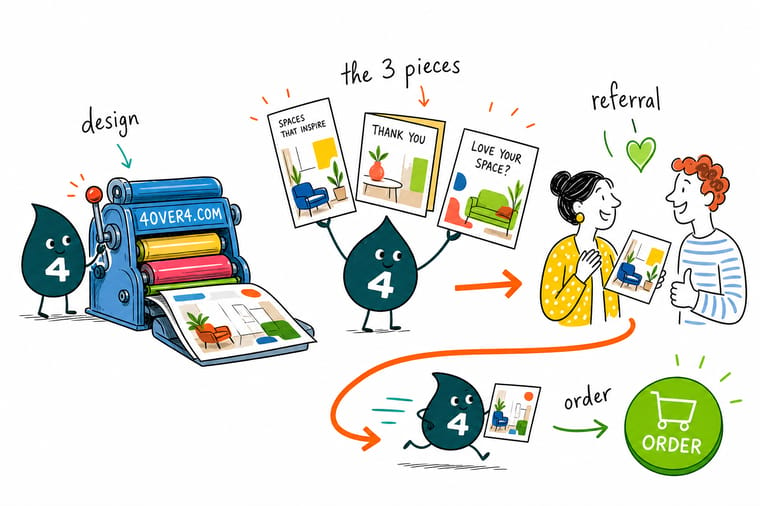
Wally looks at an interior design referral set the way a designer looks at a room, as three elements doing three different jobs. The banner brings strangers in, the card gives your client something to hand over, and the gift makes the thank you memorable enough to repeat out loud. Print them together, in one palette, and the studio that shows up in conversation is unmistakably yours.
Shop the home services collection →See it in use
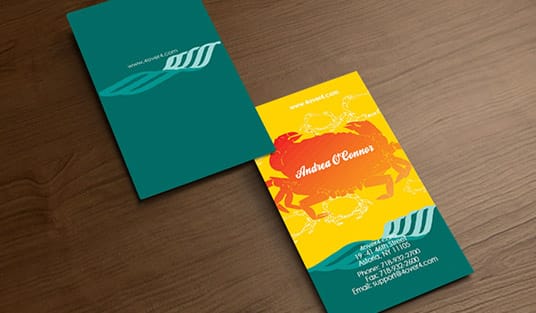
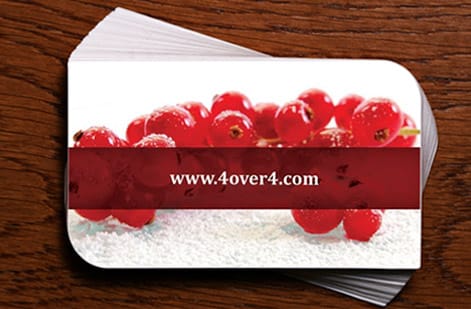
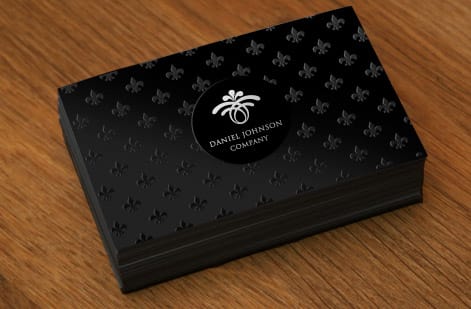
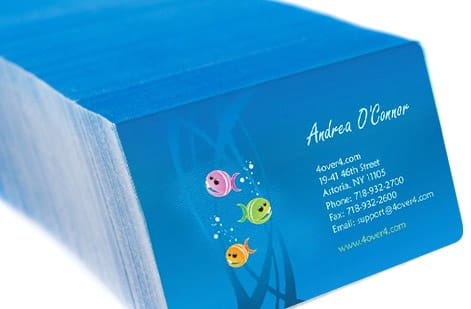
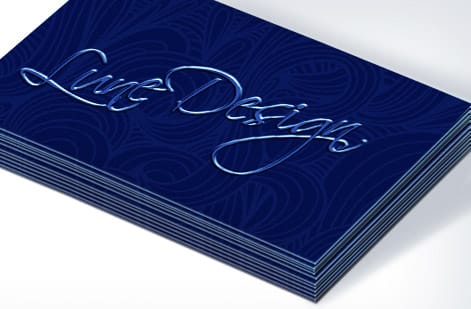
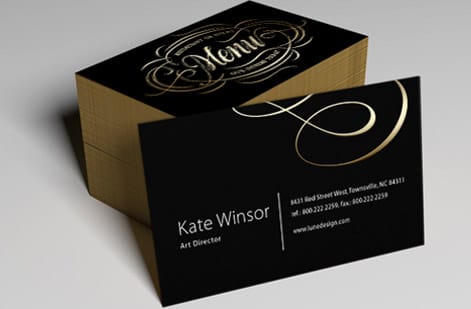
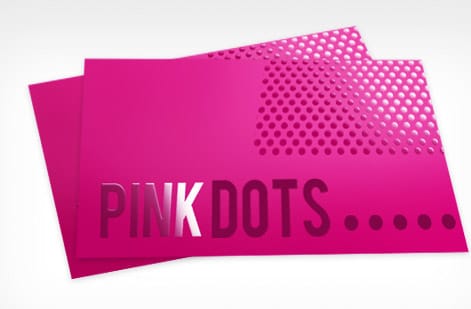
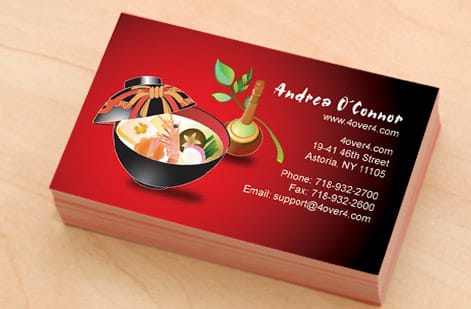
Interior design cards studios have ordered

Explore more
Where to go next


By the numbers
One set, printed to earn the next project
Common Questions
Common questions about the interior design referral set
What is the interior design referral marketing set?
It is a curated group of three printed pieces built around one job: turning finished projects into introductions. You get interior design business cards for the hand-off moment, a wine bottle shaped gift set for the project-close thank you, and two sided blockout banners for the showhouses and model units where new clients first see your work. Each piece is quoted on its own product page.
In what order should I order and use these pieces?
Start with the business cards, because they are the cheapest to reprint and every other piece leans on them. Add the gift set next so your current project list has a proper closing gesture. Order the banner when you have an event, a showhouse slot or a model unit on the calendar, since sizing and copy depend on where it hangs and how far away people read it.
Do I need all three pieces to run a referral program?
You can start with cards alone and still get referrals, but you will be relying on your client to remember your name at the right moment. The gift creates that moment on purpose and the banner brings in people who never met you. Designers who run all three tend to hear from strangers who saw the work in person rather than only from past clients.
How do I keep the card, the gift and the banner looking like one studio?
Repeat three things on every piece. Use one logo lockup at the same proportions, hold to two brand colors plus a neutral, and set every line of type in the same family. Then keep the message consistent: the same tagline on the card, the gift tag and the banner. When someone sees the banner at a showhouse and later holds your card, the match is what makes them trust that you are the same studio.
Why send a wine gift set instead of just following up by email?
An email is read once and archived. A wine bottle shaped gift set sits on a counter, gets opened with guests, and creates a conversation in the exact room you designed. That is the setting where referrals actually happen. Pair it with a card so the answer to the question about who did the room is already within arm reach of the person answering it.
How much does the full interior design referral set cost to print?
There is no set price. Each piece is quoted on its product page and the total depends on quantity, stock and finish. Interior design business cards start at $17.57 for 100 on 14pt gloss cover in 3 business days, the wine bottle shaped wine gift set at $15.00, and two sided blockout banners at $108.75 in 4 business days. Configure the quantity you need on each product page to see current pricing before you commit, and order the three together so they arrive as one set.
Can I add more pieces as the studio grows?
Yes. This set is a starting point, not a ceiling. Designers commonly add project lookbooks, mailers for the neighborhoods they already work in, and signage for job sites. Browse the collection this set belongs to and add pieces as new referral moments appear in your process.
Get Started
Order 100 interior design business cards from $17.57
Order the referral set from one place so the card, the gift and the banner share a palette, a stock family and a delivery date. Start with the cards and build the rest around them.
Legal Disclaimer
Gold Standard guarantees apply to all standard orders placed through 4over4.com. Price match requires verifiable proof of a competitor's published price for an equivalent product with matching specifications and turnaround time. Satisfaction guarantee covers manufacturing defects and print quality issues. Contact support with order number and documentation. On-time delivery rate based on tracked orders 1999 to 2026. Individual results may vary based on shipping carrier performance.
