
What Linen Paper Stock Is and When It Beats a Coated Sheet


Emma is our prepress and print production voice, built from the knowledge of our production team, with over 20 years in printing.
Linen paper is uncoated cover with a weave embossed into the sheet, used for business cards, folders, invitations and reply cards, and you can write on it with a ballpoint, gel or fountain pen. The grain is embossed, not woven, which changes how it takes ink and type, beats gloss and pearl in certain places, and carries its own price.
Linen paper stock is uncoated cover stock with a fine crosshatch grain embossed into its surface by steel rollers after the sheet is made. Nothing about it is woven, and the fiber underneath is ordinary card, so it folds, scores and die cuts normally. Use it when the piece gets held, kept or written on: business cards, presentation folders, invitations and reply cards. Skip it when a photograph has to stay crisp or a design needs high gloss.
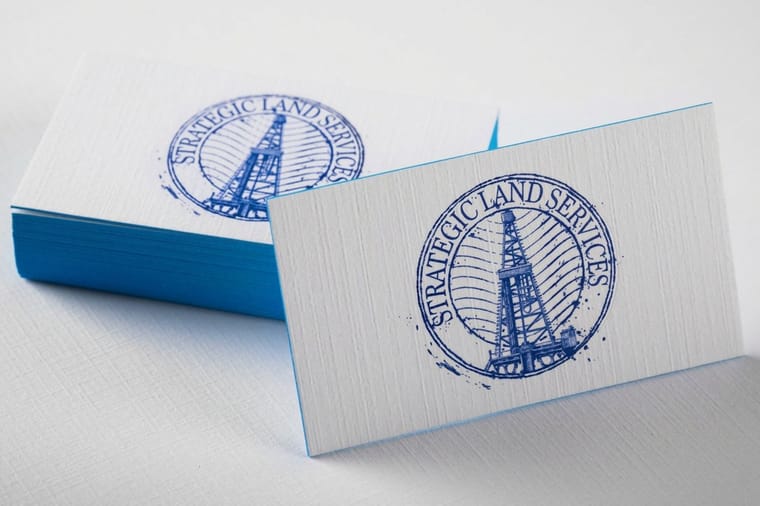
Linen paper, defined
What linen paper is and what it is used for
Linen paper is uncoated cover stock with a fine crosshatch pressed into both faces by steel rollers. It is used where someone holds the piece or writes on it: business cards, presentation folders, folded invitations, wedding RSVP cards and thank you cards. At 4OVER4.COM the linen stocks are 24pt white linen on ultra thick business cards, 14pt white linen on presentation folders, and 14pt white linen or 18pt premium white linen on RSVP and thank you cards, which start at 25 cards with 3 business days of production.
Quick answer
An embossed surface on an ordinary sheet
Linen is a texture, not a material. Steel rollers press a crosshatch into finished uncoated cover, so the grain lives on the surface while the card underneath stays plain enough to fold, score and die cut. Ink sinks into the open fiber instead of sitting on a coating, which deepens type and rules, softens photographs, and leaves a face that a pen can write on. It costs more than a coated sheet and takes longer to produce, and it is the wrong stock the moment a design depends on gloss or fine photographic detail.
What Linen Paper Stock Actually Is
Linen stock begins as plain uncoated cover. Near the end of the paper line it passes between two steel rollers, one of them carved with a fine crosshatch, and the pressure presses that grid permanently into the surface. The fiber never changes. Only the face of the sheet does.
That distinction decides how the stock behaves everywhere else. Underneath the texture it is ordinary card, so it scores, folds and die cuts with no special handling, which is why the same finish shows up as a business card, a folded invitation and a die-cut pocket folder without anyone re-engineering the job. A genuine textile laminate cracks or lifts at a fold. Linen does not.
Two consequences follow from the surface staying open. Ink soaks into the fiber rather than sitting on a sealed film, so color dries back a shade softer than the same file run on gloss. And you can write on it, which sounds minor until a client asks for reply cards.
Our ultra thick linen business cards print on one deliberate stock, a 24pt white linen, in a 2 by 3.5 inch standard, a 1.5 by 3.5 inch slim and a 2.5 inch square, with custom sizing up to 3 by 4 inches. The rest of the textured range sits together in the linen printing collection. For a closer look at the card, read the ultra thick linen business cards story.
How the Weave Gets Into the Sheet
The embossing happens in one pass. One roller carries the raised crosshatch, the second backs it up, and the web runs between them under enough pressure to deform the surface without crushing the caliper out of the sheet. Get that pressure wrong in either direction and the stock fails at its job.
Emboss too deep and a printing plate can only reach the peaks, so the ink film breaks and solids come out patchy. Emboss too shallow and nobody feels anything at all, which defeats the purpose of buying a specialty grade. Every mill ends up working inside the same narrow band, and that is why linen from different suppliers looks broadly alike while soft touch and suede finishes vary wildly.
Both faces of the sheet normally carry the grain, so a card prints and feels the same on the reverse. Caliper is the variable you actually choose. A 14pt linen behaves like any other 14pt cover and suits folders and reply cards, 18pt adds rigidity in the same footprint, and 24pt is where a card stops flexing between finger and thumb. If point sizes and paper weights are still fuzzy, the paper weight guide unpacks points, pounds and gsm properly.
How Linen Feels, and What It Does to Your Artwork
Pick up a linen sheet and your fingertips register the grid before your eyes do. It reads dry and slightly cool, with a grip that gloss never has, and because the surface already carries a pattern it hides scuffs and fingerprints that show instantly on a soft touch or high gloss card.
On press, three things shift. Uncoated fiber absorbs ink, so large solids dry back matte and a touch lighter, and a flat 100 percent black reads closer to deep charcoal than to true black. Build a rich black if the design leans on it. Second, fine detail fights the ridges: keep reversed type at 7 point or above in a weight that is not hairline, avoid rules under half a point, and expect screens under about 10 percent to go patchy. Third, photographs soften. That is a look, and for a law firm or a wedding suite it is the right look, but it is not the stock for a photograph-led promotion.
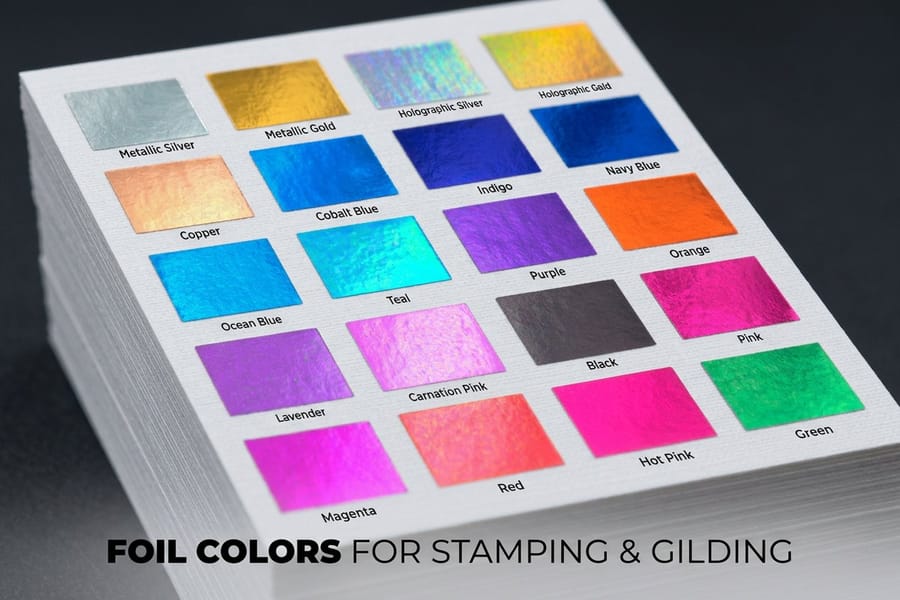
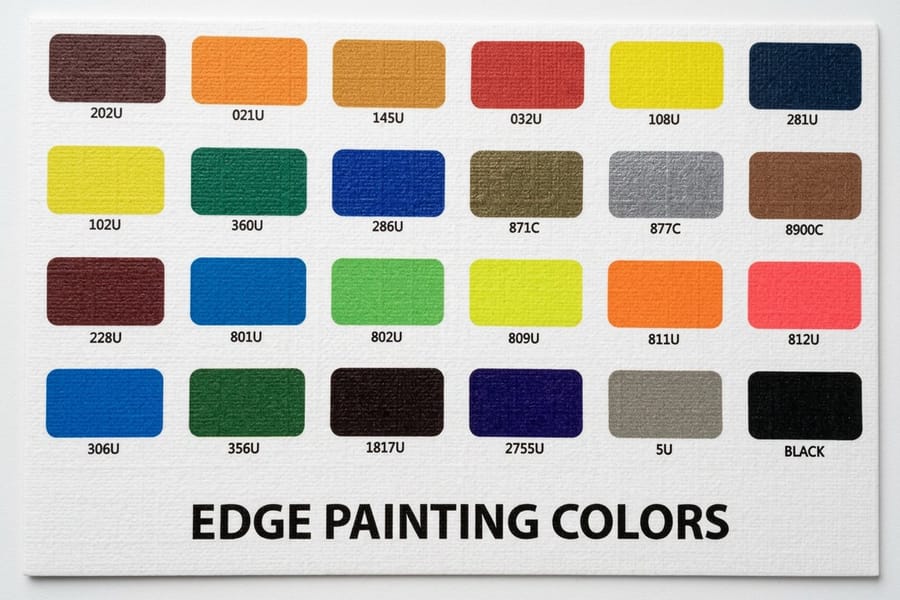
Foil, deboss and edge paint behave interestingly here. A die presses the grain flat wherever it lands, so a debossed block on linen looks like a smooth window cut into the texture, and metallic foil sits crisper than it would on a rough uncoated sheet. Designers use that contrast on purpose. For a wider view of how coatings change a printed surface, the matte versus gloss comparison covers the other side of the same argument.
Where Linen Earns Its Price, and Where It Does Not
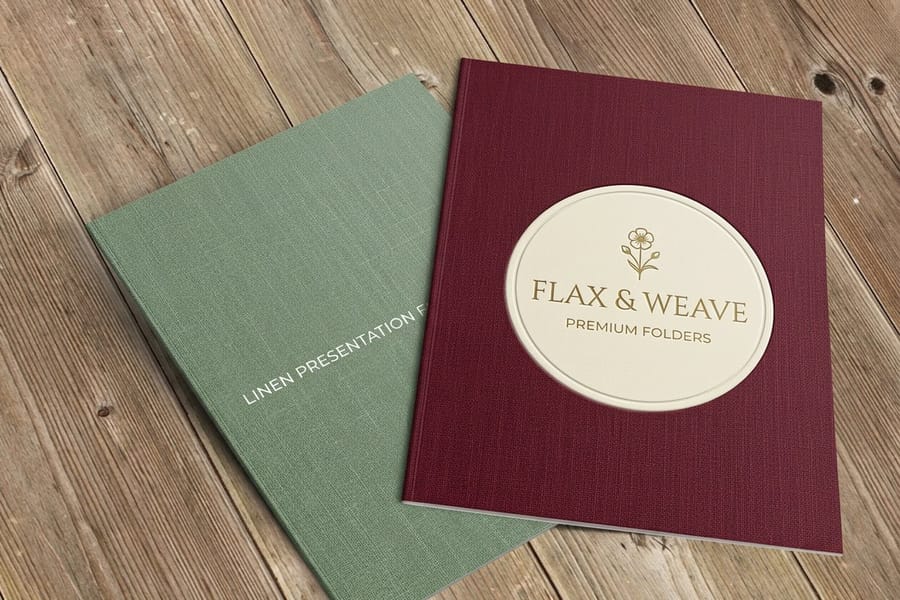
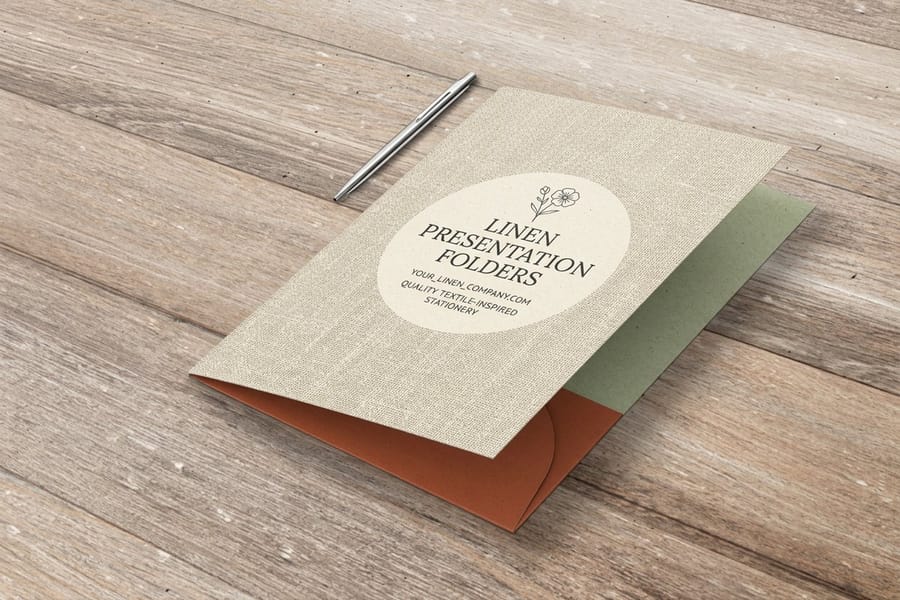
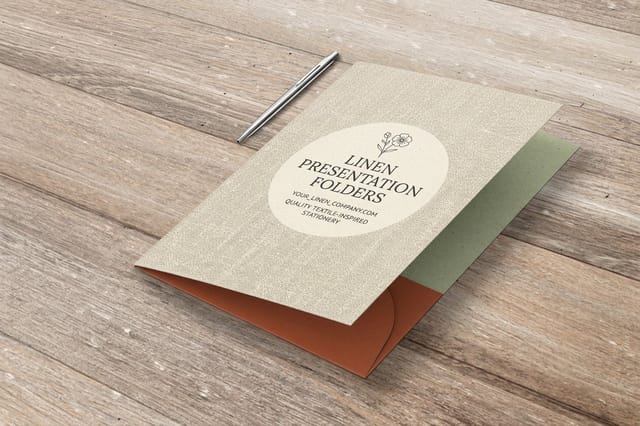
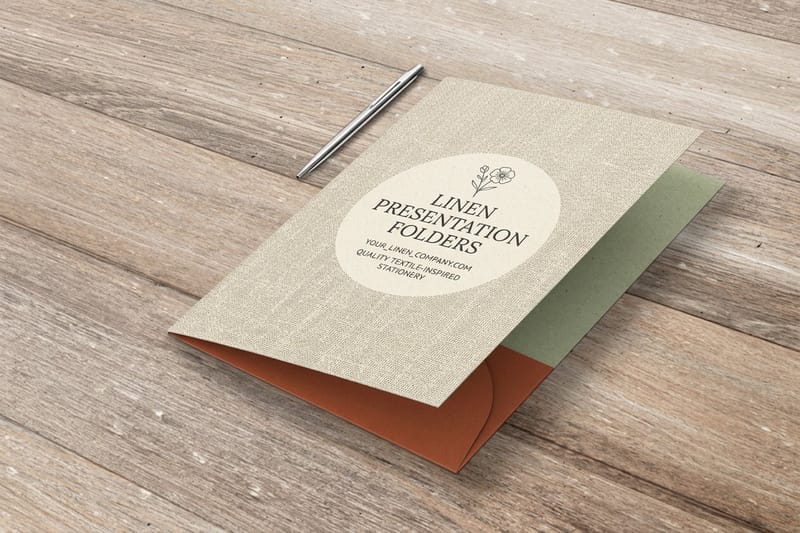
Linen pays off wherever somebody holds the piece, turns it over and keeps it. A business card handed across a table is the clearest case, because the recipient reads it with their fingers for a second before their eyes catch up. Linen presentation folders are the second, since a proposal folder gets carried out of a meeting and opened again later at a desk. Before you lay one out, read how to design custom presentation folders, and watch the linen presentation folders video to see the stock on press.
The other strong case is anything a person writes on. Uncoated linen takes pen ink cleanly, so wedding RSVP cards where a guest fills in a name and a meal choice, flat thank you cards that carry a handwritten line, and appointment cards with a date on the back all belong on this stock rather than a coated one.
| Card you write on | Linen stock | Sizes | Smallest run and production |
|---|---|---|---|
| Wedding RSVP cards | 14pt white linen or 18pt premium white linen | 4.25 by 5.5, 5 by 7 or 6 by 6 in | 25 cards, 3 business days |
| Flat thank you cards | 14pt white linen or 18pt premium white linen | 4.25 by 5.5, 5 by 7 or 6 by 6 in | 25 cards, 3 business days |
| Ultra thick linen business cards | 24pt white linen | 2 by 3.5, 1.5 by 3.5 or 2.5 by 2.5 in | 250 cards, 15 business days |
Keep the write-in area light in the file, with a pale rule or no ink at all, so the pen line stands out. RSVP and thank you cards can add matching white wove envelopes.
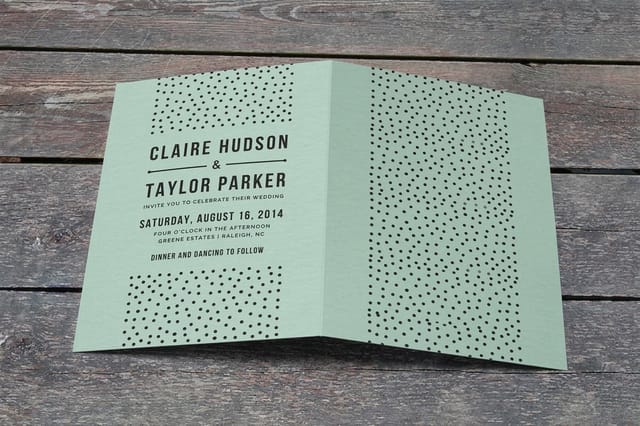
Formal work leans the same way. A folded invitation in white or cream linen reads considered before anyone opens it.
Skip it in three situations. Photograph-led marketing loses too much crispness. High-volume mail that gets sorted and binned in four seconds never gets touched slowly enough for texture to register, so the money is better spent on the offer. And any design that depends on a wet, saturated gloss finish is fighting the stock rather than using it. In those cases start from business card printing or the premium printing collection and pick a coated or laminated surface instead.
Linen Against Silk, Suede, Kraft and Metallic Pearl
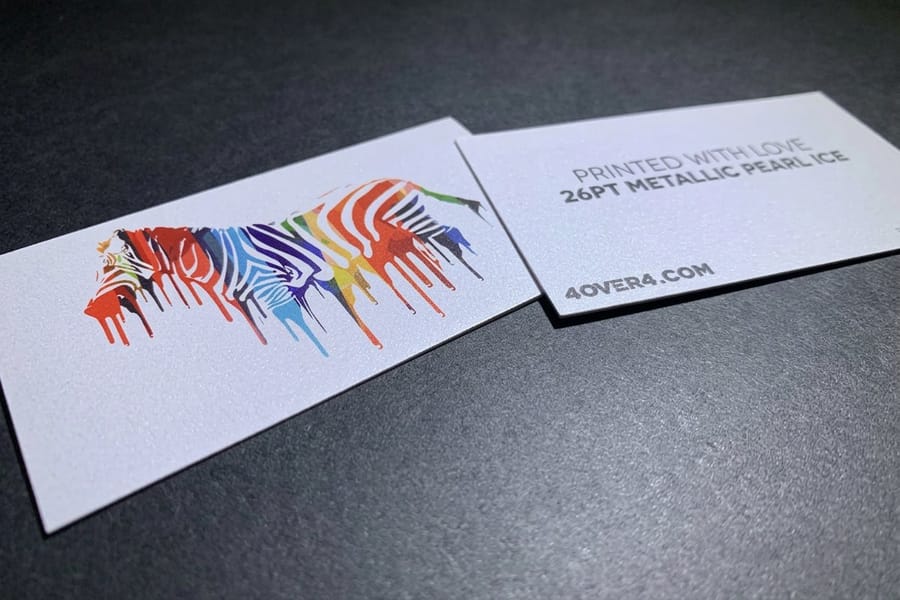
Every premium stock buys you attention in a different currency. Texture, softness, warmth and shimmer are not interchangeable, and the fastest way to choose is to decide what the artwork needs rather than what sounds most expensive. Thickness moves with the product too: linen runs 24pt on the ultra thick business card and 14pt on folders and reply cards.
| Stock | Surface | What it does to artwork | Where it wins |
|---|---|---|---|
| Linen | Uncoated, crosshatch embossed into both faces. | Strengthens type and rules, softens photos, takes pen ink. | Formal stationery, folders, invitations, reply cards. |
| Silk laminated | Sealed film, smooth with a low sheen. | Holds fine detail, keeps color saturated, refuses pen ink. | Photo-led cards that live in a pocket. From $74.53. |
| Suede | Soft touch laminate, velvet feel, no pattern. | Deepens matte, mutes color slightly, shows finger marks. | Dark designs wanting hand feel without grain. From $87.15. |
| Kraft | Uncoated recycled brown fiber, no embossing. | Shifts every color warm; anything left white prints as brown. | Rustic, natural and food branding. From $24.75. |
| Metallic pearl | Coated shimmer substrate under the ink. | Light bounces up through the ink; whites go pearlescent. | Shimmer at a fraction of foil cost. From $39.11. |
Read the third column before the fourth. If the artwork is a logo, a name and a rule, linen makes all three look heavier and more deliberate. If the artwork is a photograph or a tight illustration, silk lamination protects what linen would soften. Suede and linen are often shortlisted together and they solve opposite problems: suede is smooth and quiet, linen is patterned and formal. Our business card stock guide lays the full lineup out if you want the rest of the options in one list.
Ordering Linen Printing Without Surprises
Two numbers catch people out. The first is the calendar: 24pt linen business cards run 15 business days in standard production, while linen folders go out on a 7 business day standard with rush speeds down to 2 days. The second is quantity pricing. Linen cards start at $377.68 for 250, about $1.51 each, and the per-card cost keeps falling toward $0.50 as the run climbs to 2,000, so a single box for a launch is the most expensive way to buy them.
| Product | Linen option | Format | Starting price |
|---|---|---|---|
| Ultra thick linen business cards | 24pt white linen, single stock. | 2 x 3.5 in, 1.5 x 3.5 in slim, 2.5 in square, custom to 3 x 4 in. | $377.68 per 250 |
| Linen presentation folders | 14pt white linen, one of four covers. | 9 x 12 in or 9 x 14.5 in, two interior pockets. | $844.54 per 250 |
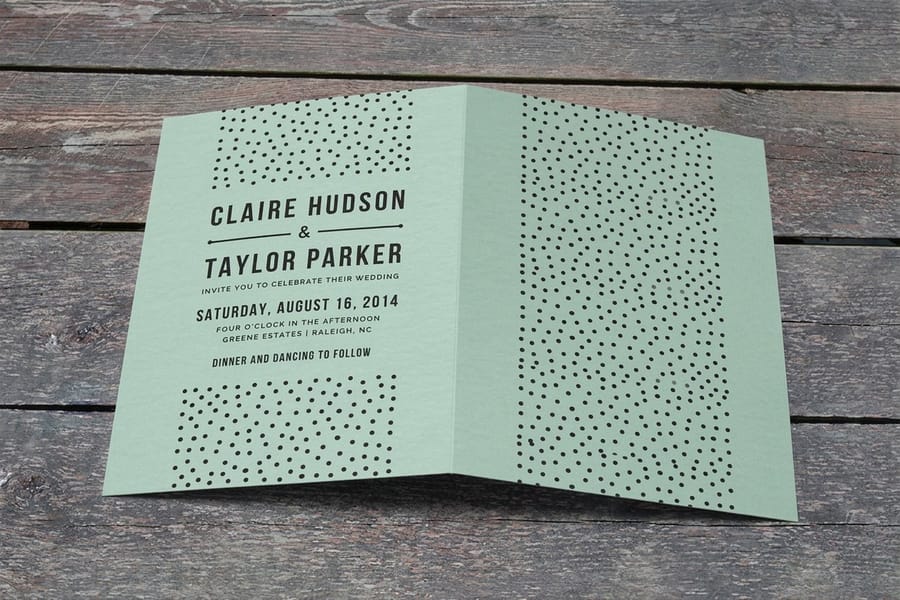
| Folded invitations | White and cream linen among the stock list. | Folded, full color, coating optional. | From $38.22 |
| Wedding RSVP cards | White linen, chosen for pen ink. | 4.25 x 5.5 in up to a 6 in square. | From $19.77 |
| Flat thank you cards | 14pt or 18pt white linen. | Flat card, optional rounded corners. | From $19.77 |
Build the file the way you would for any uncoated job: fonts outlined, artwork at full size, and a rich black rather than a flat 100 percent black behind anything that needs depth. Start from a correctly sized layout in the blank template library, and take the Free Online Proof on the 24pt card, because a fifteen day production slot is a long time to wait for a file you were not sure about. If you are still weighing linen against the coated options, read the stocks explained guide before you commit the run.
Wally explains linen stock
Two rollers, one crosshatch, and a card you feel first
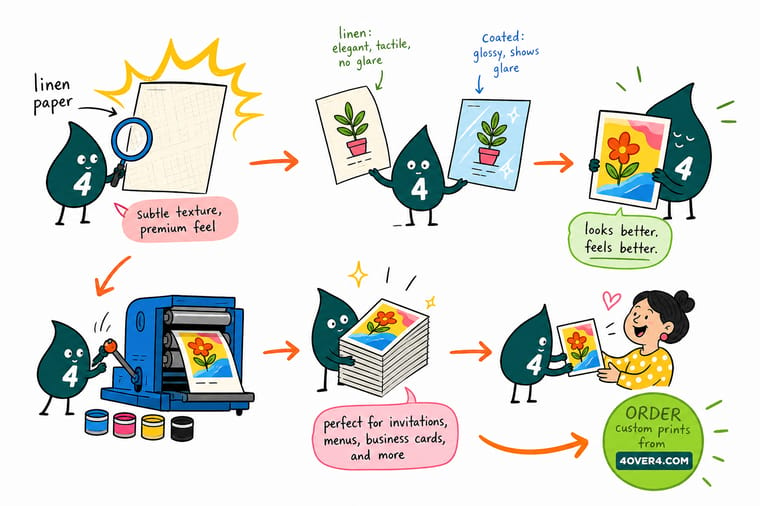
Wally takes a plain uncoated sheet and runs it between steel rollers carved with a fine grid. Out comes linen: the same card underneath, with a woven texture pressed into both faces. Ink sinks into the open fiber, so his headings look heavier and a pen writes on the back without smearing. Hand him a logo and a name and it comes out beautifully. Hand him a photograph and the ridges take the edge off it.
Order ultra thick linen business cards →
Specs and pricing
Linen stocks, sizes, and starting prices
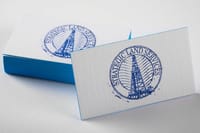
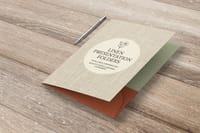
Linen presentation folders run 250 for $844.54, while 24pt White Linen business cards run 250 for $377.68 with a 15 business day turnaround.

Print it
Print on a stock people notice with their hands
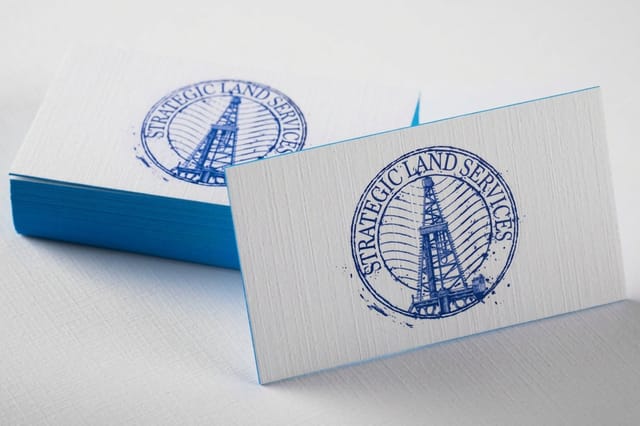
Ultra thick linen cards can add foil stamping, debossing, edge painting and rounded corners, with 15 business days of production; linen folders take 7, with optional card slits on either pocket or both.
Paper stock guides
Where to go next

Linen from our Queens plant
Linen cards, folders and invitations
Common Questions
Your linen paper questions, answered
Is linen paper made from linen fabric?
No. Linen paper stock is wood-pulp cover stock that has been run between steel rollers carved with a fine crosshatch, so the grid you feel is embossed into the surface rather than woven from flax. The name describes the look. A true textile laminate behaves differently at a fold and costs several times more, which is one reason almost nobody uses it for stationery.
Can you write on linen cards with a pen?
Yes, and that is one of the strongest practical reasons to pick it. Linen has no coating sealing the fiber, so ballpoint, gel and fountain ink all soak in and dry instead of beading on the surface the way they do on gloss or silk lamination. Wedding RSVP cards, thank you notes and any card where somebody writes a name or an appointment time on the back all benefit. Pencil takes to it too.
Does linen stock work for full color photographs?
It works, but you give something up. The embossed ridges scatter light and break the smoothness of a continuous-tone image, so fine detail reads softer and dark areas dry back less dense than the same file printed on a coated sheet. A portrait or a food shot will still look good, just gentler. If the photograph is the whole point of the piece, silk laminated stock holds it better and linen is the wrong choice.
Can linen be foil stamped, debossed or edge painted?
All three. Foil and deboss dies press the grain flat wherever they land, which designers use deliberately: a debossed panel on linen reads as a smooth window cut into the texture, and foil sits noticeably crisper than it would on a rough uncoated sheet. Our 24pt linen business cards take metallic foil, a debossed impression, and painted edges on one or both sides.
What thicknesses does linen come in?
At 4OVER4.COM the linen options run 14pt on the presentation folder cover and on cards like flat thank you cards, 18pt where you want more rigidity in the same format, and a 24pt white linen on the ultra thick business card. The 24pt is roughly the point where a card stops flexing between finger and thumb, which is most of what people mean when they call a card substantial.
Why do linen business cards cost so much more than standard ones?
Three things stack up. The stock itself is a specialty grade that mills run in smaller volumes, the 24pt caliper uses far more fiber per card than a 14pt sheet, and the job takes a longer production slot at 15 business days standard rather than the fast lane a 14pt gloss card sits in. That is how you get from $17.57 per 250 standard business cards to $377.68 per 250 in 24pt linen. Bigger runs close the gap, since the per-card price slides from about $1.51 toward $0.50 as the quantity climbs to 2,000.
Get Started
24pt White Linen cards run 250 for $377.68
Pick a linen caliper, add foil, a deboss or painted edges, and we print cards and folders that get read with the fingers before the eyes catch up.
Legal Disclaimer
Gold Standard guarantees apply to all standard orders placed through 4over4.com. Price match requires verifiable proof of a competitor's published price for an equivalent product with matching specifications and turnaround time. Satisfaction guarantee covers manufacturing defects and print quality issues. Contact support with order number and documentation.
