
What Is Company Letterhead and How to Make It Work for Your Brand


Logo, legal name, contact block, and a clean body area on a sheet of paper people can feel. This guide covers the full anatomy of company letterhead, the sizes and stocks that hold up in a real office, the design rules that keep it readable, and what printing it actually costs.
Company letterhead is a sheet of business stationery pre printed with your identity, normally 8.5 x 11 inches, carrying a logo, the legal business name, and a contact block in fixed positions with the rest of the page left blank for the letter itself. It is used for correspondence, proposals, quotes, invoices, and contracts. Most businesses print it on 70 lb to 80 lb uncoated text stock, and keep a matching digital template for documents sent as PDF.
Start here
Company letterhead in one paragraph
Company letterhead is business stationery pre printed with your organization identity, so that every letter, quote, invoice, and contract leaves your office already branded. The fixed elements are a logo, the full legal business name, and a contact block holding address, phone, email, and website. Everything else stays deliberately empty so the letter has room. The standard sheet is 8.5 x 11 inches on uncoated text weight paper, and a matching digital template keeps emailed documents looking identical to printed ones.
Why a printed letter still decides what people think of your company
A client opens two proposals on the same morning. One is a plain white page with a name typed at the top. The other lands on a properly weighted sheet with a crisp logo, the legal business name, and a contact block that has clearly been designed rather than assembled. Before a single sentence is read, one of those companies already looks like the safer choice.
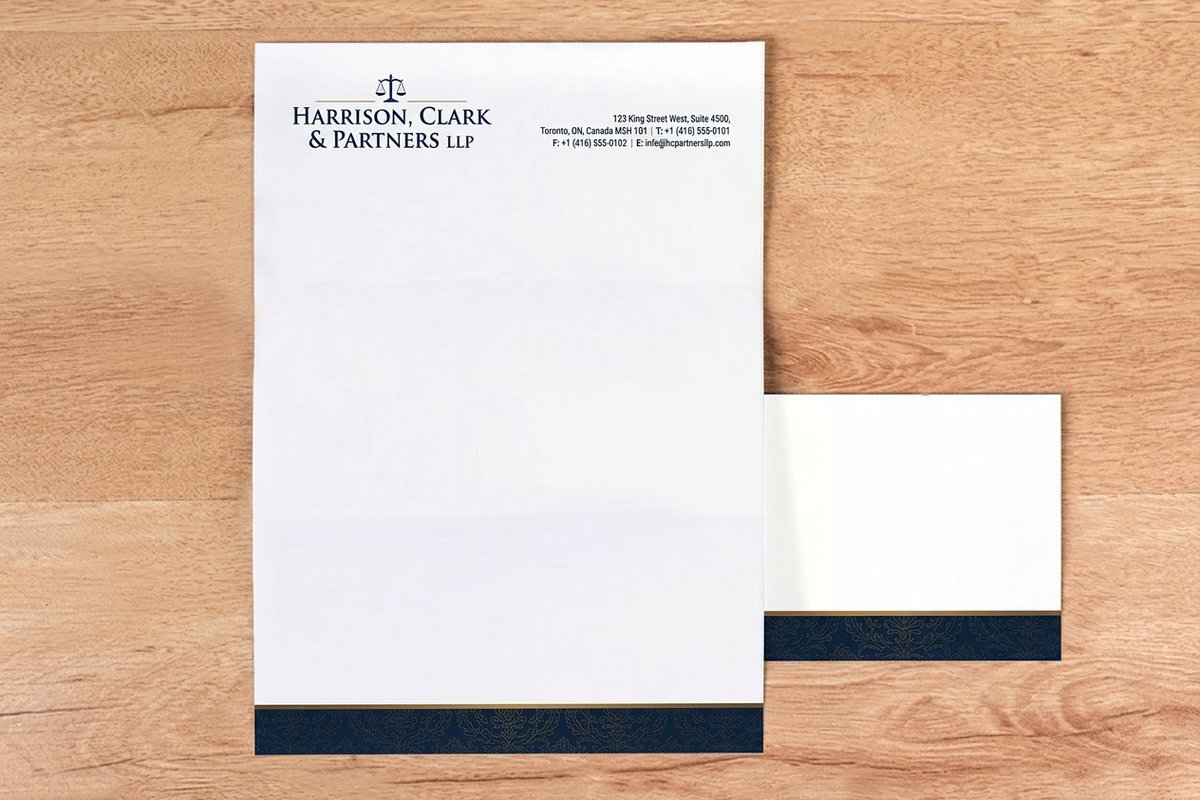
That is the entire argument for letterhead. It is the cheapest credibility signal a business can buy, and it works on the documents that carry the most weight: engagement letters, quotes, contracts, collection notices, and formal thanks. A law firm letterhead sheet does not make the argument in the letter stronger, but it removes every reason to doubt who sent it.
It also removes friction. Once the sheet exists, nobody in the office has to rebuild a header, hunt for the right logo file, or guess at the phone number format. They type the letter and print it. If you are already thinking about how the rest of the stationery set holds together, the company business cards branding guide covers the piece that travels in the same envelope.
What is company letterhead, precisely
Company letterhead is a sheet of business stationery, almost always 8.5 x 11 inches in the United States, that arrives pre printed with your organization identity. The printed portion never changes. The logo, the legal business name, the street address, the phone number, the email, and the website live in fixed positions. Everything below them is left blank so a letter, quote, or agreement can be typed or printed into it.
The word covers three related things that people often confuse. There is the physical printed sheet you feed through an office printer. There is the digital template, usually a Word or Google Docs file, that reproduces the same header on screen for emailed PDFs. And there is the design itself, the artwork that both of those are built from. A complete letterhead program has all three, built from one set of files so the printed and digital versions never drift apart.
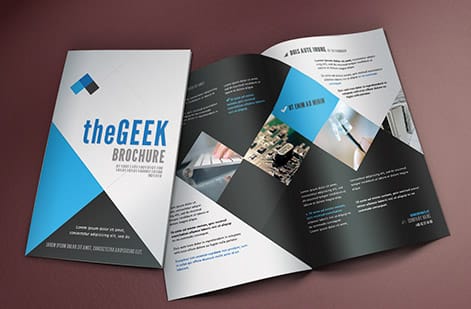
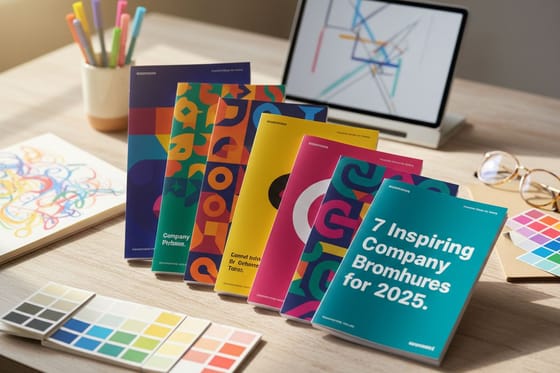
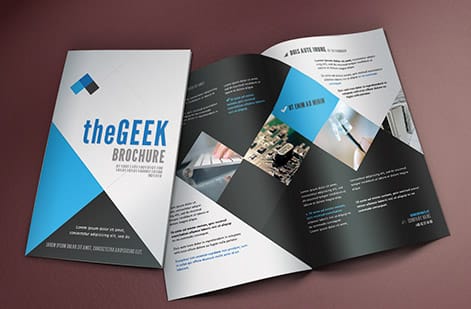
It is not the same as a flyer, a brochure, or a sales sheet. Those are designed to be looked at. Letterhead is designed to be written on, which is why restraint matters more here than anywhere else in your printed marketing. Compare it to the layout freedom in these company brochure examples and the difference in intent is immediate.
The anatomy of a letterhead that actually works

Seven parts do all the work. The logo anchors the top, usually left or centered, sized so it reads without dominating. The legal business name appears in full at least once, including the entity suffix, because contracts and invoices printed on this sheet may need it. The contact block gathers address, phone, email, and website in one place instead of scattering them.
Then comes the part most designs get wrong. The body area must be a genuinely empty rectangle. No watermarks that fight with paragraph text, no background tints that make a scanned copy look grey, no side rail that pushes the typing area off center. Around it, margins of at least half an inch on all four sides keep your words clear of the trim and clear of the unprintable edge on office laser printers.
The footer is where you park what does not need to be at the top: a tagline, license or registration numbers, or social handles. Keep it to a single quiet line. Finally the paper stock itself is a design element, not a shipping detail. A person judges the weight of a sheet in the first second of holding it, long before reading the footer. If the logo at the top is still unsettled, custom logo design for your company brand is the step that comes before this one.
Sizes, stocks, and finishes for company letterhead
Size is close to settled. In the United States, 8.5 x 11 inches is the standard because it fits every file, every #10 envelope after a standard trifold, and every office printer tray without a settings change. Deviating from it creates friction on every single letter you send, which is a high price for a small design gesture.
Stock is where the real choice happens. Uncoated text weight paper in the 70 lb to 80 lb range is the workhorse: it feels substantial, takes laser toner cleanly, and accepts a pen signature without beading. Lighter sheets read as disposable. Heavier stocks feel excellent in the hand but can jam or curl in some office printers, so reserve them for letterhead you print in house at the shop rather than run through the office machine daily.
Finishes should stay subtle. A smooth uncoated surface is neutral and reliable. A light textured or linen surface adds a tactile note that suits legal, financial, and ceremonial correspondence. Heavy gloss coating is the one to avoid outright, because toner sits badly on it and nobody can write on it. If sustainability is part of the brief, recycled and responsibly sourced sheets are widely available, and green printing explains what those certifications actually mean.
Design rules that keep letterhead readable for years
Set the header to occupy no more than the top fifth of the page. Anything larger starts competing with the letter and makes a two paragraph note look like an advertisement. Keep the type at 9 to 11 points in the contact block, which is small enough to stay out of the way and large enough to be read by someone who needs to call you back.
Use two typefaces at most, and ideally the same ones already on your business cards and envelopes. Colors should come from your brand palette and be specified in CMYK values for print, not sampled from a screen. A logo that looks vivid on a monitor can print noticeably duller, so approve the color on a proof rather than on a display.
Resist the urge to fill space. The most common letterhead failure is adding a service list, a second phone number, three social icons, and a slogan, then discovering that a short letter now looks cluttered. Print one draft, type a real four line message into it, and read it at arm length. Whatever competes with those four lines is what you remove.
Printed sheets and digital templates, kept in sync
Most companies now send more letters as PDF attachments than as paper. That does not make printed letterhead redundant, it makes matching the two essential. Build the printed sheet first, since it has the tighter constraints, then rebuild the same header inside a Word or Google Docs template with identical positioning, sizes, and colors.
Keep the digital template locked where it counts. Put the header in the document header region so it repeats on page two and cannot be dragged out of place by whoever is typing. Embed the logo at full print resolution rather than pasting a screenshot, and set the page margins to match the printed sheet exactly so a document composed on screen still fits when it is printed onto the real stationery.
Finally, decide who owns the master files and where they live. Letterhead drifts when three people keep three slightly different versions on three desktops. One shared source, one export for print, one export for the office, reviewed whenever the address or phone number changes.
What company letterhead costs and how to order it
Letterhead pricing is driven by five things: quantity, paper stock, whether you print one side or both, how much ink coverage the design carries, and how fast you need it. Quantity is the biggest lever by far, because press setup is a fixed cost spread across the run. Doubling the order rarely doubles the price, which is why most businesses order a year of stock at a time rather than a month.
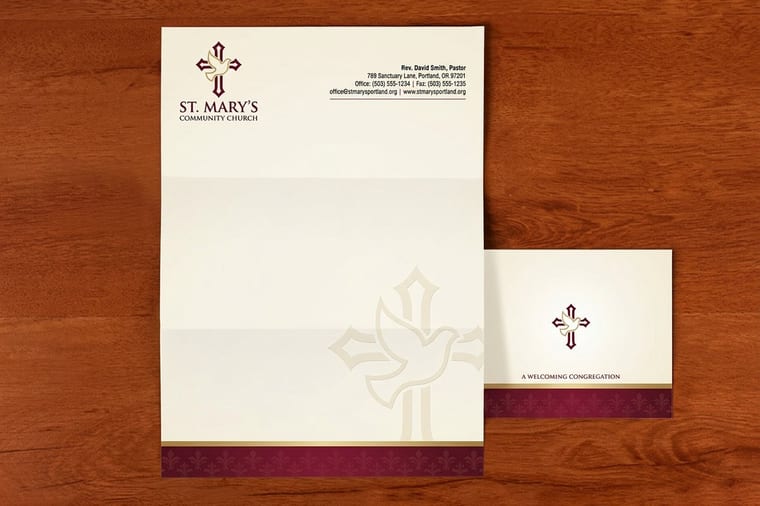
At 4OVER4.COM, custom letterhead starts at $99.95, and both church letterhead and law firm letterhead begin at that same price. The live price table on each product page recalculates instantly when you change stock, quantity, or turnaround, so you are never estimating. If you also send physical mailings at volume, the guide on how to choose a direct mail company covers what to check before handing over a list, and larger format signage like 2 sided blockout banners from $108.75 keeps the same identity working in the room where you meet clients. Order free paper samples first if you want to feel the stock before you commit a full run.
Wally explains company letterhead
A blank page with your name on it, done properly
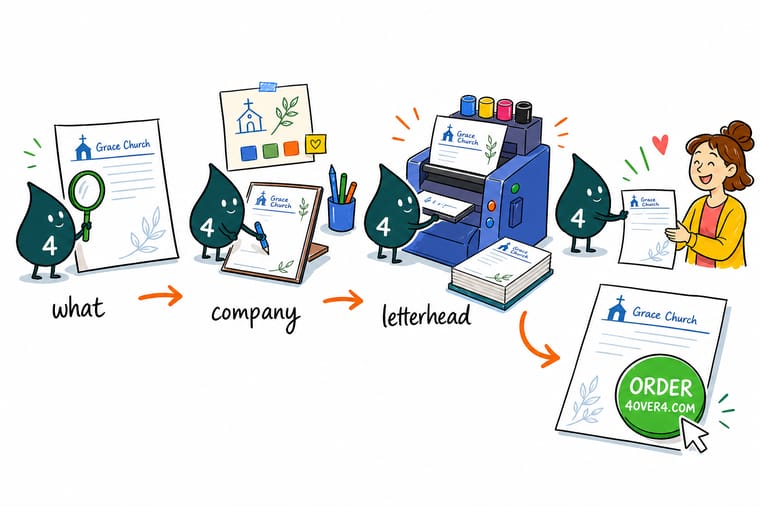
Wally checks three things before any letterhead goes to press. Is the header small enough that a short letter still looks like a letter. Are the margins wide enough that an office printer cannot clip a word. Does the paper feel like the kind of company you say you are. Get those three right and the design almost takes care of itself, so pick your stock and let us print the run.
Order custom letterhead →Infographic
The 7 parts of a company letterhead
One frame, seven parts. Keep it beside you while you lay out the sheet, and check each element off before the file goes to press.
The seven parts work as a set. Change the paper and the margins have to be rechecked, change the logo and the header height shifts, so review the whole sheet whenever one piece moves.
Specs and pricing
Letterhead specs and live pricing
When the layout is settled, the paper and the quantity set the price. Change the stock, the run size, or the turnaround below and the numbers update in real time.
| Quantity | Price Per Unit | Total |
|---|---|---|
| 50 | $2.00 | $99.95 |
| 100 | $1.05 | $105.44 |
| 200 | 58.2¢ | $116.43 |
| 300 | 43.6¢ | $130.72 |
| 400 | 34.9¢ | $139.49 |
| 500 | 29.4¢ | $147.18 |
| 600 | 25.4¢ | $152.68 |
| 700 | 22.6¢ | $158.17 |
Print it
Company stationery printed at 4OVER4
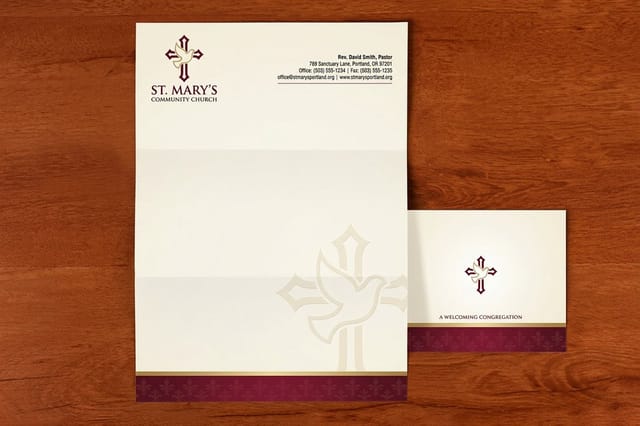
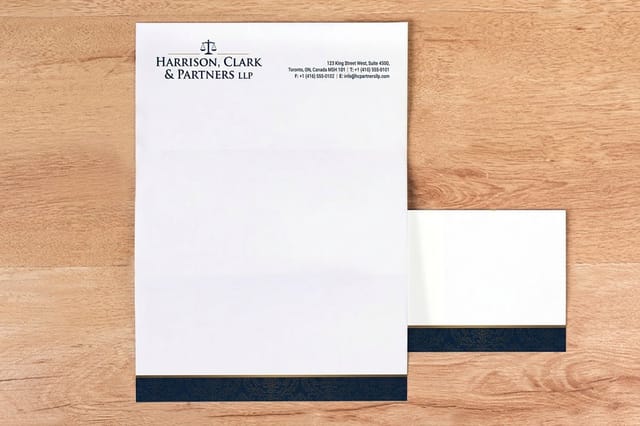
See it in use
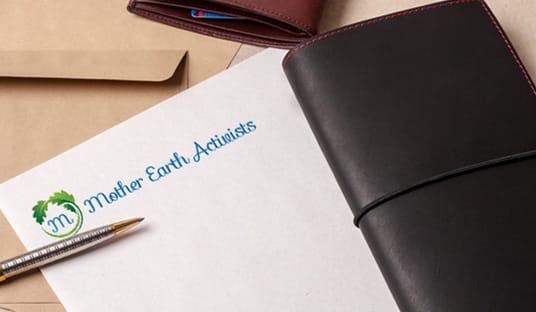
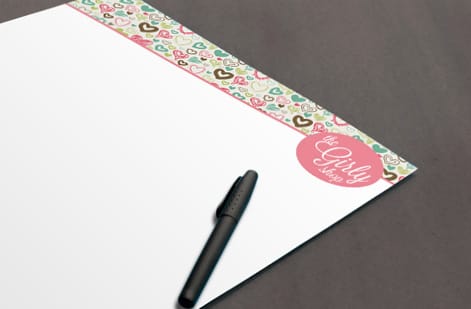
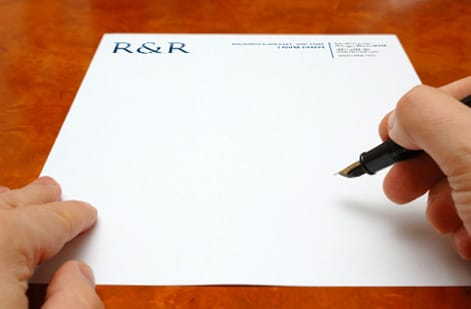
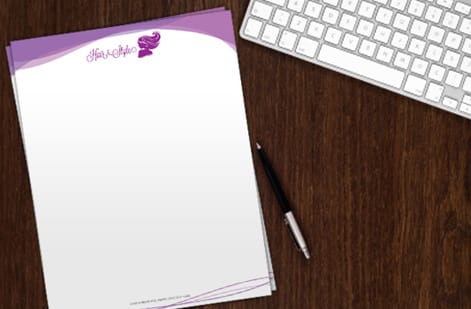
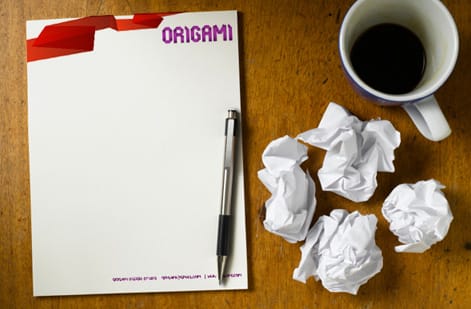
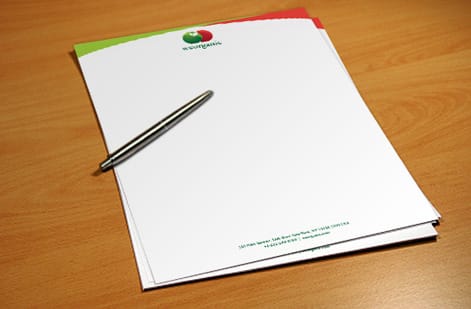
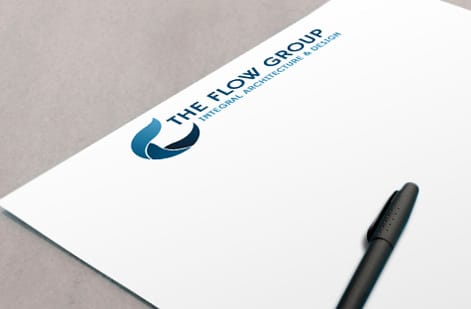
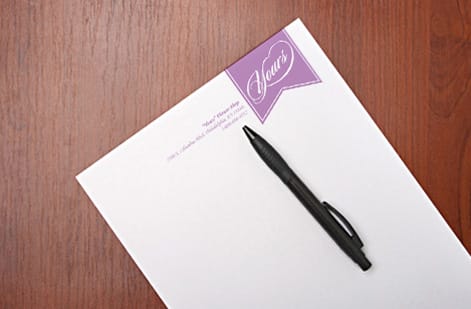
Real letterhead work, printed in house
Explore more
Where to go next
By the numbers
Printing you can count on at 4OVER4.COM
Common Questions
Common questions about company letterhead
What is company letterhead?
Company letterhead is a sheet of business stationery pre printed with your organization identity: logo, legal business name, address, phone, email, and website. It is used for letters, proposals, quotes, invoices, contracts, and any correspondence that should look official. The printed elements stay fixed while the letter body changes, so every document you send carries the same branding without anyone having to rebuild it.
How do I choose the right company letterhead?
Start with how the sheet gets used. If it runs through an office laser printer or copier every day, choose an uncoated text weight stock that accepts toner cleanly. If it is reserved for contracts and client facing proposals, move up in weight or add a subtle finish. Then match the design to your existing business cards and envelopes so the whole stationery set reads as one system.
What does company letterhead cost and how are prices set?
Price is driven by quantity, paper stock, ink coverage, one sided or two sided printing, and turnaround. Larger runs lower the unit cost sharply because setup is spread across more sheets. Custom letterhead at 4OVER4.COM starts at $99.95, and the live price table on each product page updates the moment you change size, stock, quantity, or production speed, so there is nothing to estimate.
What sizes, stocks, and finishes are available for letterhead?
The standard is 8.5 x 11 inches in the United States, which fits every filing system, envelope, and office printer. Uncoated text weight papers in the 70 lb to 80 lb range are the workhorse because they feel substantial and still take toner and pen ink. Heavier stocks, recycled sheets, and specialty finishes are available when the letterhead is meant for presentation rather than daily volume.
How long does company letterhead take to print and ship?
Production is measured in business days after your artwork passes prepress, not in calendar days. Standard turnaround suits regular restocks, while faster options exist when a proposal deadline is in the way. Shipping time is added on top and depends on your address, so order the transit method that gets the box on your desk before the sheets are actually needed.
Do I need matching envelopes and business cards?
They are not required, but a letter that arrives in a plain envelope and is signed off with an unrelated business card loses most of the credibility the letterhead just built. Print the set together from the same artwork so the logo size, the color values, and the typeface stay identical across all three pieces.
Can I print letterhead on both sides?
Yes, and it is common for firms that put terms, disclaimers, or a service list on the back. Just remember that anything printed on the reverse shows through slightly on lighter stocks and can collide with double sided office printing. If the back matters, move up in paper weight and keep the reverse design light.
Get Started
Ready to put your company on paper?
Upload your artwork or start from a clean layout, choose the stock that suits how the sheet gets used, and let 4OVER4.COM print a run that lasts you the year.
Legal Disclaimer
Gold Standard guarantees apply to all standard orders placed through 4over4.com. Price match requires verifiable proof of a competitor's published price for an equivalent product with matching specifications and turnaround time. Satisfaction guarantee covers manufacturing defects and print quality issues. Contact support with order number and documentation. On-time delivery rate based on tracked orders 1999 to 2026. Individual results may vary based on shipping carrier performance.
