
Vinyl Sign Printing That Holds Up Indoors and Out


Vinyl covers most of signage. Vinyl sign printing splits four ways: adhesive film versus banners, gloss versus matte, when to laminate, and how durability is set indoors and out.
Vinyl sign printing puts full-color artwork onto vinyl film or banner stock and finishes it for display. Use adhesive vinyl for walls, windows, floors, and vehicles, or banner vinyl for hanging signage. Choose gloss for vivid color or matte for glare-free readability, and add a clear laminate to make an outdoor sign last three to five years.
Start here
Adhesive film against a hemmed banner
Vinyl sign printing prints full-color artwork onto vinyl and finishes it for display. Adhesive film sticks to walls, windows, and vehicles, while banner vinyl hangs from grommets. Choose gloss for vivid color or matte for glare-free text, and add a clear laminate to push outdoor life to three to five years. The layer diagram below shows exactly how a printed vinyl sign is built.
What vinyl sign printing actually is
Vinyl sign printing means printing your artwork in full color onto vinyl and finishing it for display. The trade calls the finished piece a vinyl sign when it carries a message and vinyl graphics when it carries artwork, but both come off the same press on the same material, so printed vinyl graphics and vinyl signs are one family of product rather than two. Vinyl earned its place as the default signage material because it does everything: it is flexible enough to wrap a curve, sticky enough to hold to glass or a wall, and it prints color that stays vivid. From a small window decal to a wall-sized graphic, the same material family covers it.
There are two broad types. Thin adhesive film sticks to a surface, which is what you want for wall graphics, window decals, floor stickers, and vehicle lettering. Heavier banner vinyl hangs from grommets, which is what you want for events, storefronts, and anywhere a sign spans a space. Everything in the first group is what people mean by vinyl graphics or decals, and everything in the second group is a banner. The layer diagram above shows how a printed adhesive sign is built, from the protective laminate down to the release liner.
This guide explains the material choices in plain terms: what vinyl graphics are and how cut vinyl differs from printed vinyl, adhesive versus banner vinyl, gloss versus matte, when to laminate, and how to apply it. If you want to start designing right away, our online design tool sets up a clean, print-ready file, and the full vinyl printing collection shows the range. The hero of the lineup is our gloss vinyl graphics, with matte vinyl graphics for walls and interiors where glare is the enemy.
Vinyl graphics and decals: cut vinyl versus printed vinyl
Vinyl graphics are artwork printed in full color onto a thin adhesive vinyl film, cut to shape, and stuck onto a surface. That is the whole definition. A wall graphic, a window decal, a floor sticker, and the lettering down the side of a van are all vinyl graphics: the same 2 to 4 mil film off the same press, just a different surface underneath. The only real cousin is banner vinyl, which hangs from grommets instead of sticking to anything.
Two different things get called vinyl, and mixing them up is what makes a quote look wrong. Cut vinyl carries no ink at all: a plotter cuts letters and shapes out of a sheet of solid colored film, the waste is weeded away, and the color runs right through the material. That means one flat color per layer, which suits door lettering, opening hours, and a two color logo. Printed vinyl is white film that runs through the press in full CMYK, so photographs, gradients, and exact brand color are all on the table, with a clear overlaminate protecting the ink afterward. If the art has a photo, a gradient, or more than two colors in it, it is a printed job, not a cut one.
Three graphics get ordered more than any others, and each one wants something slightly different. Vehicle graphics use the thinnest, most conformable film so it can be squeegeed over curves and rivets without lifting, and they should always be laminated because they live in sun, rain, and the car wash. Wall graphics are usually matte, so the surface reads flat like paint and text stays legible under downlights, and they need a smooth, fully cured painted wall to grip. Window graphics can face out at the street or be printed to read correctly from inside the glass, and a removable adhesive is worth specifying so a seasonal promotion lifts off clean with no residue on the pane.
| Graphic type | Vinyl used | Removable | Typical life | Surface |
|---|---|---|---|---|
| Wall graphic | 2 to 4 mil adhesive film, matte | Removable | A few months to several years indoors | Smooth painted drywall and panels |
| Window decal | 2 to 4 mil adhesive film, gloss or matte | Removable | A few months plain, 3 to 5 years laminated outside | Glass, read from either side |
| Floor sticker | 4 mil adhesive film under a scuff laminate | Removable | A few months of foot traffic | Sealed concrete and tile |
| Vehicle lettering and graphics | 2 mil conformable adhesive film | Permanent | 3 to 5 years laminated | Painted panels, curves, rivets |
| Hanging banner graphic | 13 oz banner vinyl, hemmed and grommeted | Not adhesive, it hangs | Several outdoor seasons | Fences, frames, storefronts |
Ordering turns on the finish. Gloss vinyl graphics are the pick for window graphics, vehicle graphics, and anything where the color has to punch from across a parking lot, while matte vinyl graphics are the pick for wall graphics and interiors where glare would wash the message out. For a piece that has to span a space rather than sit on a surface, order vinyl banners instead, and the full lineup sits in the vinyl printing collection. Before you squeegee anything down, read how to apply a vinyl decal, because most graphics that fail were applied badly, not printed badly.
Adhesive vinyl versus banner vinyl

The biggest material decision is whether the sign sticks or hangs. Adhesive vinyl is a thin film, usually two to four mil thick, with a pressure-sensitive backing. It conforms to walls, windows, floors, and vehicle panels, and the thinner the film the better it wraps around curves and rivets. Because the ink sits under an optional laminate, adhesive vinyl can be built for a few months indoors or several years outside.
Banner vinyl is a different animal. It is a heavier, coated stock, commonly around thirteen ounces, with hemmed edges and metal grommets so it can be lashed to a fence, a frame, or a wall. Banner vinyl is made to take wind and handling, which is why it is the go-to for grand openings, events, and outdoor promotions. Our range includes dedicated vinyl banners alongside the adhesive graphics.
Choosing between them is really about the job. If the message belongs on a surface, use adhesive film. If it needs to span a space and come down again, use a banner. For a deeper look at banner stock specifically, our guide on banner material types compares vinyl, mesh, and fabric side by side.
Gloss versus matte finish
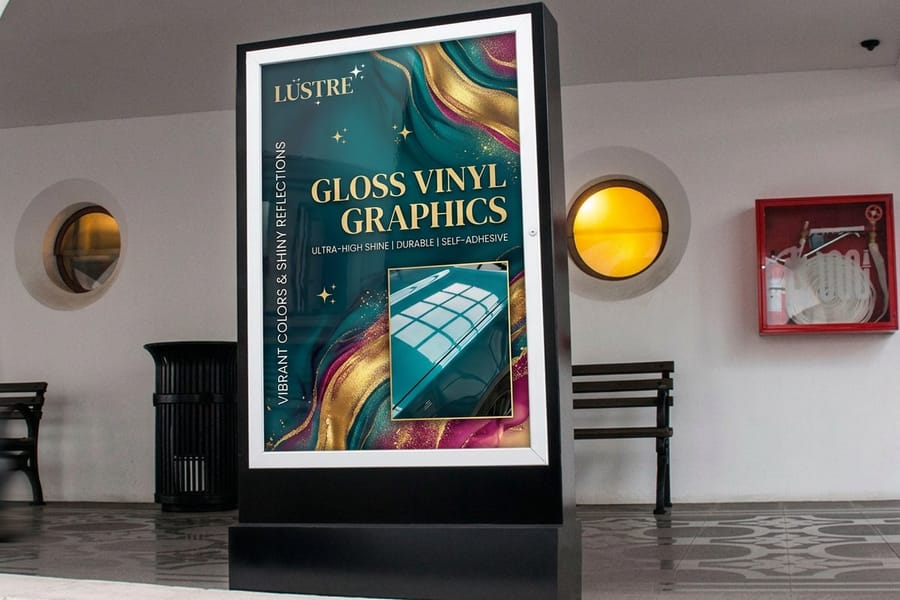
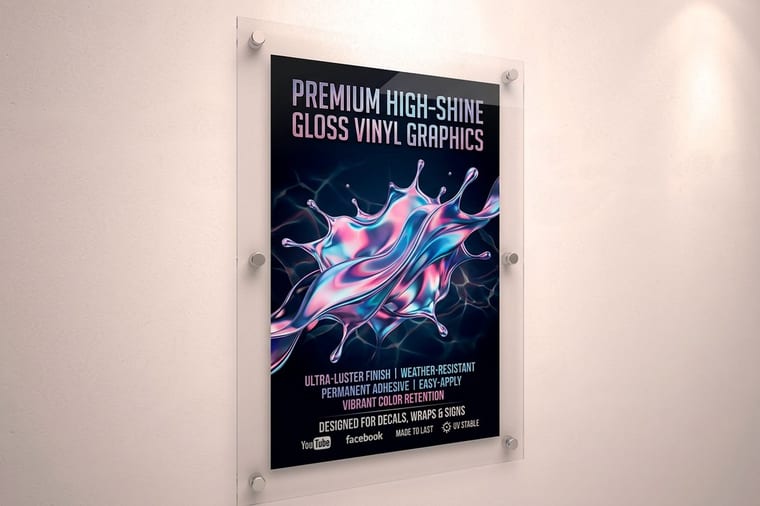
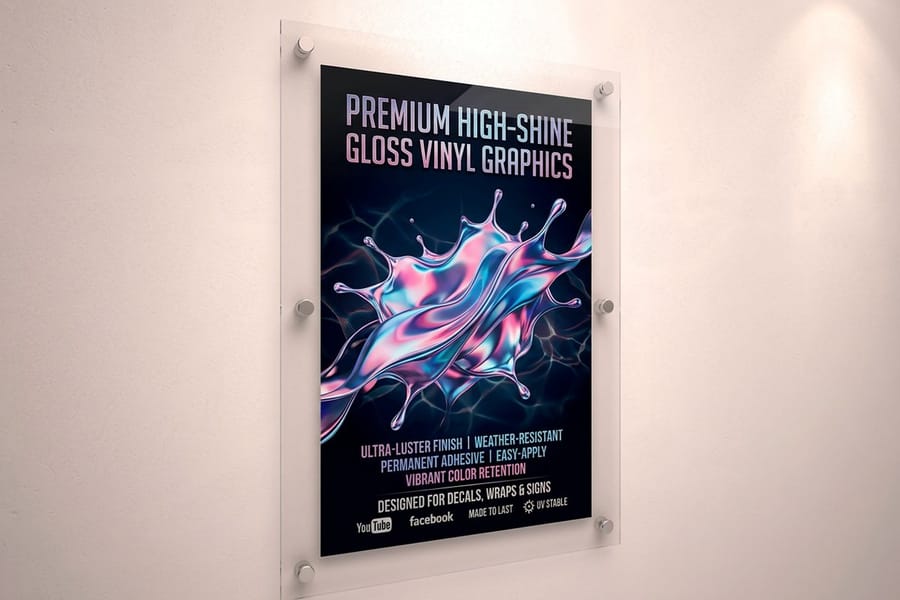
Finish changes how a vinyl sign reads under light. A gloss finish gives the deepest, most saturated color and a high shine, which makes photography and bold brand colors pop. It is the natural choice for retail graphics and anything meant to grab the eye. The trade-off is glare: under a bright light or direct sun, a glossy surface can throw reflections that wash out fine text.
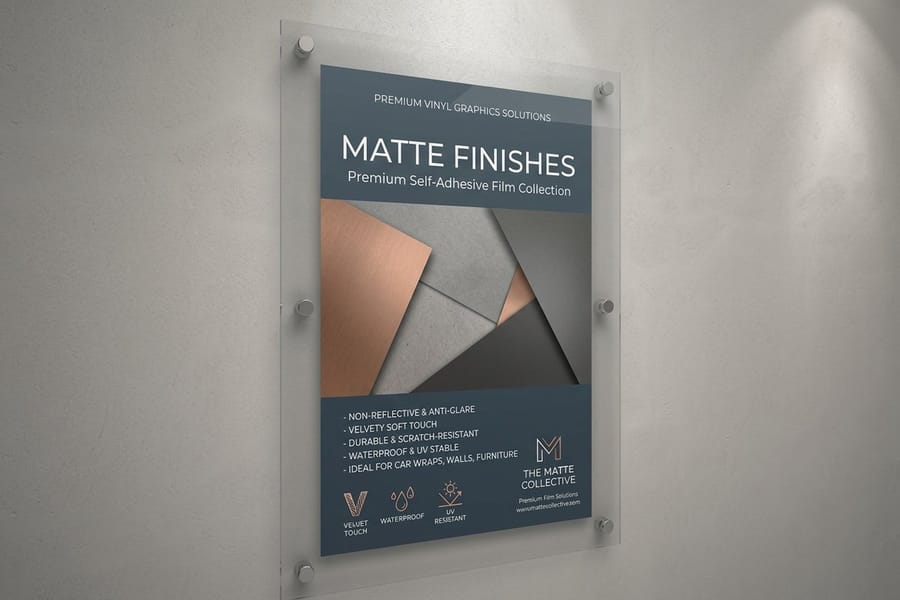
A matte finish solves that. It scatters light instead of bouncing it, so the sign stays readable from any angle and under harsh lighting. Matte reads clean and understated, which suits wayfinding, informational signs, and modern interiors. Colors are a touch less punchy than gloss, but the readability gain is worth it wherever text is the point.
There is no wrong answer, only a fit. Pick gloss when color and impact lead, and matte when legibility and a refined look lead. We offer both as dedicated products, gloss vinyl graphics and matte vinyl graphics, so you can match the finish to the setting.
Indoor versus outdoor durability, and lamination
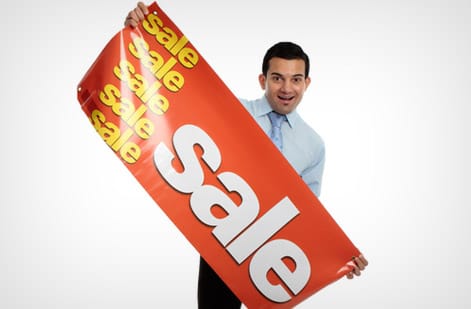
How long a vinyl sign lasts depends less on the print and more on whether it is protected. Indoors, an unlaminated adhesive graphic looks great for a long time because nothing is attacking it. Outdoors, sunlight fades ordinary ink and moisture and abrasion wear the surface, so an unprotected print ages fast.
The fix is a clear overlaminate, a thin protective layer applied over the print. It blocks UV, resists scuffs, and sheds moisture, which is what pushes an outdoor sign from a few months to a reliable three to five years. Lamination is the single upgrade that turns an indoor-grade graphic into weatherproof signage, and it is why the layer stack in the diagram starts with laminate on top.
Match the build to the place. A short-term indoor promo does not need lamination, while a storefront window graphic or an outdoor banner does. When in doubt for an exterior sign, laminate it, since the small added cost buys years of extra life. Our guide comparing screen printing versus vinyl printing covers where each method holds up best.
Applying and hanging your vinyl sign
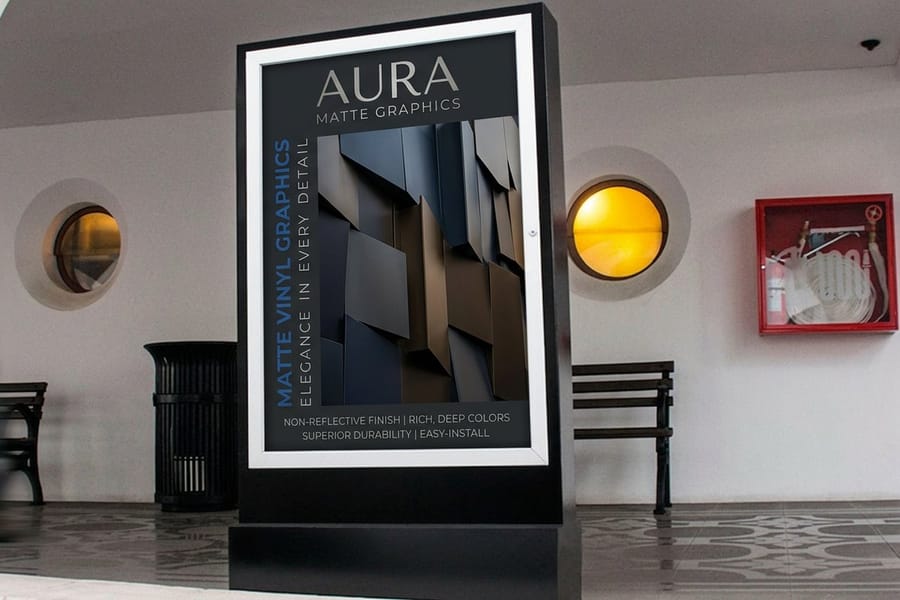
Adhesive vinyl goes up with a simple toolkit and a little patience. Clean the surface so it is free of dust and grease, position the graphic, and use a squeegee to press it down from the center outward, pushing any bubbles to the edge as you go. Larger graphics use a wet or hinge method to keep everything aligned. Take your time and the result is smooth and bubble-free.
Banner vinyl is even simpler: unroll it, line up the grommets, and secure it with zip ties, rope, or bungees to a fence, frame, or wall. If a banner arrives with a few creases from shipping, they relax out, and our article on getting wrinkles out of vinyl covers the safe way to smooth stubborn ones.
For a step-by-step on decals specifically, our guide on applying a vinyl decal walks through the squeegee technique in detail so your first install looks professional.
What vinyl signs cost, and how to order
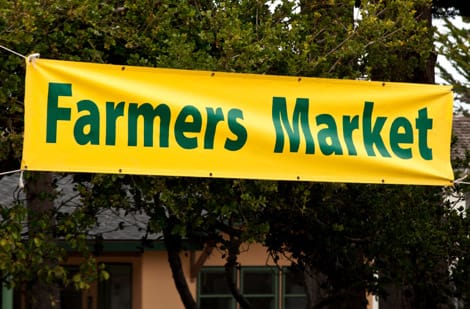
Vinyl sign pricing follows material, size, finish, lamination, and quantity. A small adhesive decal on standard film is inexpensive, a large laminated banner or a full wall graphic sits at the higher end, and size and quantity move the number the most. Every option adjusts the total, and the configurator updates the price live as you build, so there is no guessing what lamination or a bigger size does before you commit.
Ordering more than one lowers the per-unit price, which matters if you are outfitting several windows or running a set of event banners. Use the live specs and pricing panel below to set your exact material, finish, and size for real vinyl signage at 4OVER4.COM, then upload your artwork and let our free file check confirm everything before production.
If you would rather start from a layout, our design templates keep your art inside safe margins, and the vinyl printing collection shows the full range that pairs with your signs.
Wally makes vinyl stick, and last
Pick the film, pick the finish, laminate for outdoors
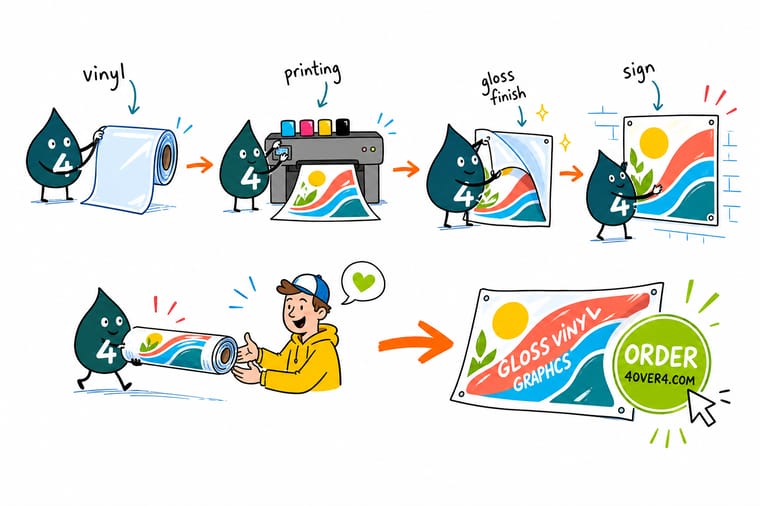
Wally keeps vinyl simple: adhesive film for anything that sticks, banner vinyl for anything that hangs, gloss when color leads and matte when text leads. Going outside? Add a clear laminate and the sign shrugs off sun and rain for years. Size it, upload a vector file, and 4OVER4 prints it ready to apply.
Configure your vinyl sign →Quick reference
The vinyl sign spec sheet, at a glance
Every vinyl sign settles the same handful of choices. Match these to the surface and the setting and the file is ready to order.
| Choice | Common option | Why it matters |
|---|---|---|
| Material | Adhesive vinyl or banner vinyl | Adhesive film sticks to walls, glass, and vehicles, while banner vinyl hangs from grommets for events. |
| Vinyl weight | 2 to 4 mil film, 13 oz banner | Thin film conforms to curves and windows, and heavier banner stock resists wind and handling. |
| Finish | Gloss or matte | Gloss makes color vivid, matte removes glare so signs stay readable under bright light. |
| Lamination | Optional clear overlaminate | A laminate adds UV, scuff, and moisture protection that pushes outdoor life to 3 to 5 years. |
| Adhesive | Permanent or removable | Permanent bonds for good, removable lifts clean off glass and walls with no residue. |
| Size | Custom dimensions | Signs are cut to your exact size, from a small window decal to a full wall graphic. |
| Artwork | Vector, CMYK, 300 DPI | Vector art stays sharp at large scale and CMYK keeps brand color true across the run. |
Step by step
Order a vinyl sign in 7 steps
- Decide where the sign livesWall, window, floor, vehicle, or a hanging banner. The surface and the environment set the material, the finish, and whether you need lamination.
- Pick adhesive vinyl or banner vinylChoose adhesive film for anything that sticks to a surface, or heavier banner vinyl with grommets for a sign you hang across a space or storefront.
- Choose gloss or matteGo gloss for the most vivid color and shine, or matte when the sign sits under bright light and readability matters more than pop.
- Add lamination for outdoor useIf the sign faces sun, rain, or heavy handling, add a clear overlaminate so the print resists UV fade, scuffs, and moisture for years.
- Prepare vector artworkSupply your design as vector art in CMYK so it stays sharp at sign scale. If you do not have a print file, build one in our free online design tool.
- Set size and quantityEnter the exact dimensions and how many you need, and the price updates live as you adjust the material, finish, and lamination.
- Order and installPlace the order, let our free file check confirm the setup, and apply the sign with a squeegee, or hang the banner from its grommets when it arrives.
Specs and pricing
Vinyl sign specs and live pricing
Once the material and finish are settled, the print decisions come down to size, lamination, and quantity. Here are the live specs and price-per-unit for vinyl graphics at 4OVER4.COM, straight from the configurator.

| Quantity | Price Per Unit | Total |
|---|---|---|
| 1 | $25.00 | $25.00 |
Order it
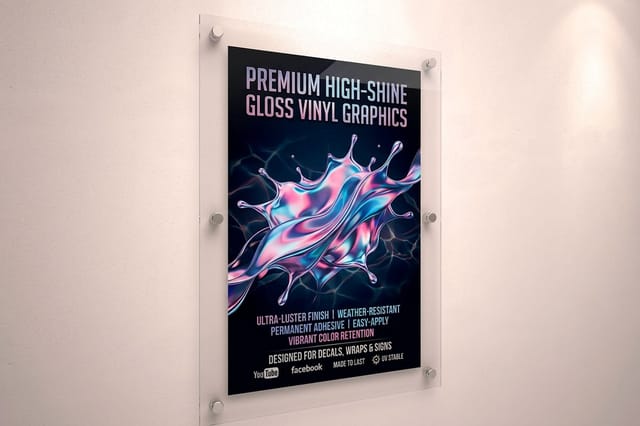
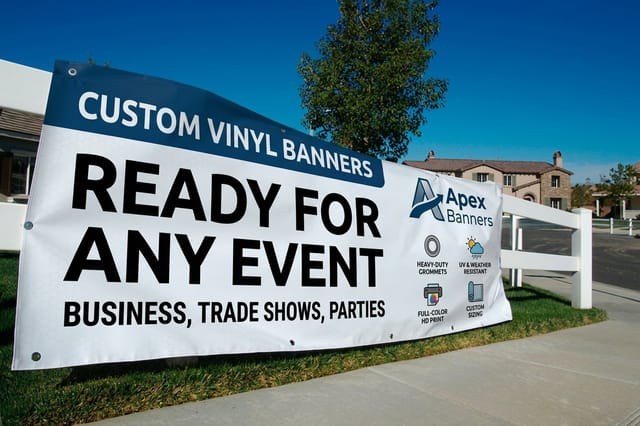
Vinyl signage for every surface and space

See it in use
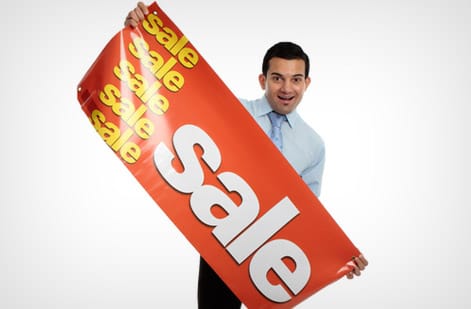
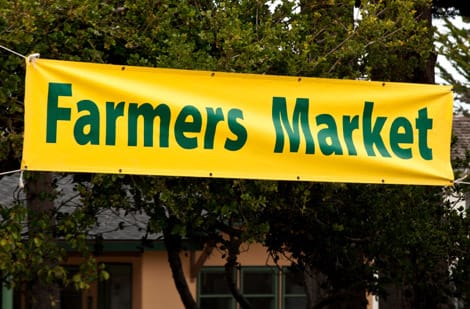
Vinyl signage we printed and trimmed

Explore more
Where to go next


By the numbers
Sixty stocks and materials in the sign catalog
Common Questions
Common questions about vinyl sign printing
What is vinyl sign printing?
Vinyl sign printing is the process of printing full-color artwork onto vinyl material and finishing it for display. Vinyl comes in two broad families: thin adhesive film that sticks to walls, windows, floors, and vehicles, and heavier banner vinyl that hangs from grommets for events and storefronts. The print is made with durable inks, often UV cured, and can be topped with a clear laminate for outdoor protection. Vinyl is the most common signage material because it is flexible, prints vivid color, sticks to almost any clean surface, and can be produced at nearly any size from a small window decal to a full wall graphic.
Does this go on a wall, a window, or a fence?
Start with the surface and the setting. For a wall, window, floor, or vehicle, choose adhesive vinyl film in the right thickness, thinner film conforms to curves and glass while a standard film suits flat walls. For a sign you hang across a space, choose banner vinyl with reinforced grommets. Then pick a finish: gloss for vivid color and shine, matte to kill glare where readability matters. If the sign goes outdoors or takes heavy handling, add a clear overlaminate for UV and scuff protection. Finally, choose permanent adhesive for a lasting bond or removable when you need to peel it off cleanly later.
What does a vinyl sign cost and how are prices set?
Vinyl sign price scales with material, size, finish, lamination, and quantity. A small adhesive decal on standard film is inexpensive, while a large laminated banner or a full wall graphic sits higher, and add-ons like overlamination or removable adhesive adjust the total. Size and quantity are the biggest levers, with the per-unit price dropping as you order more. You set every option in the configurator and the price updates live as you go, so you can compare a matte wall decal against a laminated outdoor banner before you commit.
What materials, finishes, and sizes are available for vinyl signs?
Vinyl signs are cut to custom sizes, so you are not tied to fixed dimensions. Material options include adhesive vinyl film in a range of weights for walls, windows, floors, and vehicles, plus heavier banner vinyl for hanging signage. Finishes include gloss for vivid color and matte for glare-free readability, and you can add a clear overlaminate for outdoor durability. Adhesives run from permanent to removable, and banner vinyl comes with hemmed edges and grommets for hanging. That range lets one material cover almost every signage need a business has.
How long do vinyl signs take to print and ship?
Turnaround depends on the material, finish, lamination, and quantity you choose, and the live estimate appears in the configurator as you build the order. Laminated and larger-format signs take a little longer to produce than a simple decal because of the extra finishing steps, and choosing a standard turnaround over a rush option keeps the price down. Once produced, the sign ships to your door ready to apply or hang, with adhesive vinyl going on with a squeegee and banner vinyl hanging straight from its grommets.
What are vinyl graphics?
Vinyl graphics are artwork printed in full color onto adhesive vinyl film, usually 2 to 4 mil thick, then cut to shape and applied to a surface. Wall graphics, window decals, floor stickers and vehicle lettering are all vinyl graphics: same material, same press, different surface underneath. A vinyl graphic and a vinyl sign are the same family of product, the difference is that a graphic sticks to a surface while a banner hangs from grommets. Gloss keeps the color vivid, matte kills glare so text stays readable under bright light, and a clear overlaminate takes either one from indoor use to 3 to 5 years outside.
What is the difference between cut vinyl and printed vinyl?
Cut vinyl carries no ink: a plotter cuts the letters or shapes out of a sheet of solid colored film and the waste is weeded away, so the color runs through the material but you get one flat color per layer. Printed vinyl is white film run through the press in full CMYK, so photographs, gradients and exact brand colors are all possible, with an optional clear laminate over the ink for UV, scuff and moisture protection. Use cut vinyl for simple lettering, hours of business and one or two color logos, and printed vinyl for anything with a photograph, a gradient or more than two colors.
Get Started
Vinyl graphics ship in 2 business days, banners in 3
Set the material, finish, and size for your vinyl sign at 4OVER4.COM and watch the price update live. Add lamination for the outdoors and we ship it ready to apply or hang.
Legal Disclaimer
Gold Standard guarantees apply to all standard orders placed through 4over4.com. Price match requires verifiable proof of a competitor's published price for an equivalent product with matching specifications and turnaround time. Satisfaction guarantee covers manufacturing defects and print quality issues. Contact support with order number and documentation. On-time delivery rate based on tracked orders 1999 to 2026. Individual results may vary based on shipping carrier performance.
