
Soft Cover Notebooks Explained: Stocks, Binding and Page Count


Emma is our prepress and print production voice, built from the knowledge of our production team, with over 20 years in printing.
A soft cover notebook costs less than a hard cover, from $5.00 for a spiral book, because the cover is the only part that changes. The cover is the only thing the name describes. The stock, the binding and the page count each have a right answer, and a hard cover earns its extra money in one situation.
A soft cover notebook is one whose cover is a single flexible printed sheet, typically 14pt or 16pt laminated cardstock, folded at the spine instead of built over rigid board. It costs less per unit, weighs less to ship, and prints exactly as well as a hard cover. What it gives up is edge life: the corners curl and the spine softens under a year of daily carrying. Cover weight, interior paper and binding are three separate choices, and the binding is what decides whether the book lies flat.

Quick answer
A bendable cover, and three decisions that have nothing to do with it
Soft cover describes the lid, not the book. One flexible printed sheet, 14pt or 16pt with a laminate, folds at the spine and bends with the block. There is no greyboard and no hinge, which is where the lower price and the lighter freight come from, and also why the corners eventually curl. Interior paper weight, page count and binding are chosen separately. Spiral and wire-o lie flat, saddle stitch caps out around 64 to 80 pages, and perfect binding gives you a printable spine but never opens flat.
What a Soft Cover Notebook Costs, and What It Buys You
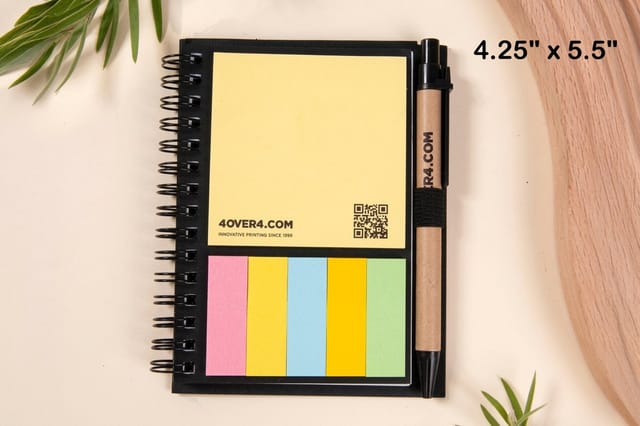
Soft cover notebook costs start at $5.00 for a ready-made Deluxe Spiral Notebook, shipped in one business day. A ready-made Leather Journal starts at $10.00. Both come with no logo. At the top, a run of 50 embossed notebooks on a wire-o binding costs $763.37 and takes 22 business days. Most of the gap between a soft and a hard cover sits in the cover itself: one printed sheet with no greyboard and no hinge.
That sheet is also where the benefits of a soft cover notebook come from:
- A lower price per unit. No board to wrap and no hinge to set, which adds up across a run of hundreds.
- Lighter freight. On 500 units the shipping saving is a real line in the budget.
- The same print quality. The cover is a full press sheet, so a photograph costs the same as a single logo.
- A book that lies flat. On a spiral or wire-o binding the cover folds fully back for one-handed writing.
The trade is edge life. Carried every day for a year, a soft cover comes back with curled corners and a softened spine.
What Soft Cover Actually Describes
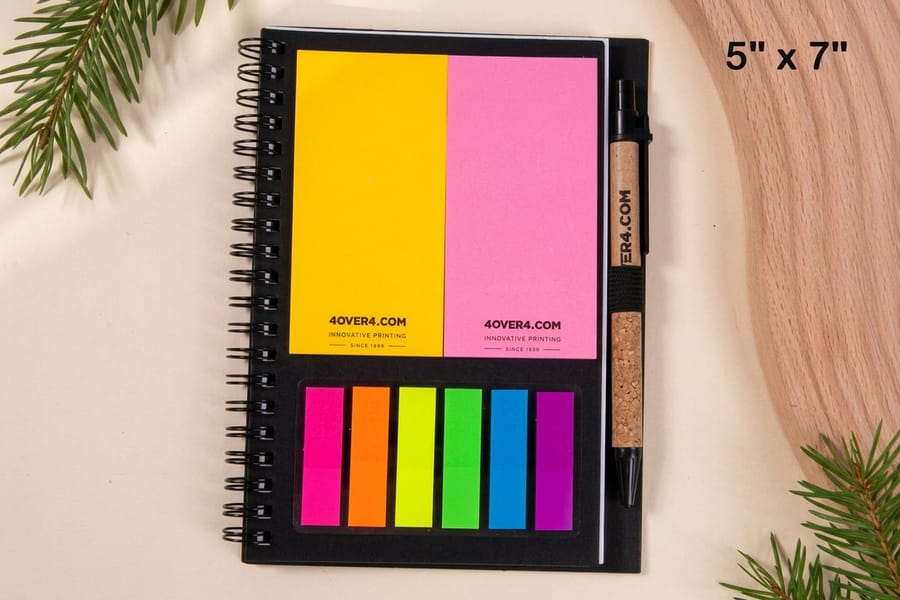
The term describes one component and one component only. A soft cover notebook has a cover made of a single flexible sheet that folds at the spine and bends with the block. A hard cover has two rigid boards, roughly 2mm of greyboard, wrapped in printed paper and hinged about 10mm in from the spine so the board swings rather than bends.
That distinction is worth holding onto because almost every quote confuses it with something else. Soft cover does not mean thin paper inside. It does not mean cheap, badly printed, or short. It does not tell you anything about the binding either: a soft cover book can be spiral bound, wire-o bound, saddle stitched or perfect bound. Confirm the cover, then choose the interior paper and the binding as two separate decisions, because a printer will quote all three whether you specify them or not.
The one place the cover does constrain you is the spine. Without a board, a perfect-bound soft cover needs enough paper thickness to build a spine worth gluing, and a very thin block will simply not hold. If your page count is low, that pushes you toward saddle stitch or a coil. The binding types guide lays out where each method starts and stops.
Cover Stock, Binding and Page Count
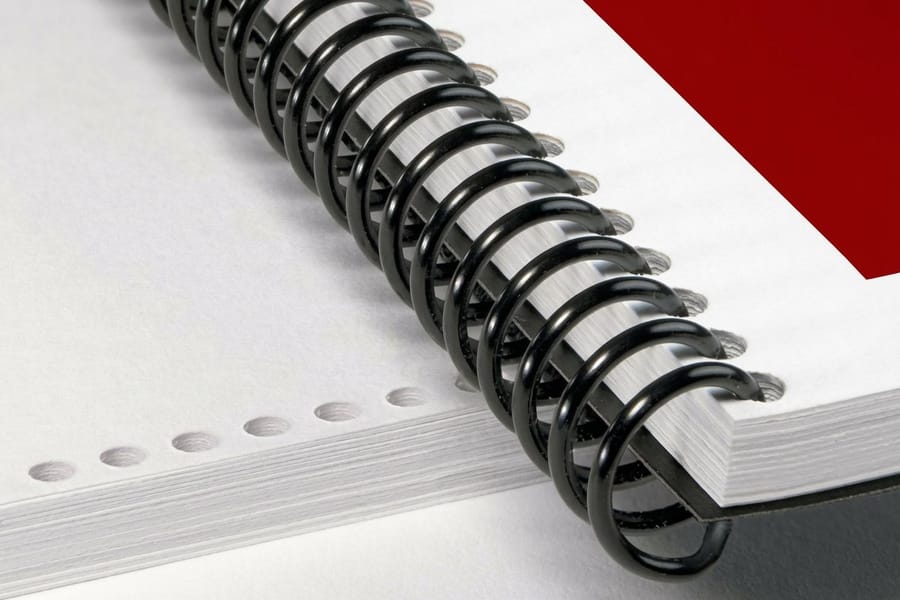
Three specs decide how a soft cover notebook feels in the hand. Get them right and nobody notices; get one wrong and the book is annoying to use from day one.
Cover stock. 14pt coated-two-sides cardstock is the working minimum. 16pt is the safer default on anything wider than about 6 inches, because a wide cover flexes across its own width and 14pt starts to feel floppy. Leatherette and vinyl wraps sit over a similar weight and add grip rather than rigidity. Add a laminate unless you want fingerprints: gloss wipes clean and makes color pop, matte hides handling scuffs, soft touch feels the most expensive and scratches the most easily.
Interior paper. 70lb text is the honest floor for a writing notebook, because a fountain pen or a gel roller will strike through anything lighter. 80lb text stops almost everything and gives the block a better bulk under a soft cover, which stops the whole book feeling limp. If it is a reference book rather than a writing book, 60lb offset is fine and cheaper.
| Binding | Lies flat | Page count | Printable spine | Best for |
|---|---|---|---|---|
| Spiral coil | Yes, folds fully back | Thick blocks, limited by coil diameter | No | Writing notebooks, workbooks, anything used one-handed |
| Wire-o | Yes, folds fully back | Similar to coil, crisper action | No | Presentation notebooks where the coil should look deliberate |
| Saddle stitch | Yes, but springs closed | Multiples of four, practical ceiling around 64 to 80 | No | Slim branded books, event notebooks, short workbooks |
| Perfect bound | No | Needs enough bulk to glue a real spine | Yes | Books meant to be read and shelved rather than written in |
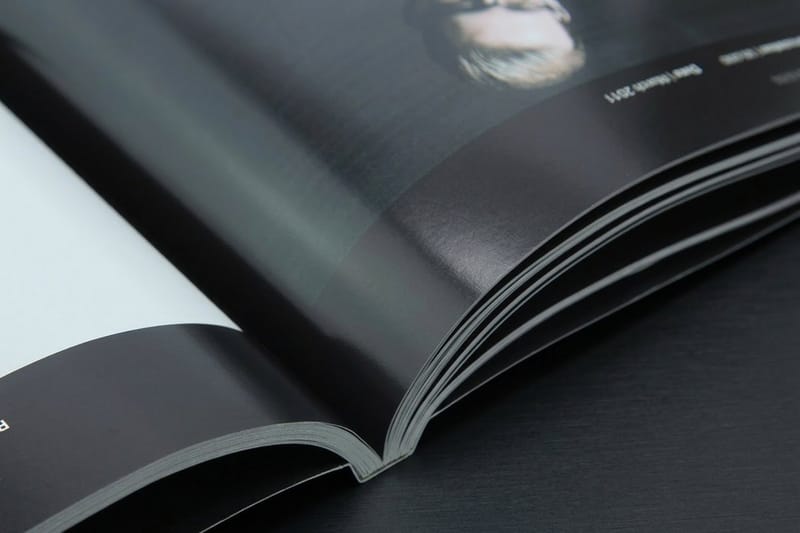
Page count. Saddle stitch runs in multiples of four and suffers from creep, where the inner sheets push outward at the fore edge and lose margin when the book is trimmed. That is why the practical ceiling sits well below what the stapler could physically manage. Our guide on page counts, multiples of four and creep shows how much margin to build in. For coil and wire-o, the coil diameter is the limit, and a block that is too thick for its coil will not close properly.
Printing a Branded Soft Cover Notebook
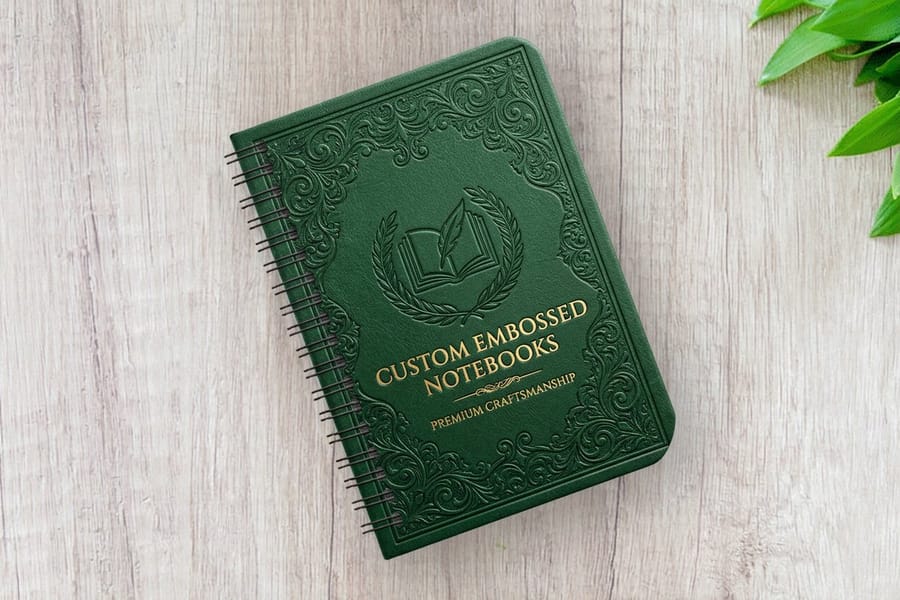
A soft cover is a full press sheet, so the cover costs the same to print whether it carries a photograph or a single logo. That changes what you should put on it. The temptation on a giveaway is to fill the front with the brand; the notebooks that actually get used carry a small mark and leave the rest of the cover alone.
Three practical rules from jobs that came back looking right. Keep type and logos at least an eighth of an inch inside the trim, because a cover wrapping a thick block shifts a fraction at the fold and edge-hugging elements look off-center across a run. Print the inside front cover if you want the piece to earn its keep, since a contact block, a grid, or a conversion chart there gets read every time the book opens. And put something on the back, even if it is just a URL, because a notebook lying on a table is face down half the time.
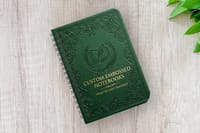
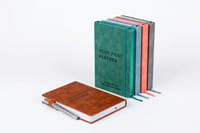
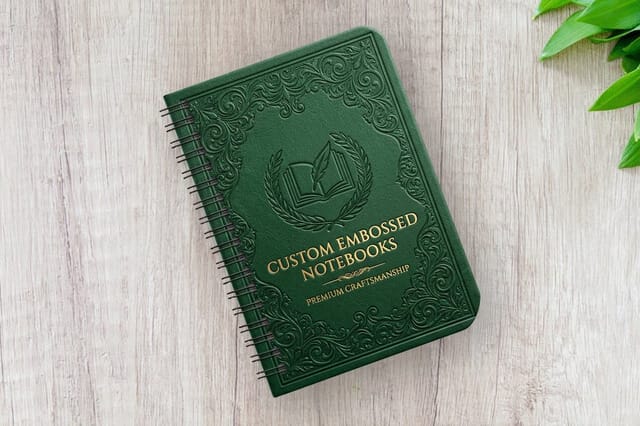
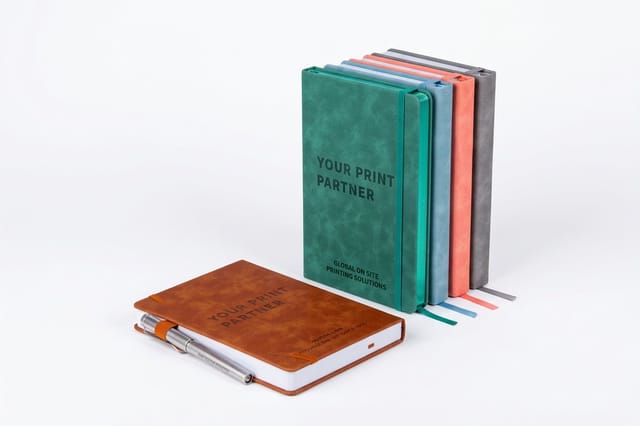
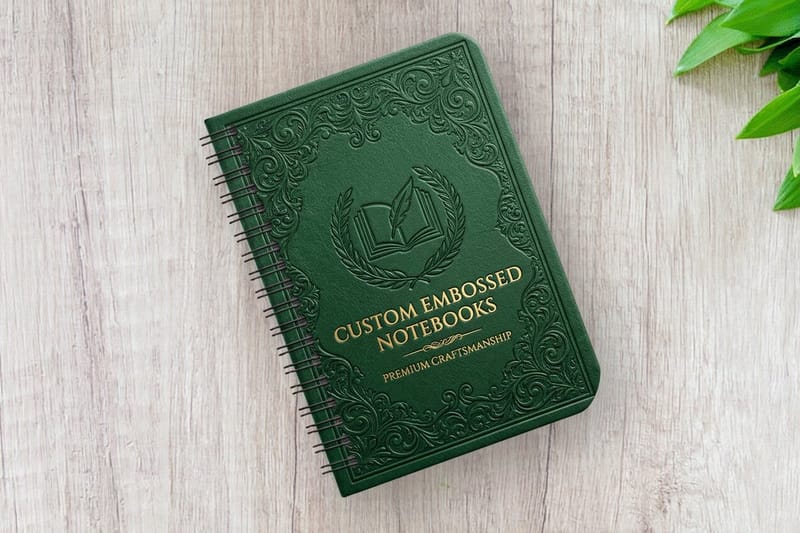
For a tactile finish without a hard cover, a debossed logo on a leatherette wrap does more work than four-color printing. Embossed notebooks press the mark into the cover itself, so it survives the scuffs that would wear a printed logo thin. If you want the finish to read as a gift rather than a giveaway, Leather Journals start at $10.00 and change the register of the whole piece. A short video on leather journals shows the product.
Build the artwork like any other print file, at full size with fonts outlined and a bleed on every edge that trims. The notebook template guide covers the setup, and how to make custom notebooks runs through the whole build from ruling to finished book.
When a Soft Cover Is Right, and When It Is Not
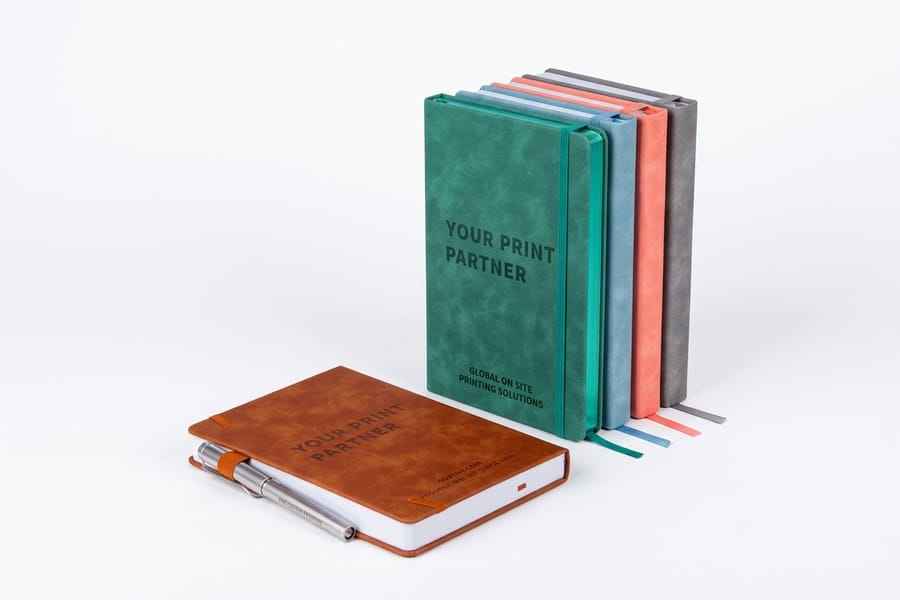
Soft cover wins on volume. A conference bag, a student pack, a new-hire kit, a trade show handout: anything printed in hundreds where the notebook has a job to do for a few months and then gets replaced. The Deluxe Spiral Notebook starts at $5.00, lies flat, and costs less to freight than the equivalent hard cover, which on 500 units is a real line in the budget rather than a rounding error.
It loses on longevity and on ceremony. A notebook that someone will carry every day for a year comes back with curled corners and a softened spine, and no laminate fixes that completely. A notebook given to a client as a gift wants the weight and the squared edge of a board. Those are the two cases where the extra cost is buying something real.
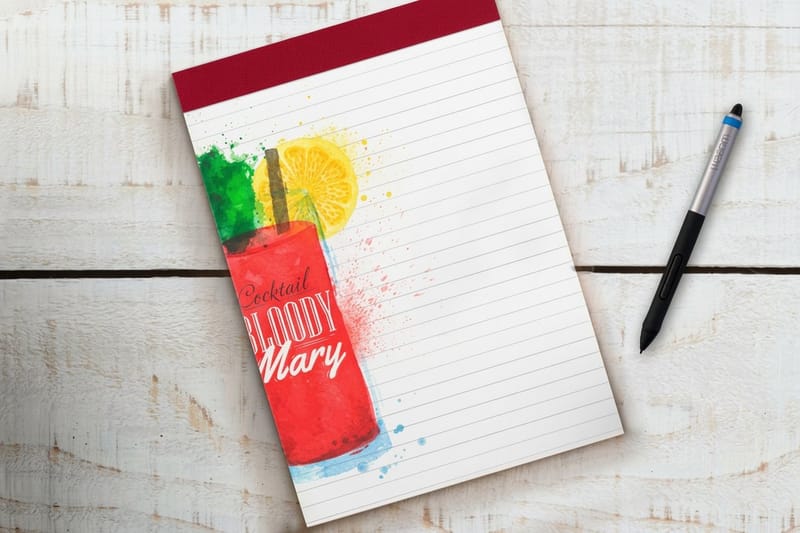
There is a third case worth naming, because it saves people money: sometimes the answer is not a notebook at all. If the pages get torn off and handed over, a glued pad does the job better and cheaper, and Notepads are built for exactly that. If the piece is being read rather than written in, a stitched booklet is lighter and cheaper than a bound notebook, and saddle stitch booklets handle it well. Browse the full range on the notebook printing category, and if the kit needs a folder to hold everything together, pocket folders pair with the same cover stocks.
Wally explains soft covers
One sheet, folded at the spine, bending with the pages
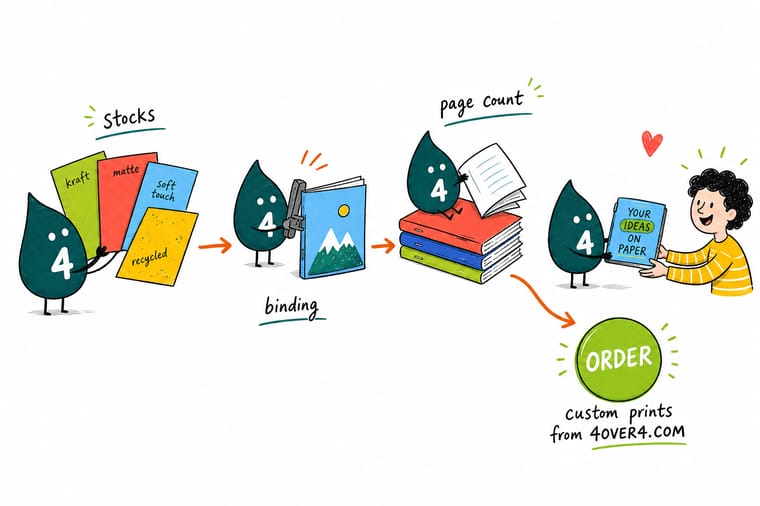
Wally holds two notebooks with the same pages inside. The soft cover is one printed 16pt sheet with a laminate on it, folded at the spine, so it rolls open in his hand and packs flat in a bag. The hard cover has 2mm board hinged 10mm in from the spine, so it swings open and stays square for years. The soft one is cheaper and lighter to ship, which is why it wins on 500 conference notebooks. The hard one wins when someone is going to carry it every day for a year.
Order deluxe spiral notebooks →
Specs and pricing
Notebook options, sizes and starting prices
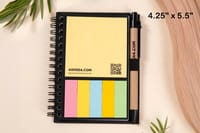
A spiral notebook costs $5.00 in one business day, while an embossed run of 50 costs $763.37 and takes 22, so the binding sets both the price and the wait.
Print it
Order notebooks people will actually keep using
The ready-made Deluxe Spiral Notebook at 4.25 x 5.5 or 5 x 7 inches for the conference bag and the new-hire kit, embossed notebooks from 4.25 x 5.5 to 8.5 x 11 inches with 50 sheets for a branded run, and the ready-made 5.75 x 8.25 inch Leather Journal when the book is a gift.
%22%2F%3E%3Ccircle%20cx%3D%2235%22%20cy%3D%2219%22%20r%3D%2230%22%20fill%3D%22%23f59e0b%22%20opacity%3D%220.15%22%2F%3E%3Ccircle%20cx%3D%2233%22%20cy%3D%2229%22%20r%3D%229%22%20fill%3D%22%23f59e0b%22%20opacity%3D%220.1%22%2F%3E%3Crect%20x%3D%2275%22%20y%3D%229%22%20width%3D%2220%22%20height%3D%2219%22%20rx%3D%224%22%20fill%3D%22%23f59e0b%22%20opacity%3D%220.08%22%20transform%3D%22rotate(15%2080%2030)%22%2F%3E%3C%2Fsvg%3E)
Explore more
Where to go next
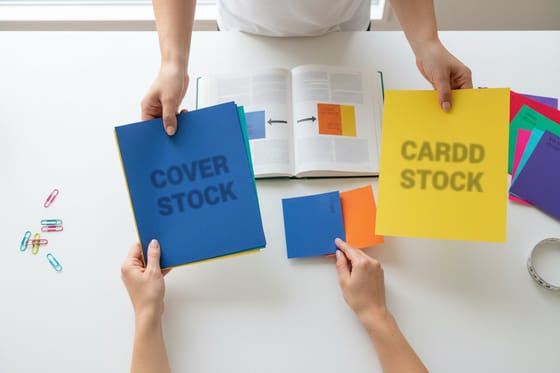
Build a custom notebook from ruling to finished book, price a bulk run, compare the four binding types, and see how cover stock differs from cardstock.

By the numbers
Soft cover, spiral and embossed notebooks
Common Questions
Your soft cover notebook questions, answered
What is a soft cover notebook?
A soft cover notebook is one whose cover is a single flexible printed sheet rather than a rigid board. In practice that sheet is 14pt or 16pt coated cardstock, usually laminated, sometimes a leatherette or vinyl wrap over the same weight of board. It folds at the spine and bends with the pages, so the notebook rolls open in one hand and packs flat in a bag. Everything else about the book, the paper inside, the page count, the ruling and the binding, is chosen independently of the cover.
Is a soft cover notebook durable enough for daily use?
For a year of desk and meeting-room use, yes. For a year of living loose in a backpack, no. The failure point is always the same: the front corners round off and start to curl, and on a perfect-bound book the spine creases where it gets folded back. A laminate slows both down considerably, and rounded corners cut on the trim help more than most people expect because there is no sharp point left to catch. If the notebook is going into a toolbox, a truck or a field kit, order a hard cover and stop arguing with it.
What cover weight should a soft cover notebook be?
Start at 14pt. Below that the cover behaves like a page rather than a cover and offers no support at all when someone writes standing up. 16pt is the safer default on anything above roughly 6 by 9 inches, because a wider cover flexes more across its own width. Above 16pt you are into board territory, which stops folding cleanly at the spine and needs to be scored. Our guide on cover stock versus cardstock walks through where the weight labels actually come from.
Which binding lies flat on a soft cover notebook?
Spiral coil and wire-o both lie flat and fold all the way back on themselves, which is why they dominate notebooks meant for writing rather than reading. Saddle stitch lies flat too, but only holds a modest page count. Perfect binding does not lie flat and never will, since the pages are glued into a squared spine. Choose spiral if people will write in it, perfect binding if they will read it and shelve it.
How many pages can a soft cover notebook hold?
The cover is not the limit, the binding is. Saddle stitch runs in multiples of four and gets bulky and creepy past 64 to 80 pages, meaning the inner pages push out at the fore edge and lose margin on the trim. Spiral and wire-o handle a much thicker block, limited by the coil diameter you pick. Perfect binding needs enough paper to build a spine worth gluing, so very thin books are not a candidate. The page count guide on multiples of four covers the arithmetic in detail.
Does a soft cover notebook cost less than a hard cover one?
Yes, and the gap shows up in two places. The unit price is lower because there is no board, no wrap and no casing-in pass: the Deluxe Spiral Notebook starts at $5.00 while Leather Journals start at $10.00. The second saving is freight. A pallet of soft cover notebooks weighs materially less than the same count in hard cover, which matters when you are shipping 500 to a conference venue rather than 25 to an office.
Can you print full color on a soft cover?
Yes, front, back and the inside covers if you want them. A soft cover is printed on a press like any other sheet, so a photographic cover costs the same to run as a one-color logo. The thing to watch is the bleed and the trim: keep logos and type at least an eighth of an inch inside the trim line, because a cover that wraps a thick block shifts slightly at the fold and type sitting near the edge will look off-center on some copies.
Get Started
Embossed notebooks run 50 for $763.37, or $15.27 each
Pick the cover stock, choose a coil or a stitched spine, set the page count, and we print notebooks that lie flat and survive the bag they live in.
Legal Disclaimer
Gold Standard guarantees apply to all standard orders placed through 4over4.com. Price match requires verifiable proof of a competitor's published price for an equivalent product with matching specifications and turnaround time. Satisfaction guarantee covers manufacturing defects and print quality issues. Contact support with order number and documentation.
