
Property Marketing That Sells a Listing, From Sign Day to Just Sold


Tobias is our voice for cutting, binding and large format, built from the knowledge of our production team, with over 20 years in printing.
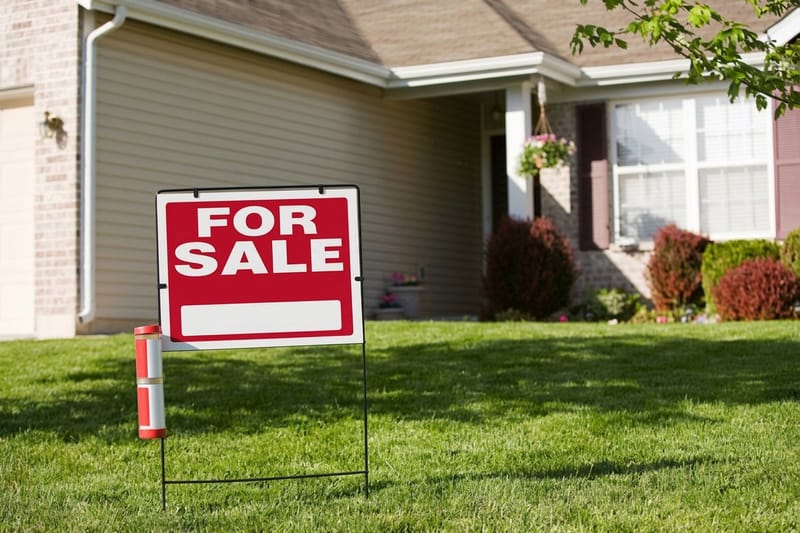
Property marketing for a single listing runs on five printed pieces, from the day the sign goes in to the day it closes. Each one does a different job, carries its own cost, and lives or dies on a few specs, so this guide walks them in order with the size, stock and send date for each.
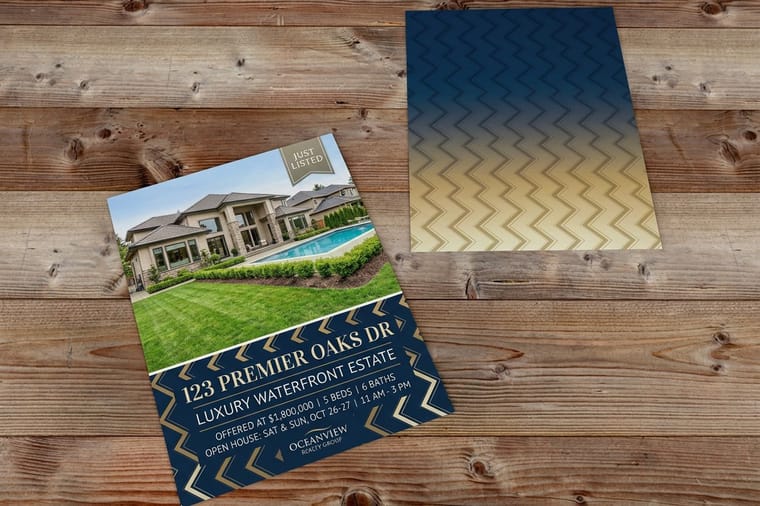
Marketing a property in print takes five pieces: a yard sign with a status rider on day one, a just listed postcard to the surrounding blocks in week one, an open house flyer as the take-one, a brochure for second showings, and a just sold postcard to the same address list at closing. Design them as one set with shared photos, because the sold card is the just listed card with two lines changed. The sold mailing is the piece that wins the next listing, since it shows a result rather than a promise.
Quick answer
One listing, five print moments, one set of files
The sign markets the property to people who were not looking, and the postcards market you to the people who live next to it. Put the yard sign and rider up on day one, mail the just listed card to the surrounding blocks inside the first week, keep flyers on the counter for the open house and brochures back for buyers who return, then mail the just sold card to the identical address list at closing. Build all five from the same photos and headline in one sitting, and the reprints stop being rush jobs.
The Print Kit One Listing Actually Needs

Every piece below has a moment it belongs to. Print them as one set with the same photos and the same headline and the whole campaign holds together, which is the part agents usually miss when they order the sign in March and the postcard in April.
| Piece | When it goes out | Where it lands | Starts at |
|---|---|---|---|
| Yard sign and rider | The day the listing goes live. | The lawn, read from a moving car. | $29.89 |
| Just listed postcard | Inside the first week. | Mailboxes in the surrounding blocks. | $16.48 |
| Open house flyer | Open house weekend. | The kitchen counter as the take-one. | $39.54 |
| Property brochure | Second showings. | In the hands of buyers who came back. | $57.11 |
| Just sold postcard | At closing. | The same mailboxes as the first card. | $16.48 |
The sign and the two postcards do most of the work. A sign is the only piece that markets the property to people who were not looking for it, and the pair of postcards turns one transaction into a track record on the street. The flyer and the brochure serve buyers who already found the house, which is why printing 200 brochures for a listing that draws 30 visitors is money spent on the wrong stage.
Three supporting pieces are worth knowing about. Open house signs from $25 are directional, so they need arrows and almost no copy. Real estate door hangers from $252.51 do the job a flyer cannot legally do, since only stamped USPS mail may go inside a mailbox. And real estate business cards from $17.57 travel with all of it, though they market you rather than this address. The full agent branding side of the job is covered in our guide to building a real estate print marketing kit.
How to Choose the Pieces for This Particular Property
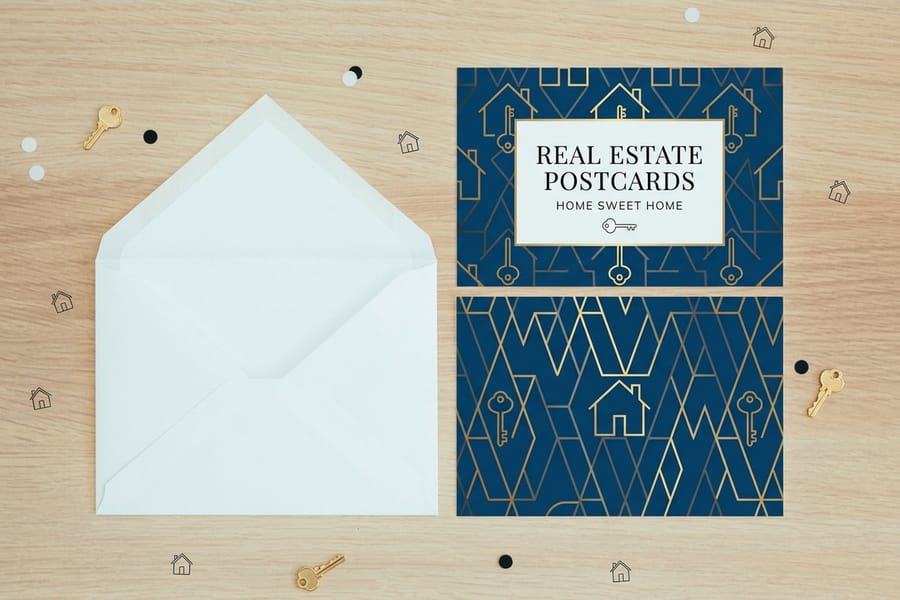
The kit is fixed but the quantities are not, and three things about the property decide them: how visible the lot is, how dense the surrounding housing is, and what the listing is worth.
Visibility decides the sign spend. A house on a through street with a short setback gets read at speed, so the sign carries your name and phone number and nothing else. A property down a long private drive or behind a hedge is barely seen from the road, and the money moves from the sign to the mailing. A corner lot is the one case where a second directional sign genuinely pays.
Density decides the mailing. In a subdivision where 300 homes sit within a quarter mile, a radius mailing is cheap per contact and repeatable. On five acre parcels the same radius might be 40 households, and the mailing stops making sense as a volume play, though it may still be worth sending because those 40 neighbors know every buyer who has ever asked about the road.
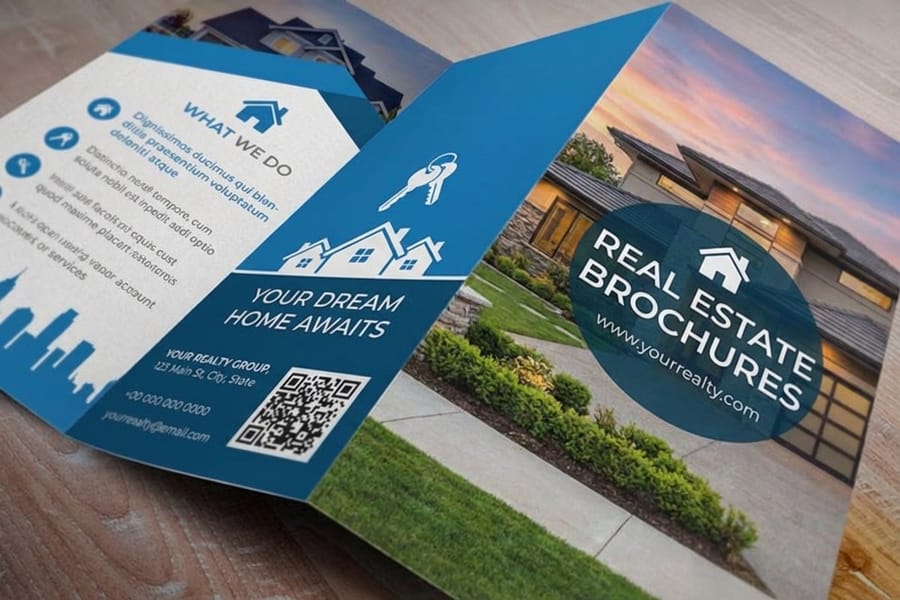
Price point decides the brochure. Below the local median, a single sided flyer on 100lb gloss text is honest and enough. Above it, buyers spend longer deciding and a folded brochure with a floor plan and a page of neighborhood detail earns its cost. Print the flyer in the quantity of expected foot traffic, and the brochure in the quantity of expected second showings, which is a much smaller number.
Size is where postage quietly decides your budget. USPS holds the postcard rate to cards no larger than 4.25 by 6 inches, so a 6 by 9 card mails at the letter rate. It is often still the right call because it holds four photos and a price without crowding, but make it a decision. Our guide to postcard postage and USPS rules lays out the thresholds, and Every Door Direct Mail is worth a look when you want a whole carrier route rather than a hand-built list.
Branding Five Pieces So They Read as One Campaign
A campaign falls apart when the sign, the postcard and the flyer look like three different agents sold three different houses. Four habits keep the set together.
- One headshot, one crop, everywhere. A different photo on the sign than on the card is the fastest way to look like a new agent every listing. Pick one, crop it once, and reuse the same file.
- Build brokerage colors in CMYK, not from a web hex. Brokerage reds and deep blues taken straight from a website shift noticeably on press. Ask your brokerage for the CMYK or Pantone build, and use it on every piece.
- Expect the sign to look different from the paper. Ink on coroplast sits on a white plastic surface and reads brighter and more saturated than the same file on coated stock. That is normal. If exact match matters, order the sign and the postcard together so both come off the same approved file.
- One QR destination per campaign. Point the sign, the flyer and both postcards at the same property page. Splitting them across four links makes the traffic impossible to read and gives you nothing to learn from.
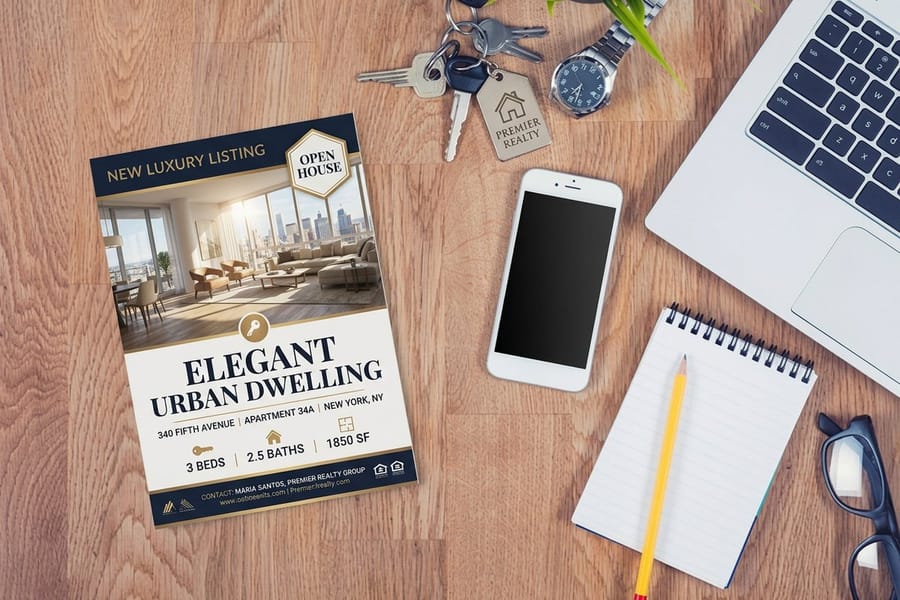
Hierarchy changes by piece even when the branding does not. On the sign, the phone number is the second largest element after your name, because a driver has one glance and no way to save anything. On the postcard, the property photo leads and the price is the second thing the eye lands on. On the flyer, the address and the price sit at the top, since the person holding it is already standing in the house and needs to remember which one it was.
Lay every piece out at the correct trim before you design, not after. Start from a correctly sized file in our blank template library, and the design side of the mailer itself is covered in the ten elements of an effective direct mail postcard.
Specs, Timing and What Goes Wrong
Most of the trouble with property marketing print is scheduling, not printing. The sign has to be in the ground the day the listing goes public, and that means ordering before the seller signs rather than after.
Signs are printed on 4mm corrugated plastic, and the flute direction matters more than anything else on the spec sheet. The hollow channels have to run vertically so the legs of an H-frame, which starts at $98.86, slide up into them. A sign with horizontal flutes has nothing to grip and folds in the first strong wind. If the listing warrants a more finished look, a real estate post from $218.35 or an A-frame from $65.90 reuses across dozens of listings, which is where the higher up front cost comes back. Material choices are compared in detail in our guide to durable outdoor yard sign materials. The same board also prints as general corrugated plastic signs from $25 for jobs beyond the listing.
On paper, 100lb gloss text is the standard open house flyer and 14pt or 16pt cardstock is the standard postcard. Go up to 16pt on the postcard when it is competing in a stack of mail, since the extra rigidity is felt before anything is read. Brochures fold, so the fold pattern has to be decided before the layout starts and not adjusted afterward.
Two failures repeat. The first is low resolution listing photos, because the MLS export people already have on their desktop is usually resized near 1024 pixels wide and prints soft. The second is a sold card ordered in a panic on closing day. Build it while the just listed card is still on screen, save it, and change two lines when the deal closes. Everything on this page is priced live at postcard printing and yard sign printing, with flyer printing and brochure printing for the open house side.
Wally explains property marketing print
Sign on the lawn, two cards in the same mailboxes
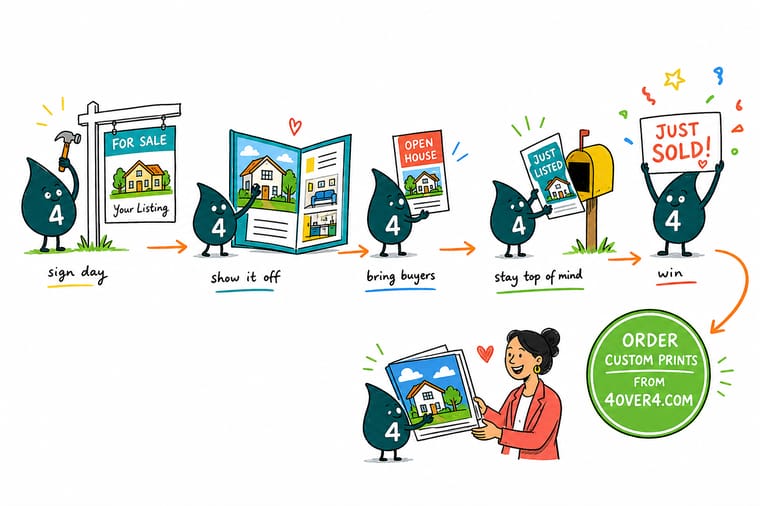
Wally puts the sign in the ground the morning the listing goes live, hangs the rider off it, and mails the just listed card to every house on the block that week. Flyers stay on the counter for the open house and brochures go to the people who come back a second time. When it closes he mails the exact same addresses again with the just sold card, because the neighbors who watched the whole thing happen are the ones who call next.
Order real estate postcards →
Specs and pricing
Sizes, stocks and starting prices for the listing kit
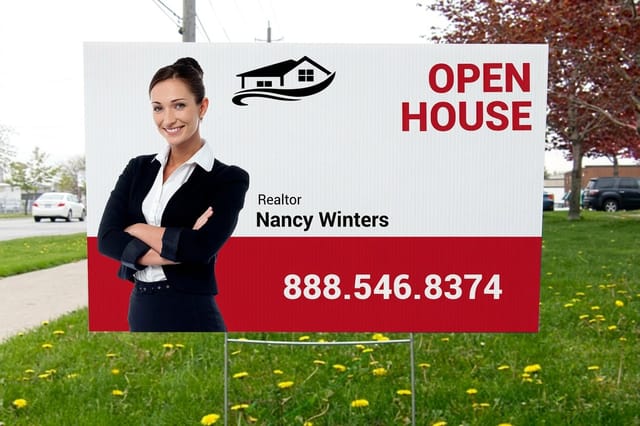
Configure the three pieces that carry a listing, with live sizes, stocks and starting prices straight from the 4OVER4.COM configurator. The yard sign is a 24 x 18 in panel of 4mm white coroplast printed on both sides, with the same or a different image on each, and an optional H-stake. Flyers run in nine sizes from 4.25 x 5.5 in to 11 x 25.5 in, and postcards in 14 sizes up to 6 x 11 in.



Print it
Order the pieces that carry a listing
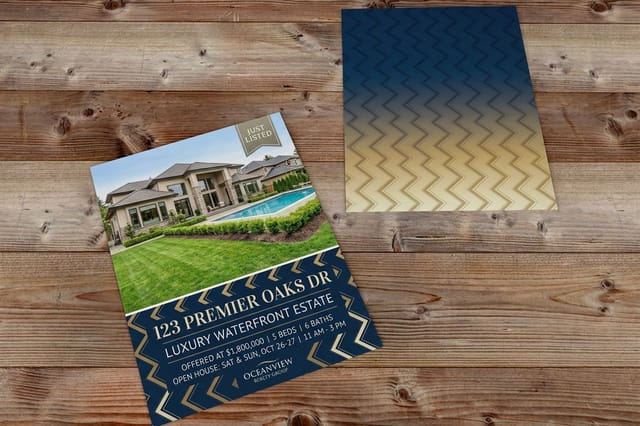
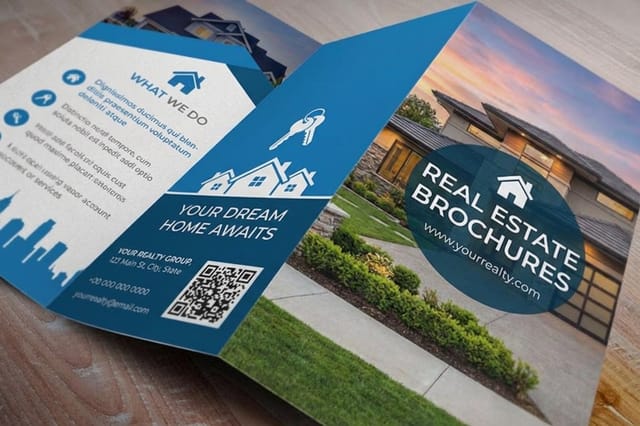
Postcards start at 50 for $16.48 and brochures at 50 for $57.11, and both take 3 business days at standard turnaround. The yard sign and rider start at $29.89 and take 4, so order the sign first and the just listed card the same day.

Explore more
Where to go next
Four guides cover the agent's own print kit, outdoor sign materials, postcard design and USPS mailing rules, and two category pages price every postcard and yard sign.

By the numbers
Real estate printing you can schedule around
Common Questions
Your property marketing questions, answered
What print materials do I need to market a single property?
Five pieces cover almost every listing. A yard sign with a status rider goes up the day the listing is live. A just listed postcard reaches the surrounding blocks within the first week. An open house flyer sits on the counter as the take-one. A brochure goes to buyers who walk the house twice. A just sold postcard goes to the same addresses that got the first card. Business cards sit alongside all of it, but they market you rather than the property.
What size should a just listed postcard be?
Either 4 by 6 or 6 by 9, and the deciding factor is postage rather than design. USPS applies the postcard rate only up to 4.25 by 6 inches, so a 6 by 9 card mails at the letter rate and costs more per piece. On a 300 home radius that difference is real money. Send the bigger card when you need room for four or five listing photos and a price, and send the small card when the whole message is an address, a price, and your face.
How many open house flyers should I print?
Print flyers for the foot traffic and brochures for the shortlist. An open house in a normal suburban neighborhood does not need 200 brochures. A stack of 40 to 60 flyers on the counter and a handful of brochures held back for the people who come back through the front door a second time is a better split, because the flyer is disposable by design and the brochure is the piece somebody carries home and shows a spouse.
Can I put real estate flyers in mailboxes?
No. A mailbox is federal property under 18 U.S. Code 1725, and only USPS mail with postage on it goes inside. That is why hand delivery in real estate runs on door hangers rather than flyers, since a hanger on the knob is legal and gets read on the way in. If you want the piece to land in the box, mail it as a postcard and let USPS carry it.
Do I need a new yard sign for every listing?
Usually not. The efficient setup is one branded agent sign that carries your name, your phone number, and your brokerage, plus a stack of riders that change per listing and per status. Riders are the cheap part. A property specific sign only earns its cost on a high end listing where the sign itself is part of the presentation, or on land and commercial parcels where the sign carries acreage and zoning detail.
What resolution do listing photos need for print?
Around 300 pixels per inch at final size, which means roughly 1800 by 2700 pixels for a 6 by 9 postcard and about 2550 by 3300 for a letter size flyer. MLS exports are commonly resized down near 1024 pixels wide, which looks correct on a phone and turns soft and blocky on paper. Request the full resolution files from the photographer as part of the shoot, because they are almost never available in a hurry.
How far in advance should I order the printing for a listing?
Order the sign and the just listed postcard together, before the listing goes live, and set the flyer file up at the same time even if you print it later. Everything shares the same photos and the same headline, so building the set once and reprinting with edits is faster and cheaper than five separate rush jobs spread across three weeks. The sold card is the just listed file with the headline and the price line changed.
Get Started
Real estate door hangers run 250 for $252.51
Set the sign, the just listed card and the open house flyer up as one order, and the sold card is two edits away when the deal closes.
Legal Disclaimer
Gold Standard guarantees apply to all standard orders placed through 4over4.com. Price match requires verifiable proof of a competitor's published price for an equivalent product with matching specifications and turnaround time. Satisfaction guarantee covers manufacturing defects and print quality issues. Contact support with order number and documentation.
