
Notepads vs Magnetic Notepads and Which One Keeps Your Brand in Front


Same sheets, same padding, different board underneath. The magnet changes where the pad lives, it changes the price, and one question settles which pad you print.
A magnetic notepad prints your logo on the magnetic backer, so the branding stays on the fridge after every sheet has been torn off. A standard notepad prints the logo on the sheets, so it leaves the room note by note and ends when the pad does. Both start at $93.37 at 4OVER4.COM, which means the magnet is a design decision rather than a budget one. It only pays off if the person receiving it has a steel surface to put it on.
Quick answer
The branding lives on the part nobody tears off
Both pads print identical sheets. The magnetic version swaps gray chipboard for a printed flexible magnet, and that is where the recall comes from. The header on the backer keeps facing the room long after the paper is used, while a standard pad loses its branding one sheet at a time. Price is not the tiebreaker, since both start at $93.37 here. The surface is. No steel on the customer side means the magnet buys you nothing.
What Actually Changes When You Add the Magnet

Strip both pads down and you are looking at one difference. The sheets, the ink, the trim and the padding glue along the head are the same on either product. What changes is the board underneath.
A standard pad is glued to chipboard. Chipboard is gray, structural, and never printed, because its only job is to stop the pad flopping while you write. When the last sheet goes, you throw the board away.
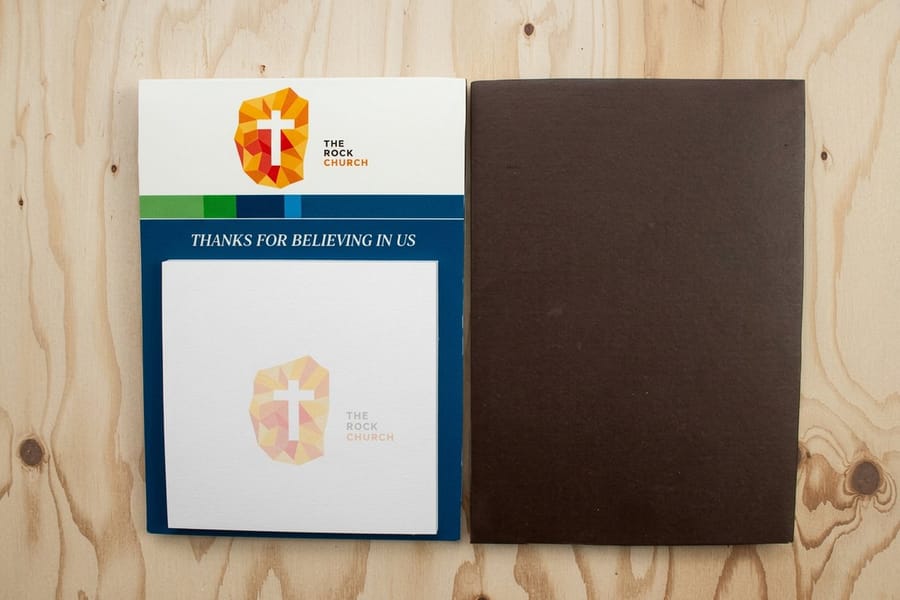
A magnetic pad is glued to a flexible magnetic sheet instead. That sheet is printed on the strip of it that sticks out above or below the paper block, which is why every magnetic notepad you have ever seen has a branded header band. That band is the whole point of the product. It is the part that is still there when the paper is gone.
Everything else you would specify on Standard Notepads carries over to Magnetic Notepads without change: trim size, sheet count per pad, one or two ink colors on the sheet, full color if you want it. If you have already built artwork for a paper pad, the only new piece of design work is the header. Our notepad design guide covers the sheet layout, and you can pull a correctly sized layout from the blank template library before you start.
Why the Backer Decides the Recall, Not the Sheets
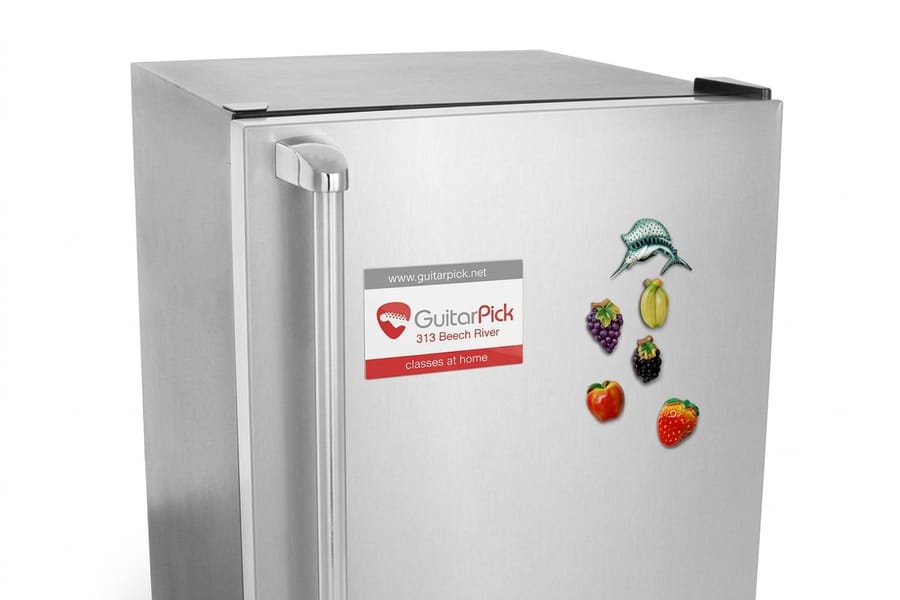
Think about what happens to a printed sheet after someone writes on it. It gets torn off, used, and either thrown away or handed to somebody else. Your logo left the room with it. On a 50-sheet pad that happens fifty times, and then the branding is over.
A magnetic pad flips that. The sheets still leave, but the printed header is on the magnet, and the magnet is on a steel door at chest height in a room people walk through every day. That is the honest argument for the product, and it does not need a made-up statistic behind it: the surface that stays put is the surface that keeps getting seen.
| Product | Where the logo sits | Where it lives | After the sheets are gone | From |
|---|---|---|---|---|
| Standard Notepads | On every tear-off sheet. | Loose on a desk, in a drawer, in a bag. | Nothing left but gray chipboard, which gets binned. | $93.37 |
| Magnetic Notepads | On the sheets and on the magnetic backer header. | Fridge door, filing cabinet, steel locker, van panel. | The printed backer stays up on its own. | $93.37 |
| Business Card Magnets | On the magnet itself, one face. | Same steel surfaces, smaller footprint. | No sheets to lose, so nothing changes. | $19.68 |
Read the last two columns together. A standard pad is a strong short-run tool because people genuinely use paper pads, but its branding has an end date built in. A magnetic pad costs the same to print here and does not. And if all you want is the fridge position without the paper at all, Standard Magnets from $19.68 buy it directly, which is the trade the magnet advertising guide works through in more detail.
Price, Weight, and the Cost That Is Not on the Product Page
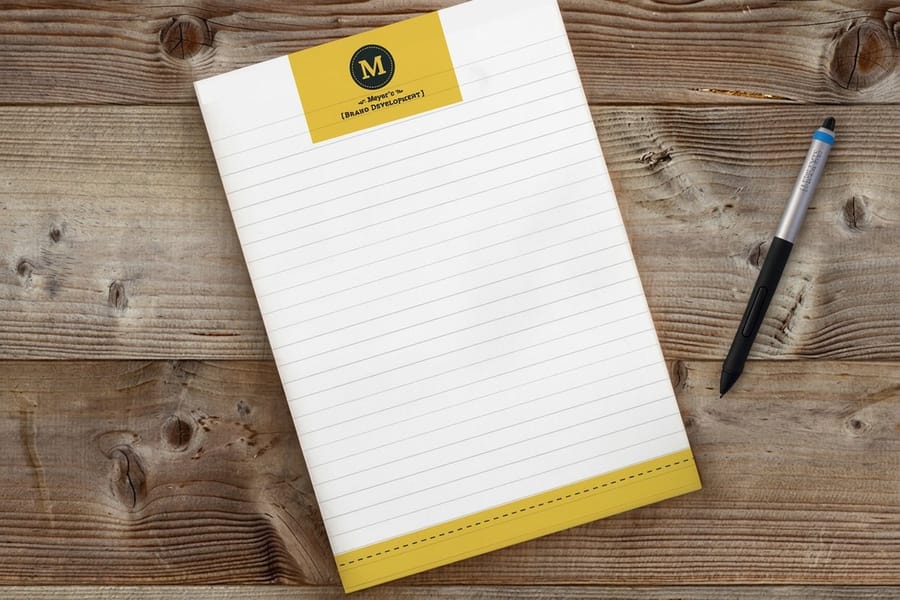
Start with the number that surprises people. Both pads start at $93.37 at 4OVER4.COM. The magnetic backer is not what moves your invoice. Quantity, sheet count and trim size are, and they move it on both products in the same direction.
The cost difference shows up in logistics. A magnetic sheet is heavier and thicker than chipboard, so a carton of magnetic pads weighs noticeably more and takes more space than the same count of paper pads. If you are handing them out at a counter, a trade show table or a service call, that never matters. If you are mailing them one at a time, it matters a lot, because the thickness and rigidity usually push the piece into parcel rates rather than flat mail.
There is a cheaper route worth knowing when mailing is the plan. Send a business card magnet at $19.68 inside the envelope, which mails flat, and keep the magnetic pads for people you meet in person. You get the fridge position at letter postage and spend the pad budget where somebody is standing in front of you.
One more practical note on sheet counts. On a magnetic pad you can run a thinner block, 25 sheets rather than 50, without weakening the promotion, because the branded backer carries on after the paper. On a standard pad a thin block ends the promotion early. The business notepad sizes and sheet counts guide has the numbers we actually run.
Which One to Order, Based on Who Gets It
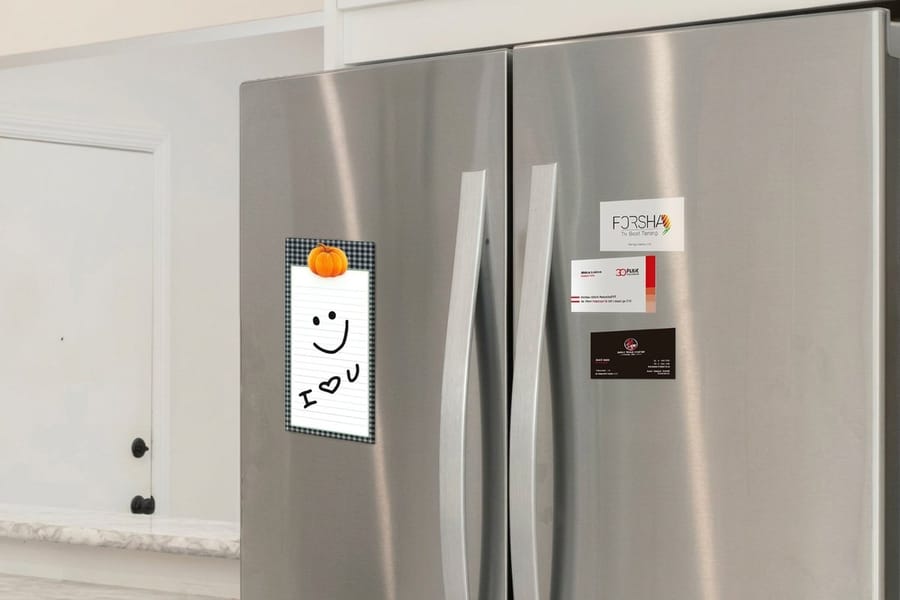
The deciding question is not which pad is better. It is whether the person receiving it owns a steel surface they look at every day.
Order magnetic notepads when you sell into homes and small shops. Plumbers, HVAC, dentists, veterinarians, real estate agents, insurance brokers, restaurants doing delivery. A household fridge is the best free advertising position in the country and it is the reason this product exists. Print the phone number large on the header and let the sheets be plain.
Order standard notepads for conferences, hotel rooms, classrooms, internal use, and any office environment built from glass and aluminum. Also order them when the pad itself is the gift and it needs to look like stationery rather than a promo item, which is the case for law firms and design studios. The notepads versus post-its comparison is the next decision if you are still choosing a format.
Order both if you run field service. Crews leave a magnetic pad at the job and drop a standard pad on the counter for the office staff who already have a wall of them. Sizes for the magnet side are in the refrigerator magnet sizes guide, and the rest of the campaign print sits in marketing materials.
The trade-off
Where the magnetic pad earns its place, and where it does not
Why the magnetic pad wins on recall
- The printed header stays on the surface after every sheet is used, so the phone number outlives the paper.
- It picks its own spot. A magnet lands on the fridge or the filing cabinet, which is eye level and gets looked at daily.
- It survives the desk purge. Loose pads get stacked and buried, magnets get left alone.
- It doubles as a shopping list holder, which is why home service brands keep reordering them.
- Same $93.37 starting price as a standard pad at 4OVER4.COM, so the upgrade is a design decision, not a budget one.
What it costs you
- Useless without a ferrous surface, and a lot of newer appliances and office furniture have none.
- Heavier and thicker, so mailing costs more and a box of them takes more space.
- The magnet only reads as premium if the header holds up on its own. A logo squeezed under the sheets is wasted.
- Overkill for internal use. Nobody needs a magnet on the pad your own staff scribble on.
- Harder to hand out at scale than a business card magnet, which slips into a wallet or an envelope.
Our verdict
If your customers are households and small shops, print the magnetic pad. It costs the same to produce here, and the branded backer keeps working after the paper runs out. Print standard notepads for offices, hotels, classrooms and anywhere the surfaces are glass and aluminum, and put the saved shipping weight into a bigger quantity.
Wally explains the two pads
One pad leaves with the note, the other stays on the fridge
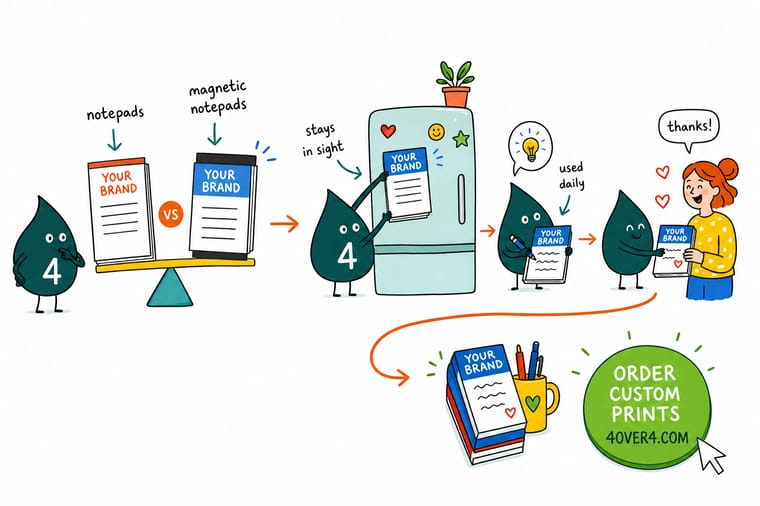
Wally tears a sheet off the plain pad and watches his logo walk out the door with it. Then he sticks the magnetic pad on the fridge. Same sheets, same glue, but the logo is printed on the magnet underneath, so it is still facing the kitchen when the last sheet is gone. He only hands those out to people who own a steel door. Glass office, aluminum locker, plastic-wrapped fridge, and the magnet is just an expensive chipboard.
Order magnetic notepads →Specs and pricing
Sheet counts, sizes, and starting prices side by side
Live configuration options and starting prices straight from the 4OVER4.COM configurator, so you can compare the paper pad, the magnetic pad and the flat magnet on the same screen.



Print it
Order the pad that suits your customer
Explore more
Where to go next


By the numbers
Promotional notepad work inside our product range
Common Questions
Your notepad and magnet questions, answered
What is the difference between a notepad and a magnetic notepad?
The sheets and the padding are identical. The difference is the board they are glued to. A standard notepad is padded onto plain chipboard, which is structural and never printed. A magnetic notepad is padded onto a flexible magnetic sheet that is printed on the exposed header, so the pad sticks to steel and shows your logo whether or not any sheets are left. Everything else, the sheet size, the paper, the number of sheets in the pad, works the same way.
Do magnetic notepads actually improve brand recall?
They improve exposure, which is the part you can control. A standard pad is only branded while sheets remain, and each sheet carries the logo out of the room when it is torn off. A magnetic pad puts the logo on the backer, so it keeps facing the customer at the fridge or the filing cabinet until someone deliberately takes it down. We do not publish a recall statistic because we have not measured one, but the mechanism is simple: the surface that stays is the surface that gets seen.
Do magnetic notepads cost more than regular notepads?
Not at the entry point here. Both Standard Notepads and Magnetic Notepads start at $93.37 at 4OVER4.COM. What moves the price on either one is quantity, sheet count per pad and the size of the sheet. Where a magnetic pad does cost more is shipping and mailing, because the magnetic backer adds weight and thickness that a chipboard backer does not.
Will a magnetic notepad stick to any refrigerator?
No, and this is the failure everyone finds out about after the boxes arrive. Most white and black fridge doors are steel and hold fine. Many stainless steel doors are actually a non-magnetic grade or a plastic wrap over an aluminum shell, and they hold nothing. The same applies to a lot of modern office furniture. If your audience is commercial offices with glass and aluminum, print standard notepads and put the magnet budget into something that mounts differently.
How many sheets should a promotional notepad have?
For a giveaway, fewer sheets and more pads usually beats the reverse. A 25-sheet pad is used up in a few weeks of real note taking, and on a magnetic pad that is fine, because the branded backer stays behind. On a standard pad a thin sheet count shortens the whole life of the promotion, so go thicker there. Our guide to standard notepad sizes walks through the sheet counts and trim sizes we run.
Can I mail a magnetic notepad?
Yes, but budget for parcel rates rather than letter rates. The magnetic backer is thicker and heavier than chipboard, which usually pushes the piece past the thickness and rigidity limits for flat mail. If mailing is the whole plan, a business card magnet at $19.68 mails flat inside a letter and does most of the same fridge job, and you can send a notepad separately to the customers who are worth the postage.
Get Started
Both pads start at 25 for $93.37 on 70# Uncoated Text
Pick your sheet count, set the trim size, and choose a chipboard or magnetic backer. We print both, and both start at the same price.
Legal Disclaimer
Gold Standard guarantees apply to all standard orders placed through 4over4.com. Price match requires verifiable proof of a competitor's published price for an equivalent product with matching specifications and turnaround time. Satisfaction guarantee covers manufacturing defects and print quality issues. Contact support with order number and documentation. On-time delivery rate based on tracked orders 1999 to 2026. Individual results may vary based on shipping carrier performance.
