
Large Fabric Backdrops That Set Up Without Tools


Size the frame to the exhibitor kit, zip the printed fabric over push fit aluminum tubes, and swap only the graphic when the campaign changes. One person builds the whole booth wall without a single tool.
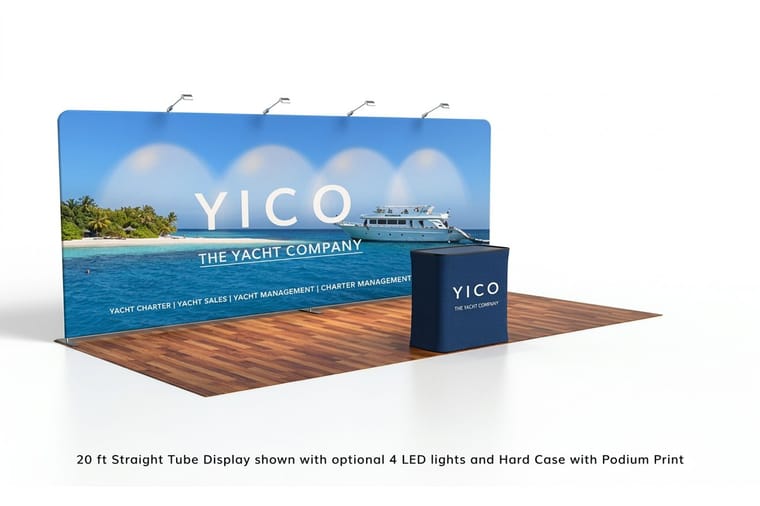
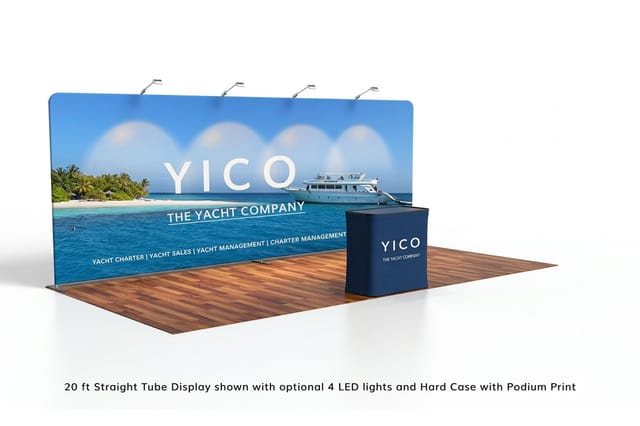
A large fabric backdrop is a printed tension fabric graphic zipped over a push fit aluminum tube frame, so one person builds it without tools. The straight tube display at 4OVER4.COM comes 8, 10 or 20 feet wide and about 89 inches tall, on 8.8oz tension fabric, single or double sided, with a soft canvas bag or a hard case. It starts at $635.96 and ships in a 4 business day standard turnaround, with 3 day, 2 day and next day rush.
Quick tips
How the tube frame, the fabric sleeve and the zipper fit together
The printed fabric is cut a little smaller than the frame, so it stretches drum flat once it is zipped on. Numbered tubes push together on the carpet, the sleeve slides over like a pillowcase, and the zipper closes along the bottom edge. Keep the headline in the band between four and seven feet, above the counter line.
Watch it printed
See a straight tube display made, in 103 seconds
What a straight tension fabric display is
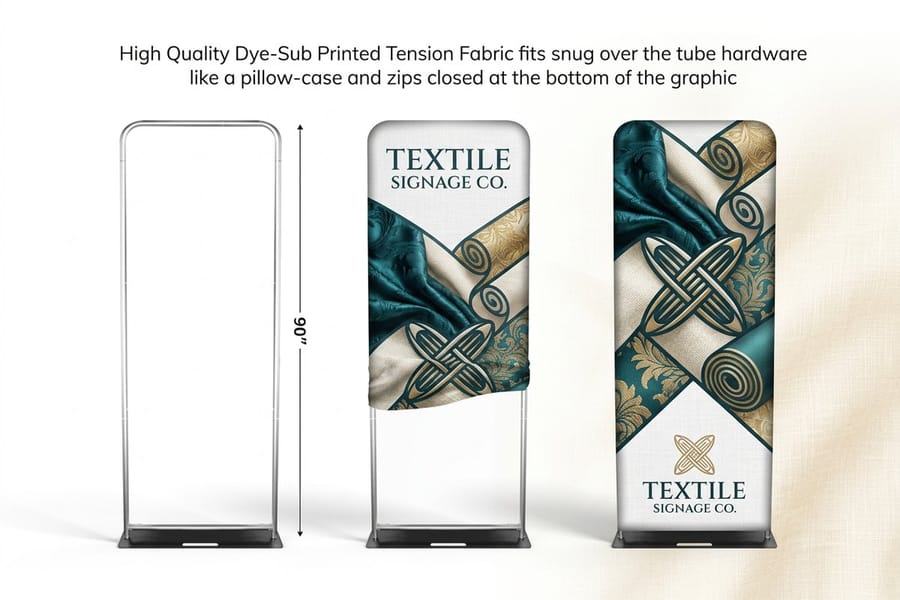
A straight tension fabric display is two parts. A frame of lightweight aluminum tubes pushes together into a flat rectangle, and a printed polyester graphic sewn as a sleeve slides over that frame like a pillowcase and pulls tight at the corners. The fabric is cut slightly smaller than the frame, so once it is on, it stretches drum flat with no ripples and no seam across the face.
That is the difference from older booth walls. Pop up systems relied on magnetic bars and overlapping laminated panels, and every panel edge showed in photos. Vinyl banners hung from grommets and kept the fold lines from the shipping tube for the first day. A tension display arrives folded in a bag and flattens itself as soon as the frame takes the load.
Straight matters too. A straight frame sits flush against the back of the booth and reads as a clean rectangle from anywhere on the aisle. A curved frame bows forward, which softens the booth but eats floor depth and makes two units harder to line up side by side.
- Pillowcase graphic. A full sleeve with a zipper along the bottom edge, wrapping the frame front, back and sides. Faster for a traveling booth.
- SEG graphic. Short for silicone edge graphic: a strip sewn around the perimeter presses into a groove in the frame. SEG fabric at 4OVER4.COM is 6oz fabric with a sewn in 10mm silicone keder, non-lit or backlit, from $69 in any size.
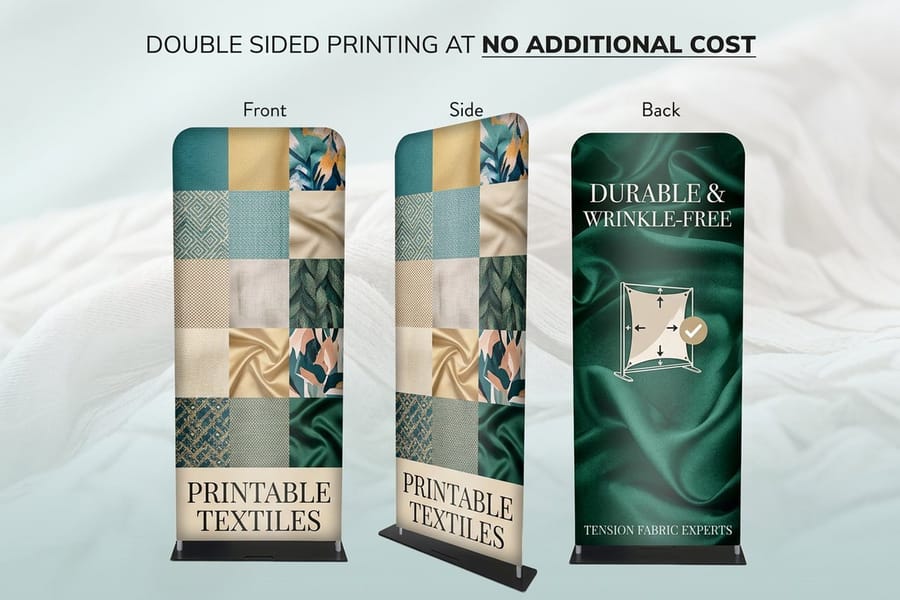
- The fabric itself. The straight tube display prints on 8.8oz tension fabric by dye sublimation, so the color bonds into the fiber instead of sitting on top. That is why the graphic folds into a bag without cracking; check the care note that ships with it before you wash it.
Setup in minutes without tools or a second person

Ask any exhibitor what they hate about trade shows and setup is near the top. You land late, the hall is loud, your neighbor is already drilling, and the floor closes soon. A straight tension display is built for that window: the tubes are numbered or bungee corded so they fit one way, you push the rectangle together on the carpet, slide the graphic over it, zip the bottom and stand it up.
Nothing in that sequence needs a tool, a ladder or a labor call. One person can build an 8 or 10 foot wall alone. Two people make the 20 foot wall comfortable, mostly for the reach rather than the weight.
Teardown is where the time is saved. Unzip, pull the graphic off, fold it loosely, break the frame down, and it all goes back in the case it came in: a soft canvas bag or a hard case, picked when you order. There is no crate to rebuild and no panel edges to protect.
Shipping weight follows setup ease. Aluminum tubes and folded fabric travel in one case, which most couriers treat as a single package. Crated hard panel walls need freight, a delivery window and storage at the venue, and over a season of regional shows that difference can outweigh the display itself.
Sizing a fabric backdrop to your booth, not to the wall
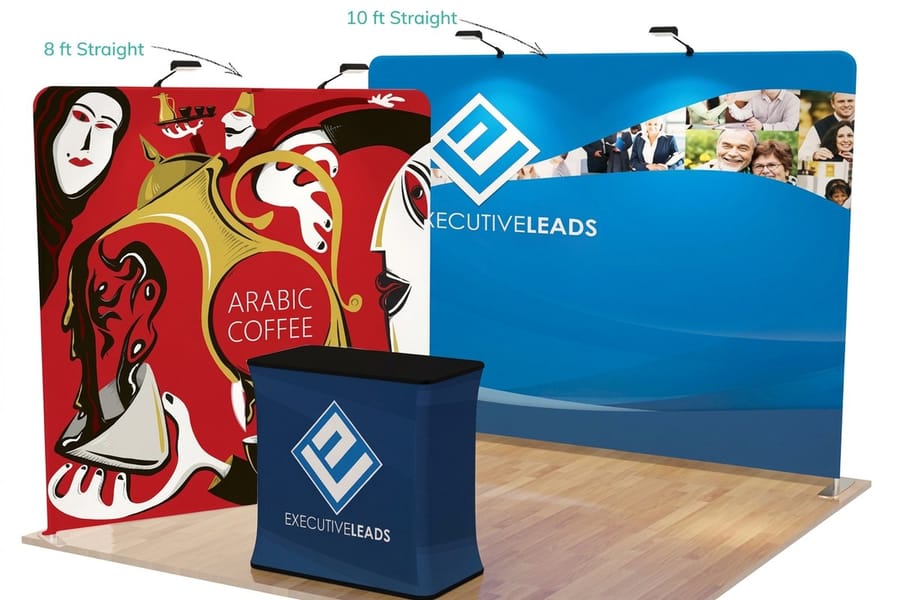
Get the booth size right before anything else. People measure the physical back wall and order a graphic to match it, then find the show has a height limit or the pipe and drape sits forward of where they measured. Read the exhibitor kit first. Most inline booths cap back wall height at eight feet, with side wings limited to three or four feet toward the aisle.
Work back from that. The straight tube display comes in 8, 10 and 20 foot widths, each about 89 inches tall, just under the eight foot cap. A ten foot inline booth takes the 8 or 10 foot frame. A twenty foot space takes the 20 foot frame, or two 10 foot units butted together, which ship more easily and split across two smaller shows later. Island booths often allow taller structures, so check the specific limit.
Leave room for what stands in front of it. Counters, a table, product and staff occupy the bottom three feet of the wall. Keep the logo and headline between four and seven feet off the floor, where they clear a crowd and read across the aisle, and fill the bottom three feet with pattern or color nobody needs to read.
Match the panel to the job. The wide frame is the brand wall. A narrow fabric panel is the message unit at the aisle edge, beside a demo station or in a hotel lobby. For photo walls, see which backdrop size you should get.
Replaceable SEG graphics and what a display really costs
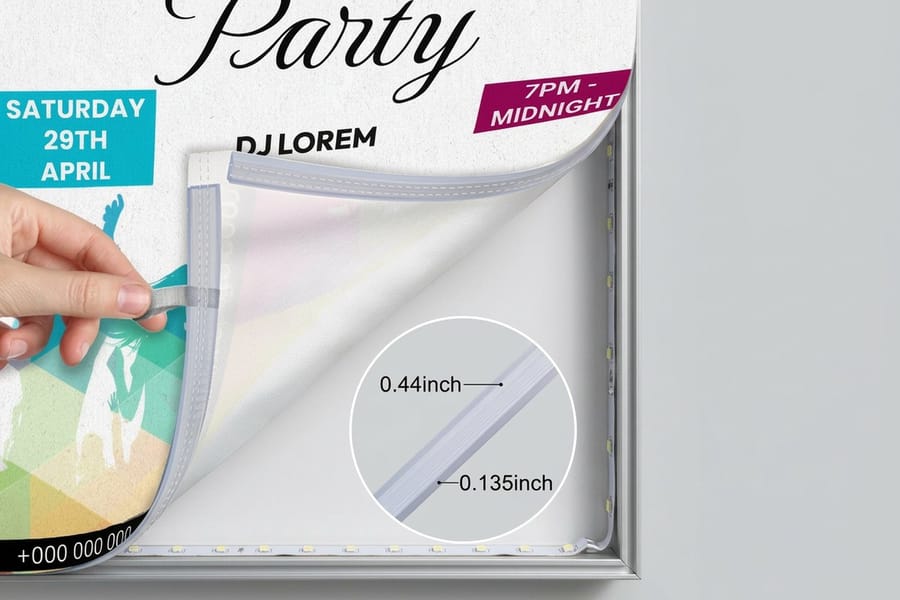
The strongest argument for tension fabric is the fifth show, not the first. The aluminum frame lasts; the graphic carries your campaign and dates. Because the fabric detaches completely, you replace only the part that went out of date, in the ten minutes it takes to unzip one sleeve and slide on another. Many exhibitors keep two or three graphics per frame: a general brand version and one for whatever they are launching.
- The full kit. A straight tube display is the frame, the printed fabric and the case, from $635.96. Ten come to $5,710.45, about $571 each. Add 2 LED lights if the hall is dim.
- Single or double sided. A back wall needs one face. An island divider seen from both sides takes double sided printing on the same 8.8oz fabric.
- Fabric only. The 36 by 90 and 48 by 90 inch fabric displays order as fabric only when you already own the frame; they start at $163.67.
- SEG graphics. Any size from $69 in 3 business days, non-lit or backlit, for frames with a silicone edge groove.
- Turnaround. The display prints in 4 business days standard, with 3 day, 2 day and next day rush for a tight show date.
Configure the size and the sides you need and the price updates live; the table further down is the real configurator output.
When a retractable fabric stand is the smarter buy

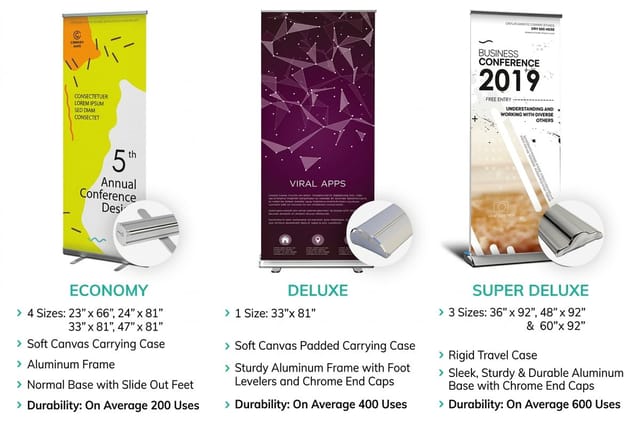
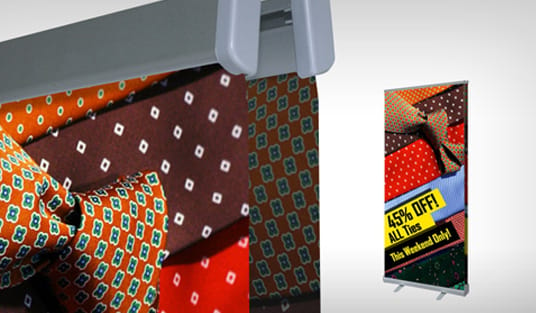
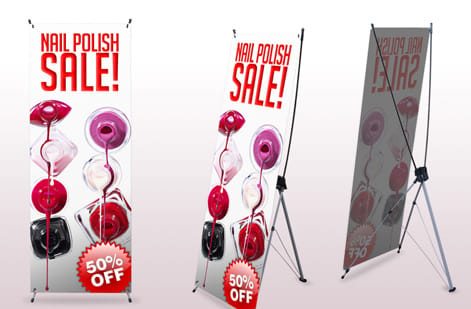
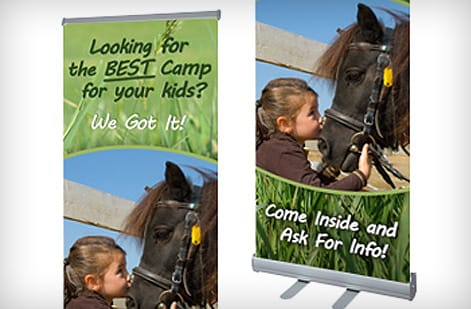
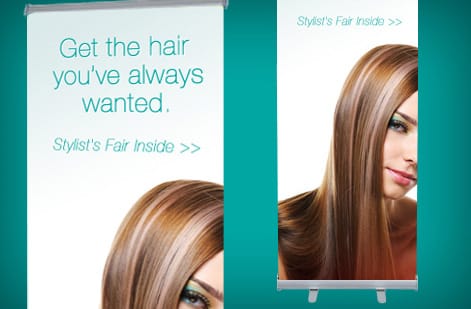
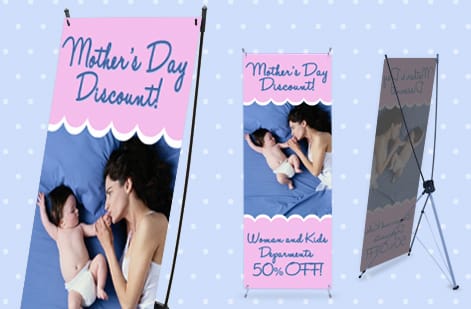
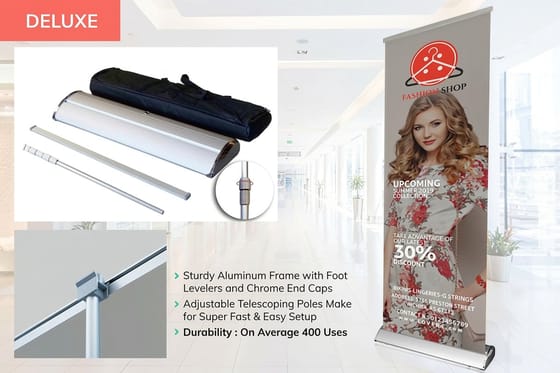
Not every backdrop needs to be a wall. A retractable fabric banner stand holds a printed panel that rolls down into an aluminum base, so the unit travels as one piece. Setup is lifting a pole and clipping the top rail. For a recruiting table, a registration desk, a showroom corner or a lobby, it does the job a full frame would overdo. If the backdrop is a photo wall, start with our guide to backdrop banner sizes and setup for photo walls that look sharp on camera.
Retractable fabric banner stands start at $159.85 and print on 9oz UV printed coated polyester fabric, from 23 by 66 inches in the economy stand to 60 by 92 inches in the super deluxe, in 3 business days. A fabric panel stays matte, so photos of staff in front of it come out without the hot spot that vinyl throws back at a flash.
The practical setup is one wide straight display as the back wall plus two fabric stands as bookends or aisle units. For a small show take only the stands; for the flagship event take everything. One artwork system keeps the brand the same at every size.
Covering the rest of the booth with adhesive wall fabric

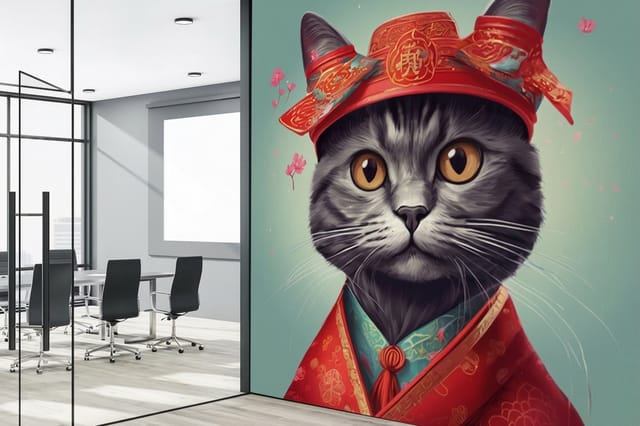
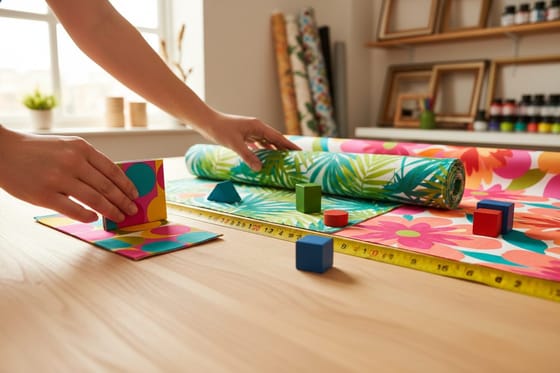
A tension display handles the back wall. It does not handle the column in the middle of your space, the hard wall of a meeting room, the front of the counter or the door people walk through. Adhesive wall fabric fills those gaps: 7mil low tack wall fabric that presses onto a smooth surface, lifts off without residue and repositions while you line it up.
It is the cheapest branded square footage an exhibitor can buy, from $25 in any size, in 3 business days. Wrap the column in your pattern, run a floor to ceiling graphic beside the entrance, or panel a plain office wall for a customer visit and pull it down the same afternoon.
Two rules keep it clean. Apply it to a smooth, dust free, fully cured surface, since fresh paint and textured plaster are where adhesive fabrics fail. Smooth from the center outward with a soft squeegee or your palm so air can escape, and test a corner before you commit to a whole wall in a rented space.
Building artwork that prints clean on fabric
Fabric forgives a lot and punishes two things. The first is bleed. A pillowcase graphic wraps around the frame edge, so the artwork has to continue past the visible face; a design built to the finished size shows white at the fold or loses type into the return. Build to the template, keep live text inside the safe area, and run color out to the bleed line.
The second is resolution at scale. Nobody views an eight foot wall from four inches away, so you do not need 300 dpi at full size: a file at quarter or half scale at 150 dpi is normal. What matters is that every placed image is large to begin with, because an enlarged web graphic looks as bad on fabric as anywhere else, only bigger.
A short pre flight list:
- Use the template. Download the exact layout for the 8, 10 or 20 foot frame instead of guessing at bleed and safe margins.
- Outline your type. Convert fonts to outlines or embed them so nothing substitutes on our end.
- Set CMYK. Dye sublimation prints from process ink, and bright RGB values shift.
- Keep the reading zone high. Logo and headline between four and seven feet off the floor, above counters and staff.
- Flatten transparency. Export a flattened PDF so drop shadows and blend modes render the way you drew them, and add the free online proof.
First show on the calendar? Our first time exhibitor's trade show checklist covers everything around the backdrop.
Wally builds the booth wall alone
Kit rules first, then the frame, then the graphic
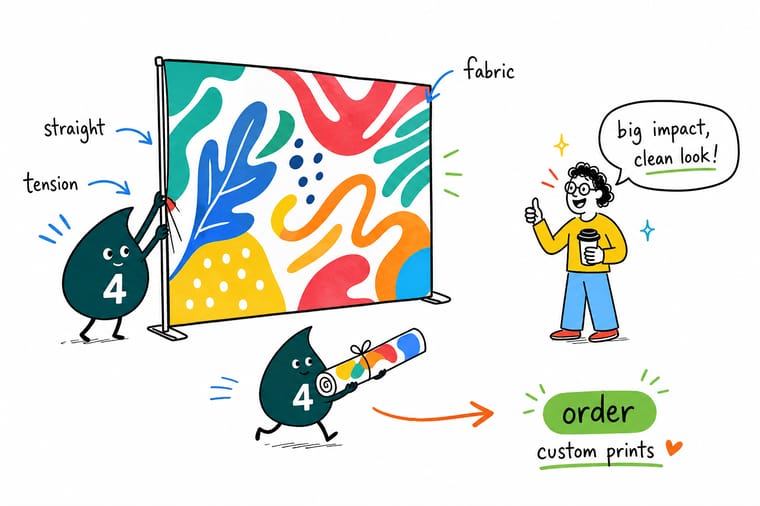
Wally reads the exhibitor kit before he picks a frame, because the height cap decides everything. He pushes the numbered tubes together on the carpet, slides the fabric on, zips the bottom and stands the wall up, no tools and no second person for the 8 or 10 foot frame. He keeps the headline between four and seven feet, and when the campaign changes he swaps the graphic and keeps the frame.
Order a straight tube display →
Compare walls
Fabric versus vinyl and rigid panel walls
Vinyl still has a place: outdoors, in weather or on a fence line, a heavy vinyl banner is the right product and fabric is not. Indoors under bright booth lights, fabric wins on what shows in the photo, and a rigid wall wins only when it has to carry weight.
| Wall | Material | In photos | Travel and setup | Best for |
|---|---|---|---|---|
| Tension fabric display | 8.8oz tension fabric on an aluminum tube frame | Matte, no seams, no glare stripes | One case, one person, no tools | Indoor booth walls; swap the graphic, keep the frame |
| Vinyl banner | 13oz outdoor vinyl or 15oz blockout vinyl, grommets and hems | Can glare under lights and sag between grommets | Rolls into a tube, hangs from grommets or pole pockets | Outdoors, weather and fence lines |
| Rigid panel wall | Hard panels on a structural frame | Panel lines across a wide face | Crated freight, two people and a toolkit | Walls that must hold monitors or shelving |
Specs and pricing
Straight tube display specs and pricing
These are the live widths, fabric, sides, cases and quantity prices for the straight tube display at 4OVER4.COM, straight from the configurator, so you can price the whole booth wall before you design it.
| Quantity | Price Per Unit | Total |
|---|---|---|
| 1 | $635.96 | $635.96 |
| 2 | $635.96 | $1,271.92 |
| 3 | $635.96 | $1,907.88 |
| 4 | $635.96 | $2,543.84 |
| 5 | $575.33 | $2,876.65 |
| 6 | $574.64 | $3,447.81 |
| 7 | $574.14 | $4,018.96 |
| 8 | $573.77 | $4,590.12 |
Print it
A back wall, the stands beside it and the fabric for the rest
See it in use
Displays customers have set up
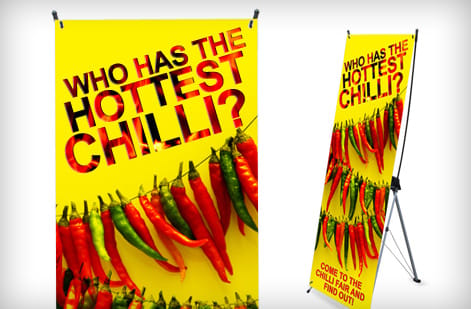

Explore more
Where to go next
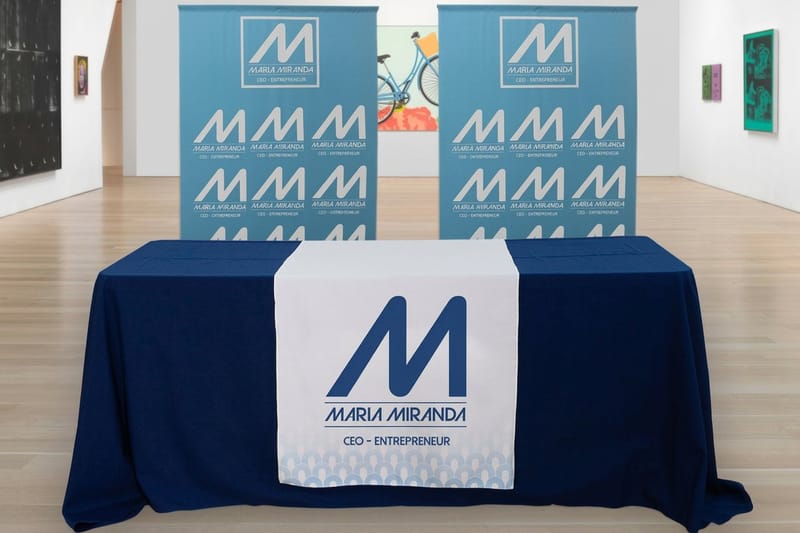
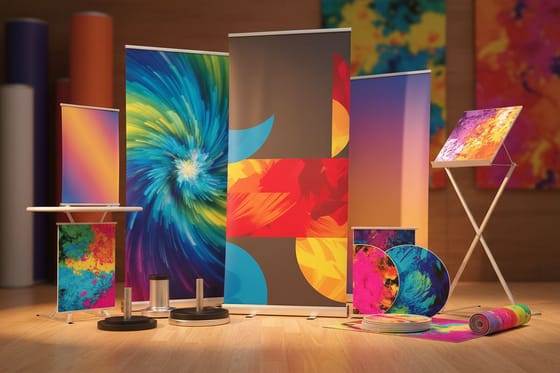
By the numbers
Three widths, one person, no tools
Common Questions
Large fabric backdrops, answered
How does a straight tension fabric display work?
Two parts. An aluminum tube frame pushes together into a flat rectangle, and a dye sublimated fabric graphic slides over it and zips shut, stretching drum tight because the fabric is cut slightly smaller than the frame. The result is one printed wall with no panel lines and no glare, which is why it has largely replaced pop up panel walls at trade shows. The Straight Tube Display is the standard version of the system.
Which display width fits a 10 or 20 foot booth?
Start with the exhibitor kit, not a tape measure: confirm the back wall height limit, usually eight feet for an inline booth, and the side wing rule. The straight tube display stands about 89 inches tall in 8, 10 and 20 foot widths. A ten foot booth takes the 8 or 10 foot frame; a twenty foot space takes the 20 foot frame or two 10 foot units side by side. Add a narrow fabric stand for the aisle.
What does a fabric backdrop cost?
The Straight Tube Display starts at $635.96 for the frame, the printed fabric and the case together, and ten cost $5,710.45. Retractable Fabric Banner Stands start at $159.85, Adhesive Wall Fabric at $25 and SEG fabric at $69. Double sided printing, a hard case and LED lights raise the display price; a fabric only order keeps your frame.
Which fabrics and finishes can I choose?
The straight tube display prints on 8.8oz tension fabric, single or double sided, with a matte face, and packs in a soft canvas bag or a hard case, with 2 LED lights as an option. Retractable stands use 9oz UV printed coated polyester fabric. SEG graphics use 6oz fabric with a sewn in 10mm silicone keder, non-lit or backlit, and adhesive wall fabric is a 7mil low tack material.
How long does a fabric display take to print?
The straight tube display has a 4 business day standard turnaround, with 3 day, 2 day and next day rush. Retractable fabric stands, SEG fabric and adhesive wall fabric print in 3 business days. The clock starts after artwork approval, and transit sits on top, so order with a real cushion before the show and pick the rush only when the date forces it.
Get Started
Build the booth wall before the show
Read the exhibitor kit, pick the 8, 10 or 20 foot frame, keep the headline above the counter line, and approve a free online proof before the fabric prints.
Legal Disclaimer
Gold Standard guarantees apply to all standard orders placed through 4over4.com. Price match requires verifiable proof of a competitor's published price for an equivalent product with matching specifications and turnaround time. Satisfaction guarantee covers manufacturing defects and print quality issues. Contact support with order number and documentation.
