
The Interview Success Blueprint That Gets You Hired


Four moves, in order: research that gives you a theory, five stories that answer most questions, a kit that removes friction in the room, and a follow up that arrives while the decision is still open.
Interview success comes from four things: researching the company until you can name the problem it is hiring against, preparing five stories that cover almost every behavioral question, walking in with spare resumes and a one-page 90 day plan, and following up inside 24 hours with something specific. Keep behavioral answers near two minutes and give the result thirty seconds of it, because the outcome is what gets scored and it is the first thing that gets cut when the setup runs long.
Quick answer
Research, five stories, a kit, and a follow up inside a day
Interviews are won on preparation that changes what you say, not on confidence. Read the job posting as a symptom and find the problem behind it. Write five stories covering a win, a failure, a conflict, a time without instructions, and a time you changed your mind. Carry spare resumes, a one-page 90 day plan and a notebook of questions. Then answer in about two minutes, with a full thirty seconds spent on the result, and send a short specific note within 24 hours.
The Week Before, Where Most of the Result Is Decided
Preparation is not rereading the job description. It is arriving with a working theory of what this team is struggling with, and two stories that speak to it.
Start with the posting itself and read it as a symptom. A role that lists "process documentation" three times is a team that lost someone who held everything in their head. A posting rewritten twice in two months, which you can see from the reposting date, usually means the first search failed. Then go wider: recent product releases, the company blog, a support forum, one-star reviews, the LinkedIn profiles of the people interviewing you. Twenty minutes on reviews tells you more about daily friction than an hour on the careers page.
Then build the five stories. A shipped win, a failure you owned, a conflict you resolved, a time you worked without instructions, and a time you changed your mind on something you had argued for. Write each one down in full sentences once, out loud, and time it. Writing forces the specifics, and the specifics are what survive.
Write your questions in a notebook before the day, not on your phone. Reading a question off a page reads as preparation. Reading it off a phone reads as distraction, fairly or not. Any notebook works, and a branded pad from custom notepads starting at $93.37 only earns its place if you are interviewing as a consultant or a founder who will leave sheets behind. For a job search, a plain pad is the honest answer.
What to Carry In, and What It Costs to Get It Right
The paper you bring does one job: it removes friction for the people in the room. Nothing you carry will win an interview on its own, and a bent resume pulled from a rucksack can cost you a little ground before you sit down.
The core kit is four or five resume copies, a one-page plan for your first 90 days, a notebook, and a card. What changes is the format of the interview.
| Interview format | What to bring | What matters most | What to skip |
|---|---|---|---|
| Phone screen | Resume and job posting on the desk in front of you, one page of notes. | Numbers you might be asked for, and your salary range written down. | Everything printed for anyone else. Nobody sees it. |
| Video call | Printed resume for yourself, portfolio open in one window, questions on paper. | A clean share of one window, not a hunt through tabs while people wait. | Folders, cards, anything you cannot hand through a screen. |
| Onsite or panel | Four or five resume copies, a one-page plan, folder, cards, notebook. | Spares for the person who was added to the panel that morning. | A thick bound portfolio nobody asked to see. |
| Portfolio review | Printed work samples or a booklet, plus the digital version as backup. | Being able to point at a page while you talk instead of scrolling. | Explaining every project. Pick three and go deep. |
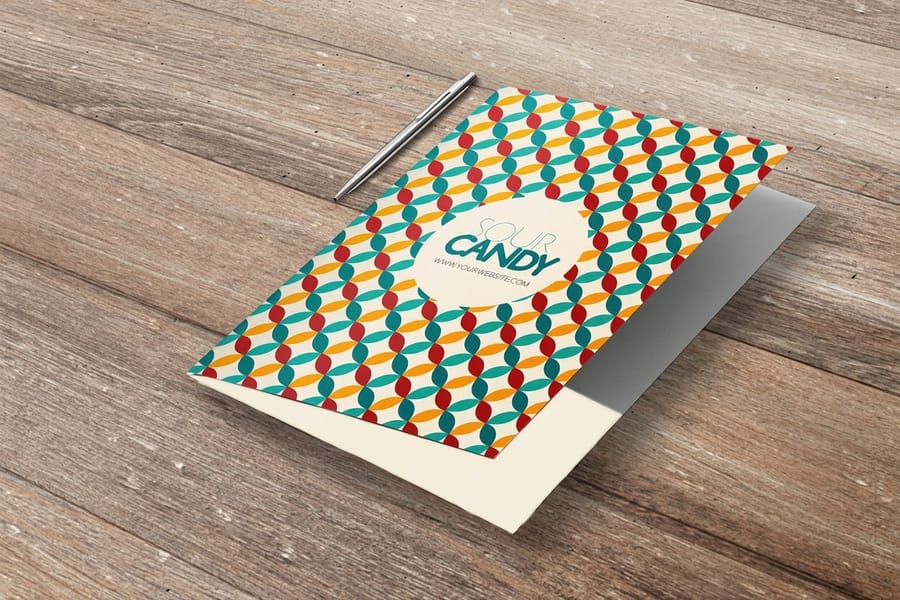
A folder is the cheapest upgrade in the whole kit, because it keeps five sheets flat and gives you somewhere to put anything they hand you. Short run presentation folders start at $108.75, and the short run part is the point: a standard folder order runs into the hundreds of units, which is absurd for one job search. If that is still more than a job hunt justifies, a plain manila folder does the mechanical job and nobody scores you on it. The folder printing guide covers stock and pocket choices if you are ordering for a firm rather than for yourself.
The one-page plan is the piece almost nobody brings, and it is the one that gets kept. One page, three headings for the first 30, 60 and 90 days, six to eight concrete lines under them, printed single sided. Run it as a simple one-page printed flyer, which starts at $39.54, or print it at home on decent paper. Hand it over when they ask what you would do first. It turns an opinion into a document somebody carries back to their desk.
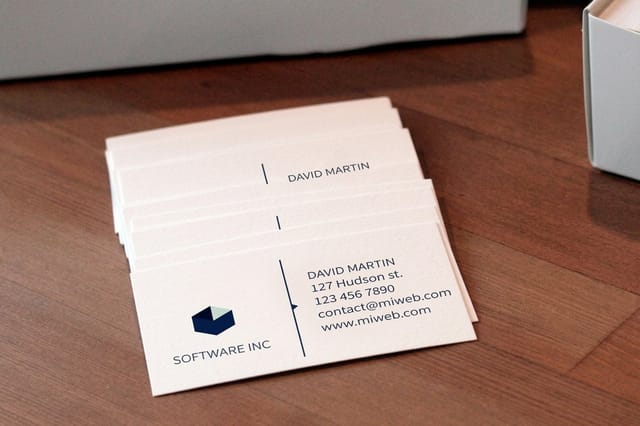
Cards still matter for interviews you get through networking, for panels where nobody writes your name down, and for anyone freelancing on the side. Standard business cards start at $17.57, which is less than the taxi to the office. Keep the card to a name, a role, a phone number, a mail address and one link, and see what to include on a business card before you crowd it. The rest of the matching set lives in business stationery.
Answering So the Result Never Gets Cut
Two minutes is the working length of a behavioral answer, and the way candidates lose it is always the same. The setup swells, the middle rushes, and the outcome arrives as an afterthought while the interviewer is already writing.
Use STAR, but weight it deliberately. Fifteen seconds to set the scene, fifteen for what you were responsible for, a full minute on what you decided and did, and thirty seconds on what changed. The action section is where the interview actually happens, because it is the only part that shows judgment rather than circumstance. If you cannot say what changed, the story is not ready and you should pick another one.
Three habits do most of the work. Answer the question that was asked, then stop talking, even if the silence stretches; interviewers frequently leave a pause to see whether you fill it with noise. When a question is vague, ask which part they want before you spend two minutes on the wrong half. And when you do not know, say so, then say how you would find out. That answer is scored better than a confident guess in almost every debrief.
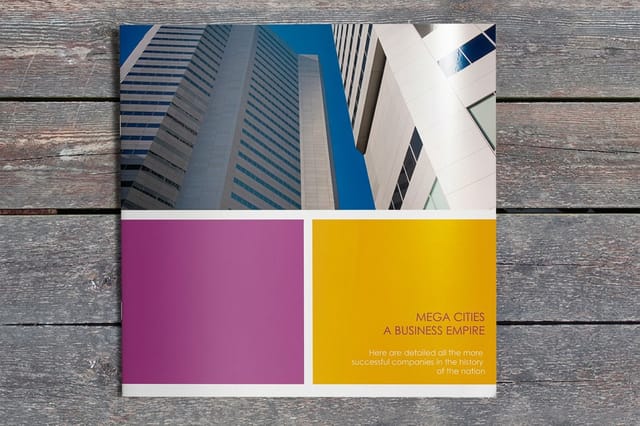
If your work is visual, bring it printed. A printed booklet starting at $240.55 makes sense for a design studio or an agency that reviews work in the room, because a page you can point at holds attention better than a screen you scroll. For a single job search, a few printed samples in the folder do the same job for a fraction of the cost. If networking brought you the interview, the follow up thread often starts from a card, which is why putting your LinkedIn on a card is worth getting right.
The 24 Hours After, and What Actually Gets Read
Send the email the same day or the next morning, while the panel is still comparing notes. Anything later arrives after the decision has taken shape.
Six sentences is plenty. Thank them, name one specific thing from the conversation, then answer the question you fumbled. That third part is the whole reason to write. If you gave a weak answer on scaling a process, three tight sentences with the example you should have used are worth more than four paragraphs of enthusiasm, and they give your advocate on the panel something to quote.
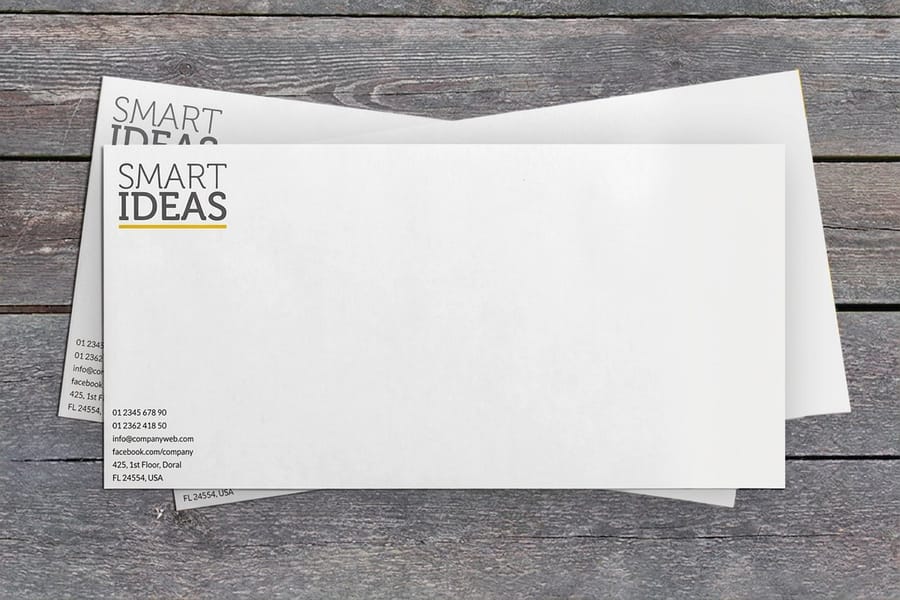
Printed notes are a narrower play than career advice suggests. They fit senior roles with slow processes, client-facing work where the gesture is part of the job, and small companies where a piece of mail is unusual enough to be remembered. They do not fit a fast software hiring loop that closes in five days, because the note arrives after the offer. If you send one, send it in addition to the email, keep it handwritten, and get it in the mail the same day. Matching printed letterheads from $99.95 and printed envelopes from $142.99 are a business stationery decision rather than a job search one, so order them when you run a practice or a consultancy, not for a single interview. The letterhead and card matching guide covers keeping the set consistent, and design templates give you a starting layout.
Then set the follow up. If they gave you a date, wait until the day after it before you check in. If they did not, one week is the polite interval, one message, and no apology for sending it. Keep interviewing while you wait, because the strongest position in a negotiation is the one where you have somewhere else to be. How you present yourself across all of it stays consistent, which is the argument in our brand presentation guide.
Wally walks into the interview
Five stories, spare copies, and a plan on one page
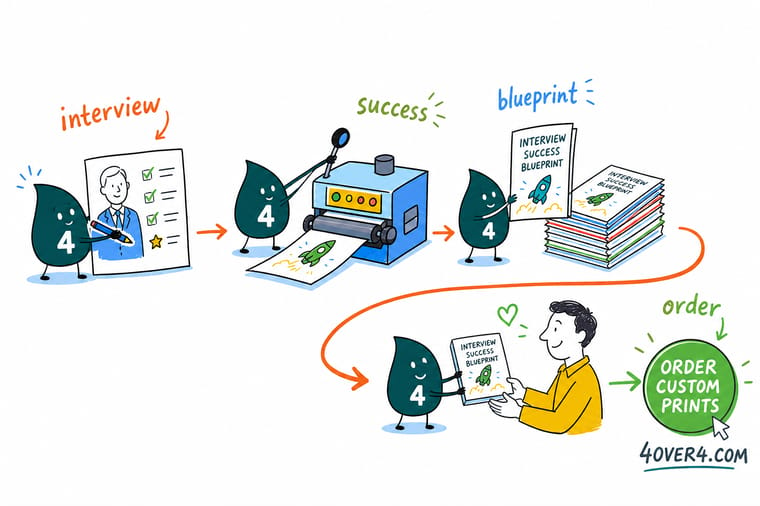
Wally reads the job posting as a symptom, not a wish list, and builds two answers around the problem he finds. He brings five resume copies for a panel that grew overnight, a single page showing what he would do in the first 30, 60 and 90 days, and a notebook with his questions already written down. He keeps each story near two minutes and saves the last thirty seconds for what actually changed. Then he sends six sentences the same evening, including the answer he wishes he had given.
Print a short run presentation folder →Specs and pricing
The interview kit, sizes and starting prices
Cards for the people who never wrote your name down, a folder that keeps five resumes flat, and a one-page plan you can hand across the table. Live configuration options and starting prices from the 4OVER4.COM configurator.

Print it
Print the pieces you hand over
Explore more
Where to go next

By the numbers
Printing you can plan an interview date around
Common Questions
Your interview questions, answered
What should I actually bring to a job interview?
Four or five printed copies of your resume, a printed one-page plan for the first 90 days, a notebook with your questions already written in it, a pen, and a few business cards if you have them. Carry the paper in a folder rather than loose in a bag, because a creased resume handed across a table is the first thing anyone notices. For a video interview, swap the folder for the same documents open in a single window you can share, plus the printed copy in front of you for your own reference.
Is a printed resume still necessary when they already have my PDF?
The hiring manager has it. The third person on the panel, pulled in that morning, usually does not. That is who the spare copies are for, and handing one over quietly at the start buys you two minutes while everyone reads. It costs almost nothing to print, so the only real argument against it is a folder so battered it works against you.
How long should an interview answer be?
Around two minutes for a behavioral question, and thirty seconds for a factual one. Two minutes is shorter than it feels, so the discipline is in the split: roughly fifteen seconds of situation, fifteen of task, a full minute on what you actually did, and thirty seconds on the result. If you have not said what changed by the two minute mark, stop and ask whether they want the outcome or the detail.
What questions should I ask at the end?
Ask about the work, not the perks. What does the first successful 90 days look like in this role, what is the thing about this team that surprises new joiners, how does a decision like the one in the job posting actually get made, and who would I be working with most closely. Write them down in advance, because the end of an interview is the worst moment to invent a question, and asking nothing reads as no interest.
How soon should I send a thank you note, and should it be printed?
Send email within 24 hours while the panel is still comparing notes, and keep it under six sentences. A printed note mailed afterward is worth it only for slow-moving senior roles, client-facing work, or a small company where the gesture will actually be noticed, and it has to arrive within a few days to matter. Never send only the printed note, because the decision is usually made before the mail arrives.
What do I say when I do not know the answer?
Say you do not know, then say how you would find out, then stop. Interviewers ask questions outside your experience on purpose to see what you do when the ground disappears. Guessing confidently is the worst option, silence is the second worst, and "I have not hit that, here is how I would work it out and who I would ask" is a genuinely good answer.
Get Started
Walk in with the paper part handled
Print the folder, the spare resumes and the cards once, and use them for every interview in the search. Upload a file or start from a template, and pick a turnaround that lands before your date.
Legal Disclaimer
Gold Standard guarantees apply to all standard orders placed through 4over4.com. Price match requires verifiable proof of a competitor's published price for an equivalent product with matching specifications and turnaround time. Satisfaction guarantee covers manufacturing defects and print quality issues. Contact support with order number and documentation. On-time delivery rate based on tracked orders 1999 to 2026. Individual results may vary based on shipping carrier performance.
