
How to Use Sidewalk Graphics That Grip, Survive Weather and Stay Legal


Ground level advertising that works comes down to three things nobody checks in time: what the pavement is made of, what people step on, and who owns the strip outside your door.
Sidewalk graphics are printed adhesive vinyl applied to the ground, and they hold on smooth surfaces like sealed concrete, pavers and entry tile. On rough broom finish concrete or exposed aggregate the adhesive only reaches the high points, so the edges curl within days. Specify a textured, non-skid face so the graphic stays grippy in the rain, and check the permit position first, because the pavement outside a storefront is normally public right of way rather than yours.
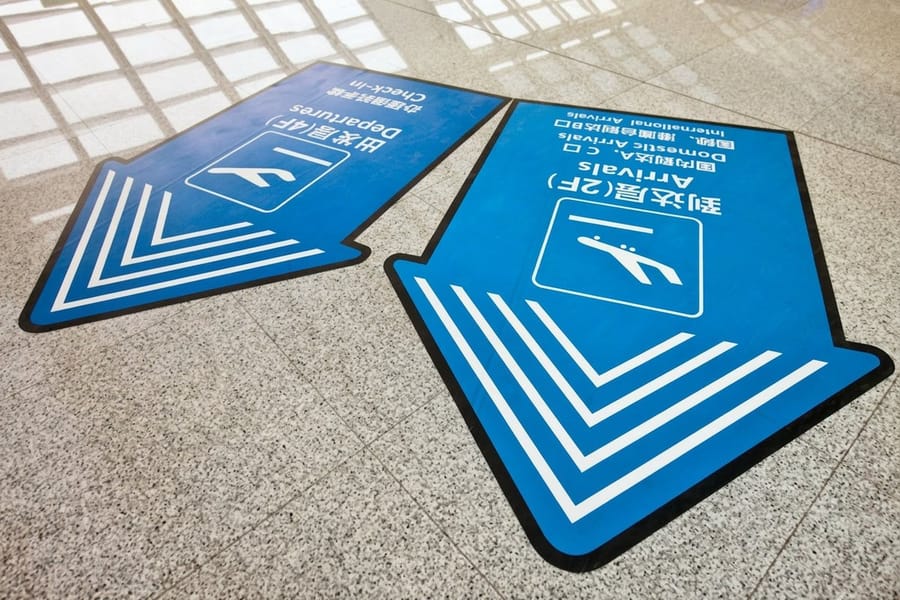
Quick answer
Thin film, rough ground, and a permit you probably need
A sidewalk graphic is a film, so the surface under it does the deciding. Smooth sealed concrete, pavers and entry tile give the adhesive full contact and a graphic that runs a season. Broom finish and aggregate only touch the peaks, and every hollow becomes a place for water and a shoe edge to work underneath. Put a textured, non-skid layer on top so the piece stays safe wet, keep it out of the first stride off a step, and settle the permit question before artwork, because the pavement past your threshold usually belongs to the city.
What a Sidewalk Graphic Actually Is
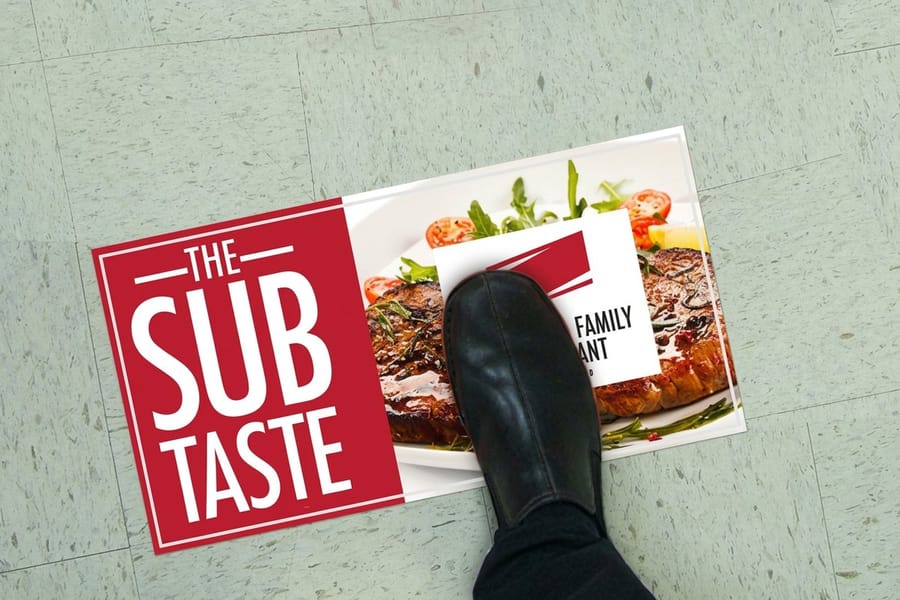
A sidewalk graphic is a printed adhesive film, and the whole thing is thinner than a business card. That single fact explains most of what follows.
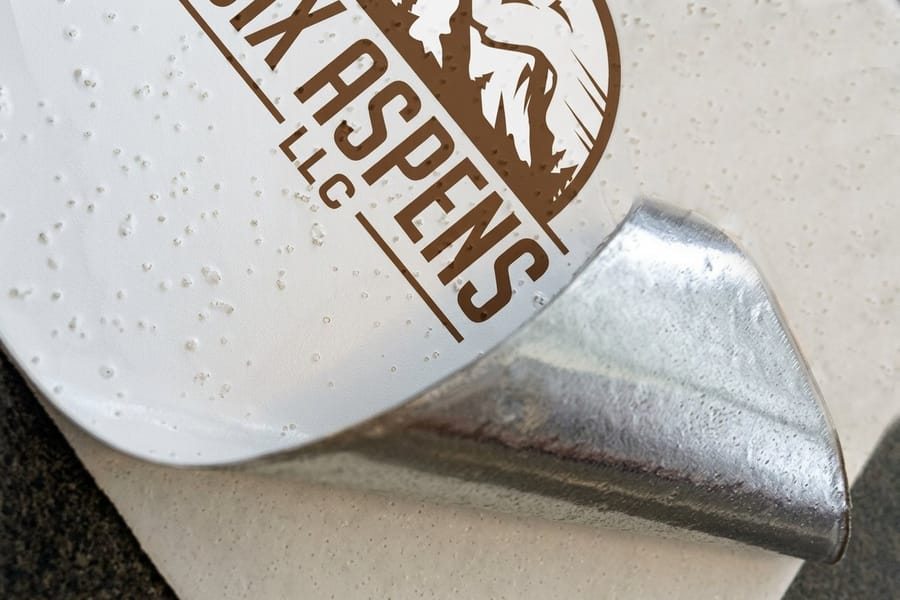
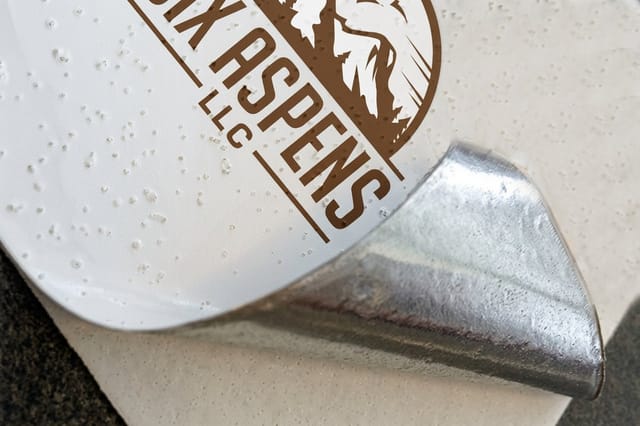
Four layers do the work. The bottom is a pressure sensitive adhesive that grabs when you press it. Above that sits a conformable vinyl carrier, flexible enough to sink into shallow texture instead of bridging over it. The ink layer prints onto that carrier. On top goes the layer people actually stand on, which on an outdoor or high traffic piece is a textured, non-skid surface rather than a gloss laminate.
Because the film is so thin, it cannot fill anything. It follows whatever it is stuck to, peak for peak and hollow for hollow. A graphic on smooth sealed concrete makes full contact and stays put. The same graphic on broom finish concrete is only touching the ridges, which is maybe half the area, and the untouched hollows become the places water, grit and a shoe edge start working underneath.
That is the difference between a graphic that runs a season and one that curls by the weekend, and it has nothing to do with which vinyl you bought. Floor graphics print on flexible floor vinyl from $34 and are built to be walked on. Aluminum floor graphics print on 8mil textured aluminum foil vinyl with a non-skid surface from $29, which is the tougher face where the ground takes a beating.
Match the Material to the Ground, Then Test It
Before you pick a material, kneel down and drag a coin flat across the spot you have in mind. If it glides, film will work. If it rattles, the surface is too coarse and no amount of squeegee pressure will fix it.
| Material | Surface it suits | Face people step on | From |
|---|---|---|---|
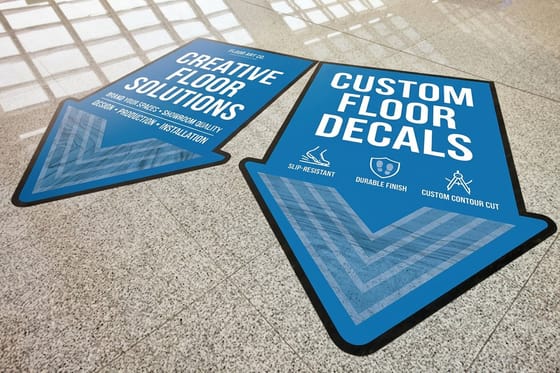
| Floor Graphics | Tile, sealed concrete, wood, laminate, smooth pavers. | Flexible floor vinyl, printed full colour, lifts clean. | $34 |
| Aluminum Floor Graphics | Entrances, event floors and anywhere the traffic is heavy. | 8mil textured aluminum foil vinyl, non-skid, metallic shine. | $29 |
| Floor Decals | Tile, sealed concrete, smooth flooring, short campaigns. | Flexible floor vinyl in 11 sizes up to 48 by 48 inches. | $34 |
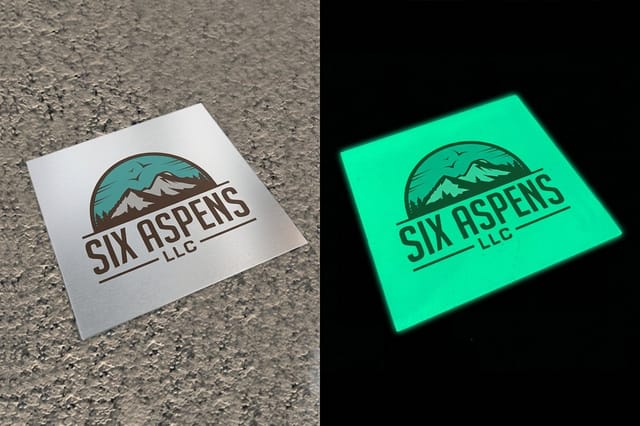
| Aluminum Glow Floor Graphics | Dim entries, corridors, venues, night events. | Luminous aluminum glow vinyl, any size you specify. | $49 |
Read the second column first, because it is the one that decides whether the job works. All four are ground materials, and all four assume a surface a film can wet out against. None of them is a fix for rough asphalt.
Two other calls come up constantly. Sun and standing water shorten every outdoor install, so a graphic under a canopy or an awning outlasts one in open weather by a wide margin, and our guide to outdoor sticker materials that survive sun and rain covers how films fail in each. And if the piece is going on glass or a wall rather than the ground, white adhesive vinyl at $25 is the opaque sheet for that, not a floor material.
Grip, Wet Weather and the Liability Nobody Budgets For
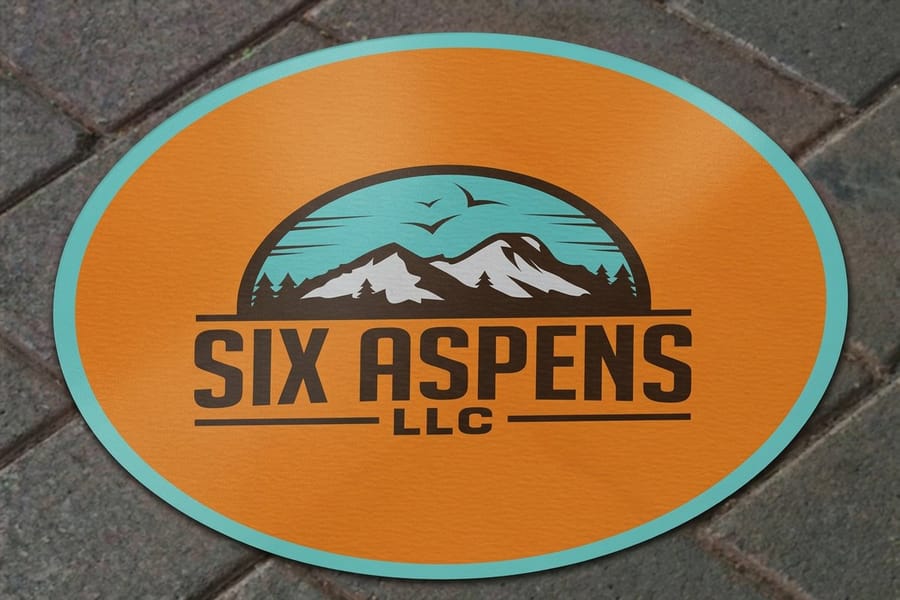
The moment you put a graphic on the ground outside a door, you have changed the walking surface. That is a safety decision before it is a marketing one.
Two things reduce the risk, and both are free. First, specify a textured face. A non-skid surface like the 8mil textured aluminum foil vinyl on our aluminum pieces stays grippy wet, whereas a smooth gloss film turns into a small skating rink in rain. Second, place it where the foot is already flat and moving forward. Never in the first stride off a step or a kerb, never on a slope, never where a door swings across it, and never straddling a change in level.
Edges matter as much as the face. A lifted corner is a trip hazard and a legal problem in a way a scuffed graphic is not, so put a set time in the diary to check the perimeter each week and pull the piece the day an edge stops sitting flat. Round the corners of the artwork where you can, because a rounded corner has no point for a shoe to catch.
Sizing follows the same logic as any ground level signage. If the message has to stop someone rather than just point them, it needs the area to do it. For the walking pace reading distances and the layout rules that go with them, our custom floor stickers guide works through the sizes, and the aluminum floor graphics installation guide covers the squeegee pass in detail.
Who Owns That Pavement, and What the City Says
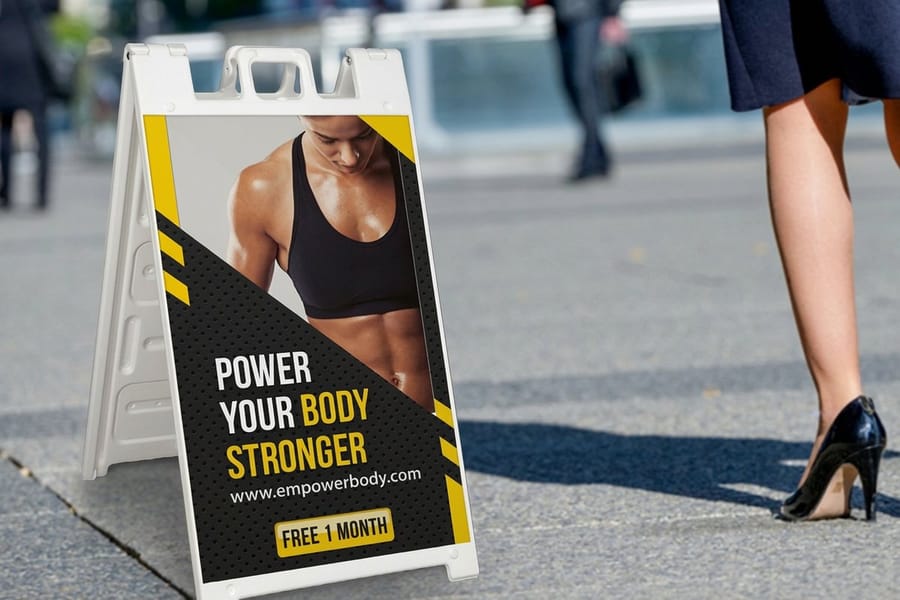
The strip of pavement outside your door usually belongs to the city, not to you or your landlord. It is public right of way, and that is the sentence that decides most sidewalk graphic projects.
What that means in practice varies by municipality rather than by state. Some cities license temporary pavement advertising with a permit and a removal deadline. Some allow it only inside a permitted event footprint or a closed street. Some prohibit adhesive on public paving entirely, on the reasonable grounds that whatever you stick down becomes their maintenance problem. Business improvement districts often layer their own rules on top. Before artwork goes anywhere near production, call the local permit office and ask the plain question: may we apply a temporary adhesive graphic to the public sidewalk, and if so under what permit. Our guide to sign permits in every U.S. state is the starting point for that call.
Everything changes the moment you step onto ground you control. The floor inside your entrance, a leased forecourt, a private plaza, a mall concourse, a trade show hall or a stadium concourse is governed by your lease or the venue rules rather than by city code. That is where floor graphics do most of their work, and it is why so many campaigns that started as sidewalk ideas end up beginning at the threshold instead.
When the answer from the city is no, the freestanding route is the one that stays legal. A Signicade A-frame from $182.32 sits on the pavement without adhering to it, and most cities treat a movable sign taken in at closing very differently from a permanent application. Our guide to sandwich and A-frame sidewalk signs covers the placement clearances that keep an A-frame out of trouble.
Installing It, and Getting It Off Again
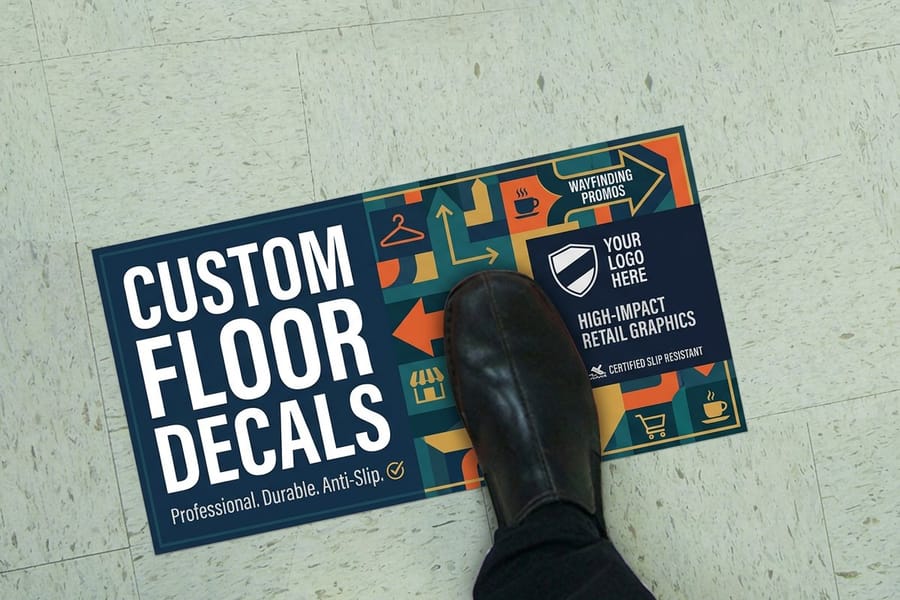
Most failed installs fail in the first five minutes, during the part everyone rushes. Adhesive bonds to what is on the surface, so a floor with a film of dust on it means the graphic is stuck to dust.
Sweep, then scrub with a degreaser, then rinse and let the ground dry completely. Cold matters too: below roughly 50°F most pressure sensitive adhesives never fully wet out, so an install on a frosty morning fails by Thursday no matter how well you cleaned. Pick a mild, dry day, and if you can, put the roll somewhere warm for an hour beforehand.
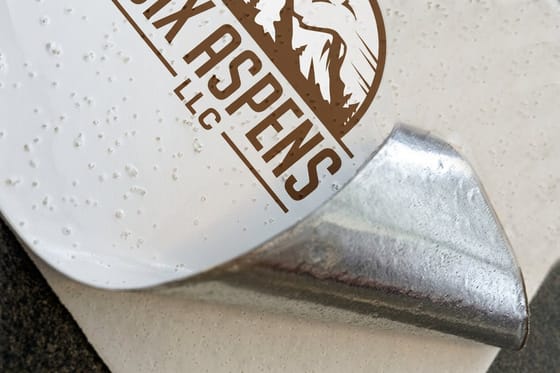
Applying it is one motion. Position the graphic dry with the liner still on, tape a hinge along one edge, peel the liner back a few inches and squeegee from the centre outward at a shallow angle, working the air out ahead of the blade rather than trapping it. Then walk the whole face, heel down, especially the perimeter. That last pass is what turns contact into a bond.
Removal runs the process backwards. Warm the surface, lift a corner with a plastic scraper, and pull slowly back on itself at a shallow angle. Pulling straight up is what tears the film and leaves adhesive behind. Any residue that stays takes a citrus remover and a nylon pad. Build the artwork the way you would for any print job, at full size with fonts outlined, starting from a correctly sized layout in the blank template library. If the plan also includes windows or walls, the rest of the family sits in decal printing and sticker printing.
Wally explains sidewalk graphics
The ground decides, then the top layer keeps people upright
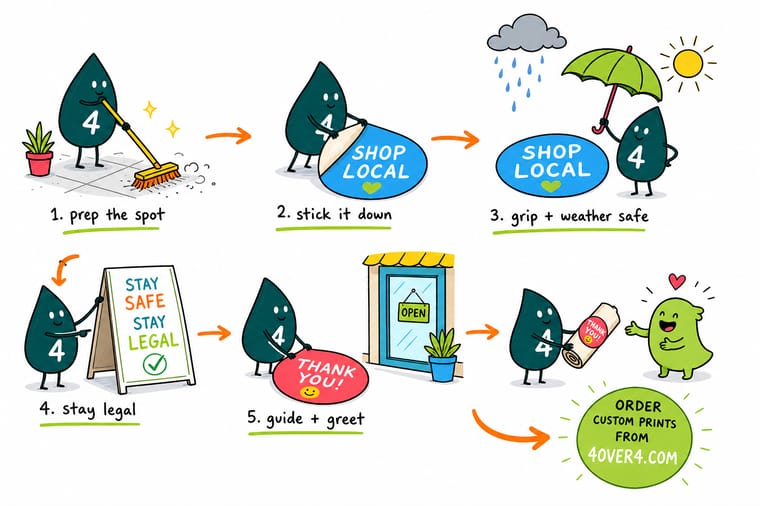
Wally drags a coin across the spot first. If it glides, the film will bond and the graphic runs a season. If it rattles, he moves the graphic inside the door and puts an A-frame on the pavement instead. He specifies a textured face so it stays grippy in rain, keeps it out of the first stride off a step, and checks the corners every week, because a lifted edge is a trip hazard long before it is an eyesore.
Order floor graphics →Specs and pricing
Ground materials, sizes, and starting prices
Compare the three floor materials side by side, with live size and turnaround choices and starting prices straight from the 4OVER4.COM configurator.
Print it
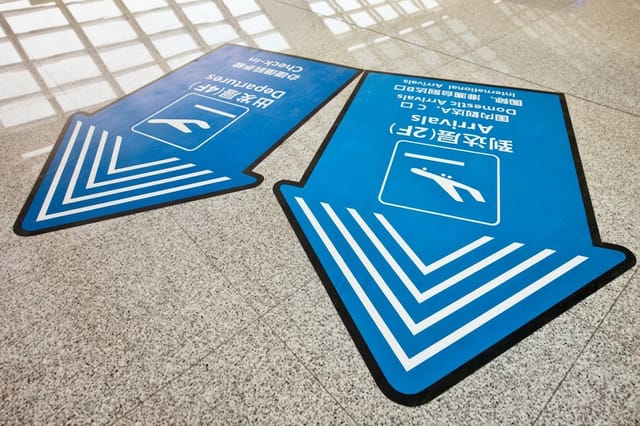
Put the message where feet already are
Explore more
Where to go next




By the numbers
Ground level printing you can count on at 4OVER4
Common Questions
Your sidewalk graphics questions, answered
How long does a sidewalk graphic last outdoors?
On smooth sealed concrete, pavers or an entry floor under a canopy, plan on a promotional season rather than a year. Direct sun, freeze and thaw cycles, grit dragged in under shoes and pressure washing all shorten it. On rough or unsealed pavement the honest answer is days to a couple of weeks, because the adhesive is only gripping the tops of the aggregate. If the message needs to survive a full year outside, put it on a rigid sign or an A-frame instead of on the ground.
Will a sidewalk graphic make the pavement slippery?
A smooth print film can, which is why the top layer matters more than the artwork. Our Aluminum Floor Graphics print on 8mil textured aluminum foil vinyl with a non-skid surface, so the face people step on stays textured rather than glossy. Whatever material you choose, walk the installed graphic in wet shoes before you open, and keep graphics out of the first stride off a step, where a foot lands hardest and shortest.
Do I need a permit for a graphic on the sidewalk?
Usually, because the sidewalk in front of a storefront is normally public right of way owned by the city rather than by the landlord. Some municipalities license temporary pavement advertising, some allow it only for events with a street closure, and some ban adhesive on public paving outright. The floor inside your entrance, a leased courtyard, or a private plaza is a different matter and is generally yours to use. Our guide to sign permits in every U.S. state is the place to start before you order artwork.
Can sidewalk graphics be removed without damaging the surface?
Flexible floor vinyl is built to lift away clean, and on sealed concrete or tile it does. Warm it first with sunlight or a heat gun on low, lift a corner with a plastic scraper, then pull slowly back on itself at a shallow angle rather than straight up. Adhesive left behind comes off with a citrus remover and a nylon pad. Unsealed concrete is the exception: it is porous, so it can hold a faint shadow where the graphic protected it from weathering.
What size should a sidewalk graphic be?
Big enough to read at walking pace from roughly two strides out. A 9 by 18 inch piece works for an arrow, a spacing marker or a short line of type. Anything meant to stop someone, like a full logo lockup or an offer, wants 24 by 36 inches or more. Floor Graphics run through 11 sizes and a custom option up to 48 by 48 inches, and because price follows area, two small markers usually cost less than one large graphic covering the same ground.
What artwork survives being walked on?
Heavy type, thick rules, solid shapes and high contrast. Fine hairlines and small text disappear under scuffing within a week, and pale colours read as dirt once grit works into the texture of the top layer. Set type at a size you can read standing up, keep critical elements away from the outer inch where lifting starts, and supply the file at full size with fonts outlined. A correctly sized starting layout is in the blank template library.
Get Started
Ready to claim the ground outside your door?
Pick the size, choose flexible floor vinyl or the textured non-skid aluminum face, and we print a graphic built to be walked on and lifted away clean.
Legal Disclaimer
Gold Standard guarantees apply to all standard orders placed through 4over4.com. Price match requires verifiable proof of a competitor's published price for an equivalent product with matching specifications and turnaround time. Satisfaction guarantee covers manufacturing defects and print quality issues. Contact support with order number and documentation. On-time delivery rate based on tracked orders 1999 to 2026. Individual results may vary based on shipping carrier performance.
