
How to Print Large Portrait Prints That Hold Up at Wall Size


The pixel maths that decides your maximum size, how canvas, framed and mounted prints treat skin, and the crop and wrap traps that quietly remove part of the face.
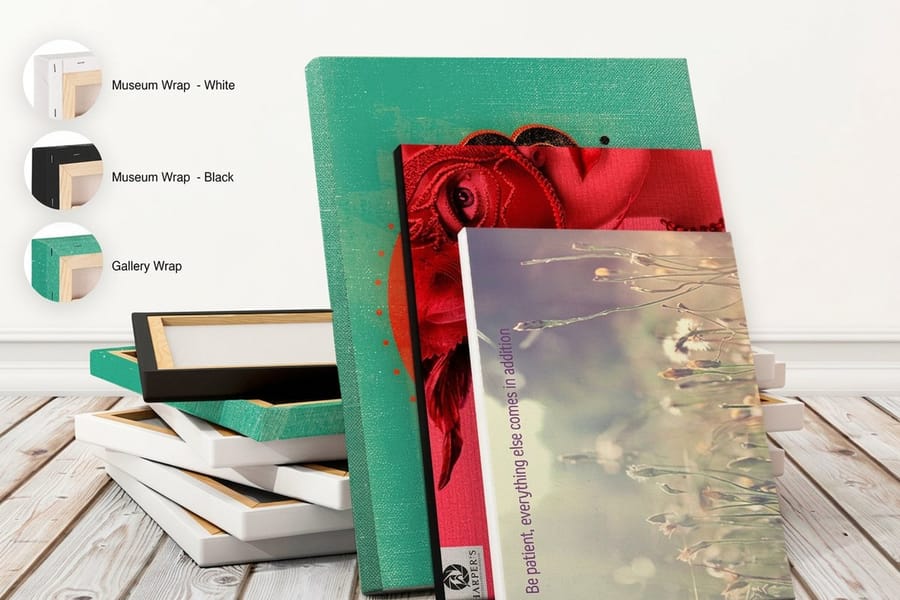
Divide the long edge of your file in pixels by 150 and that is the biggest wall print it makes comfortably, so a 6000 by 4000 camera file prints 40 by 27 inches with nothing added. Choose stretched canvas when the file is soft or the wall faces a window, because the weave hides noise and there is no glass to reflect. Choose a framed print when the detail is genuinely sharp and the room wants a border. Then crop for the wrap: a gallery wrap folds part of the image around the bar, so keep the face two inches inside the trim.
Quick answer
Size comes from viewing distance, quality comes from the surface
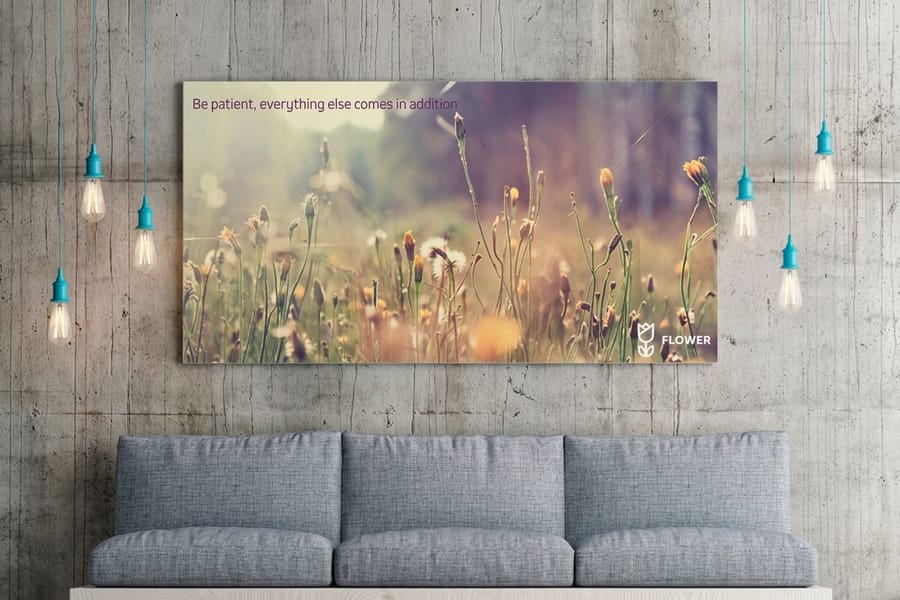
Long edge in pixels divided by 150 gives you a wall size that reads sharp from three feet. Push to 100 ppi and the same file covers a wall from six feet away, which is how a 24 megapixel frame becomes a 60 by 40 inch canvas. What decides whether it looks good is the surface underneath: canvas weave conceals softness and reflects nothing, while smooth paper behind glazing shows every artifact and every window in the room.
How Big Your File Will Actually Print
Start with the long edge in pixels, then divide by the ppi the viewing distance justifies. That single division answers the question, and it is the step most people skip because they were told 300 ppi is the law.
300 ppi is the standard for something held in the hand: a book page, a card, a menu. Nobody holds a 40 inch portrait. A wall print is read from three feet at the closest and usually from six or more, and at those distances the eye cannot resolve the difference between 150 ppi and 300 ppi. Print labs have known this for decades, which is why billboards run at single digit ppi and still look sharp from a car.
| Your file | At 300 ppi | At 150 ppi | At 100 ppi |
|---|---|---|---|
| 4032 × 3024 px (12 MP phone) | 13 × 10 in | 27 × 20 in | 40 × 30 in |
| 6000 × 4000 px (24 MP camera) | 20 × 13 in | 40 × 27 in | 60 × 40 in |
| 8192 × 5464 px (45 MP camera) | 27 × 18 in | 55 × 36 in | 82 × 55 in |
| Read from | Arm's length | About 3 ft | 6 ft and beyond |
Two caveats keep this honest. A heavy crop throws away pixels before you get here, so measure the long edge of the cropped file rather than what came out of the camera. And a file that was already soft, noisy or blurred does not improve at any size. Resolution sets the ceiling; focus sets the floor. Our big poster sizes and resolution guide works through the same maths for signage and display work.
Canvas, Framed or Mounted, and What Each Does to a Face
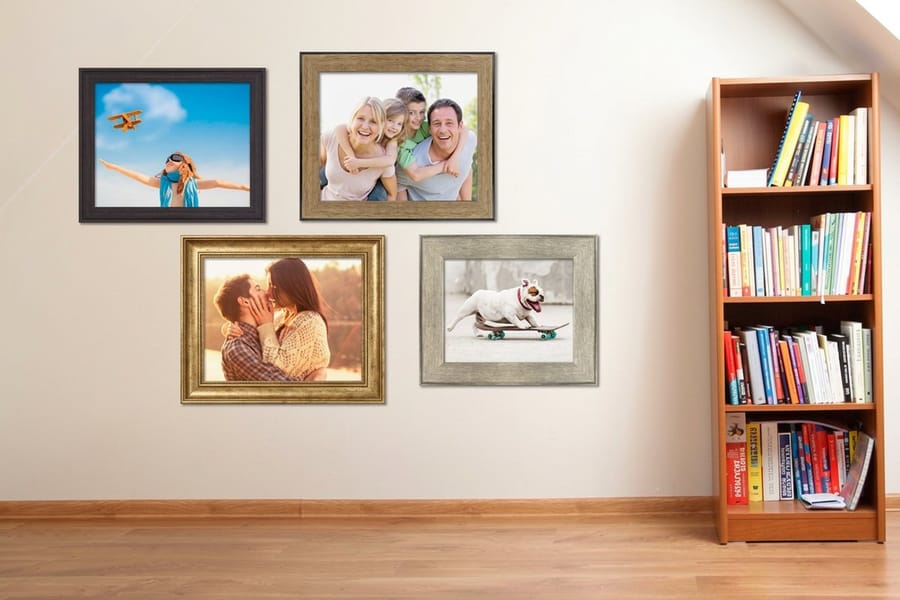
All three put the same photograph on a wall and they treat skin completely differently. Pick by the room and by how good the file is, not by the price alone.
| Format | Surface | Handles a soft file | Starts at |
|---|---|---|---|
| Stretched canvas | Woven, matte, no glazing | Well. The weave hides noise and interpolation. | $59 |
| Rolled canvas | Same weave, shipped unstretched | Well, and you keep every pixel | $25 |
| Framed prints | Smooth photo stock in a frame | Poorly. Every artifact is on show. | $73.57 |
| Mounted prints | Flat print bonded to rigid board | Moderately. No glass, no frame. | $39.99 |
| Framed canvas | Canvas inside a floating frame | Well, with a finished edge | $50.33 |
Canvas is the default for portraits for a practical reason: no glazing means no reflection. Put a framed print with glass on a wall opposite a window and half the day the sitter is competing with a rectangle of sky. Canvas also flatters skin, because the texture softens the micro-detail that makes a large face look clinical.
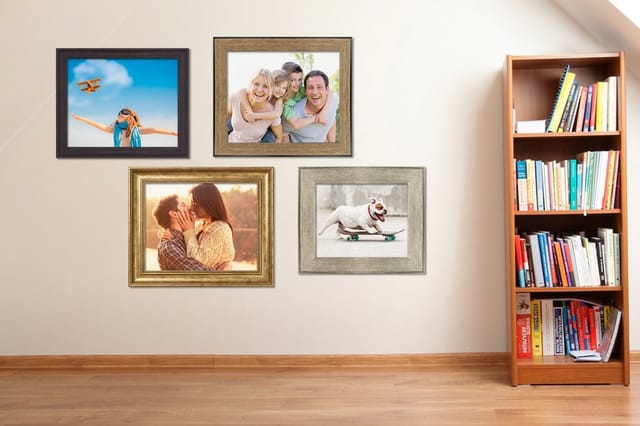
Framed prints earn their place when the detail is the point, on a studio portrait shot on a tripod, or when the piece needs a border to sit properly in a formal room. Mounted prints are the value play and the honest one for a series: flat, rigid, no frame budget, so a set of six family portraits on a stairwell stays affordable. If you are weighing a photograph against a graphic poster, canvas versus posters lays out where each wins, and acrylic against canvas and framed canvas covers the glossier end.
The Crop and the Wrap, Where Portraits Get Cut
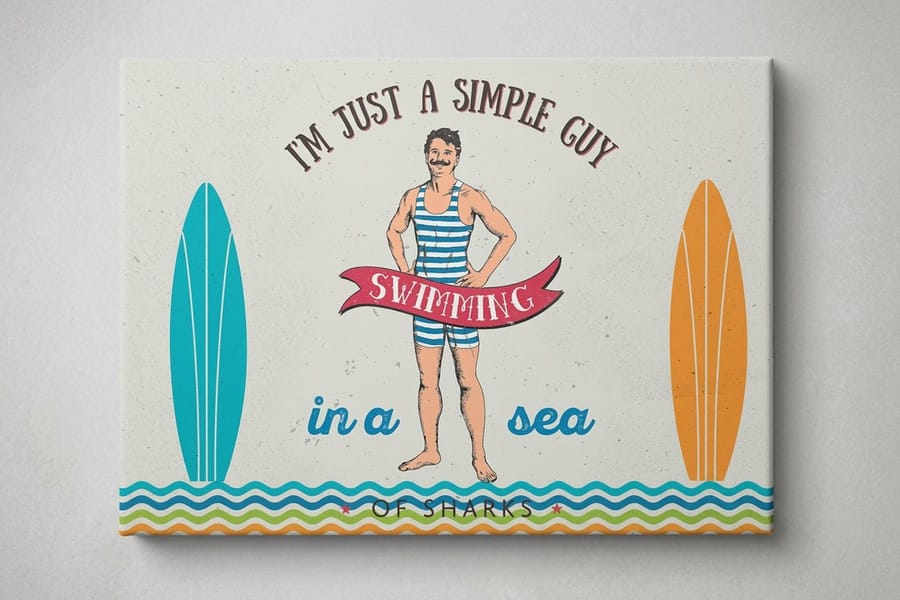
Two things eat into a portrait between the file and the wall, and both are decided before the job goes to press. Handle them yourself or the trim handles them for you.
The aspect ratio. Nearly every camera shoots 3:2. Nearly every standard frame size is 4:5 or 3:4. Crop a vertical 3:2 frame to 16 by 20 and you lose one sixth of the height, which in a portrait is either the space above the head or the hands at the bottom. Neither is a rounding error. Either crop it yourself in the file so you choose what goes, or order a 2:3 size such as 20 by 30 or 24 by 36 where the frame matches the camera and nothing is lost.
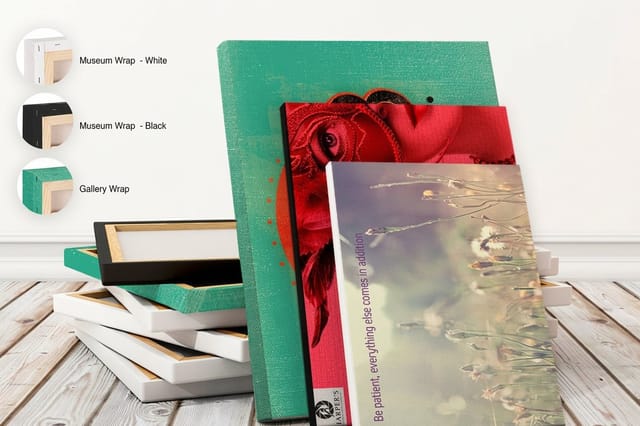
The wrap. A stretched canvas folds the image around the stretcher bar on all four sides, so a band of the picture ends up facing the wall. Bar depth varies, commonly three quarters of an inch up to an inch and a half per side, which on a 24 by 36 print can take three inches out of the visible height. Keep the face, the hands and any signature at least two inches inside the finished trim. If the composition is tight and there is nothing to spare, order rolled canvas and have it stretched locally, or move to a mounted print where the image simply stops at the edge.
Set the file up at final size in CMYK-safe sRGB, fonts and layers flattened, and export a single high quality file rather than a screenshot. If you want a correctly sized starting layout, the blank template library has one for every trim we print.
Finish, Color and Sharpening for Skin
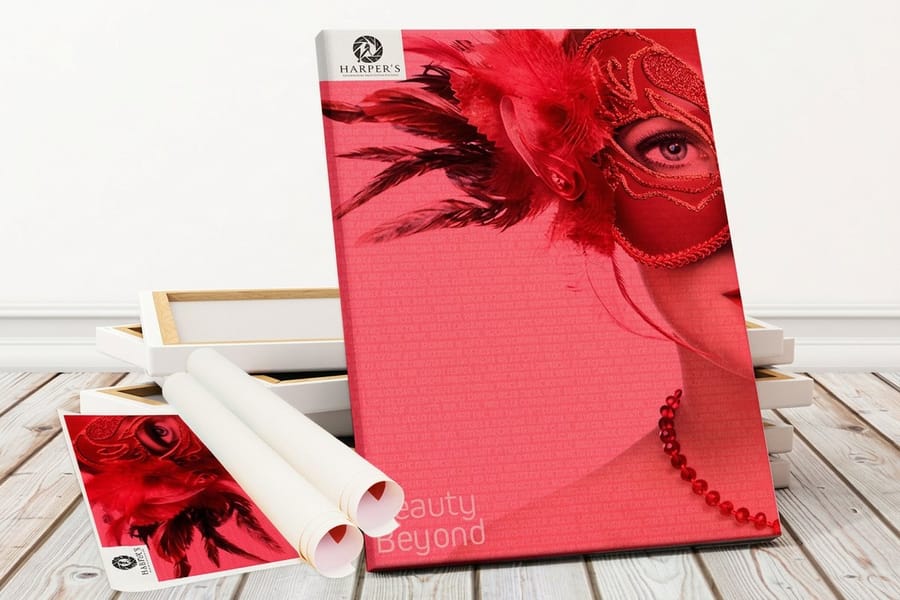
Skin is the least forgiving subject in printing. A color cast nobody notices in a landscape reads as jaundice or sunburn across a three foot face, so the last three decisions matter more here than on any other job.
Finish. Gloss deepens blacks and makes skin look richer under controlled light. It also mirrors the room, and at 40 inches wide that reflection lands squarely on the face. Matte lifts the deepest blacks slightly and loses some apparent contrast, and it is still the right answer for almost every home. Only choose gloss when you know the wall and the lighting.
Color. Send sRGB unless you have been told otherwise. Files exported in Adobe RGB or ProPhoto and sent to a press without conversion come back flat and slightly off, and skin is where the shift shows first. Watch the warm shadows in particular; they are the tones that drift most between screen and paper.
Sharpening. Resize to the final print dimensions, then sharpen lightly for output. Judging sharpness at 100 percent on a monitor gives you a print with visible halos along the jaw and the hairline. Canvas takes a little more sharpening than smooth paper because the weave absorbs some of it.
The cheapest insurance is a proof. Order a small mounted print of the same file from $39.99, put it under the lamp it will live near, and look at it the next morning. If the skin holds, order the big one. Browse the full large format printing range to compare sizes and stocks side by side, or compare a photographic finish against a graphic one on standard posters.
Wally sizes a portrait
Step back first, then do the maths
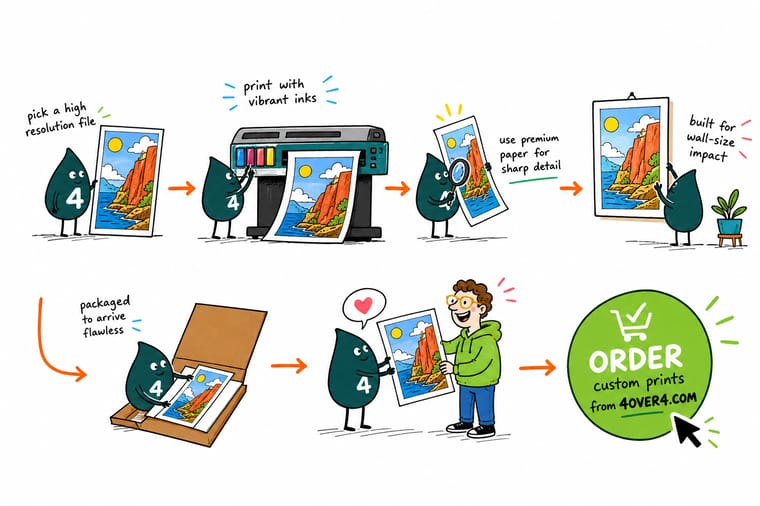
Wally does not start with the file. He stands where you will actually look at the portrait, measures the wall, and only then divides the long edge in pixels by 150 to see if the size works. A 6000 pixel edge gives him 40 inches, and nobody standing three feet away can tell it from 300 ppi. Then he leaves two inches of breathing room around the face so the canvas wrap does not fold a shoulder around the side of the frame.
Order a stretched canvas portrait →Specs and pricing
Canvas, framed and mounted sizes with live prices
Compare the three wall formats side by side, with real configuration choices and starting prices straight from the 4OVER4.COM configurator.

Print it
Put the portrait on the wall

Explore more
Where to go next
By the numbers
The wide format press a portrait gets scaled onto
Common Questions
Your large portrait printing questions, answered
What resolution do I need for a large portrait print?
Work back from where the print will hang. At arm's length you want 300 ppi. On a wall read from three feet, 150 ppi looks identical to most eyes. Above about six feet, 100 ppi holds. That means a 6000 by 4000 pixel file, the output of a 24 megapixel camera, prints 20 by 13 inches at 300 ppi, 40 by 27 inches at 150 ppi and 60 by 40 inches at 100 ppi, all from the same untouched file. The number that matters is pixels across the long edge, not the megapixel count on the box and not the ppi tag stored in the file.
Can I print a phone photo at 30 inches?
Usually yes, on canvas. A 12 megapixel phone file is 4032 by 3024 pixels, which lands at roughly 134 ppi across 30 inches with no upscaling at all. On stretched canvas the weave hides the softness and the result reads fine from a sofa. On a framed print behind glazing the same file looks mushy, because smooth paper and a flat sheet of glass give the eye nothing to hide behind. Portrait mode shots are the exception to watch: the artificial background blur often has ragged edges around hair that only show up once the print is three feet wide.
Canvas or framed print for a portrait?
Canvas for warmth and scale, framed for formality and fine detail. Stretched canvas from $59 has no glass, so there is no reflection to fight and no glazing to bounce a window back at the viewer, and the texture flatters skin. Framed prints from $73.57 hold sharper detail and give the portrait a finished border, which suits a small print in a hallway or a formal family group. If the room has a big window opposite the wall, canvas is the safer choice.
How much of the image does a canvas wrap take?
Enough to matter. A gallery wrap folds the image around the stretcher bar on all four sides, and the depth of that bar decides how much disappears, commonly three quarters of an inch to an inch and a half per side. On a 24 by 36 print that can be three inches of total height gone. Keep the face, the hands and any signature at least two inches inside the finished trim, and check the wrap allowance on the product page before you crop. If you want every pixel visible, order rolled canvas and stretch it locally, or pick a mounted print instead.
Should a large portrait be matte or gloss?
Matte for anything that faces a light source, gloss only for a controlled wall. Gloss deepens the blacks and makes skin look richer, but a dark portrait under a gloss coat behaves like a mirror the moment a lamp or a window is opposite it, and at 40 inches wide that reflection covers the face. Matte lifts the deepest blacks a little and costs some apparent contrast. Most people prefer the matte print once both are on the wall, because they can actually see it from every angle in the room.
What size portrait print fits above a sofa?
Aim for a piece roughly two thirds the width of the furniture below it. A standard three seat sofa is around 84 inches, so a single print between 50 and 60 inches wide, or a pair of 24 inch prints with a gap, sits right. Hang the center of the image at eye level, about 57 to 60 inches from the floor, and leave six to ten inches between the top of the sofa back and the bottom of the frame. A print that is too small is the single most common mistake, and it is a cheaper mistake to avoid than to fix.
Do I need to sharpen a portrait before printing it large?
Yes, and at the final size rather than at 100 percent on screen. Sharpening judged on a monitor at full magnification is far too aggressive for a print viewed from three feet, and the halos it leaves around a jawline or a hairline become visible edges once the file is 40 inches wide. Resize to the print dimensions first, then apply a light output sharpen. On canvas you can push it a little harder than on smooth paper, because the weave absorbs some of the effect.
Get Started
Order a rolled canvas, ready in 2 business days
Pick canvas, framed or mounted, upload the file at its full pixel size, and we print a portrait that reads sharp from across the room.
Legal Disclaimer
Gold Standard guarantees apply to all standard orders placed through 4over4.com. Price match requires verifiable proof of a competitor's published price for an equivalent product with matching specifications and turnaround time. Satisfaction guarantee covers manufacturing defects and print quality issues. Contact support with order number and documentation. On-time delivery rate based on tracked orders 1999 to 2026. Individual results may vary based on shipping carrier performance.
