
How to Print Custom TCG Cards That Sleeve and Shuffle Like Retail Decks


The specs a trading card game deck has to hit, the finishes that make a custom set look rare, and the one design mistake that turns a normal print run into a marked deck.
Print custom TCG cards at 2.5 by 3.5 inches on 16pt or heavier stock, with rounded corners near a 3 mm radius, an eighth of an inch of bleed and an eighth of an inch of safety margin, in CMYK at 300 dpi. Pick the laminate by handling rather than looks: gloss shuffles fastest, silk and suede feel better and grip more. Keep every foil or spot UV effect on the front, and give the card back a full bleed pattern so trim drift never shows as uneven margins.
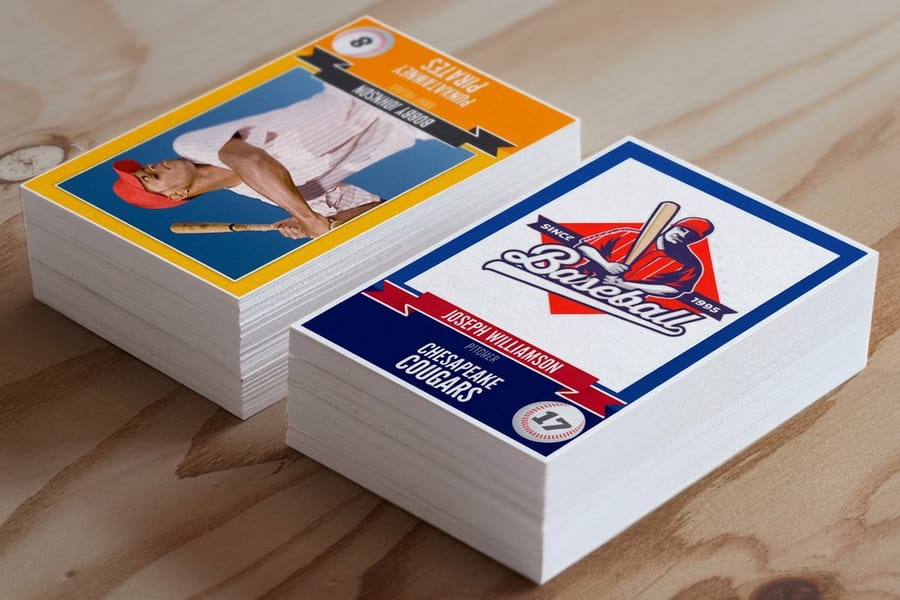
Quick answer
Poker size, 16pt stock, rounded corners, effects on the front only
A custom TCG card is a 2.5 by 3.5 inch card on 16pt or heavier stock, laminated on both sides, with corners rounded at about 3 mm. Build the file in CMYK at 300 dpi with an eighth of an inch of bleed and the same again as safety margin. Choose the laminate for handling: gloss is the fastest to shuffle, silk and suede feel better and grip more, kraft is for playtests. Put foil and spot UV on the face of the card and never on the back, and design the back full bleed so the cutter tolerance cannot show up as uneven borders.
Print a Custom TCG Deck, Step by Step
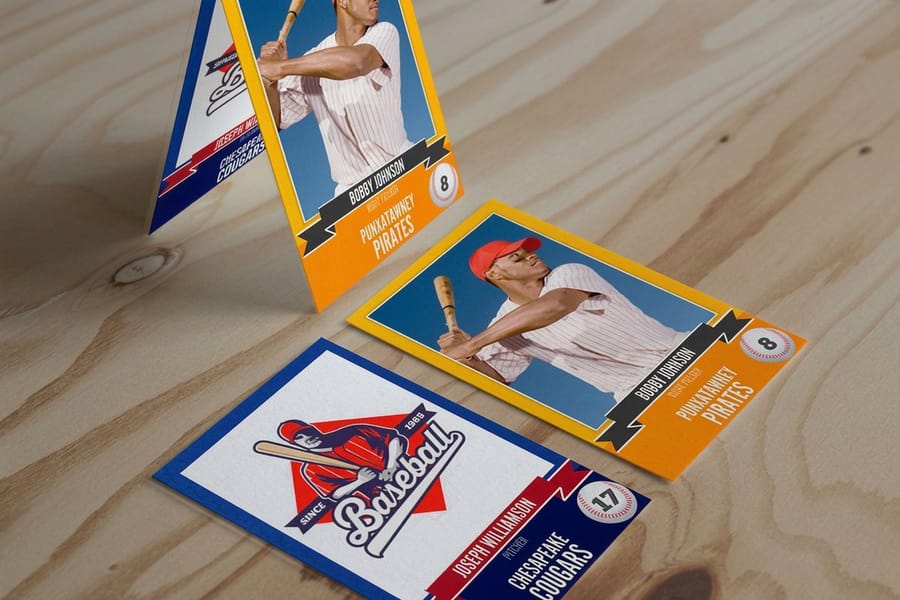
The order of operations matters more than any single setting. Get the size and the back sorted first and the rest is ordinary printing.
- Fix the card size before you draw a line. 2.5 by 3.5 inches. Set the document to 2.75 by 3.75 so an eighth of an inch of bleed runs off every edge, and drop a guide an eighth of an inch inside the trim for the safety margin.
- Work in CMYK at 300 dpi at final size. Card art is usually painted in RGB, and the deep blues and bright oranges shift when they convert. Convert early and adjust, rather than finding out on a proof. Our CMYK and RGB conversion guide covers the moves that keep the colour close.
- Design the back before the fronts. One back file gets used on every card in the set, so it carries all the risk. Make it full bleed, or give it a border of at least 3 mm.
- Build the frame as a reusable template. Name plate, art window, type box, rules text area, set symbol. Lock it, then place art inside it. Cards that share a frame stack visually, which is what makes a set look like a set.
- Pick the stock and the laminate together. 16pt or heavier, and a laminate chosen by how the deck will be handled rather than how it looks on a screen.
- Choose rounded corners. Around a 3 mm radius, matching the cards these will be shuffled with.
- Proof one card physically. Print a page at 100 percent on any home printer, cut a card out, slide it into a sleeve, and put it in a stack of real cards. Two minutes of that finds the size mistakes no screen preview shows.
- Order the whole set in one run, with spares. A reprint months later can come off a different paper lot, and a handful of cards that feel newer than the rest is exactly what you were trying to avoid. Start from Trading Cards or a laminated line, and compare stocks in the trading card printing category.
The Specs That Decide Whether a Deck Is Playable
Three numbers do most of the work: the size, the thickness, and the corner radius. Miss any of them and the deck is a display object rather than something anyone will play with.
Size. 2.5 by 3.5 inches, 63.5 by 88.9 mm. Sleeves are cut with a couple of millimetres of clearance on that, which is why a card printed a millimetre over still sleeves fine and a card printed at 70 by 100 mm does not sleeve at all. If your game needs an oversized commander or a token card, treat it as a separate accessory rather than as part of the deck.
Thickness. 16pt is the practical floor. Retail cards feel firmer than most people expect, and the reason is that stock is a laminated construction rather than a single sheet. On a commercial press, the closest equivalent is heavy card stock plus a laminate on both faces, which is what the laminated trading card lines give you. There is a limit worth naming: we print on solid stock, not the black core or blue core paper that card factories use to block backlight. If your event standard demands total opacity, opaque sleeves close that gap and cost less than a reprint.
Corners. Roughly a 3 mm radius. It looks like a small detail until a custom card with square corners sits in a hand of rounded ones and announces itself from across the table. Our comparison of standard and rounded corners covers what the die actually does to the sheet.
Set the file up the way any print job wants to be set up: outlines on type, art at full size, an eighth of an inch of bleed and an eighth of an inch of safety. Start from a correctly sized layout in the blank template library if you would rather not build the artboard from scratch.
Choose the Laminate by How the Deck Gets Handled

Every laminate is a trade between how the card feels and how it moves. A deck that gets riffled forty times an evening wants a different surface from a set that goes straight into a binder.
| Finish | In the hand | Shuffling | Best for | From |
|---|---|---|---|---|
| Gloss laminate | Slick and bright, colours look their most saturated. | Fastest. Cards slide over each other with almost no friction. | Play decks that get shuffled constantly, and anything sold at a booth. | $94.74 |
| Silk laminate | Soft matte with a faint sheen, no glare on camera. | Slower than gloss, still smooth enough for a riffle. | Sets that get photographed or streamed, and premium promo cards. | $94.74 |
| Suede | Velvety and warm, the surface people keep touching. | Grippy. Fine sleeved, noticeably draggy bare. | Collector and kickstarter tiers where feel is the selling point. | $94.74 |
| Velvet laminate | Deepest matte, blacks read almost as fabric. | Grippy, and it shows scuffs on a dark back. | Display sets and art cards, not a tournament deck. | $94.74 |
| Kraft | Uncoated brown board, visible fibre. | Rough. It will not shuffle like a game deck. | Prototypes, playtest sets and rustic themed cards. | $48.61 |
Two honest warnings. Suede and velvet mark, so a black velvet back picks up a fingernail scratch that a gloss back would shrug off. And any grippy laminate is harder to shuffle unsleeved, which is a real problem for a playtest deck and a non-issue for a sleeved one. If the deck will live in sleeves anyway, pick the surface you want to look at. If it will be handled bare all night, Gloss Laminated Trading Cards are the least annoying choice. For prototypes, Kraft Trading Cards are cheap enough to iterate on.
Holo, Foil and Spot UV Without Marking the Deck
This is the part most printers skip, and it is where a custom set either reads as premium or reads as amateur. There are two ways to chase the retail holo look, and one rule that governs both.
Metallic foil puts a genuine reflective layer on the card. Run it under the art window frame, the set symbol, or the rarity marker and it flashes when the card is tilted, which is the behaviour players read as a rare. It is the closest thing to a foil pull that a commercial press produces.
Raised spot UV puts a clear gloss layer only where you place it. Over a matte laminate the contrast is strong: the treated area shines and has a texture you can feel, and the untreated area stays flat. Used on a frame or a light burst behind a character it sells the same idea as a holo without pretending to be one. Our guide to how spot UV printing works covers how the layer is applied, and the broader print finishing guide compares it with embossing and foil stamping.
The rule: every effect goes on the front. A spot UV or foil layer on a card back adds thickness and changes reflectance on a face down card, which makes those cards identifiable in a stack. That is the definition of a marked deck, and it will fail a deck check at any organised event. Even for a casual set it is worth avoiding, because once one card sits proud in a shuffled pile everyone notices.
One more constraint from the press side: spot UV and foil need something solid to sit on. Hairline strokes and one point type do not hold either layer cleanly. Give the effect a shape with real area, keep effects a millimetre or so apart from each other, and supply the layer as its own 100 percent black artboard matching the trim size exactly.
Quantity, Cost, and What to Print First
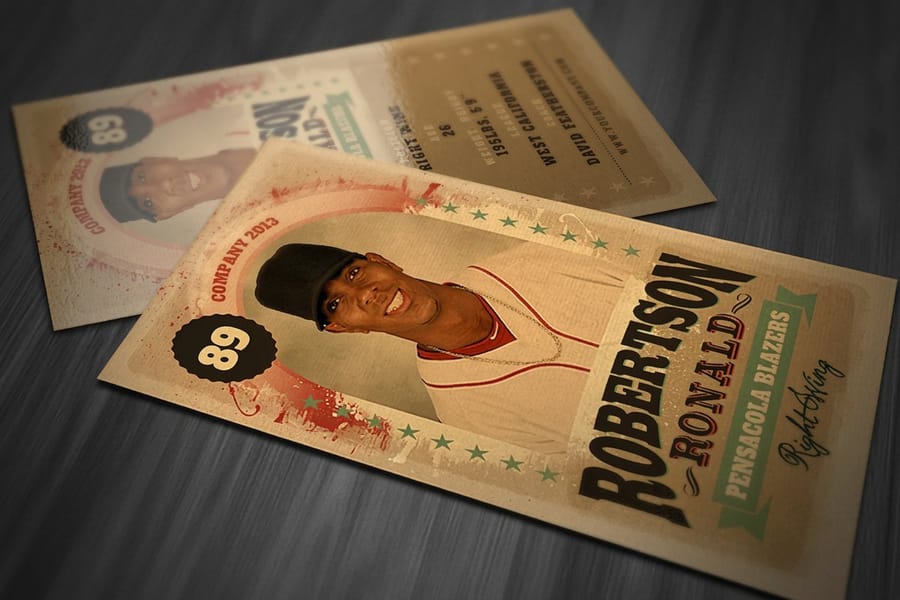
Prototype cheap, then print the real set once. A playtest deck exists to be written on, cut up and thrown away, so Kraft Trading Cards at $48.61 or plain Trading Cards at $11.25 do that job without spending the budget you need for the finished run.
When the set is locked, the laminated lines are where the deck stops feeling like a print job. Silk Laminated Trading Cards, Suede Trading Cards and the gloss and velvet options all start at $94.74, and the difference between them is the surface rather than the build.
Two ordering habits save reprints. Print the entire set in one order, including the cards you are not sure about, because the paper lot is consistent within a run and not guaranteed to be across runs. And order spares of the cards a player uses four copies of, since those are the ones that wear first and a replacement from a later run will not match. The full stock and laminate range sits in the trading card printing category, and if you want to compare card sizes before committing, the trading card size guide lists every format in circulation.
Wally explains custom TCG cards
Poker size, thick stock, and a back that gives nothing away
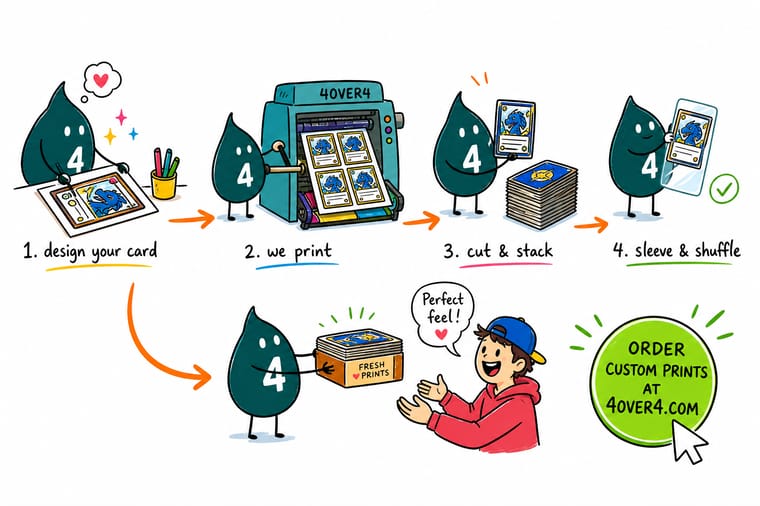
Wally cuts every card to 2.5 by 3.5 inches on 16pt stock, rounds the corners at about 3 mm, and slides one into a sleeve to prove it fits. Then he fans the deck face down. If one card shows a fatter border than the rest, the back was designed with a thin frame and the cutter found it. Full bleed backs solve that. Foil and spot UV stay on the front, where they make a card look rare instead of making it findable.
Configure custom trading cards →Specs and pricing
Card stocks, laminates, and starting prices
Compare the trading card stocks side by side, with live configuration choices and starting prices straight from the 4OVER4.COM configurator.

Print it
Order a deck that holds up to a full night of play

Explore more
Where to go next




By the numbers
Card printing you can count on at 4OVER4
Common Questions
Your custom TCG card questions, answered
What size should custom TCG cards be?
2.5 by 3.5 inches, which is 63.5 by 88.9 mm, the poker size used by nearly every major trading card game. Build the artboard at 2.75 by 3.75 inches so there is an eighth of an inch of bleed on every side, and keep type and frames an eighth of an inch inside the trim line. That size is what standard sleeves, nine pocket binder pages and deck boxes are built around, so a custom deck at any other size forces players to buy accessories that fit nothing else they own.
What stock thickness do playable trading cards need?
16pt is the sensible floor and heavier is better if the deck will be played rather than collected. A thin card flexes in a riffle shuffle and keeps the bend, and after one long session the corners on the light stock start to fan. Thicker stock with a laminate on both sides also blocks more light, which matters when someone holds a hand up against a window and the front of a card can be read through the back.
Can you print holographic or foil TCG cards?
You can get very close to the retail holo look with a metallic foil layer or a raised spot UV pattern over the frame and the art window, and both catch light the way a player expects. What we do not do is the rainbow diffraction pattern stamped into a foil web at the card factories, so match the effect to what it can be: bright metallic accents and a raised gloss texture over a matte laminate. Read the finish options in our guide to print finishing techniques before you build the layer.
Why does everyone say never put foil on the card back?
Because a raised or foiled back stops the deck from being uniform. Spot UV adds measurable thickness to whatever it covers, so cards carrying it sit slightly higher in a stack and can be felt through a shuffle. Foil also reflects differently from plain laminate, which shows up on camera. The result is a deck that is arguably marked, and in an organised event it is a deck that gets you a game loss. Effects go on the face.
How do I stop the deck looking marked when the cards are cut?
Design the back so trim drift cannot be measured. A full bleed pattern or a border at least 3 mm wide absorbs the small variation every cutter produces. A 1 mm border does the opposite: shift the sheet half a millimetre and one card shows 1.5 mm on the left and 0.5 mm on the right, and the difference is visible at a glance when the deck is fanned face down. Our guide to bleed and trim explains the tolerances behind that.
Do the cards need rounded corners?
For a playable deck, yes. The corner radius on a standard TCG card sits near 3 mm, and square corners next to it look wrong the moment the two are shuffled together. Square corners also chip faster because the point takes the impact when the deck hits the table. A collector edition that will live in a binder is the one case where square corners are fine.
Can you print cards using artwork from an existing game?
No. We print artwork you own or have the right to use. Card frames, logos, set symbols and illustrations from a published game are the publisher property, and a print run that reproduces them is not something we can produce. Original artwork for your own game, a custom set for a play group with your own frames, or a licensed property you hold the rights to are all fine.
What do custom trading cards cost?
Trading Cards start at $11.25 at 4OVER4.COM, which covers plain uncoated and coated runs. The laminated lines cost more because the laminate is a separate pass: Gloss Laminated, Silk Laminated, Suede and Velvet Laminated Trading Cards all start at $94.74, and Kraft Trading Cards start at $48.61. Print the full deck in a single run rather than in batches, because stock from a different paper lot can shuffle and sound slightly different from the rest.
Get Started
Ready to print your set?
Pick the stock, choose a laminate that suits how the deck gets handled, add rounded corners, and we cut every card to the same 2.5 by 3.5 inches.
Legal Disclaimer
Gold Standard guarantees apply to all standard orders placed through 4over4.com. Price match requires verifiable proof of a competitor's published price for an equivalent product with matching specifications and turnaround time. Satisfaction guarantee covers manufacturing defects and print quality issues. Contact support with order number and documentation. On-time delivery rate based on tracked orders 1999 to 2026. Individual results may vary based on shipping carrier performance.
