
How to Make a DIY Business Card Holder That Fits Real Cards


One strip of board, three scored folds, and a pocket sized to a 3.5 by 2 inch card. Here are the measurements that make it work, the materials worth the effort, and the stock question that decides how many cards it holds.
Cut one strip 3.75 inches wide by 4.65 inches long, score it at 2.25, 2.65 and 4.25 inches, fold, and glue only the side edges of the pocket. That gives a back panel, a 0.4 inch spine and a front pocket that stops half an inch short of the card so your thumb can reach it. The 3.75 inch width is the number that matters: a 3.5 inch card needs a quarter inch of clearance or it binds. Capacity follows the stock, not the pocket, at roughly 28 cards at 14pt and 12 at 32pt.
Quick answer
The measurements that make a holder work
Everything is set by the card, not by the craft. A 3.5 by 2 inch card wants a pocket 3.75 inches wide, a front panel that stops at 1.6 inches so half an inch of card stays exposed, and a spine cut to the stock you print. Fold a single strip rather than assembling panels, score every crease before folding it, and run the folds along the board grain. The diagram below shows the flat cut and the spine in cross section, including why 32pt cards fill the same pocket in half the count.
Cut One Strip, Score Three Lines, Fold It
Work outward from the card, never from a pattern you found. A US business card is 3.5 by 2 inches, so the pocket has to be 3.75 inches wide. That quarter inch of clearance is the whole job. Skip it and every card comes out with a bent corner.
One, cut a single strip 3.75 inches wide by 4.65 inches long. Two millimeter greyboard, a doubled cereal box, or 2 to 3 ounce veg tan leather all work. Cut against a steel rule with a fresh blade rather than scissors, because a wavy edge telegraphs through every fold that follows.
Two, score three lines across the width, at 2.25, 2.65 and 4.25 inches from one end. That gives you a 2.25 inch back panel, a 0.4 inch spine, a 1.6 inch front pocket and a 0.4 inch tuck flap. Score on the outside of each fold with a bone folder or the spine of a butter knife.
Three, fold with the grain. Paperboard has a grain direction. Tear a scrap and it runs straight one way and ragged the other. Run your folds parallel to the clean tear or the crease frays and the holder looks homemade in the bad sense.
Four, glue only the two side edges of the pocket. A 3mm bead of PVA down each side, then clamp under a heavy book for an hour. Leave the bottom open so you can push the stack up from underneath with a finger.
The front panel stopping at 1.6 inches is deliberate. It leaves 0.4 to 0.5 inches of card above the pocket, which is what your thumb catches. Make the pocket flush with the card and you will be shaking it at people. If you print anything other than the standard size, remeasure first with our business card size guide, because a square or slim card changes every number above.
What Each Material Costs You in Time, Tools and Wear
Four materials cover almost every version of this project, and they trade off against each other in ways the tutorials rarely admit.
| Material | What it takes | How it wears | The honest limit |
|---|---|---|---|
| Covered greyboard | 2mm board, PVA, book cloth or paper, a bone folder. About an hour. | Corners soften after a few hundred openings. | It is a season, not a decade. Cheap enough to rebuild. |
| Veg tan leather | 2 to 3 oz hide, stitching groover, awl, waxed thread. An evening. | Gets better. The pocket loosens to your stack. | Real tooling and real practice before the first one looks right. |
| Mint tin | An empty tin and 10 minutes of lining paper. | Effectively permanent, if slightly dented. | Tight fit and a lid that rattles. It protects, it does not impress. |
| Acrylic or 3D print | Laser cutter or printer, plus a file and some tuning. | Fine on a desk, brittle in a bag. | Layer lines and sharp edges scuff card faces over time. |
Read the last column first. A covered board holder is the right answer for most people because it costs almost nothing and takes an hour, and the corner wear only matters if you carry it daily. Leather is the one worth the trouble if you will use it for years. A tin is the only material on that list that reliably keeps a card flat in a bag, which is why it keeps showing up despite looking like what it is.
One material note that catches people out: if you line a holder with a printed paper, let the ink cure before you close it on a stack. Fresh inkjet output can offset onto the face of the top card, and it shows most on uncoated stock. Coated cards shrug it off, which is one of several reasons our stock guide pushes coated for anything that gets handled.
The Travel Version and the Desk Version Are Different Objects
People search for a travel business card holder and a business card case as if they were the same thing. They are not, and building one to do both is why so many homemade holders disappoint.
A travel holder lives in a jacket or a bag. It needs a closure, a snug spine, and rigidity, because the failure mode is a bent stack rather than a lost card. Add a flap that tucks under the back panel, or a short length of elastic across the spine. Keep the capacity modest. Fifteen to twenty cards sits flat against a chest pocket, forty makes a brick.
A desk holder has the opposite job. It should be open, raked back about 15 degrees so the top card is readable, and it can hold sixty or more because nothing has to fit in a pocket. Build it from the same 2mm board: a base, a back at 105 degrees, and two side triangles glued on. It does not need a lid and it should not have one.
Then there is the case you buy rather than make. A metal case is still the only thing that survives a back pocket for years, and there is no shame in carrying one. What you can do is make the printed piece worth the case. Rigid stock helps as much as the container does. Our plastic business cards use 20 point rigid vinyl that does not curl at all, and they start at $180.02 for 250, which is a real jump over paper and only makes sense when the card has to survive a wallet for a year.
If you are handing cards out at events rather than carrying them daily, the holder matters less than what is printed on the reverse. There are back of card ideas worth stealing, and a non standard shape will change the pocket dimensions you just cut.
The Holder Is Only as Good as the Cards Inside It
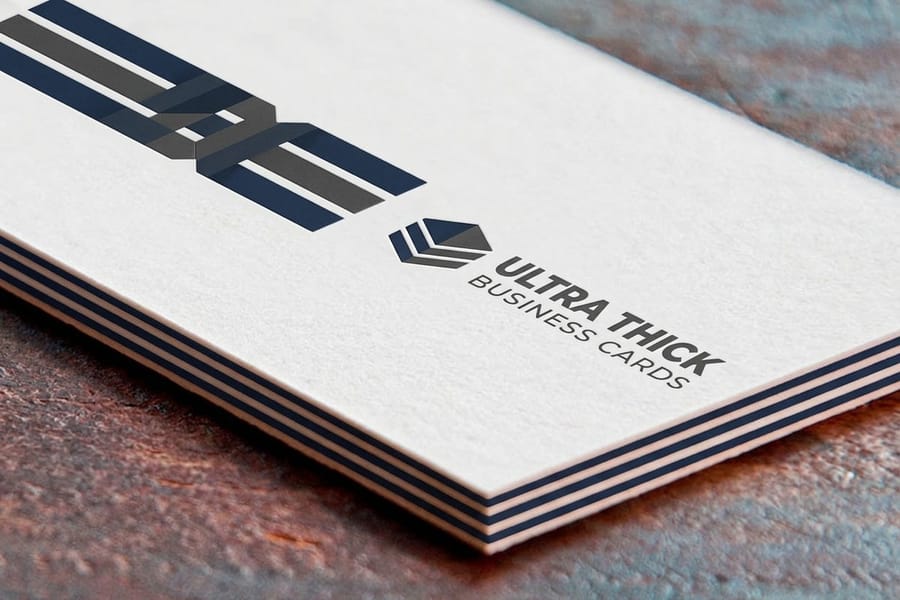
Here is the number that decides your build. Card thickness, not pocket size, sets how many cards you carry. A 0.4 inch spine holds about 28 cards at 14pt, 25 at 16pt, 20 at 20 point vinyl and roughly 12 at 32pt. Thick stock halves your capacity, so decide what you print before you cut the spine.
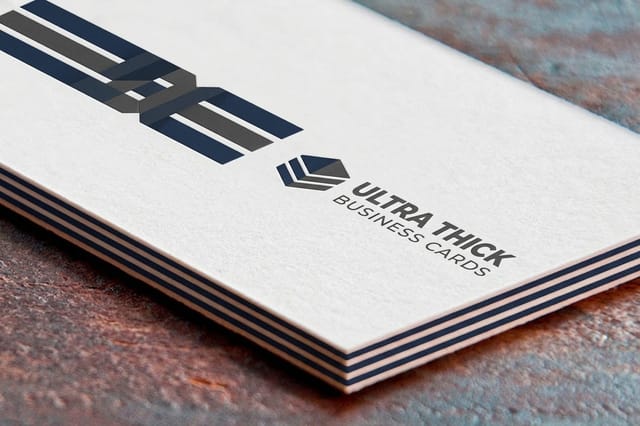
That trade is worth making in one direction. Ultra thick business cards start at 32pt and run up to 80pt, from $36.62 for 50, and they do not curl, do not soften in a wallet and do not need the holder to keep them flat. The cost is capacity: at 32pt you are carrying a dozen at a time and refilling more often. At 80pt a holder is almost beside the point, since four cards make a stack you can feel through a jacket.
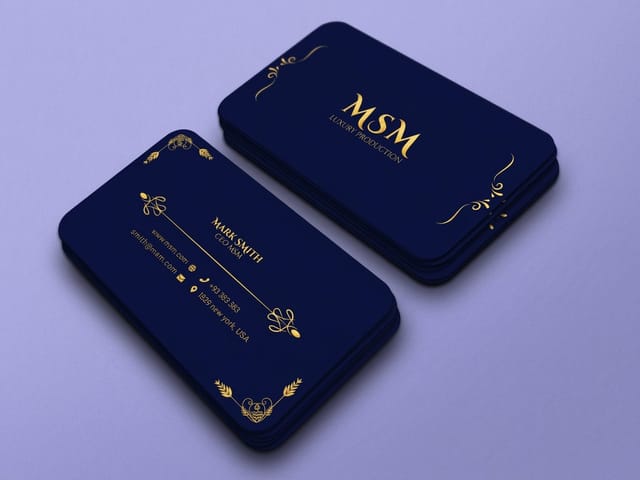
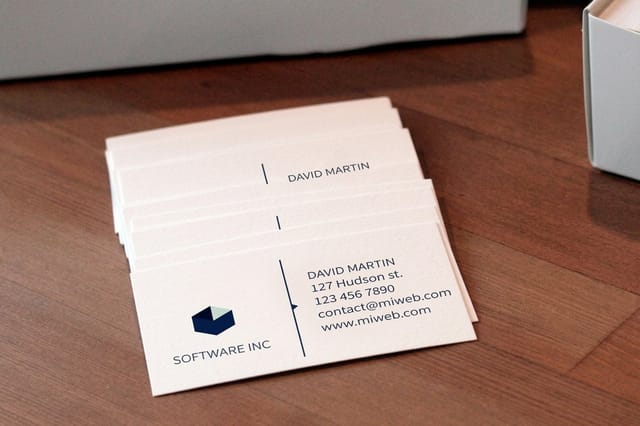
In the other direction, standard business cards start at $17.57 per box of 100 on everyday 14pt, and a box that size is exactly what a homemade holder is for, since 14pt is the stock most likely to take a curve in a pocket. Premium business cards sit in between, with 74 stocks including soft touch, linen and metallic pearl, from the same $17.57 per 100.
Two practical notes before you order. Soft touch and uncoated stocks pick up marks from a rough pocket lining, so line a holder for them with something smooth. And uncoated cards absorb humidity, which is the slow curl you see on a desk stack in summer, while coated cards mostly ignore it. The finish comparison covers how each one handles handling, and the thickness chart gives you the caliper for every point weight, which is what you actually measure the spine against. Setting up your own file is easier from a correctly sized layout in our blank template library.
Wally builds a card holder
One strip, three scores, a quarter inch of clearance
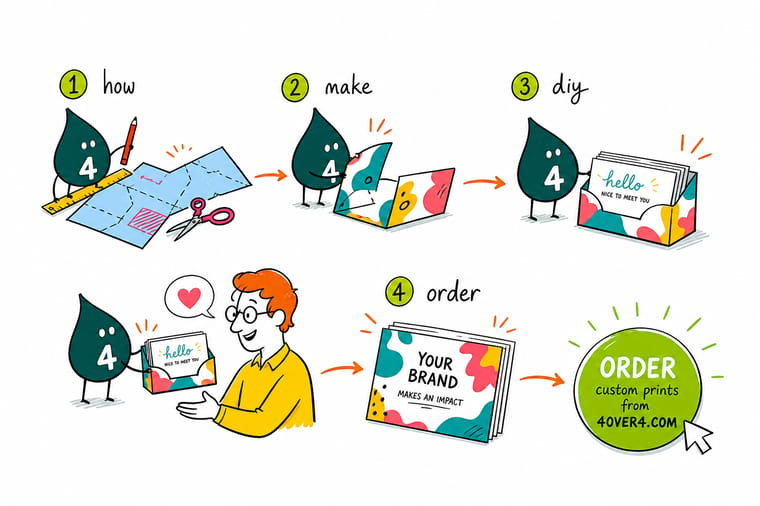
Wally measures the card first, not the board. He cuts a strip 3.75 inches wide so a 3.5 inch card has room to slide, scores three lines before he folds anything, and glues only the two sides of the pocket so he can push the stack up from below. Then he stops the front panel half an inch short of the card top, because a holder you have to shake is a holder nobody uses twice. Last thing he checks is the stock: thick cards fill the spine in half the count.
Print premium business cards →Specs and pricing
Stocks, sizes, and starting prices for the cards that go inside
Three ways to fill the holder, with live configuration choices and starting prices from the 4OVER4.COM configurator. Check the caliper before you cut the spine.

Print it
Cards that earn the holder you just built
Explore more
Where to go next

By the numbers
Business card printing you can count on at 4OVER4
Common Questions
Your card holder questions, answered
What size should a DIY business card holder be?
Size it around a 3.5 by 2 inch card, which is the standard US wallet size. The pocket wants to be 3.75 inches wide, giving a quarter inch of side clearance, and the front panel wants to stop at about 1.6 inches so half an inch of card stays exposed for your thumb. Depth is the part people guess wrong: a 0.4 inch spine is a sensible default, but it is really a function of your card stock. If you print outside the US, a 85 by 55 mm card needs a pocket about 91 mm wide instead.
How many business cards fit in a homemade holder?
Divide the spine depth by the card thickness. A 0.4 inch spine holds roughly 28 cards at 14pt, 25 at 16pt, 20 at 20pt rigid vinyl and about 12 at 32pt. That last number surprises people who order ultra thick cards and then wonder why their holder swallows barely a dozen. If you carry thick stock, cut the spine at 0.6 inches and accept a chunkier holder, or plan on refilling it more often.
What material works best for a homemade card holder?
Two millimeter greyboard covered in book cloth or decorative paper is the best balance of cost, tools and result, and it is what most bookbinding tutorials use. Veg tan leather at 2 to 3 ounces looks better and lasts far longer, but you need a stitching groove, an awl and saddle stitching to do it properly. A mint tin is the fastest option and the only one that genuinely protects cards in a bag, though the fit is tight and the lid rattles. Acrylic and 3D printed cases look sharp on a desk and crack in a pocket.
How do I stop my cards from bending or curling inside the holder?
Bending is a stock problem more than a holder problem. A 14pt card in a back pocket will take a curve by the end of the day no matter what surrounds it, while a 32pt card sits flat because it is too rigid to bend in the first place. If you carry cards loose in a bag, the practical fixes are a rigid holder, a heavier stock, and keeping the pocket full so the stack braces itself. Coated stocks also resist humidity better than uncoated, which is what causes the slow curl on a desk.
Is a homemade holder good enough for a trade show?
For a one day event, yes, and a well made leather or cloth covered holder reads as considered rather than cheap. For a full week of shows it is worth being honest about wear: glued board softens at the corners after a few hundred openings, and a holder that is coming apart says the wrong thing at the exact moment you hand something over. Carry the DIY holder for the pieces you hand to people you want to remember, and keep a plain box in the bag for volume.
Does a nicer holder actually matter if the cards are cheap?
The holder is a two second impression and the card is the one that stays in someone else’s pocket, so the card is where the money belongs. A box of 100 standard business cards starts at $17.57 at 4OVER4.COM and ultra thick cards start at $36.62 for 50. Spending an afternoon on a leather case to hold a thin, curling card is the wrong order of operations. Print something worth carrying first, then build the holder around it.
Get Started
Build the holder, then fill it with something worth handing over
Pick your stock, from everyday 14pt to 80pt ultra thick, and we print cards that stay flat, hold their color and survive the pocket they end up in.
Legal Disclaimer
Gold Standard guarantees apply to all standard orders placed through 4over4.com. Price match requires verifiable proof of a competitor's published price for an equivalent product with matching specifications and turnaround time. Satisfaction guarantee covers manufacturing defects and print quality issues. Contact support with order number and documentation. On-time delivery rate based on tracked orders 1999 to 2026. Individual results may vary based on shipping carrier performance.
