
How to Make a Customizable Poster From Size to Finish


Five decisions turn a design into a poster you can order. Here they are in the order the configurator asks for them, with the specs, the starting prices, and where each one goes wrong.
Customizing a poster is four ordered choices plus the file: trim size, stock, finish, and mounting. Set the size first, because it fixes how many pixels your artwork needs and which stocks are available. Then pick the stock by how the poster has to behave, the finish by the lighting in the room, and the mounting by how it gets onto the wall. Matte, laminated and canvas posters start at $25, mounted at $39.99, foam core at $49.99.
Quick answer
Size, stock, finish, mounting, in that order
Each choice narrows the next, which is why the order matters more than any single option. Trim size decides the pixel count your artwork must reach and which stocks the configurator will offer. Stock decides whether the poster arrives as a flexible sheet in a tube or a rigid board ready to lean. Finish is settled by the lighting in the room, not by how the design looks on a monitor. Mounting is the last question and it is about display hardware, not print quality.
Step One: Set the Trim Size Before You Touch the Artwork
Trim size is the decision every other decision hangs off. It sets how many pixels your artwork needs, which stocks the configurator will offer you, and whether the finished piece can be mounted rigid or has to ship rolled.
Pick the size from the viewing distance, not from a list. A poster read from across a room wants 24 by 36 inches. A poster at eye level in a hallway or a shop window works at 18 by 24. A poster next to a counter or a desk is fine at 11 by 17. Event and film posters default to 27 by 40 because that is the size the frames already screwed to the wall happen to be, and fighting that costs more than accepting it.
Then check the file. At 150 dpi, which is what we work back from on posters, 24 by 36 inches needs artwork around 3600 by 5400 pixels. A large poster nobody stands closer than about six feet from survives at 100 dpi. A poster read at arm's length does not, and that is where upscaled web images fall apart along type edges. Our guide to image resolution for printing goes through the arithmetic, and the complete poster size guide lists every standard size with the distance it suits.
If the wall or the frame gives you an odd measurement, enter it as a custom size rather than ordering a standard size and trimming it by hand. The configurator prices custom posters from the area, so a 20 by 30 costs what a 20 by 30 costs, and you avoid the uneven border a craft knife always leaves.
Step Two: Choose the Stock, Because It Decides How the Poster Behaves

Stock is where most people default to whatever is preselected and regret it later. The print looks the same across all of these. What changes is weight, rigidity, how the poster survives handling, and how it gets onto a wall.
| Stock | What it is | Best for | Starts at |
|---|---|---|---|
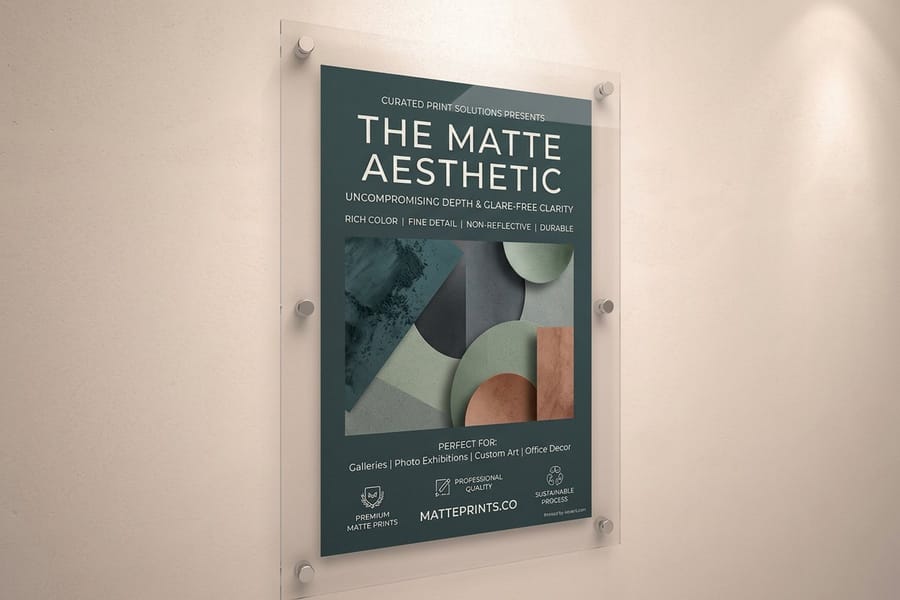
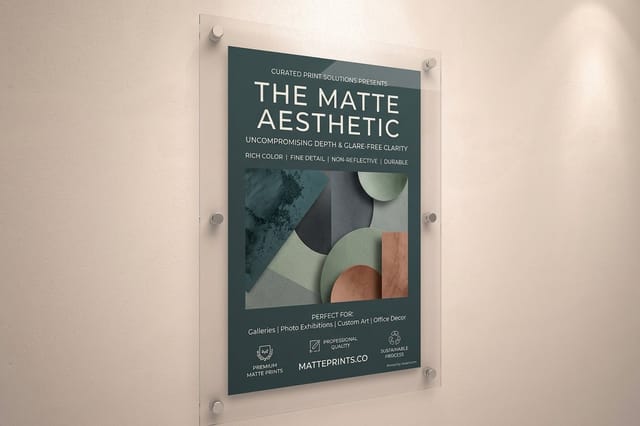
| Matte poster paper | Flexible sheet with a non-reflective coated surface. | Indoor posters under downlights, text-heavy layouts, anything framed behind glass. | $25 |
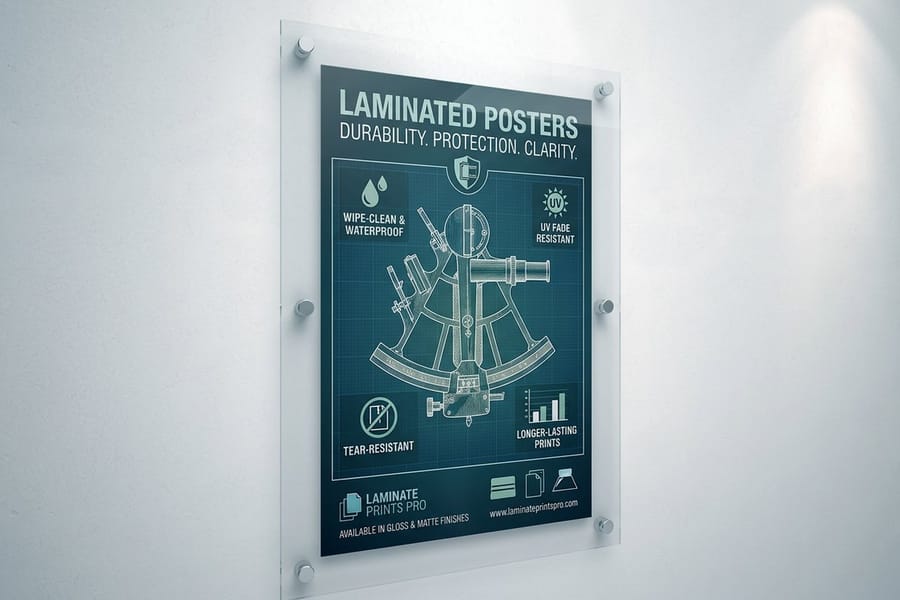
| Laminated poster | The same sheet with a clear film bonded over the print. | Menus, schedules, site notices, anything at hand height or in a damp room. | $25 |
| Mounted poster | Print bonded to a rigid backing so it cannot curl. | Wall pieces that must sit dead flat without a frame. | $39.99 |
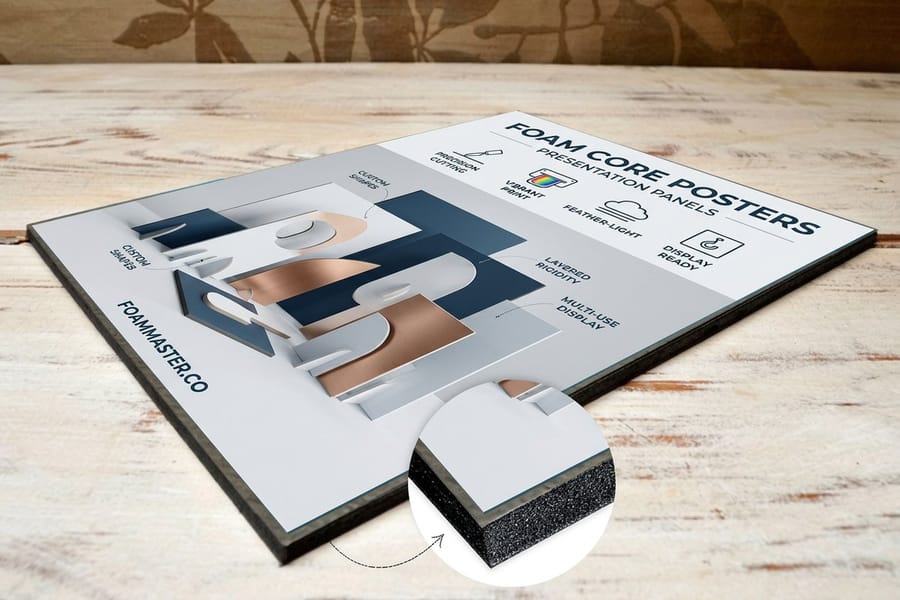
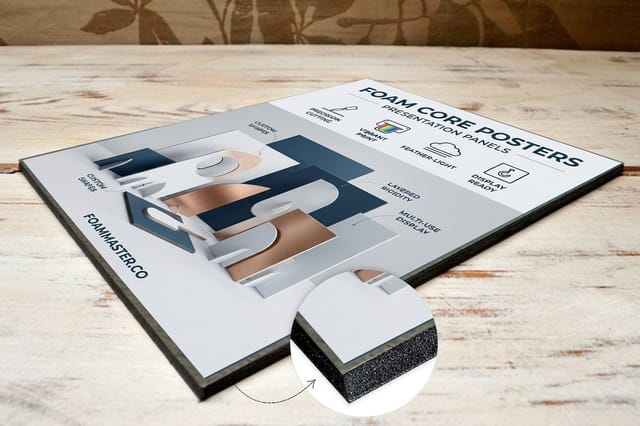
| Foam core poster | Print on lightweight foam board, thicker and self-supporting. | Easels, presentation boards, trade show tables, science fairs. | $49.99 |
| Canvas poster | Textured canvas surface instead of paper. | Art reproductions and decor where the weave is part of the look. | $25 |
| Framed poster | Print supplied already in a frame, ready to hang. | Offices, lobbies, and gifts where nobody wants a second purchase. | $87.86 |
Read the last two columns together. The $25 stocks are flexible sheets, which means shipping is cheap and a tube arrives at the door, but somebody still has to solve hanging. The $39.99 and $49.99 stocks arrive ready to lean, stand, or hang, and the extra money is buying the rigidity, not better printing. A poster going into a frame you already own should always be the flexible sheet. Which poster material to use works through the same choice from the display side.
For anything wider than about 36 inches, look at large format posters instead, which run on wide-format equipment built for that size rather than sheet presses.
Step Three: Match the Finish to the Lighting, Not to the Artwork
Finish is the choice people make on screen and regret on the wall. The deciding factor is the light in the room, and it beats every argument about how the design looks.
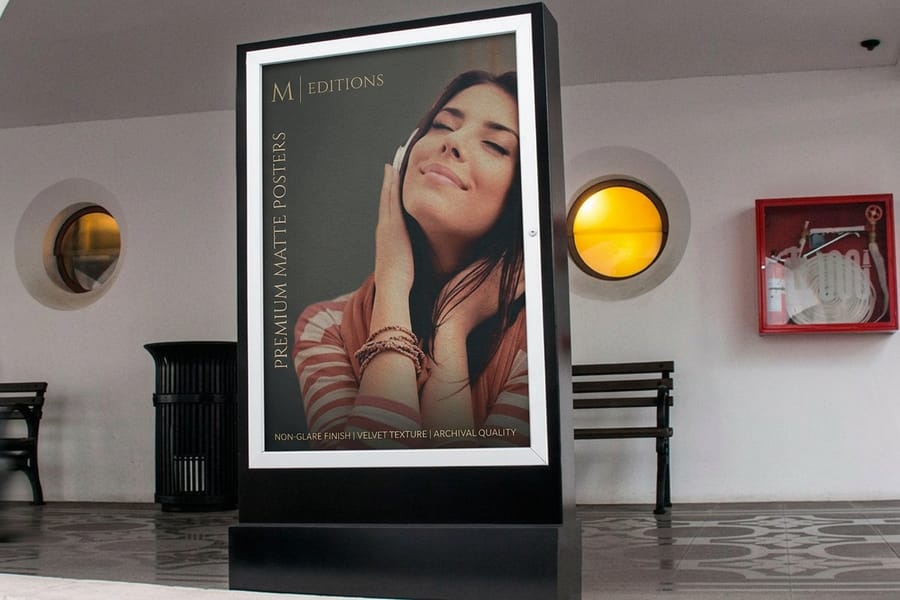
Gloss makes photographs and saturated color snap because the coating reflects light back through the ink. That same reflection turns the poster into a mirror the moment a ceiling downlight or a window lines up with the viewer, and a person standing in the wrong spot reads the room instead of your message. Matte scatters the light, holds legible from every angle, and is the correct default for posters carrying text, prices, schedules, or a dense layout. Order a matte poster unless the piece is essentially one big photograph in soft, controlled light.
Lamination is a separate question from gloss or matte, and it answers durability rather than looks. Add it when the poster will be touched, cleaned, or hung somewhere with moisture: a gym class board, a deli menu, a job site notice, a poster low enough for hands to reach. Laminated posters take fingerprints and a damp cloth without the ink lifting, and the film adds enough stiffness that the sheet stops flapping. Skip it on a promotional poster that gets swapped out monthly, because that job never lives long enough to use the protection.
One thing to check before either finish: your color mode. A file left in RGB shifts on press, most visibly in bright blues and greens, and a poster is large enough to make that shift obvious. Convert before you upload; CMYK vs RGB for printing explains what moves and by how much, and matte vs gloss finishes compared covers how each coating changes the same ink.
Step Four: Decide How It Gets Onto the Wall
Mounting is a display decision, not a quality one. Every option here carries the same print; what changes is what happens between the box arriving and the poster being up.
A rolled sheet is the cheapest to ship and the most work to hang. It arrives in a tube with a memory curl that takes a day or two flat under books to relax, and it needs a frame, a hanger, or tape you will regret. Mounted posters solve the curl outright by bonding the print to a rigid backing, so it goes on the wall flat with nothing behind it. Foam core posters go further: the board is thick and light enough to stand on its own edge, which is what an easel at a trade show or a presentation board actually needs.
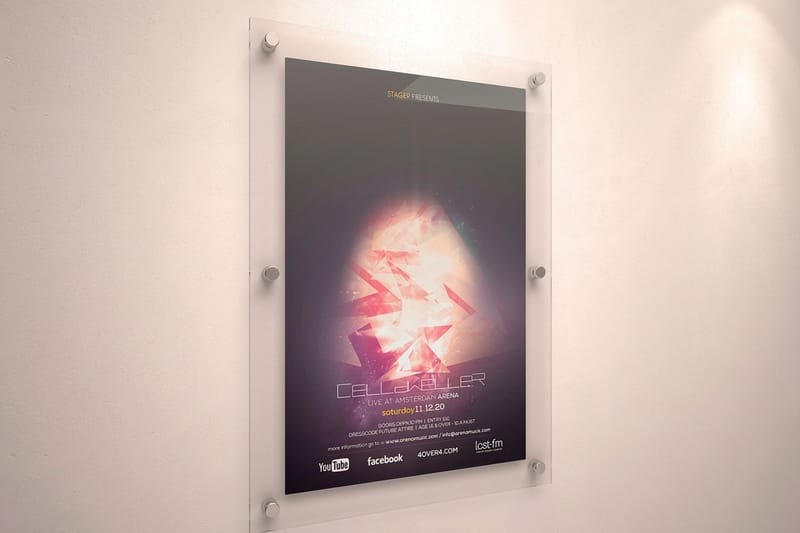
If you want the poster changeable, a wood poster hanger frame at $32.75 grips the top and bottom edge with magnetic rails, so the sheet swaps in seconds and nothing is glued down. That is the right pairing for a seasonal menu or a rotating gallery. When the poster is going up permanently and you want it framed on arrival, framed posters save a second purchase and a trip to a frame shop.
For the walls themselves, hanging a poster damage free covers the adhesives that come off cleanly, and arranging a gallery wall without nails handles spacing when there is more than one.
Step Five: Build the File So the Configurator Accepts It First Time
The customization is only real once the file matches it. Four things account for nearly every poster that comes back for a reupload.
- Bleed. If any color or image runs to the edge, extend it past the trim line so the cut never exposes white paper. Full bleed printing explained gives the amount and where it goes.
- Safety margin. Keep type and logos well inside the trim. Posters are cut in stacks, and a headline sitting 2 mm from the edge will look off-center on some sheets in the run.
- Built at final size. Set the document to the trim size you ordered rather than designing at half scale and enlarging. Half-scale artwork needs 300 dpi to hit 150 dpi at print size, and most people forget the doubling.
- Fonts outlined, images embedded. Export a print-ready PDF with type converted to outlines so nothing substitutes on our end.
The fastest way past all four is to start from a correctly built file. Our blank template library has the trim, bleed, and safety already drawn for standard poster sizes, and the online design templates let you customize a layout in the browser and send it straight into the order without leaving the site. If you would rather design from scratch, how to design a poster in 8 steps covers the layout side, and the whole poster range sits on the poster printing page.
Wally builds a custom poster
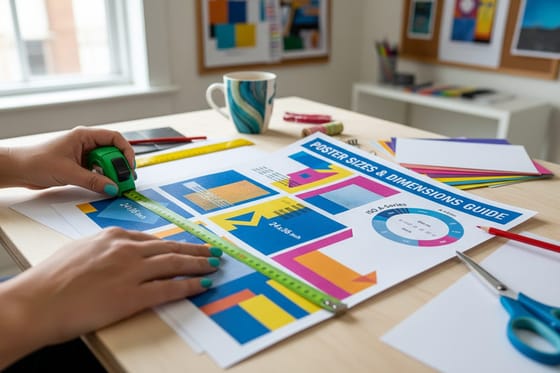
Measure the wall, then choose the paper
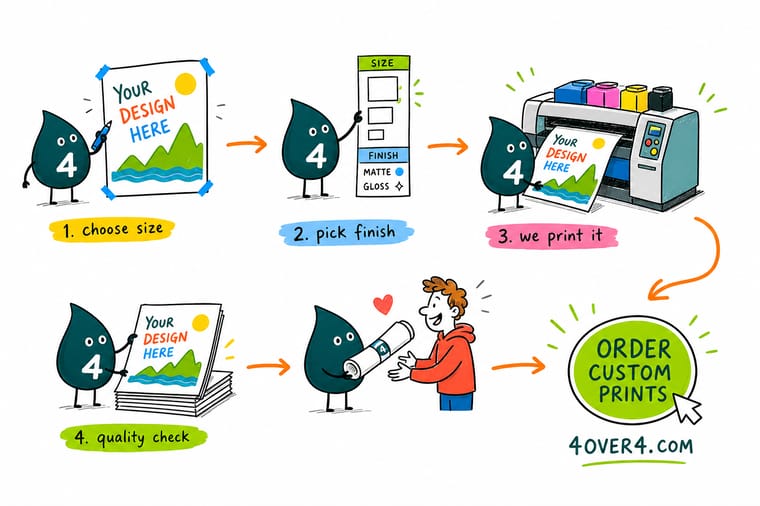
Wally starts at the wall with a tape measure, because the trim size decides everything after it. Then he checks the light: downlights and windows mean matte, soft light and one big photograph mean gloss. If people will touch the poster he laminates it. If it has to stand on an easel he puts it on foam core instead of paper. The file comes last, built at final size with bleed already added, so nothing has to be reuploaded.
Configure your poster →Specs and pricing
Poster sizes, stocks and starting prices
Configure the three most-ordered poster builds side by side, with live size, stock and finish options and starting prices straight from the 4OVER4.COM configurator.



Print it
Order the poster you just configured

Explore more
Where to go next


By the numbers
Custom poster printing you can count on at 4OVER4
Common Questions
Your custom poster questions, answered
What size should a customizable poster be?
Start from where it will hang. A poster read from across a room reads best at 24 by 36 inches; a poster in a hallway or a shop window at eye level works at 18 by 24; a poster pinned near a desk or a counter is fine at 11 by 17. Movie and event posters usually go 27 by 40 because that is the size the frames on the wall already are. If the wall or the frame dictates an odd measurement, enter it as a custom size in the configurator rather than printing a standard size and trimming it down, because a hand trim never leaves an even border.
What resolution does my file need for a poster?
150 dpi at the finished size is the target we work back from. That is 1650 by 2550 pixels for 11 by 17, 2700 by 3600 for 18 by 24, 3600 by 5400 for 24 by 36, and 4050 by 6000 for 27 by 40. You can drop to 100 dpi on a large poster that nobody stands closer than about six feet from, such as a wall behind a trade show table. What you cannot do is upscale a 1200 pixel web image to poster size and expect type edges to hold. Vector artwork and live type sidestep the whole problem because they have no fixed pixel count.
Matte or gloss for a poster?
Look at the lighting before you look at the artwork. Gloss makes photographs and saturated color snap, but it also mirrors ceiling downlights and windows, so a viewer standing in the wrong spot sees the room instead of the poster. Matte scatters that light and stays readable from every angle, which is why it is the default for text-heavy posters, menus, and anything under retail lighting. If the poster is mostly one large photograph and the lighting is soft, gloss wins on color.
Should I laminate a poster?
Laminate any poster that people will touch, or that lives somewhere damp. A gym class schedule, a deli menu, a construction site notice, a poster hung low enough for hands to reach all justify it. Laminate adds stiffness and a wipeable surface, and it stops the ink lifting when the sheet is cleaned. Skip it on a poster that hangs high and gets replaced monthly, because you are paying for durability the job will never use.
What is the difference between a mounted poster and a foam core poster?
Mounted posters bond the print to a rigid backing so the sheet stays perfectly flat, and start at $39.99. Foam core posters use a lightweight foam board that is thicker and stands on its own edge, which is what you want for an easel at a trade show or a presentation board, and start at $49.99. The print quality is identical; the difference is weight, thickness, and how the piece is displayed. Mounted is the flatter wall piece, foam core is the free-standing one.
Can I order a custom poster size that is not in the list?
Yes. The configurator accepts custom width and height within the press limits for the stock you picked, and the price recalculates from the area rather than snapping to the nearest standard size. Two things to watch: build the file at the custom size with bleed already added, and check the size against the frame or fixture before you order, because a custom poster is not a stock size you can swap later.
How much does a customizable poster cost?
Matte posters, laminated posters, and canvas posters all start at $25. Mounted posters start at $39.99, foam core posters at $49.99, and framed posters at $87.86 because the frame is part of the product. A wood poster hanger frame is $32.75 on its own if you would rather buy the hardware separately and keep the poster rolled. Size, quantity, and finish move all of those, so configure the exact job to see the real number.
Get Started
Ready to build your poster?
Enter your size, pick the stock and finish that suit the room, and choose whether it ships rolled or mounted rigid. We print it and it lands ready to hang.
Legal Disclaimer
Gold Standard guarantees apply to all standard orders placed through 4over4.com. Price match requires verifiable proof of a competitor's published price for an equivalent product with matching specifications and turnaround time. Satisfaction guarantee covers manufacturing defects and print quality issues. Contact support with order number and documentation. On-time delivery rate based on tracked orders 1999 to 2026. Individual results may vary based on shipping carrier performance.
