
How to Make a Car Bumper Sticker That Survives the Weather


The artwork takes an afternoon. Whether the sticker still reads in two years is decided by the film, the laminate, and the adhesive you pick at checkout.
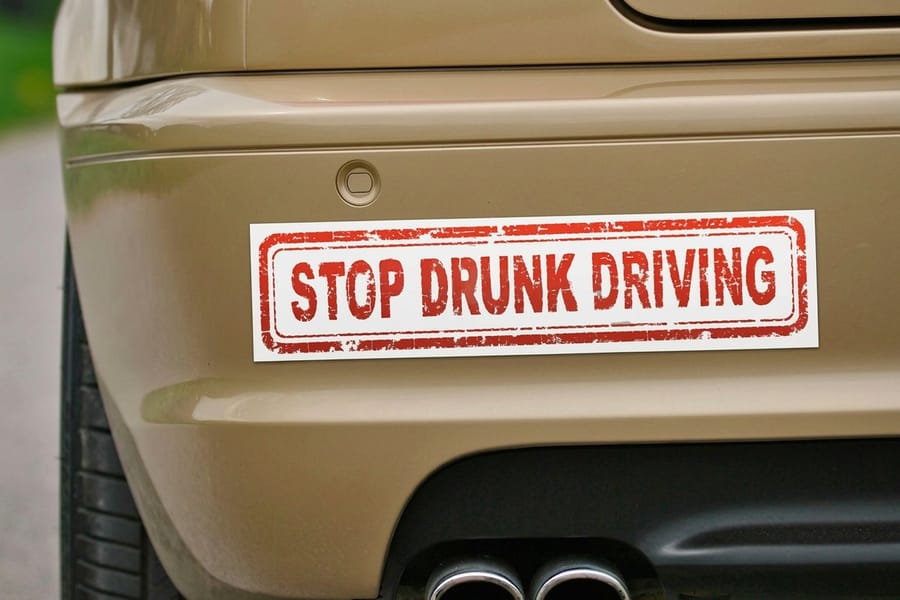
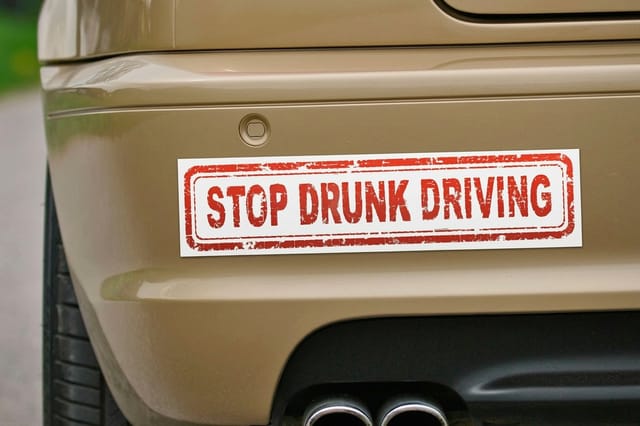
To make a car bumper sticker, set the artwork at final size in CMYK with 0.125 inches of bleed, then print it on UV-resistant vinyl with a clear laminate and the adhesive that matches how long it stays. The standard strip is 3 by 11.5 inches with rounded corners. Permanent adhesive is for a message that is not changing; removable is for a campaign with an end date. Design it to be read at a stoplight, because a 3 inch strip carries about 30 feet.
Quick answer
Vinyl, laminate, adhesive, and a line short enough to read
A bumper sticker is a material spec wearing a design. Print on flexible vinyl so it moves with the panel, put a clear UV laminate over the ink so the color does not go blue-grey by the second summer, and pick permanent or removable adhesive based on whether the message has an end date. Build the file at the finished size with 0.125 inches of bleed, round the corners, and keep the copy to four to seven words in a heavy sans serif. Then apply it to a smooth panel you have wiped with isopropyl alcohol, above 50 degrees, and leave it a day before washing the car.
Making the Sticker, Start to Finish
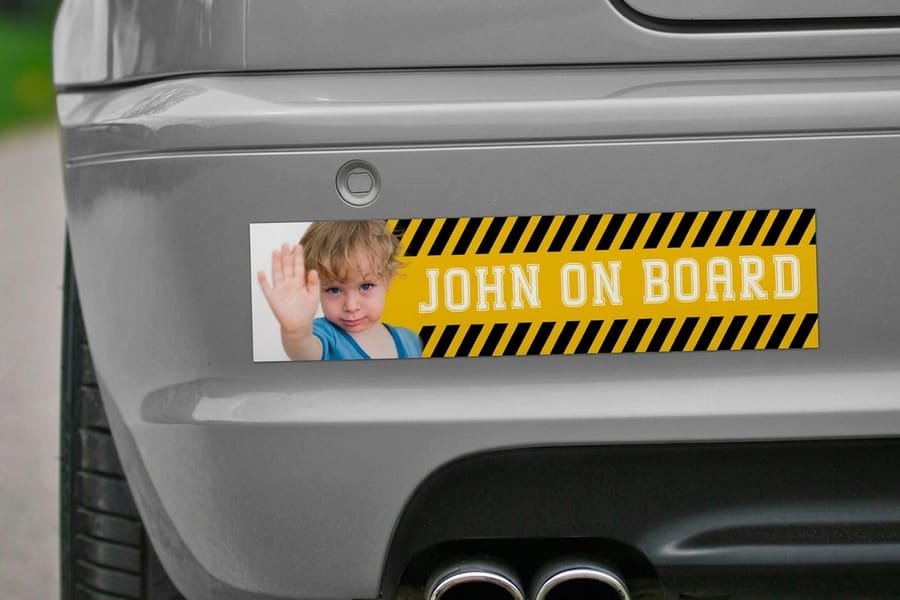
Six steps, and the order matters. Most bumper sticker problems come from picking a size before the words are final.
- Write the line and count the words. Four to seven words is the sweet spot. A driver reads a bumper in about two seconds and gets one look at it.
- Pick the size from the copy. The classic strip is 3 by 11.5 inches. A short tagline fits 3 by 7.5, a statement piece wants 5 by 15, and the configurator takes whatever width and height you set. The bumper sticker size guide lists what each one holds.
- Build the file at final size. CMYK, 300 DPI, 0.125 inches of bleed on all four sides, and every letter kept 0.125 inches inside the trim. Our explainer on full bleed printing covers why that margin exists, and the blank template library has the layout set up already.
- Round the corners. A square corner is the first thing that catches an edge of airflow or a car wash brush. Rounded corners are standard on bumper strips for exactly this reason.
- Spec the material. UV-resistant vinyl, a laminate over the ink, and the adhesive that matches how long the sticker stays. This is the step that decides whether it looks the same in two years.
- Proof at 100 percent, then order. Zoom to full size on screen and read it the way a stranger will. Upload a flattened PDF to custom bumper stickers, which start at $38.44, and the free file check runs before anything prints.
Cutting your own from a home printer is possible, and it lasts about one rain. Inkjet ink on sticker paper is water soluble, and even printable vinyl from a desktop printer has no laminate over it, so the first wash takes the color with it.
What Actually Makes a Sticker Survive a Car
A bumper sticker is a four layer sandwich, and each layer fails in its own way. Understanding the stack is the difference between a sticker that still reads next summer and one that goes chalky.
The vinyl film is the body. It flexes with the bumper, which paper cannot do, and it stays dimensionally stable when the panel heats up in traffic. Most bumper stock is calendered vinyl, which is fine on a flat panel and slowly shrinks back on a deep curve. That is the reason a sticker on a flat bumper looks perfect for years while the same film on a compound curve pulls at the corners.
The ink is printed on the face of the film, not into it. Full color CMYK reproduces photos and brand color, but the pigments do not all age at the same rate: magenta and yellow give up long before cyan and black. That is why a faded sticker reads blue-grey rather than evenly washed out.
The laminate is the layer people skip and then regret. A clear UV laminate takes the sunlight instead of the ink, and it also takes the scuffing from brushes and grit. Gloss reads brighter from a distance, matte kills the reflection so the type stays readable in direct sun. Without a laminate you are relying on the ink alone, which is the same as leaving a poster out in the weather.
The adhesive sits under it all, and it is covered in the next section. If you want the wider comparison across sticker materials, our guide on vinyl stickers versus paper stickers and the one on outdoor sticker materials both go deeper. Vinyl stickers start at $25 if you want the same construction in another shape.
Permanent, Removable, or a Magnet Instead

This is the one decision you cannot change later, so make it before you order. All three options put your message on the car. They end very differently.
| Option | How it holds | Coming off | Pick it when |
|---|---|---|---|
| Permanent vinyl | Adhesive keeps building grip for the first day or two, then it is not going anywhere. | Needs a hair dryer and adhesive remover, and it may tear if the vinyl has aged. | The message is not changing. Slogans, band names, cause stickers, long-term brand marks. |
| Removable vinyl | Enough grip for highway speed and rain, less bite into the clear coat. | Lifts in one piece with gentle heat, as long as the film is still flexible. | A campaign with an end date, a leased vehicle, a promotion, a car you plan to sell. |
| Car magnet | Magnetic sheet against flat steel. It will not hold on plastic or aluminum panels. | Peels off in seconds, no residue, no heat. | A work vehicle that switches between company branding and personal use. |
Two things surprise people. Removable does not mean removable forever: leave it through four summers and the vinyl goes brittle, so it comes off in shards like a permanent one. And a magnet needs a flat ferrous panel, which rules out most modern bumpers, so car magnets at $47.50 go on a door or a quarter panel instead. Take a magnet off every week or two, wipe both surfaces, and let them dry, because trapped grit under a magnet is what actually marks paint. The decals versus magnets versus bumper stickers comparison lays out the rest, and car decals from $93.37 cover the cut-vinyl look with no visible background.
Designing Something a Driver Can Actually Read
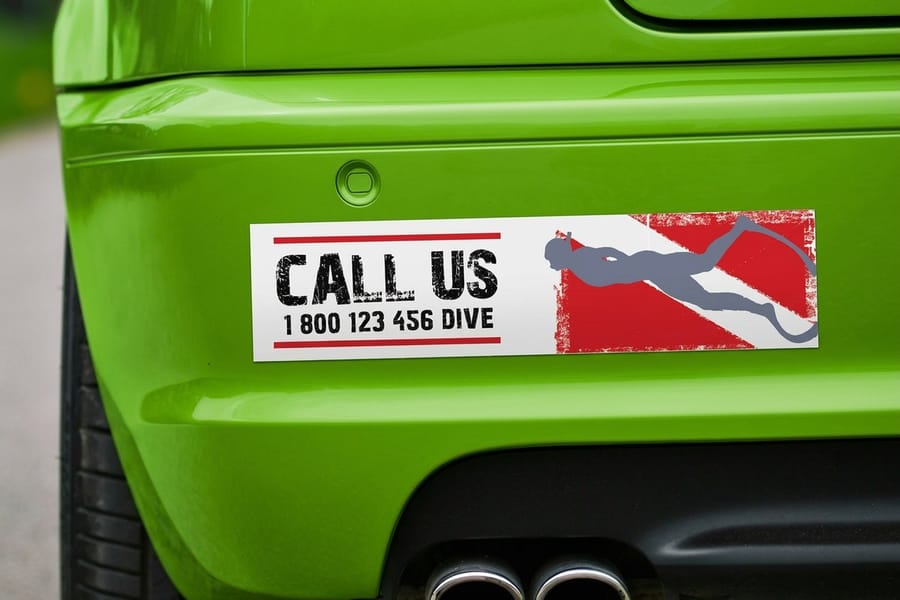
Sign makers size type by distance: roughly one inch of cap height for every ten feet you want it read from. Run that math on a bumper sticker and the honest answer is uncomfortable. A 3 inch tall strip gives you maybe two inches of type, which reads at about 20 to 30 feet. That is the car behind you at a light, not the car three lanes over at highway speed.
So write for the stoplight. One idea, one line, and a second line only if it is genuinely secondary. Set it in a heavy sans serif rather than a script, because thin strokes disappear against road grime and glare. Dark type on a light field carries further than light type on a dark field, and a bright field also survives fading better because there is less ink to lose.
Keep the artwork simple where the print gets small. Fine gradients and photographic detail print fine on vinyl, but nobody sees them at speed, and a busy background steals contrast from the words. If your brand needs an intricate mark, put it on the car as a car decal where you control the shape, and keep the bumper strip for the line people should remember. For contour-cut shapes on any surface, die-cut stickers start at $93.37.
One last check before you export: read the line out loud to somebody who has never seen it. If they need a second pass, it is too long for a bumper.
Putting It On So It Stays On
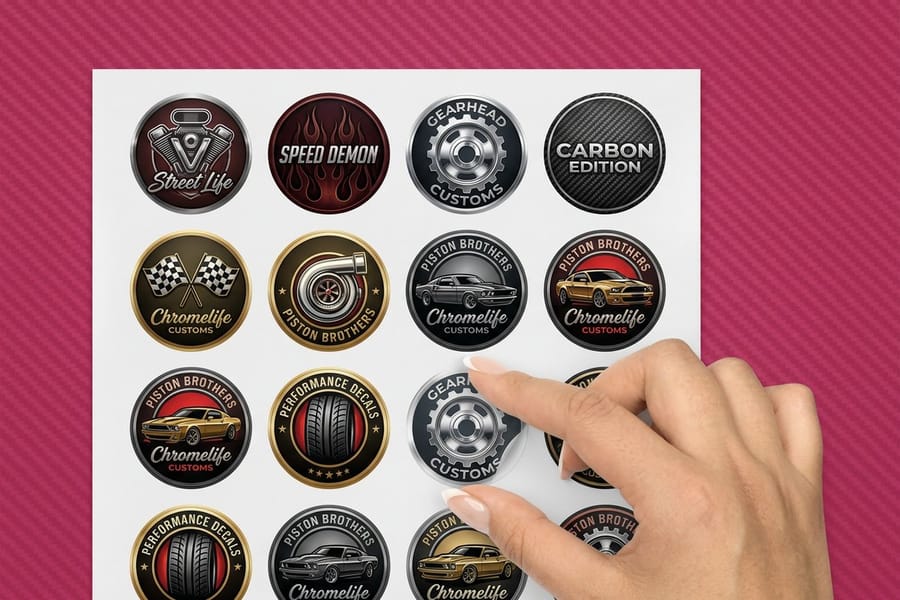
Application is where a good sticker gets ruined in three minutes. The surface has to be clean, dry, and smooth, and the temperature has to be reasonable.
Wash the panel with soap and water, then wipe it with isopropyl alcohol on a lint-free cloth. Soap alone leaves wax behind, and wax is exactly what adhesive cannot grip. Work above roughly 50 degrees Fahrenheit; in the cold the adhesive stiffens and never fully wets out, which is why a sticker applied in January starts lifting in March.
Pick your spot with the panel in mind. Pebbled plastic bumper covers only give the adhesive the tops of the texture to hold, so a smooth painted section holds far better. Avoid a panel gap, a body seam, or anything with a sharp crease running under the sticker.
Then place it with the hinge method: line the sticker up dry, tape one long edge down, fold it back, peel half the liner, and squeegee from the center outward at a shallow angle before doing the other half. Small bubbles work out toward the nearest edge, and a stubborn one can be pricked with a pin and pressed flat. Leave it alone for 24 hours before the first wash so the adhesive can cure. The full technique is in our vinyl decal application guide, and the whole sticker range sits on the sticker printing page.
Wally explains bumper stickers
Vinyl underneath, laminate on top, and one short line
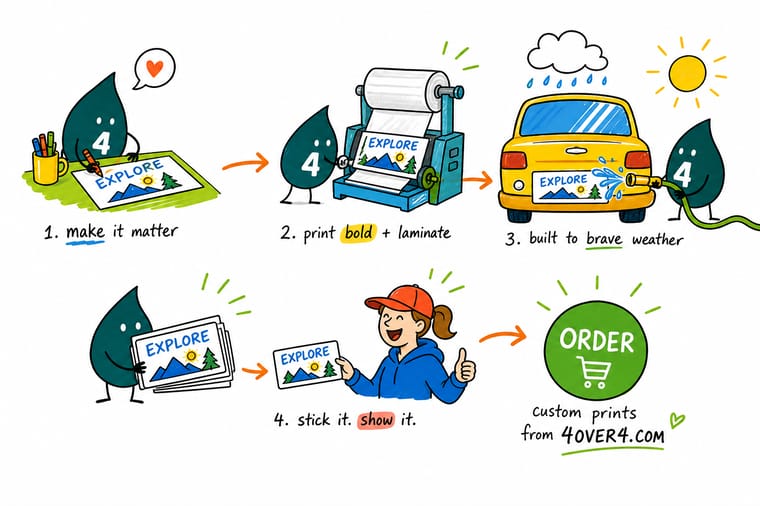
Wally keeps the words down to four, prints them big on vinyl, and puts a clear laminate over the ink so the sun hits that instead of the color. He picks permanent adhesive when the sticker is staying and removable when the campaign ends in October. Then he wipes the bumper with alcohol, tapes one edge, and squeegees from the middle out. Twenty four hours before the first car wash and it is set.
Order custom bumper stickers →Specs and pricing
Sizes, stocks, and starting prices for car branding
Compare the three ways to put your message on a vehicle, with live configuration choices and starting prices straight from the 4OVER4.COM configurator.


Print it
Order the version that fits your vehicle

Explore more
Where to go next




By the numbers
Vehicle graphics printed to order at 4OVER4
Common Questions
Your bumper sticker questions, answered
How do I make a car bumper sticker step by step?
Write the line first and count the words, because copy length decides the size. Build the file at the finished dimensions, most commonly 3 by 11.5 inches, in CMYK at 300 DPI with 0.125 inches of bleed on every edge and all type kept 0.125 inches inside the trim. Round the corners so nothing catches the airstream. Then order it on UV-resistant vinyl with a laminate, choosing permanent adhesive if it stays for years or removable if it comes off after a campaign. Upload a flattened PDF and the free file check confirms the setup before it prints.
Will a bumper sticker damage my car paint?
On factory paint in good condition, no. The damage people blame on stickers is almost always sun damage around them: the paint under the sticker stays shielded while the paint around it oxidizes, so when the sticker finally comes off you see a clean rectangle against faded paint. That is more likely on a decade-old single-stage finish than on modern clear coat. The real risk is the removal, not the sticker. Chipped or resprayed paint, and any panel with lifting clear coat, can come away with the vinyl.
What is the best way to remove a bumper sticker?
Heat it, do not pull it cold. Warm the sticker with a hair dryer until the vinyl is pliable, lift a corner with a plastic card or a fingernail, and pull back on itself at a low angle rather than straight up. Keep the heat moving as you go. Whatever glue stays behind comes off with an adhesive remover or isopropyl alcohol on a microfiber, then wash and wax the spot. A sticker that has been through four summers usually tears into small pieces because the vinyl has gone brittle, which is the moment to be patient rather than aggressive.
Do bumper stickers survive a car wash?
A laminated vinyl sticker with a permanent adhesive handles brush washes and touchless washes without trouble once it has cured for a day or two. Pressure washers are the exception. A narrow nozzle held a few inches from the edge will get under the film and start lifting it, so keep the wand back and angle the spray away from the edges rather than into them. A car magnet is the opposite case: take it off before the wash, because water and grit trapped underneath is what marks the paint.
Should I use a bumper sticker or a car magnet?
It depends on whether you want the mark to come off. A sticker sits flat, survives highway speed, and stays where you put it, which suits a slogan or a permanent brand mark. A magnet peels off in seconds, so it fits a work vehicle that switches between company branding and personal use. The catch is that a magnet needs a flat steel panel, and most modern bumpers are plastic or aluminum, so the magnet goes on a door or a quarter panel instead. Magnets also need to come off every week or two so the surface underneath can dry. Car magnets start at $47.50 and bumper stickers at $38.44, so cost is rarely the deciding factor.
Is there anything I am not allowed to put on my bumper?
Two practical limits, both about visibility rather than content. Nothing may cover any part of the license plate, including the state name, the registration stickers, or the plate frame area, and that is enforced in every state. Nothing goes over a light, a reflector, or a sensor housing, and on newer cars the bumper often holds parking sensors and radar for adaptive cruise, so a strip of vinyl across one can affect it. Rear window stickers are a separate matter because window obstruction rules vary by state. On the bumper itself, keep it to the painted or plastic panel and you are fine.
Get Started
Ready to put your line on the back of the car?
Set the size, pick UV vinyl with a laminate, choose permanent or removable adhesive, and we print bumper stickers that read as well next summer as they do the day they arrive.
Legal Disclaimer
Gold Standard guarantees apply to all standard orders placed through 4over4.com. Price match requires verifiable proof of a competitor's published price for an equivalent product with matching specifications and turnaround time. Satisfaction guarantee covers manufacturing defects and print quality issues. Contact support with order number and documentation. On-time delivery rate based on tracked orders 1999 to 2026. Individual results may vary based on shipping carrier performance.
