
How to Design Custom Pie Boxes That Protect the Crust and Sell the Bake


Sizing from the plate rim, the window trade-off, the board that survives a butter crust, and the cheapest way to put your name on a box.
Size a pie box one inch larger than the pie plate rim, and set the height at plate depth plus the tallest point of the filling plus about a quarter inch, so a 9 inch pie takes a 10 by 10 by 2.5 box and deep dish takes a 4 inch height. Choose a window only where the pie is bought by sight, because film fogs on a warm pie and takes away the best print panel. Then pick a grease resistant or coated interior, keep printing inks off the food side, and brand small runs with labels rather than a full printed box run.
Quick answer
Measure the plate, then measure the tallest point
Two numbers decide the box, and neither of them is the number printed on the pie recipe. The first is the outside diameter of the pie plate rim, plus about half an inch of clearance each side, which puts a 9 inch pie in a 10 by 10 box. The second is the height from the base of the plate to the highest point of the filling, plus a quarter inch so the lid never touches the crust. Everything after that is a commercial choice: window or solid lid, coated or uncoated interior, printed box or plain box with a label.
The Box Is Doing Two Jobs, and They Pull Against Each Other
A pie box has to hold a heavy, fragile, greasy object level through a car journey, and it has to make somebody want the pie before the lid comes off. Those two jobs want different things from the design, and most bad pie packaging is the result of one of them winning outright.
Protection wants a deep box, a rigid base, and a lid that stays shut. A finished 9 inch fruit pie weighs between two and three pounds, and all of that weight sits on the bottom panel while the box is carried by the sides. That is why a tuck bottom that pops open under load is the classic failure, and why a locking or glued base is worth the small extra cost on anything above 9 inches.
Selling wants a window, a bold print, and a lid the customer photographs. Every one of those makes the lid panel weaker or more expensive. The useful way through it is to decide where the pie is actually sold. A market stall or a display case rewards a window. A pie ordered ahead and collected rewards a solid printed lid, because the customer has already decided and the box is now a brand impression they carry home.
Get the structure right first and the graphics second. Our guide to getting custom boxes covers the box styles and where each one is strong, and the bakery printing collection shows what the rest of a bakery print set looks like around the box.
Common Pie Box Sizes and How to Pick Yours
Measure the plate, not the pie. A pie plate sold as 9 inches is 9 inches across the outside of the rim, and that rim is what touches the box wall. Add roughly half an inch of clearance on each side and the box size falls out of it, which is why a 9 inch pie belongs in a 10 by 10 box.
Height is the measurement people get wrong. Take the depth of the plate, add the tallest point of the filling above the rim, then add about a quarter inch so the lid never rests on the crust. A flat cherry pie clears 2.5 inches comfortably. A meringue or a piled lattice does not.
| Box size | What it fits | Height headroom | Watch for |
|---|---|---|---|
| 8 x 8 x 2.5 | 7 inch tarts, hand pie multipacks, small quiche. | Fine for anything flat topped. | Too tight for a 8 inch plate with a raised crimp. |
| 9 x 9 x 2.5 | 8 inch plates, single serve slabs. | Flat fruit and custard only. | People buy this for a 9 inch pie and the crimp shears off. |
| 10 x 10 x 2.5 | The standard 9 inch pie, the volume size for most bakeries. | About a quarter inch over a flat top. | Nothing domed. A lattice already touches the lid. |
| 10 x 10 x 4 | Deep dish, meringue, piled lattice, streusel. | Room for a tall filling and a dome. | The extra void lets a light pie slide, so it wants a snug base. |
| 12 x 12 x 3 | 10 and 11 inch party pies, two 8 inch pies side by side. | Generous on a standard depth. | The base panel flexes at this width unless the board is heavy. |
One habit saves a lot of grief: box dimensions are quoted as the inside of the finished box, and plate dimensions are quoted as the outside of the rim. When you order a custom size, state which pie plate you use and the height of your tallest seller, rather than a box number you read somewhere. Start from a correct dieline in the blank template library and check the setup rules in the packaging file prep guide before you send artwork.
Window Lids Versus Solid Lids

A window is a die cut hole in the lid, usually with a clear film patch glued behind it. It works, and it costs you three things that nobody mentions in the quote.
It costs print area. The window sits in the middle of the largest flat panel on the package, which is the panel a customer sees in a case and the panel your logo wants. It costs stacking strength, because a hole in the lid is a hole in the panel that the next box rests on, and a tall stack of windowed boxes bows in a way a solid stack does not. It costs clarity the moment a warm pie goes in, because steam condenses on film far more visibly than it does on board.
Against that, a window sells fruit pies in a self serve case better than any photograph. If a buyer is choosing between six pies by eye, showing the real lattice wins. The compromise most bakeries land on is a small window over the centre of the pie with the brand printed around it, so the lid still carries the name at a distance.
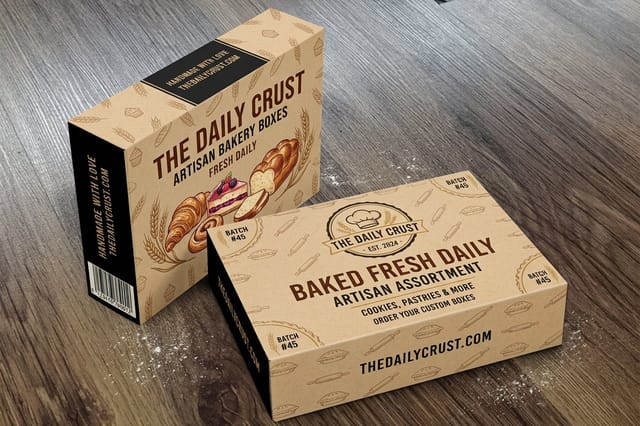
A solid lid is the stronger commercial choice for pre ordered and delivered pies, and it is the cheaper one. You get the whole panel for artwork, the board keeps more heat in on a warm delivery, and there is no film to fog. If you go solid, spend the saving on the print: a full colour lid on a custom bakery box is what turns the packaging into an ad sitting on somebody's kitchen counter until the pie is finished.
Food Safe Board, Grease, and What Actually Touches the Pie
Two separate questions get merged here, and they have different answers. The first is whether the board is suitable for food contact. The second is whether it survives grease. Passing the first tells you nothing about the second.
On contact: a baked pie in its own foil tin or ceramic plate is barely a food contact situation at all, and standard bakery board handles it. It changes when the pie leaves the tin, when the product is a slab or a hand pie sitting on the base, or when the filling is wet. For those, use food grade virgin board rather than recycled fiber, or put a board circle or a greaseproof sheet between the product and the box. Printing inks belong on the outside of the box, never the inside, and no reputable packaging printer will print an interior food contact panel.
On grease: uncoated kraft looks beautiful and wicks butter fat into the fibers. Within a few hours a warm butter crust leaves a dark translucent patch on the base, and on a printed box that patch reads as a defect rather than as character. A clay coated interior, a poly lined board, or a grease resistant liner stops it. So does the cheap answer, which is a plain board circle under the plate that absorbs the fat and gets thrown away with the tin.
Ventilation belongs in this section too, because it is a food quality decision made at the packaging stage. A sealed box around a hot pie traps steam, the steam condenses on the lid, and it rains back onto the crust. Cool the pie to near room temperature before boxing, or specify small vent holes in the lid if your service model forces you to box warm. If you are shipping rather than handing over, look at roll end tuck top boxes with a corrugated outer, because a bakery box on its own is not a shipping carton.
Branding a Plain Box With Labels and Tags
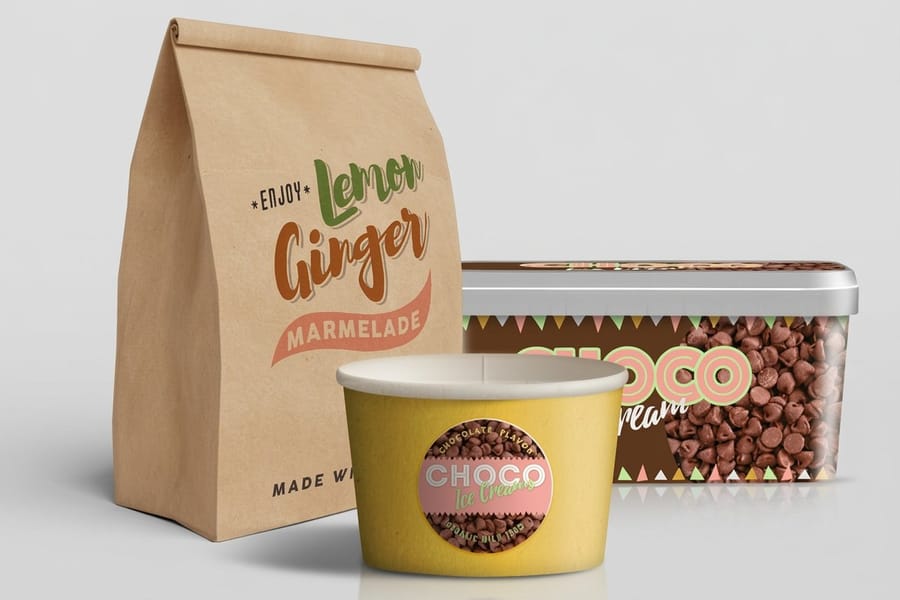
Here is the arithmetic that decides most small bakery packaging. A printed run of bakery boxes starts at $711.78, and every box in that run carries the same artwork for as long as the stock lasts. Premium food labels start at $29.16. If you sell six flavours and change three of them by season, printing the flavour into the box is the wrong place to spend money.
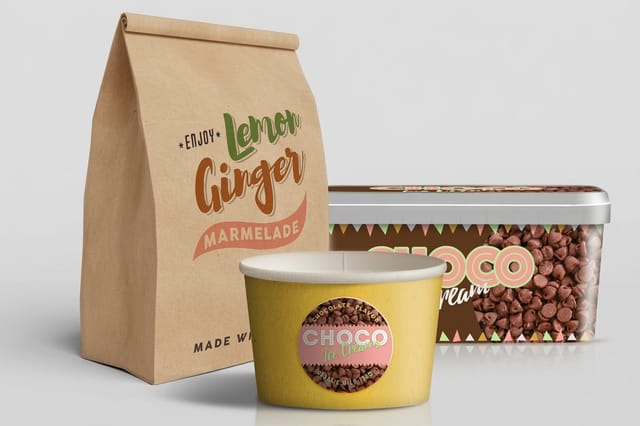
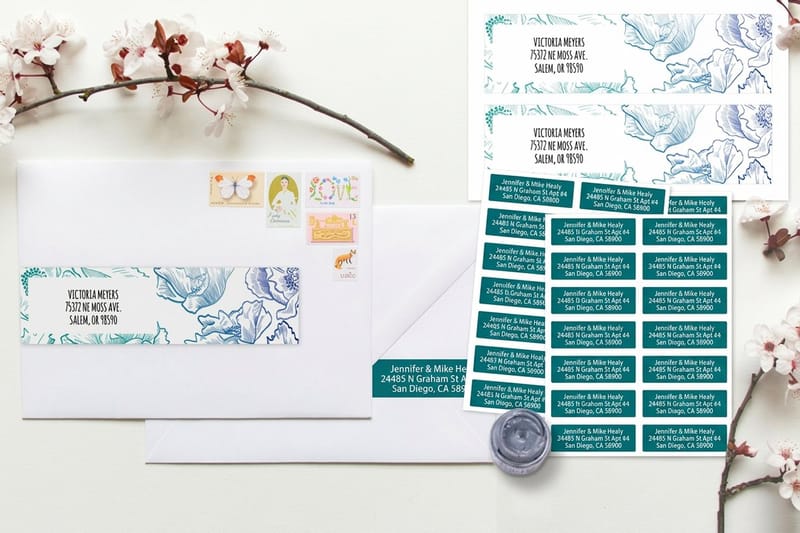
The pattern that works: one plain or lightly printed box that carries the brand, and a label that carries everything that changes. Flavour, allergens, bake date, best before, the farm the apples came from. Labels also carry the legal copy, which is a real advantage because ingredient statements change and boxes do not. For a bakery running a labeller at volume, roll food labels come on a roll for an applicator instead of a sheet, which is worth it above a few hundred units a week.
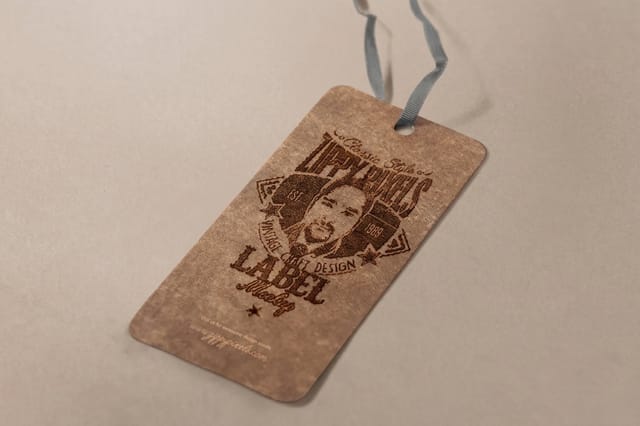
Tags do a different job. A kraft hangtag tied to a box ribbon reads as handmade in a way a printed lid cannot, which suits a farmers market or a gift pie better than a supermarket shelf. They start at $57.96, and the hang tag guide covers string, hole placement, and the sizes that survive handling. A sheet of printed tissue paper under the pie in a gift box is the third piece, and it costs almost nothing per unit.
Keep the whole set consistent. Same typeface on the box, the label and the tag, same one or two colours, and the same logo lockup at three sizes. Browse the full range on labels printing and the packaging and labels hub when you are choosing the pieces, and see finished examples in the packaging printing collection.
Ordering in Bulk Without Buying Five Years of Boxes
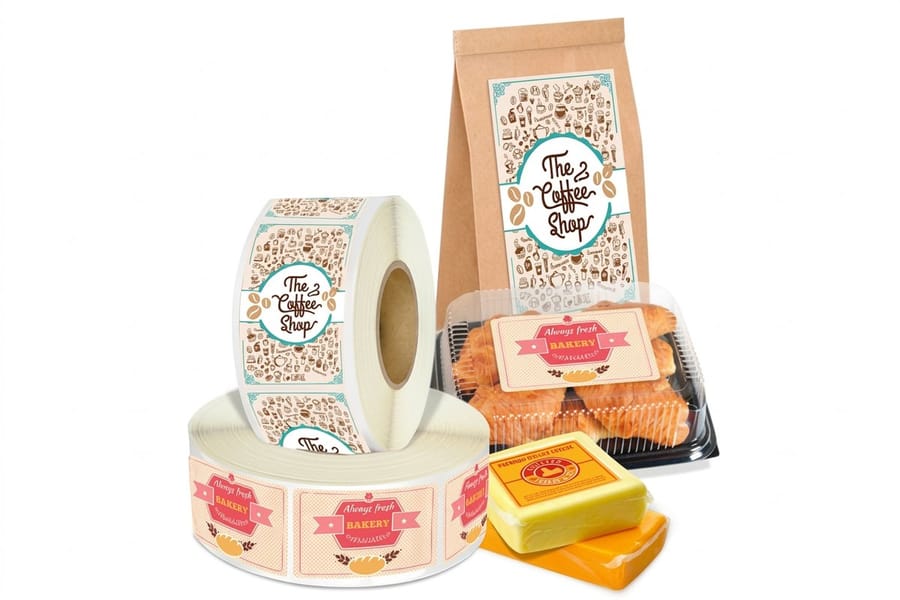
Custom boxes are a tooling business. A dieline has to be cut once, the sheet has to be printed, and the setup is the same whether you order 500 boxes or 5,000. That is why the per box price falls steeply through the first few thousand and then flattens, and it is why the honest advice for a new bakery is to order fewer sizes rather than fewer boxes.
Three rules keep a first order sensible. Standardise on one box size for the pie you sell most and one taller size for everything domed, instead of a size per product. Order enough to reach the point where the setup is spread thin, which is usually somewhere in the low thousands rather than the hundreds. And leave the changing information off the box so a recipe change, a new flavour or a new label law does not turn your stock into waste.
Storage is the constraint people forget. Flat boxes ship knocked down and take far less room than assembled ones, but a few thousand of them still need a dry shelf, because board that sits in a damp back room loses stiffness and the folds crack when you make them up. Order to the space you have.
Run the numbers on your own sizes in the configurator rather than from a table. Every box on custom box printing shows live pricing across quantities, so you can see exactly where your break point sits, and the packaging box ideas piece is a good place to look for structural options before you commit a dieline.
Wally sizes a pie box
One inch wider than the plate, a quarter inch above the filling
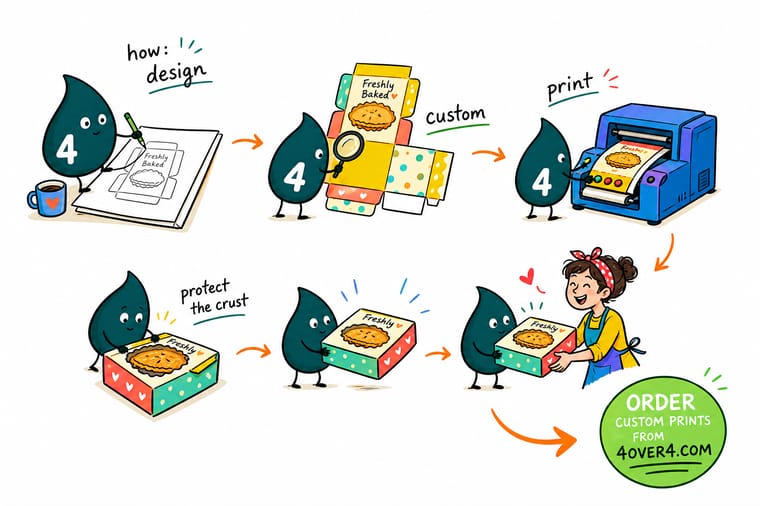
Wally puts the tape across the rim of the pie plate, not across the pastry, because the rim is what meets the box wall. Nine inches on the plate means a ten inch box. Then he measures from the base of the plate to the highest bit of the filling and adds a quarter inch, so the lid never sits on the crust. A flat fruit pie clears a 2.5 inch box. A meringue does not, and that is how a beautiful top arrives flattened.
Configure custom bakery boxes →Specs and pricing
Boxes and labels, sizes and starting prices
Compare the packaging pieces side by side, with live configuration choices and starting prices straight from the 4OVER4.COM configurator.
Print it
Package a pie the way you would want one handed to you
Explore more
Where to go next
By the numbers
Bakery packaging you can count on at 4OVER4
Common Questions
Your pie box questions, answered
What size box does a 9 inch pie need?
A 10 by 10 box with a 2.5 inch interior height for a standard flat fruit or custard pie. The 9 inch figure on a pie plate is the outside rim diameter, so a 9 by 9 box gives you nothing to work with and the crimped edge rides against the wall. Go to a 4 inch height for deep dish, meringue, or anything with a piled lattice, and remember that box dimensions are quoted inside, not outside.
Should pie boxes have a window?
Only if the pie is sold from a display case or a market table where the buyer chooses by sight. A window costs more, weakens the lid panel that a stack of boxes rests on, and takes away the largest printable area on the package. It also fogs badly if a pie is boxed while still warm, so a bakery boxing straight out of the cooling rack is usually better off with a solid printed lid and a photograph on it.
Can I put a pie straight into the box?
A baked pie in its own plate or foil tin, yes, because contact is brief and dry. Loose contact between fresh food and printed board is a different question: printing inks sit on the outside for a reason, and recycled fiber is not the right choice for direct contact without a barrier layer. If the pie leaves its tin, put a food grade board circle or a sheet of greaseproof under it.
Will grease soak through a pie box?
Through uncoated kraft, yes, and faster than most bakers expect. A butter crust that is still warm pushes fat into the fibers and the base darkens into a translucent patch, usually within a few hours, which looks like a defect to the customer. A clay coated interior or a poly lined board holds it off, and a cheap board circle under the plate solves it for a bakery that wants to keep plain kraft.
Can you box a pie while it is hot?
You can, and the crust pays for it. A sealed box traps the steam coming off a hot filling, the moisture condenses on the underside of the lid, and it drips back onto the top crust and softens it. Let a pie come down to close to room temperature before it goes in, or specify vent holes in the lid if you have to box warm for a same day delivery run.
How do small bakeries brand boxes without a big print run?
They buy plain boxes and brand them with labels. A printed run of Bakery Boxes starts at $711.78, while Premium Food Labels start at $29.16 and Kraft Hangtags start at $57.96, so a seasonal or single flavor design costs a few dollars instead of committing to a pallet of one artwork. Once one design sells year round, that is the point to print it into the box itself.
Get Started
Ready to put your pies in a box worth keeping?
Give us your plate size and your tallest filling, pick a window or a solid printed lid, and we cut, print and ship boxes that arrive with the crimp intact.
Legal Disclaimer
Gold Standard guarantees apply to all standard orders placed through 4over4.com. Price match requires verifiable proof of a competitor's published price for an equivalent product with matching specifications and turnaround time. Satisfaction guarantee covers manufacturing defects and print quality issues. Contact support with order number and documentation. On-time delivery rate based on tracked orders 1999 to 2026. Individual results may vary based on shipping carrier performance.
