
How to Choose Marketing Signage for Awareness, Wayfinding and Promotions


Signage is chosen badly when it is chosen by price. Start from the distance the reader stands at and the life of the message, and the material, the size and the mounting fall out of those two answers.
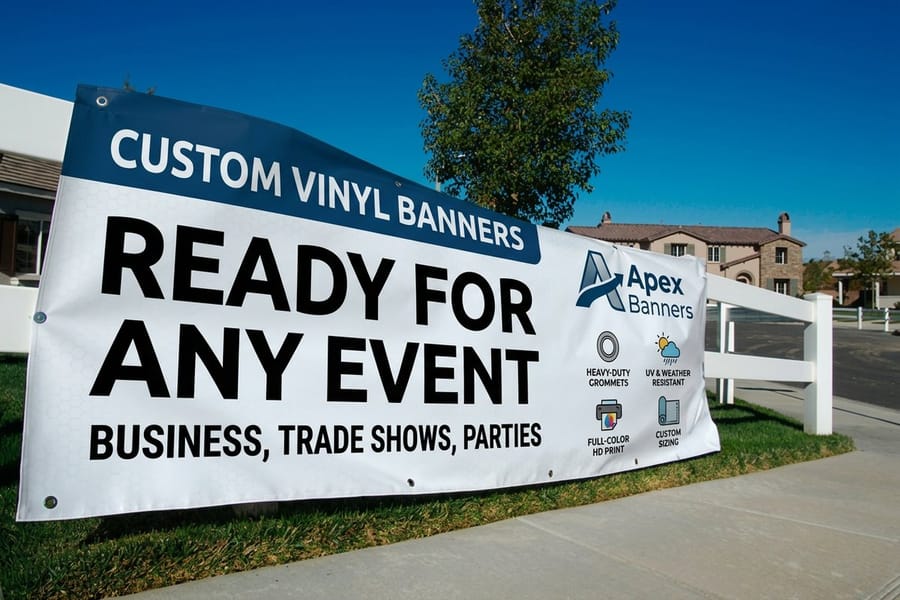
Choose marketing signage by answering two questions first: how far away the reader stands, and how long the message stays true. Distance sets the size, because letters need roughly one inch of height per ten feet of reading distance. Lifespan sets the material: 4mm coroplast yard signs from $25 for a campaign, 13oz vinyl banners from $79 for a season, 8oz perforated mesh from $75 where wind is the problem, and aluminum from $36 when the sign is a fixture rather than a promotion.
Quick answer
Distance picks the size, lifespan picks the material
Every signage decision reduces to two measurements. Pace out the distance between the sign and the person who has to read it, then decide how many weeks or years the wording stays accurate. Distance gives you the letter height and therefore the product, since a headline readable at 100 feet will not fit on a lawn sign. Lifespan gives you the material: coroplast and vinyl for campaigns and seasons, aluminum and window graphics for the things that do not change. Everything else, including the finishing and the mounting, follows from those two.
Match the Sign to the Job It Has to Do
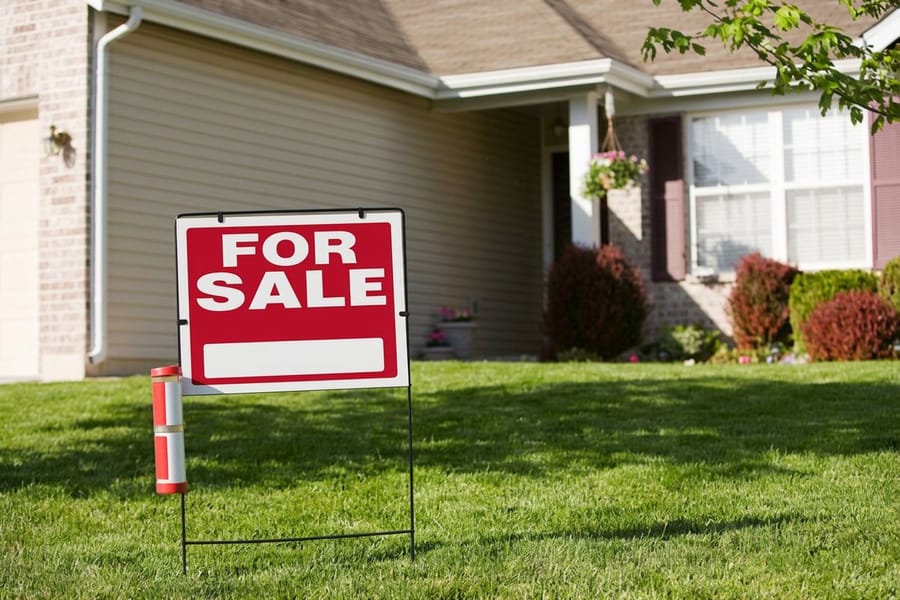
Most signage money is wasted on a piece that was chosen by price rather than by job. A sign does one of three things: it makes people aware you exist, it points them to a door or a room, or it announces something that will stop being true in a few weeks. Each job has a different reading distance and a different lifespan, and those two numbers pick the product for you.
| The goal | Who reads it, and from where | The sign that fits | Starts at |
|---|---|---|---|
| Awareness | Drivers and walkers, 60 to 150 feet away, moving | Vinyl banners on a wall, feather flags at the roadside | $79 / $108.75 |
| Directions | People already on site, 10 to 40 feet, walking | Yard signs along a path, aluminum panels on a post | $25 / $36 |
| Promotion | Passersby at the window or the entrance, under 20 feet | Window clings, A-frames, a banner across the front | $30 |
| Events | Attendees in a booth or a lobby, 3 to 15 feet | Retractable banner stands, foam core signs | $139 / $49.99 |
| Permanent | Anyone, any distance, for years | Aluminum signs, drilled and bolted | $36 |
Read the second column before the third. A message meant for a car at 100 feet needs roughly ten inch letters, and ten inch letters do not fit on a 12 by 18 inch yard sign no matter how good the design is. That single mismatch is behind most of the signage that gets printed, staked out, and quietly ignored. If you are still weighing flexible vinyl against a rigid panel, our banners versus signs comparison takes that decision apart on its own.
Outdoor Signage: Pick the Material for the Wind, Not the Weather
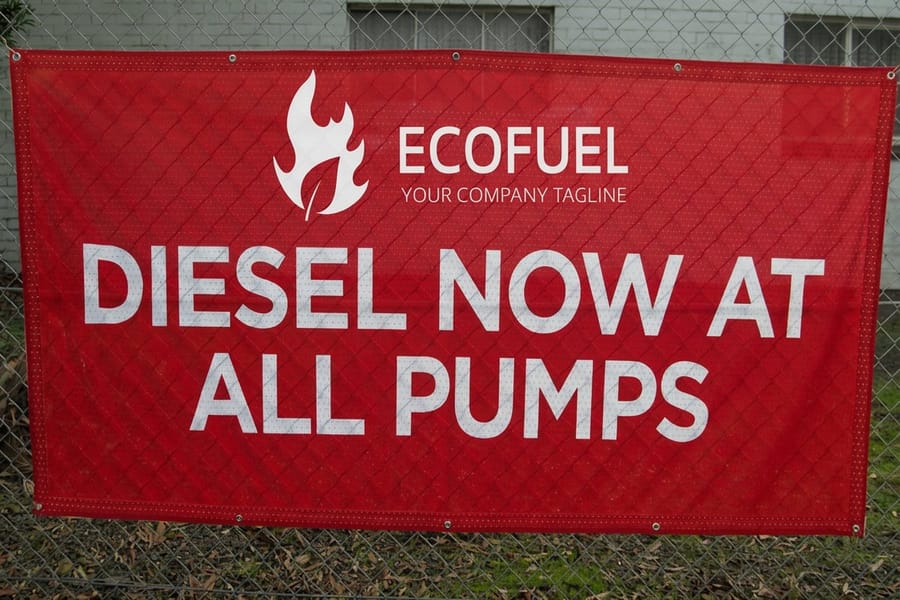
Rain is a solved problem. Every outdoor material here prints waterproof and holds full color through a season of sun and sprinklers. Wind is what actually destroys outdoor signage, and it is the reason the outdoor range splits into three materials rather than one.
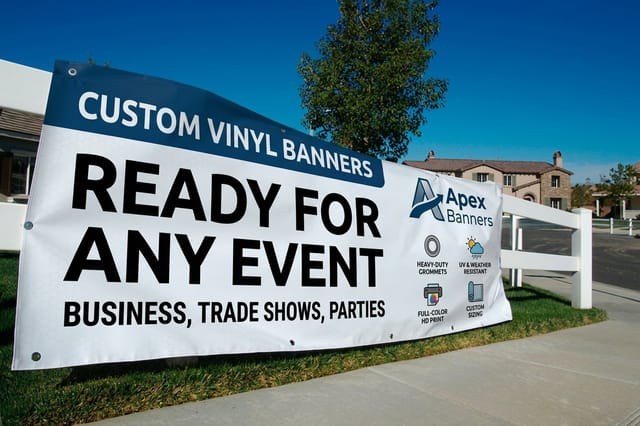
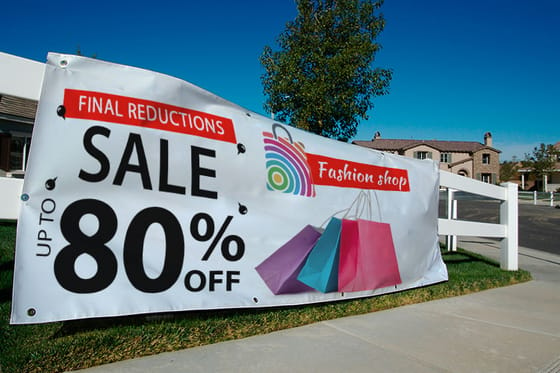
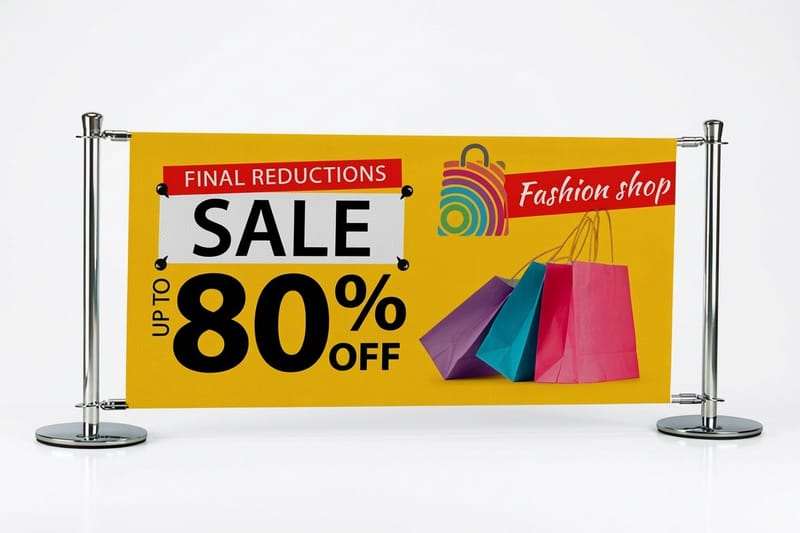
13oz outdoor vinyl is the everyday banner stock, and it is the right call on a wall, a storefront, or anything with solid backing behind it. Add hems for a reinforced edge and grommets to tie through, or a 2 inch or 4 inch pole pocket if you are sliding a rod across the top. 15oz blockout vinyl carries a light-blocking core, so a double-sided print does not ghost from one face to the other and a window behind it does not show through. 8oz perforated mesh is what you hang on an open fence, a scaffold or a construction hoarding, because the holes let the wind through instead of catching it. Mesh banners start at $75 and go to a single 10 by 30 foot piece for a building wrap.
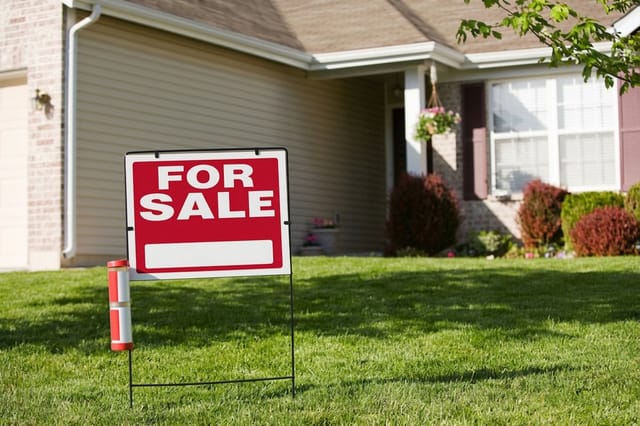
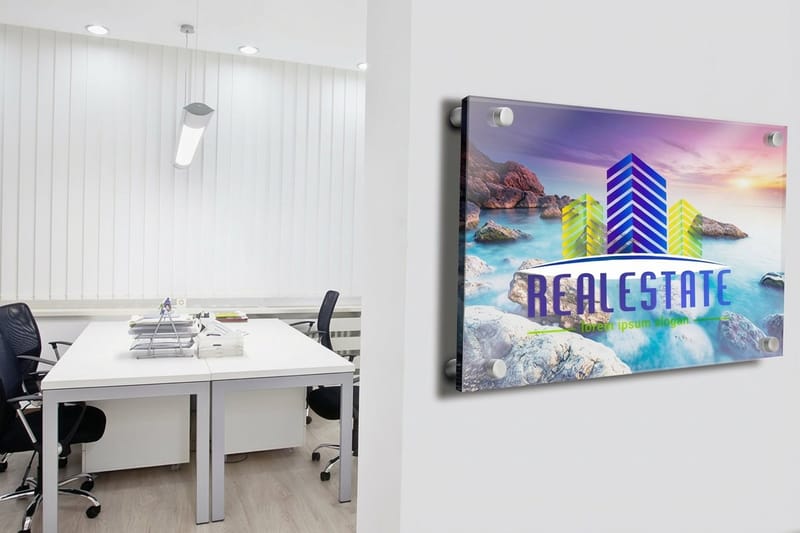
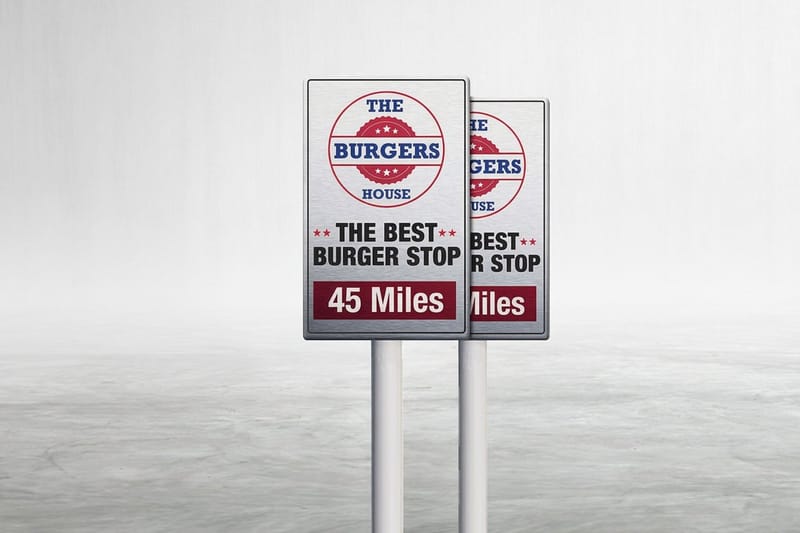
Rigid outdoor signage runs the same logic. 4mm white coroplast is corrugated plastic, cheap, light, and disposable enough that reprinting a changed price is not painful. It takes a steel H-stake straight into soft ground or grommets for zip-tying to a railing. Aluminum is the opposite trade: order the drilled holes with the sign, two along the top for an H frame or four at the corners for a post, and it stays where you put it. Both live in the rigid signs range, and the vinyl banner category covers the flexible side.
One habit saves more banners than any material choice: grommet the full edge, not just the corners. Grommets every 2 feet spread the load along the hem so no single fixing point takes the whole gust. On a 10 foot banner that is four extra ties and about a minute of work.
Indoor Signage: Buy for Setup Speed and Portability
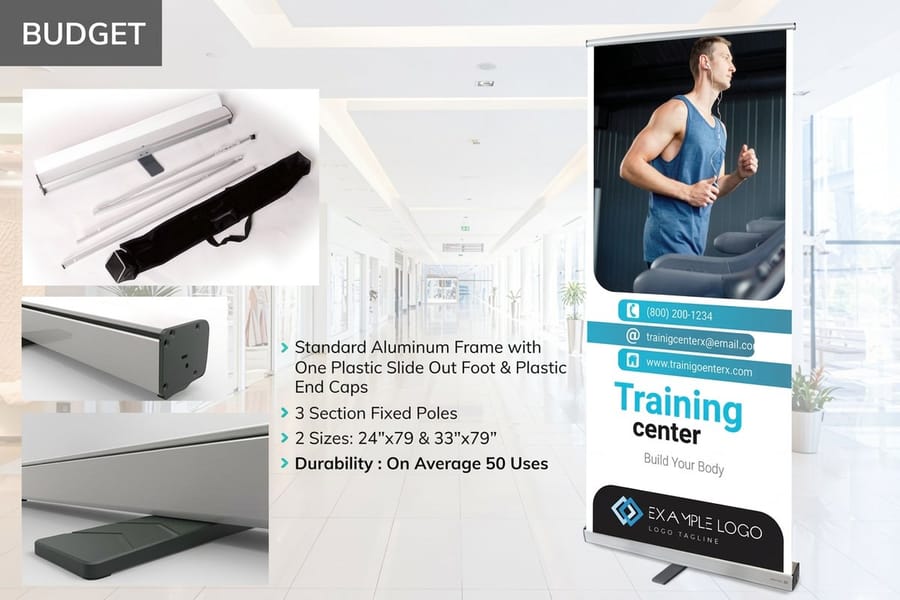
Indoors nothing has to survive weather, so the deciding factor changes completely. It becomes how fast the piece goes up, whether one person can carry it, and whether it can be used again next quarter without looking tired.
A retractable banner stand is the default for a booth, a lobby or the flank of a stage. From $139 you get the printed graphic and the aluminum base together, the banner rolls up out of the base and clips to a support pole, and it stands in under a minute with no wall, no tape and no tools. The graphic prints on 13oz blockout vinyl so a bright window behind the stand does not wash it out. Widths run from 24 inches to 59 inches, with 79, 85 and 92 inch heights.
Foam core signs take the other indoor role: the board that sits on an easel and gets carried under one arm. The print mounts to a 3/16 inch foam board in white or black, sizes run from 16 by 20 inches up to a custom 40 by 60, and an optional 3 mil gloss lamination is worth adding to anything that gets handled repeatedly at events. Choose the uncoated 32# stock when people read the board up close, and hi gloss when it is carrying a photograph.
For a window, vinyl window clings at $30 do the job that tape and paper do badly: they come off cleanly and go back up for the next promotion. Match the artwork so it reads from the sidewalk, not from inside the shop, and keep it in the lower two thirds of the glass where people actually look. The full window cling range and the banner stand range list every size we print.
Placement: Where Signage Earns Its Cost, and Where It Burns It
A well-printed sign in the wrong spot performs worse than a plain one in the right spot. Before you order, walk the approach the way a customer does: from the road, into the lot, to the door. Note the distance at each point where you want them to read something, and put a sign only there.
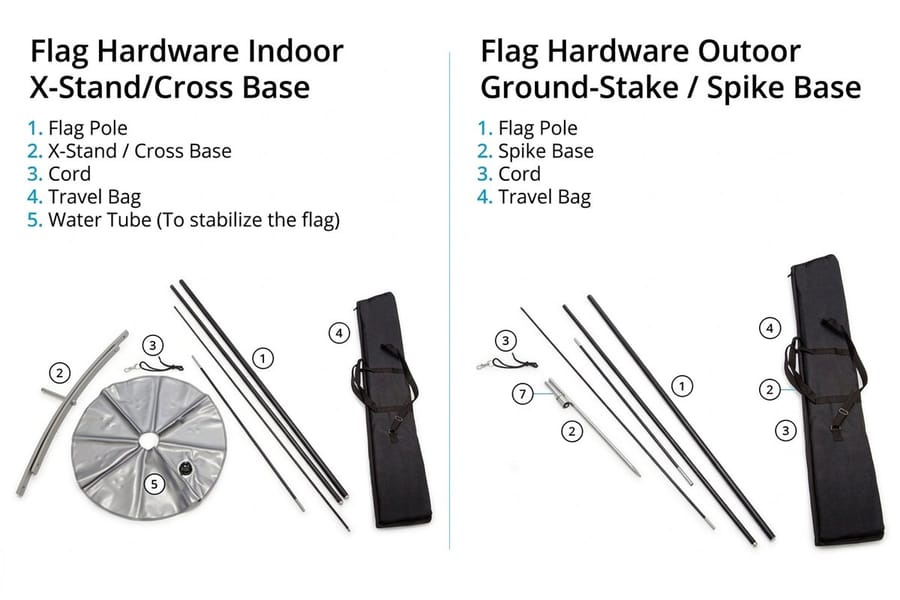
At the roadside, motion beats size. A feather flag at 8 to 15 feet tall moves in the same breeze that a rigid sign ignores, and that movement is what pulls a driver's eye. The graphic prints single-sided on 3oz polyester knit and mirrors through to the back, so keep the text short and check how it reads reversed. Pick the stake and spike base for grass or dirt and the X-stand cross base for hard floors, and set whether the pole sits left or right of the sleeve.
In the lot and at the entrance, distance drops fast and so should letter height. This is where a yard sign at 12 by 18, 12 by 24 or 18 by 24 inches earns its place, and where double-sided printing pays off on a corner. On the building itself, one large banner with three or four words beats four small signs with sentences on them. Our guide to sign colors covers the contrast pairs that stay legible in glare, and the banner sizing guide covers bleed and safe margins so a hem never eats your logo.
Two places signage reliably wastes money. The first is a sign placed where the reader is already committed, such as a promotion at the register that could have been at the window. The second is a sign printed at a size that suits the budget rather than the distance, which is a smaller version of the same message nobody can read. Both are cheaper to fix before the file goes to press, and a blank template at the real trim size makes the check simple.
Wally sizes a sign the practical way
Pace the distance first, buy the material second
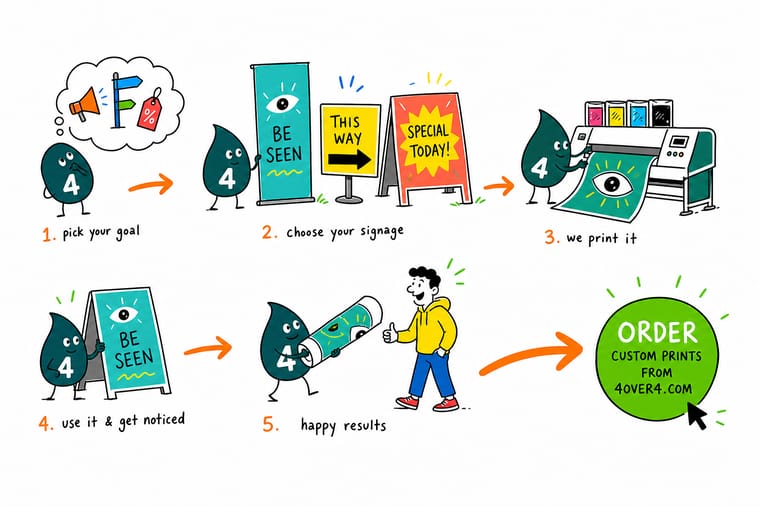
Wally walks back from the sign until he is standing where the customer will be, counts the steps, and turns that into letter height at about one inch per ten feet. Then he asks how long the wording stays true. A week of open house traffic gets coroplast at $25. A season on a storefront gets 13oz vinyl at $79. An open fence in wind gets perforated mesh at $75. Something bolted to a post for years gets aluminum at $36. Same artwork, four different answers, and the distance is what decides.
Shop signs, banners and displays →Specs and pricing
Sizes, materials and starting prices side by side
The three signage products that cover most jobs, with live configuration choices and starting prices straight from the 4OVER4.COM configurator.

Print it
Order signage that reads from where people stand
Explore more
Where to go next
By the numbers
Coroplast, vinyl and metal on one order
Common Questions
Your marketing signage questions, answered
What signage should a small business buy first?
Buy the sign that covers the gap between someone noticing you and someone finding the door. For most storefronts that is one outdoor piece and one at the entrance: a vinyl banner or a feather flag to be seen from the road, then an A-frame or a window cling that says what you sell and when you are open. Yard signs at $25 each are the cheapest way to test whether a message pulls before you commit to a larger print, and they cost little enough to reprint when the wording turns out to be wrong.
How big do the letters need to be to read from the street?
Sign makers work to about one inch of capital letter height for every ten feet of reading distance, with more height if the reader is moving. A two inch headline is fine for someone standing at a table. Thirty feet away, at a curb, you want roughly three inches. Across a parking lot at a hundred feet you are into ten inch letters, which is a banner or a flag rather than a yard sign. Measure the real distance before you pick a size, because that number sets the product more than the budget does.
Will a vinyl banner survive on a fence?
On a solid wall, yes. On an open fence in wind, a solid 13oz vinyl banner behaves like a sail and works its corners loose until the grommets tear. That is what mesh banners are for: 8oz perforated vinyl full of tiny holes that lets the wind pass through. Mesh starts at $75, runs to a 10 by 30 foot piece, and takes grommets at the corners or every 2 feet so you can zip-tie it tight along the whole edge.
Do I need to print both sides?
Print both sides whenever traffic passes the sign from two directions, and skip it when the sign sits flat against a wall or a window. A yard sign on a corner lot is the classic double-sided case, since cars read it coming and going. An aluminum panel hanging from an H frame is another, because half the people who see it are looking at the back. A banner tied to a building face only ever shows one side, so the second print is money spent on nothing.
How long does a coroplast yard sign last outdoors?
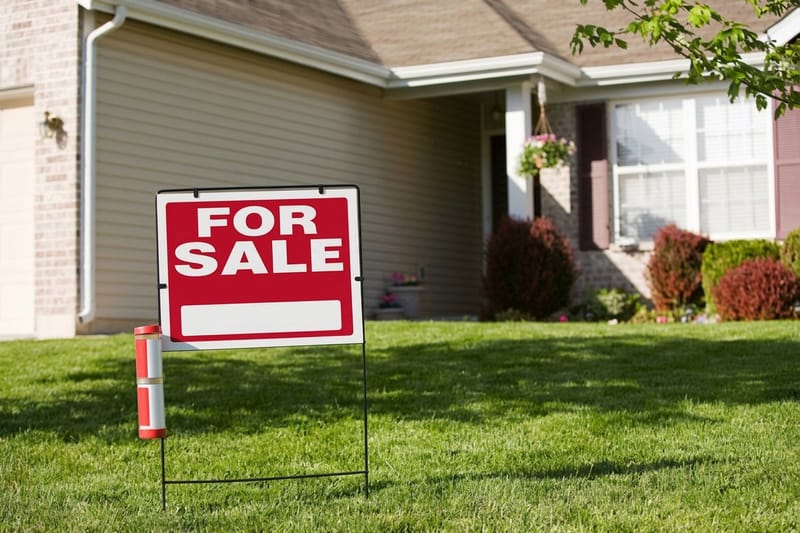
The print is the durable part. 4mm white coroplast is waterproof corrugated plastic, so rain, sun and sprinklers do not lift the ink. What fails first is the mounting: the H-stake works loose in soft ground, and the corners soften where zip ties pull against them. Add grommets in all four corners rather than just the top two if the sign lives on a fence, and move to an aluminum sign when the message needs to stay up past a campaign.
How fast can signage be printed for an event?
It depends on the product, so count backwards from the event date and include delivery. Vinyl banners, mesh banners and retractable banner stands print on a standard 3 business day turnaround with 2-day, Next-Day and Same-Day rush available out of the Queens plant. Yard signs run 5 business days standard with 3-day and 2-day rush. Foam core signs run 4 business days standard with rush down to Next-Day. Rush covers production only, so shipping time sits on top of it.
Get Started
Order a feather flag from $108.75
Pick the size for the distance, the material for the mounting, and we print banners, signs, flags and displays out of our Queens plant with same-day rush when the date will not move.
Legal Disclaimer
Gold Standard guarantees apply to all standard orders placed through 4over4.com. Price match requires verifiable proof of a competitor's published price for an equivalent product with matching specifications and turnaround time. Satisfaction guarantee covers manufacturing defects and print quality issues. Contact support with order number and documentation. On-time delivery rate based on tracked orders 1999 to 2026. Individual results may vary based on shipping carrier performance.
