
How to Brand Custom Logo Journals for Corporate Gifting


Emma is our prepress and print production voice, built from the knowledge of our production team, with over 20 years in printing.
Four ways to put a logo on a journal cover, what each one needs from your artwork, and how to choose paper and page count for a book people keep.
You brand a journal with one of four marks: a debossed logo pressed into the cover, a foil stamp in that same recess, screen or pad printed ink on top of the cover, or a full color printed wrap. The cover material decides which of the four is possible, so pick leatherette, board or printed paper first and the method second. Pressed marks last the life of the book and cost one die. Printed ink carries more colors, and it is the layer that wears.

Quick answer
The cover material decides the method
Leatherette and PU covers get a debossed or foil stamped logo, flat board and canvas get printed ink, and only a paper cover can carry full color artwork. A pressed mark costs one die and never wears, because it sits in the material rather than on it. Printed ink is cheaper for several spot colors and is the first thing to scuff in a bag. Every extra color, in foil or in ink, is another pass, so a logo simplified to one solid shape is the single biggest saving on the job.
The Four Ways to Get a Logo Onto a Journal Cover
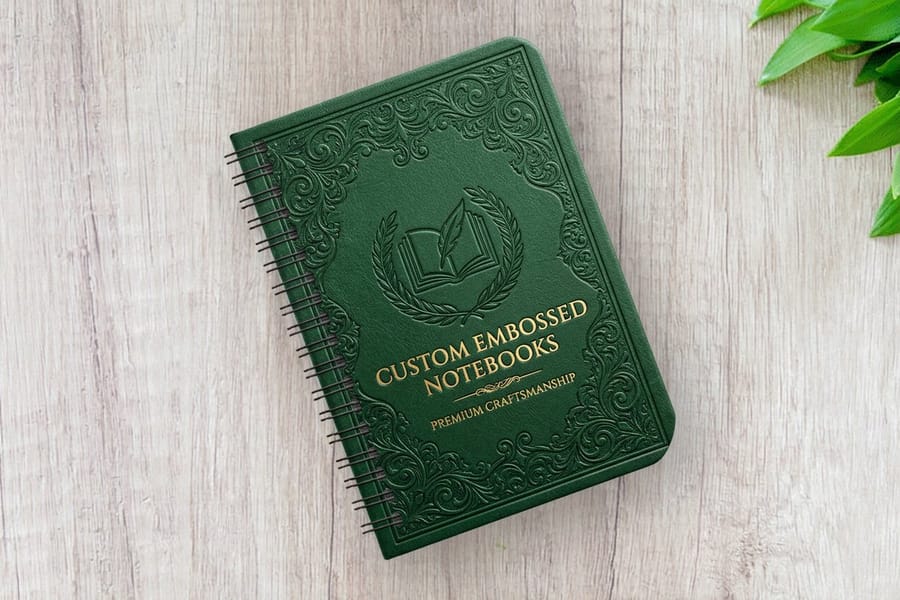
Every branded journal you have ever been handed used one of four marks. Knowing which is which saves an entire round of quoting, because three of them are physically impossible on some covers.
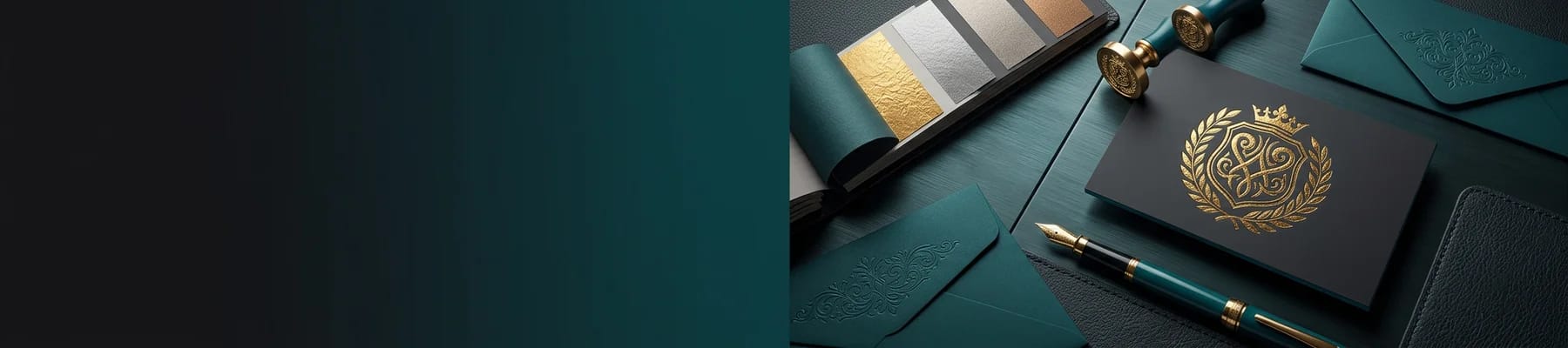
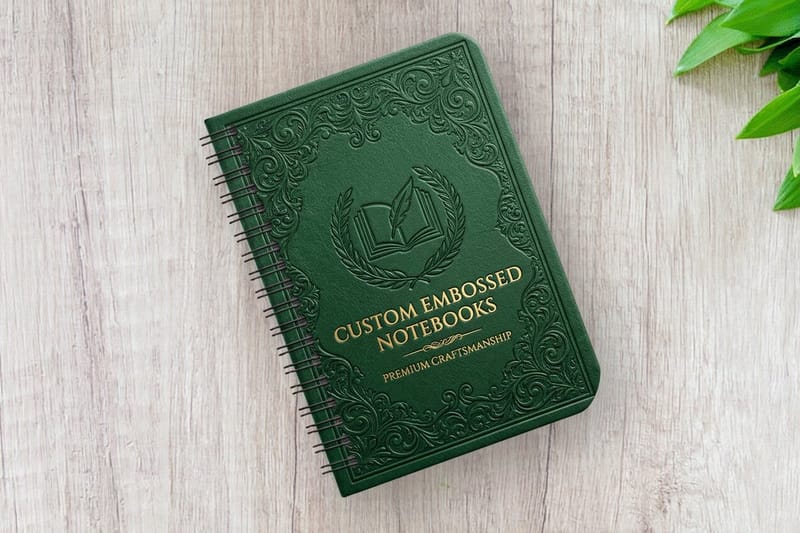
Debossing presses a heated metal die into the cover so the logo sits below the surface. No ink is involved, so the mark is the cover material itself, seen in shadow. Foil stamping uses the same die with a foil roll between the die and the cover, so the recess fills with a metallic or matte color layer. Screen and pad printing lay ink on top of the cover in flat spot colors. A printed wrap prints the whole cover on a press sheet before the book is assembled, which is the only method that gives you photographs and edge to edge color.
| Method | How the mark is made | Colors in one pass | What it costs you |
|---|---|---|---|
| Deboss | Heated die pressed into the cover, no ink. | None, the cover is the color. | One die. Nothing repeats per color, so it is the cheapest pressed mark. |
| Foil stamp | Heated die drives foil into the recess. | One foil color per pass. | One die plus foil. A two color logo needs a second die and a second pass. |
| Screen or pad print | Ink pushed through a stencil onto the cover. | One spot color per screen. | A screen per color. Cheap at volume, and the layer that scuffs first. |
| Printed wrap | The cover sheet is printed flat, then wrapped. | Full color, gradients, photos. | No die at all, but only works on a paper cover. |
Read the third column before you fall in love with a logo. A mark with two brand colors is one screen print job and two foil passes, and the second foil pass is where a simple looking cover turns into a quote nobody approves. The fix is almost always to press a single shape and let the cover material do the rest, the same reasoning we walk through in our guide to foil stamping versus raised foil.
Pick the Cover Material Before You Pick the Method
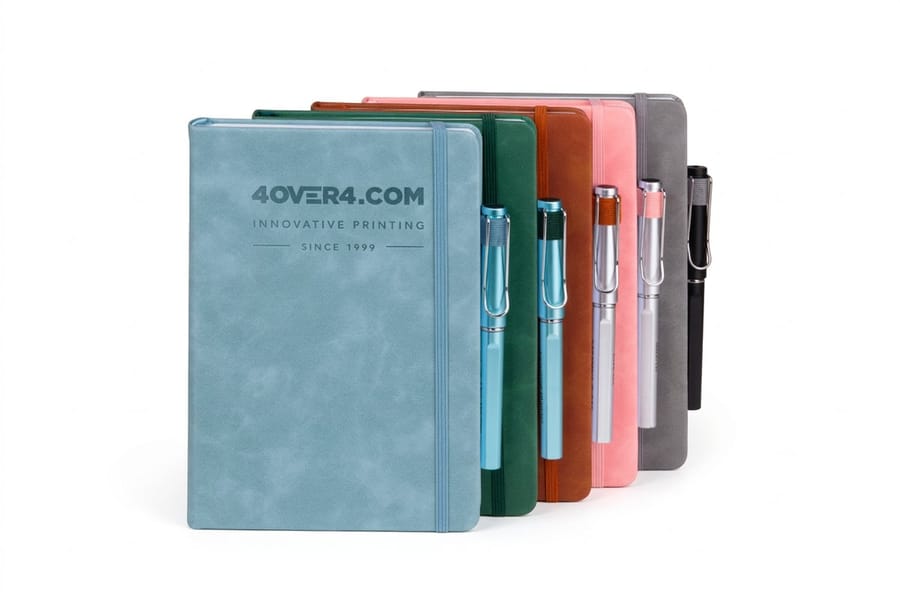
The cover decides what is possible, so choose it first. This is the step people skip, and it is why briefs come back with artwork that cannot be made.
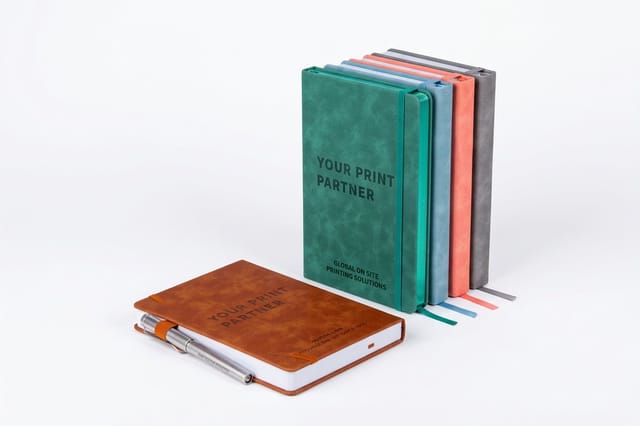
- Leatherette and PU covers take a die beautifully. The material holds a crisp recess and gives a foil layer something to bite into. They do not take printed ink well and they never take a photograph. Our ready-made Leather Journals start at $10.00 and ship plain, with no logo, when the gift has to feel like something without a mark.
- Flat board and canvas covers are the home of printed ink. A screen or pad printed logo lands cleanly, and multiple spot colors are affordable because each one is just another screen.
- Printed paper covers are the only route to full color. If the design is a photograph, an illustration or a full bleed pattern, the cover has to be printed, and that means a paper cover with a laminate rather than a pressed one.
- Pressed and printed together is possible on some books: a printed cover with a foil stamped logo on top of it. It is the most expensive combination, and it earns its cost only when the artwork and the mark are doing different jobs.
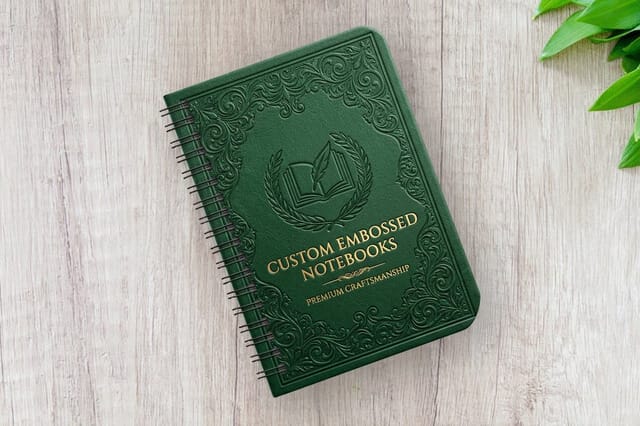
There is one more consideration that has nothing to do with looks. A pressed mark is permanent for the life of the book, because it is in the material rather than on it. Printed ink is a layer, and layers wear. For an item that lives in a bag for a year, that difference is worth more than the color choice. Embossed Notebooks start at $763.37 for the smallest run, which is a bulk order rather than a per book price, so the pressed route only makes sense once you are ordering for a group rather than for a shelf.
Page Count, Paper and Binding: The Parts People Actually Use
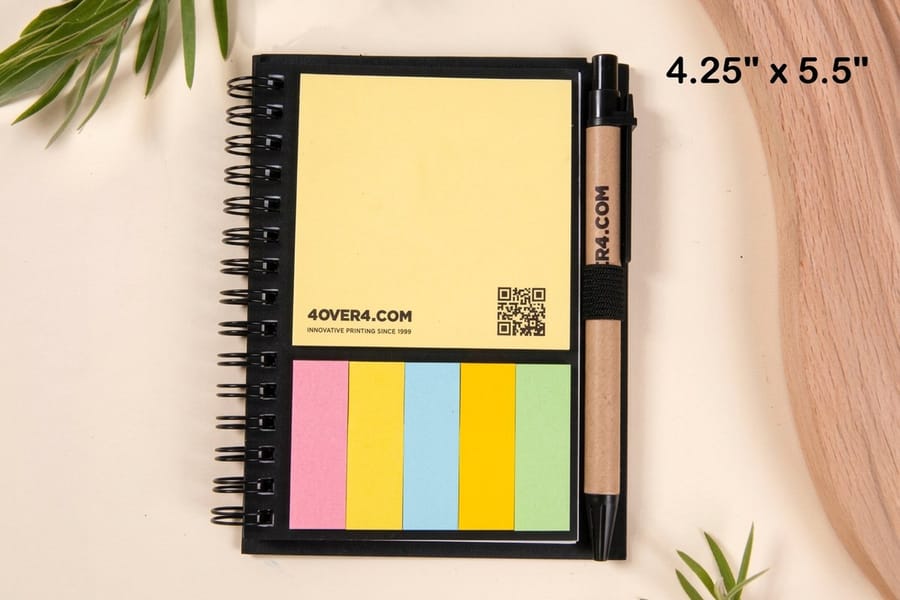
The cover gets the meeting, the inside gets the use. A journal that ghosts every page or refuses to lie flat gets abandoned in a drawer no matter how good the logo looks.
Paper weight is the first call. Light text paper keeps the book slim and the price down, but it shows a marker or a fountain pen through the sheet, and anyone who writes with liquid ink notices immediately. Heavier text paper stops the ghosting and adds thickness and weight. Since spine thickness is fixed by what feels right in a bag, page count and paper weight trade directly against each other: the same spine holds far fewer sheets on heavy paper. Decide the paper against the pen your audience actually uses, then let the page count follow.
Ruling is the second call, and it is more personal than people expect. Lined pages suit note takers and meeting minutes. Dot grid suits planning, sketching and anyone who lays out a page their own way, which is why it has taken over so much of the journal market. Blank suits designers and almost nobody else. If the journals go to a mixed group, dot grid annoys the fewest people.
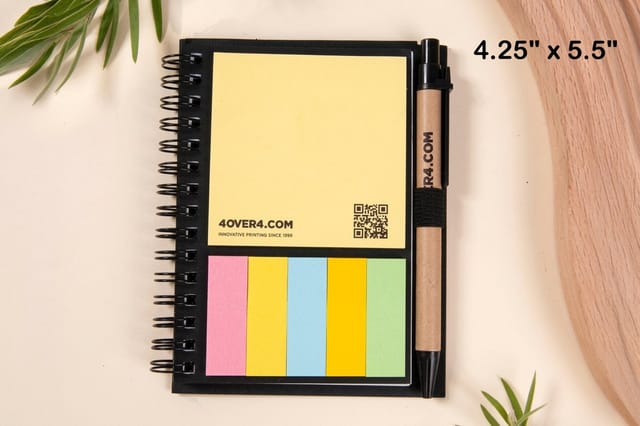
Binding is the third. A sewn or cased book has a clean spine, survives being thrown in a bag, and opens reasonably flat once it has been used a few times. A coil bound book folds all the way back on itself and lies perfectly flat from day one, which is why the Deluxe Spiral Notebook starts at $5.00 and remains the practical choice for training and workshops. The catch is the coil: it catches on things in a bag and bends, and a bent coil is the fastest way to make a gift look cheap. For a full walk through the build, read how to make custom notebooks.
Ordering Journals for Swag Without Wasting the Budget
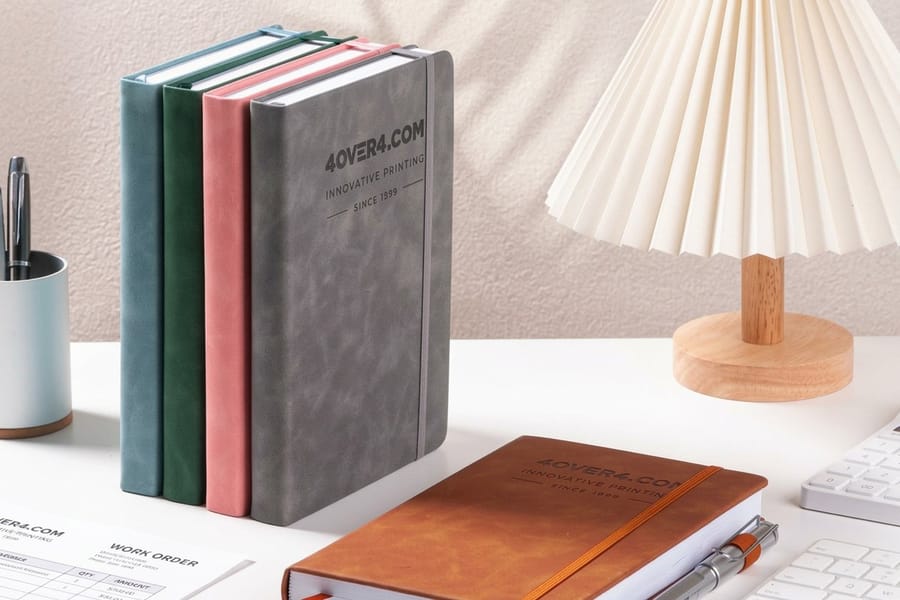
Journals are a carried item, not a booth handout, and the ordering mistake follows from forgetting that. One journal per attendee at a trade show means paying for books that get left on chairs. The same budget spent on fewer, better journals for the people who sit in meetings gets carried for a year with your logo on it.
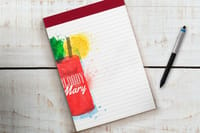
A workable split: pressed leatherette journals for clients, executives, new hires and anyone who takes notes for a living, and something light and cheap for the table. Notepads start at $93.37 and do the table job at a fraction of the cost per head, which frees the journal budget for the covers worth pressing.
Order in one run rather than in waves. Journal pricing moves in quantity breaks, and a die pays for itself once and then costs nothing on the rest of the run, so splitting a hundred books into four orders of twenty five pays the setup four times. Our guide to bulk notebook printing and quantity breaks shows where those breaks land, and bulk discounts plus 4OVER4 coins apply on top of the run price when you consolidate.
Leave real time for the artwork approval, not for the printing. A pressed mark needs the logo simplified, converted to outlines and checked for strokes too fine to survive a die, and that back and forth is what makes a rushed journal order late. Get the vector art settled early, then browse the full notebook and journal range and, if the gift is going out as part of a wider program, our advice on getting corporate gifting right.
Wally explains logo journals
Press it in, or print it on
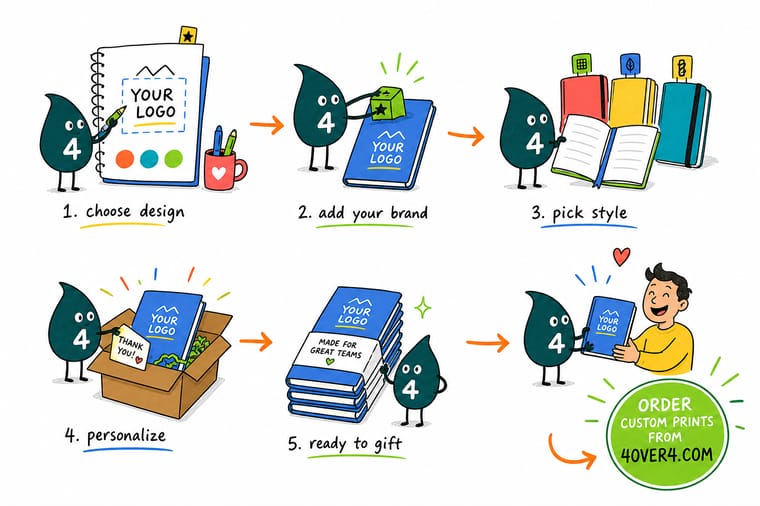
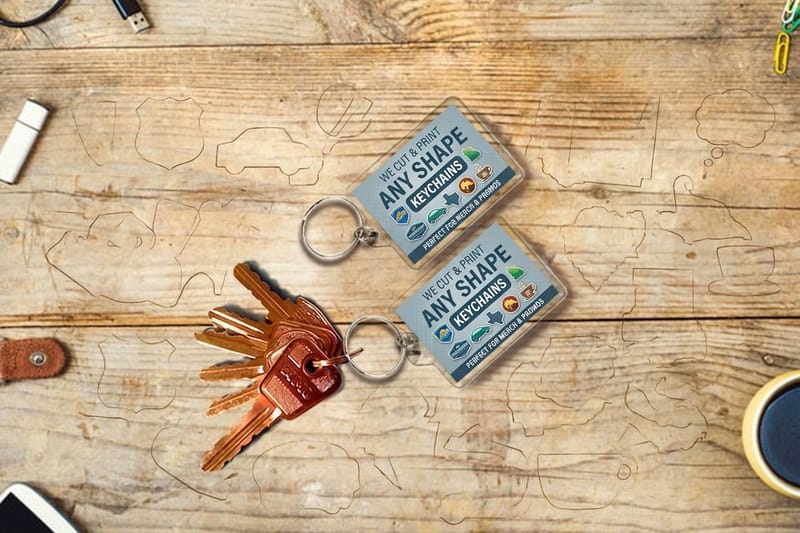
Wally puts the heated die on the leatherette cover and the logo goes down into the material, no ink at all. Swap in a roll of foil and the same recess fills with gold. On a flat board cover he switches to ink, one screen for each colour, and that ink sits on top where a set of keys can find it. Full colour photography only works on a printed paper cover. Give him one clean vector shape and any of the four comes out sharp.
Configure leather journals →
Specs and pricing
Journals, notebooks and pads, with live starting prices
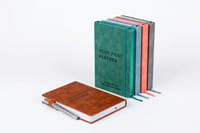
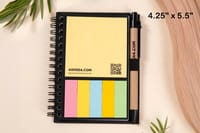
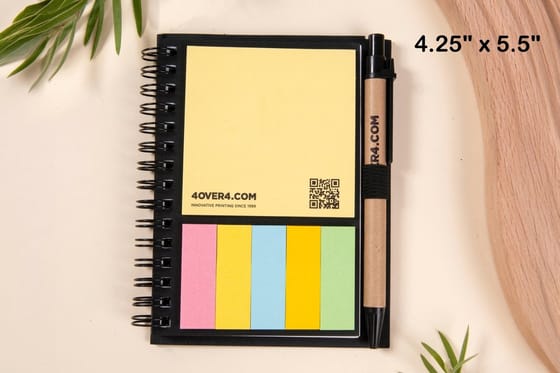
Compare the books side by side. Leather journals come at 5.75 by 8.25 inches in blue, green, gray, mocha or pink; deluxe spiral notebooks at 4.25 by 5.5 or 5 by 7 inches; and notepads in five sizes up to 8.5 by 11 inches with 50 or 100 sheets a pad on 70# uncoated text. The configuration choices and starting prices come straight from the 4OVER4.COM configurator.
Print it
Order journals worth carrying
Leather journals and spiral notebooks ship from a single book with 1 business day of production. Embossed notebooks run from 50 books with a 31pt 3D lenticular cover and Wire-O binding, in 22 business days, so book the pressed run well ahead of the event.
Explore more
Where to go next
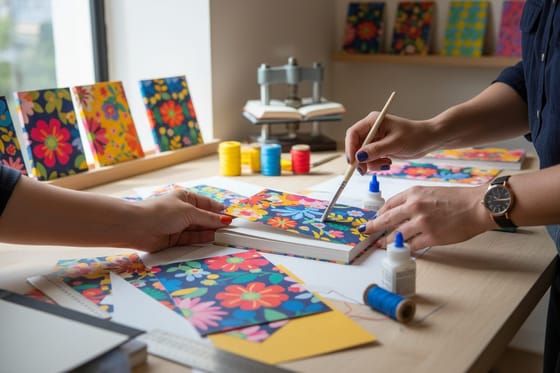
Plan a custom notebook from mockup to print file, see where bulk quantity breaks land, choose between embossing and debossing a cover, match the gift to the person, then shop notebooks, journals and promotional products.
By the numbers
Branded journal work against 25 years of output
Common Questions
Your logo journal questions, answered
What is the cheapest way to brand a journal with a logo?
A single color printed or debossed mark on a stock cover. Both use one setup and one pass, so nothing in the job repeats per color. At 4OVER4.COM a Deluxe Spiral Notebook starts at $5.00 and Leather Journals start at $10.00, while Embossed Notebooks start at $763.37 for the smallest run, which is a bulk order rather than a per book price. The expensive parts of journal branding are almost always extra colors, a second die pass, and a full color printed cover, not the book itself.
Deboss or foil: which one looks more expensive?
It depends on the cover color. On a dark leatherette cover a blind deboss reads as quiet and confident, because the only thing you see is a shadow in the material. Foil beats it whenever the room is bright or the cover is dark enough to give the metal contrast, which is why gold on navy or black is the classic corporate pairing. On a light kraft or tan cover, foil loses most of its contrast and a deboss usually looks better for the same money. If you want the comparison in detail, read our guide on embossing versus debossing.
How many pages should a corporate journal have?
Enough to feel substantial in the hand and not so many that it becomes a brick. The practical range for a gifted journal is a book you can put in a laptop bag without noticing it. Page count and paper weight trade against each other: the same spine thickness holds far fewer sheets when the paper is heavy. Decide the paper first, based on whether people will use pens that bleed, and let the page count fall out of the spine you want.
Can you print full color photography on a leather journal?
No, and this is the most common brief that has to change. Leatherette and PU covers are branded by pressing them, so the mark is one shape in deboss or one foil color per pass. Full color artwork, gradients and photographs need a printed paper cover, which is a different product and a different feel in the hand. If the artwork is the point, print the cover. If the material is the point, simplify the artwork.
Will a printed logo rub off a notebook cover?
A printed logo is the layer most likely to wear, because it sits on top of the cover rather than in it. Screen and pad printed ink survives normal desk use, but a book that lives in a bag with keys and a laptop charger will show wear on printed ink long before a debossed or foil stamped mark shows anything. If the journal is a year long gift rather than an event handout, put the budget into a pressed mark.
What kind of logo file works for a debossed or foil stamped journal?
Vector artwork, one color, with the strokes and gaps kept generous. A die is a physical shape, so hairlines, fine serifs and tight counters inside letters either fill in or vanish when the cover is pressed. Convert the type to outlines, remove drop shadows and gradients, and if the logo has a heavy mark and small legal text, press the mark and drop the small text. Our blank template library gives you the correct trim to build against.
Get Started
Order 50 embossed notebooks from $763.37
Pick the cover, send one clean vector logo, and we press or print it on journals your team will still be carrying next year.
Legal Disclaimer
Gold Standard guarantees apply to all standard orders placed through 4over4.com. Price match requires verifiable proof of a competitor's published price for an equivalent product with matching specifications and turnaround time. Satisfaction guarantee covers manufacturing defects and print quality issues. Contact support with order number and documentation.
