
How Stickers Are Printed, From Press to Die Cut


Jordan is our labels, packaging and sustainability voice, built from the knowledge of our production team, with over 20 years in printing.
The five stages on a real sticker line, what each face stock does once the sticker leaves the shop, and how to pick between rolls, sheets and singles before you lay out the artwork.
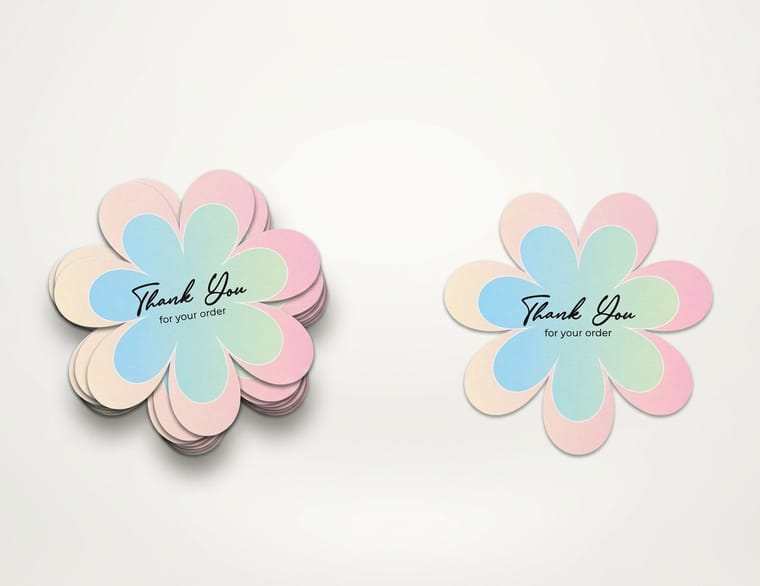
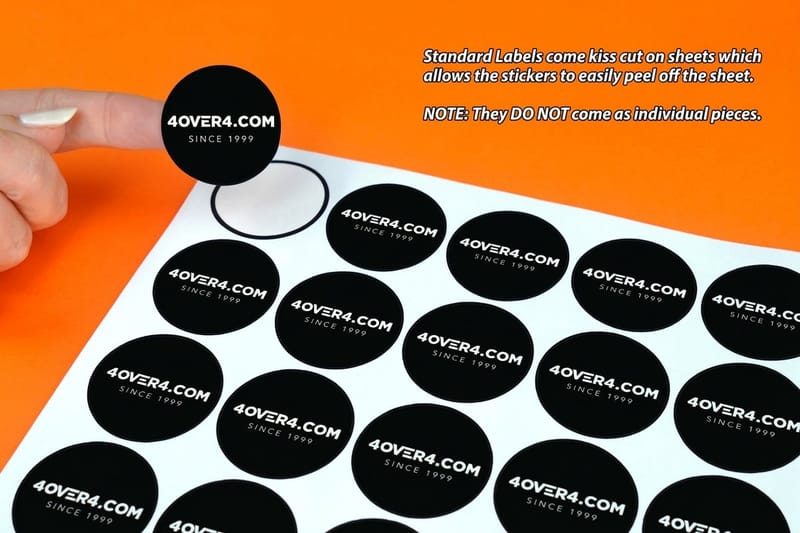
Stickers are printed onto a bonded stack of face stock, adhesive and release liner: the press lays ink on the face, a laminate film is bonded over it, then a die or a digital knife cuts the shape. If the blade stops on the liner it is a kiss cut and the shapes stay on one backing, which is how sheets and rolls are made. If it cuts through the liner it is a die cut and every sticker leaves as a separate piece.
Quick answer
Print the face, laminate it, then decide how deep to cut
A sticker is manufactured as a continuous stack, not as a single sheet of paper. Ink goes onto the face stock, with a white pass first if that stock is clear. A laminate film is bonded over the printed face while the material is still whole. Only then does a rotary die, a flatbed die or a digital knife cut the shape, and the depth of that cut is what turns the same printed material into sheets, rolls or individual singles.
Step by step
How stickers are printed, and how die cut stickers are made
Stickers are printed in five steps: the file is ganged onto one sheet or web, ink goes onto the face stock, a laminate is bonded over the print, a die or a digital knife cuts the shape, and the waste around it is stripped. Short runs print digitally on toner or UV inkjet, and long roll runs print flexo with one plate per color. On clear or metallic stock, a white ink pass goes down before the color.
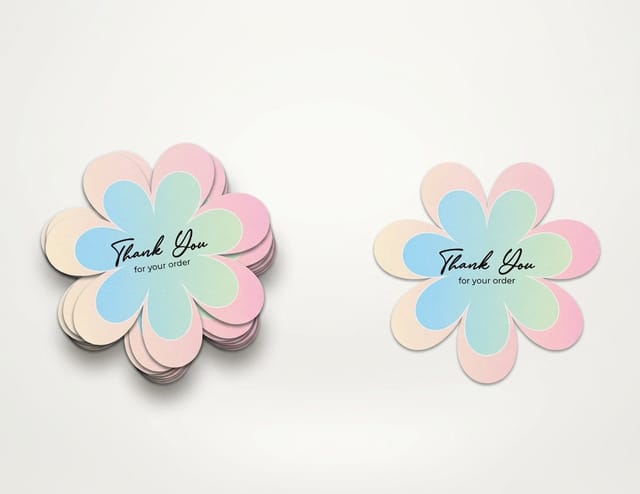
Die cut stickers are made by setting the blade to cut through the liner as well as the face stock, so each sticker leaves the line as its own piece. Our die cut stickers start at 25 pieces in sizes from 2 by 2 up to 11 inches, on paper, white vinyl or clear label stock, in a basic or a complex custom shape, with 5 business days of production.
How a Sticker Gets Made, From File to Finished Cut
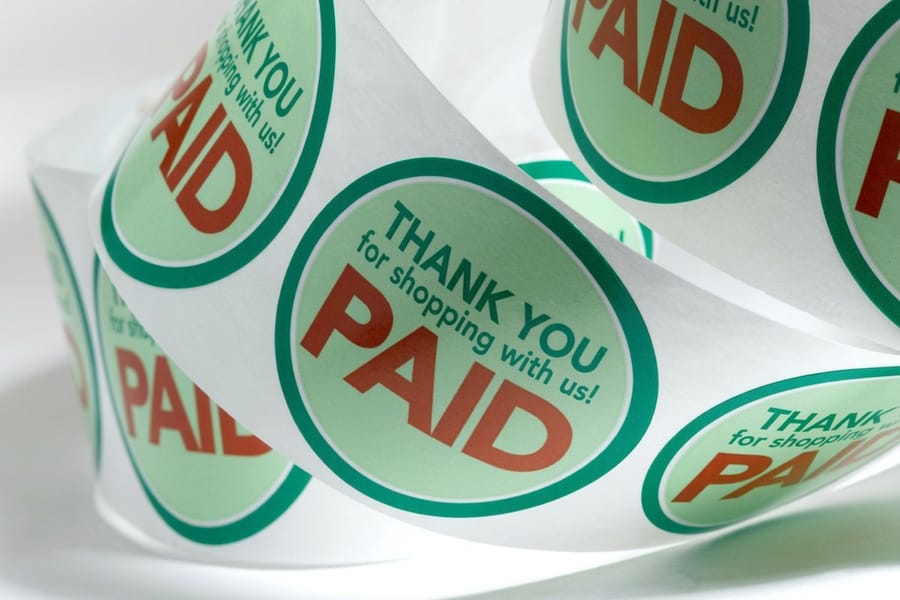
A sticker is three bonded layers before a drop of ink touches it: a face stock, a coat of pressure sensitive adhesive, and a silicone treated liner the adhesive can release from cleanly. Every stage on the line acts on that stack, and the one decision that changes the finished product most is how deep the blade travels into it. Swap the process colors for PMS 877 silver or PMS 872 gold on a semi-gloss face and the same stack becomes a metallic ink sticker.
One, the file is ripped and ganged. Several designs get imposed onto a single sheet or a single web so the press is not running a mostly blank surface. This is also where bleed and cut path are checked, because a shape with no bleed will show a white sliver after the die.
Two, the ink goes down. Short runs go on digital presses, either toner or UV inkjet. Long roll runs go flexo, where each color has its own plate and station. On clear or metallic stock, white ink is laid first so the colors have something opaque to sit on.
Three, the laminate is applied. A thin gloss or matte film is bonded over the printed face while the material is still a continuous sheet or web. It has to happen here, before any cutting, or the film would bridge across the cut lines.
Four, the shape is cut. A rotary die on a roll press, a flatbed die on sheets, or a digital knife when the run is too short to justify making a die. The blade is set either to the depth of the face stock, which is a kiss cut, or all the way through, which is a die cut. Our kiss cut vs die cut guide goes deeper into which one to specify.
Five, the waste comes off and the job is finished. The matrix, meaning the material around the shapes, is stripped away and discarded. Then the work is either sheeted and stacked, or slit and rewound onto a core for a roll. What arrives at your door is die cut stickers as individual pieces, a stack of sheets, or a wound roll, and that difference was decided back at step four.
On an order, those five steps take 5 business days for die cut singles and sticker sheets and 6 for rolls. Singles and sheets start at 25 pieces on uncoated, semi-gloss, hi-gloss or white vinyl stock, and a sheet carries anything from one shape to more than 26. Rolls start at 100, wind on a 3 inch core in 88 sizes, and take a gloss or matte laminate if you ask for one. Upload the artwork with bleed past the shape and every important element clear of the cut path.
The Material Under the Ink Decides How Long It Lasts
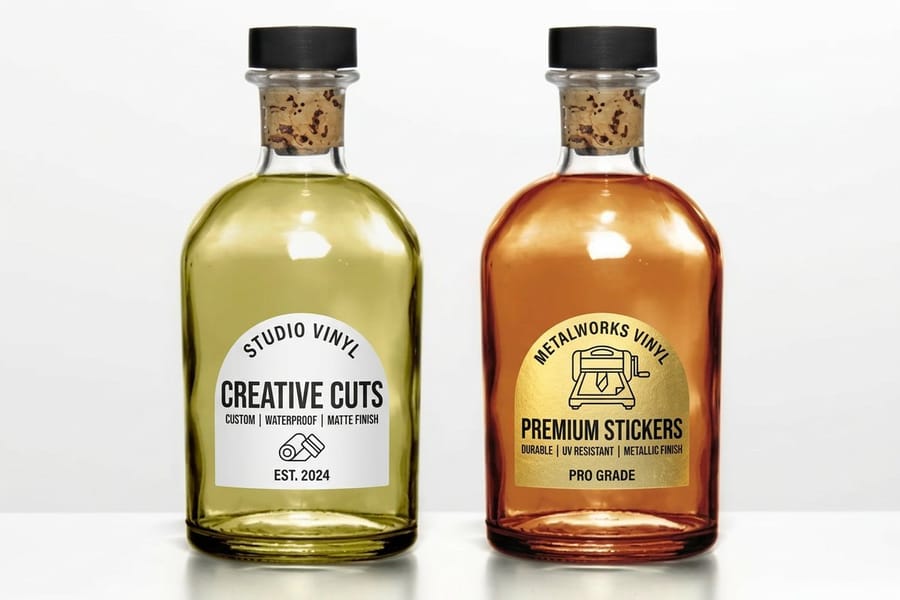
Ask a printer why one sticker survived a winter on a water bottle and an identical looking one turned to pulp, and the answer is almost never the ink. It is the face stock. There are four families in normal use and they behave very differently.
| Face stock | How it behaves | Outdoors and wet | Where it fails |
|---|---|---|---|
| Coated paper | Tears by hand, takes ink beautifully, the cheapest thing on the line. | Indoor only. | Cockles and lifts at the edges once it gets properly wet. |
| White vinyl | Flexible film with a little stretch, so it follows a curve. | Built for it. Rain and sun are normal service. | Deep texture. It will not bed into brick or heavy grain. |
| Clear film | Glass like, close to invisible where there is no ink. | Strong, and the standard for bottles and jars. | Needs a white underprint or the artwork goes transparent. |
| Metallic and holographic | Mirrored or prismatic under the ink, noticeably stiffer. | Fine, though the effect dulls under a heavy laminate. | Solid dark coverage kills the shine. The pattern needs open areas to show. |
Read the last column first, because that is the one that decides the job. A brand kit for a trade show table can be paper and nobody will ever know. Anything that will be applied to a bottle, a laptop, a helmet or a window wants film, and vinyl stickers start at $25. If the surface it lands on is see through, clear stickers at $25 with a white underprint are the version that looks like it belongs there. For the full breakdown, the sticker materials guide and our notes on outdoor sticker materials cover the exposure cases.
What Lamination Adds, and What It Takes Away
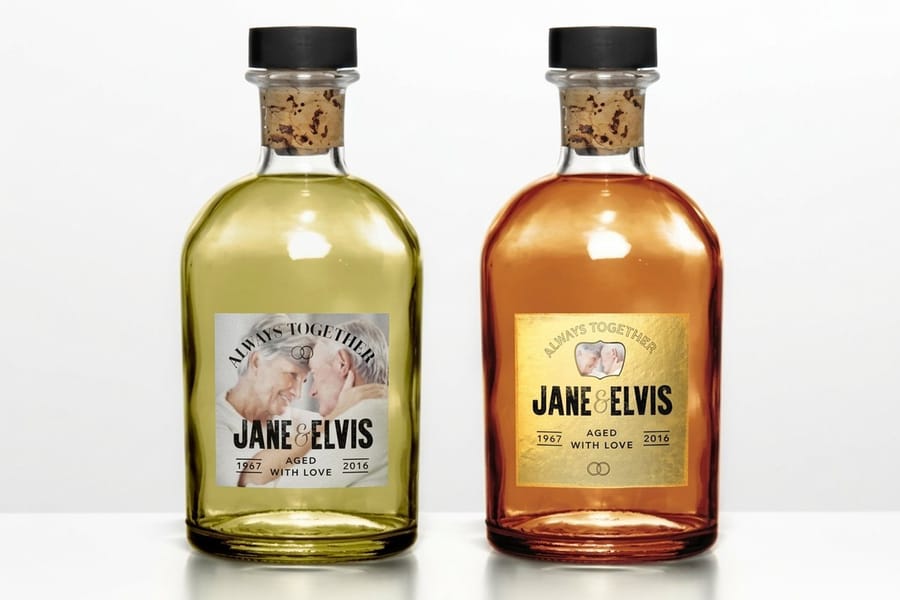
Laminate is a second film bonded over the printed face, and it does three jobs at once. It resists scuffing, it slows fading from sunlight, and it gives the blade a tougher surface to cut so the edge stays crisp instead of fraying the way bare paper does.
The choice between gloss and matte changes more than looks. Gloss lifts saturation and makes dark colors look deeper, and it also records every fingerprint, which matters on a sticker people will handle repeatedly. Matte scatters light, so it reads calmer and hides handling, but it flattens a saturated red or a rich navy by a visible amount. If a brand color has to match a printed swatch exactly, ask which laminate the proof was made under, because the same ink under the two films does not look the same.
The honest limit is cost and necessity. Laminating adds a pass, and on a giveaway sticker that gets stuck on a notebook and forgotten it buys nothing. That is what standard stickers at $23.88 are for: a plain coated face stock, cut square or rectangular, no film. Step up to premium stickers at $29.16 when the piece has to survive being carried around. And if the sticker is going on a car, skip the paper conversation entirely, because bumper stickers at $38.44 are built on outdoor vinyl from the start.
Roll, Sheet, or Single: Choose the Format Before You Design
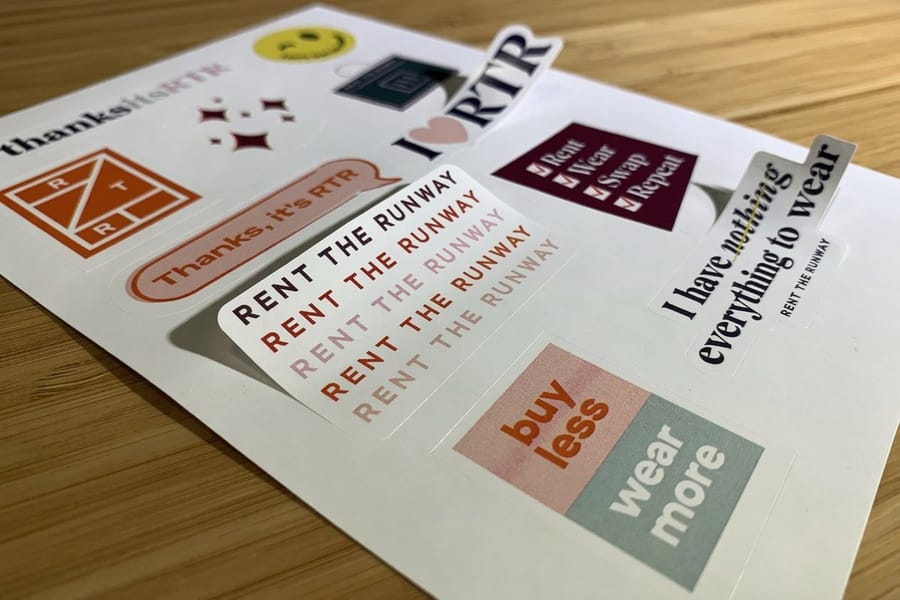
Most sticker orders that go wrong were the right artwork in the wrong format. Format follows how the stickers get applied: singles and sheets from 25 pieces for hand peeling, rolls from 100 on a 3 inch core for a hand or machine applicator, and only after that does the design get laid out to fit it. Here is the whole decision in one table, with the starting price for a small batch of each.
| Format | How it is cut | Order it when | Starts at |
|---|---|---|---|
| Standard stickers | Trimmed to a square or rectangle, no die involved. | You want the most stickers for the money and the shape does not matter. | $23.88 |
| Bumper stickers | Cut from outdoor vinyl to a fixed long rectangle. | It goes on a vehicle, a cooler, or anything left in the weather. | $38.44 |
| Die cut singles | Blade cuts face stock and liner together, following your outline. | One custom shape, handed out or mailed one at a time. | $93.37 |
| Sticker sheets | Several kiss cut shapes sharing one backing sheet. | You are selling or giving away a set rather than a single design. | $181.24 |
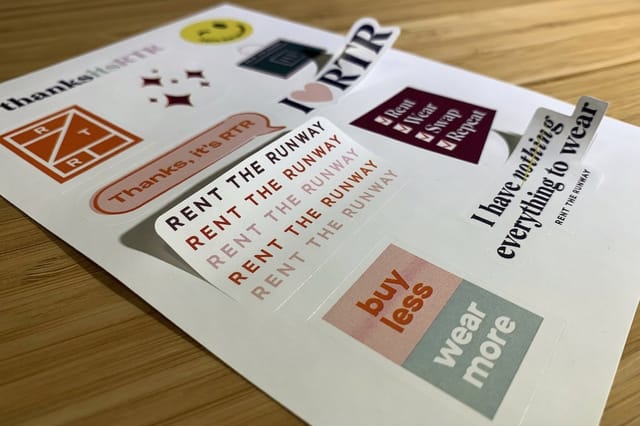
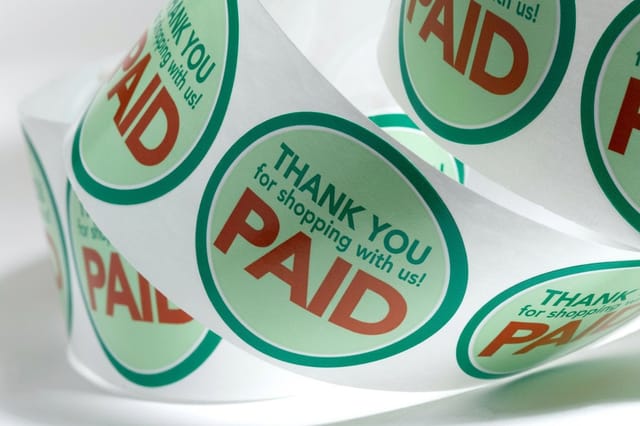
| Roll stickers | Kiss cut in a continuous web, then wound onto a core. | A machine or an applicator feeds them, or someone seals hundreds of boxes. | $322.98 |
The prices tell the real story better than any argument about quality. Rolls carry the highest entry cost because a roll press is set up for length, and that setup only makes sense across a long run. Under a few hundred pieces applied by hand, a roll is the expensive way to buy the same sticker. Above that, and especially with an applicator involved, it becomes the only sensible one, since nobody wants to peel sheets on a packing bench. The roll vs sheet vs die cut comparison and our roll labels vs sheet labels guide work through the crossover in more detail.
Once the format is fixed, build the artwork to it. Keep important elements clear of the cut path, supply bleed past the shape, and start from a correctly sized layout in the blank template library rather than guessing at trim. If you want to see how quantity moves the number before committing, the custom sticker pricing guide lays out the breaks, and the full sticker printing range and label printing range price live as you change the quantity.
Wally explains the cut
Same printed roll, two different blade settings
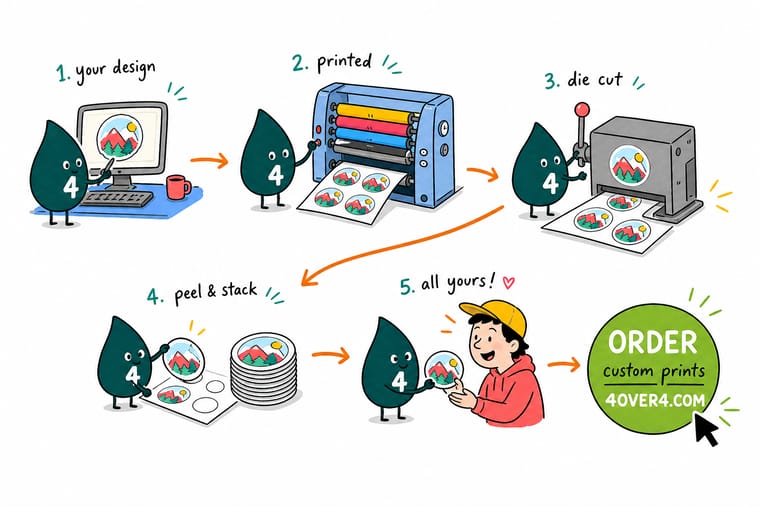
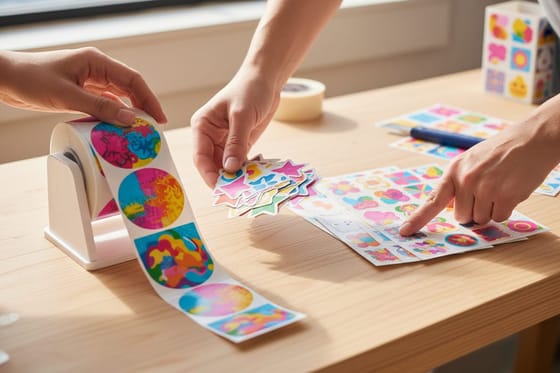
Wally prints the face stock, bonds a laminate over it, then walks to the die and sets the depth. Set it shallow and the blade stops on the liner, so the shapes stay put on one backing and come off as a sheet or a roll. Set it deep and it goes through everything, so each sticker leaves on its own little square of backing. Nothing about the ink changed. Only the blade did.
Order die cut stickers →
Specs and pricing
Sticker formats, sizes, and starting prices
Compare the three formats side by side. Die cut singles come in sizes from 2 by 2 up to 11 inches, sticker sheets from 5 by 7 up to 11 by 11 inches, and roll stickers in 88 sizes from 0.75 by 1 inch, on white gloss, white or clear BOPP, silver foil or eggshell felt. The live material and quantity choices and starting prices come straight from the 4OVER4.COM configurator.

Print it
Order the format that matches how you apply them
Singles and sheets ship after 5 business days of production and rolls after 6. Pick hand or machine application and the surface on a roll order, glass, plastic, metal, wood, corrugated or frozen product, so the adhesive suits it.

Explore more
Where to go next
Compare the two cut depths, pick a face stock for where the sticker ends up, weigh rolls against sheets and singles by run size, check the sizes presses already run, then shop stickers and labels.

By the numbers
Stickers printed, laminated and die cut here
Common Questions
Your sticker printing questions, answered
How are stickers printed, start to finish?
The artwork is ripped and ganged up so several designs share one sheet or one web of self adhesive material. The material runs through the press and takes ink on its face stock, with a white ink pass first if the stock is clear. A laminate film is then laminated over the printed surface. Last, a rotary die, a flatbed die or a digital knife cuts the shape, either stopping on the liner for a kiss cut or going through it for a die cut. The waste around the shapes is stripped off, and the job is sheeted, or slit and wound onto a core if it is going out as a roll.
What is the difference between kiss cut and die cut stickers?
Depth. A kiss cut sets the blade to the thickness of the face stock plus adhesive, so it cuts the shape but the liner underneath stays intact and continuous. That is how sticker sheets and roll stickers work. A die cut drives the blade through the liner as well, so each sticker comes off the line as its own little piece with its own backing. Kiss cut is better for packs and machine application. Die cut is better for anything handed to one person at a time.
Do stickers need lamination?
Not always, but skip it and you are choosing a shorter life. Bare paper stickers scuff, absorb moisture and lift at the edges. Laminate adds abrasion resistance, some UV protection, and a cleaner cut edge because the blade slices film and face stock in one pass. The trade is cost and appearance: gloss laminate deepens the colors and shows fingerprints, matte laminate mutes saturation and hides them. If a sticker will be seen once and thrown away, unlaminated paper is the honest cheaper answer.
Are roll stickers cheaper than sheets?
Per sticker at volume, yes. Per order, no. Roll stickers start at $322.98 at 4OVER4.COM against $181.24 for sticker sheets and $93.37 for die cut singles, because a roll is made on a continuous web and the setup only pays for itself over a long run. The rule that actually helps: if a person peels them by hand and the quantity is small, order sheets or singles. If a labeling machine or an applicator handles them, order a roll, because feeding a machine from sheets is not practical.
How do clear stickers keep their color instead of going see through?
With a white underprint. Process inks are transparent by design, so on clear film a red logo would take on the color of the bottle behind it. The press lays a layer of white ink only where the artwork needs opacity, then prints the color on top of that white. Designers can use this deliberately: leave a shape with no white behind it and it stays genuinely transparent, which is how the no label look on bottles is done.
How long do printed stickers last outdoors?
It depends far more on the material than on the ink. Paper face stock is an indoor material and will cockle and lift the first time it gets properly wet. Vinyl and polypropylene films are made for outdoor exposure and hold up to rain and sun, and with a laminate over them the print usually gives out before the film does. Two things shorten that life sharply: applying to a dirty or cold surface, and dark solid coverage on a panel that bakes in direct sun.
Get Started
Order die-cut stickers in 25s from $93.37
Pick a face stock, choose gloss or matte laminate, and tell us whether they arrive as singles, sheets or a roll. We cut to your outline and ship from Queens.
Legal Disclaimer
Gold Standard guarantees apply to all standard orders placed through 4over4.com. Price match requires verifiable proof of a competitor's published price for an equivalent product with matching specifications and turnaround time. Satisfaction guarantee covers manufacturing defects and print quality issues. Contact support with order number and documentation.
