
How Printed Magnets Are Made and Which Type Fits Each Job


Jordan is our labels, packaging and sustainability voice, built from the knowledge of our production team, with over 20 years in printing.
Printed magnets are made in layers: a printed, UV coated sheet glued to flexible rubber full of iron powder. The indoor stocks differ from the 30mil sheet on a truck door, and some surfaces hold none of it, so each type of magnet fits a different job.
A printed magnet is artwork printed on face stock, sealed under a UV coating, then laminated to a flexible magnet sheet made of strontium ferrite powder in a rubber binder and magnetized in narrow alternating stripes. The magnetic back stays blank, so only one side prints. Everything after that is stock choice: 17pt or 35pt indoor magnet, from 2 by 3.5 in to 5 by 7 in, for fridges, mailers and giveaways, or 30mil with a Hi Gloss UV coat, from 9 by 9 in to 24 by 36 in, for car doors and metal gates.
Quick answer
Printed face, UV coat, ferrite rubber sheet
A magnet is built in layers, and the layer at the bottom is rubber. Ferrite powder mixed into a rubber binder gets rolled flat, magnetized in stripes across one face, and laminated to a sheet that has already been printed and UV coated. The printed side never holds anything, which is why the design lives entirely on the front. Choose between the family that goes indoors, capped at 5 by 7 in, and the 30mil family that starts at 9 by 9 in and is coated to survive a year of weather on a door.
How a Printed Magnet Comes Off the Line
The magnet does not start at a printing press. It starts as a compound: strontium ferrite powder blended into a rubber or vinyl binder, then squeezed between rollers until it comes off as a flat, flexible sheet on a roll. That is the whole trick behind a product people assume is metal. It bends, it cuts on a guillotine, and it takes a laminate.
One, the face prints. Artwork goes down on the face stock in full color, or in black only if the job is a one color phone number and logo. Nothing about this step is special. It is the same press work as a postcard.
Two, the UV coating cures. A coating passes over the ink and cures hard. On the indoor stocks it stops fingers wiping the ink off a fridge door. On the 30mil outdoor stock the Hi Gloss UV coat is doing a heavier job, holding the color against sun and rain for the life of the panel.
Three, the printed sheet is laminated to the magnet. Adhesive bonds the printed face to the magnet sheet, and the pair go through a nip to force the air out. A bubble here shows up later as a soft spot that will not sit flat on steel.
Four, the back is magnetized in stripes. The magnet sheet carries narrow alternating north and south bands running across one face, written in during manufacture rather than magnetized as a single block. Those stripes are the reason one side of a magnet grips a steel door and the other side does nothing at all, and the reason two magnets stuck back to back feel like they are sliding into grooves.
Five, it is cut to size. Straight cuts on a guillotine for square work, or a die for corner radius. Car magnets and magnet signs offer a 1 in rounded corner, and reflective magnets a 0.75 in radius, which is not decoration. A square corner on a vehicle panel is the first thing to lift.
The whole sequence explains the pricing too. A box of 25 standard magnets starts at $19.68, while a pair of 9 by 9 in car magnets starts at $47.50, because area of magnet sheet, not piece count, is what the job consumes.
The Two Magnet Stocks, and Why the Numbers Mislead

There are two families, indoor and outdoor, and the caliper numbers printed next to them cause more confusion than any other spec in the magnet aisle. A point and a mil are the same unit: one thousandth of an inch. So a 35pt indoor magnet measures 0.035 in and is genuinely thicker than the 30mil sheet a car magnet prints on.
| Stock | Caliper | Size range | Where it belongs |
|---|---|---|---|
| 17pt indoor | 0.017 in | 2 x 3.5 in to 5 x 7 in | Fridge magnets, mailers, giveaway cards. Light enough to mail without changing the piece much. |
| 35pt indoor | 0.035 in | 2 x 3.5 in to 5 x 7 in | Same sizes, roughly twice the body. Pick it when the magnet has to hold paper against the door. |
| 30mil outdoor | 0.030 in | 9 x 9 in to 24 x 36 in | Car doors, van panels, metal storefront gates. Hi Gloss UV coat and rounded corners available. |
| 30mil reflective | 0.030 in plus film | Any size, 1 to 100 pieces | Service vehicles that work after dark. A reflective film bounces headlights back at the viewer. |
Read the size column, not the caliper column. That is where the real division sits. You cannot order a 24 by 36 in fridge magnet, and you cannot order a 4 by 6 in car magnet, because each family is cut from a different roll with a different coating and a different minimum. If a job needs to sit somewhere between the two, magnet signs run the same 30mil stock from 9 by 9 in in quantities as low as two pieces, and reflective magnets are cut to any size you specify.
Two specialty stocks sit outside the table. Dry erase magnets take a marker and wipe clean, which suits a shop floor board or a delivery schedule. Magnetic notepads bond a printed pad to a magnet base so the sheet tears off and the magnet stays. Both are magnet products, neither behaves like a printed magnet, and the magnets printing category lists them alongside everything else.
Picking a Size and Building the File
Size is decided by the surface, not by the design. Measure first, then lay out the artwork to what you measured.
- 2 x 3.5 in. The wallet footprint. Fits a card holder, mails inside a standard envelope, and carries a name, a number and a logo legibly. Anything more crowds it.
- 4 x 6 in and 5 x 7 in. Enough room for a calendar grid, a coupon, a service checklist or an emergency number list. This is the size range where a fridge magnet earns a permanent spot rather than a week on the door.
- 9 x 9 in to 12 x 18 in. Vehicle doors. Measure the flat area between the crease lines and the handle, then stay inside it.
- Up to 24 x 36 in. Box truck panels and metal shutters, where the design is read from across a parking lot rather than from arm's length.
On a vehicle the flat area is the constraint that catches everyone. A magnet that overlaps a body line only touches steel at two points, so the middle sits proud, air gets under it and the panel peels off somewhere between the shop and the highway. Take a tape measure to the door before you pick a size, not after.
File setup is straightforward once you accept that only one side prints. Build the front at full size with bleed, keep type and logos back from the trim edge because a guillotine cut has tolerance, and if you have chosen the 1 in rounded corner keep artwork clear of that arc. Fonts get outlined, images sit at print resolution, and we accept a print ready PDF, JPG or PNG. Start from a correctly sized layout in the blank template library, and if the piece is going in the mail rather than a hand, our guide to how online printing works covers the handoff from file to delivered box.
To print on magnets with us, pick the product first, because the product fixes the stock and the size range:
| Product | Stock | Sizes | Starts at |
|---|---|---|---|
| Magnets | 17pt or 35pt indoor magnet | 2 x 3.5, 3 x 4, 4 x 6, 5 x 7 in, or any size | 25 for $19.68, 5 business days |
| Magnet postcards | 17pt or 35pt indoor magnet | The same four sizes, or any size | 25 for $19.68, 5 business days |
| Car magnets | 30mil magnet | 18 sizes from 9 x 9 to 24 x 36 in | 2 for $47.50, 4 business days |
| Reflective magnets | 30mil magnet with reflective film | Any size | $29.00, 4 business days |
Then measure the surface, build the front only at that size with bleed, upload the PDF, JPG or PNG, and check the proof before the run cuts.
Which Magnet Fits Which Job, and Where Magnets Fail
A magnet earns its cost in one situation: when the piece needs to stay in front of somebody for months rather than seconds. That narrows the choice quickly.
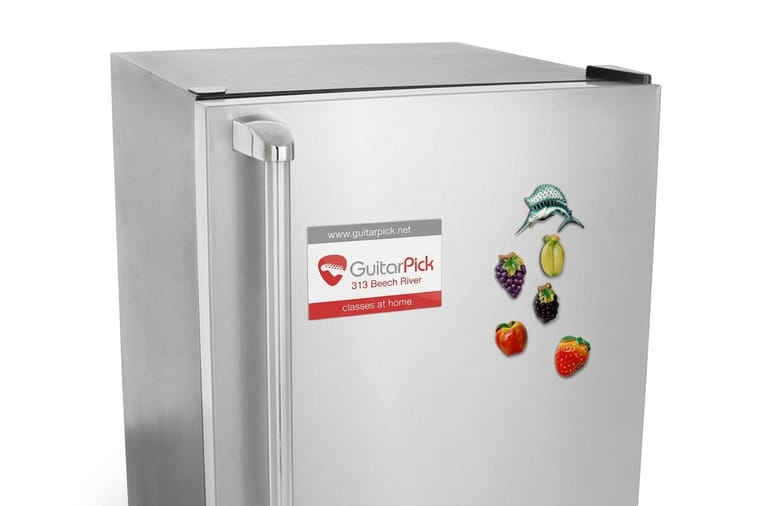
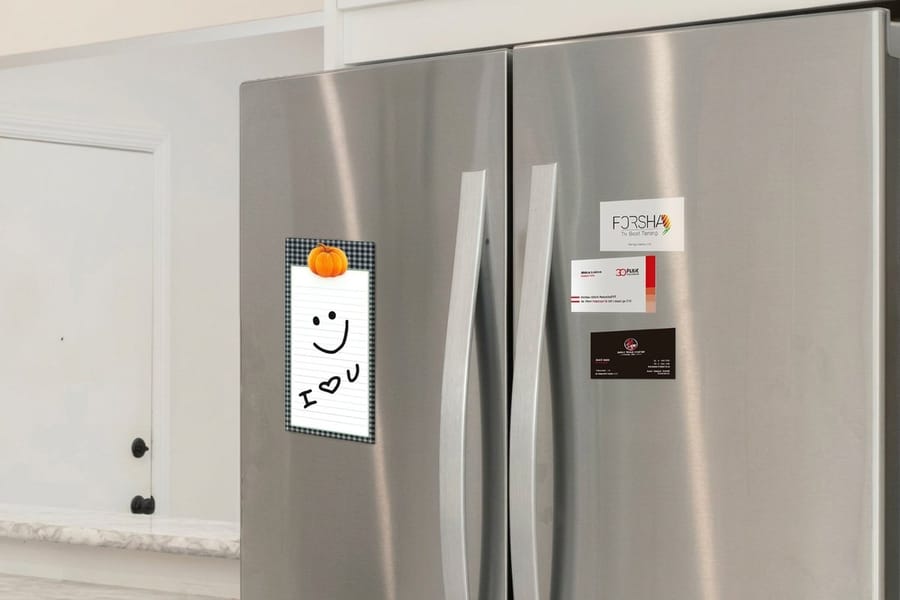
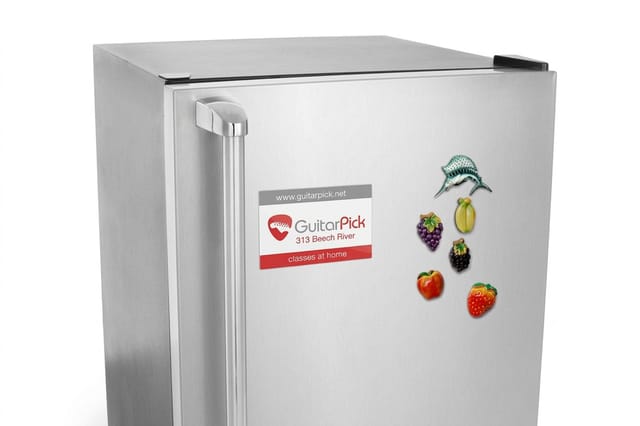
The fridge. Any trade that gets called in an emergency belongs on a fridge door. Plumbers, dentists, vets, towing. Business card magnets start at $19.68 for 25 and do this job at the smallest size. Where the piece is mailed instead of handed over, magnet postcards carry the offer and the magnet in one hit, and skip the recycling that takes the rest of the stack.
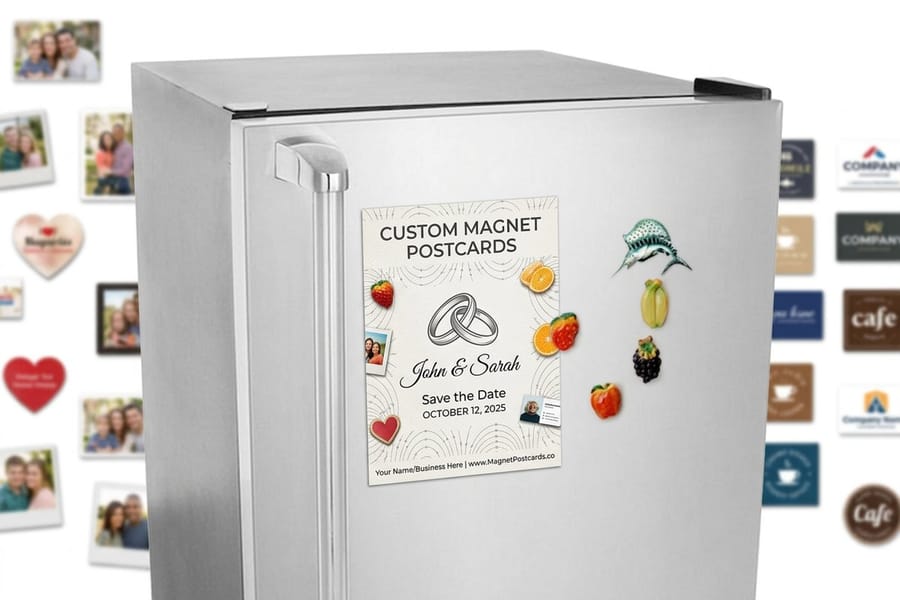
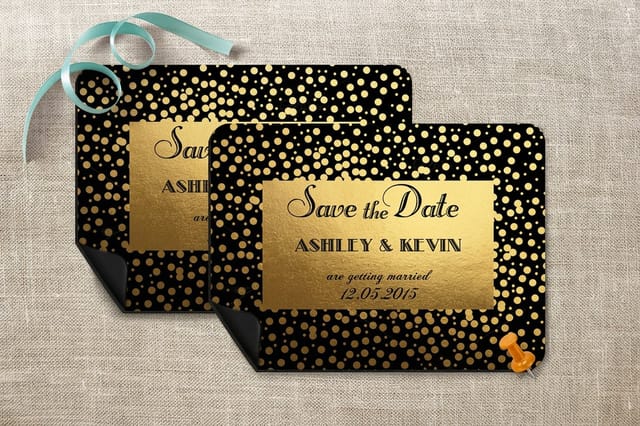
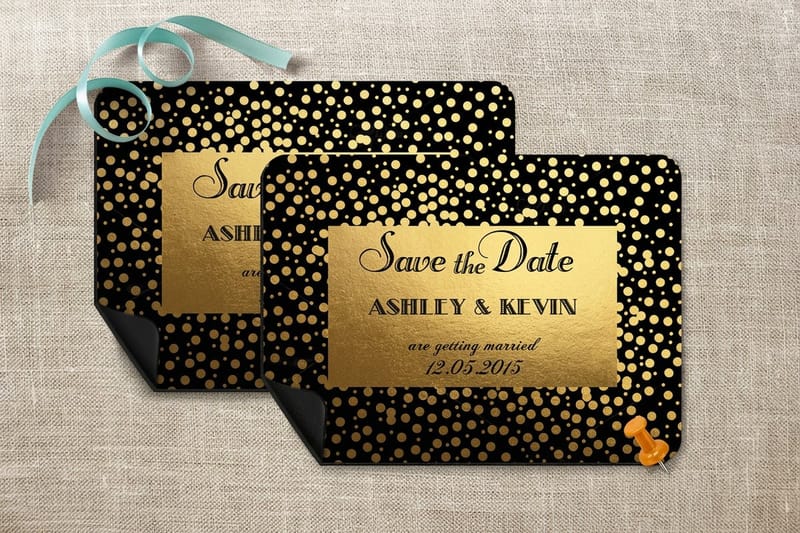
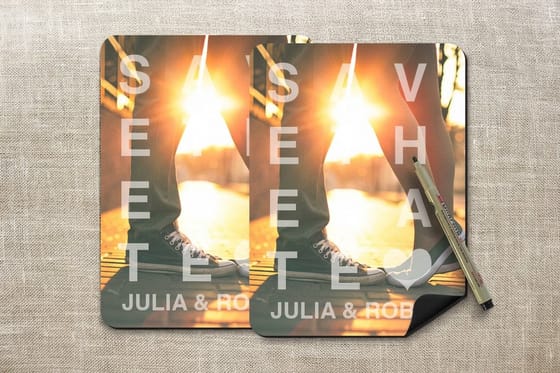
Dated events. Save the date magnets put a wedding or an event date at eye level for months, which no folded card manages, and they are the one indoor product with a made to order any size option running up to 11 by 17 in.
Vehicles. A car magnet turns a work van into signage on Monday and back into a private car on Saturday, which is the whole argument against a vinyl wrap for anyone who does not want the business on the paint permanently. Reflective stock takes the same idea into the dark for service vehicles parked roadside.
Now the failures, because they are predictable and every one of them costs a reprint. Magnets hold on ferrous steel and nothing else: aluminum doors, composite tailgates, fiberglass caps, plastic bumpers and many brushed stainless fridge fronts will not hold a magnet at all, so test the exact surface with an old fridge magnet before ordering. Curved and creased panels lift at the edge. A magnet left on paint for weeks traps grit and moisture, so pull it weekly, wash both faces and refit dry. And a magnet mailer is heavier and stiffer than a paper card, so put one finished piece in front of your mail house before you commit the full run rather than after. If the piece is going somewhere permanent and none of that appeals, the honest comparison is in magnets against stickers.
Wally explains printed magnets
Print the front, glue it to rubber full of iron, cut it to size
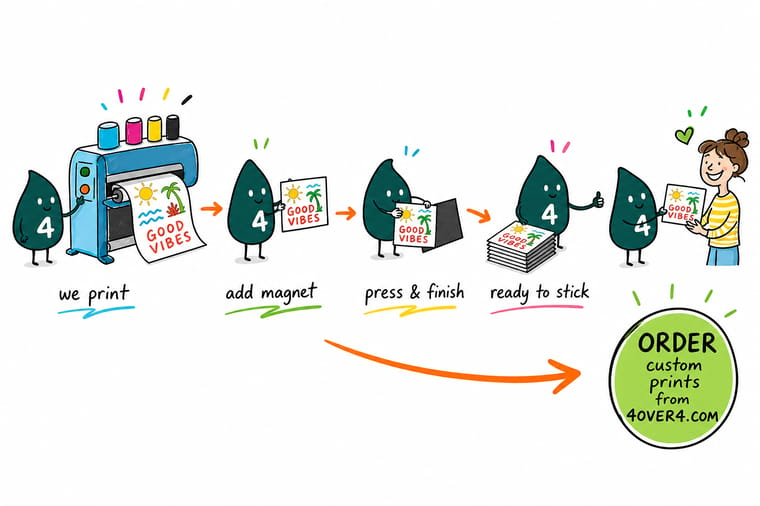
Wally prints your artwork on face stock, cures a UV coat over the ink, then rolls the whole sheet onto flexible magnet: iron powder kneaded into rubber and magnetized in little stripes. The stripes only run down one face, so the back grabs steel and the front holds nothing. He cuts small ones for fridges and mailers, big ones on thicker outdoor stock for truck doors. Hand him a panel that turns out to be aluminum and even Wally cannot help you.
Order printed magnets →%22%2F%3E%3Ccircle%20cx%3D%2242%22%20cy%3D%2249%22%20r%3D%2227%22%20fill%3D%22%23f59e0b%22%20opacity%3D%220.15%22%2F%3E%3Ccircle%20cx%3D%2278%22%20cy%3D%2258%22%20r%3D%2214%22%20fill%3D%22%23f59e0b%22%20opacity%3D%220.1%22%2F%3E%3Crect%20x%3D%2272%22%20y%3D%2229%22%20width%3D%2227%22%20height%3D%2234%22%20rx%3D%224%22%20fill%3D%22%23f59e0b%22%20opacity%3D%220.08%22%20transform%3D%22rotate(37%2080%2030)%22%2F%3E%3C%2Fsvg%3E)
Specs and pricing
Magnet stocks, sizes and starting prices
Magnets print on 17pt or 35pt indoor stock from 25 for $19.68, car magnets on 30mil sheet in 18 sizes up to 24 by 36 inches from $47.50 for two, and magnet postcards on the indoor stocks from 25 for $19.68. Indoor stock, outdoor stock and the mailable version sit side by side with live configuration choices and starting prices straight from the 4OVER4.COM configurator.

Print it
Order magnets that stay on the door
Car magnets take 4 business days of standard production; magnets and save the date magnets take 5, in four sizes from 2 by 3.5 to 5 by 7 inches or any size you enter.


Explore more
Where to go next
Six next reads: fridge magnets layer by layer, car magnet sizes for doors and tailgates, magnets against stickers, the five magnet advertising formats, the magnets range and our printing FAQs.


By the numbers
Magnets printed on 17pt indoor stock and 30mil sheet
Common Questions
Your printed magnet questions, answered
What are printed magnets actually made of?
Three things bonded together. The bottom layer is a flexible magnet sheet, which is strontium ferrite powder mixed into a rubber or vinyl binder and rolled flat, so it is closer to a stiff rubber mat than to a lump of metal. Above it sits the printed face stock, carrying your artwork in full color. A UV coating cures over the ink to take the scuffing, the fingerprints and the weather. The magnet sheet is magnetized in narrow alternating stripes across one face, which is why the printed side of a magnet holds nothing and the blank side grabs a steel door hard.
Should I order 17pt or 35pt for a fridge magnet?
Order 17pt if the magnet holds only itself, and 35pt if it has to hold anything else. The 17pt indoor stock is the standard fridge magnet: light, easy to mail, and perfectly happy carrying a phone number and a logo. The 35pt is roughly twice the material, and the extra body buys a firmer grip that will pin a school schedule or a stack of appointment cards to the door, plus more resistance to curling at the corners over a few years. Both take the same UV coating and both come in the same sizes, from 2 by 3.5 in up to 5 by 7 in.
Will a car magnet stick to my truck?
Only if the panel is steel. Aluminum body panels, composite tailgates, fiberglass caps and plastic bumper covers hold nothing at all, and that catches people out on newer pickups where the doors are aluminum. Check before you order by pressing any fridge magnet against the exact panel you plan to use. The surface also has to be flat and clean: a magnet that straddles a body line or a door crease lifts at the edge, and once air gets under an edge at highway speed the whole panel can go.
Can you print both sides of a magnet?
No. The back is the magnetic face and it stays blank, so all the artwork lives on the front, printed either 4/0 in full color or 1/0 in black. If a piece genuinely needs two printed faces, the usual answer is a printed card paired with a separate magnet, or a magnet on one side and a mailed insert alongside it. Designing a magnet as though it were a two sided postcard is the single most common file mistake we send back.
How large can a printed magnet be?
It depends on the stock family. Indoor magnet sets run from 2 by 3.5 in up to 5 by 7 in, and save the date magnets add a made to order any size option from 2 by 2 in up to 11 by 17 in. The 30mil outdoor stock starts at 9 by 9 in and runs to 24 by 36 in across 18 sizes, with magnet signs also available in a custom size. Reflective magnets are cut to whatever dimensions you set. There is no single sheet that spans both ranges, which is why a big fridge magnet and a small truck magnet are two different orders.
Do magnets damage vehicle paint?
The magnet itself does not, but what gets trapped under it can. Road grit works its way beneath the edge and grinds against the clear coat every time the panel flexes, and water sitting between the magnet and the paint has nowhere to evaporate. The habit that prevents it is simple: pull the magnet off about once a week, wash and dry both the panel and the back of the magnet, and put it back on a dry surface. Take it off before a pressure wash and before a long stretch of highway in heavy rain.
How fast can printed magnets ship?
Indoor magnets run a 5 business day standard turnaround, with 4-day, 3-day, 2-day, Next-Day and Same-Day rush available. The 30mil outdoor stock is quicker as standard at 4 business days, with 3-day, 2-day, Next-Day and Same-Day rush out of the New York plant. Same-Day means the piece is produced that day, not delivered that day, so build shipping transit on top of whichever production speed you pick.
Get Started
Order standard magnets in 25s, printed in 5 business days
Pick your stock, set the size to the surface you measured, and we print magnets that grip steel and hold their color under a UV coat.
Legal Disclaimer
Gold Standard guarantees apply to all standard orders placed through 4over4.com. Price match requires verifiable proof of a competitor's published price for an equivalent product with matching specifications and turnaround time. Satisfaction guarantee covers manufacturing defects and print quality issues. Contact support with order number and documentation.
