
Greeting Card Printing Sizes, Stocks and How to Order a Run


Two folded sizes, seventeen stocks, and one envelope decision that catches people out. Here is what to pick, what it costs, and the order in which to decide it.
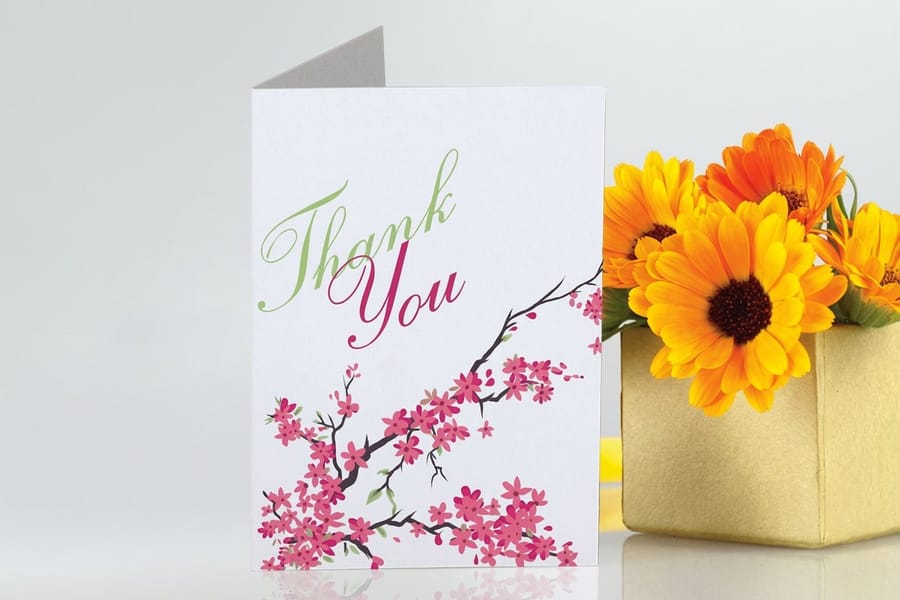
Greeting cards print in two folded sizes: an 8.5 by 5.5 inch sheet that folds to 4.25 by 5.5, and a 10 by 7 inch sheet that folds to 5 by 7. At 4OVER4.COM a set of 50 starts at $56.02, about $1.12 a card, on any of 17 stocks, with a matching White Wove A2 envelope, machine folding, and a 5 business day standard turnaround that rushes down to Same-Day. The 5 by 7 card needs an A7 envelope, not the A2, and that is the detail that delays most mailings.
Quick answer
One sheet, one score, and an envelope that has to match
A greeting card is a flat sheet with a crease down the middle, so the fold halves the width and leaves the height alone. Order the 4.25 by 5.5 fold and the matching White Wove A2 envelope comes with it. Order the 5 by 7 and you need an A7 instead, bought at the same time. Stock is the second decision and it comes down to whether anyone writes inside: coated stocks smear a pen, uncoated, linen and kraft do not. Everything else, the finishes and the rush tiers, is priced on top of those two calls.
The Two Folded Sizes and Which One You Actually Want
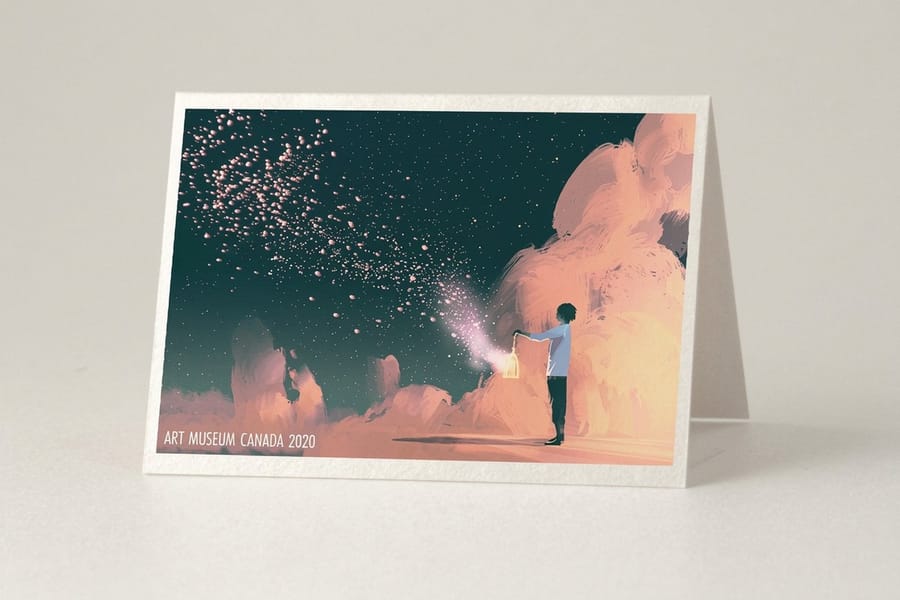
Greeting cards come in two folded sizes here, and both are cut from one flat sheet with a score down the centre. The compact card prints at 8.5 by 5.5 inches and folds to 4.25 by 5.5. The roomy card prints at 10 by 7 inches and folds to 5 by 7, the shape most people picture when they say greeting card.
The fold halves the width and leaves the height alone. That single fact fixes most layout mistakes: your artwork file is the flat sheet, the front panel is the right half of it, and anything crossing the centre line will land on the crease.
| Format | Flat sheet | Folded card | Envelope it needs | Best for |
|---|---|---|---|---|
| Compact | 8.5" x 5.5" | 4.25" x 5.5" | White Wove A2, 4.375" x 5.75" | Thank-you notes, customer mailings, anything going out in volume. |
| Roomy | 10" x 7" | 5" x 7" | A7, ordered separately | Holiday cards, invitations, photography, anything that gets displayed. |
Pick the compact card when the piece is a message and the budget is per head. Pick the 5 by 7 when the card has to hold a photograph or stand on a shelf without falling over, because the extra height genuinely helps it stay up. If you want the flat, no-envelope version of the same job, folded invitations and our invitation printing guide cover that side of the range.
Stock: 17 Options, Four Decisions
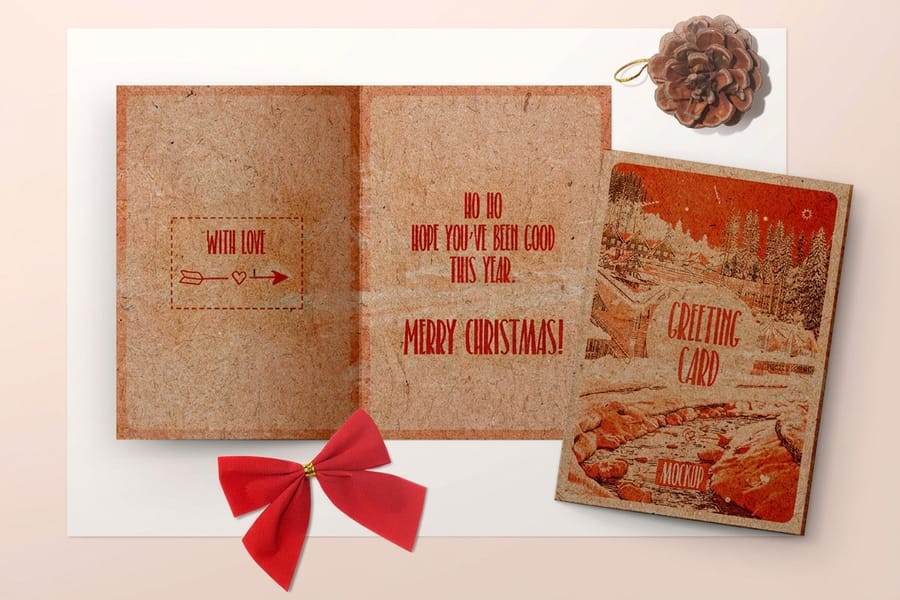
Seventeen stocks sounds like a lot until you sort them by what the card has to do. There are really four questions, and the answers narrow the list fast.
Will anyone write inside it? Then it needs an uncoated surface. Ballpoint and gel ink sit on top of a gloss coating and smear under a thumb, which is a miserable discovery to make with 300 cards on the table. Uncoated cover, 14pt and 18pt white linen, and the 18pt kraft all take a pen properly.
Does the front carry a photograph or a saturated brand color? Then coated wins. A 14pt or 16pt gloss cover holds density and keeps a red from going dusty. A 100# silk or matte cover splits the difference: still coated, but calmer under a lamp, and easier to read a block of text on.
Does it need to feel like something? Soft touch, which is 16pt uncoated with a soft-touch laminate, is the one people notice without being able to name. It reads velvety, it kills glare, and it makes a simple one-color design look deliberate.
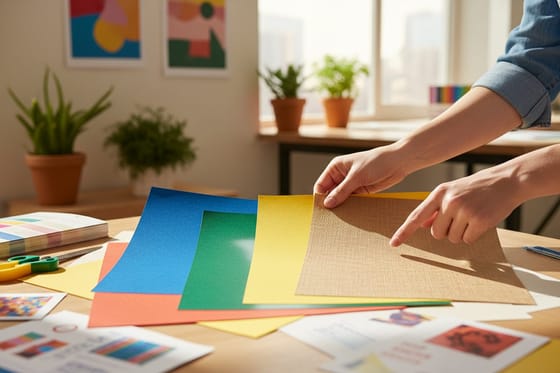
Does it need to shine? The 15pt metallic pearl range in ice, champagne, silver and gold has a shimmer built into the sheet itself, so the whole card glows rather than one stamped element. Add a High Gloss UV Coating over any stock to make a photo snap harder. If you want the whole stock taxonomy rather than the greeting-card slice of it, read printing paper stocks explained and the paper weight guide.
The honest limit: stock cannot rescue a low-resolution photograph, and a heavier point count does not make a card look more expensive on its own. A 16pt uncoated card with one well-set line of type beats a 18pt metallic card with a stretched logo every time. Kraft greeting cards start at $193.15 per 100 and are the cheapest way to make a card look handmade rather than printed.
Finishes and Upgrades, With What They Cost
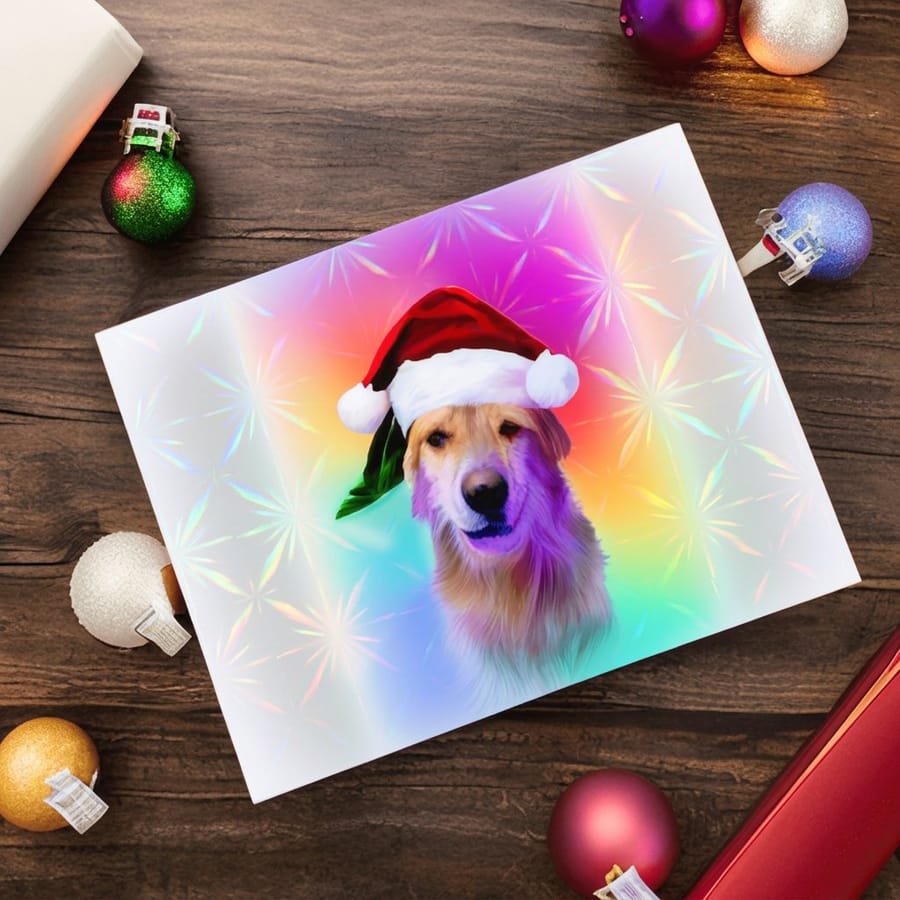
The specialty cards are separate products, not checkboxes on the standard card, because each one runs on its own stock and its own press pass. That is also why the prices jump: they are quoted per 100 on premium substrates, while the standard card is quoted per 50 on ordinary cover.
| Card | Starting price | Per card | Standard turnaround | What you are paying for |
|---|---|---|---|---|
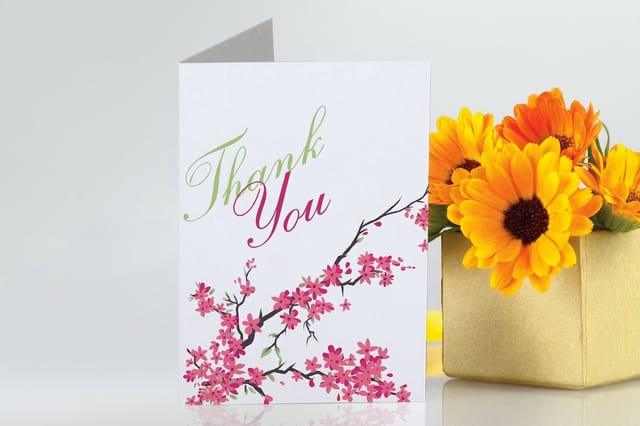
| Standard greeting cards | $56.02 / 50 | $1.12 | 5 business days | Two sizes, 17 stocks, matching A2 envelope, full color inside and out. |
| Kraft greeting cards | $193.15 / 100 | $1.93 | 5 business days | 18pt kraft uncoated from 100% post-consumer fibre, with a white-ink option. |
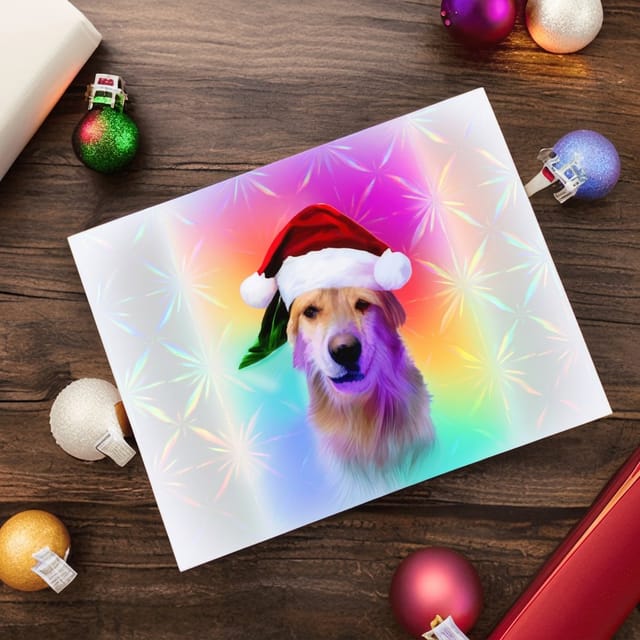
| Holographic greeting cards | $367.82 / 100 | $3.68 | 10 business days | Rainbow holographic base under silk, gloss or velvet 16pt lamination. |
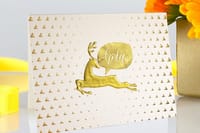
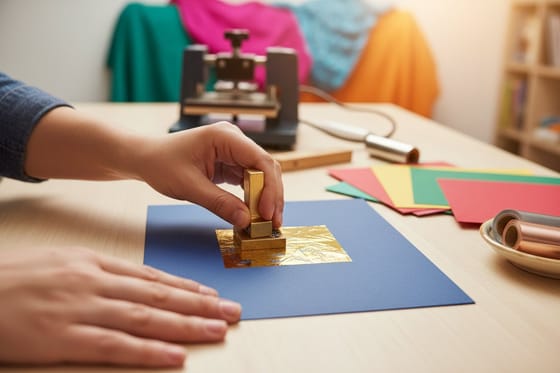
| Raised foil greeting cards | $618.16 / 100 | $6.18 | 7 business days | Gold, silver or holographic foil raised above 16pt soft-touch velvet stock. |
Read the turnaround column as carefully as the price column. Holographic cards take 10 business days standard, which is three weeks of calendar time once you add weekends and shipping, and there is no way to buy that back the week before a holiday. If the date is tight, the standard card on a metallic pearl stock gets you shine on a 5-day clock.
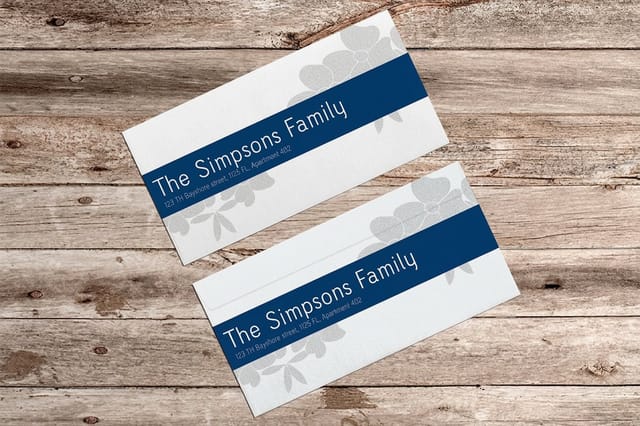
Where the specialty cards earn their money is a small run to people who matter: a client list of 100, a board, a wedding. Where they waste it is a broad send that gets opened once. For that, spend on the envelope instead, because printed invitation envelopes from $170.42 per 250 get looked at before the card does. Foil on the card is explained in more depth in our foil stamping guide.
Envelopes, Folding and the Assembly Nobody Budgets For
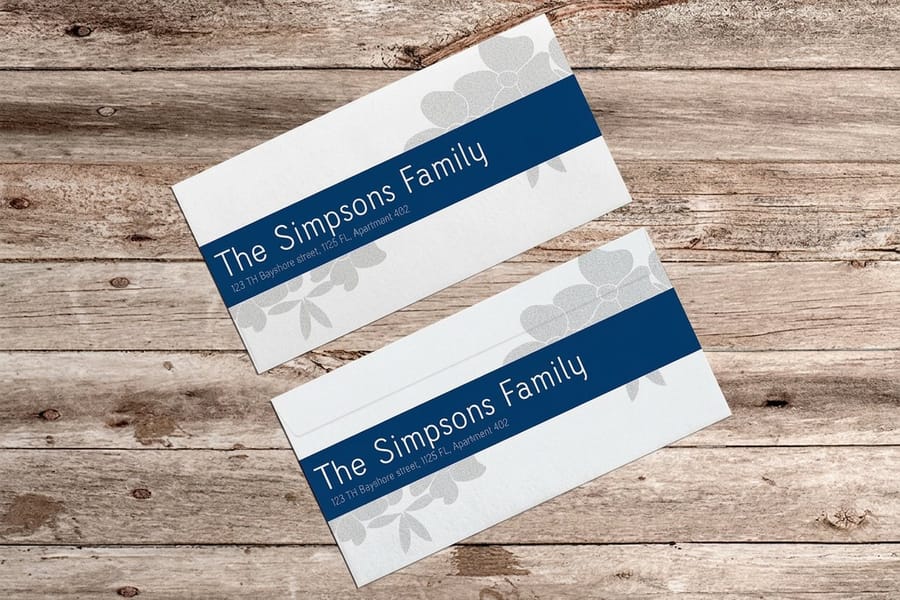
Two options at checkout decide whether the box that arrives is a finished mailing or an afternoon of work. Both are easy to skip and expensive to skip.
Folding. By default cards ship scored and flat. Turn folding on and they are machine-folded to finished size. On 16pt cover, a machine crease is squarer than a hand fold and it does not crack along the spine, which hand folding on heavy stock frequently does. On 500 cards the labour saving alone justifies it.
Envelopes. The matching White Wove A2 is sized for the 4.25 by 5.5 fold. It will not take a 5 by 7 card. If you are ordering the roomy size, add A7 envelopes from the invitation envelope range, which runs 11 sizes from A2 at 4.375 by 5.75 inches up to a 6.5 inch square, on a 7 business day standard turnaround with rush available. Printing a return address or a full-color design on the envelope costs less than most people assume and it lifts open rates on a cold list.
Bundling is the third one. Ask for the set bundled and the cards come grouped for handout instead of loose in a carton. It sounds trivial until you are sorting a thousand cards on a conference-room table.
How to Order, Step by Step
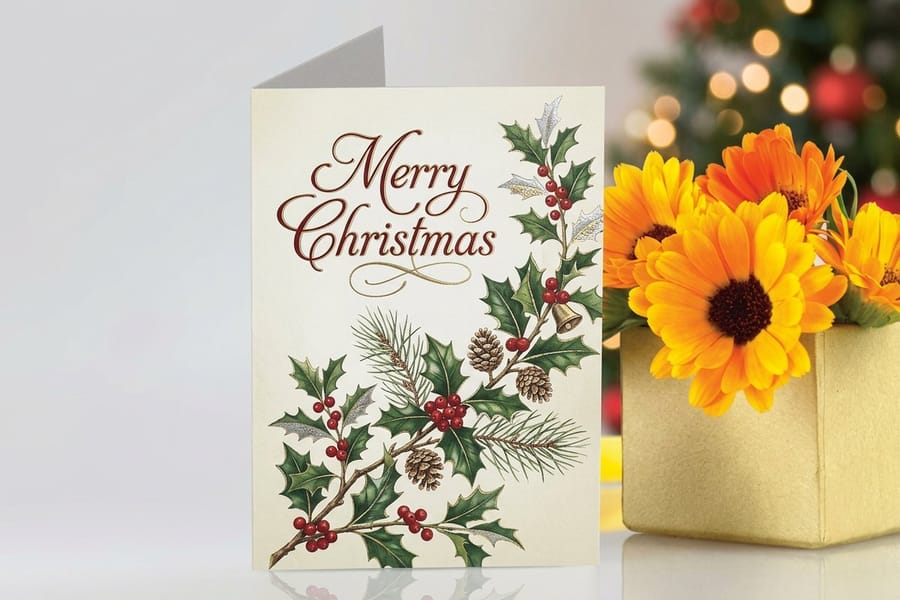
Six steps, and the only one people rush is the first.
- Fix the finished size first. 4.25 by 5.5 or 5 by 7. Everything after this depends on it, including which envelope you can buy.
- Count the list, then add ten percent. Pricing is per set and drops steeply with quantity, so the marginal cards are the cheapest ones you will ever buy. Reprinting 30 cards later costs more than printing 100 extra now.
- Choose the stock against the pen test. Handwriting inside means uncoated, linen or kraft. Photography on the front means gloss or silk.
- Build the file at the flat size. Design on the 8.5 by 5.5 or 10 by 7 sheet, keep live copy clear of the centre fold and an eighth of an inch inside the trim, and outline your fonts. Start from a greeting card blank template with the fold and bleed already drawn, or lay it out in the online design templates. If bleed is new to you, bleed and trim explained takes ten minutes and saves a reprint.
- Add folding and envelopes on the same order. Not afterwards. The envelope has to be in the box with the cards or the mailing stalls.
- Work backwards from the in-hand date. Standard is 5 business days production, plus transit. Rush tiers go to Next-Day and Same-Day with approval by the cutoff, but rush costs a percentage of the job, so a decision made a week earlier is cheaper than any rush tier.
Upload the file, approve the proof, and the run goes to press. Every card in the greeting card range follows the same six steps, and the whole order-to-doorstep sequence is laid out in how online printing works.
Wally explains greeting card sizes
One sheet, one crease, one envelope that fits
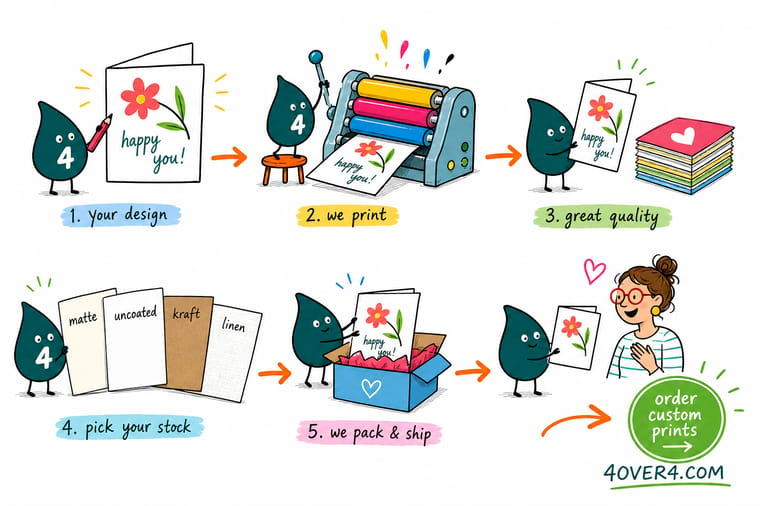
Wally prints your card flat, puts a score down the centre, and folds it. The width halves, the height stays put, so 8.5 by 5.5 becomes 4.25 by 5.5 and 10 by 7 becomes 5 by 7. The A2 envelope in the box is cut for the small fold. Hand Wally a 5 by 7 card and he will ask for an A7, and he would rather ask now than after the run has printed.
Configure your greeting cards →Specs and pricing
Sizes, stocks and starting prices, live from the configurator
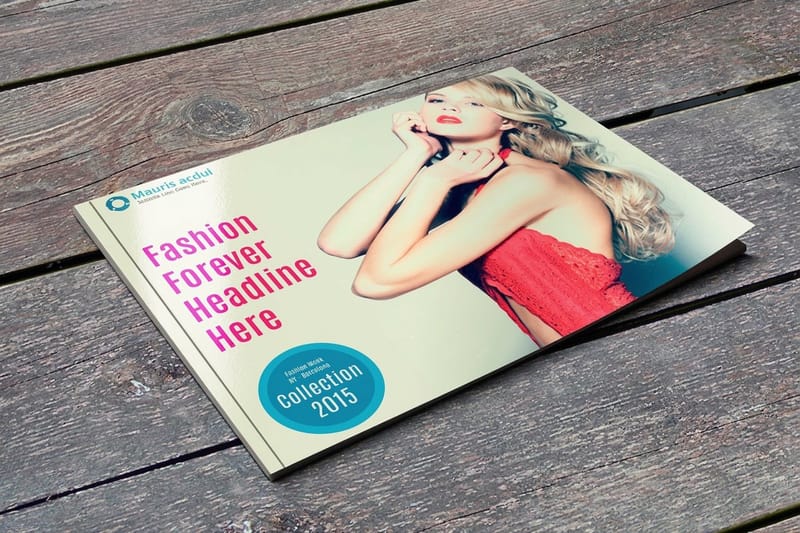
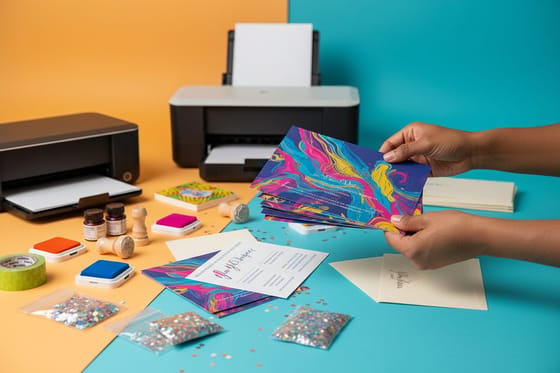
The standard card next to the two upgrades people ask about most. Sizes, stock lists and starting prices come straight from the 4OVER4.COM configurator.

Print it
Order the card, and the envelope that fits it
Explore more
Where to go next

By the numbers
Greeting card printing you can count on at 4OVER4
Common Questions
Your greeting card printing questions, answered
What size are printed greeting cards?
At 4OVER4.COM there are two folded sizes. The compact card prints on an 8.5 by 5.5 inch sheet and folds to 4.25 by 5.5 inches. The roomy one prints on a 10 by 7 inch sheet and folds to 5 by 7 inches, the classic A7 shape. Both print flat and ship scored, so the fold is a crease we put in, not a guess you make with a bone folder. Set your artwork up at the flat sheet size with the fold running down the centre, and keep anything you do not want cut at least an eighth of an inch inside the trim.
Which envelope fits a 5 by 7 greeting card?
An A7. The matching envelope offered with standard greeting cards is a White Wove A2 at 4.375 by 5.75 inches, which is cut for the 4.25 by 5.5 fold, not for a 5 by 7 card. If you order the larger size, add A7 envelopes from the invitation envelope range at the same time. Buying envelopes after the cards have shipped is how a mailing ends up two weeks late for no good reason.
What stock should I print greeting cards on?
Start with what the card has to survive. If people will write inside it, choose an uncoated, linen or kraft stock, because ink from a pen sits on top of a gloss coating and smears. If the front carries a photograph or a saturated brand color, a 14pt or 16pt gloss cover keeps it punchy. Soft touch reads velvety and expensive under a thumb. The 15pt metallic pearl range in ice, champagne, silver and gold catches the light and suits holiday and wedding work. There are 17 stocks in total, but that is the decision behind almost all of them.
How much does greeting card printing cost?
A set of 50 standard greeting cards starts at $56.02, about $1.12 a card, and the per-card number keeps falling as the run grows, reaching roughly 9 cents at 7,000 and under 5 cents at 100,000. Specialty stocks are priced very differently because they run in sets of 100 on premium substrates. Kraft greeting cards start at $193.15 per 100, holographic at $367.82 per 100, and raised foil at $618.16 per 100. Envelopes are separate: invitation envelopes start at $170.42 for 250.
How long does greeting card printing take?
Standard greeting cards run on a 5 business day standard turnaround, with 4-day, 3-day, 2-day, Next-Day and Same-Day rush tiers that add a set percentage to the base price. Specialty cards are slower because of the extra pass: raised foil is 7 business days standard with a 4-day rush, and holographic is 10 business days standard. Production days are not shipping days, so count transit on top and work backwards from the date the cards need to be in hand.
Can I print full color inside the card as well as the front?
Yes. Greeting cards print full color on the front with a blank or black-ink inside, or full color on both sides. Full color inside costs more and is worth it when the inside carries a photo collage or a designed layout. It is wasted money when the inside is a two-line message people will write over by hand, and on a coated stock it actively fights the pen. A common setup that works: full color outside, uncoated or black-ink inside, room left clear for a signature.
Do the cards arrive folded or flat?
Your choice, and it matters more than it sounds. By default the cards ship scored and flat, which packs tighter and lets you fold them yourself. Turn folding on and we machine-fold them to finished size, so each card is creased, square, and ready to write in the moment the box opens. On a run of 500 cards for a holiday send, machine folding buys back an afternoon and produces a straighter crease than a hand fold on 16pt stock ever will.
Get Started
Ready to send a card people keep?
Pick the fold, pick the stock, add folding and the matching envelope, and we print a card that arrives creased, square and ready to write in.
Legal Disclaimer
Gold Standard guarantees apply to all standard orders placed through 4over4.com. Price match requires verifiable proof of a competitor's published price for an equivalent product with matching specifications and turnaround time. Satisfaction guarantee covers manufacturing defects and print quality issues. Contact support with order number and documentation. On-time delivery rate based on tracked orders 1999 to 2026. Individual results may vary based on shipping carrier performance.
