
Free Greeting Card Templates and Print Setup Guide


A great card starts from a correctly sized template. Here is how greeting card sizes and folds work, how to lay out each panel, and how to export a file that prints and folds exactly right.
A greeting card template is a layout set to the card's finished size with the fold, bleed, and margins in place. Choose flat or folded, pick a standard size (5 by 7 pairs with A7 envelopes), build a folded card from a flat sheet twice the width with a center fold, lay out each panel in reading order, work in CMYK at 300 DPI, and export a print-ready PDF.

Start here
Greeting card templates in one paragraph
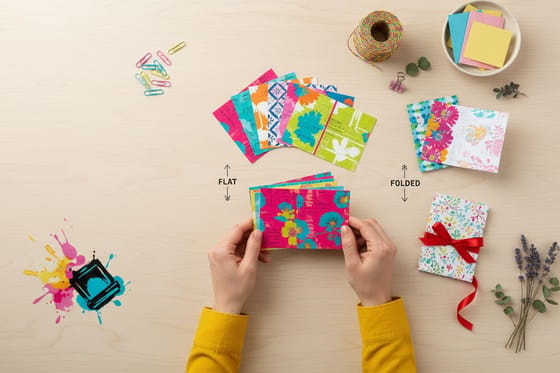
A card template is a correctly sized layout with the fold, bleed, and margins built in. Choose flat or folded, pick a standard size that matches an envelope, build a folded card from a flat sheet twice the width, design each panel in reading order, work in CMYK at 300 DPI, and export a print-ready PDF. The diagram shows the flat-to-folded template layout.
Watch it printed
See birthday greeting cards on the press, in 170 seconds
What a greeting card template gives you
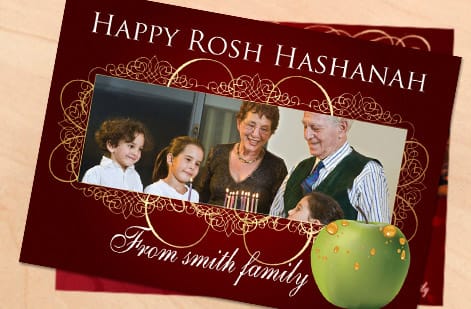
A greeting card template is simply a layout set to the card's finished size with the fold line, bleed, and safe margin already in place. Instead of rebuilding the geometry each time, you drop in your artwork and words and trust that everything lines up with the fold and the cut.
For a folded card, the template is a flat sheet twice the finished width with a guide down the center. A 5 by 7 inch folded card therefore starts from a 10 by 7 inch flat template. That single idea, build flat and fold to size, is the key to every card in this guide.
You can start from our free design templates, which come correctly sized with the fold and margins in place, or set up your own file to the specs in the reference table below. Either way you get a card that prints and folds exactly as intended. For sizing details, pair this with our greeting card size guide.
What a Word card template can and cannot do
Microsoft Word ships with card templates, and for a card you print at home they are fine. You pick a layout, swap the words and the photo, and print it folded on letter paper. If that is the job, stop there.
Two limits matter the moment the card goes to a press. Word has no bleed, so it cannot extend artwork past the trim, which means any background that touches an edge will show a white sliver after cutting. And Word works in RGB, so the colors you pick on screen are converted at the last moment and can shift noticeably in print.
There are two honest ways around it. Design inside the safe area with a white border all the way round, and nothing has to bleed. Or start from a template that already carries the fold, the 0.125 inch bleed and the margins, and export a print-ready PDF in CMYK from a tool that supports both.
If you have a Word layout you like, rebuild it at the flat size before you order, then print greeting cards from that file.
Flat or folded: choose the format first
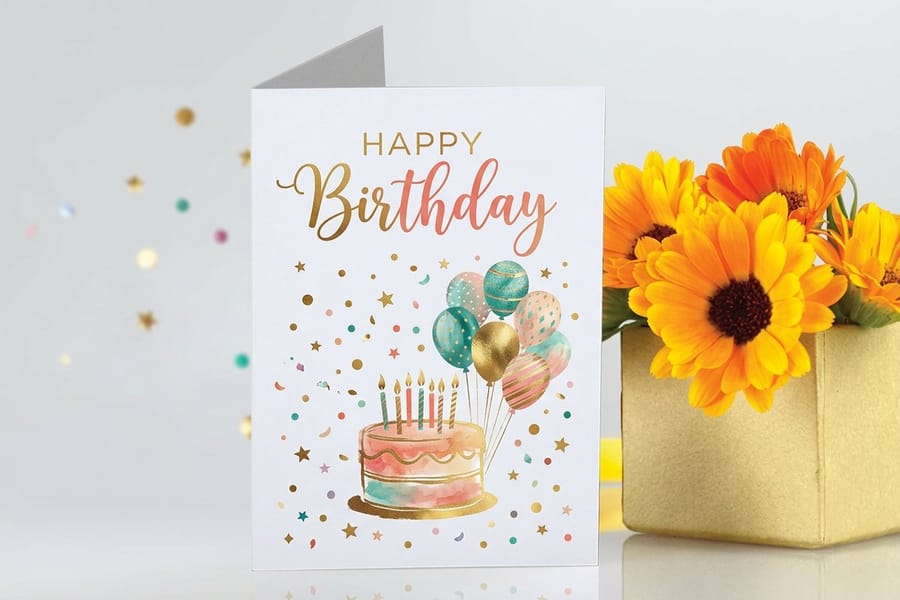
Before you touch a template, decide whether the card is flat or folded, because that choice sets the whole layout. A flat card prints on two sides and ships slim, which suits photo cards, save-the-dates, and quick announcements. A folded card gives you four surfaces and a warmer inside message, which is why folded cards dominate birthdays, anniversaries, and holiday greetings.
A folded card also changes how the piece reads. The front is the cover, the inside spread carries the message, and the back closes it out. If a handwritten note will be added, leave the inside generously open. Our guide on flat versus folded cards breaks down when each format earns its place.
Occasion lines like anniversary and holiday cards all use the same flat-or-folded template logic, so once you learn it for one card you can design any of them.
Standard sizes and matching envelopes
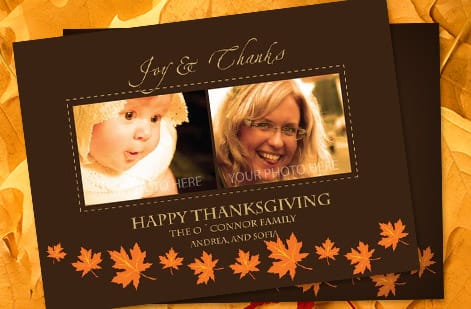
Card sizes are standardized for a practical reason: they need to fit off-the-shelf envelopes. Sticking to a common size keeps mailing simple and cheap.
The three you will use most are 5 by 7 inches, the most popular folded size, which pairs with A7 envelopes; 4 by 6 inches, compact and economical for photo cards; and A5, for a European-standard feel. Whatever finished size you pick, set the flat template to twice the width for a folded card and mark the fold before you place a single element.
Matching the card to a standard envelope up front avoids the frustration of a card that will not fit anything you can buy. For the full size-to-envelope pairing, see our greeting card size guide.
Design each panel for its job

A folded card has four surfaces and each does a different job, so design them in reading order rather than as one canvas. The front cover carries the occasion, the main illustration or photo, and any short greeting, kept clean so it reads at a glance.
The inside left and right hold your message and supporting art. This is where warmth lives, so leave breathing room, and if a handwritten note will go in, keep one panel mostly open. The back panel is the place for a logo, a short line, or a photo credit, treated like a quiet second cover.
Keep body text readable at print scale, lean on white space, and let each panel make one point. For editable starting layouts that already balance these panels, our free design templates are the fastest way in.
Set bleed, color, and export a print-ready file

With the layout done, the final step is a file the press can print without edits. Build at the flat size, add 0.125 inch of bleed on every side, and run any background or photo that touches an edge out to the bleed so no white sliver shows after cutting.
Work in CMYK so your preview matches process-ink output, place images at 300 DPI at their printed size, keep text inside a safe margin and clear of the fold, then outline or embed fonts, flatten, and export one print-ready PDF. Our bleed and trim guide shows how to set these lines precisely.
Before you upload, print a dummy, fold it, and read it in order. A quick paper proof catches a mirrored inside panel or a message on the wrong side far more cheaply than a full run does.
Wally builds flat, then folds to size
The template already knows where the fold goes
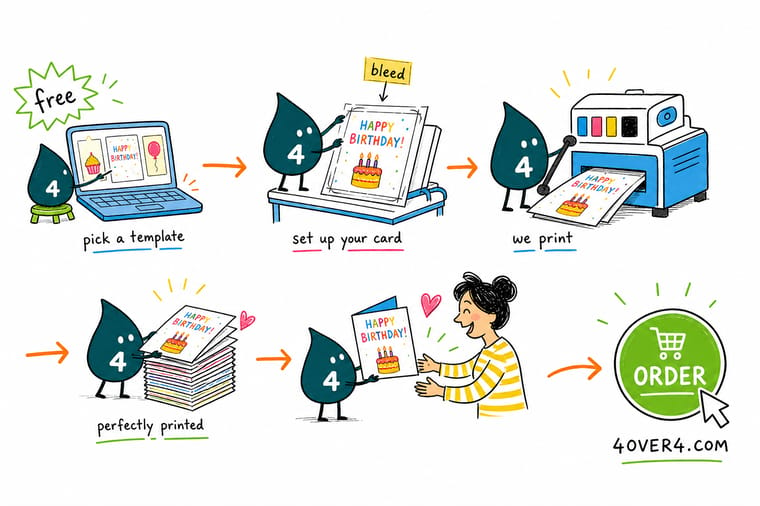
Wally starts every card from a template sized to the finished card, with the fold, bleed, and margins already marked. He picks flat or folded, keeps to a standard size so the envelope is easy, then lays out each panel in reading order. Set it in CMYK, export one flattened PDF, and 4OVER4 prints and folds it exactly as drawn.
Print your greeting cards →Quick reference
The greeting card template setup, at a glance
Match these settings and your card template is ready for almost any occasion.
| Setting | Get it to | Why it matters |
|---|---|---|
| Finished size | 5 x 7, 4 x 6, or A5 | Common card sizes that pair with standard envelope sizes. |
| Card type | Flat or folded | Flat prints two sides; folded gives four panels and an inside message. |
| Flat template (folded 5x7) | 10 x 7 in with center fold | A folded card is built from a flat sheet twice the width with a fold down the middle. |
| Bleed | 0.125 in past every edge | Backgrounds run past the trim so no white sliver shows after cutting. |
| Safe margin | 0.125 in inside the trim + off the fold | Keeps text and art clear of the blade and the crease. |
| Color mode | CMYK | Presses print process inks, so convert from RGB before you export. |
| File format | Flattened print-ready PDF | One self-contained PDF prints predictably every time. |
Step by step
Set up a greeting card in 7 steps
- Pick flat or folded, and the finished sizeChoose whether the card prints as a flat two-sided piece or folds to reveal an inside, then set the finished size (5 by 7 is the most popular).
- Open a template at the flat sizeSet the document to the unfolded sheet size, add 0.125 in bleed all around, and drop a guide on the center fold for a folded card.
- Design the cover firstThe front carries the occasion, the illustration or photo, and any short greeting. Keep it clean so it reads at a glance.
- Lay out the inside panelsOn a folded card the inside left and right hold your message and art. Leave generous room if a handwritten note will be added.
- Add photos at 300 DPI and run art to the bleedPlace images at full resolution for the printed size and extend backgrounds past the trim so edges stay clean.
- Work in CMYK and proof the foldBuild in CMYK, print a dummy, fold it, and read it in order to confirm nothing lands on the crease.
- Export a print-ready PDF and orderFlatten, embed or outline fonts, export a PDF with bleed, then upload it to print your greeting cards.
Specs and pricing
Greeting card specs and live pricing
Once your template is ready, the print choices come down to size, fold, stock, and finish. Here are the live specs and price-per-unit for greeting cards at 4OVER4.COM, straight from the configurator.

| Quantity | Price Per Unit | Total |
|---|---|---|
| 50 | $1.12 | $56.02 |
| 100 | 78.0¢ | $77.99 |
| 200 | 50.0¢ | $99.95 |
| 300 | 40.6¢ | $121.92 |
| 400 | 36.0¢ | $143.89 |
| 500 | 33.2¢ | $165.86 |
| 600 | 31.9¢ | $191.12 |
| 700 | 30.9¢ | $216.38 |
Print it
Print your greeting cards at 4OVER4
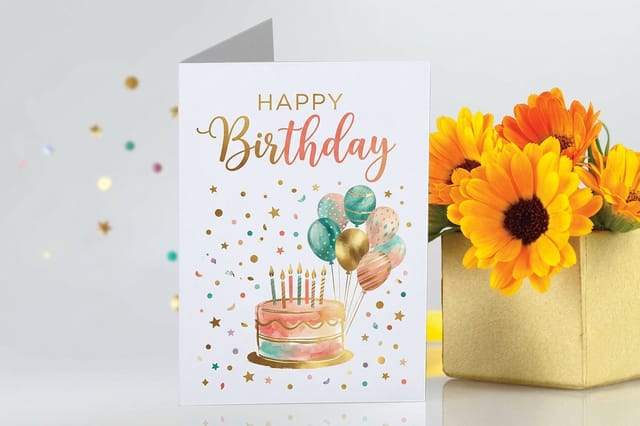
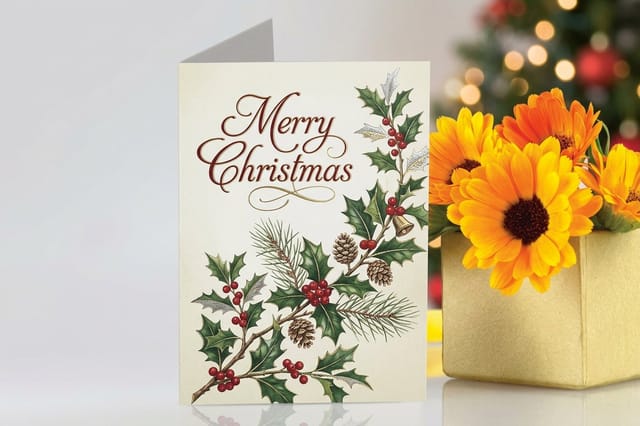
See it in use
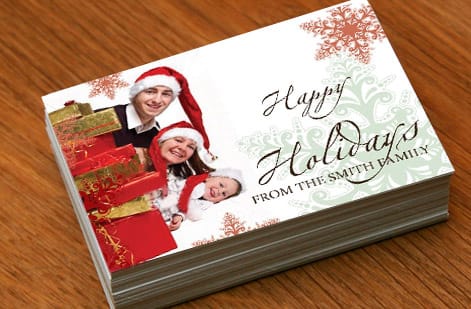
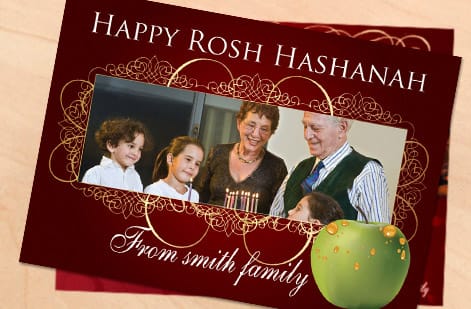
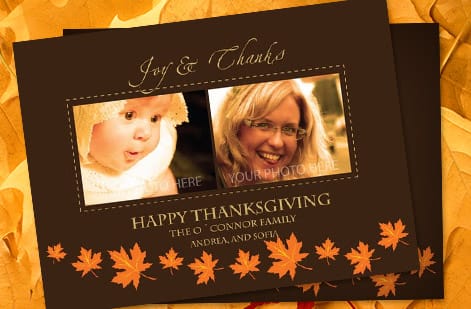
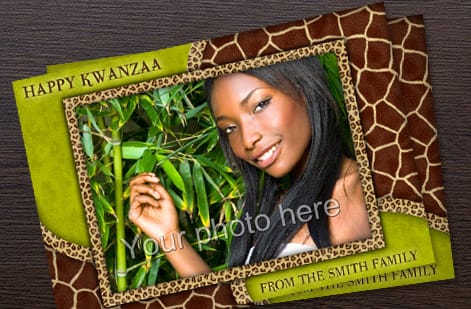
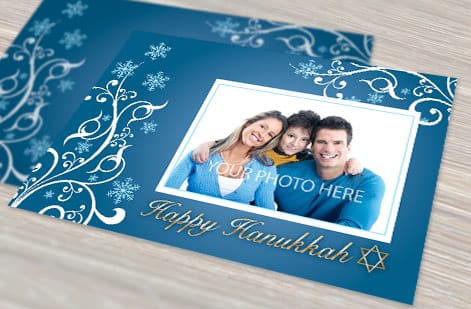
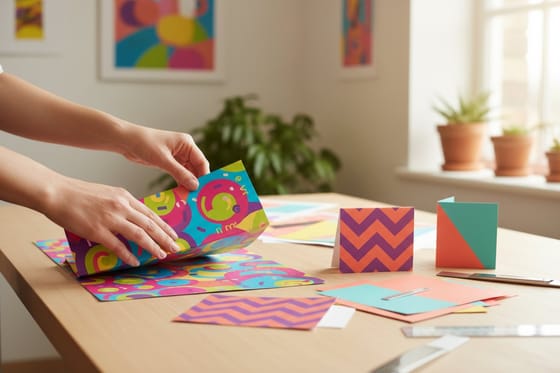
What a finished birthday card looks like



Explore more
Where to go next
By the numbers
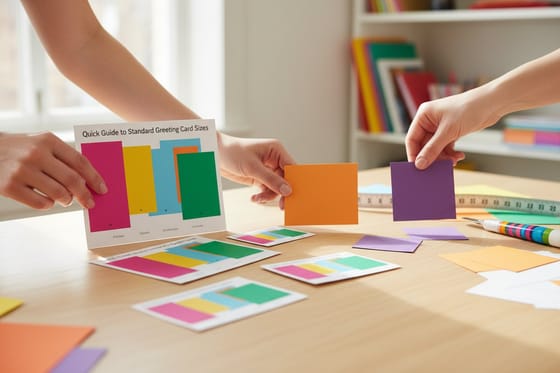
Three standard card sizes, sixty plus stocks
Common Questions
Common questions about greeting card templates
Is there a Word template for greeting cards?
Yes, Microsoft Word carries built-in card templates and they work well for cards printed at home on letter paper. For a professionally printed card they have two gaps: Word cannot set bleed, so artwork will not run past the trim, and it works in RGB rather than CMYK. Either design with a clear border so nothing needs to bleed, or rebuild the layout at the flat size in a tool that exports a CMYK PDF with bleed.
How can I make my own greeting cards for free?
Start from a correctly sized template rather than a blank page, since the geometry is the part that goes wrong. Pick flat or folded and a standard size, build the document at the flat dimensions, which for a 5 by 7 folded card means a 10 by 7 inch sheet, and mark the fold before you place anything. Lay out the cover, the inside spread and the back in reading order, place photos at 300 DPI, then print a dummy and fold it. Designing costs nothing, and only the printing carries a price.
Where can I find free printable greeting card templates?
The free design templates at 4OVER4.COM come sized to each card with the fold line, the 0.125 inch bleed and the safe margins already in place, so your artwork lines up with both the crease and the cut. That is the difference that matters between a printable template and a press-ready one. If you would rather build your own, set the file to the flat size, add the same bleed and margins, work in CMYK and export a flattened PDF.
What is a greeting card template?
A greeting card template is a pre-sized layout file set to the finished dimensions of a card, with the fold line, bleed, and safe margin already marked so you only add your artwork and words. For a folded card the template is a flat sheet twice the finished width with a guide down the middle, so a 5 by 7 inch folded card starts from a 10 by 7 inch flat template. Templates save you from rebuilding the geometry every time and make sure your design lines up with the fold and the cut. At 4OVER4.COM you can start from our free design templates or set up your own file to these specs.
Which greeting card template size fits a standard envelope?
Match the template to the envelope before you draw anything, because the envelope is the part you cannot resize later. A 5 by 7 inch card, flat or folded, goes into an A7 envelope at 5.25 by 7.25 inches, and that is the pairing most birthday, anniversary, and holiday cards use. An A2 card finishes at 4.25 by 5.5 inches from an 8.5 by 5.5 inch flat sheet and mails in an A2 envelope at 4.375 by 5.75 inches, the usual pick for thank-you notes. A 4 by 6 inch flat card fits an A6 envelope at 4.75 by 6.5 inches and is the cheapest of the three to mail in volume. The pattern behind all of them: the envelope runs about a quarter inch larger than the card on both dimensions so the card slides in without bending a corner. Build the template at the flat size, add 0.125 inch bleed on every edge, keep text 0.125 inch inside the trim, and the finished card lands in the envelope you planned for.
How do I choose the right greeting card size and fold?
Start with how the card will be used and mailed. A 5 by 7 inch folded card is the most popular for personal and holiday greetings because it feels substantial and pairs with A7 envelopes. A 4 by 6 inch card is compact and economical, good for photo cards and save-the-dates. A5 suits a European-standard feel. For the format, a flat card prints on two sides and ships slim, while a folded card gives you four surfaces and a warmer inside message, which is why folded cards dominate birthdays, anniversaries, and holidays. Decide the size and fold first, because they set the template and the envelope you will need.
What does it cost to print greeting cards and how are prices set?
Designing from a template costs only your time. Printing price scales with quantity, size, paper stock, fold, and finish: larger runs lower the unit price, and premium stocks or coatings add a little per card. You set each option in the configurator and the total updates live as you adjust it, so you can see exactly how a heavier stock, a folded format, or a bigger run changes the number before you commit. Greeting cards are cost-effective in bulk, which makes them practical for holiday sends, event thank-yous, and business card sets alike.
What sizes, stocks, and finishes are available for greeting cards?
You can print greeting cards flat or folded in sizes such as 4 by 6, 5 by 7, and A5, on 60-plus paper stocks that range from smooth matte to bright gloss and heavier premium covers. Finishes include gloss and matte coatings, and specialty options for a raised or metallic look on select cards. Occasion-specific lines cover birthdays, anniversaries, holidays, and more, all built on the same template logic. Use the live specs panel below to see the exact sizes, stocks, and coatings available and how each choice affects the price.
How long do greeting cards take to print and ship?
Turnaround depends on the size, stock, finish, and quantity you choose, and the configurator shows the available production speeds when you build your order. Simpler flat cards on standard stock move faster than premium folded cards with special finishes. 4OVER4.COM ships from New York with a 99.8 percent on-time record, so to meet an occasion or event date, set your card options first and pick the production speed that lands them in time.
Do I need bleed and a fold guide on a greeting card template?
Yes to both when the card is folded or has art to the edge. Add 0.125 inch of bleed on every side so a slight cutting shift never leaves a white sliver, and place a guide exactly on the fold line so nothing important lands on the crease. Keep your text and key art inside a safe margin, and remember that on a folded card the reading order changes as the card opens. Our bleed and trim guide shows how to set these lines in your design software.
Can I use a free template and still customize the card?
Yes. Our free design templates give you a correctly sized starting layout with the fold, bleed, and margins in place, and you can swap in your own photos, colors, and wording from there. Templates are a shortcut to the geometry, not a limit on creativity, so you keep full control of the artwork while trusting that it will line up with the fold and the cut. If you prefer to build from scratch, set your own file to the specs in the reference table and you will get the same result.
Get Started
Ready to print a card that folds and reads perfectly?
Start from a free template or your own file at 4OVER4.COM and print on the size, fold, stock, and finish your occasion calls for. Adjust every option and watch your price update live.
Legal Disclaimer
Gold Standard guarantees apply to all standard orders placed through 4over4.com. Price match requires verifiable proof of a competitor's published price for an equivalent product with matching specifications and turnaround time. Satisfaction guarantee covers manufacturing defects and print quality issues. Contact support with order number and documentation. On-time delivery rate based on tracked orders 1999 to 2026. Individual results may vary based on shipping carrier performance.
