
Double Sided Poster Printing and How To Stop the Back Showing Through


One sheet printed on both faces, or two prints mounted back to back. Which one you want depends on the stock, the file, and whether anything sits behind the poster when it hangs.
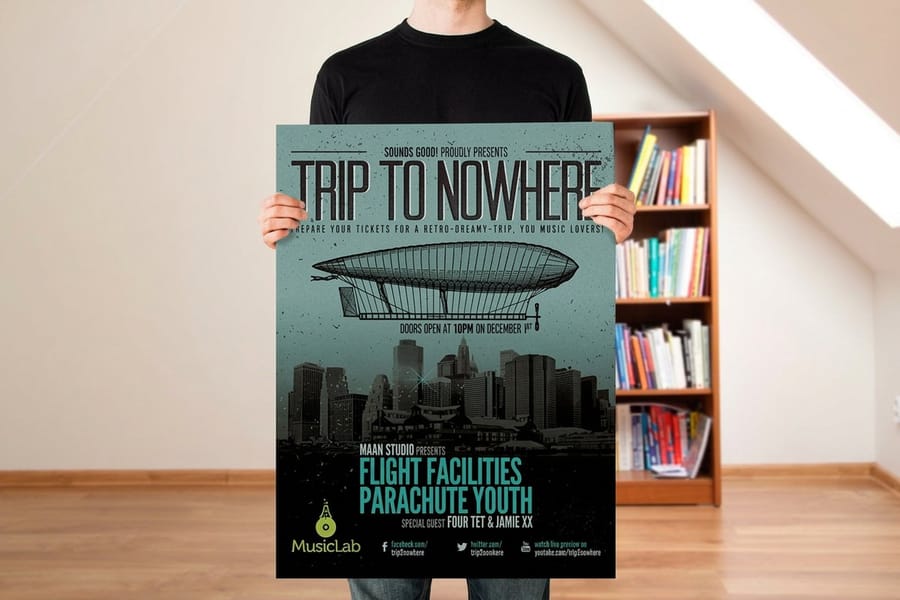
Double sided poster printing is a 4/4 order, full color on the front and full color on the back of the same sheet, and on standard posters it is a dropdown rather than a special job. What decides whether it looks right is the stock, not the press: a 70# uncoated text lets the back image ghost through, while a 14pt cover or a 15pt synthetic blocks it. For a poster that hangs in open air and is read from both directions, two prints back to back or a blockout material beats one two sided sheet.
Quick answer
Both sides on one sheet, and the stock that keeps them apart
4/4 means four process inks on the front and four on the back of the same poster. It costs a second pass, not a second poster, and it does not change the 5 business day standard production window. The variable that matters is opacity. A thin uncoated text sheet with heavy solids on both faces will ghost, a 14pt cover will not, and backlit film should never be printed two sided because it exists to pass light through. When the poster hangs free in the middle of a room, stop asking for 4/4 and start looking at blockout vinyl or two mounted prints.
What 4/4 Means When You Order a Poster
Printers write the sides as a fraction. The number before the slash is the count of process inks on the front, the number after it is the count on the back. A 4/0 poster is full color on one side and blank behind. A 4/4 is full color on both. A 4/1 puts full color on the front and black only on the back, which is the cheap way to carry an address, a schedule or a set of terms on side two.
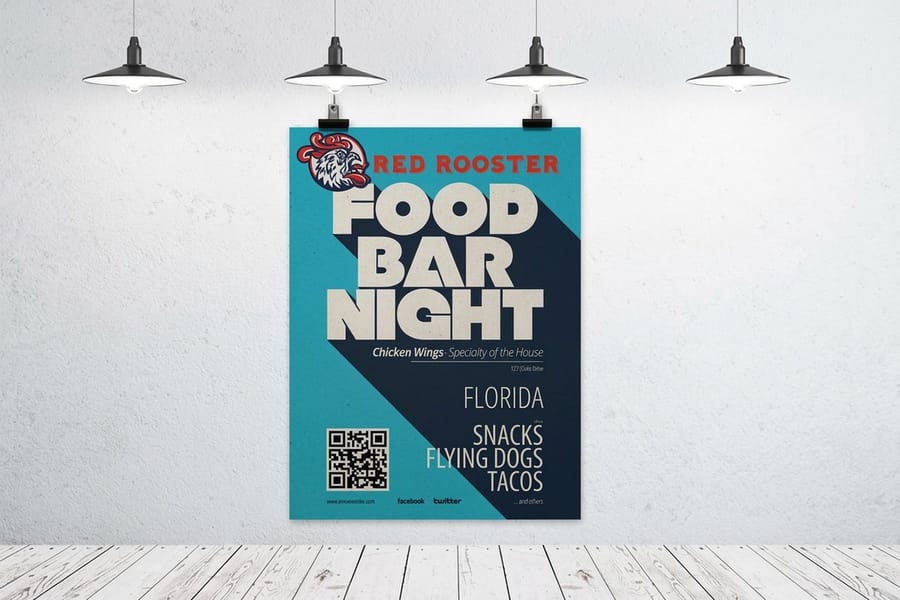
On standard posters the choice sits in the configurator with everything else. Six sizes run from 11" x 17" up to 22" x 28", with 18" x 24" as the size most people mean when they say poster, and a custom size on request. Nine stocks are available, from a light 70# uncoated text up to a 14pt cover in gloss, silk and uncoated finishes, plus two synthetic plastics and a backlit film. High Gloss UV coating is optional, and ten folding styles are there if the poster doubles as a large folded handout.
Turnaround does not move when you add the second side. Standard production is 5 business days, and you can step it down to 4-day, 3-day, 2-day, Next-Day or Same-Day, with Same-Day orders needing approval by noon EST. The one thing worth planning for is proofing: a two-sided file has twice as much to get wrong, and a rush level only helps if the file clears review on the first look. Browse the full range on the poster printing category if you are still deciding on a size.
Show Through Is the Whole Problem
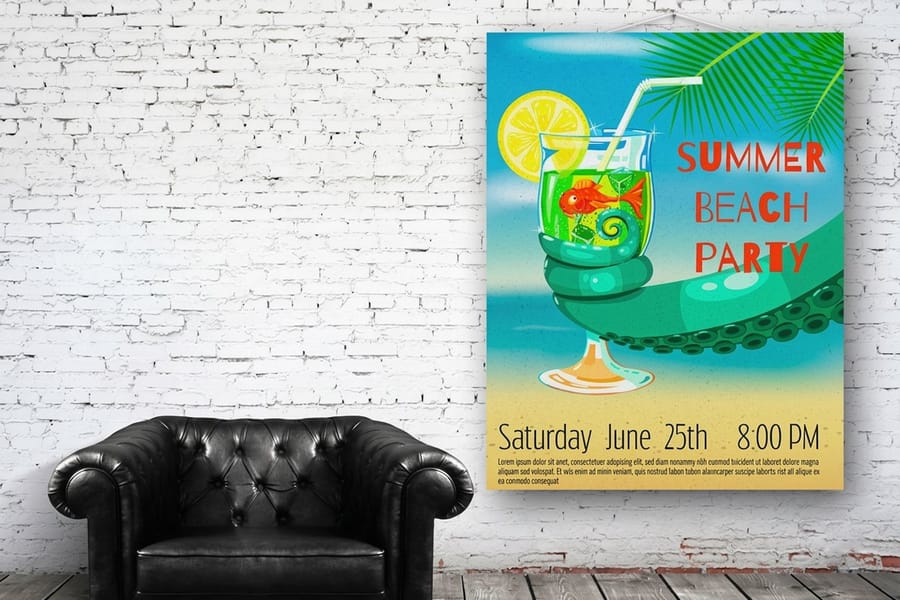
Every complaint about a double sided poster comes back to one thing. Paper is not opaque. Put a heavy solid on the back of a thin sheet, hold it up to a window, and the back image appears as a gray ghost behind the front artwork. Nothing about the press caused it and no press setting fixes it. The stock does.
Ranked by how well they hold a 4/4 job, the nine poster stocks fall out like this:
- 70# uncoated text. The lightest and the cheapest, and the one that ghosts. Fine for 4/0, risky for 4/4 with heavy coverage on both faces.
- Gloss and silk text weights. The coating adds a little opacity and a lot of color punch, but the sheet is still thin. Workable when one side is mostly type.
- 14pt cover. The safe paper answer for two-sided work. Thick enough that a full-bleed solid on the back stays behind the sheet.
- 8mil and 15pt synthetic plastic. The most opaque of the set, and waterproof and tear resistant on top of it. This is what a menu, a pool sign or a kitchen poster should be printed on.
- Backlit film. Built to transmit light for a lightbox. Never order it 4/4, because passing light through is the entire point of the material.
There is one case where a thin 4/4 sheet is exactly right, and it is the most common double sided poster of all: the window poster. Taped inside the glass, the front faces the sidewalk and the back faces the shop floor, with the glass and the daylight behind it doing the work. Nobody sees the sheet from an angle where the ghost would matter. Away from the glass it is a different job, and a moisture-facing window wants a synthetic anyway, which our guide to weatherproofing posters for outdoors covers. Finish choice pulls in the same direction, and glossy versus matte poster paper explains what each surface does to glare and to perceived opacity.
Setting Up a Two Sided Poster File
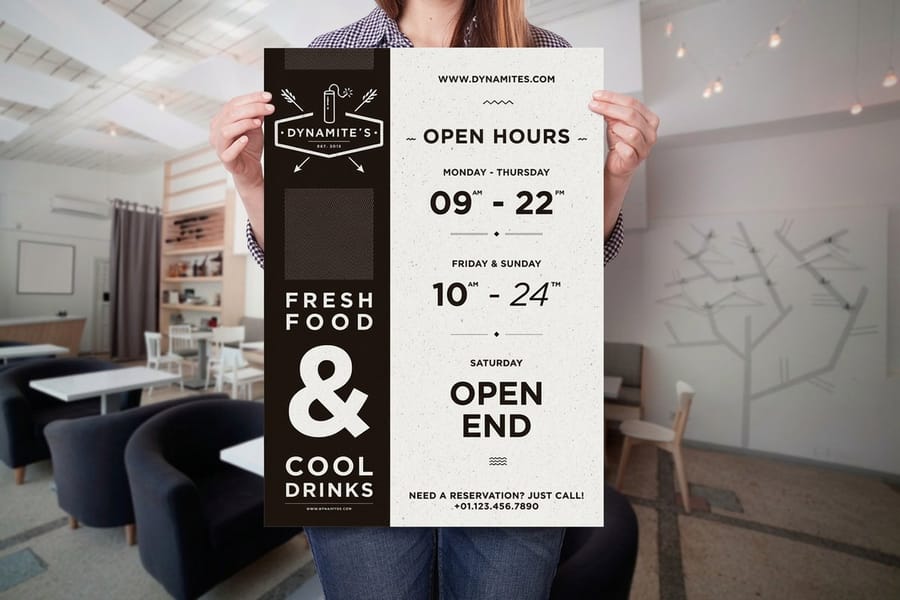
Send one PDF with two pages. Page 1 is the front, page 2 is the back, both at the same trim size and the same orientation. Two separate files work too, but a two-page PDF removes the question of which one is which.
Both pages need 1/8 inch of bleed on all four edges, not just the front, and live text should sit about 1/4 inch inside the trim on both. This trips people because the back is usually the afterthought: someone builds a careful front, then drops a phone number 2mm from the edge on page 2 and it trims off. The mechanics of that margin are in bleed and trim explained, and the blank template library gives you a file with the guides already drawn.
State the flip. A back that flips on the long edge reads right way up when you turn the poster like a page. A back that flips on the short edge reads right way up when you turn it like a calendar. Get this wrong on an 18" x 24" and side two arrives upside down, which is the single most common reprint on two-sided work and is entirely avoidable with one line in the order notes.
Two design habits save the rest. Do not build artwork that has to register front to back, such as a border on the front meant to line up with a border on the back through the sheet, because a small shift between the two passes will show. And if the back has to carry heavy solids on a thin stock, lighten the front background instead of upgrading the paper. Ghosting is caused by ink on both faces at once, so pulling one side back to type on white is often cheaper than moving from 70# text to 14pt cover. Resolution rules do not change for the second side either, and the poster resolution guide gives the pixel counts by size. Confirm the trim first against the common poster sizes guide so both pages are built at the same finished dimension.
When Two Prints Beat One Two Sided Sheet
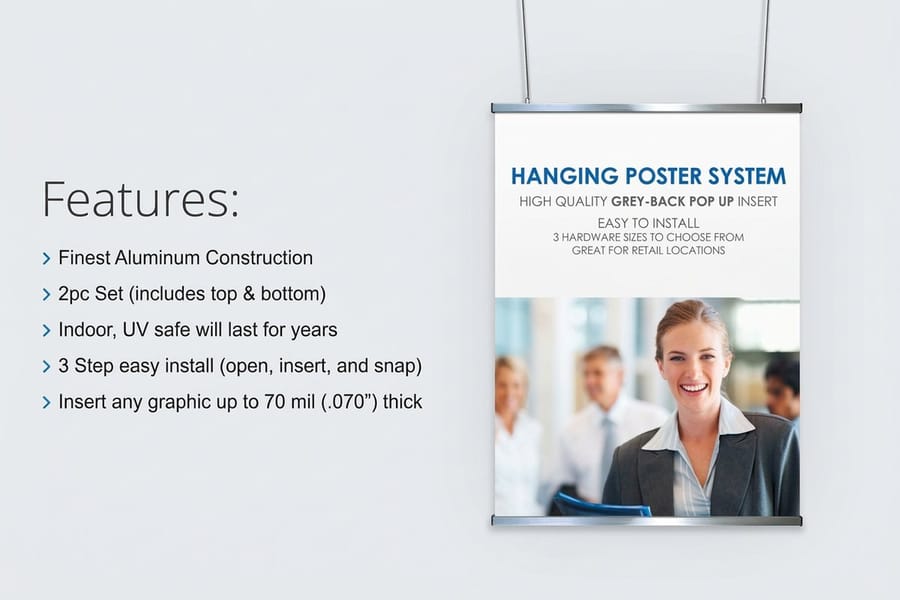
Ask where the poster hangs before you ask for 4/4. A sheet with a wall or a pane of glass behind it can be printed on both sides all day. A sheet hanging in open air, lit from behind by a store light or a skylight, will glow, and no paper choice fully fixes it. That is where a different product does the job better.
| Route | How the two faces are made | Where it belongs | Starts at |
|---|---|---|---|
| Standard poster, 4/4 | One sheet, full color both sides, nine stocks to pick from. | Windows, doors, notice boards, anywhere with something solid behind it. | $108.75 for 50 |
| Large format on blockout vinyl | 13oz smooth blockout vinyl with an opaque core that stops light bleed. | Ceiling hangs and aisle markers, up to 48" x 96". | $25 |
| Hanging poster display | 9mil polypropylene with 2.5mil matte lamination and a 2-piece hanging set included. | Retail floors, booths and lobbies, 45 sizes up to 48" x 100". | $53.83 |
| Two mounted posters, back to back | Two prints, each bonded to a 3/16 inch foam core board in white or black. | Easel signs and counter displays people walk around. | $39.99 |
| Framed poster | One printed face behind glazing in a frame. | Wall art only. There is no second face to print. | $87.86 |
Read the third column before the fourth. A hanging poster display costs more per piece than a paper poster and earns it in exactly one situation: the piece hangs free and gets seen from both sides, and the synthetic film keeps it flat instead of curling every time it comes down and goes back up. Large format posters on blockout vinyl are the answer at ceiling scale, where the same job on paper would be translucent and floppy.
Mounted posters are the low-tech version and often the right one. The print bonds to a 3/16 inch foam core board that keeps it dead flat on an easel or a counter, and two boards placed back to back give you a rigid two-sided sign with zero show-through by definition, because there is a board in the middle. Framed posters are the one route that closes the door: a frame has a front and a back, and the back is hardware. Compare the big-format options across the large format printing category when the piece has to be read from more than a few feet away.
Wally explains double sided posters
Hold it up to the light before you order 50 of them
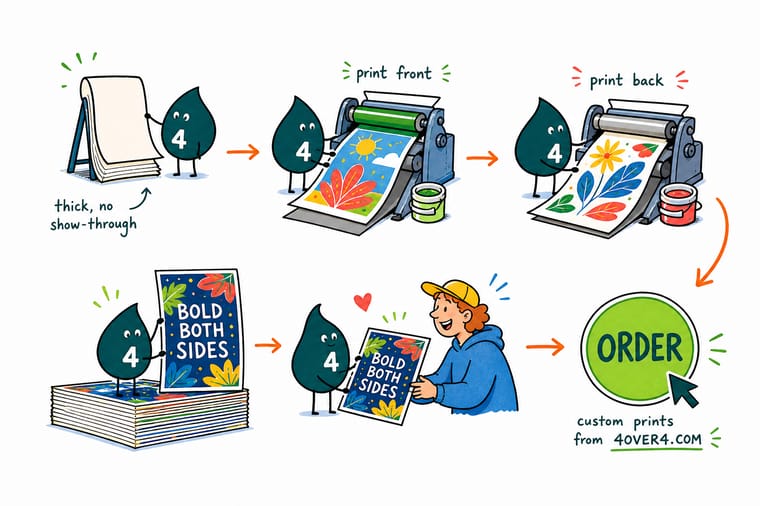
Wally prints the same artwork twice, 4/4 both times. The thin 70# text sheet goes up to the window and the back image swims through it. The 14pt cover goes up next and nothing shows. That is the whole decision. Tape it inside a shop window and either one works, because the glass and the wall behind it hide the second side. Hang it from a ceiling with a light behind it and only the thick stock, a blockout vinyl or two prints back to back will hold up.
Configure a double sided poster →Specs and pricing
Sizes, stocks and starting prices for two sided work
Compare the three products that handle a two sided poster, with live configuration choices and starting prices straight from the 4OVER4.COM configurator.


Print it
Order a poster that reads from both directions

Explore more
Where to go next
By the numbers
Our press record behind a two sided poster
Common Questions
Your double sided poster questions, answered
Can 4OVER4.COM print posters double sided?
Yes. On standard posters you choose full color on one side (4/0) or on both sides (4/4) in the same configurator where you pick the size and stock. It covers all six standard sizes, 11" x 17", 12" x 18", 14" x 22", 16" x 20", 18" x 24" and 22" x 28", plus a custom size on request, and it does not change the standard 5 business day production window. Pricing starts at $108.75 for 50 standard posters, roughly $2.18 apiece, and the per-poster cost keeps easing as the quantity climbs.
Does printing both sides cost twice as much?
No. You are paying for a second pass and a second side of ink coverage on the same sheet, not for a second poster. Handling, stock and shipping are unchanged, which is where a large share of a poster order actually sits. The bigger cost jump usually comes from the stock, because a 4/4 job that has to stay clean often needs a 14pt cover or a synthetic instead of a 70# text.
Which poster stock stops the back showing through?
A 14pt cover is the safe paper answer, and the two synthetic plastics, 8mil and 15pt, are the most opaque options of the nine stocks we run. A 70# uncoated text is the thinnest and the cheapest, and it is the one most likely to ghost when both sides carry heavy solids. Backlit film is the outright exception: it is engineered to pass light through for a lightbox, so it should never be ordered 4/4.
How do I set up a double sided poster file?
Supply one PDF with two pages. Page 1 is the front, page 2 is the back, both at the same trim size and the same orientation, each with 1/8 inch bleed on all four edges and live text held about 1/4 inch inside the trim. Tell us which edge the back flips on, long edge or short edge, because an 18" x 24" back that arrives upside down is almost always a short-edge flip assumed where a long-edge flip was meant. Start from a correctly sized layout in the blank template library if you want the bleed and trim already in place.
Can large format posters be printed on both sides?
The dependable route for a big two-sided hang is 13oz smooth blockout vinyl, one of the 10 large format stocks. Blockout material carries an opaque core that stops light bleed, which is the failure mode that ruins a paper poster hung in open air with a window or a light behind it. Large format posters start at $25 for a single print and run from 11" x 17" up to 48" x 96", with a custom Any Size option from 8" to 59.5" wide.
Can a mounted or framed poster be double sided?
No, and it is worth knowing before you order. A mounted poster is bonded to a 3/16 inch foam core board, so only the outward face is printed, and a framed poster shows one face behind glazing. If the piece has to read from both directions, order two mounted posters and put them back to back, or use a hanging poster display, which prints on 9mil polypropylene with 2.5mil matte lamination and ships with the hanging hardware.
Get Started
A hanging poster display costs $53.83 in 4 business days
Pick your size, choose a stock heavy enough to hold the back image, set the run to 4/4, and upload one PDF with the front on page 1 and the back on page 2.
Legal Disclaimer
Gold Standard guarantees apply to all standard orders placed through 4over4.com. Price match requires verifiable proof of a competitor's published price for an equivalent product with matching specifications and turnaround time. Satisfaction guarantee covers manufacturing defects and print quality issues. Contact support with order number and documentation. On-time delivery rate based on tracked orders 1999 to 2026. Individual results may vary based on shipping carrier performance.
