
Custom Poly Packing Tape That Seals and Brands Every Box You Ship


Pick the width for your cartons, turn the logo into one or two flat ink colors, and build a repeat that reads wherever the blade cuts. The same roll then seals the box and carries the brand from the dock to the doorstep.
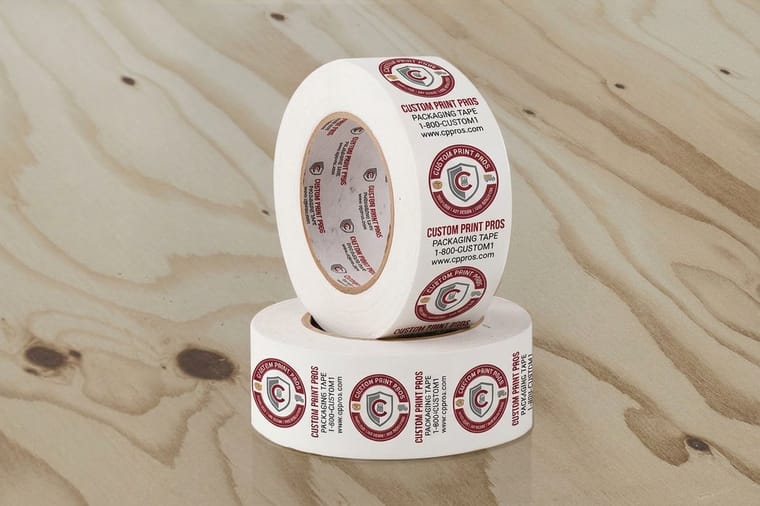
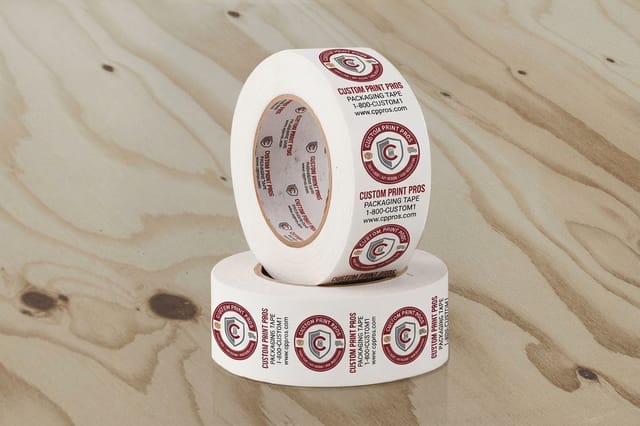
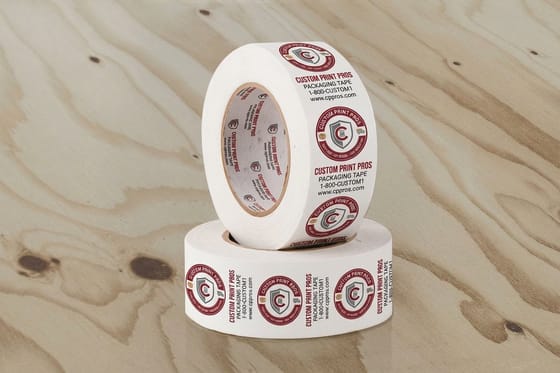
Custom poly packing tape is polypropylene carton sealing tape printed with your logo, repeating down the roll. At 4OVER4.COM it comes on white or clear pressure sensitive polypropylene, 2 inches wide in 55 or 110 yard rolls at 36 rolls a case, or 3 inches wide at 24 rolls a case, printed in one or two ink colors picked from a list of Pantone shades. One case starts at $347.11, with a free online proof and a standard production time of 20 business days.
Quick tips
How the tape seals the box, and where the logo lands
A center strip closes the seam; an H pattern also covers the two end seams and puts three printed surfaces on top of the box. The ink sits between the film and the adhesive, so the dispenser blade and every scuff in transit pass over plastic and not over the logo. Build the repeat to the roll width and it reads on every strip.
Watch it printed
See printed packaging tape made, in 86 seconds
What poly packing tape is and why it holds
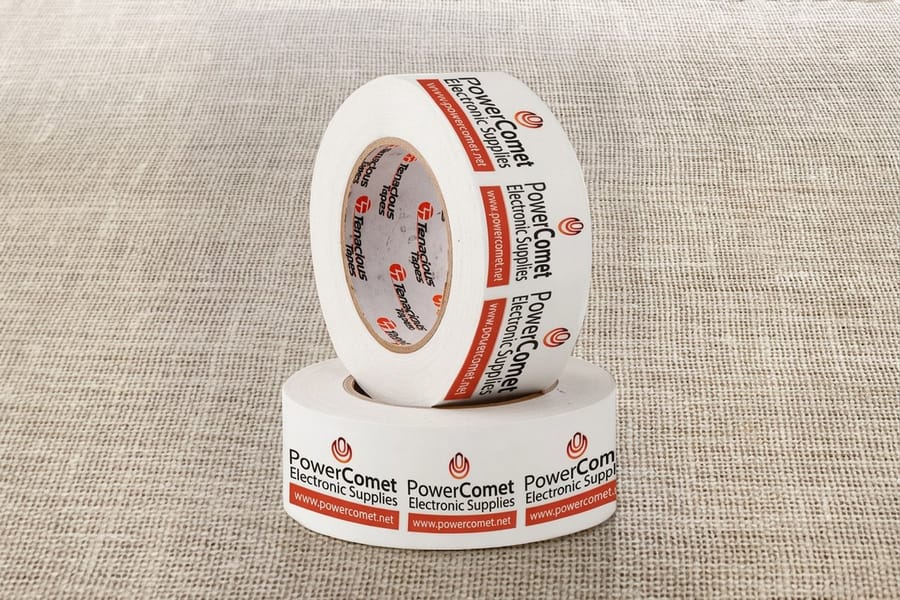
Poly packing tape is the clear or printed plastic tape running down the center seam of almost every carton that arrives at a door. The film is polypropylene, stretched in two directions so it resists tearing under tension, and it carries an adhesive on one face that grabs on contact instead of needing water or heat. That combination is why it dominates carton sealing.
Custom poly tape takes the same film and prints it: your logo, your color and your handling instruction, repeating every few inches down a roll that is already part of your packing process. You add no step and no new cost line; you upgrade a material you already buy. 4OVER4.COM has printed 10 billion+ cards since 1999 for 150,000+ businesses, and a carton sealed with branded tape is recognized on a porch, on a loading dock and in every unboxing video. Custom business tape works the same way across every format we print.
- The film does the structural work. Biaxially oriented polypropylene holds its shape when a loaded box flexes, so the seam stays closed through stacking, strapping and the drops that happen in every network.
- The adhesive decides where it sticks. Acrylic adhesive stays stable in heat and cold and clear for years. Hot melt rubber grabs harder and faster on recycled corrugated with a dusty surface.
- The print layer rides underneath. On a printed roll the ink sits between the film and the adhesive, so the logo that leaves your dock is the logo that arrives.
- The seal pattern sets the strength. A single center strip is enough for light goods. An H pattern over both end seams is the standard for anything heavy.
Printing your brand on the seal

The seal is the one part of a package a recipient must touch. They look at it, they cut it and they remember what was on it. Printed tape turns the seam into the first line of the brand experience before the box is even open.
Plan for a strip only 2 or 3 inches tall, read at arm's length: a wordmark, one supporting element and nothing else. If you also need a handling instruction, print a second roll instead of crowding the first. Pair the tape with Custom Business Cards inside the box so the recognition on the outside has something to land on when the flaps open.
- Lead with the wordmark. A name read in half a second beats an icon nobody has learned yet.
- Own one color. A solid brand field across white film reads from farther away than any detail.
- Repeat on a short pitch. A design that restarts every 4 to 6 inches survives being cut anywhere.
- Keep the URL short. A bare domain reads cleanly; a deep link with parameters does not.
- Leave breathing room. Art that touches the edge of the film looks trimmed when the roll tracks slightly off center.
Branded tape also works as a security feature. A carton wrapped in a distinctive printed seam is harder to open and reseal without leaving evidence, which is why warehouse teams notice when one arrives with plain tape over the top.
Choosing width, thickness and adhesive
Three specs decide whether a roll performs on your line. Width sets how much print you get and how much flap you cover. Thickness sets how much abuse the seal survives. Adhesive sets how well it bonds to your corrugated.
Width. Two inch tape is the default for cases under about 30 pounds and fits every standard hand dispenser and case sealer. At 4OVER4.COM it comes in 55 or 110 yard rolls, 36 rolls to a case. Three inch tape covers more of the flap and gives the artwork half again as much room, in the same two roll lengths at 24 rolls to a case, which is the right call for large cartons and for tape that does real branding work.
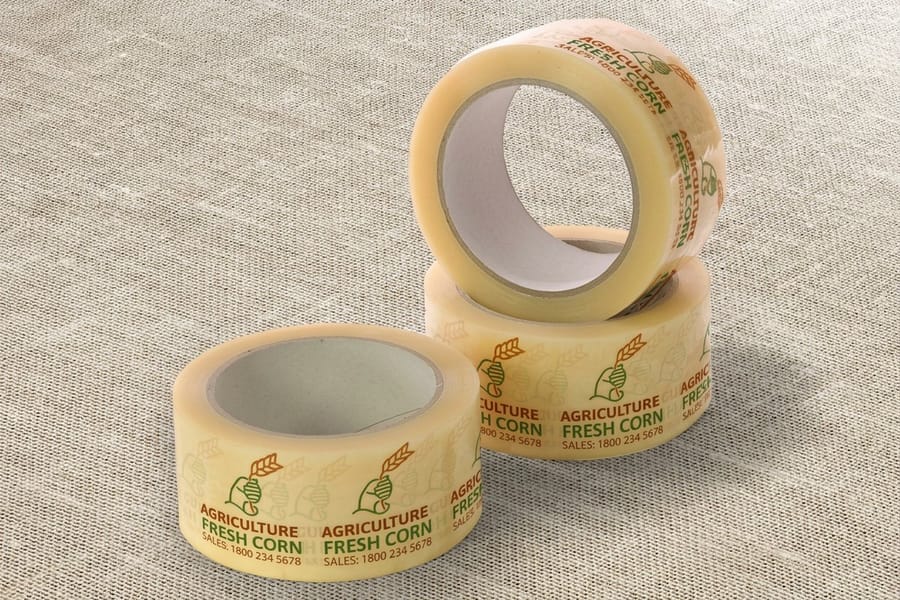
Film color. White polypropylene gives the ink a solid ground and hides the corrugated underneath. Clear polypropylene lets the brown box show through, so a dark ink in a bold wordmark carries it best.
Thickness. Tape gauge is measured in mils, film plus adhesive. Light gauge suits lightweight parcels on short routes; heavier gauge suits dense product, long routes and cartons stacked deep on a pallet. When in doubt, go up, because a failed seam costs far more than the tape.
Adhesive. Match the adhesive to your box, not to a catalog picture. High recycled content corrugated has a loose, fibrous surface that hot melt grips better, and cold storage favors acrylic, which stays flexible when the temperature drops. The printed rolls from 4OVER4.COM are pressure sensitive, so they need no water. Kraft tape is water activated and paper based, and worth comparing side by side.
Designing tape art that reads on a moving line

Tape art is a long, narrow, repeating format, applied by a person moving fast. Nobody positions a roll to center the logo, so the design has to look intentional wherever the blade cuts and survive a slight stretch as it comes off the dispenser.
Build the artwork as a repeating tile the width of the roll, and check that the right edge of the tile meets the left edge cleanly. Set type large and bold, keep strokes thick, and skip fine serifs and hairlines that vanish under a dispenser scuff.
- Work in spot color. The tape prints one or two ink colors from a Pantone list, so pick the nearest shade to your brand color instead of sending a CMYK build.
- Mind the bleed. Extend background color past the trim so a small tracking drift never shows bare film.
- Test at real size. Print the tile on paper at 100 percent, cut a strip and lay it on a box before you approve.
- Skip tiny legal text. If you cannot read it from three feet away, it does not belong on tape.
- Plan for the cut. Assume the roll is severed mid logo and make sure the repeat still communicates.
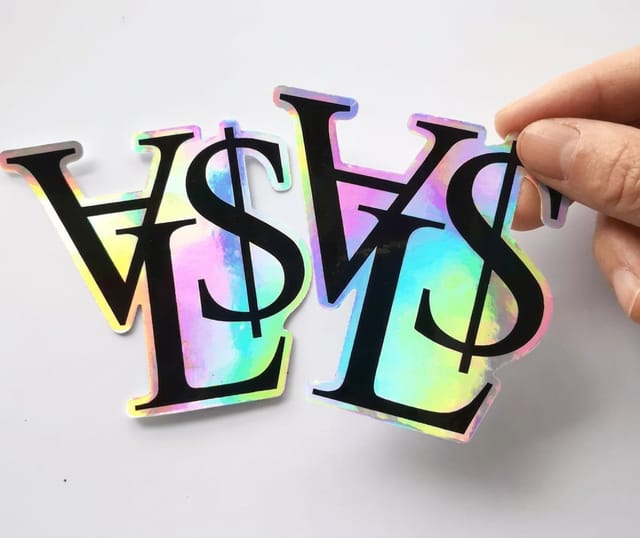
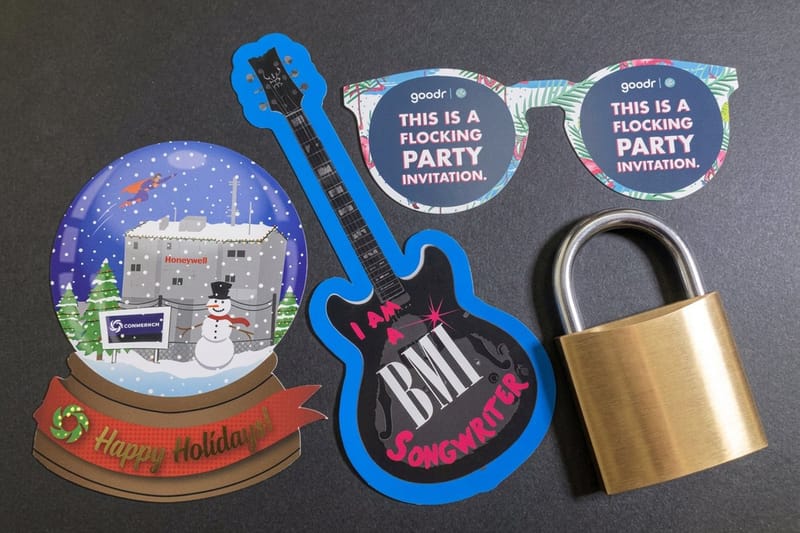
If shine is part of the look, put it on a separate seal. A single Custom Holographic Sticker across the tape line catches the light, shows plainly if someone cut the seam and resealed it, and photographs well when a customer opens the box on camera.
What custom poly tape costs and how pricing works

Printed tape prices on volume, like every printed roll good. At 4OVER4.COM you order by the case: one case of 2 inch by 55 yard tape, 36 rolls, starts at $347.11, which is under $10 a roll. Ten cases come to $2,332.75, near $233 a case, and the per case price keeps falling up to 50 cases. The live table further down shows every step for the size you pick.
Color count shapes the design more than the price list. A one or two color design on clear or white film is the way this tape prints, and it is often the strongest looking option because it forces simplicity. Keep the file stable across runs so every reorder matches the last one.
- Width scales material. A 3 inch roll uses half again the film of a 2 inch roll at the same length, and a case holds 24 rolls instead of 36.
- Length per roll drives handling. 110 yard rolls mean half the changeovers of 55 yard rolls on a packing bench.
- Order in whole cases. Tape ships and stores by the case, and you price it the same way.
- Approve the free online proof. Check the repeat, the ink colors and the orientation on the proof, and you will rarely need a second run.
Finishes that pair with printed tape
Tape rarely works alone. The strongest packaging layers two or three printed pieces that share one palette, so the carton reads as a designed object. The tape carries the seam, a label carries the identity, and a small seal carries the finish.
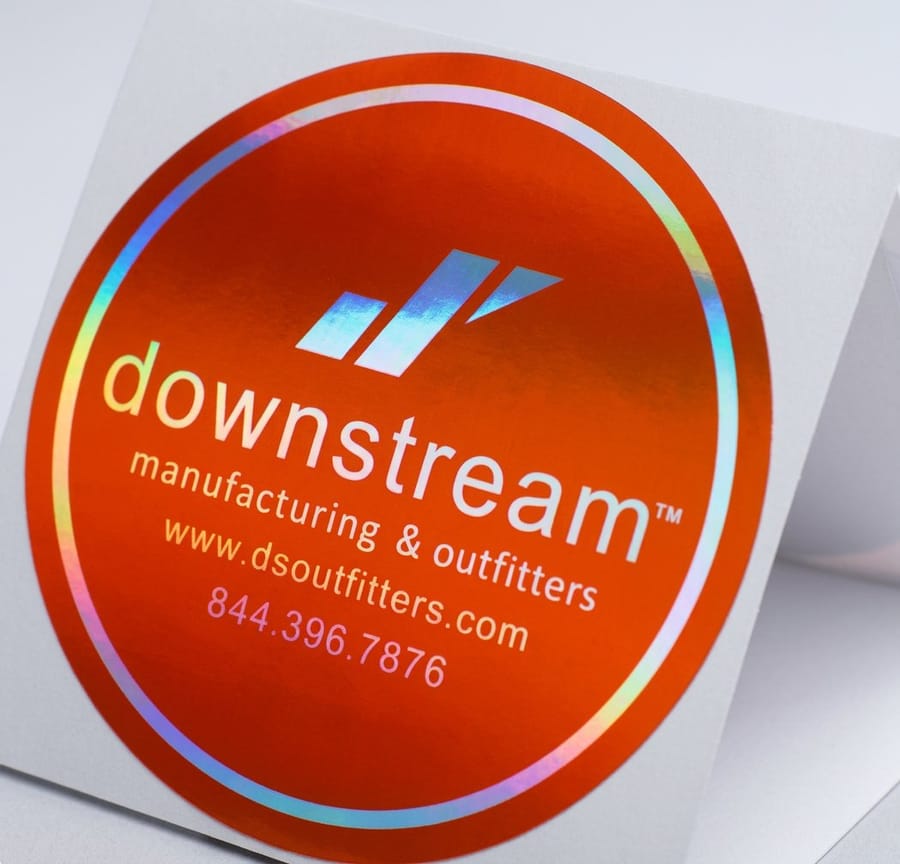
A holographic seal does two jobs at once. It catches light from every angle, which makes a plain brown carton look considered, and a sticker placed across the tape line shows at once if the seam was cut. Custom holographic stickers start at $322.98 for 100 on white gloss, white or clear BOPP, or bright silver metallic foil, with gloss or matte lamination. Browse the packaging labels range to see how the pieces fit together.
- Plain tape, shiny seal. The contrast in finish reads as deliberate design, not as a mismatch.
- One accent color. Let the tape hold the brand color and let the seal hold the metallic.
- Size the seal to the seam. A round or square sticker centered on the tape line looks anchored.
- Keep the same typeface. Shared type across tape, label and insert makes the system feel whole.
Building a branded shipping kit around the tape
Once the outside of the box does brand work, the inside should answer it. The moment the tape is cut is the most attention your customer will give your packaging, and a carton full of void fill wastes it. A kit of three printed pieces covers it:
- The tape. 2 or 3 inch rolls in one or two ink colors, from $347.11 a case, in 20 business days.
- The seal. A holographic sticker across the tape line, from $322.98 for 100, in 6 business days.
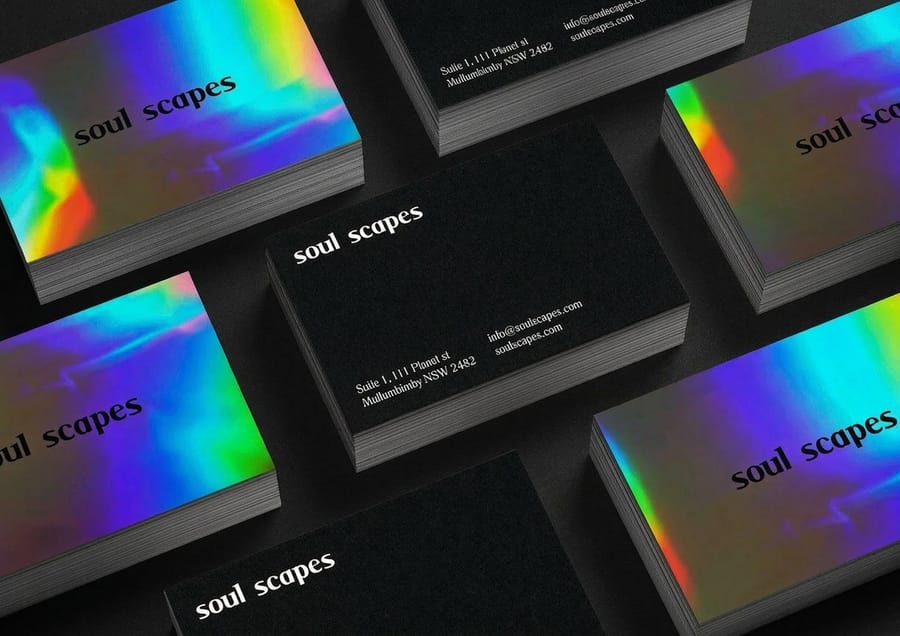
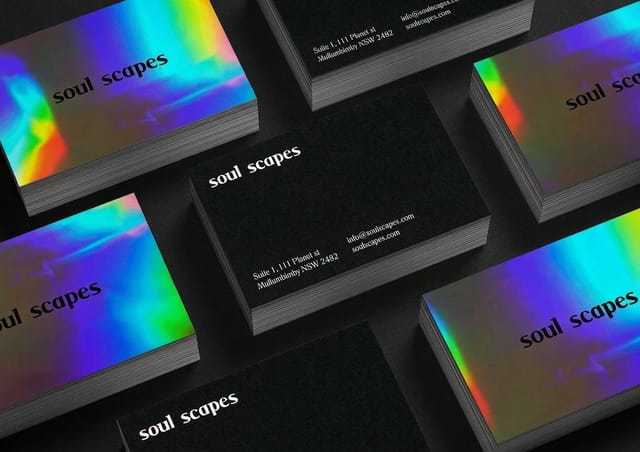
- The insert. A 2 by 3.5 inch business card with a reorder code, a care note or a signed thank you, from $17.57 for 100, in 3 business days.
Keep each insert to one job: reorder, review or instruction, not all three on one card. Inserts date faster than tape, so print them in smaller runs and reorder more often, and add a real name, because a signed line beats a marketing paragraph. For food and retail packing, our printed food wrappers guide and custom pizza boxes guide apply the same logic to a different substrate.
Artwork setup and ordering without surprises
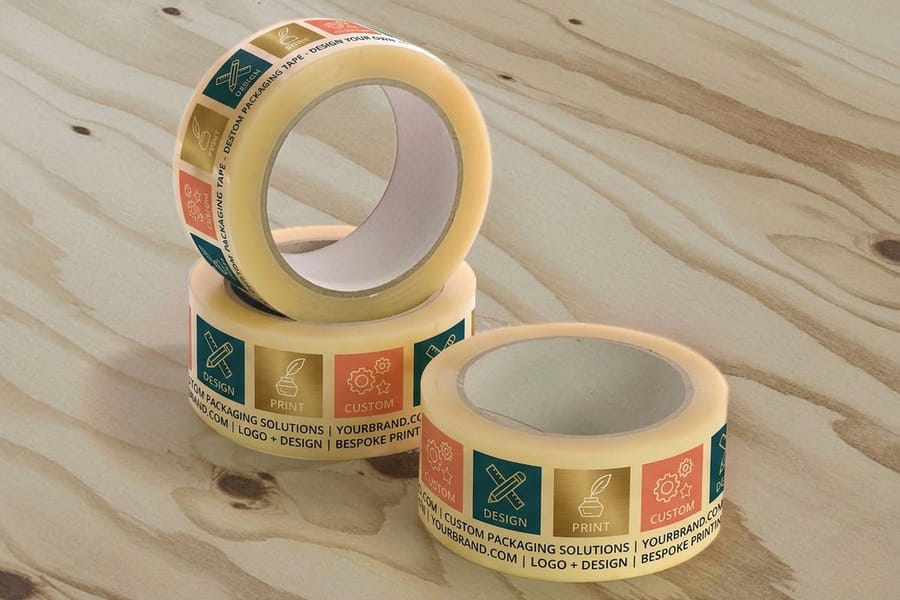
Getting tape right on the first run rests on file discipline. Supply vector art, convert type to outlines, name your ink colors from the Pantone list, and mark the repeat so the press knows where your tile starts and ends.
Before you upload:
- Confirm the roll width and design the tile to that exact dimension plus bleed on all four sides.
- Outline all fonts so nothing substitutes on a different machine.
- Flatten transparency or supply a flattened copy beside the layered file.
- Name the colors in the file, one or two, so the press has no guesswork about which blue you meant.
- Send a mock of the tape on a box, which catches orientation mistakes faster than a flat proof.
If you brand more than the carton, the same discipline carries across formats. Branded water bottles and custom gift bags use the same repeat logic, so one clean file set can dress an entire fulfillment operation. Our packing tape ordering guide walks the order end to end.
Wally helps you brand the seal
The right width, the right repeat, the right ink colors
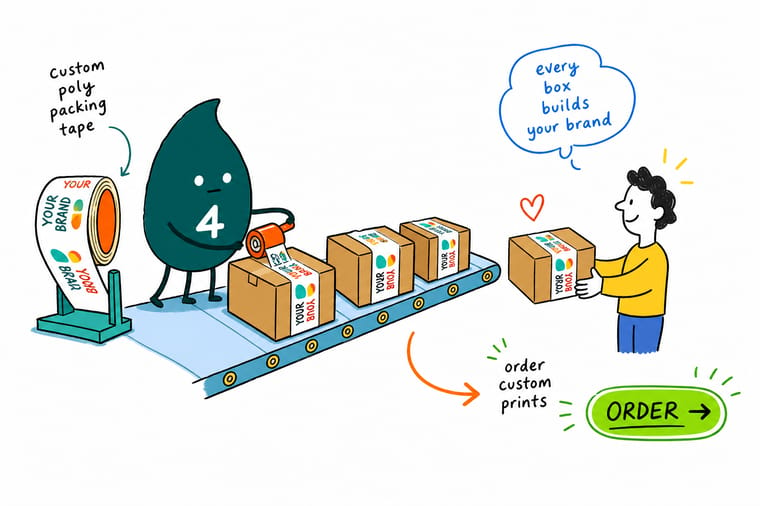
Not sure whether you need two inch or three inch? Start with the weight of your carton, then pick white film for a solid ground or clear film to let the box show. Turn the logo into one or two Pantone colors and design a tile that restarts every 4 to 6 inches so it reads wherever the blade cuts. Upload the artwork, check the free online proof, and see the case price before you commit to a run.
Design your custom tape →%22%2F%3E%3Ccircle%20cx%3D%2242%22%20cy%3D%221%22%20r%3D%2217%22%20fill%3D%22%2314b8a6%22%20opacity%3D%220.15%22%2F%3E%3Ccircle%20cx%3D%2240%22%20cy%3D%2250%22%20r%3D%225%22%20fill%3D%22%2314b8a6%22%20opacity%3D%220.1%22%2F%3E%3Crect%20x%3D%2272%22%20y%3D%22-7%22%20width%3D%2227%22%20height%3D%2210%22%20rx%3D%224%22%20fill%3D%22%2314b8a6%22%20opacity%3D%220.08%22%20transform%3D%22rotate(7%2080%2030)%22%2F%3E%3C%2Fsvg%3E)
Compare tapes
Poly tape compared with kraft, filament and barricade tape
Poly is the default carton seal, not the only tape a shipper uses. Kraft bonds into the corrugated fibers, filament reinforces, and barricade tape marks off an area instead of closing a box. The barricade tape video shows the spools on press.
| Tape | Material | What it does | How it prints | Best for |
|---|---|---|---|---|
| Poly packing tape | White or clear polypropylene, pressure sensitive | Seals the carton seam on contact, from any hand dispenser | One or two Pantone ink colors; 2 or 3 in wide, 55 or 110 yd rolls | Branding every box at the lowest cost per carton |
| Kraft paper tape | Paper, water activated | Bonds into the corrugated and shows plainly if tampered with | Good print quality on paper | Plastic free cartons that recycle with the box; needs a wetting dispenser |
| Filament tape | Film with glass strands | Reinforces and bundles with very high tensile strength | Poor, the strands break up any design | Heavy cartons and bundling, not branding |
| Barricade tape | Yellow or orange 4 mil polyethylene | Marks off a site or an entrance; does not seal boxes | Printed message on 3 or 6 in by 1,000 ft spools | Job sites, events and store entrances, from $115.33 a spool |
Specs and pricing
Printed packaging tape specs and pricing
These are the live widths, roll lengths, film types and case prices for printed packaging tape at 4OVER4.COM, straight from the configurator, so you can price a season of shipping before you approve the art.
| Quantity | Price Per Unit | Total |
|---|---|---|
| 1 | $347.11 | $347.11 |
| 2 | $302.40 | $604.80 |
| 5 | $272.53 | $1,362.67 |
| 10 | $233.28 | $2,332.75 |
| 20 | $189.39 | $3,787.89 |
| 30 | $176.79 | $5,303.65 |
| 40 | $166.70 | $6,667.83 |
| 50 | $162.16 | $8,107.79 |
Print it
Tape, seals and inserts for one branded box
See it in use
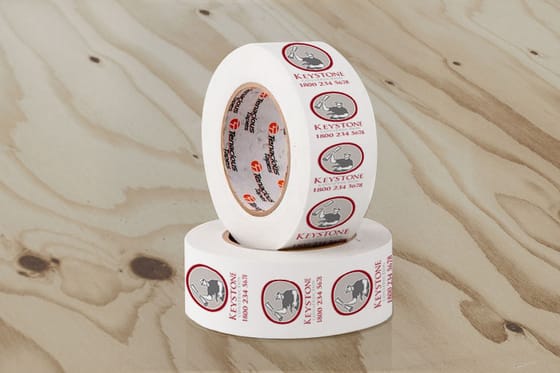
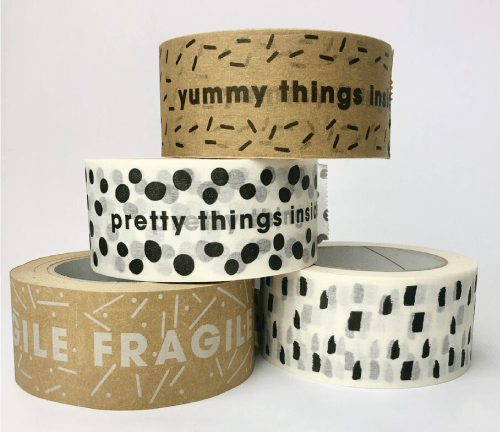
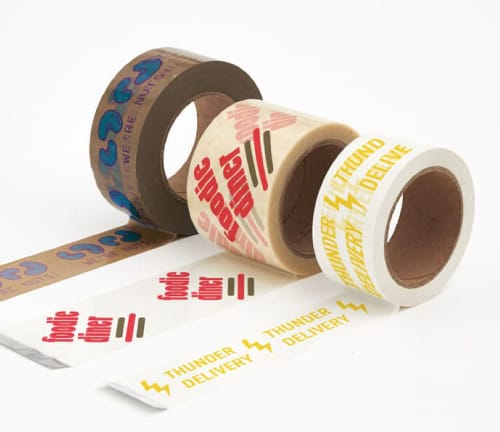
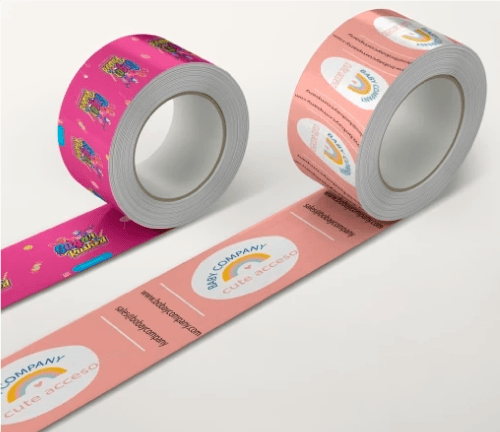
Printed tape customers have shipped
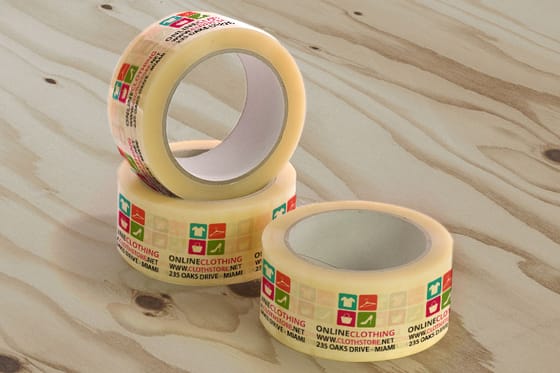
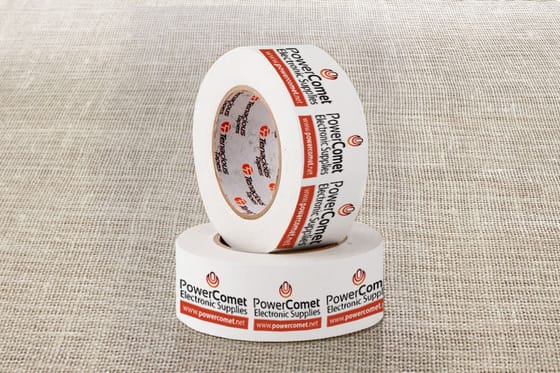
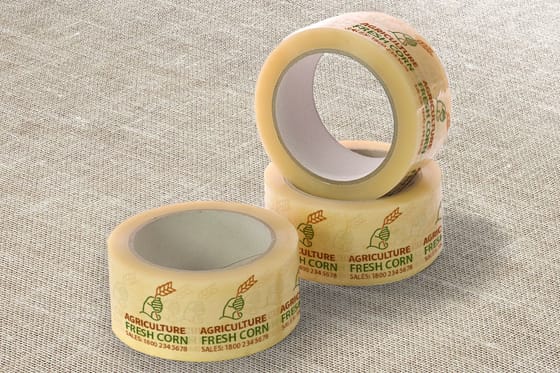
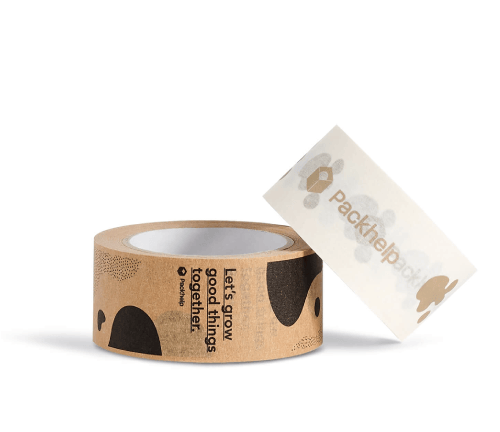

Explore more
Where to go next
By the numbers
Two widths, two roll lengths, one repeat
Common Questions
Custom poly packing tape, answered
How is poly packing tape made?
Poly packing tape is biaxially oriented polypropylene film coated with a pressure sensitive adhesive. Stretching the film in two directions gives it tensile strength without much thickness, and the adhesive bonds on contact, so no water or heat is needed. Printed versions carry the artwork between the film and the adhesive, which protects the design from scuffs in transit. See how to order custom packing tape for the full specification list.
Should I pick 2 inch or 3 inch tape for my cartons?
Start with the weight and size of the carton. Two inch tape handles standard cases under about 30 pounds and fits every common dispenser, and 4OVER4.COM packs it 36 rolls to a case. Three inch tape covers more of the flap and gives the artwork half again as much print area, at 24 rolls to a case. Both come in 55 or 110 yard rolls; when two options look close, test both on your own boxes.
What does a case of printed tape cost?
One case of 2 inch by 55 yard printed packaging tape, 36 rolls, starts at $347.11 at 4OVER4.COM. Ten cases come to $2,332.75 and 50 cases to $8,107.79, so the price per case falls as the run grows. The tape prints in one or two ink colors on white or clear film, with a free online proof and a standard production time of 20 business days.
Can printed packaging tape be full color?
No. This tape prints in one ink color or two, picked from a list of Pantone shades that runs from black and white through reds, blues, greens, browns and grays. Convert the logo to flat spot color before you upload. When the brand needs a photo or a gradient on the box, put it on a label or a holographic sticker across the seam and keep the tape to the wordmark.
How do I apply printed tape so the branding lands right?
Design for the fact that nobody aims a tape gun. Build a tile that restarts every four to six inches so the design reads wherever the blade cuts. Run a single center strip for light contents and an H pattern over both end seams for anything heavy, which also gives you three printed surfaces on the top panel. Press the tape down along its full length and let the adhesive build its bond before the carton is stacked.
Get Started
Seal the next shipment with your logo
Pick a width and a film color for your cartons, send the logo in one or two ink colors, and approve a free online proof before a single roll prints.
Legal Disclaimer
Gold Standard guarantees apply to all standard orders placed through 4over4.com. Price match requires verifiable proof of a competitor's published price for an equivalent product with matching specifications and turnaround time. Satisfaction guarantee covers manufacturing defects and print quality issues. Contact support with order number and documentation.
