
UV Coating on Business Cards Explained


A liquid polymer flashed hard by UV light turns flat cardstock into a glossy, scuff-proof card people want to hold. Full UV and spot UV are two different tools, and the choice changes how you build the file.
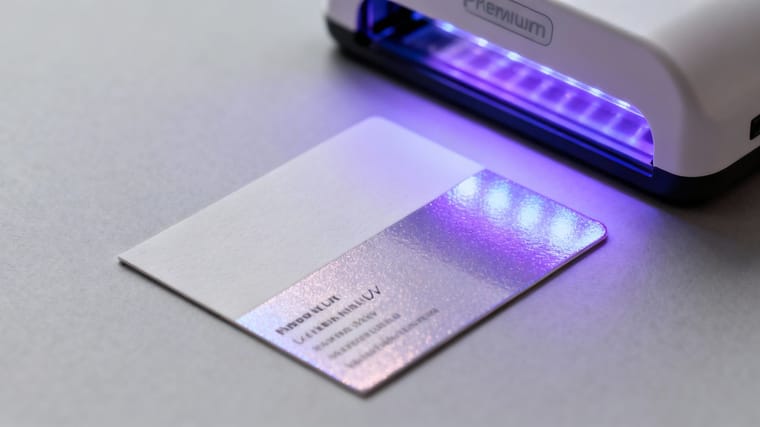
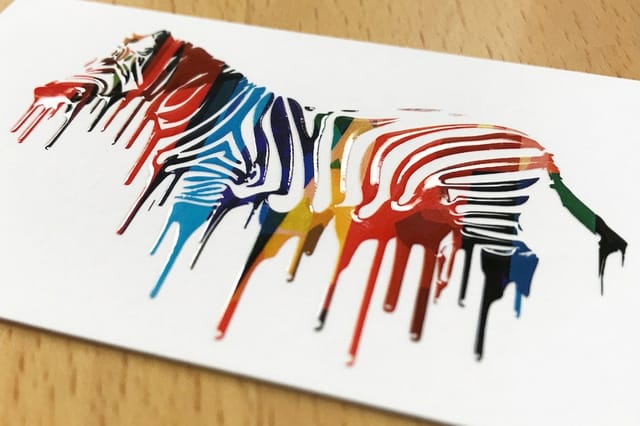
UV coating is a liquid polymer cured onto a printed business card with ultraviolet light, leaving a hard, glossy shield that makes color pop and resists scuffs, fingerprints, and moisture. Apply it to the whole card for an even high-gloss look, or as spot UV over a matte base to highlight a logo or name with raised, tactile contrast.
Quick tips
Quick tips for UV coating your business cards
UV coating adds a hard, glossy polymer layer that makes business card color pop and shrugs off scuffs, fingerprints, and moisture. Choose full UV for an even, all-over shine on photo-heavy or bold designs, and spot UV over a matte base to lift a logo or name with raised contrast. Pair it with matte or uncoated 16pt or 32pt stock for the biggest visual jump, and leave any writable area uncoated.
On our cards
UV coating on business cards, as you order it
UV coating on business cards is a clear polymer cured by ultraviolet light over the printed card, either across the whole face (full UV) or only on chosen areas (spot UV). On standard business cards you get full UV by picking High Gloss UV Coating in the Finish dropdown instead of Standard Finish, in any of the 4 sizes, from 100 cards on a 3 business day turnaround. Spot UV business cards are a separate product: 2 by 3.5 inches on 14pt gloss, 16pt gloss or 16pt silk laminated cover, with spot UV on the front, the back or both, from 500 cards on a 5 business day turnaround. Raised spot UV business cards build the gloss up on 16pt velvet laminated cover from 100 cards in 7 business days.
Specs and pricing
Business card specs and pricing
Standard business cards carry both a standard finish and high-gloss UV coating, in 4 sizes from the 2 by 3.5 inch US card to 2 by 2 inches, from 100 cards on a 3 business day turnaround. The widgets show live specs and price per unit pulled straight from the configurator.
| Quantity | Price Per Unit | Total |
|---|---|---|
| 100 | 17.6¢ | $17.57 |
| 200 | 11.5¢ | $23.07 |
| 300 | 9.15¢ | $27.46 |
| 400 | 7.96¢ | $31.86 |
| 500 | 7.25¢ | $36.26 |
| 600 | 6.77¢ | $40.64 |
| 700 | 6.43¢ | $45.04 |
| 800 | 6.18¢ | $49.43 |
Print it
Order UV and spot UV business cards at 4OVER4
Full UV on standard cards from 100, flat spot UV on 14pt or 16pt stock from 500, or raised spot UV on 16pt velvet laminated cover from 100, each 2 by 3.5 inches.
At a glance
UV finishes, side by side
Two quick comparisons: full UV against spot UV, then UV coating against lamination and aqueous coating. Read the rows against your artwork and your run: full UV suits a 100 card reorder, spot UV earns its setup from 500 cards up.
| Feature | Full UV coating | Spot UV coating |
|---|---|---|
| Coverage | Covers the entire card surface | Applied to specific, selective areas |
| Primary effect | High-gloss, uniform, bright shine | Contrast between gloss and matte |
| Best for | Photo-heavy designs, bold colors | Highlighting logos, text, or patterns |
| Feel | Smooth and slick all over | Tactile, with varied textures |
| Overall vibe | Loud, energetic, high-shine | Sophisticated, subtle, elegant |
| Durability | Excellent overall protection | Protects only the coated areas |
| Attribute | UV coating | Lamination | Aqueous coating |
|---|---|---|---|
| Protection level | High (scuffs, moisture) | Very high (tears, water) | Basic (fingerprints, scuffs) |
| Appearance | High-gloss, bright | Matte, gloss, or soft-touch | Subtle sheen, satin-like |
| Feel and texture | Smooth and slick | Thick, rigid, varied textures | Smooth but not slick |
| Cost | Mid-range | Higher-end | Most affordable |
How UV coating works: the science behind the shine
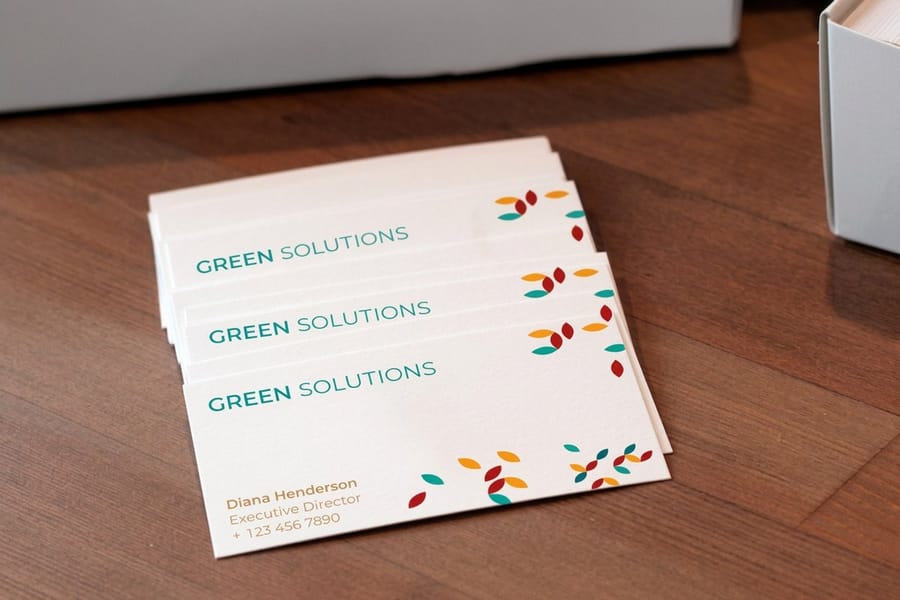
UV coating is a liquid polymer that gets rolled or screened onto a printed business card, then cured in a fraction of a second by ultraviolet lamps. The polymer cross-links and hardens on contact, so there is no drying time and no waiting. What you are left with is a brilliant, rock-solid finish bonded straight to the paper.
That instant cure is what sets UV coating apart from older aqueous or varnish finishes. Those air-dry or heat-dry, which takes longer and leaves a softer result. A UV-cured layer is harder, more scratch resistant, and noticeably sharper in gloss. You feel the difference the moment you pick the card up. To judge it before you commit, order free samples or mock the design up in the online designer.
Full UV coating vs spot UV: two different strategies
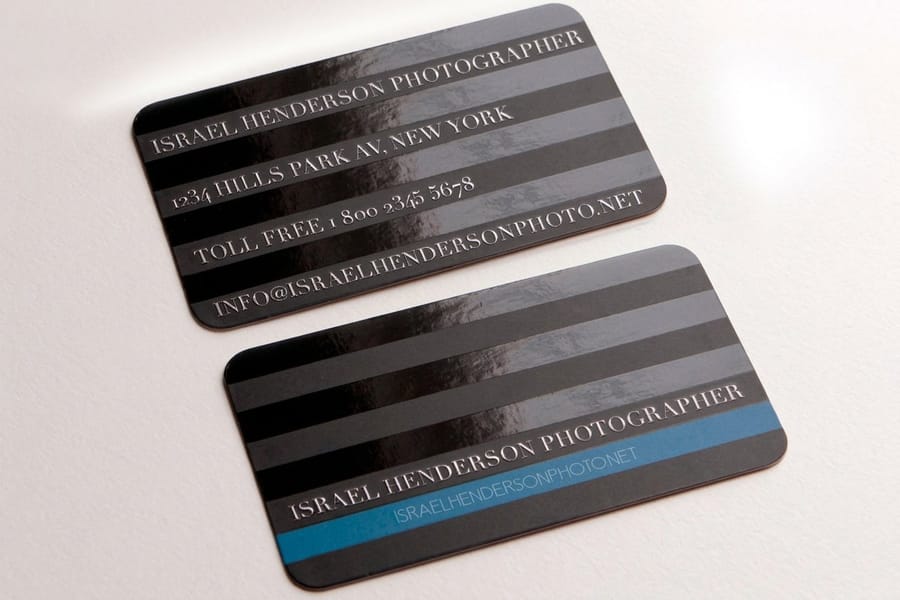
Full UV coating covers every square millimeter of the card. Both sides get the same high-gloss treatment, so colors read more saturated, text looks crisper, and the whole card feels smooth and slick between your fingers. It is the straightforward choice when you want one consistent, wet-look shine.
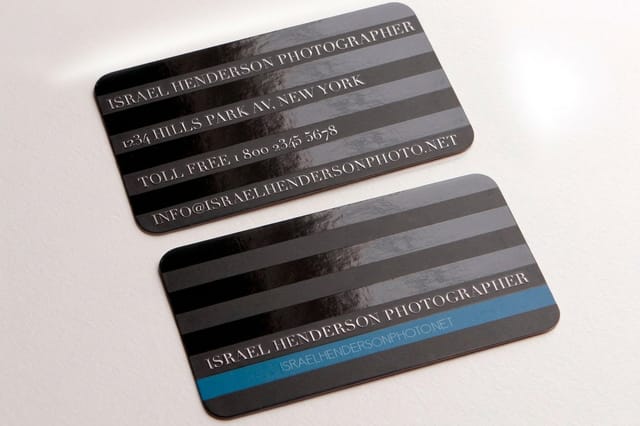
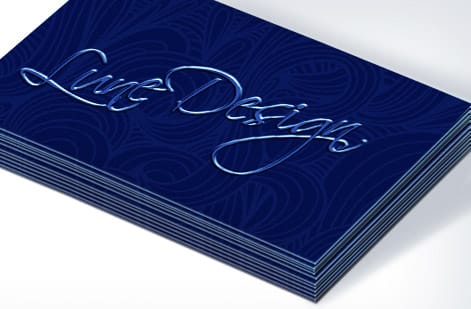
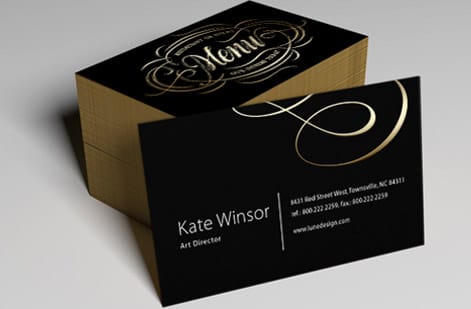
Spot UV is a different animal. Instead of coating the whole card, you pick specific areas, your logo, a graphic, your name, or a pattern, and apply gloss only there. The rest stays matte. That creates a contrast you can actually feel with a fingertip, a raised glossy element sitting against a soft matte background.
Spot UV is where business card design gets interesting. It adds a third dimension to a flat piece of paper. People instinctively touch the raised areas, flip the card over, and look closer, and those extra few seconds of attention are exactly what you want from a networking tool. For more print ideas the guide hub covers projects of every kind, browse ready-made looks in design templates, or jump straight to spot UV business cards and raised spot UV business cards.
What format to use for spot gloss design files
A spot gloss job needs two files that line up exactly, because the press uses the second one as the mask for the coating.
- The artwork file. A print ready PDF of the full color card at final size, 2 by 3.5 inches plus bleed, with fonts outlined.
- The spot gloss mask. A second PDF at the identical size and position, where every area to be glossed is solid black and everything else is white, the convention our spot UV guide walks through.
- Vector shapes only. Build the mask from the same vector logo and type as the artwork, so the gloss registers against the print within a hair.
Keep glossed type at 12pt and up, as the design tips below explain, and leave any line under 8pt out of the mask. Start from a blank template so both files share the same trim, bleed and safety lines.
How much spot gloss you can have on a card
You can gloss one small mark or most of the face; contrast and legibility set the limits. The spot gloss reads best as a minority of the card, the 20 to 40 percent coverage our spot UV guide recommends, because the matte around it is what makes it catch the light.
| Element | Spot gloss on it |
|---|---|
| Logo or monogram | Yes, the classic spot UV target |
| Name or company name at 12pt and up | Yes, large type holds the gloss cleanly |
| Contact lines under 8pt | No, glare and registration blur them |
| A writing area | No, pen ink slides off gloss |
| Front, back or both sides | Your choice on spot UV business cards |
Because the mask is a setup cost, gloss coverage barely moves the price; the run length does, which is why spot UV feels expensive on 100 cards and reasonable on 1,000.
When to choose full UV vs spot UV
Neither finish is better in the abstract. The right call depends on your artwork, your stock and your run: full UV is a finish choice on 14pt standard cards from 100, while spot UV is its own product on 14pt or 16pt stock from 500.
Full UV coating works best when:
- Your design is photo-heavy or leans on bold, saturated color that benefits from maximum vibrancy.
- You want a uniform, polished look across the whole card surface.
- Durability is a priority, since full UV gives the most complete shield against scuffs and moisture.
- Your brand identity leans sleek and modern rather than understated.
Spot UV coating works best when:
- You want to highlight a single element like a logo, monogram, or pattern.
- Your design uses a matte base, because the matte-to-gloss contrast is the whole point.
- You are going for a luxury, high-end feel that people notice on contact.
- You want a card that is tactile and interactive, rather than just nice to look at.
How much does UV coating cost on business cards
Full UV coating is usually included in the base price of a gloss business card, while spot UV is a separate finishing pass that adds cost per run rather than per card. On our order forms that shows up as a Finish setting on standard business cards from 100, against a separate spot UV product that starts at 500 cards.
That distinction explains almost everything about UV pricing. High Gloss UV sits in the Finish dropdown on the standard business card alongside Standard Finish, so switching to it changes the specification rather than adding a line item. Spot UV is different work: the press needs a mask that says which parts of the card get coated, and that mask has to register against the printed sheet within a hair. You are paying for the setup, which is why spot UV feels expensive on 100 cards and reasonable on 1,000.
That also means the per-card gap narrows as the quantity climbs. A setup cost divided across 100 cards is noticeable. The same cost divided across 1,000 is small. If you are weighing spot UV against a plain gloss card, the honest advice is to price both at the quantity you actually intend to order rather than at the smallest run.
For the current numbers at 100, 500 and 1,000, use the live pricing table further up this page. It pulls from the same configurator that runs the product page, so it moves when our prices move, and quoting a figure here would go stale within a season. Set the quantity, switch the finish, and the per-unit price updates in front of you.
What UV coating does to your card's durability
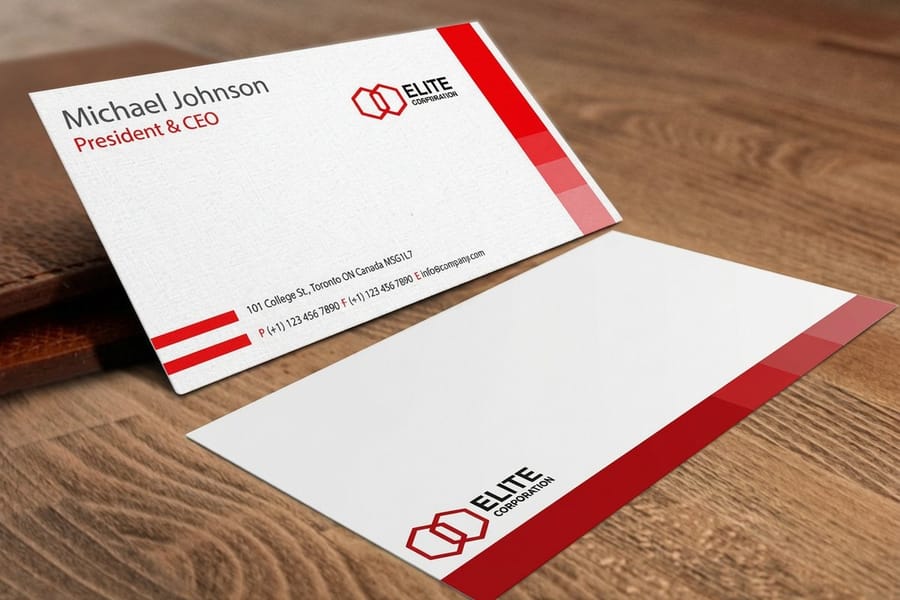
A UV-coated card is tougher than an uncoated one, and on a 14pt standard card the coating is the cheapest durability upgrade on the form. The cured polymer acts like armor against the things that wreck uncoated cards: fingerprint oils, pocket lint, moisture from a sweaty handshake at a busy event, and the general beating of living in a wallet or bag.
Uncoated or lightly coated cards start showing wear within days. Corners soften, colors smudge, and the card looks tired before it earns a second glance. UV coating stretches that timeline dramatically, keeping a card sharp and bright for weeks or months, which matters because people do not always follow up right away.
This holds up especially well in trades where cards get handled constantly, restaurant owners passing cards to suppliers, agents leaving stacks at open houses, planners working a crowded venue. In each case the coating keeps your card looking like it just came off the press. For durability tips on other formats, see how to make flyers and how to make envelopes.
Design tips for UV-coated business cards
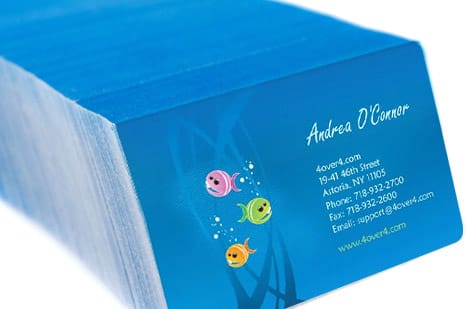
Getting the most out of UV coating starts at the design stage. You cannot drop a glossy finish onto any layout and expect magic, because some choices boost the effect and others fight it.
Color and contrast
Dark backgrounds look incredible under UV coating. Deep blacks, navy blues, and rich burgundies all gain depth under that glossy layer, which behaves almost like a magnifying glass for saturation. Light colors benefit too, but the effect is most dramatic on darker palettes.
For spot UV, contrast is everything. Pair a matte black background with a spot UV logo and the result is striking. The glossy element catches light while the matte surface absorbs it, so the eye goes straight to the coated area. That is intentional design at work.
Typography
UV gloss can make small text harder to read, because the shine throws reflections and fine type below 8pt loses legibility. Keep the details people actually need, phone number, email, and website, at a comfortable size, and favor bold weights over thin ones. If you are applying spot UV to type, stick to larger sizes, since a company name or tagline at 12pt and up looks fantastic while a 7pt email address turns into a mess. For correct bleed and safety margins, start from blank templates.
Paper stock pairing
Not every stock plays well with UV. Thicker 16pt and 32pt cards have the rigidity to carry the coating without warping, and a UV-coated 32pt card feels genuinely luxurious in the hand. Textured papers like linen or felt can take full UV, but you lose the texture under the gloss, so if you chose that stock for its feel, spot UV is the smarter move. Want a running start? Base your file on a print-ready 3D lenticular or black business card template.
UV coating vs other business card finishes
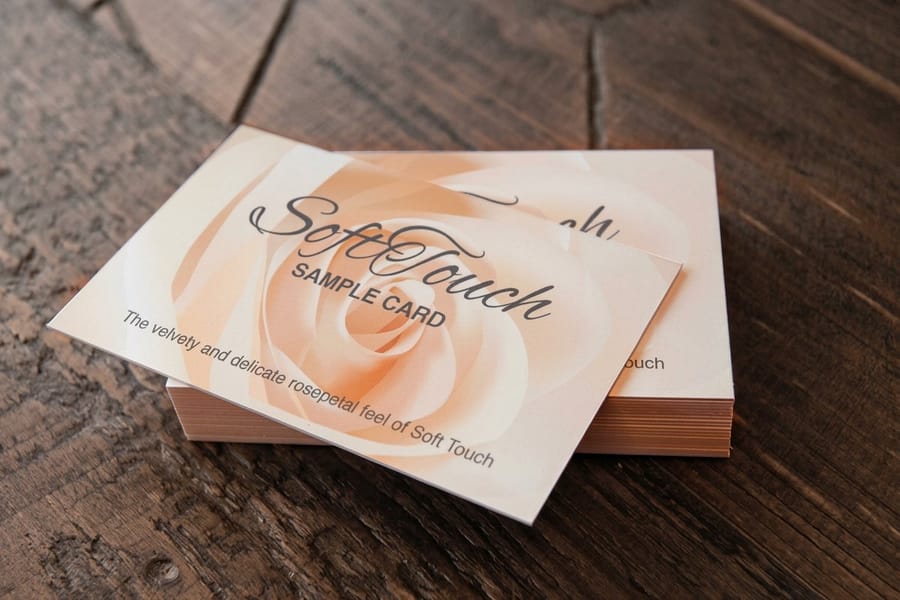
UV coating is one of five finishes you will meet on business card order forms, and each one changes both the feel and the stocks you can pick, from 14pt gloss for UV to 16pt velvet or silk laminated cover for the laminates.
Matte lamination gives a soft, velvety feel with zero gloss. It is elegant and understated, and fingerprints do not show, but it will not make color pop the way UV does. Many designers use matte lamination as the base and add spot UV on top for the best of both.
Soft-touch lamination, sometimes called velvet lamination, pushes the matte idea further into an almost suede-like feel that people love touching. Like matte, it pairs beautifully with spot UV accents.
Aqueous coating is the most basic protective layer. It is thinner than UV, less glossy, and less durable, fine for everyday print jobs but short of the depth and hand UV gives a business card.
Uncoated cards have a natural, organic feel that suits raw, artisanal brands, but they are also the most vulnerable, with no shield against moisture, oils, or scuffing.
Different products call for different finishing strategies. For creative projects beyond cards, browse how to fold a brochure, how to clean rubber stamps, and how to make custom magnets.
Mistakes that ruin UV-coated business cards
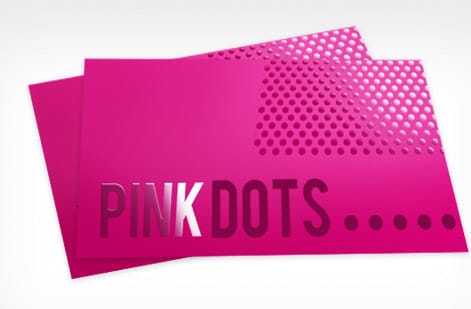
Even people who understand UV coating make avoidable errors. These are the ones the 4OVER4.COM production team sees most.
Writing on a UV-coated surface. Full UV is slick and non-porous, so pen ink slides right off. If you need a spot for appointment times or a handwritten note, leave that area uncoated. Spot UV solves this cleanly.
Ignoring glare on photos. Gloss reflects light, and on a headshot or product photo that glare can hide detail at certain angles. Test the design on a sample before you commit to a big run.
Coating already-glossy stock. Adding UV to a glossy paper is redundant and barely changes the look, so start from a matte or uncoated base to get the full benefit.
Skipping the proof. What looks great on screen can behave differently under UV curing, so always review a proof. 4OVER4.COM includes one so you can catch issues before the full run prints.
Wally explains UV coating
Gloss where it counts, matte where it helps
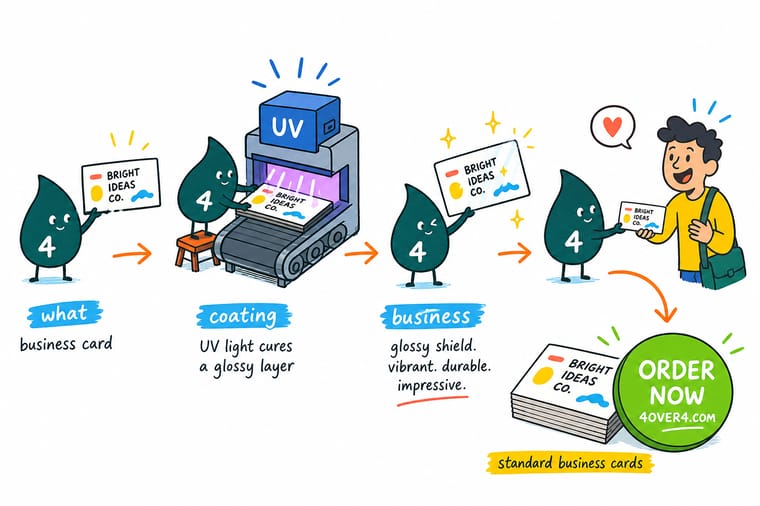
Wally treats UV coating like a clear coat on a new car: it makes the color underneath sing and shields the card from the daily beating of pockets, wallets, and sweaty handshakes. Go full UV when you want the whole card to shine, or spot UV to raise a single logo off a matte background so people reach out and touch it. Just remember to leave a bare patch if anyone needs to write on the back.
Order business cards →
See it in use
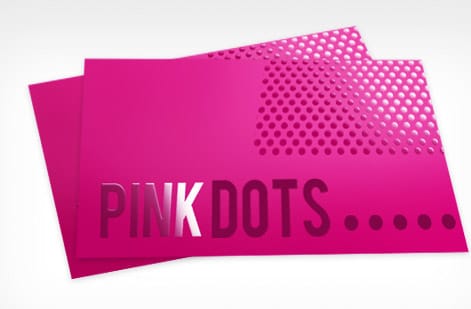
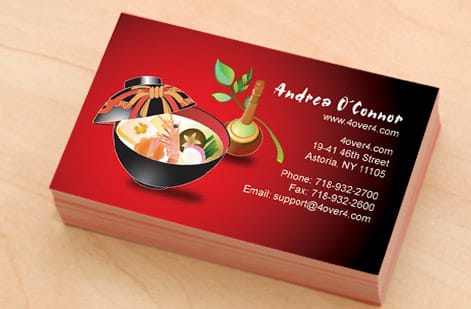
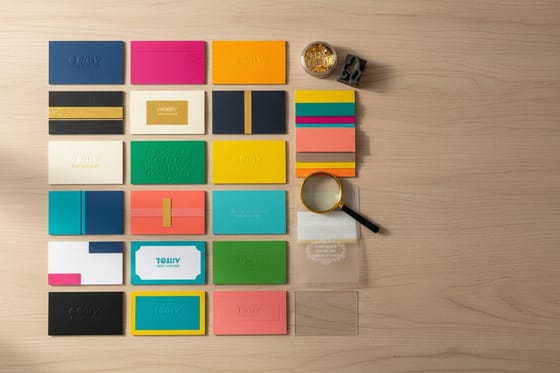
UV and spot UV cards from customer runs
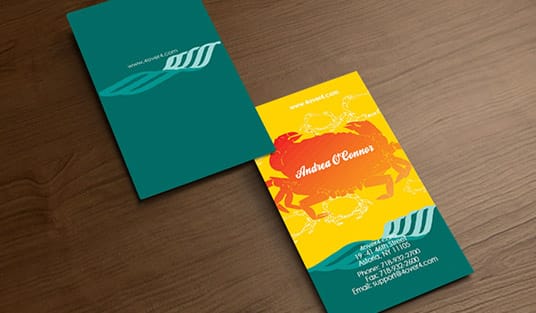
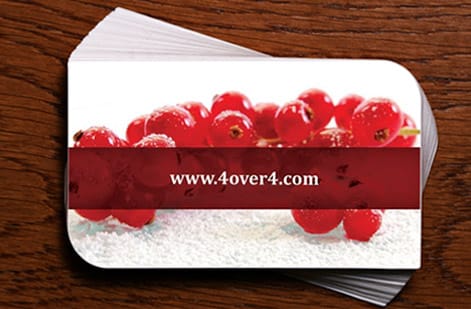
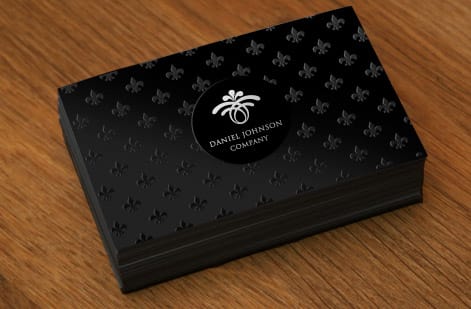
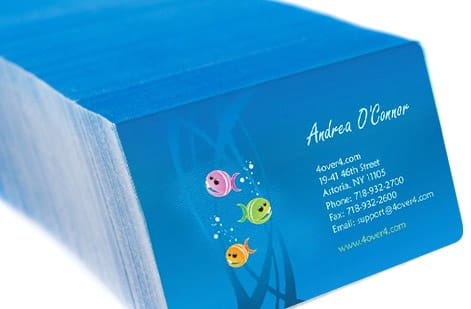

Explore more
Where to go next

By the numbers
The curing line these cards pass through
Common Questions
Common questions about UV coating on business cards
What is UV coating on a business card?
UV coating is a liquid polymer applied to a printed business card and cured instantly with ultraviolet light. It creates a hard, glossy finish that protects against scratches, fingerprints, and moisture while making colors look more vivid and saturated. You can apply it across the full card or just to specific areas, which is called spot UV.
Can you write on UV-coated business cards?
No, standard pen ink will not adhere to a fully UV-coated surface because the finish is non-porous. If you need a writable area, use spot UV coating and leave sections like appointment lines or note areas uncoated. That gives you glossy accents plus functional space on the same card.
What is the difference between UV coating and lamination?
UV coating is a liquid applied and cured directly onto the paper. Lamination is a separate plastic film bonded to the surface. UV coating is thinner and produces a sharper gloss, while lamination in matte or soft-touch form adds more physical thickness and a different feel. Many premium cards combine matte lamination with spot UV for contrast.
Does UV coating make business cards more expensive?
UV coating adds a modest cost over uncoated cards, but the jump in perceived quality is large. Full UV coating is the more affordable option. Spot UV costs a bit more because it needs a separate plate for the coated areas. At 4OVER4.COM both options are available across multiple paper stocks and quantities.
Which paper stock works best with UV coating?
Matte and uncoated stocks benefit most, because the contrast between the base paper and the glossy finish is the most noticeable. Thicker stocks like 16pt and 32pt pair especially well since they have the rigidity to complement the coating. Avoid applying UV coating to already-glossy paper, where the difference is minimal.
Is spot UV the same as raised UV?
They are related but not identical. Standard spot UV adds a thin glossy layer to selected areas. Raised, or dimensional, spot UV builds a thicker coating you can physically feel as a raised texture. Both create contrast against a matte background, but raised UV adds a more dramatic tactile element that grabs attention on contact.
Get Started
Order 100 raised spot UV business cards from $108.75
Pick your stock, choose full UV or spot UV, drop in your artwork, and we print a glossy, scuff-proof card that reads sharp in every hand.
Legal Disclaimer
Gold Standard guarantees apply to all standard orders placed through 4over4.com. Price match requires verifiable proof of a competitor's published price for an equivalent product with matching specifications and turnaround time. Satisfaction guarantee covers manufacturing defects and print quality issues. Contact support with order number and documentation.
