
Welcome Back to Work Ideas That Land With Returning Teams


Jordan is our labels, packaging and sustainability voice, built from the knowledge of our production team, with over 20 years in printing.
A welcome back that works does three things on the first morning: it says plainly what changed while people were away, it puts something printed and useful on every desk, and it books the week so people end up in the same room as the colleagues they have not seen. Skip the first and the rest reads as a distraction. The ideas below are ordered by how much they cost you, starting with the ones that cost only attention.
The welcome back kit at a glance
| Item | Format | What it carries | Best for | Product at 4OVER4 |
|---|---|---|---|---|
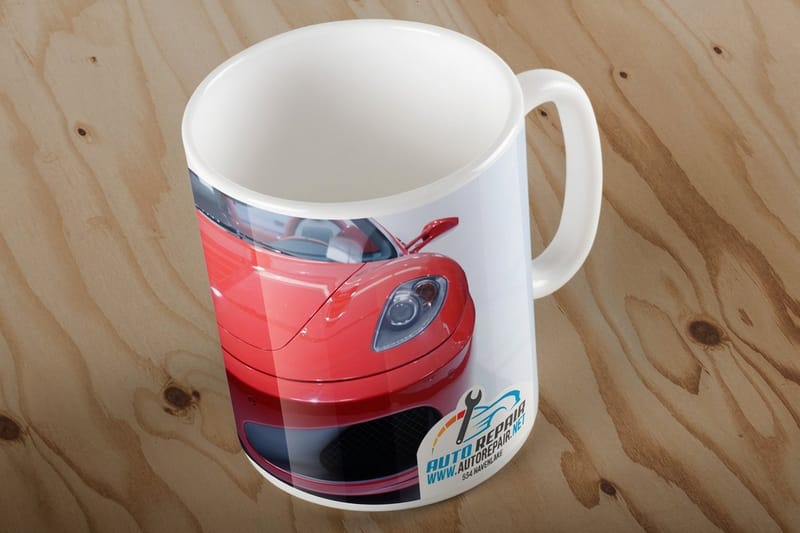
| Branded mug | 11 oz or 15 oz ceramic | Logo, or a line the team actually says | Everyone in the building | Mugs, from $20.86 |
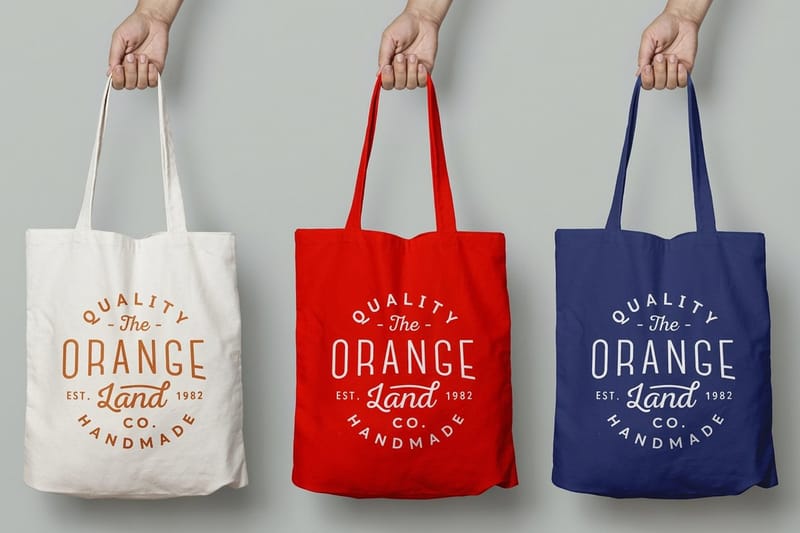
| Cotton tote | Printed one or two sides | Logo plus the team or floor name | Hybrid teams moving between desks | Tote Bags, from $22.73 |
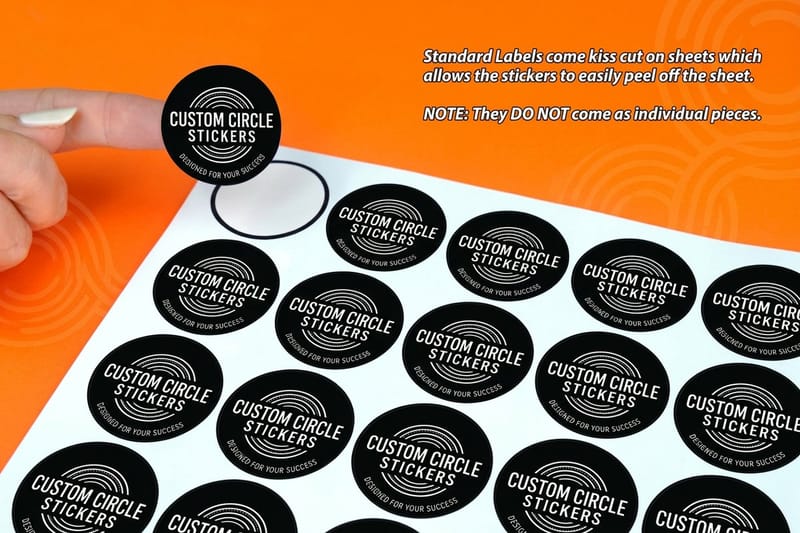
| Sticker sheet | Circle or die cut, matte or gloss | Four colors, one per team or interest | Laptops, bottles, lockers | Circle Stickers, from $23.88 |
| Desk notepad | 25 or 50 sheet glue bound pad | Week one schedule printed on the header | Meeting heavy roles | Standard Notepads, from $93.37 |
| Gift tag | Hang tag on a basket or box | The person name, written by hand | Baskets, returners, new starters | Standard Hang Tags, from $25.27 |
The mug and tote prices above buy one item. The sticker, notepad and hang tag prices buy the smallest run at 4OVER4.COM, 25 stickers, 25 pads or 50 tags, so those three cost far less per person once the headcount passes the first run. Price your real quantity in the configurator before you set the budget. You can configure custom mugs and see the quantity breaks in the same view.
Why the first morning back decides the rest of the quarter
The first morning back is the only moment when the whole team is paying attention at the same time. Whatever the room feels like at nine is repeated in a hundred private conversations by lunch, and that version is the one that sticks. A team that walks into an unchanged office with an unchanged calendar concludes, correctly, that nothing was decided while they were away.
So lead with what changed. Which days people are expected in, who sits where, what the office is for now, and what happens to the work that ran fine remotely. Vague warmth lands worse than a blunt answer, because people fill the gap with the least flattering guess available.
Then hand them something. A printed kit costs a fraction of the catering budget and it is still on the desk in March. Mugs start at $20.86 and a cotton tote at $22.73, which puts a two item kit under the price of the sandwich platter that gets eaten and forgotten by two in the afternoon.
What to send before anyone walks in
Send the practical detail a week ahead: parking, desk booking, whether the kitchen is stocked, what time the all hands runs, and who to find if something is missing. People plan their commute around it, and arriving prepared is most of what feeling welcome actually is.
Put the same information on a printed card in the kit rather than only in an email. An email from four weeks ago is gone by the time it matters. A card propped against a monitor is not.
The trade-off nobody names
A welcome event costs a working morning. If the return is already contentious, a compulsory two hour icebreaker reads as management deciding that your time is theirs to spend, and it hardens the position it was meant to soften. Keep the structured part to forty minutes, make the rest genuinely optional, and let people get to their desks.
The same logic applies to gifts. A kit that is obviously cheap generic swag reads as a substitute for an answer, not a gesture. One good item beats five forgettable ones. The honest test is whether a person would use the thing if the logo were not on it.
Get-to-know-you games people do not resent
The games that work need no explaining and no volunteers. The ones that fail are the ones where somebody has to stand up and be interesting on demand, in front of people they last saw as a video tile.
Printed props do the heavy lifting. A card, a board or a sheet of stickers carries the instruction, so nobody has to run the game and nobody is put on the spot. It also gives the quiet half of the room something to hold, which matters more than most facilitators admit.
Three that actually work
1. Desk bingo. A four by four grid of small true facts printed on a card, one per square: cycled in today, joined during the remote stretch, has met fewer than five colleagues in person. People walk the floor to fill it. Conversation happens as a side effect rather than as the assignment.
2. Sticker sort. Hand out a sheet of circle stickers in four colors, one color per working style or interest, and let people mark their laptop lid. By the afternoon the room has sorted itself into visible groups without a single round of introductions. There are more uses in ten fun ways to use logo stickers.
3. Two truths, printed. The old game, moved off the circle. People write their three statements on a notepad sheet the day before and pin them to a board. Guessing then happens over coffee, at everyone else’s pace, instead of under a spotlight.
Name badges are not childish after a long gap
A good share of the room was hired during the remote stretch and has matched a Slack handle to a face exactly never. Event badges start at $49.88 and remove the most common piece of first day friction, which is not knowing whether you are supposed to already know somebody. Print the name large, the team small, and leave the job title off. Our badge design guide covers what belongs where.
Then retire them at the end of week one. A badge that stays past the point of usefulness stops being helpful and starts feeling like a uniform.
Take the first week outdoors
An outdoor session solves a problem an indoor one cannot: it deletes the seating chart. Nobody has an assigned place at a picnic table, so the people who would have sat with their own team all morning do not.
Keep it local and short. A walk with lunch at the end beats a hired venue on both cost and attendance, and it does not need a run sheet. If you are staging something bigger, our roundup of promotional materials for events covers what earns its place and what gets binned on the way out.
Print for the weather you did not order. Paper signage on an outdoor table is finished after one shower. A retractable banner stand at $139 is an indoor unit and it will go over in the first real gust, so keep it inside the door or under a marquee and use vinyl banners tied to a fence for anything genuinely exposed.
What to hand out at an outdoor session
Load a tote per person before anyone arrives. It saves twenty minutes of handing items out one at a time, and it means the kit goes home instead of back into a desk drawer on the way past.
Skip anything that melts, blows away, or needs a table to work. Stickers, tags and a bag survive an afternoon outside. Loose printed sheets and anything with a fold do not.
Welcome baskets and printed welcome kits
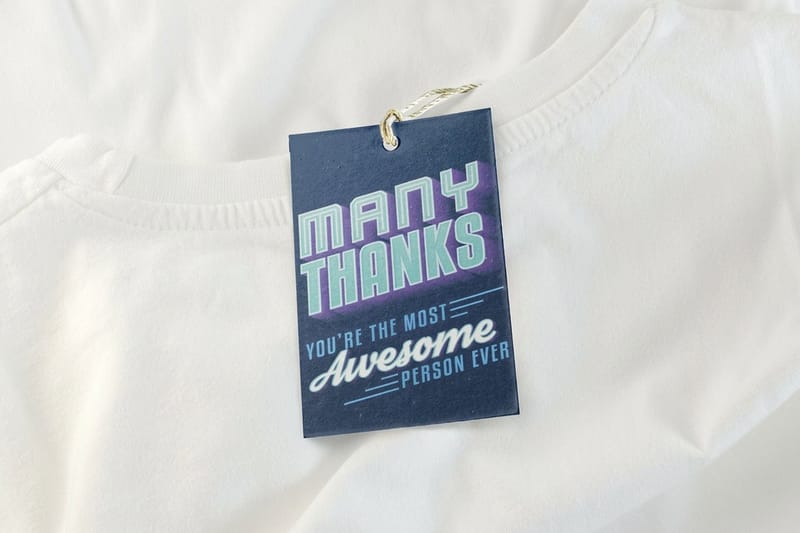
A gift basket is remembered when someone’s name is on it. That is the whole trick, and it costs almost nothing: the tag does more work than the contents.
Print hang tags at $25.27 and write the names by hand. A handwritten name on a properly printed tag reads as effort in a way a laser printed address label never will. If the tag carries a line as well as a name, our piece on writing thank you notes is a better source than a template pack. Watch how we print hang tags on recycled card before you pick the stock. For a name people read across a room, the guide to printed name tags covers insert sizes and attachments.
Build the basket around one item people will use daily and two they will enjoy once. The mug is the daily item in almost every version of this. The rest is edible. For the version aimed at strangers rather than colleagues, compare with swag bag ideas conference attendees actually want, which is the same problem with a lower trust budget.
What a kit costs per head
The catalog prices quoted here are the price of the smallest run, not the price of a single unit, so the per head figure falls as the team grows. That is the part most budgets get wrong in the other direction: a fifteen person kit is expensive per person and a hundred and fifty person kit is not, and the difference is large enough to change what you can include.
Order the run to the number of people, plus roughly ten percent. New starters arrive, items get damaged in assembly, and a reprint of forty units costs close to what the original hundred did.
What to leave the basket out of
Leave out anything with a date printed on it. A dated item is dead stock the moment the plan slips, and return plans slip. Leave out the branded pen, which every person in the building already has four of. Leave out anything sized for a home office if you are asking people to come into a shared one.
Leave out food with a short shelf life if the kits are assembled more than two days ahead. It sounds obvious and it is the single most common thing that goes wrong on the morning.
Signage and notepads for the office relaunch
Signage is the half of the plan that has to be finished before anybody arrives, which is why it gets ordered first and forgiven last. Everything else can be late by an hour. A wayfinding sign that is late is just an absent sign.
Most offices moved something during the gap. Desks got pooled, teams got shuffled, rooms got renamed after somebody decided the old names were confusing. Print the new map, put it where people enter, and put a table tent on each pooled desk explaining how booking works. A person who cannot find their seat in the first ten minutes has already formed an opinion about how well this was planned.
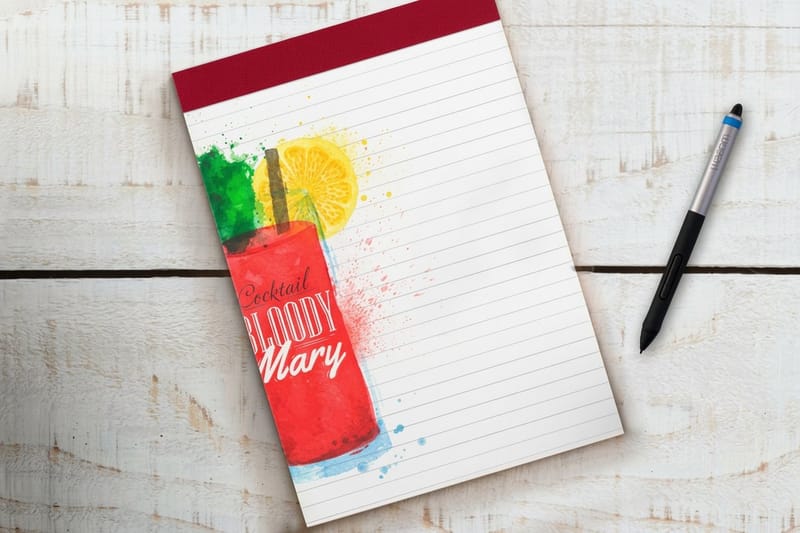
Standard notepads start at $93.37 for the smallest run, and a pad on each desk does two jobs at once: it says the desk was prepared for a person, and it catches the first week of notes without a laptop lid between two faces. There is more on making a pad worth keeping in custom notepads for your great ideas.
What the signs should say
Directions first, sentiment second. Where the teams sit, where the quiet rooms are, where the kitchen moved to, and which doors are badge only now. A banner reading welcome back above a floor nobody can navigate is the exact combination that gets photographed and shared with a caption.
Keep one piece of sentiment, and make it specific to this company rather than to companies in general. Type large enough to read from across the lobby, which in practice means fewer words than the first draft has.
The order in which to buy it
Signage first, because it must be installed. Kits second, because they can be assembled the night before. Anything personalized with a name last, because the list is not final until it is final and reprinting a name is the one thing you cannot fudge on the morning.
Give yourself a spare working day between delivery and the first day back. Assembly always takes longer than the estimate, and there is no version of this where discovering a problem at seven in the morning goes well.
Kit pricing and specs at 4OVER4.COM
A kit for one person and a kit for a hundred cost very different amounts per head. At 108 mugs the run comes to $1,415.81, about $13.11 a mug, and 100 cotton totes come to $630.31, about $6.30 a bag, so a hundred person mug and tote kit lands near $19.41 a head. Add circle stickers from $23.88 for 25 and one $139 retractable banner stand at the entrance, which serves the whole floor. The mug table below comes from the live configurator, so you can check the break closest to your headcount before you commit.
Quantity and price
Custom mug pricing and specs
Real configurator numbers for the one kit item that gets used every morning, with the quantity breaks that decide your per head cost.
| Quantity | Price Per Unit | Total |
|---|---|---|
| 1 | $20.86 | $20.86 |
| 2 | $19.22 | $38.43 |
| 3 | $18.67 | $56.00 |
| 4 | $18.67 | $74.68 |
| 5 | $18.01 | $90.05 |
| 6 | $18.31 | $109.83 |
You can also earn coins on every order and redeem them against the next run, which helps when the second batch is forty units for the people who started after the first one shipped.
What the teams who handled it well did differently
The returns that went smoothly had one thing in common, and it was not the budget. They treated the first week as an operations problem rather than a morale problem. Desk allocation was settled and published before anyone traveled. The reason for the change was stated in one paragraph that a person could disagree with, which is what makes a statement credible. The social part was booked as one short slot rather than spread across five days of interruptions.
The ones that went badly usually inverted it. A large welcome event, warm language, and no answer on the two questions everybody actually had. Print cannot rescue that, and it should not be asked to. What print does well is make the operational answer visible: the map at the entrance, the booking rule on the desk, the pad that shows the desk was set up for a named person.
Print it
Totes, ready to load
Cotton totes printed one or two sides, packed before anyone arrives so the kit goes home instead of into a drawer.
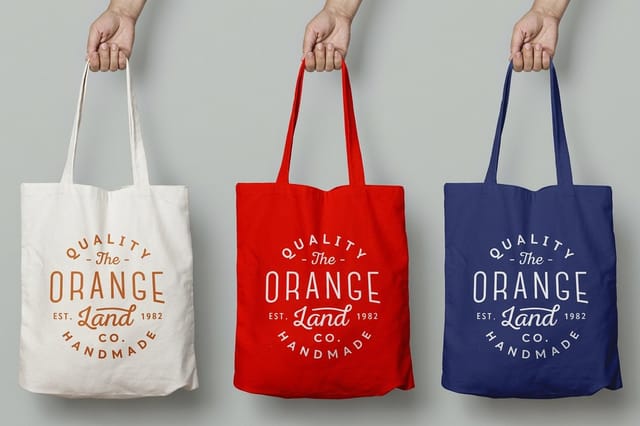
Stock and finish decide how long the kit survives contact with a commute. A matte laminate on a sticker sheet resists thumb marks better than gloss, and it photographs without a flare, which matters if anybody posts the desk. Ceramic mugs are dishwasher tolerant and heat tolerant, so they stay in rotation rather than becoming a pen pot. Cotton totes take a print on one or two sides, and a two side print is the cheapest way to make a bag look intentional rather than promotional. For heavier office signage that has to survive being moved, look at banner stands rather than a mounted board.
Choosing the right kit for your workplace
Different workplaces need different things back, so the kit changes by workplace type.
- Hybrid offices. Pooled desks need table tents that explain booking, and a printed floor map at the entrance. The kit travels, so the tote matters more than it would in a fixed seat office.
- Agencies and studios. Sticker sheets and notepads suit a room that is used to making things. Skip the corporate welcome banner and put the budget into one good item per person.
- Clinics and practices. Staff and patients read the same signage, so the wayfinding has to work twice. Badges carry first name and role, and they stay in use past week one.
- Manufacturing and warehousing. Signage does safety work as well as welcome work. Print durable, mount it properly, and keep the kit to items that survive a locker.
- Retail head office. Store teams and head office return on different schedules, so print two runs of the same design rather than one that half the company never sees.
Blanks that remove the part that stalls
If nobody in the building is a designer, templates remove the part that stalls. 4OVER4.COM draws each blank at the product's real size, 1" x 1" to 2" x 2" and up for circle stickers, with the cut line and the bleed already marked, so the logo lands inside the trim. The mug works the same way, with an 8.5" x 3" print area on the 11 oz size and 9" x 4" on the 15 oz. Pull a print ready file from the blank template library and drop your logo into it.
Start fast
Blanks that remove the part that stalls
Sticker design templates and exact size blanks so the artwork lands inside the cut line the first time.

Wally sets the desks before the team walks in
Order the room first, then the kits, then the names
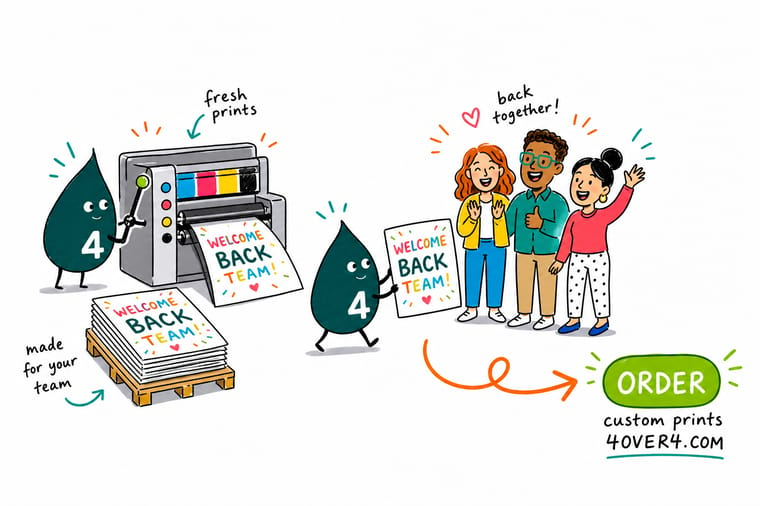
Signage has to be standing before the doors open, so buy it first and install it a day early. Assemble the desk kits the night before: a mug, a sticker sheet, a notepad and a card with parking, desk booking and the week schedule on it. Print names last, because the list is never final until it is, and add ten percent for new starters and assembly damage.
Order custom mugs →What to remember about welcoming a team back
Print decisions that hold up on the day
- Name first, logo second. The item people keep is the one addressed to them. Put the person name on the tag and let the logo sit small on the item itself.
- Print fewer things, better. Five cheap items read as a budget line. One mug that somebody would buy reads as a gesture. Cut the list before you cut the quality.
- Size type for the lobby, not the screen. Signage gets read from ten feet away while somebody is walking. If it takes a pause to read, it is too small and there are too many words.
- Leave the date off. A printed date turns a reusable item into dead stock the moment the plan moves, and return plans move.
- Order signage before kits. Signage has to be installed and kits only have to be assembled. Buying in that order is the difference between a late delivery being annoying and being visible.
Explore more
More ways to print and promote
Circle stickers run 25 for $23.88 in 3 business days and event badges 25 for $49.88 in 5.
Product Custom Mugs The one kit item that gets used every single morning. Product Cotton Tote Bags Carries the kit in, then carries a laptop home. 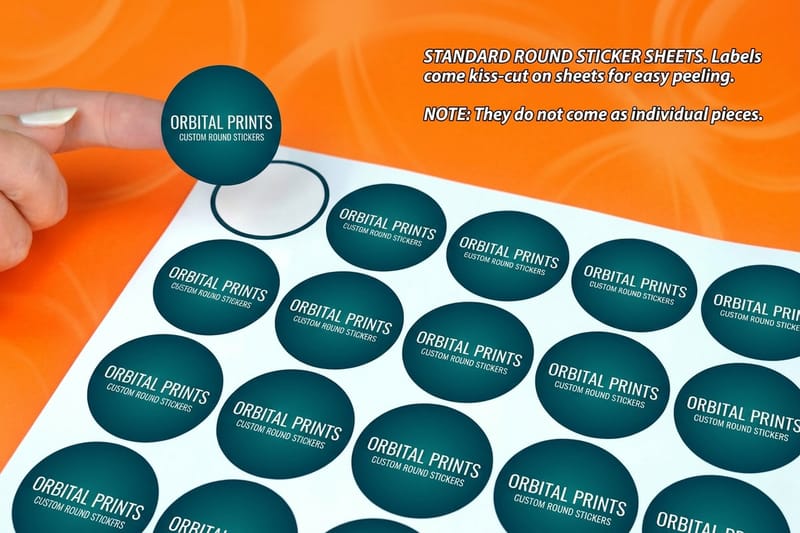 Product Round Stickers Color coded sheets that sort a room without introductions. Product Notepads A prepared desk, and somewhere to put week one. Product Custom Hang Tags Put a name on the basket, by hand.
 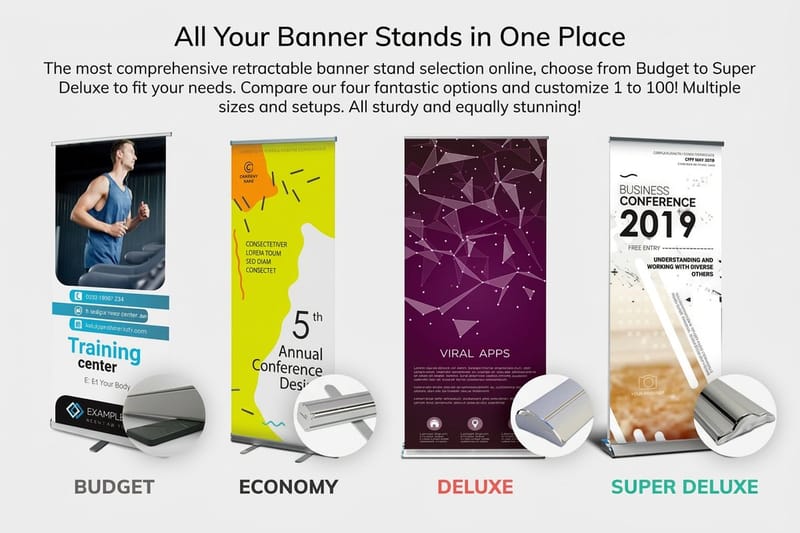 Product Retractable Banner Stands Indoor signage that goes up in a minute and packs down flat.
 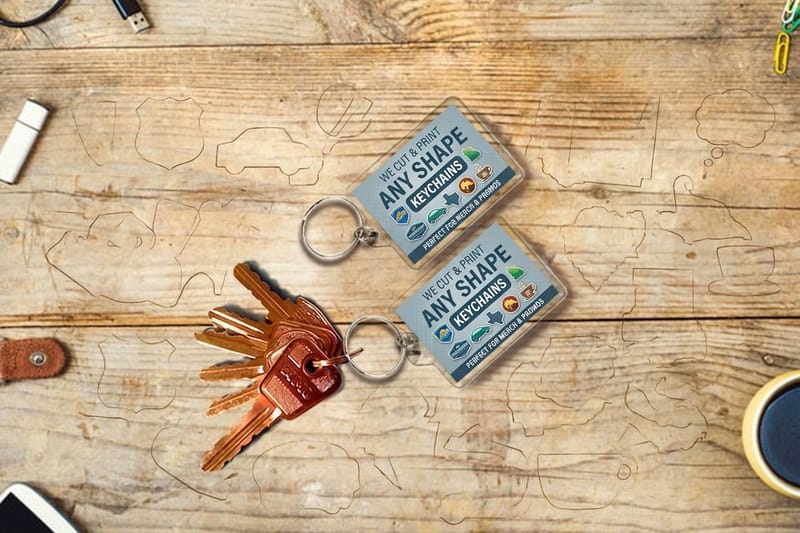 Category Promotional Products Every giveaway item in one place, priced live.
 Ready to print the welcome kit?
Pick the items, drop in your logo or a free template, and 4OVER4.COM prints it sharp on premium stock in time for the first morning back.
Common questions about welcoming teams back
What should go in a welcome back to work kit?
One item people will use daily, one that says who they are, and one that carries the practical information. In practice that is a mug, a sticker sheet or badge, and a printed card with the week schedule, parking and desk booking on it. A tote holds the lot and gets reused. Resist the urge to fill space: a kit of eight cheap items reads as a budget line being spent, while three good ones read as somebody thinking about the person opening it. At 4OVER4.COM mugs start at $20.86, circle stickers at $23.88 and cotton totes at $22.73, all priced for the smallest run rather than per unit.
How much does a printed welcome kit cost per employee?
Less than you expect at scale and more than you expect at fifteen people, because print pricing steps down hard as the run grows. The catalog figures you see are the smallest run, so a hundred and fifty person kit lands at a fraction of the per head cost of a twenty person one. The honest planning method is to price the exact quantity in the configurator rather than dividing a minimum by your headcount, then add roughly ten percent for new starters and assembly damage. Compare the total against your catering spend for the same day, which is usually the number that makes the decision.
What do you say in a welcome back message to employees?
Say what changed, then say what you want from the week, then say thank you. The order matters. People who have been away are scanning for the practical answer first, and a message that opens with three sentences of warmth before mentioning that the desks are now pooled gets read as spin. Keep it to a short paragraph, name a person to contact when something is missing, and put the same information on a printed card in the kit so it survives the inbox. Avoid promising a culture. Describe an arrangement instead.
Are welcome back gifts worth it, or do people see through them?
People see through a gift that is standing in for an answer, and they do not see through a gift that arrives alongside one. That is the actual dividing line, not the budget. A branded item handed out on a day when the difficult questions were addressed plainly is received well. The same item handed out instead of addressing them becomes the joke of the week. So decide the communication first and treat the print as the physical part of the message, not as the message itself.
How far ahead should we order the printing?
Order signage first and everything else after it, and leave at least one spare working day between the last delivery and the first day back. Signage must be installed before anyone arrives, so a late sign is simply an absent sign, while kits can be assembled the night before if they have to be. Anything printed with individual names goes last, because the attendance list is never final until it is. Turnaround at 4OVER4.COM depends on the product and the finishing, so check the option you have configured before you commit to a date rather than assuming the fastest one applies.
