
Wall Quotes in Vinyl That Turn Blank Walls Into Statements


Tobias is our voice for cutting, binding and large format, built from the knowledge of our production team, with over 20 years in printing.
How Cut Vinyl Wall Lettering Actually Works
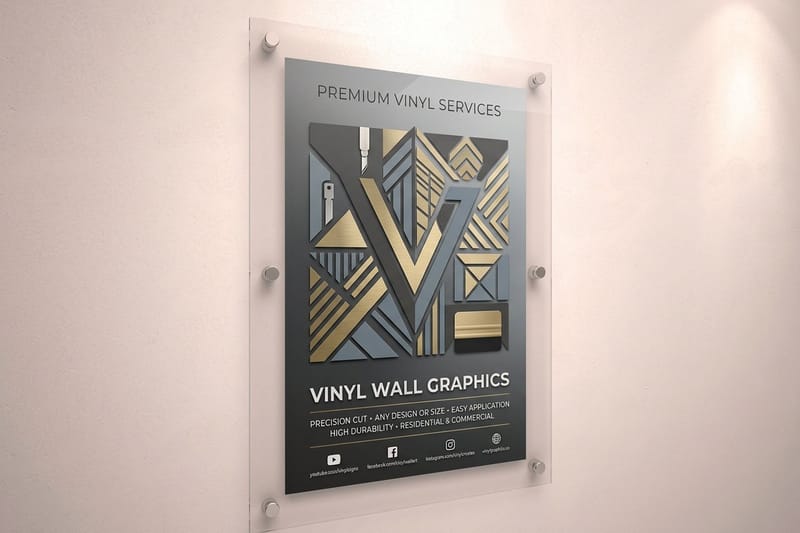
A vinyl wall quote is your own words cut from adhesive vinyl and laid straight onto the paint, and it looks hand painted by someone with very steady hands even though a cutter made it. Your words are cut out of a thin sheet of adhesive vinyl, the leftover material around the letters is pulled away, and what remains gets carried onto the wall in one piece by a sheet of transfer tape. When the tape comes off, only the letters stay behind.
That is the whole trick, and it is why a good vinyl quote reads as part of the room instead of a sticker stuck on it. There is no rectangle, no border, no visible edge around the words. Matte vinyl in particular kills the shine that gives cheap decals away.
4OVER4.COM has printed 10 billion+ print products since 1999 for more than 150,000 businesses and a very large number of people who simply wanted their living room to say something. Vinyl Wall Graphics start at $25, and the same file can be cut as bare lettering or printed as a full color panel depending on what your design needs.
Cut lettering versus printed decals
Cut lettering suits solid color type, monograms, logos, and line art. Printed decals suit photographs, gradients, watercolor backgrounds, and anything with more than two or three colors. If your quote sits inside a painted brush stroke or a soft blob of color, that is a printed piece, not a cut one.
What the file has to be
Cut vinyl needs vector artwork, so an AI, EPS, or vector PDF file with every font converted to outlines. A JPG of a quote in a pretty font cannot be cut because there is no path to follow. Printed graphics are more forgiving and accept raster art at 150 dpi or better at final size.
Where the finish matters
Matte reads like paint and hides wall texture better under raking light. Gloss pops color and wipes clean, which is why it belongs in kitchens, gyms, and retail. On a bedroom quote, gloss is usually the wrong call.
Shop the category
Custom printing collection
Wall graphics and everything else we cut, print, and finish to your exact dimensions.
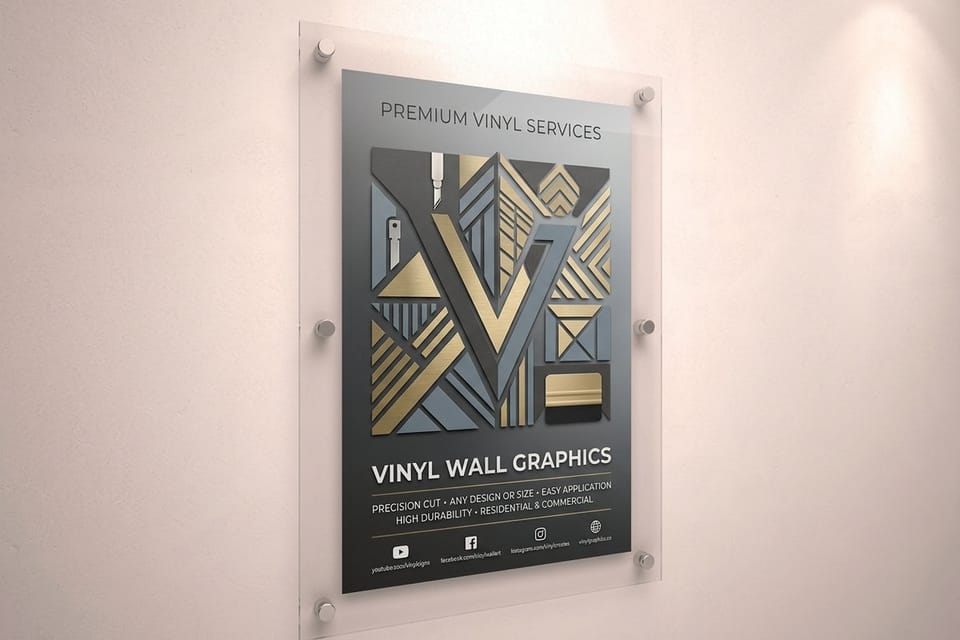
Picking the Material Your Wall Can Actually Live With
Material choice is really a question about two things: how smooth the wall is, and how permanent you want the result to be. A flat drywall surface in a house you own gives you every option. A textured rental wall narrows the field fast, and pretending otherwise is how people end up with corners lifting after a week.
Adhesive vinyl grips hardest and gives the crispest letter edges. Adhesive fabric grips gently, repositions while you are still fussing with alignment, and lifts off without taking paint. Rigid aluminum skips the wall surface question entirely because it hangs rather than sticks, which is the honest answer for brick, block, and heavily textured plaster.
- Smooth painted drywall. Cut vinyl lettering is the best looking option and holds for years.
- Light orange peel texture. Vinyl works with firm squeegee pressure, but keep letter strokes reasonably thick.
- Knockdown or heavy texture. Skip adhesive entirely and mount a printed aluminum panel instead.
- Rentals and dorms. Adhesive wall fabric is the low risk pick that comes off at move out.
- Kitchens and bathrooms. Choose a laminated or gloss face that tolerates steam and wiping.
Prices below are the real starting points from the configurator, and all three take custom dimensions rather than a fixed menu of sizes.
Print picks
Three wall materials worth comparing
Live starting prices, all cut and printed to your custom dimensions.
 Vinyl Wall Graphics $25 each Cut or printed adhesive vinyl for quotes, monograms, and full wall murals.
 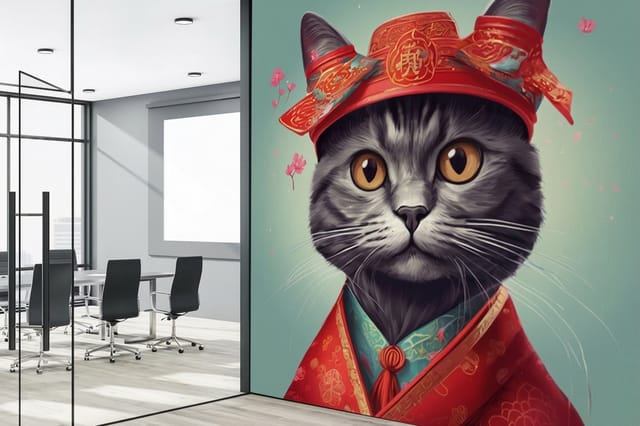 Adhesive Wall Fabric $25 each Repositionable fabric that lifts off without residue, ideal for rentals and dorms.
 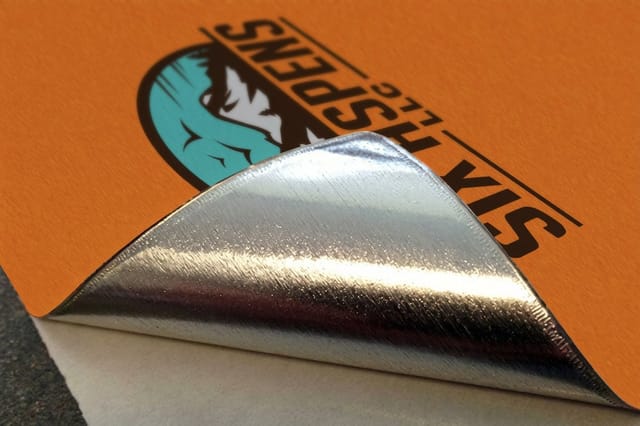 Aluminum Wall Graphics $29 each Rigid printed panels for lobbies, entryways, and high traffic commercial walls.
 Applying a Wall Quote Without Bubbles or a Crooked Line
Almost every failed install traces back to one of three things: a dirty wall, paint that had not cured, or someone peeling the transfer tape off in a hurry. None of those are hard to avoid, and the whole job on a typical quote takes under an hour if you slow down at the start.
Wash the wall with a little dish soap and water, rinse, and let it dry completely. Skip anything with oils, waxes, or silicone in it, because those leave a film that adhesive cannot bite through. If the wall was painted recently, wait the full 30 days. Vinyl applied to uncured latex will either fail to stick or pull the paint off later.
The hinge method, step by step
- Tape the piece up with painter's tape and step back across the room to check the alignment against furniture, not just the ceiling line.
- Run a strip of tape down the vertical center to make a hinge, then fold one half back on itself.
- Peel the backing paper away from the folded half, cut it off, and lay the exposed half down from the center outward.
- Squeegee in overlapping strokes from the hinge toward the outside edge, firmly enough that the letters look slightly darker as they bond.
- Repeat on the second half, then let it sit for about half an hour before you touch the transfer tape.
When you pull the tape, go slowly and fold it back on itself at a sharp angle rather than lifting it away from the wall. If a letter starts to come with it, press the tape back down, burnish that spot again, and continue. Small trapped bubbles can be popped with a pin and pressed flat.
Taking It Down Later Without Wrecking the Paint
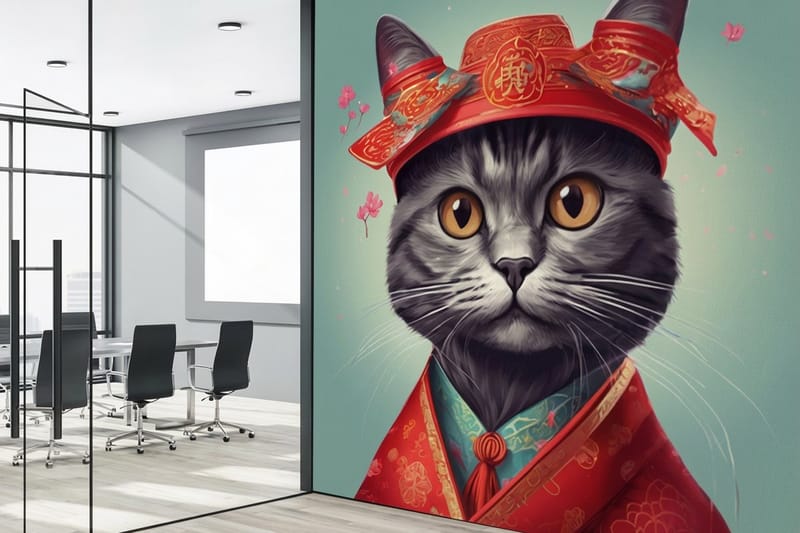
Removability is the question everyone asks second and should ask first. Removable vinyl and adhesive fabric are engineered to come off in one piece, but the outcome still depends on what is underneath. Well cured, quality paint releases cleanly. Cheap flat paint over unprimed drywall can lift no matter how gentle you are.
Warm the letters with a hair dryer on low, working a small area at a time until the adhesive softens. Lift a corner with your fingernail or a plastic card, then pull back at a shallow angle rather than straight out from the wall. Any residue wipes away with a little isopropyl alcohol on a soft cloth.
If you are renting and cannot risk it at all, Adhesive Wall Fabric is the safer material by design. It uses a gentler adhesive, repositions during install, and comes away without heat. Landlords notice the difference, and so does your deposit.
Sizing a Wall Saying So It Reads From Across the Room
Undersized wall quotes are the most common mistake. On a computer screen a 24 inch design looks generous. On an 8 foot wall it looks like a note left on the fridge. Measure the actual wall, mark the outline in painter's tape at full size, and live with it for a day before you order.
Two rules of thumb do most of the work. For legibility, allow about one inch of letter height for every ten feet of viewing distance, so a quote read from fifteen feet away wants letters around an inch and a half tall at minimum. For proportion, size the piece to roughly two thirds the width of the sofa, headboard, or console beneath it.
- Above a sofa. Typically 40 to 60 inches wide, hung so the bottom sits 8 to 12 inches above the back cushions.
- Over a bed. Match about two thirds of the headboard width and keep the block centered on the bed, not the wall.
- Stairwell or hallway. Go taller and narrower, and check sight lines from the bottom step.
- Office or reception. Size to the viewing distance from the front door, then add a little more.
Pricing follows the finished square footage, so bigger costs more, but the jump from a timid size to the right size is usually smaller than people expect. The configurator shows the exact number as you change dimensions and quantity.
Quantity and price
Vinyl wall graphics pricing and specs
Real configurator numbers, so you can see what going a size bigger actually costs.
| Quantity | Price Per Unit | Total |
|---|---|---|
| 1 | $25.00 | $25.00 |
Wall Quote Ideas for Homes, Offices, and Storefronts
The best wall sayings are specific to the people who live or work in the room. A generic inspirational line ages badly. A family last name with the year the house was bought, a lyric that means something to two people, or the phrase your team actually says in meetings will still feel right in five years.
Homes lean personal and warm. Offices lean short and confident. Retail leans practical, because a wall that lists your hours, your handle, or your one line promise does more work than a quote about dreaming big. Pick the job the wall has to do before you pick the words.
- Entryways. A family name with an established date, or a short welcome line sized to the door.
- Kids rooms. Names, growth chart lettering, and gentle phrases in a rounded sans that will not embarrass a ten year old.
- Kitchens. Recipes in script, a coffee bar label, or the pantry organized in clean uppercase.
- Offices. Values, a founding year, or the mission line in your brand typeface and brand color.
- Gyms and studios. Big, bold, high contrast type meant to be read mid workout from across the floor.
- Storefronts. Hours, social handles, and window lettering that stays readable in reverse from inside.
Renter friendly
Adhesive wall fabric
A gentler adhesive that repositions while you align it and lifts off without residue later.

Fonts, Color, and Layout Choices That Age Well
Two typefaces is the ceiling. A script for the emotional words and a clean sans for everything else gives you contrast without noise. Three or more fonts in a single quote reads as a craft project, and once it is cut in vinyl at three feet wide there is no quiet way to fix it.
Watch the thin strokes. Delicate scripts and hairline serifs look lovely on screen and become fragile in vinyl, where a stroke thinner than about an eighth of an inch is difficult to weed and easy to snag during install. If you love a thin face, either scale the whole piece up or pick a slightly heavier weight of the same family.
- Color. Aim for real contrast against the wall. Matte black, deep charcoal, and warm white are the safe workhorses.
- Tone on tone. A shade one or two steps off the wall color gives a subtle, architectural look in good light.
- Line count. Keep the quote under four lines. Longer passages want a printed panel, not cut letters.
- Kerning. Connect the script letters properly before you outline the fonts, because gaps get magnified at scale.
- Alignment. Centered blocks forgive uneven line lengths. Left aligned blocks look sharper but demand tighter copywriting.
If your design is heavier on image than on type, a printed panel is the better carrier. Rigid stock also lets you hang the piece where adhesive would never hold.
For rougher walls
Aluminum wall graphics
When brick, block, or heavy texture rules out adhesive, a rigid printed panel hangs instead of sticking and holds up to daily contact.
When Vinyl Lettering Beats a Framed Print
A framed print is an object on the wall. Vinyl lettering becomes the wall. That distinction decides most of these choices. When you want the words to feel architectural, span a width no frame comes in, or wrap around a corner or a doorway, vinyl is the only sensible answer. If the lettering is one part of a bigger room makeover, the 3-product adhesive vinyl wrap and wall set pairs adhesive wall fabric with clear and front adhesive vinyl, each from $25.
Vinyl also wins on scale and cost. A six foot statement in cut lettering costs a fraction of a six foot canvas and weighs nothing, which matters on plaster walls and in rentals where you cannot drill. It ships flat in a tube and needs no hardware, no level, no anchors.
Frames still win when you want to swap art seasonally, when the wall is too rough to hold adhesive, or when the piece is a photograph that deserves depth and a mat. Plenty of rooms use both, with lettering above the sofa and framed work down the hallway.
Getting Your Artwork Print Ready and Placing the Order
Ordering goes quickly once the file is right. Set the artboard to the finished wall dimensions or an exact proportional scale of them, convert every font to outlines, and remove any stray points or overlapping paths left over from editing. For printed panels, build in an eighth inch of bleed and keep critical type well inside the trim.
If you would rather start from something structured than from a blank canvas, the design templates library gives you layouts you can retype with your own words, and print ready blanks confirm the exact live area before you commit. Upload, approve the proof, and choose the turnaround that fits your install date.
A short pre flight checklist
- Vector for cut lettering. AI, EPS, or PDF with outlined fonts and no live text.
- Raster for printed graphics. 150 dpi or better at final size, built in CMYK.
- Exact dimensions. Give width and height in inches, measured on the actual wall.
- One color per cut layer. Separate colors mean separate pieces to align during install.
- Reverse reading for glass. Flag it in the order notes if the piece goes on the inside of a window.
Start fast
Templates and print ready blanks
Free layouts to retype with your own words, plus exact size blanks that confirm the live area.
Wally gets your wall quote on straight
The right material first, then the right size, then a clean install
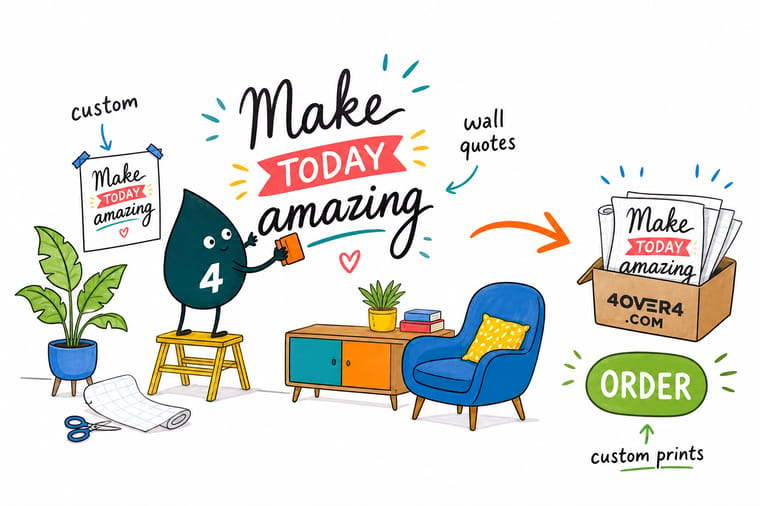
Pick the material your wall can live with, cut vinyl for smooth painted drywall, adhesive fabric if you rent, aluminum if the surface is rough. Then tape the outline at full size on the wall before you order, because almost every regret is a piece ordered too small. Wash, dry, wait 30 days after painting, hinge it down the middle, and squeegee from the center out.
Design your custom wall quote →What to remember before you order
Keep reading
Four guides for the next step on your wall
Weeding and installing cut letters and numbers, turning your photos into a printed wall piece, vinyl versus screen printing, and a photo calendar for the same wall.
Guide Custom Vinyl Lettering and Numbers The complete walkthrough on cut lettering, weeding, and install. Guide Custom Wall Art From Photos Turn your own photography into a printed wall piece. Guide Screen Printing vs Vinyl Printing Which process suits which job, and where each one falls short. Guide Custom Photo Calendar Printing Another wall piece worth planning, this one with dates on it. Explore more
More ways to put your words on a wall
Related pages across 4OVER4.COM, one card for every product, guide, and article that touches vinyl.
Product Vinyl Wall Graphics Cut or printed adhesive vinyl in any custom size. Product Adhesive Wall Fabric Repositionable, residue free, and made for rentals. 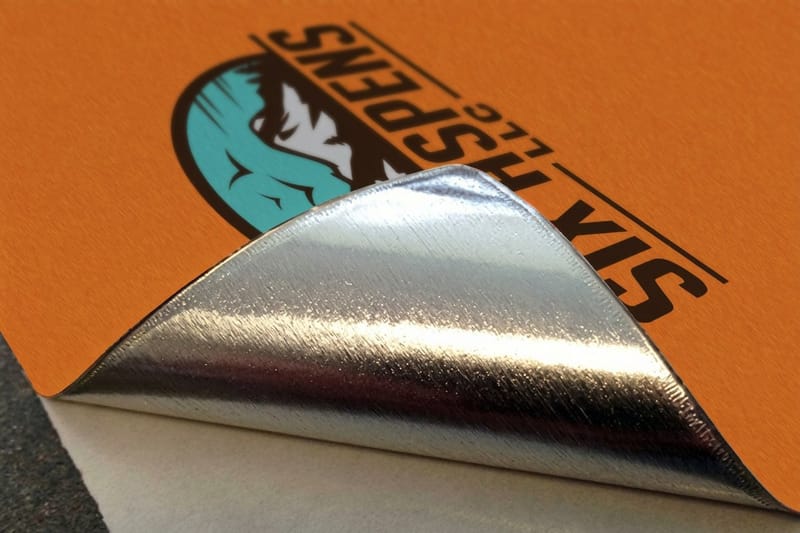 Product Aluminum Wall Graphics Rigid printed panels for lobbies and storefronts.
  Collection Custom Printing Collection Everything we print to spec, from wall graphics out.
 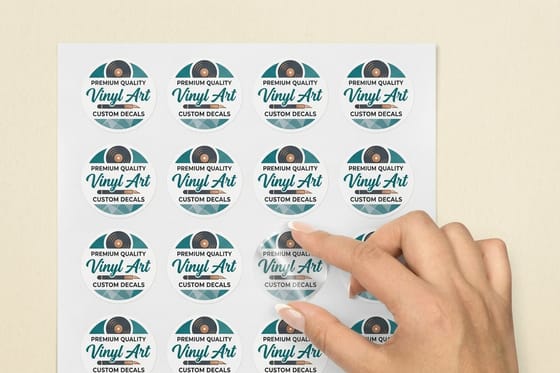 Article Cut Vinyl Lettering and Graphics How cut vinyl differs from printed decals in practice.
  Guide Vinyl Lettering and Numbers Guide Sizing, spacing, and weeding explained end to end.
 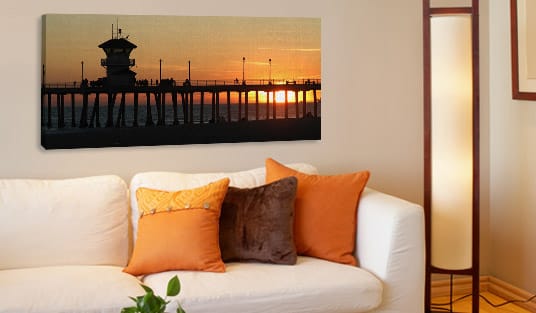 Guide Wall Art From Your Photos Photo files to finished wall piece, step by step.
  Guide Screen Printing vs Vinyl Two processes compared on cost, color, and durability.
  Article Dry Erase Vinyl Installation A writable wall surface installed with the same technique.
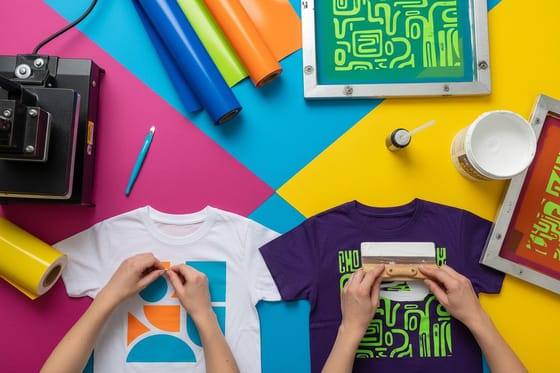
  Article DIY Custom Shirts Without Transfer Paper Heat transfer vinyl, applied to fabric instead of walls.
  Guide Custom Photo Calendar Printing Another wall piece, planned around twelve good photos.
  Articles All Printing Articles Ideas, comparisons, and how to pieces across every product.
 Ready to put your line on the wall?
Send us vector artwork with the fonts outlined and the exact wall dimensions, approve the proof, and your quote ships flat with transfer tape ready for install.
Wall Quote and Vinyl Lettering FAQs
What are wall sayings and how are they made?
Wall sayings are quotes, names, or short phrases applied to a wall as adhesive lettering or as a printed graphic. For cut lettering, your artwork is cut from a sheet of vinyl, the surplus material around the letters is weeded away, and transfer tape lifts the whole layout onto the wall in one piece so the spacing stays exactly as designed. Nothing but the letters remains once the tape comes off, which is why the result looks painted rather than stuck on. For a deeper walkthrough of the cutting and weeding stages, see our complete vinyl lettering and numbers guide.
How do I choose the right wall saying for a room?
Start with the job the wall has to do. Entryways and living rooms suit something personal, like a family name with a date or a line that means something to the people in the house. Offices do better with short, confident statements in the brand typeface. Retail walls should carry practical information such as hours or a social handle. Then check the words against the room in painter tape at full size before ordering, because a phrase that reads well on a screen can feel very different at three feet wide.
What do custom wall quotes cost and how is pricing set?
Vinyl Wall Graphics start at $25 and Adhesive Wall Fabric starts at $25, while rigid Aluminum Wall Graphics start at $29. Pricing is driven by finished square footage first, then by material, finish, and quantity, so a small monogram costs far less than a mural sized statement in the same vinyl. Because every piece is cut or printed to the dimensions you supply, there is no fixed size menu to work around. The configurator on each product page updates the total as you change width, height, and quantity.
What sizes, materials, and finishes are available for wall lettering?
Sizes are custom, so you specify width and height in inches to match the wall rather than choosing from presets. Adhesive vinyl gives the crispest letter edges and the strongest bond on smooth painted drywall. Adhesive fabric uses a gentler adhesive that repositions during install and lifts off without residue, which suits rentals and dorm rooms. Aluminum panels hang instead of sticking, making them the answer for brick, block, and heavily textured surfaces. Matte finishes read like paint, and gloss finishes wipe clean in kitchens, gyms, and retail spaces.
How long does printing and shipping take for wall graphics?
Turnaround depends on the product, the finish, and the size of the run, and each product page shows the available production speeds with their cutoff times before you check out. Custom cut lettering usually needs a little more production time than a straightforward printed panel because of the cutting and weeding stages. Add transit time on top of production, then give yourself a buffer day for the install itself. If the piece is going up for an event or an opening, order at least a week ahead so a reprint would not put the date at risk.
