
The 3-Product Adhesive Vinyl Wrap and Wall Set
Most vinyl projects fail on the same question: which film belongs on which surface. This set answers it with three printed films that cover painted walls, see-through glass and windows you can only reach from indoors, all built from one artwork file so the whole space reads as one installation.
The adhesive vinyl wrap and wall set is three printed films chosen by surface. Adhesive wall fabric covers painted drywall and peels off cleanly. Clear adhesive vinyl puts artwork on glass while daylight still passes through the unprinted areas. Front adhesive vinyl carries its glue on the printed face, so it mounts inside a window and reads correctly from the street. All three start at $25.

The picks
The three films, priced live
Start here. These are the three adhesive films this set is built around, each one priced live on its own page so the size, finish and turnaround you actually need is the number you see.


Design and print help
Keep all three films on brand
A wrap only looks intentional when the wall, the window and the glass share one palette and one type system. These tools make that consistency the easy path rather than the careful one.
How they work together
Install in the order the room fills up
Each film owns a surface, and the order matters more than most installers expect. Work from the largest plane outward so every later panel has something finished to match.
The largest surface sets the tone of the room, so print it first and let the wall graphic decide the palette everything else follows.
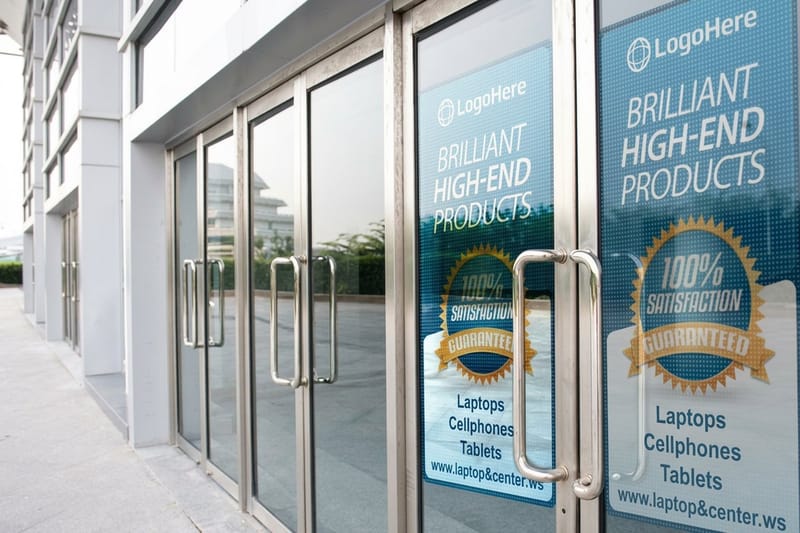
Windows and glass partitions carry the message outward. Clear film adds artwork without shutting off the daylight the space depends on.
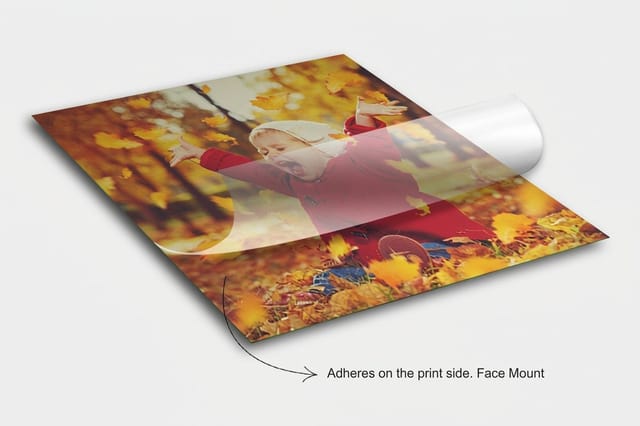
For glass you can only reach from indoors, front adhesive film goes on the interior surface and still reads correctly from the sidewalk.
1. Adhesive wall fabric: the removable mural that leaves paint alone

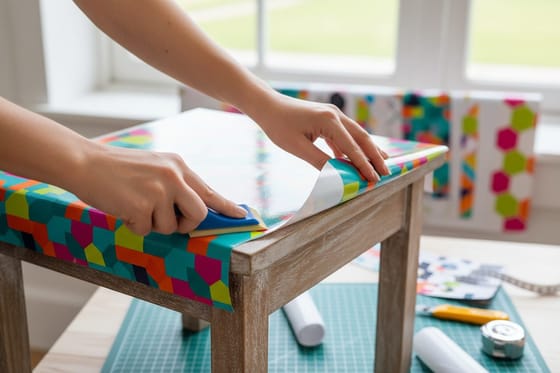
Wall fabric is the piece that changes a room in an afternoon. It is a polyester-based film with a gentle pressure-sensitive adhesive, which means it goes up without a pasting table, repositions while you are still working, and comes back down in one sheet. For anyone printing in leased space, that last property is the entire argument.
The matte face is the other reason designers reach for it. Overhead office lighting turns glossy film into a mirror, and a mirrored wall graphic is unreadable from most angles in the room. Fabric scatters that light instead, so a full-height mural stays legible from the doorway and photographs cleanly for social posts. It also sits comfortably over lightly textured paint, where a rigid film would telegraph every roller mark. Once you have the technique, the same material works on cabinet fronts and desk sides, which the guide to covering furniture with vinyl sticker wrap walks through step by step.
Hang the wall first. It is the biggest surface, it fixes your palette, and every window graphic you print afterward has to live next to it.
2. Clear adhesive vinyl: artwork on glass that keeps the daylight

Clear film is what you use when covering the glass would cost you more than the graphic gains. The film itself is transparent, so only the printed areas carry weight and everything else stays open. A logo, a set of hours, a band of pattern at eye height: each one reads clearly while the room behind it keeps the light it was designed around.
Design for it differently than you would design for paper. Whatever sits behind the glass becomes part of the composition, so busy shelving behind a thin script will swallow it. Keep letterforms heavier than you think you need, give shapes room to sit against a plain background, and remember that ink coverage is your only opacity control. If a printed area has to look solid rather than tinted, plan a white layer behind it at the file stage instead of hoping the glass does the work.
Measure the visible glass, not the frame. The rubber gasket around a storefront pane eats more of the panel than most people expect.
3. Front adhesive vinyl: install from inside, read from the sidewalk
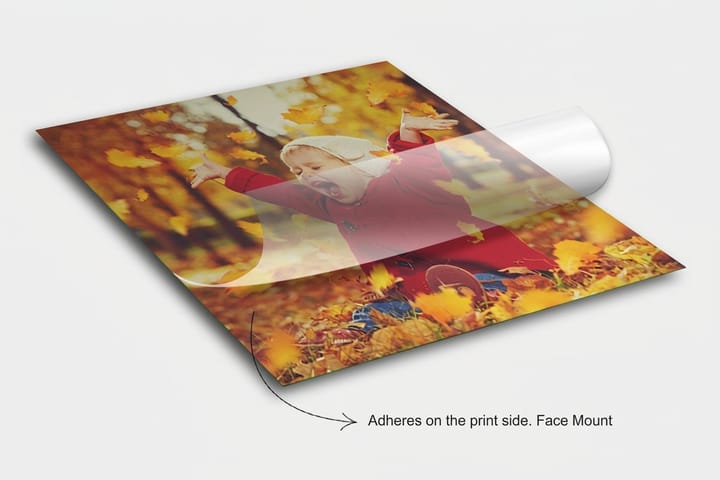
This is the specialist in the set, and the one most people order without understanding why it exists. The adhesive is on the printed face rather than the back, so the artwork presses directly against the inside of the glass and is meant to be viewed from the other side. Second-floor windows, lobby glass and any pane you cannot safely reach with a ladder all become straightforward jobs.
Two practical wins come with that. Ink sits behind glass, so rain, road grit and cleaning crews never touch it, and the graphic holds its color far longer than an exterior-mounted film. Mounting from inside also means no permits, no weather window and no waiting on a dry morning. The trade is that your file has to be mirrored before printing, so confirm orientation on the proof rather than at install. The same install discipline shows up in this account of installing custom dry erase vinyl wraps, where a clean squeegee pass decides the finished look.
Clean the interior glass properly first. Interior panes collect a fine film of dust and cleaner residue that quietly ruins adhesion.

Specs and pricing
Anchor the set: adhesive wall fabric specs and live pricing
The wall is the largest print in the project, so its size and finish set the budget for everything else. Check the specs here, then price the exact square footage you measured.

| Quantity | Price Per Unit | Total |
|---|---|---|
| 1 | $25.00 | $25.00 |
Wally explains the wrap set
Three films, one file, every surface covered
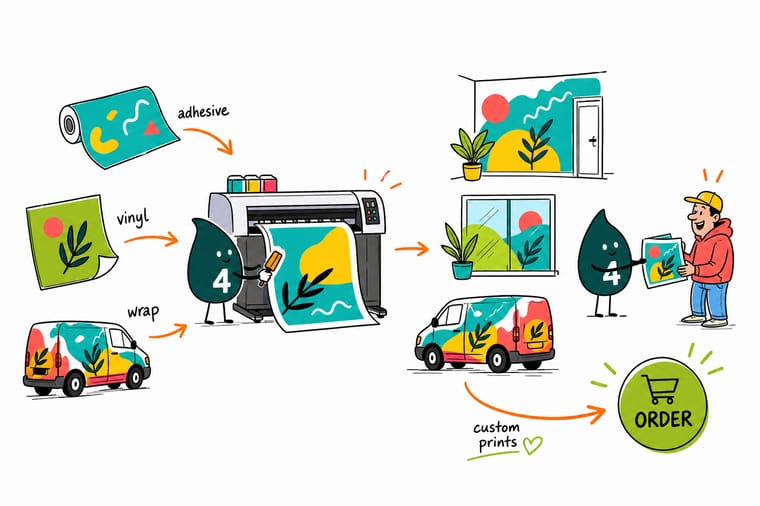
Wally sorts vinyl by the surface it has to stick to, never by the picture on it. Painted drywall gets wall fabric because it peels off clean. Glass you can reach from outside gets clear film, so daylight still comes through. Glass you can only reach from inside gets front adhesive vinyl, which mounts against the pane and still reads correctly from the sidewalk. Measure the surface, then pick the film.
Shop the adhesive vinyls collection →See it in use
Real adhesive vinyl work, printed in-house
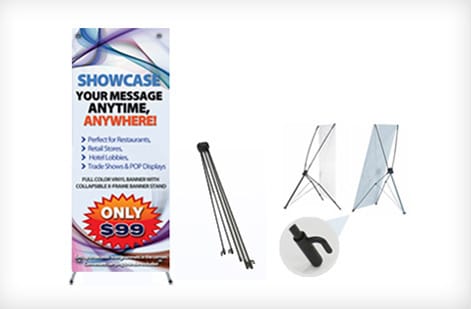
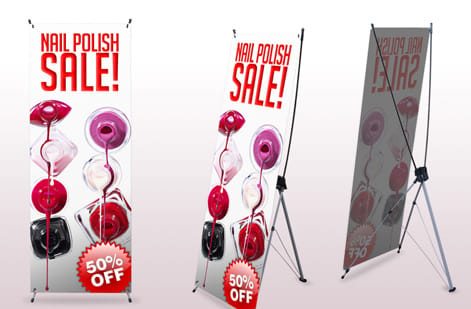
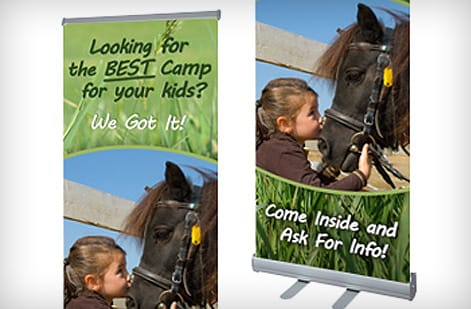
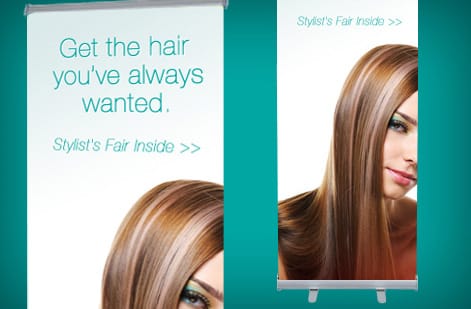


Explore more
Where to go next

By the numbers
One set of films, printed to cover a whole space
Common Questions
Common questions about the adhesive vinyl wrap and wall set
What is in the adhesive vinyl wrap and wall set?
Three printed films that cover the three surfaces most interiors actually have. Adhesive wall fabric handles painted drywall and large murals. Clear adhesive vinyl handles glass and acrylic where you want light to pass through. Front adhesive vinyl handles glass you can only reach from the inside, because its adhesive sits on the printed face. Together they let one design run across a whole space.
How is adhesive wall fabric different from regular wall vinyl?
Wall fabric is a polyester-based film with a low-tack pressure-sensitive adhesive rather than a solid PVC film with an aggressive one. It conforms to lightly textured paint, it repositions while you are still hanging it, and it releases cleanly instead of pulling paint or paper off the drywall. The matte surface also scatters overhead light, so large panels photograph without hot spots.
What does front adhesive vinyl mean?
It means the glue is on the printed side of the film instead of the back. You press the printed face against the inside of a window, and the artwork reads correctly to anyone standing outside. That is the whole reason it exists: storefronts and lobby glass are usually only reachable from indoors, and weather never touches the ink because the glass protects it.
Will clear adhesive vinyl really look transparent?
The film is transparent. What you print on it is not. Ink that covers an area blocks light there, while anything you leave unprinted stays see-through. That is why clear vinyl suits logos, frosted-look bands, hours of operation and open lettering. If you need a printed area to look solid rather than tinted, plan for a white ink layer behind that part of the artwork.
Can I take these graphics down without damaging the surface?
Adhesive wall fabric is the removable one. Warm the edge slightly, pull it back on itself at a low angle, and it comes off painted drywall in a sheet without residue. Window films release from glass cleanly as well, though older installations may leave adhesive that a plastic blade and a glass-safe cleaner will lift. Always test a small corner first on aged or freshly painted surfaces.
How do I measure and split a wall into printed panels?
Measure the finished area first, then decide the panel width based on how much film one person can hang alone. Overlap adjacent panels slightly and place the seams where the artwork is busy rather than through a face or a word. Add a margin past the trim line at the top, bottom and outside edges so a wall that is not perfectly square still gets full coverage.
What do these films cost to print?
Each film is priced live on its own product page, and all three in this set start at $25. Price moves with the printed square footage, the finish you select and the turnaround you choose, so a small window decal and a full conference-room wall sit far apart on the same price table. Configure the exact size to see your real number before you order.
Get Started
Ready to wrap the wall and the windows?
Print the whole set at 4OVER4.COM and keep one look running from the mural to the storefront glass. Measure your surfaces, price the exact square footage, and order the films together.
Legal Disclaimer
Gold Standard guarantees apply to all standard orders placed through 4over4.com. Price match requires verifiable proof of a competitor's published price for an equivalent product with matching specifications and turnaround time. Satisfaction guarantee covers manufacturing defects and print quality issues. Contact support with order number and documentation. On-time delivery rate based on tracked orders 1999 to 2026. Individual results may vary based on shipping carrier performance.
