
Spa Print Marketing Ideas from Magnets to Treatment Menus


Print the magnet first. It is the only spa handout that stays visible for months, because it has an obvious place to live and the fridge door is where people stand when they decide what to do with a free afternoon. Then print a treatment menu that groups services by outcome and states prices, and back both with gift certificates and referral cards that put a stranger in the chair.
Spa print pieces at a glance
| Piece | Typical size | What it carries | Where it goes | Product at 4OVER4 |
|---|---|---|---|---|
| Appointment magnet | 3.5 x 2 in, business card footprint | Name, phone, booking link, a blank line for the next date | Handed over at checkout, ends up on the fridge | Business card magnets |
| Fridge calendar or larger promo magnet | 4 x 6 in and up | Seasonal offer, membership tiers, aftercare reminders | Mailed to past clients or bagged with a retail purchase | Standard magnets |
| Event and opening magnet | 4 x 6 in postcard footprint | One date, one offer, one way to book | New location launches, member events, milestone promos | Save the date magnets |
| Treatment menu | 8.5 x 11 in flat, or tri-folded to 8.5 x 3.67 in | Services grouped by outcome, durations, prices, add-ons | Reception desk, treatment room, retail bag | Menu printing |
| Card at the counter | 3.5 x 2 in | Therapist name, referral offer, gift value | Referral cards, gift certificates, retail inserts | Spa business cards |
Match the format to how long the piece is meant to live. Permanent information belongs on a magnet, changeable information belongs on a menu you reprint. You can order business card magnets in any of the standard sizes straight from the configurator.
The magnet is the piece that does not get thrown away
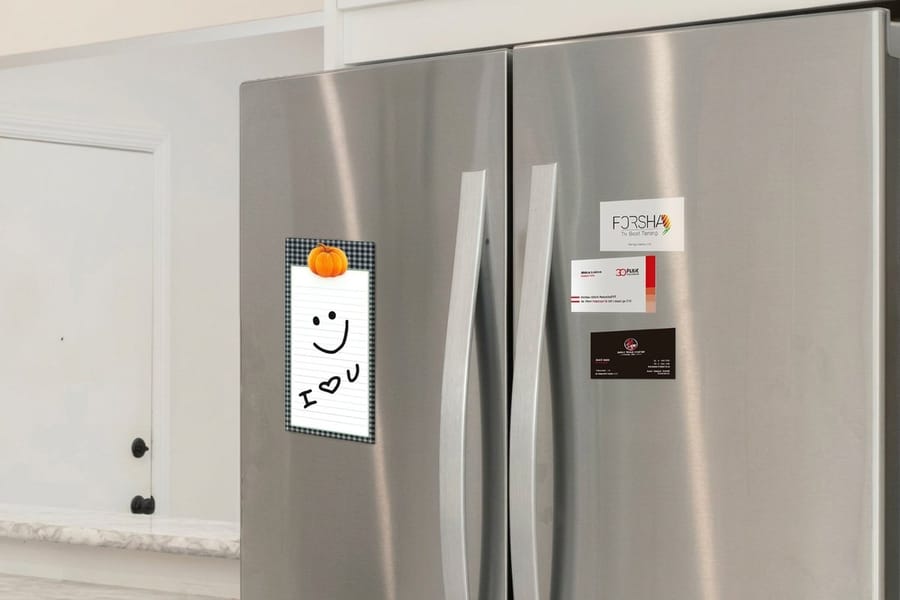
Almost every printed piece a spa hands out ends in a bin or a drawer within a week. A magnet does not, because it has somewhere obvious to live, and the fridge door is where people stand when they are deciding what to do with a free Saturday. That is the whole argument for magnets in a spa: not that they look better, but that they are still in the room three months after you gave them out.
Business card magnets start at $19.68, which puts them in the same range as a decent card that gets thrown away. The 3.5 by 2 inch footprint is deliberate. It fits the same wallet or bag as a normal card, and it fits alongside the school calendar and the takeaway numbers without taking over the door.
The limit worth knowing before you order: a magnet is heavier and thicker than a card, so mailing one is not the same postage as a postcard. Check the rate for the size and thickness you have chosen before you plan a mailing around it, and browse the full range on our magnet printing category if you are weighing a larger format.
What actually belongs on a spa magnet
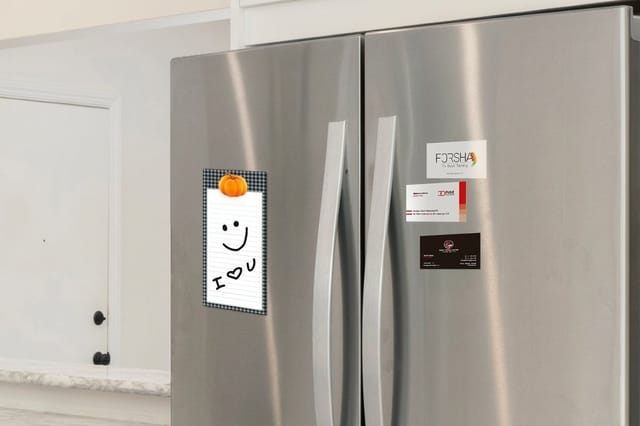
Four things: the spa name, a phone number people can read from arm’s length, a booking link short enough to type, and a clear blank line for the next appointment. Everything else is decoration. A magnet crowded with five services and a QR code and an address block is a magnet nobody reads, because the point of the format is that it gets glanced at, not studied.
The blank line is where most designs fail. Leave a genuine writing area with a light rule under it, and check what your finish does to a pen. A gloss face resists ballpoint and needs a permanent marker; a matte or uncoated face takes a normal pen and stays legible. If your front desk is going to write on these at checkout, choose the finish for the pen, not for the photograph.
Where magnets are the wrong choice
Magnets are a retention piece, not an acquisition piece. Handing them to strangers at a mall stand wastes the format, because the reason they work is that someone already has a reason to keep your name. Give them to clients who have just been treated, tuck them into retail bags, and mail them to lapsed clients with an offer attached.
They are also poor for anything that changes. Prices, staff names, and seasonal packages move; a magnet stays on a door for a year or more. Print the permanent information on the magnet and put the changeable information on the treatment menu, which you can reprint cheaply.
The treatment menu is where the upgrade gets sold
The magnet gets a client back. The menu decides how much they spend once they are in the chair. A menu that lists twenty-two services alphabetically makes people pick the one they already knew about, which is almost always the cheapest one. A menu that groups services by what the client wants, sore shoulders, tired skin, an hour of quiet, gets them reading past the treatment they came in for.
Put the duration and the price next to every service. Spas leave prices off menus more often than any other business, usually out of a fear of looking expensive, and the result is that clients ask the therapist mid-treatment and the awkwardness kills the upsell. Print the numbers. Then print short runs so a seasonal change costs a reprint rather than a pallet of stale menus in the back office.
Format follows where the menu lives. A tri-fold on 100lb gloss text sits in a retail bag and mails in a standard envelope. A flat 8.5 by 11 in on 14pt cover stands up on a reception counter and survives being handled by wet hands all day. If both matter, print both from the same artwork rather than compromising on one piece.
Grouping that sells the add-on
Add-ons need a home on the page, not a footnote. Give scalp massage, hot stones, or an extra fifteen minutes their own small block with the price stated as an addition, so the client is choosing an upgrade rather than deciding between two whole treatments. Naming the block "add to any treatment" does more for average ticket than any adjective in the service descriptions.
Keep descriptions to two lines. A menu is scanned in the ninety seconds between arriving and being taken through, and long paragraphs get skipped entirely. Two lines that say what it does and who it suits will outperform a beautifully written five-line paragraph every time.
The menu on the treatment room wall
The best-read menu in a spa is the one a client stares at while lying face up. A single laminated sheet or a small framed print in each room, listing add-ons only, catches people at the exact moment they are relaxed and thinking about coming back. It is a piece most spas never print.
Keep that version deliberately short. Six add-ons with prices, nothing else. It exists to prompt one question to the therapist, and a full service list on a treatment room wall reads as sales pressure in a place people came to stop thinking.
Gift certificates, referral cards, and the pieces that bring a stranger in
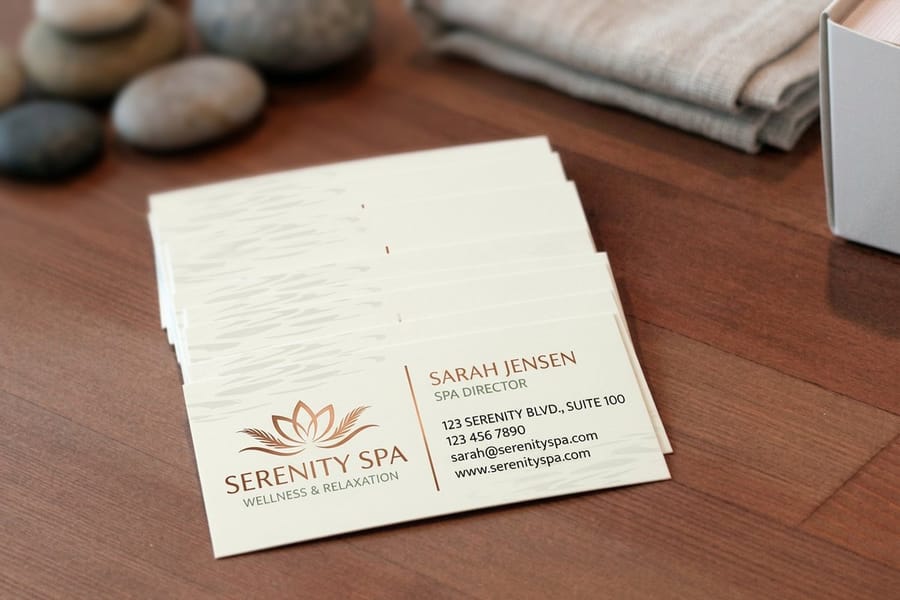
A gift certificate is the cheapest new client a spa gets, because someone who already trusts you is doing the recommending and paying for the first visit. Print them on real card stock and treat them like a product. A certificate printed on office paper tells the recipient exactly how much thought went into it, and it sets the value of the treatment before they have walked in.
Referral cards work the same way with a smaller ask. Give a departing client two spa business cards, which start at $17.57, with a stated offer on the back for the friend and something back for the client. Two cards, not ten. A handful reads as a chore; two reads as a favor you are asking of someone who liked their treatment.
For a launch, a new therapist, or a members-only evening, a save the date magnet at $19.68 does the job a flyer cannot. It carries one date and one action, and it stays on the fridge until that date passes, which is the only piece of print that keeps reminding people without you paying again.
What a gift certificate has to state
The value or the named treatment, an expiry policy if you have one, a serial or code you can check against your booking system, and how to redeem it. Vague certificates create front desk arguments. A code you can look up turns a disputed certificate into a ten second check.
Watch the expiry wording. Gift certificate expiry rules vary by state and some restrict or ban expiry on the paid value, so confirm the current rules where you operate before you print the terms onto a run of certificates.
Metal magnets for the pieces that stay
For retail displays, member lockers, or anything that gets handled daily, a metal magnet at $19.68 holds up where a flexible magnet curls. The face is rigid, so it keeps its shape on a display board, and it reads as an object rather than a handout.
The trade-off is weight and cost per piece. Metal is the wrong choice for a giveaway you print in the thousands, and the right choice for the fifty pieces that need to look deliberate. Match the format to how long the piece is meant to live.
Magnet pricing and specs at 4OVER4.COM
Magnet pricing moves with size, stock, and quantity, and the per unit cost drops as the run grows. The numbers below come straight from the live configurator, so you can size a season of appointment magnets before you order.
Quantity and price
Magnet pricing and specs
Live magnet pricing from 25 up, on 17pt and 35pt indoor stock.
| Quantity | Price Per Unit | Total |
|---|---|---|
| 1 | $19.68 | $19.68 |
You can also earn coins on every order and redeem them for future printing discounts, which stretches a small marketing budget across more reprints.
Stock, finish, and how they change the piece
Stock and finish decide whether a piece survives its job. A magnet is a printed face bonded to a flexible magnetic backing, so the decision that matters is the face: gloss for color and photography, matte or uncoated when staff need to write on it. Menus are the opposite problem, because they get handled with damp hands all day, so a heavier cover stock or a laminate on a counter menu earns its cost within a month.
Print it
Appointment magnets, ready to hand over
Standard business card footprint, printed full color, with room for the next date.
Color is worth a second thought for a spa. The palettes that read calm on screen, soft greens, sand, pale blues, lose contrast in print if the type sits too close to the background value. Keep at least one strong tone for the phone number and the booking link, and check a proof under the light your reception actually uses. If your brand runs pale, a matte finish holds the mood better than gloss, which pushes soft colors toward looking washed out. Related ideas for the wider campaign sit in our article on fall marketing ideas and in the physical therapy marketing playbook, which shares the same repeat-booking problem.
What to print by spa type
Different businesses need different pieces first, so here is a quick breakdown by type.
- Day spas. Appointment magnets at checkout, a tri-fold treatment menu in every retail bag, and gift certificates stocked behind the desk from October onward.
- Medi-spas. Menus that separate consultation from treatment, with pricing per session and per package, plus a magnet carrying aftercare contact details clients need at 9pm.
- Massage therapists. A referral card that names the therapist, and a fridge magnet with the booking link, because repeat bookings are almost the whole business.
- Nail and beauty salons. Short-run menus reprinted with each seasonal palette, and small magnets bagged with retail so the brand travels home with the product.
- Wellness studios and memberships. Save the date magnets for member events, and a rate card that shows what a membership saves against single sessions.
Where the magnet blanks live
If you are not starting from scratch, templates speed everything up. 4OVER4.COM sizes its blanks to exact product specs so your artwork lines up with the cut lines and bleed, which matters more on a magnet than on a card because there is no forgiving margin once it is die cut. Our guide to print-ready files covers bleed, resolution and color mode before you upload.
Start fast
Where the magnet blanks live
Magnet blanks cut to the die, because a die-cut edge leaves no forgiving margin.
Wally puts the spa on the fridge door
One magnet, one menu, and a card worth passing on
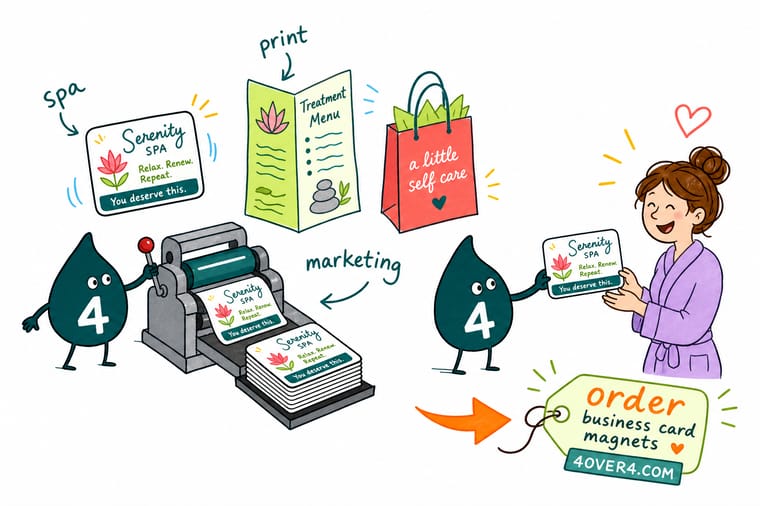
Print the magnet at 3.5 x 2 inches with the phone number large, the booking link short, and a real blank line for the next appointment. Choose matte if the front desk writes on it, keep prices on the treatment menu and print it in short runs, and hand every departing client two referral cards instead of a handful.
Order appointment magnets →What to remember about spa print marketing
Design tips that work on every piece
- Leave a real writing line. A magnet without a blank line for the next appointment is a business card that sticks. The line is the reason the front desk uses it.
- Choose the finish for the pen. Gloss looks better in a photograph and rejects ballpoint. If staff write on the piece, go matte or uncoated and test with the pen you actually keep at the desk.
- One phone number, readable across a kitchen. Set it larger than feels comfortable. A magnet is read from a meter away, standing up, without glasses.
- Group the menu by outcome, not by alphabet. People book a result, not a technique. Headings that name the problem sell the treatment that solves it.
- Print prices, print short runs. Hiding prices costs bookings. Reprinting is cheap, and a short run means a price change costs a reprint instead of a storeroom.
Explore more
More ways to print and promote
Magnets print on 17pt or 35pt indoor magnet stock in 5 business days, spa cards in 3.
 Product Business Card Magnets The appointment reminder that lives on the fridge door.
 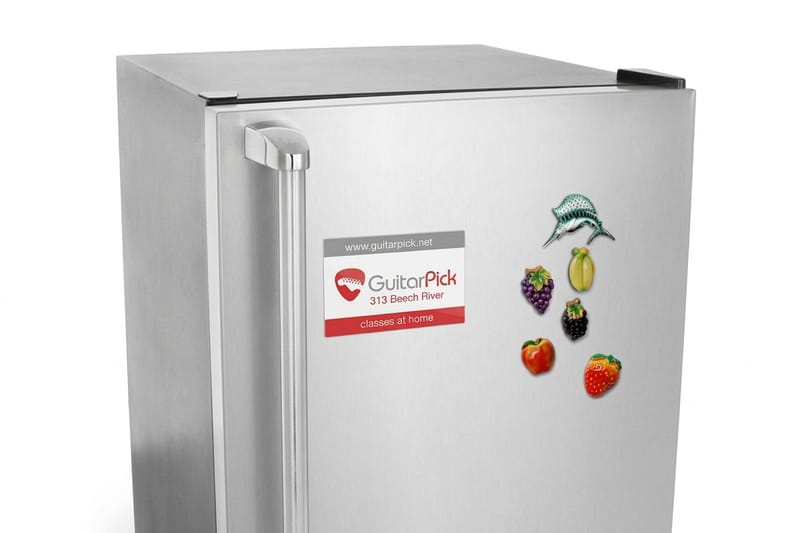 Product Standard Magnets Larger formats for seasonal offers and mailed promos.
 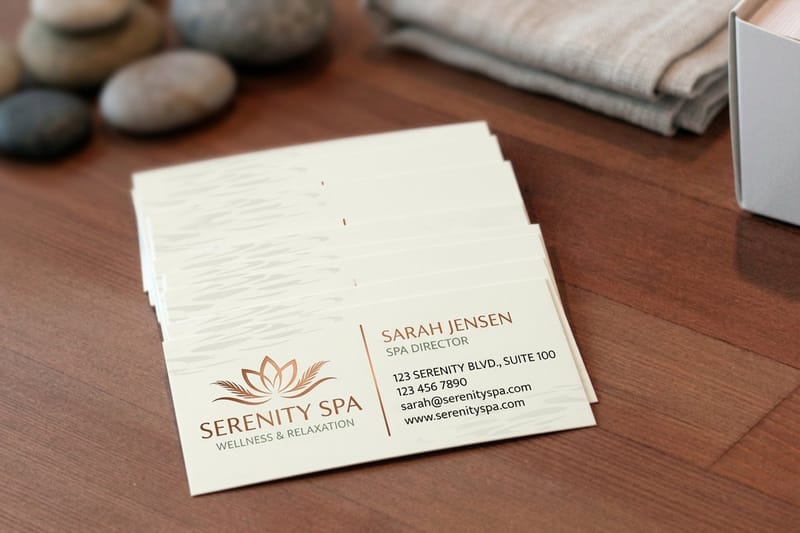 Product Spa Business Cards Referral cards and counter pieces on real card stock.
 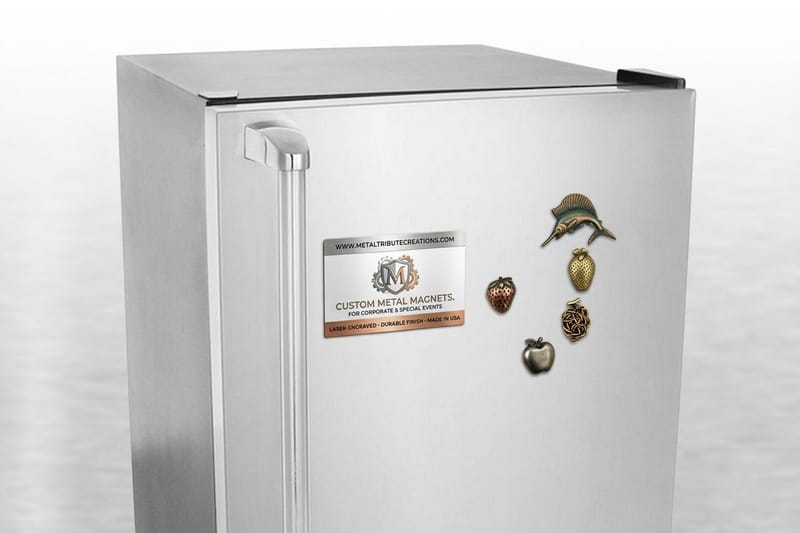 Product Metal Magnets Rigid faces for displays and pieces that get handled daily.
 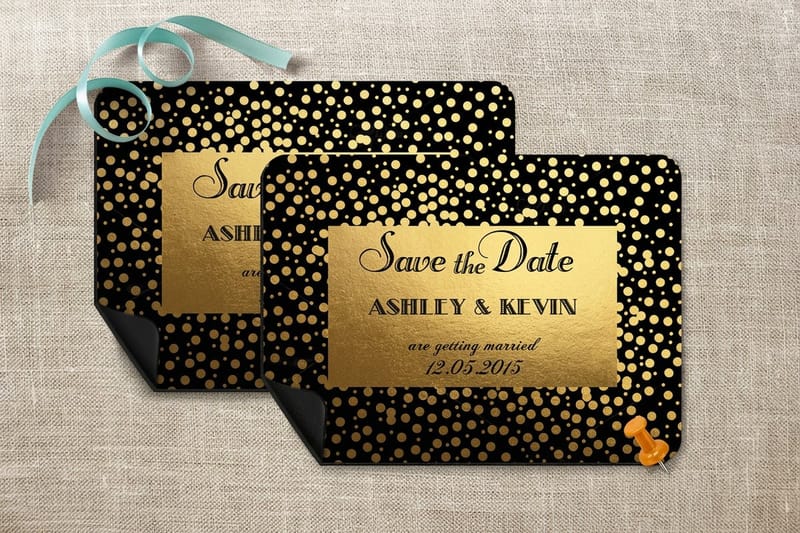 Product Save the Date Magnets One date, one offer, on the fridge until it passes.
 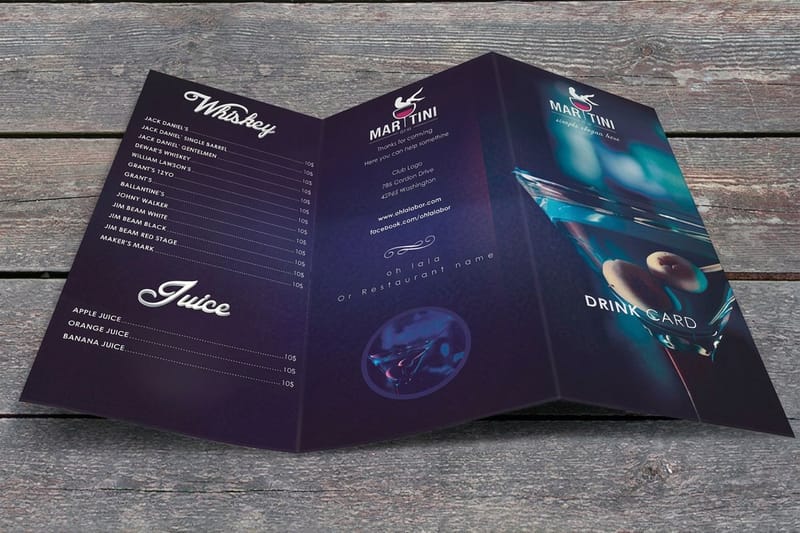 Category Menu Printing Treatment menus in flat, folded and counter formats.
 Ready to print your spa marketing set?
Pick your magnet size, drop in your artwork or a blank template, and 4OVER4.COM prints the face gloss or uncoated, as fast as your deadline needs.
Common questions about spa print marketing
Do fridge magnets actually bring spa clients back?
They work for clients who have already been in, and they do very little for people who have not. The mechanism is simple: a magnet stays visible on a fridge door for months, so your name is in front of someone at the moment they are deciding what to do with a free afternoon, long after an email has been archived. Give them out at checkout with the next appointment written on the blank line, tuck them into retail bags, and mail them to clients who have not booked in six months with an offer attached. Handing them to strangers at an event wastes the format, because the value comes from the person already having a reason to keep your name.
What size should a spa appointment magnet be?
Start at 3.5 by 2 inches, the same footprint as a business card. It fits in a bag on the way home, it sits on a fridge door without dominating it, and it holds a name, a phone number, a booking link and a writing line comfortably. Move up to 4 by 6 inches only when the magnet has a real job that needs the space, such as a seasonal offer, a membership tier breakdown, or aftercare instructions a client will look up at home. Business card magnets at 4OVER4.COM start at $19.68 and standard magnets in larger formats start at the same price, so the decision is about the content, not the budget.
Should I put prices on my treatment menu?
Yes. Leaving prices off is the most common mistake on spa menus, and it costs bookings rather than protecting them. A client who cannot see a price either asks the therapist mid-treatment, which is awkward enough to kill the upsell, or defaults to the one service they already knew the cost of. Print durations and prices next to every service, give add-ons their own block with the price stated as an addition, and print in short runs so a seasonal price change means a reprint rather than a storeroom full of menus you cannot use.
Can my front desk write on a magnet at checkout?
Only if you choose the finish for it. A gloss face photographs beautifully and rejects ballpoint ink, which smears and then rubs off in a bag. A matte or uncoated face takes a normal pen and stays legible for the weeks between booking and the appointment. Test with the pen that actually sits at your desk before you order the run, and design a genuine writing area with a light rule under it rather than hoping there is a gap somewhere in the layout.
How many referral cards should I give a client?
Two. A handful reads as a task you have handed someone, and most of them end up in a bin on the way to the car. Two cards read as a favor asked of a person who just enjoyed their treatment, and they get passed to the one or two people that client actually wants to recommend you to. Put a stated offer on the back for the friend and something back for the client, name the therapist so the referral feels personal, and print them on the same stock as your business cards so they do not feel like a discount voucher.
