
Invisible Marketing: How Brands Sell Without Saying a Word


Marcus is our print marketing voice, built from the knowledge of our production team, with over 20 years in printing.
Why the Quietest Brand Signals Do the Heaviest Selling
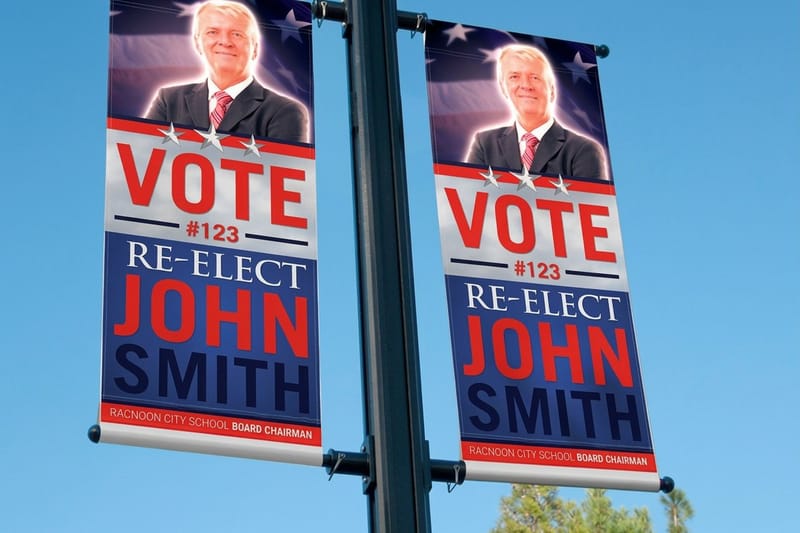
Invisible marketing is everything a brand says while nobody thinks it is talking, and most of it arrives as print. It is the weight of a business card between two fingers, a custom mailer box that opens without a fight, tissue printed in your brand color, and a thank you card on 16pt uncoated soft touch stock waiting under the lid. It is also a banner whose back artwork does not ghost through the front, because a 15oz. BlackOut Vinyl core sits between the two prints. None of it announces itself, and that is why it lands. The customer never raises the defenses they raise for a headline.
Advertising people call the loud half of this work persuasion. The quiet half has no agreed name, so most teams never budget for it. They pour money into the pitch and hand the product to a courier in a plain box with a packing slip that reads like a receipt from a parts warehouse.
That gap is where the opportunity sits. Paid attention is expensive and rented. The attention inside a delivered package is already bought and already positive, because someone chose you and is now waiting to be proven right. A printed insert, a branded sleeve, a card with real thickness costs cents against a click, and it arrives at the one moment when a buyer is leaning toward you rather than away. 4OVER4.COM has printed 10 billion cards and print products since 1999, and the pieces that quietly do this work are the ones customers reorder without being asked.
The rule behind all of it
Anything a customer touches is media. A mailer, a lanyard, a table tent, a charger left on a desk. If it carries your color, your typeface, or your finish, it is running an impression, and it runs that impression for free every time it is picked up.
Start here
The quiet piece large format relies on
An opaque core keeps both printed faces clean, which is the kind of detail nobody praises and everybody notices.
The Unboxing Moment Nobody Reads as a Sales Pitch
Delivery is the only advertisement your customer schedules for themselves. They know roughly when it arrives, they are usually alone, and they open it with their hands rather than their scroll thumb. Attention at that moment is close to total, and it lasts about forty seconds. What you put in those forty seconds decides whether the second order needs a discount code to happen.
Treat the sequence like a storyboard. Outer box, first layer, the product, the last thing they find. Each stage can carry one quiet signal and no more, because stacking pitches turns the moment back into an ad. Word of mouth compounds from here too, and the numbers behind that are laid out in our word of mouth marketing data and facts.
- Outer layer. Restraint wins. One mark, correct color, nothing shouting from the shipping label area.
- First reveal. Tissue, a sleeve, or a wrap band. This is the stage that reads as care rather than cost.
- Product contact. Whatever touches the item should feel deliberate, not like void fill grabbed from a bin.
- Last find. A card, a note, a small object. It is the piece they hold longest and the only one that survives the recycling.
- The follow up. Anything printed with a reason to come back beats a coupon with no story attached.
The three formats below cover the extremes of quiet branding, from a full room presence down to something that lives in a pocket. They are worth studying together because each one solves the same problem at a different distance from the customer.
Print picks
Three formats that sell without a pitch
Live prices, ready to customize with your artwork and quantity.
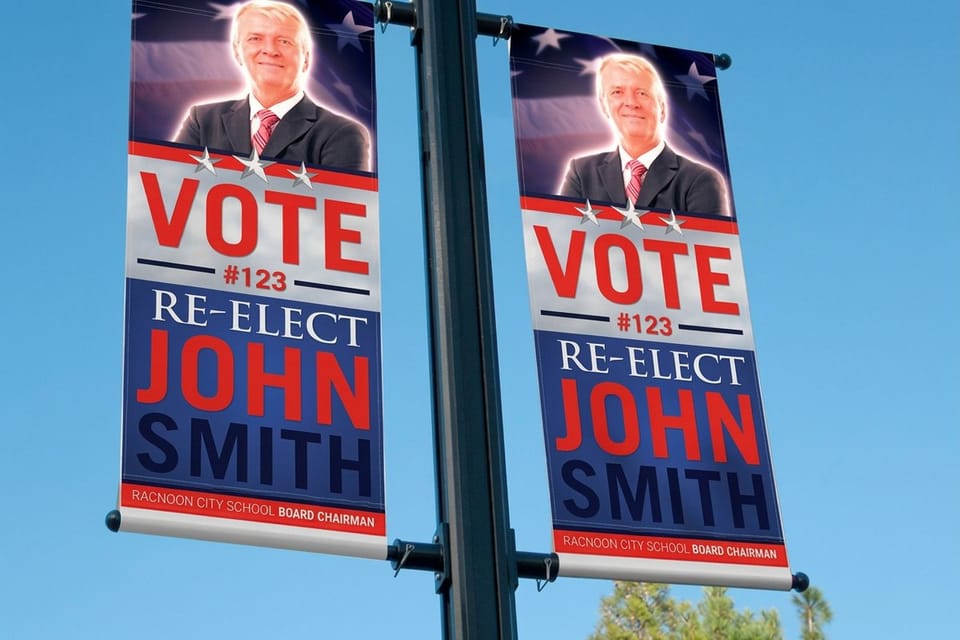
 2 Sided Blockout Banners $108.75 each A blockout layer stops the back artwork showing through, so both faces read clean.
 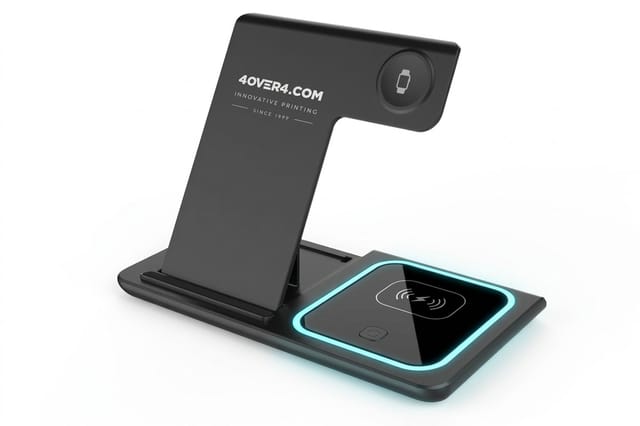 3 in 1 Foldable Wireless Charger $15.00 each A ready-made desk object people actually keep and use every single day.
 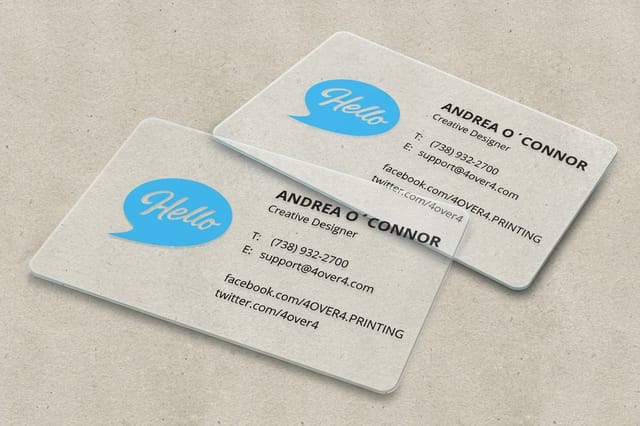 30mil Clear Plastic Cards 500 for $529.26 Transparent stock that signals premium before a single word gets read.
 Packaging, Tissue, and the Physics of a Good First Impression
Before anyone reads, they weigh. Hands measure thickness, stiffness, and surface drag faster than eyes read a line of copy, and the verdict arrives as a feeling rather than a thought. That is why a thin, floppy card can undo a beautifully written brand story, and why a heavier stock with a soft finish makes a modest product feel considered.
Three physical variables carry most of the meaning. Weight suggests seriousness. Opacity suggests quality control, because show through reads as cheapness even to people who could never name what bothered them. Finish sets temperature, with matte and soft touch reading calm and expensive while high gloss reads energetic and retail.
What each material quietly says
- Uncoated and kraft. Honest, handmade, local. Ideal for food, wellness, and anything sold on provenance.
- Soft touch matte. Considered and premium. It slows the hand down, which is the entire point.
- Gloss and high build. Energetic and confident. Right for entertainment, events, and anything meant to catch light.
- Clear plastic. Modern and technical. Transparency reads as nothing to hide, which is a message no headline can fake.
- Blockout stock. Solid and professional. Two clean faces with no ghosting says the brand sweats details.
The same logic scales to hospitality and service businesses, where the printed piece on the table often outperforms the campaign that paid to get people through the door. There are practical examples of that in our guide on how to sell more catering with five marketing ideas.
Thank You Inserts That Earn the Second Order

The thank you insert is the most underused piece in commerce. It costs less than the packing tape, it is guaranteed to be seen, and it is the only marketing asset a customer might photograph and post without being asked. Most brands either skip it or ruin it by turning it into a coupon with a smile drawn on top.
A good insert does one job. It confirms the buyer made a smart decision. Everything else, the discount, the review request, the social handle, is secondary and should look secondary. If the card has three competing calls to action it stops being a gift and starts being a flyer, and it goes in the bin with the rest of them.
A four line insert that works
- Line one. Name what they bought, in their words, not your SKU language.
- Line two. One specific detail about how it was made, packed, or checked before it left.
- Line three. A real human signature block, or the first name of whoever handled the order.
- Line four. One next step, and only one. A care tip, a refill reminder, or a reason to come back in ninety days.
Print these in a single batch and the cost per card collapses. The pricing table below shows how quantity moves the number on a real configurator rather than a rate card estimate.
Quantity and price
Blockout banner pricing and specs
Real configurator numbers. The more you print in one run, the lower each piece lands.
| Quantity | Price Per Unit | Total |
|---|---|---|
| 1 | $108.75 | $108.75 |
| 2 | $108.74 | $217.47 |
| 3 | $108.74 | $326.22 |
| 4 | $97.76 | $391.02 |
| 5 | $97.76 | $488.78 |
| 6 | $97.76 | $586.53 |

When Transparency Is the Whole Message
Some materials argue on your behalf before a word gets read. Clear plastic is the clearest example. Hand someone a transparent card and the reaction is physical, a slight pause and a tilt toward the light, because the object behaves differently from every other card in the wallet. That pause is attention you did not have to buy.
Use it where the message is precision, membership, or access. Loyalty programs, VIP tiers, appointment cards for clinics and studios, gift cards that should not feel disposable. The stock does the positioning, so the artwork can stay minimal, and minimal artwork is what makes transparency read as confident rather than gimmicky.
- Keep coverage low. Leave real open area or the transparency effect disappears under ink.
- Use white ink deliberately. A white layer under key elements keeps text legible on any background.
- Mind the thickness. 30mil has the rigidity people associate with bank and access cards.
- Design for both sides. Anything transparent will be flipped over within seconds of being handed across.
Premium material
30mil clear plastic cards
Rigid transparent stock with the heft people associate with access and membership cards.
Objects That Live on a Desk and Keep Working
The best invisible advertising is useful enough to be kept for reasons that have nothing to do with you: a charger, a notebook, a well made bag. The 3 in 1 Foldable Wireless Charger is the easy place to start, a 7 by 6.75 inch foldable pad at $15.00 a unit, sold from a single piece and ready in 1 business day, so ten for your best clients cost $150.00. It sits in someone's daily environment for a year or more, and every use is a low intensity impression delivered inside a moment of convenience rather than interruption.
Choose the object by the room you want to be in. Desk objects put you in the workday. Kitchen objects put you in the home. Bag and travel objects put you in public, where other people see the mark too. The trap is buying cheap. A promo item that fails is worse than none, because failure is also a message and it is one people remember precisely.
There is a longer list of ways to place these pieces across a campaign in our roundup of ten ways to use marketing promotions, and the service industry version, where the object often replaces the ad entirely, in nineteen physical therapy marketing ideas.
Keep working after the sale
A branded object that stays on the desk
Useful enough to keep for its own reasons, which is what turns a promo item into a year of quiet impressions.
Signage That Sells by Being Impossible to Misread
Large format is where invisible marketing gets tested in public. A banner at a trade show, a market stall, or a storefront is judged in under two seconds from ten feet away, and it is judged on execution before content. Wrinkles, ghosting, a washed out color, a sagging hem, all of it registers as a verdict on the business behind it.
Double sided placement is the common failure. Print artwork on both faces of a standard banner and each side bleeds faintly through the other, which turns crisp type into something faintly dirty. A blockout core solves it by putting an opaque layer between the two prints, so a hanging banner in an aisle reads perfectly from either direction. That is a detail no visitor will ever compliment and every visitor will feel.
Table level pieces follow the same rule at closer range, and there are strong examples of what a small printed surface can carry in ten daring designs for dazzling table tents.
Compare formats
Popular banners, side by side
Mini retractable stands run 1 for $49.41 in 3 business days and fabric tube displays 1 for $163.67 in 4.
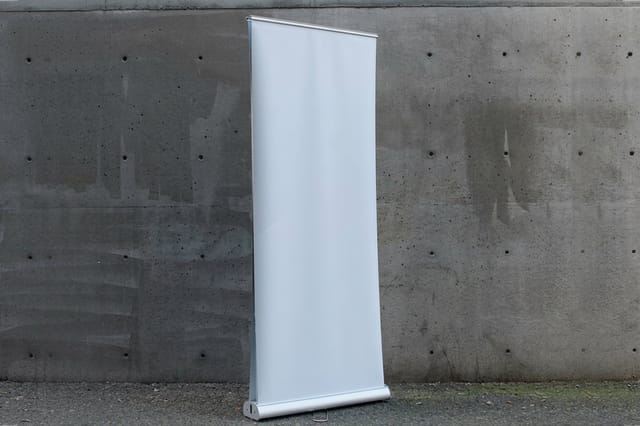 Double Retractable Stands | 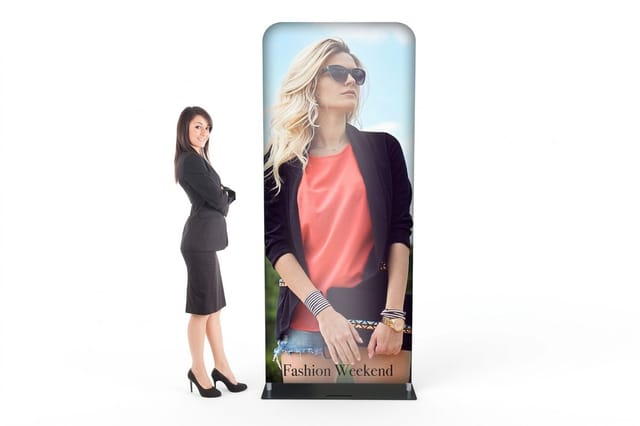 Fabric Tube Displays | 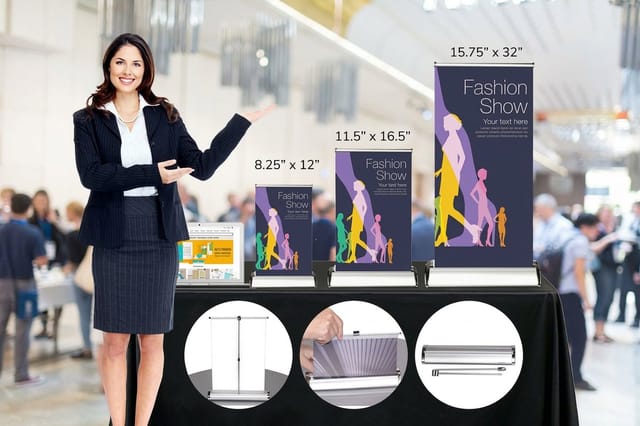 Mini Retractable Banner Stands | 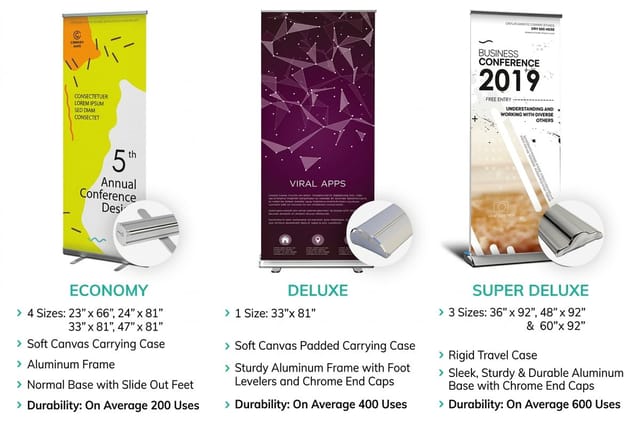 Retractable Fabric Banner Stands | |
|---|---|---|---|---|
| Min price | $393.75 | $163.67 | $49.41 | $159.85 |
| Paper / stock | 13oz. Smooth Blockout Vinyl | 8.8oz. Tension Fabric | 10 mil Premium Vinyl | 9oz UV Printed Coated Polyester Fabric |
| Size | 33" x 81" | 36" x 90" | 8.25" x 12" | 23" x 66" (Economy) |
| Default qty | 1 | 1 | 1 | 1 |
| Turnaround | 3 business days | 4 business days | 3 business days | 3 business days |
| Rating | ||||
| View & customize | View & customize | View & customize | View & customize |
Building an Invisible Marketing System You Can Actually Print
A system beats a shopping list. Map every physical point where a customer meets your business, then decide what each one should say without words. Most brands find five to eight touchpoints and discover that three of them currently say nothing at all, which is the fastest improvement available to them this quarter.
The four step build
- Map the journey. First contact, purchase, delivery, use, reorder. Write down the physical object present at each stage.
- Assign one signal per stage. Reliable, premium, personal, effortless. One word each, no stacking.
- Pick materials that match the signal. Stock, thickness, and finish before layout. The material decision is the message decision.
- Print in batches and hold stock. Small pieces reordered constantly cost far more than one considered run.
Cost per piece falls sharply with volume, which is why the quiet touches are usually cheaper than the campaign that drove the traffic. Seasonal businesses see this most clearly, and the pattern is worked through in twenty one pool company marketing ideas. If you are comparing print suppliers before committing to a system, the trade offs are laid out in our breakdowns of GotPrint coupon and promo alternatives and Overnight Prints alternatives.
Start fast
Templates and print-ready blanks
Free layouts plus exact-size blanks so your files land inside the trim every time.
Wally explains invisible marketing
The pieces that sell for you while nobody notices they are selling
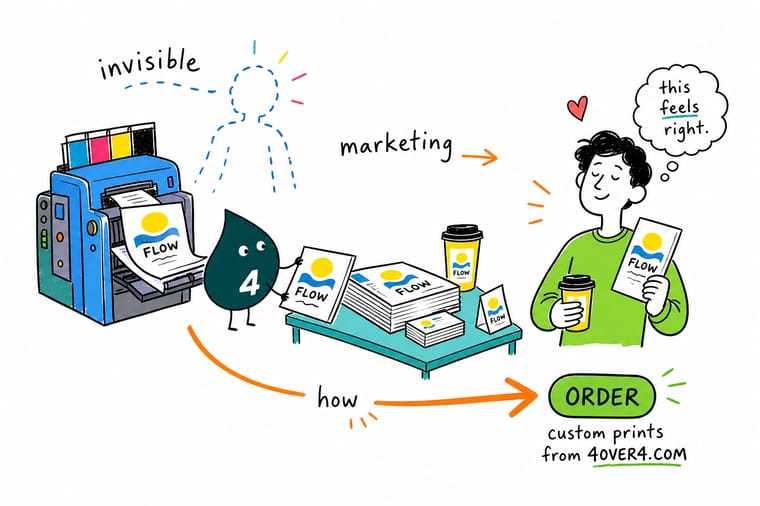
Think of your brand as a set of surfaces rather than a set of messages. Every surface a customer touches is running an impression, and the ones that arrive after the sale are the cheapest attention you will ever get. Pick one signal per touchpoint, choose the material that carries it, and print the whole set in a single run. That is the entire method, and it costs less than the ads that got them there.
Print your quiet touchpoints →What to Remember About Selling Without Saying a Word
Keep reading
Four pages on catering, referrals, promotions and table tents
Five catering moves where print closes the sale, the referral numbers behind word of mouth, ten promotions that still convert in print, and ten table tent layouts that work at close range.
Sell More Catering Five marketing moves where the printed piece does the closing. Word of Mouth Data The numbers behind referrals, and why unboxing feeds them. Ways to Use Promotions Where promotional objects belong in a real campaign. Daring Table Tent Designs Small printed surfaces that carry a full brand voice. Explore more
More ways print sells for you
Related pages across 4OVER4.COM, one card per type so you can jump anywhere.
Product 2 Sided Blockout Banners Two clean faces with no ghosting between them. 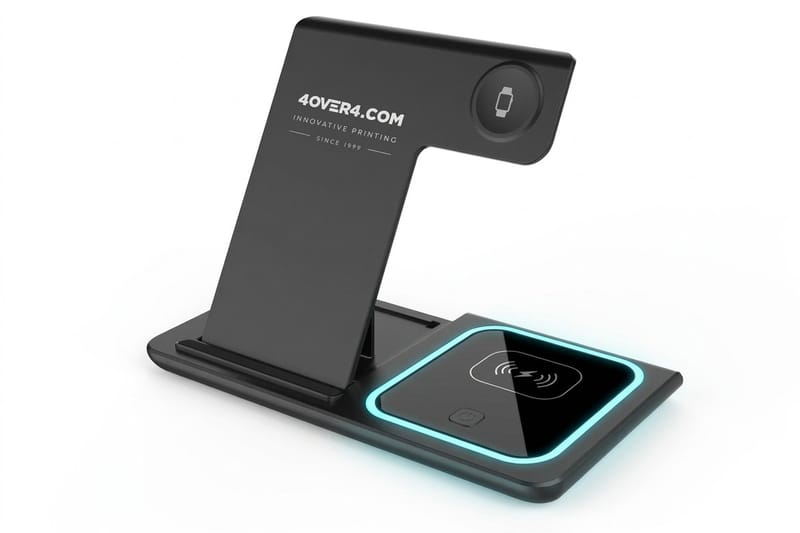 Product 3 in 1 Foldable Wireless Charger A desk object people keep for years. Product 30mil Clear Plastic Cards Transparency that reads as premium on contact.
 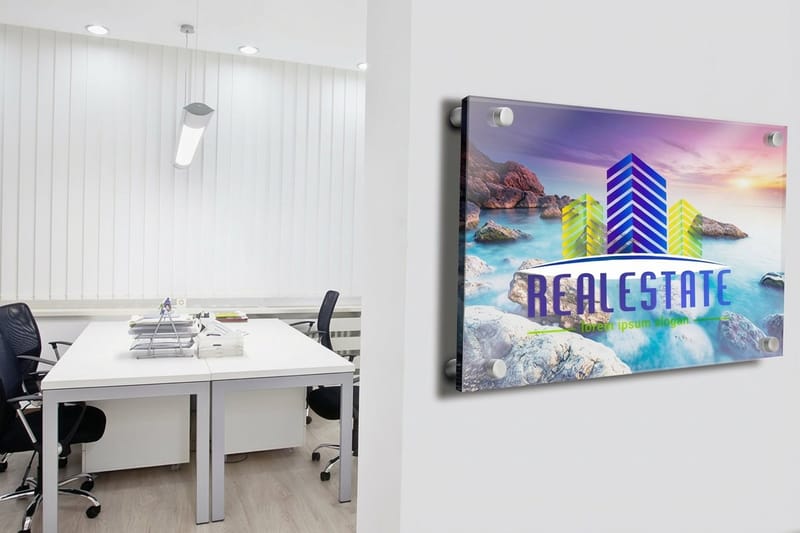 Guide Sell More Catering Five ideas built around print that closes quietly.
  Statistics Word of Mouth Marketing Data What referral behavior actually looks like in numbers.
  Alternative 4OVER4 vs GotPrint Promos How the coupon math compares on real orders.
  Alternative 4OVER4 vs Overnight Prints Turnaround, stocks, and finish options side by side.
  Article Daring Table Tent Designs Ten layouts that work at close range. Article Ways to Use Marketing Promotions Placing promotional print where it earns attention. Article Physical Therapy Marketing Ideas Nineteen moves for practices that grow on trust. Article Pool Company Marketing Ideas Seasonal print tactics that keep working off season.
 Ready to make your quiet touchpoints do the selling?
Choose the material that carries your signal, upload your artwork, and print the whole set in one run so every surface a customer touches says the same thing.
Invisible Advertising Questions, Answered
What is invisible advertising?
Invisible advertising is any branded signal a person absorbs without recognizing it as marketing. It lives in materials and moments rather than headlines, so it bypasses the resistance people bring to a pitch. A blockout banner with no ghosting, a card with real thickness, tissue wrap in a brand color, a thank you insert signed by a human, a charger that sits on a desk for two years. None of those make a claim. All of them build the impression that this business is careful, and careful is what people buy again.
How do I choose the right invisible advertising?
Start from the journey rather than the catalog. Write down every physical point where someone meets your business, then give each point a single signal to carry, such as reliable, premium, personal, or effortless. Match materials to those words before you touch layout. Public and high traffic moments call for large format like 2 Sided Blockout Banners. Handoff moments call for a card with presence. Post purchase moments call for an insert or a useful object. If a piece cannot be assigned one clear signal, it does not belong in the system yet.
What does invisible advertising cost and how are prices set?
Price is driven by format, material, size, quantity, and turnaround, and quantity moves it hardest because setup is spread across the run. On 4OVER4.COM, 2 Sided Blockout Banners start at $108.75, the 3 in 1 Foldable Wireless Charger starts at $15.00, and 30mil Clear Plastic Cards start at $529.26 for a full card program. Specialty stocks and finishes such as clear plastic or blockout cores cost more per unit than standard paper, and rush turnaround adds a premium. Configure the exact quantity on the product page to see live pricing rather than an estimate.
What sizes, stocks and finishes are available for invisible advertising?
The range covers more than 60 paper and specialty stocks, from uncoated and kraft through heavy coated cover weights, soft touch matte, gloss, spot UV, raised foil, rigid 30mil plastic, and clear plastic. Banners come in standard and custom sizes with optional hems and grommets, and blockout versions add an opaque core for double sided artwork. Cards run standard, square, and custom shapes with rounded corners available. The practical rule is to pick the material for the signal you want carried, then size the piece to the moment it appears in.
How long does invisible advertising take to print and ship?
Turnaround depends on the product and the finish. Standard paper pieces such as inserts and cards typically print in one to four business days, with same day production available on many formats when the file is print ready and the order is placed early. Specialty work like clear plastic cards, blockout banners, and promotional objects needs longer because of the extra production stages. Shipping time is added on top of production, so for a launch or an event plan roughly two weeks end to end and order proofs before the full run.
