
Free Wedding Invitation Samples and the Styles Worth Exploring


Sofia is our design and templates voice, built from the knowledge of our production team, with over 20 years in printing.
What a Wedding Invitation Sample Tells You That a Screen Never Will
Free wedding invitation samples are printed pieces on the real stocks and finishes, such as 14pt uncoated cover, gold foil or a raised embossed monogram, that 4OVER4.COM mails to you at no charge so you can judge them in hand before you order. Every invitation looks convincing on a backlit monitor, but paper does not glow, and that is the whole problem. A screen adds brightness that heavy cotton stock will never have, flattens texture into a smooth rectangle, and turns a soft blush into something closer to coral. The first time most couples see the real gap is the day the finished box arrives, which is far too late to change anything.
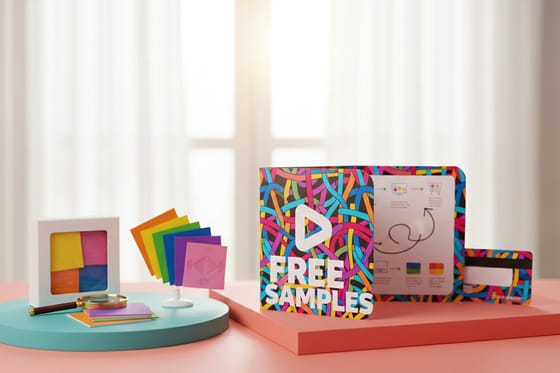
Free wedding invitation samples close that gap for the price of a few minutes of your time. You get printed pieces in your hands, on the actual stocks, with the actual finishes, so the decision stops being a guess. Hold two side by side and the winner usually becomes obvious inside a minute.
Order samples before you finalize anything. The sequence that saves couples the most money is simple: request samples, choose the stock and finish from what you can touch, then design to that choice and print the full run. Doing it the other way around means designing for a look you have only imagined, then discovering that your delicate hairline script disappears on uncoated stock or that the deep navy you picked prints closer to charcoal. Our short walkthrough on ordering free wedding stationery samples covers exactly what to ask for.
Step 1: judge the paper before you judge the design
Ignore the artwork on the sample for the first ten seconds. Flex the sheet, listen to the sound it makes, feel the edge between your thumb and finger. Weight and rigidity communicate formality faster than any font choice, and guests register it before they read a single word.
Step 2: read the type at arm’s length
Hold the sample the way a guest will, at reading distance under normal room light. Fine script that looked elegant zoomed to 300 percent on your laptop can close up and turn muddy at true size, especially on softer uncoated stocks that let ink spread slightly.
Step 3: tilt every finish under warm light
Foil, pearlescent coatings and spot gloss are all made of reflection, so they only reveal themselves in motion. Tilt the sample under a lamp and near a window. A finish that looks quiet under a ceiling light can turn spectacular under candlelight at an evening reception.
Step 4: put one in an envelope and mail it to yourself
This is the step almost nobody takes and the one that catches real problems. You learn whether the piece fits the envelope cleanly, how it survives the sorting machines, and whether the postage you budgeted actually covers the weight of the finished suite.
Shop the day
Wedding printing collection
Invitations, save the dates, menus and thank you cards in one matched family.
What a Wedding Invitation Sample Pack Shows You
A wedding invitation sample pack puts the choices you are weighing on your own table: coated and uncoated cover stocks such as 14pt Gloss Cover and 14pt Uncoated Cover, foil in gold, silver, rose gold or copper, raised embossing, a letterpress style impression, and flat or folded cards. You see the true weight, the real color of the ink on each sheet and how a finish moves under a lamp, before you commit to invitations that start at $19.77 for a flat card or $421.91 for foil.
How free wedding invitation samples work
The samples cost nothing, ship free and need no design file. You request them on the free samples page the way you place a small order: pick the stocks and finishes you want to compare, enter your address and confirm. Delivery time depends on standard shipping to your address, so ask for them before you start the design. The steps from request to final order are laid out in the section on how to get free wedding invitation samples.
Wedding Invitation Styles Worth Putting in Your Sample Pack
Most couples request a single sample of the design they already like, compare it to nothing, and call the decision made. Sample across styles instead. A flat card prints full color on stocks from 14pt Gloss Cover to 24pt Ultra Thick Gloss Cover, a foil card presses gold, silver, copper or rose gold leaf into 16pt Silk Laminated or 14pt Uncoated Cover, and an embossed card lifts the design out of 16pt laminated stock. You cannot reason your way toward those physical differences, and three pieces on your kitchen table tell you more than three hours of browsing.
Ask for at least one of each family. Flat Wedding Invitations show you what your typography looks like with nothing to hide behind, Embossed Wedding Invitations add relief you can feel through the back of the sheet, and Foil Wedding Invitations bring genuine metal into the picture. Once you have handled all three, the budget conversation becomes much easier because you know precisely what the upgrade buys. Each family has a short story to tap through first: flat wedding invitations, embossed wedding invitations and foil wedding invitations.
- Flat printing. Full color, unlimited ink coverage, the widest range of stocks, and the friendliest price for large guest lists.
- Foil stamping. Metallic leaf pressed into the surface in gold, silver, rose gold or copper, ideal for names, monograms and borders.
- Embossing. Raised relief created by pressure rather than ink, elegant in a blind treatment with no color at all.
- Letterpress character. Deep impression pressed into thick, soft stock, the classic heirloom look for a formal evening wedding.
- Folded formats. A card that opens gives you room for the ceremony details, a map, or a note to your guests without adding a separate insert.
Keep the samples somewhere visible for a few days rather than deciding on the spot. First impressions favor whatever sparkles most. The style you still reach for on day three is usually the one that matches the wedding you are actually planning.
Print picks
Three wedding invitation styles worth sampling
Live prices, ready to customize with your names and date.
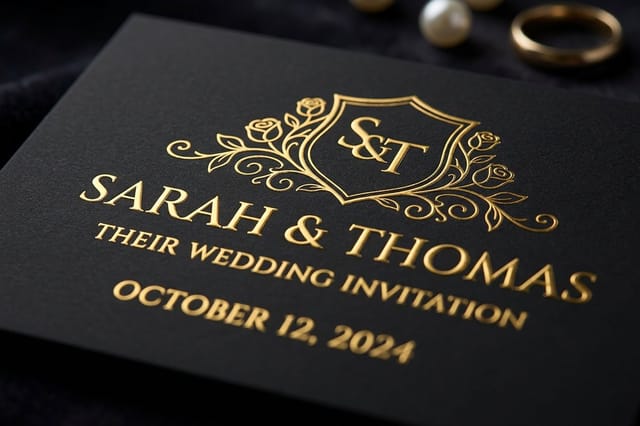 Embossed Wedding Invitations 100 for $220.20 Raised names and monograms you can feel with a fingertip before you read them.
 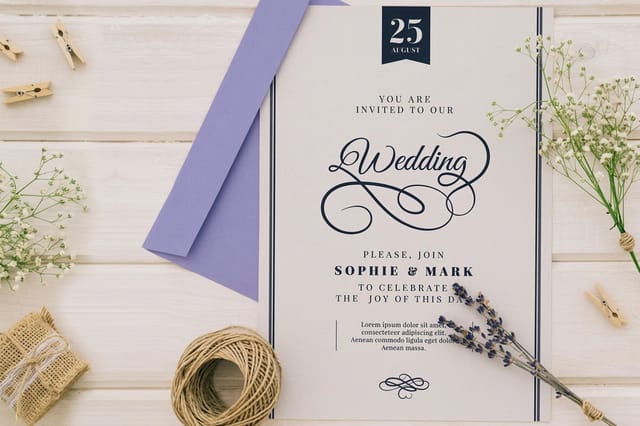 Flat Wedding Invitations 25 for $19.77 Clean single-panel printing that lets the typography and the paper carry the day.
 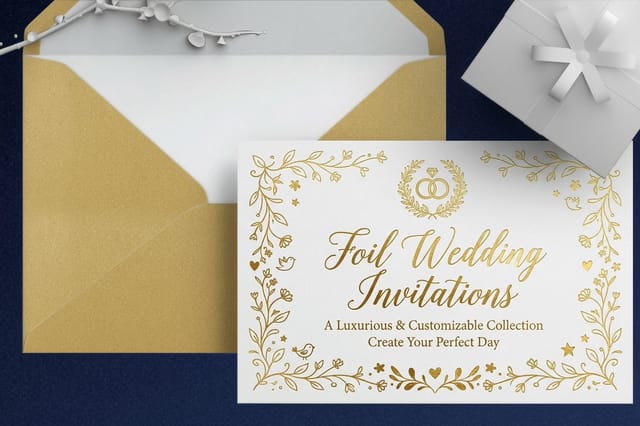 Foil Wedding Invitations 500 for $421.91 Genuine metallic foil that shifts and catches light as the card moves in hand.
 Foil Wedding Invitations and How the Metal Actually Behaves
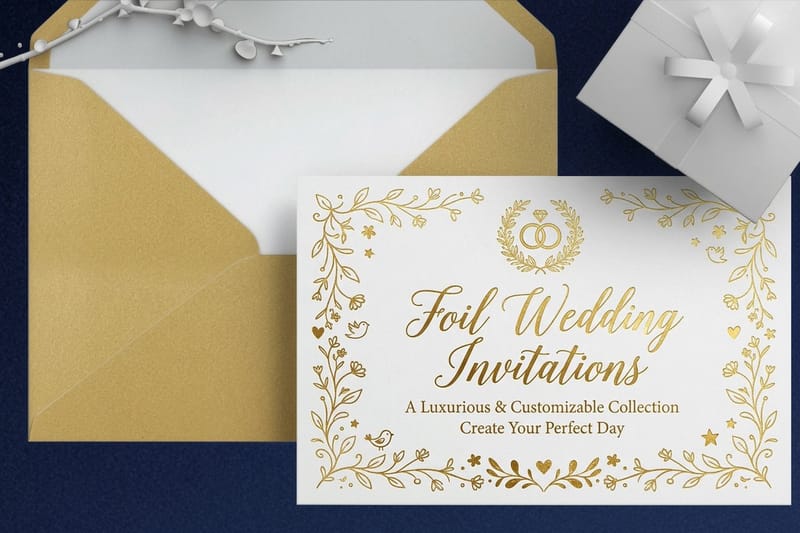
Foil is the finish people most often misjudge from photographs, because a photo freezes one angle of a surface whose entire personality is movement. Real foil is metal leaf bonded to the sheet under heat and pressure, so it reflects like jewelry rather than sitting on top like ink. A gold digital print and a gold foil stamp look similar in a product shot and nothing alike in a hand. Our guide to gold foil printing and its silver twin explains how the stamp is made.
When you sample Foil Wedding Invitations, pay attention to how much of the design is foiled. A thin monogram and a set of hairline rules read as refined. Large solid areas read as bold and modern. Both work, but they belong to very different weddings, and the sample is where you find out which one you are.
- Color of the metal. Gold warms everything near it, silver cools it, and rose gold sits between the two and flatters blush and dusty palettes.
- Foil against dark stock. Metallic leaf on deep navy, forest or black is the highest-contrast combination in wedding stationery.
- Line weight. Very fine strokes can fill slightly under pressure, so check your script at true size instead of enlarged on screen.
- Coverage and cost. Foil is priced by the work it takes to press it, so restraint in the design is also restraint in the budget.
- Envelope pairing. A foiled invitation asks for an envelope that lives up to it, whether that is a matching liner or a printed return address.
Embossed and Letterpress Invitations You Can Feel With Your Eyes Closed
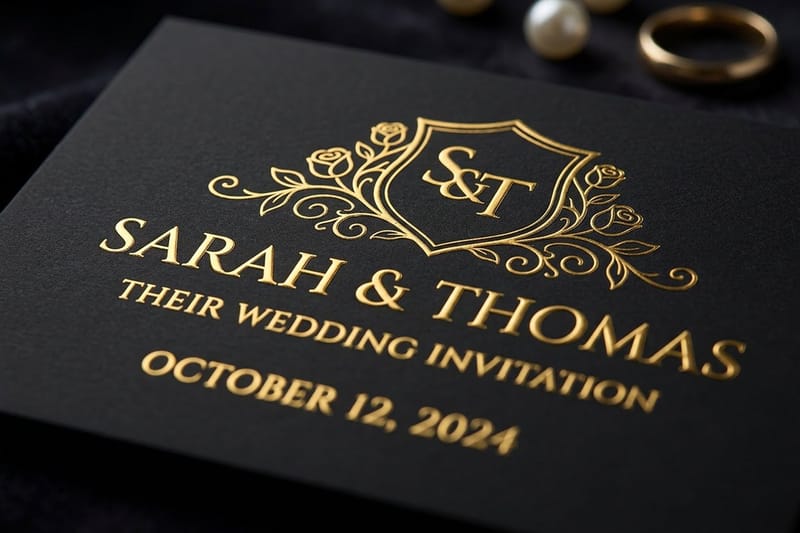
Embossing and letterpress are the two finishes that turn an invitation into an object. Neither adds much visual noise, and that restraint is the point. Embossing lifts the design above the sheet, letterpress presses it down into the fibers, and both leave a texture your guests will run a thumb across without thinking about it.
Sampling matters more here than anywhere else, because relief simply does not photograph. A raised monogram on Embossed Wedding Invitations looks like a slightly bolder monogram in a picture and feels like a completely different price bracket in person.
- Depth of impression. Thicker, softer stock takes a deeper press, which is why heavyweight cotton and letterpress belong together.
- Blind treatments. Relief with no ink at all is the quietest luxury in stationery and reproduces beautifully on ivory and ecru.
- Show-through on the reverse. Embossing leaves a soft ghost on the back of the sheet, so plan the reverse layout around it.
- Type that survives pressure. Bold serifs and clean sans faces hold their shape better than very delicate hairlines.
- Mixing finishes. Foil plus embossing on the same element gives raised metal, the most formal combination on the menu.
Three things are worth checking on any raised sample before you approve a full run:
- Edge crispness. Look closely at where the relief meets the flat sheet and confirm the transition is sharp rather than rounded.
- Stacking behavior. Raised pieces do not stack perfectly flat, which affects how the finished suite sits inside its envelope.
- Handling wear. Pass the sample around to a few people and see how the surface holds up to real fingers.
Folded, Flat and Pocket Formats for the Full Suite
Format decides how much you can say and how the piece feels coming out of the envelope. A single flat card at 4.25" x 5.5", 5" x 7" or 6" x 6" is direct, modern and efficient to mail. A folded card prints on a 10" x 7" sheet that folds to 5" x 7", so it holds twice the information and gives your guests a small moment of ceremony as they open it. Neither is more correct, and the sample is what makes the choice concrete.
Start with Flat Wedding Invitations if your ceremony and reception share one venue and your details fit comfortably on one side. Move to a folded or pocket format once you are handling a welcome note, directions, accommodation blocks and an RSVP card, because a pocket keeps the whole suite together instead of letting pieces scatter across a kitchen counter.
- Single flat card. The lightest option to mail and the easiest to keep consistent across a large guest list.
- Folded card. Four printable panels, room for a schedule or a short letter, and a heavier feel in hand.
- Pocket suite. One holder for the invitation plus every insert, which cuts down on lost RSVP cards.
- Square formats. Distinctive and photogenic, though they usually carry additional postage, so confirm cost before committing.
- Oversized cards. Generous margins make simple typography feel intentional rather than sparse.
Quantity and price
Flat wedding invitation pricing and specs
Real configurator numbers. The more you print, the lower the cost per invitation.
| Quantity | Price Per Unit | Total |
|---|---|---|
| 25 | 79.1¢ | $19.77 |
| 50 | 50.5¢ | $25.27 |
| 100 | 42.8¢ | $42.84 |
| 200 | 25.8¢ | $51.62 |
| 300 | 20.1¢ | $60.42 |
| 400 | 17.3¢ | $69.20 |
Paper Stocks and Finishes to Request in Your Samples
Stock is the single decision that changes the feel of an invitation the most, and it is also the one couples spend the least time on. Weight, surface and coating together set the tone before anyone reads a word. Flat invitations alone run on 20 stocks, from 10pt StarLustre Platinum Cover through 18pt Premium White Linen and 16pt Uncoated with Soft Touch to 26pt Metallic Pearl Ice. Ask for a spread rather than one option, because the differences are obvious in hand and nearly invisible in a product listing.
Match the stock to the typography you have chosen. Uncoated and cotton stocks absorb a little ink and soften fine detail, which suits classic serifs and letterpress but can blur an ultra-thin script. If you are still choosing letterforms, our roundup of the best wedding fonts for invitations pairs well with a stack of samples on the table.
- Weight. Heavier stock feels more formal and holds embossing and letterpress far better than lightweight sheets.
- Uncoated and cotton. Soft, matte and warm, the traditional choice for formal weddings and the friendliest surface for a calligraphed envelope.
- Matte coated. Smooth and modern with controlled ink, ideal when your design leans on photography or deep saturated color.
- Pearl and metallic sheets. A subtle shimmer built into the paper itself rather than added on top.
- Soft-touch and spot gloss. A velvety surface with selected glossy elements, a quiet way to highlight names or a monogram.
Which invitation samples to request first
Narrow the pack so every piece compares like for like. Choose two or three stocks, for example 14pt Gloss Cover, 14pt Uncoated Cover and 18pt Premium White Linen, then one or two finishes such as gold foil or embossing. Add the format you expect to order, a flat 5" x 7" card or one that folds to 5" x 7", and the matching White Wove envelope offered with flat invitations. The samples are free and need no design file, and once they settle the stock, a first run of 25 flat invitations costs $19.77.
Premium finish
Foil wedding invitations
Metallic leaf pressed into the sheet, the finish that decides the whole tone of a suite.
Envelopes, Liners and the Details Guests Notice First
Feel it first
Embossed wedding invitations
Raised relief created by pressure rather than ink, the detail guests notice with their fingers before their eyes.
The envelope is the first thing your guests touch, and it usually gets the last five minutes of attention. That is backwards. A beautiful invitation inside a thin, mismatched envelope loses most of its effect before anyone sees the card, so bring envelopes into the sample stage alongside everything else. The Invitations & Cards story shows the formats worth sampling together.
Check the fit with the actual invitation, not an approximation. Confirm that a folded or pocket suite slides in without forcing, that the flap closes flat, and that printed or hand-written addressing sits well on the surface. If you are still deciding how to write out names and titles, our reference on addressing wedding invitation envelopes covers the conventions.
- Envelope weight. A substantial envelope signals the quality of what is inside before the flap is even opened.
- Liners. A patterned or colored liner is the cheapest surprise in the entire suite and photographs beautifully.
- Addressing surface. Test how your calligrapher’s ink or a printed address behaves on the stock you have chosen.
- Return address. Printed on the flap it looks finished, and it saves you writing the same lines a hundred times.
- Postage and thickness. Weigh the full assembled suite, including inserts, before you buy stamps in bulk.
Save the Dates and Matching Pieces to Sample at the Same Time
Wedding stationery works as a set. Save the dates arrive months earlier, RSVP cards come back to you, menus and programs appear on the day, and thank you cards close the whole thing out. Save the dates print in the same 4.25" x 5.5", 5" x 7" and 6" x 6" sizes as the flat invitation on 15 of its 20 stocks, and RSVP cards print at 4.25" x 5.5" on 19 of them, each with a matching White Wove envelope option, so one sample of your chosen stock tells you how three pieces will look together. Sampling the invitation alone leaves you guessing about the rest, and mismatched pieces are obvious once they sit side by side on a welcome table.
The efficient move is to sample the stock you like across two or three formats at once, so you can confirm the family holds together. Slotting that step into your timeline early keeps it from becoming a rush later, and a working wedding planning checklist makes it easy to see when samples need to land.
- Save the dates. Usually lighter and more casual than the invitation, but printed on a stock that clearly belongs to the same family.
- RSVP cards. Small, uncoated enough to write on comfortably, and sized to fit the reply envelope without trimming.
- Detail cards. Directions, hotel blocks and weekend schedules that keep the main invitation uncluttered.
- Menus and programs. Seen up close under table light, so the finish choice matters more than the size of the run.
- Thank you cards. Order them with the invitations while the design files and stock choice are still fresh.
Compare finishes
Popular invitation formats, side by side
Stock, finish, size, quantity, turnaround and price in a single view.
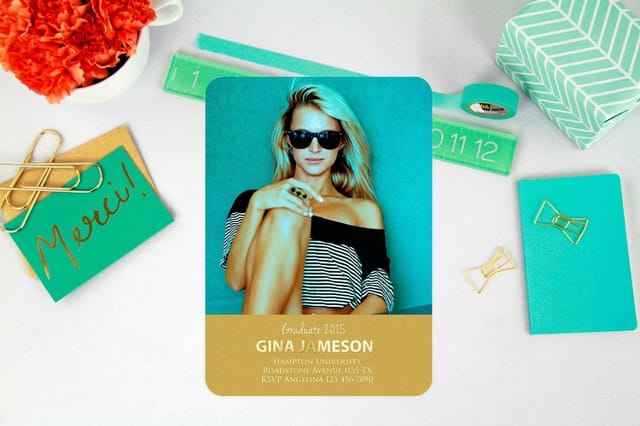 Invitation Cards | 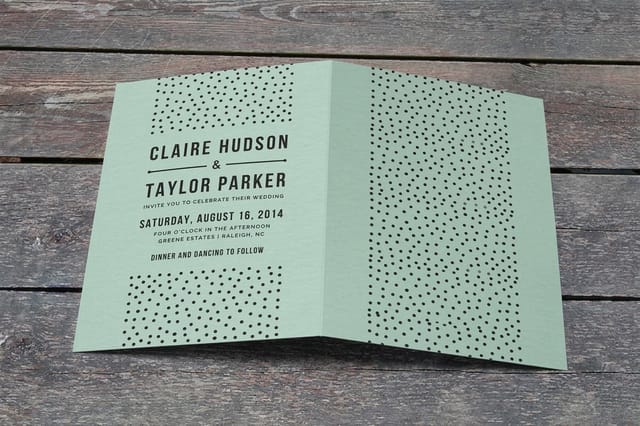 Folded Invitations | 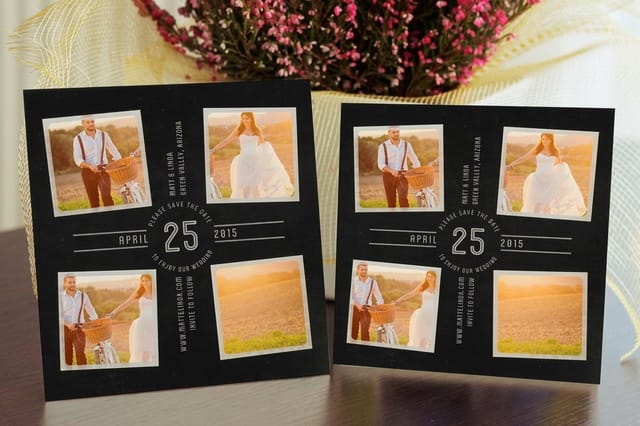 Save the Date Cards | 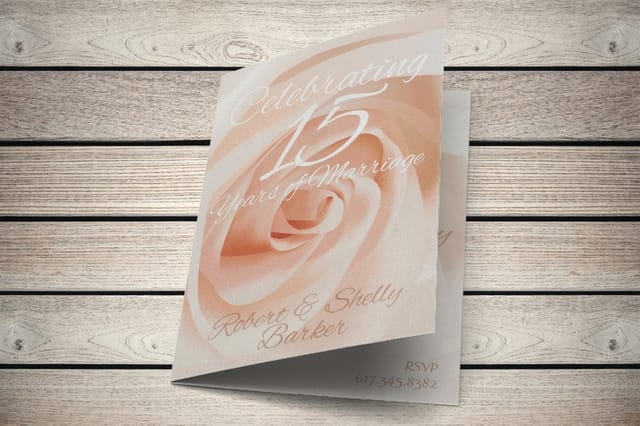 Velvet Invitations | |
|---|---|---|---|---|
| Min price | $19.77 | $38.22 | $19.77 | $251.36 |
| Paper / stock | 14pt Gloss Cover | 14pt Gloss Cover | 14pt Gloss Cover | 16 Point Soft Velvet Laminated |
| Finish | Standard Finish | Standard Finish | Standard Finish | - |
| Size | 4.25" x 5.5" | 8.5" x 5.5" fold to 4.25" x 5.5" | 4.25" x 5.5" | 4.25" x 5.5" |
| Default qty | 25 | 25 | 25 | 500 |
| Turnaround | 3 business days | 5 business days | 5 business days | 7 business days |
| Rating | ||||
| View & customize | View & customize | View & customize | View & customize |
How to Get Free Wedding Invitation Samples and Place the Order
The request itself takes a couple of minutes. Choose the stocks and finishes you want to compare, submit the request, and wait for the envelope. What decides whether the exercise is useful is not the ordering, it is being specific about what you want to see and building enough time into your schedule to act on what arrives.
Our overview of how to get free printing samples explains what is included and how to ask for particular stocks, and the walkthrough on ordering free samples before your first order shows the process end to end. When you are ready to see the full range in one place, the wedding printing collection gathers invitations, save the dates and every matching piece.
Match the finish to the wedding you are actually having
- Formal evening wedding. Heavy uncoated stock, deep impression, foil or blind embossing on the names.
- Modern city wedding. Matte coated stock, generous white space, one strong metallic accent and nothing else.
- Outdoor or rustic wedding. Warm uncoated or cotton stock where the texture does most of the work.
- Large guest list on a budget. Flat printing on a good stock, with foil reserved for the save the dates only.
Start fast
Invitation templates and print-ready blanks
Invitation blanks at the flat and the folded sizes, with the trim already drawn.

Wally helps you pick the paper before you print
Sample the styles first, then order the whole suite with confidence
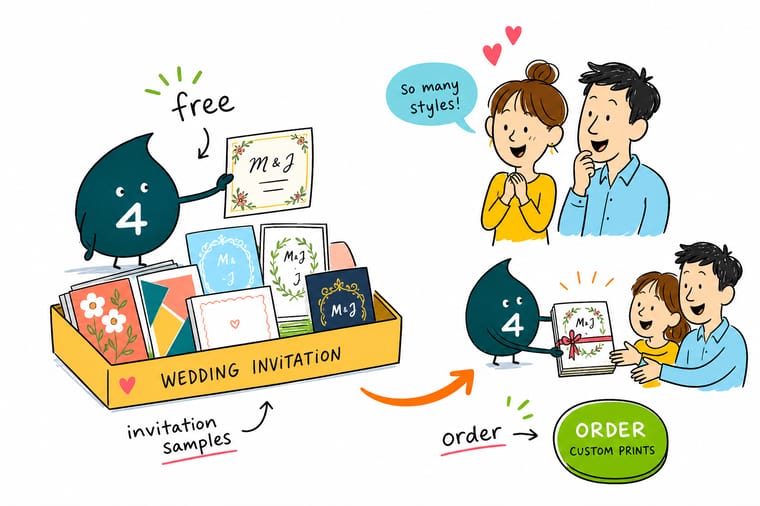
Not sure whether to go foil, embossed or flat? Ask for one of each. Feel the weight, tilt them under a lamp, read the script at arm’s length, then slide one into an envelope and mail it to yourself. Ten minutes with real paper settles a decision that photographs cannot, and it protects the biggest stationery order you will ever place.
Explore wedding invitations →Choosing a Wedding Invitation You Will Still Love in the Album
The invitation you still love in the album is usually the one you held before you ordered: a 5" x 7" card on a stock you picked by touch, a foil or embossed detail you tilted under a lamp, and a script you read at arm’s length. Approve a free online proof of the final file, and flat invitations print in 3 business days, foil in 7 and embossed in 10.
By the numbers
The company printing your suite, in four numbers since 1999
Guides
Wedding stationery guides worth reading first
Requesting stationery samples, the free sample program, addressing envelopes and the planning timeline, one short read each.
Order Wedding Stationery Samples What to request and how to judge what arrives. How to Get Free Printing Samples The sample program explained, start to finish. Address Wedding Envelopes Names, titles and formatting done correctly. Free Wedding Planning Checklist Fit the stationery timeline into the whole plan. Explore more
More ways to plan and print your wedding stationery
Related pages across 4OVER4.COM, one card for every part of the suite.
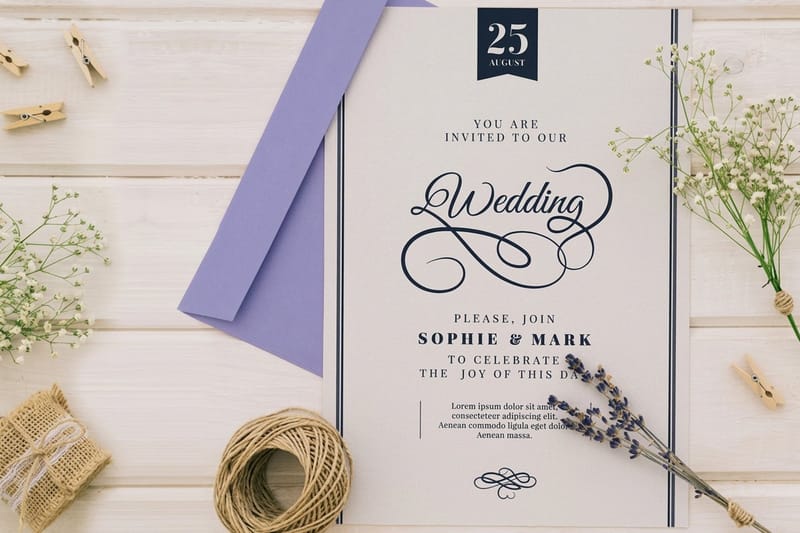 Collection Wedding Printing Collection Invitations, save the dates and every matching piece. Product Foil Wedding Invitations Real metallic leaf pressed into the surface. Product Embossed Wedding Invitations Raised names and monograms you can feel. Product Flat Wedding Invitations Clean single-panel printing at a friendly price.
  Guide Wedding Stationery Samples Request the right pieces before you print.
  Guide Free Printing Samples How the sample program works for any product.
  Guide Addressing Envelopes US conventions for names, titles and lines. Checklist Wedding Planning Checklist Where stationery fits in the full timeline.
  Article Best Wedding Fonts Typefaces that hold up at true printed size.
  Alternative Vistaprint Samples Alternative How the free sample paths compare.
  Alternative 123Print Alternative Online printing with coins and free proofs.
  Update Order Samples First The sample request walked through step by step.
 Ready to hold your wedding invitations before you print them?
Request samples of the stocks and finishes you are weighing, compare them in your own light, then configure the full suite once the decision is made.
Wedding Invitation Sample Questions
What are free wedding invitation samples?
They are printed pieces sent to you at no charge so you can judge stock, finish and color in your own hands instead of on a screen. A sample shows you the true weight of the paper, how a foil or embossed treatment catches light, and how your typography behaves at real size. Couples use them to settle the flat versus foil versus embossed question before committing to a full guest list. If you are weighing sample programs across printers, our Vistaprint free samples comparison lays out the differences.
How do I choose the right wedding invitation sample to request?
Request across categories rather than variations of one design. Ask for a flat printed piece, a foil piece and an embossed piece so you can feel the three different production methods, and include at least two stocks, ideally one uncoated and one coated. Then look at them in daylight, under warm evening light, and at arm’s length. The style you still prefer after a few days, rather than in the first excited minute, is usually the right call for your wedding.
What do wedding invitations cost and how is pricing set?
Price is driven by quantity, stock, size and finish. Flat Wedding Invitations start at $19.77, Embossed Wedding Invitations start at $220.20, and Foil Wedding Invitations start at $421.91, with per-piece cost dropping as quantity climbs because setup is spread across the run. Specialty finishes carry the cost of the extra press work, so restraint in the design keeps the number down. Configure your exact quantity and options on the product page to see live pricing rather than an estimate.
What sizes, stocks and finishes are available for wedding invitations?
You can print standard invitation sizes as well as square and oversized formats, on stocks that run from smooth matte coated sheets to heavyweight uncoated and cotton papers. Finishes include foil stamping in gold, silver, rose gold and copper, embossing with or without ink, soft-touch coating, spot gloss and pearlescent surfaces. Folded and pocket formats add panels for schedules, directions and RSVP details. Requesting a spread of stocks in one sample order is the fastest way to narrow the field.
How long does printing and shipping take for wedding invitations?
Turnaround depends on the product and the finish you choose, with flat printing moving fastest and specialty treatments such as foil and embossing needing additional press time. Shipping time is added on top and depends on where the order is going. Build a buffer into your schedule so samples arrive, get evaluated, and still leave room to print and mail the finished suite comfortably ahead of your RSVP deadline. Free proofs help you catch issues before production begins, as covered in our 123Print alternative comparison.
How far ahead of a wedding should you send out invitations?
Send wedding invitations six to eight weeks before the wedding, and give a destination wedding closer to three months, with save the dates going out months earlier still. Count back from that mailing date. Flat Wedding Invitations print in 3 business days, Foil Wedding Invitations in 7 and Embossed Wedding Invitations in 10, before shipping, so leave room for free samples to arrive and for a free online proof.
How to write a simple invite?
Write a simple invite in five lines: who is hosting, the couple’s names, the date and time written out, the venue with its city and state, and how to RSVP. Move directions, hotel blocks and the dress code to a detail card. Five short lines in a readable serif sit comfortably on a 5" x 7" flat card with generous margins and stay legible at true size on 14pt Uncoated Cover.
What are the current trends in wedding invitations?
Texture and a single metallic accent lead current invitation styles: blind embossing, one foil detail in rose gold or copper, and heavy uncoated or linen stock such as 18pt Premium White Linen. Square 6" x 6" cards and folded suites that carry the weekend schedule inside are popular too. Sample a foil piece, an embossed piece and a linen flat card side by side to see which look suits your wedding.
