
Creative Signage Ideas That Convert Browsers Into Buyers


Tobias is our voice for cutting, binding and large format, built from the knowledge of our production team, with over 20 years in printing.
Small but Mighty Event Signage Ideas
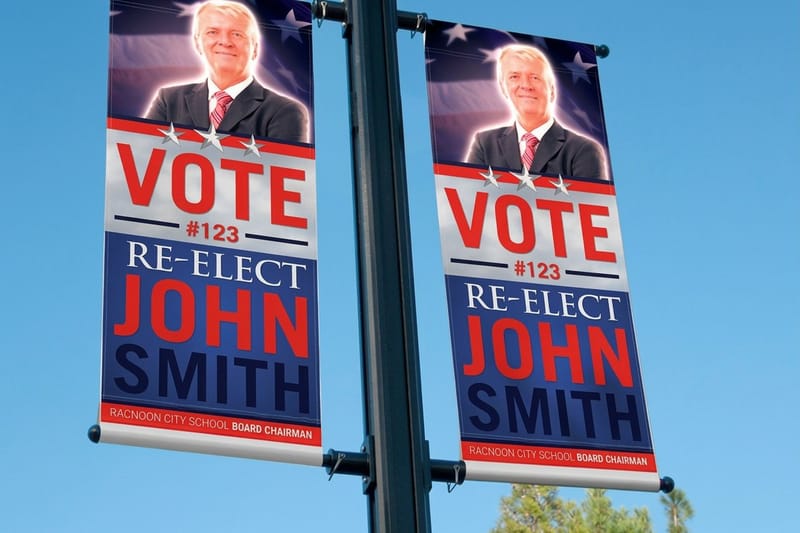
Creative signage design starts with a hard limit. A person walking a trade show aisle or a sidewalk gives your sign about three seconds of attention, and in that window they decide whether to slow down or keep moving. Every idea on this page is built for that window, and every one of them is a real printed piece you can order and install this week.
The mistake most booths and storefronts make is treating a sign like a brochure. Nine lines of copy, three logos, a QR code the size of a stamp. Strip it back to one promise and one instruction, then let size, contrast, and placement do the persuading.
Small signs punch above their weight because they sit at eye level and at the exact moment of decision. A tented sign on the registration table, a mini banner clipped to a stanchion, an arrow at the corner where the aisle splits. Use the legibility rule of thumb printers have leaned on for decades, roughly one inch of cap height for every ten feet of reading distance, and your headline will read from across the room instead of from arm's length.
Put a sign where the decision happens
Walk your space and mark every point where a visitor pauses, turns, or looks for permission. Those spots get signage. Blank walls and dead corners do not, no matter how much room they offer.
One sign, one job
Directional signs point. Offer signs sell. Credibility signs reassure. When a single sign tries to do all three it does none of them, and the reader edits it down to noise.
Design for the angle people actually see
Most aisle traffic approaches from the side, not head on. Double sided printing and a vertical format catch that approach, while a wide horizontal sign disappears into an edge until someone is already past you.
Start here
The sign that does the most at an event
Two printed faces, a blockout liner, and sizes that fit an aisle or a storefront window.
Dynamic Displays That Pull People Off the Aisle
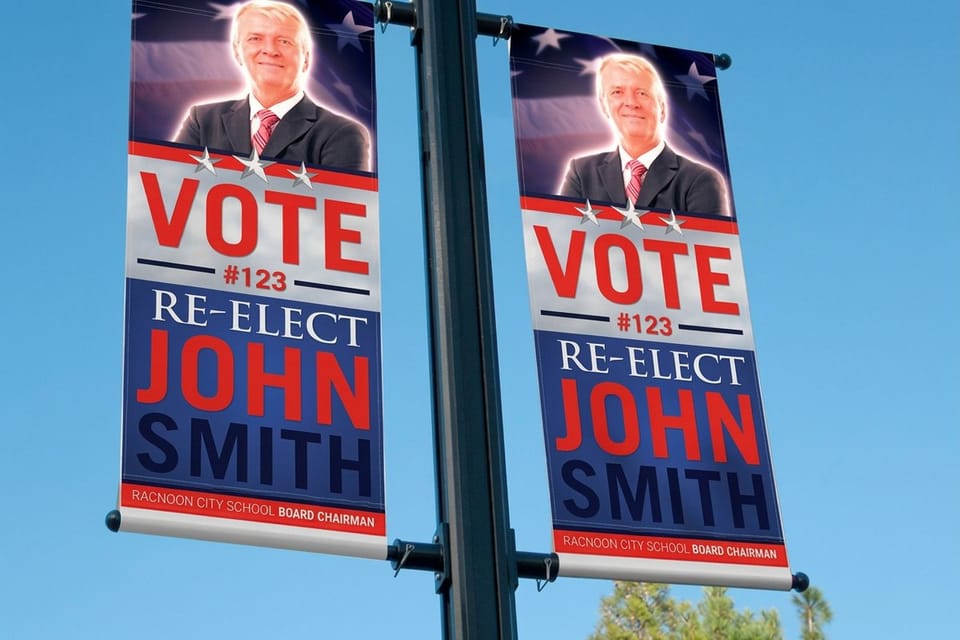
A dynamic display is any sign that changes what a passerby sees as they move: two printed faces, a rotating panel, a banner that reads differently from the left than from the right. The simplest build is a 2 x 6 foot or 3 x 8 foot banner on 15oz BlackOut Vinyl, printed both sides with 3 inch pole pockets top and bottom, hung across the aisle so each direction of traffic meets its own face. Movement and change are what human peripheral vision is tuned for, and a static rectangle at the back of a booth loses that fight every time.
The most reliable version costs nothing extra in labor. Hang a double sided blockout banner perpendicular to the flow of traffic so both approaches get a full face of artwork, and let the blockout liner stop light from bleeding one design through the other. That single change usually beats adding a second sign.
Build the display in layers. A headline that reads at twenty feet, a support line that reads at eight, and a detail band that only rewards someone who has already stopped. That layering gives a visitor a reason to take each step closer, and each step makes a conversation more likely.
Print picks
Three formats that carry a signage idea end to end
Live prices, ready to customize with your artwork and quantity.
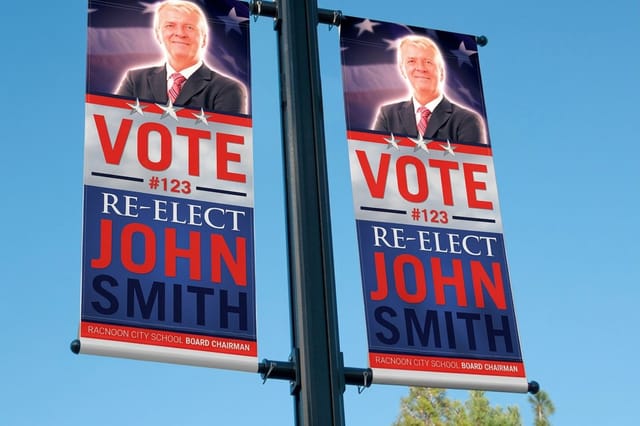 2 Sided Blockout Banners $108.75 each A blockout liner keeps both printed sides crisp in aisles and windows.
 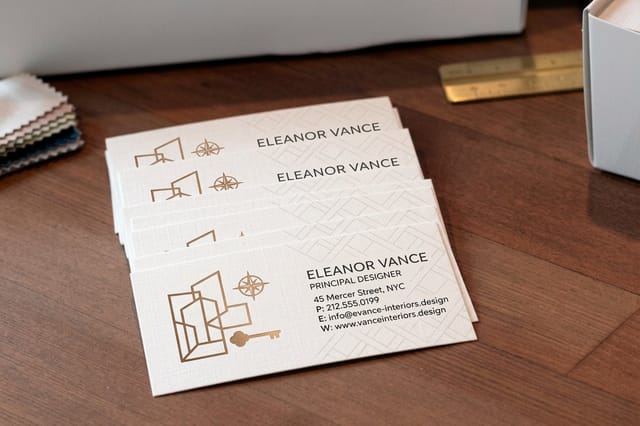 Interior Design Business Cards 100 for $17.57 The take-away that finishes what your sign started, pocket sized.
 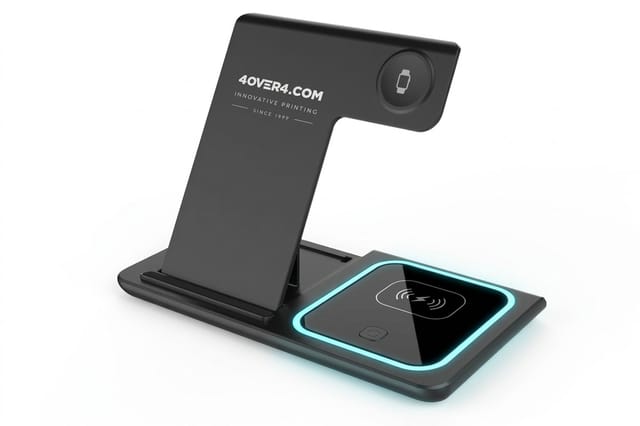 3 in 1 Foldable Wireless Charger $15.00 each A reason to stop, sit down, and stay at your table.
 Photo Worthy Moments Guests Will Actually Post
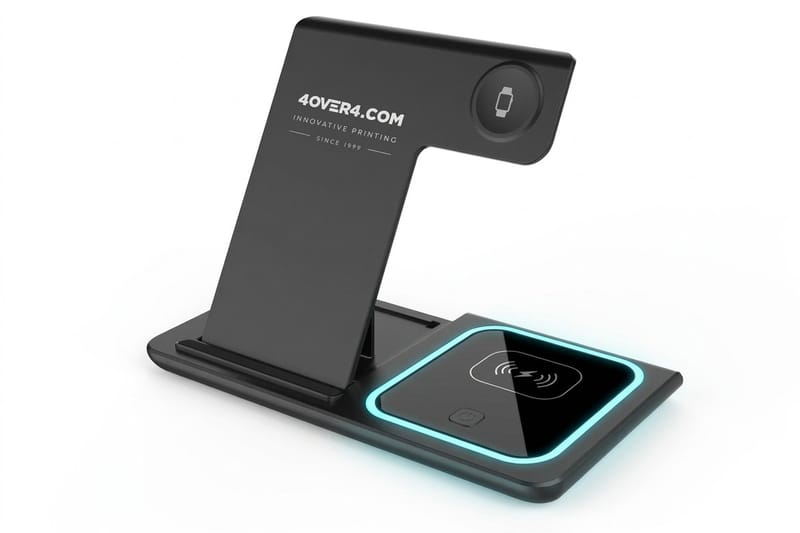
Photo signage is the cheapest distribution you will ever buy. A guest frames your artwork, posts it, and your sign travels to an audience that never walked through the door. The catch is that people only photograph things that make them look good, so the design has to flatter the person standing in front of it.
Keep the backdrop pattern quiet and the logo small and repeated rather than one giant mark that ends up cropped or blocked by a shoulder. Leave a clean band of negative space at head height. Light the wall rather than the face, and put the whole setup where there is room to stand back six feet.
Then give people a reason to line up. A small branded object works better than a raffle nobody trusts, because it is instant and it goes home with them. Pair the photo wall with a giveaway table and staff it with one person whose only job is to hand something over and say thank you.
Write a line worth standing under
The best photo walls carry a sentence the guest wants attributed to themselves, not a slogan about you. Short, specific, a little proud. Read it out loud before you print it.
Give them a reason to stop
Branded desk hardware
A giveaway people keep beats a raffle nobody believes in, and it works your logo every single day.
Conversation Starters That Keep People at Your Table
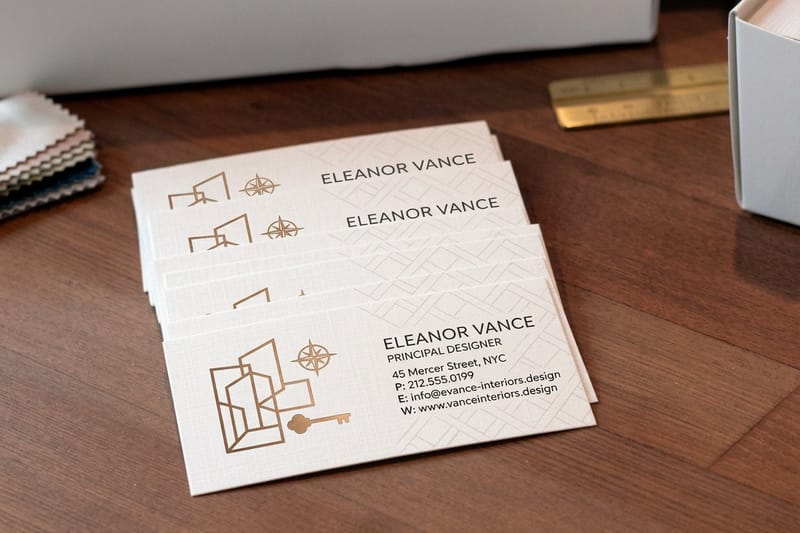
Signage opens the conversation. Something in the hand closes it. When a visitor stops, the next sixty seconds decide whether you become a memory or a contact, and a well made card carries far more weight in that moment than a link scribbled on a napkin.
Treat the card as an extension of the sign, not a separate project. Same headline promise, same palette, same one instruction. If the banner says free layout review, the card says it too, with the name of the person who offered it written on the back in pen. Handwriting on a printed card is the oldest conversion trick in the trade and it still works.
Choose a stock with weight and a finish with texture. People judge a card in the hand before they read a word of it, and a card that feels substantial gets kept on a desk instead of dropped in a tote bag with forty others.
- Anchor the offer. One line on the card repeats the promise on the sign so nothing gets lost in translation.
- Name the human. A person's name and direct line beats a general inbox on every follow up.
- Leave writing room. A clean back panel invites a note, a date, or a quoted price.
- Print two versions. One for buyers, one for partners, so the message matches who is standing there.
The take-away
Interior design business cards
Stocks, finishes, and sizes for the card that leaves the table in someone's hand.
Workplace Signage That Does Real Work
Internal signage is the most neglected surface in any company and the easiest to improve. Wayfinding in a lobby, a 3 x 6 foot values banner in a hallway with grommets every 2 feet so it sits flat on a wall rail, a printed board that tracks the week. It shapes how staff and visitors read your operation before anyone speaks.
Standardize the system before you design a single panel. Fix your type sizes, your arrow style, your color for directional versus informational, and your mounting height. A visitor learns the system in one hallway and then navigates the rest of the building without asking, which is exactly the point.
Budget matters here because quantities add up fast. Large format printing is priced by material, size, finishing, and run length, so a floor of matching banners usually costs less per unit than three one off signs ordered a month apart. Plan the whole set, order it together, and hold a spare of each.
Quantity and price
Blockout banner pricing and specs
Real configurator numbers. Order the whole set at once and the unit cost drops.
| Quantity | Price Per Unit | Total |
|---|---|---|
| 1 | $108.75 | $108.75 |
| 2 | $108.74 | $217.47 |
| 3 | $108.74 | $326.22 |
| 4 | $97.76 | $391.02 |
| 5 | $97.76 | $488.78 |
| 6 | $97.76 | $586.53 |

Make Your Signs Unmissable in a Crowded Room
In a room full of competing signs, attention goes to contrast, not to volume. Everyone else is loud, so the quiet sign with enormous white space and one bold word wins. By the one inch per ten feet rule, that word needs letters about 3 inches tall to read from 30 feet, so on a 3 x 8 foot banner you can set it at 8 inches and still leave half the panel empty. Everyone else is white, so the deep color panel wins. Read the room before you design for it, and deliberately break the pattern you find.
Three technical choices carry most of the weight. Contrast ratio between text and background, which decides legibility at distance. Material and liner, which decide whether light and background clutter show through. And finish, which decides whether the sign glares under venue lighting or reads cleanly from an angle.
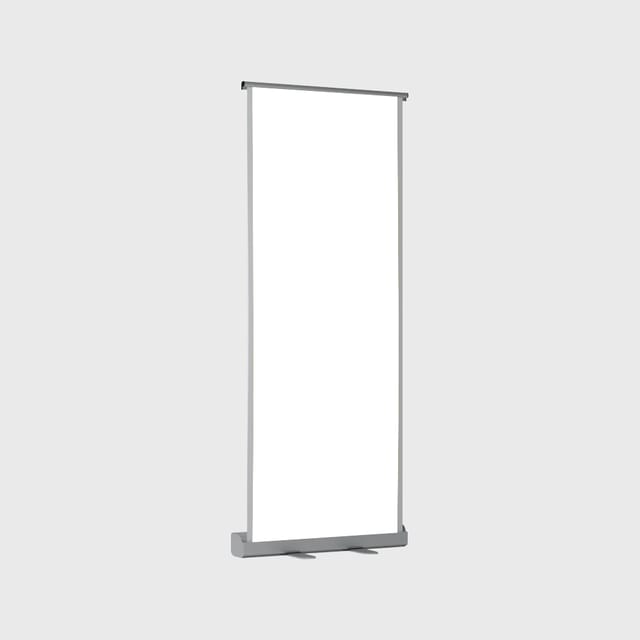
Compare the formats side by side before you commit. A retractable stand, a hanging double sided banner, and a rigid panel solve different problems, and the right pick usually turns on ceiling height, how often you move it, and whether people will see one face or two.
Compare formats
Popular banner and sign formats, side by side
Material, size, quantity, turnaround, and price in one view so you can pick fast.
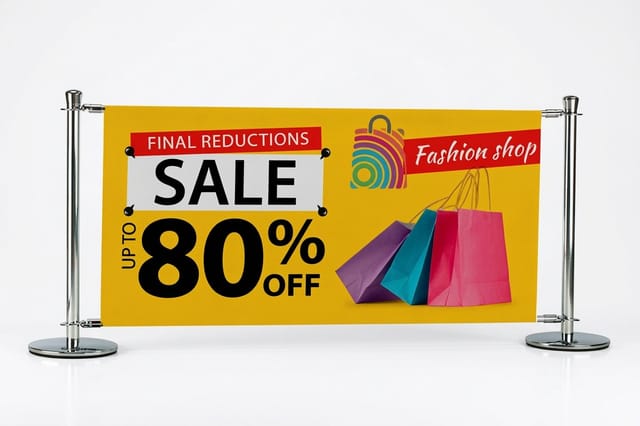 Indoor Banners | 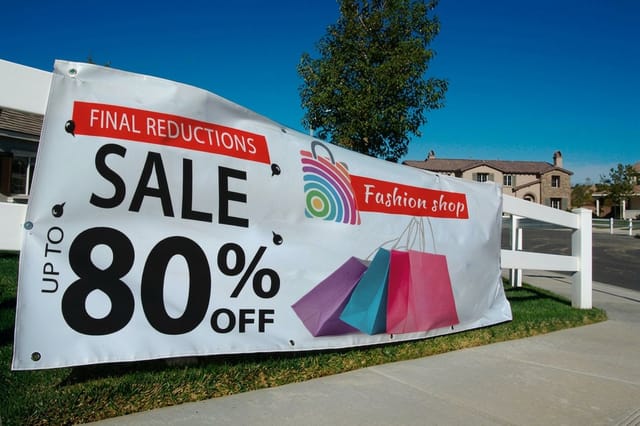 Outdoor Banners | 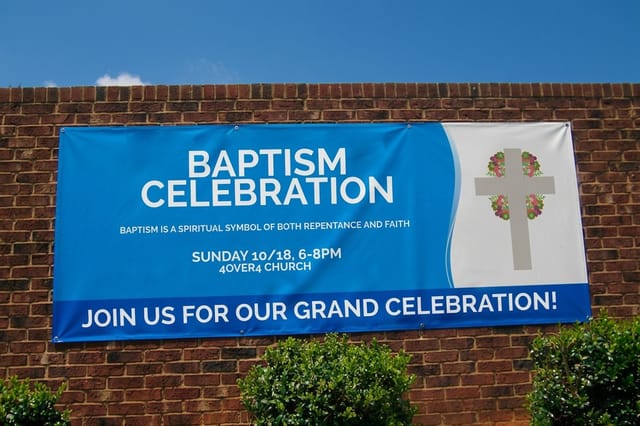 Business Banners | 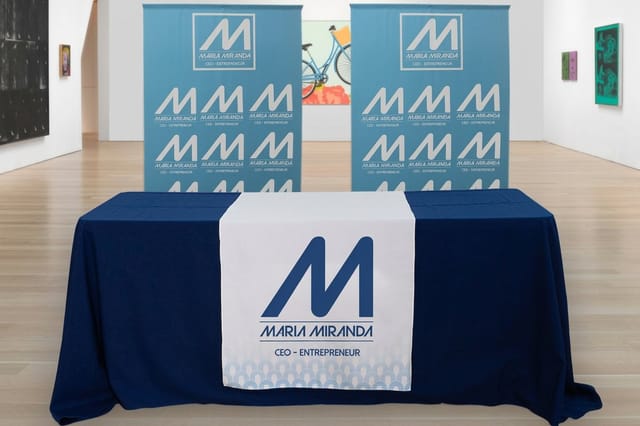 Fabric Banners | |
|---|---|---|---|---|
| Min price | $25.00 | $79.00 | $43.92 | $57.20 |
| Paper / stock | 13oz. Smooth Blockout Vinyl | 13oz. Outdoor Vinyl | 13oz. Scrim Vinyl | 5oz Economy Polyester |
| Size | 12" x 24" | 2' x 4' | 2' x 6' | 24" x 72" |
| Default qty | 1 | 1 | 1 | 1 |
| Turnaround | 2 business days | 3 business days | 2 business days | 4 business days |
| Rating | ||||
| View & customize | View & customize | View & customize | View & customize |
Print, Proof, and Install Without Drama
Great signage ideas die in production. Artwork set up at the wrong size, text placed where a grommet punches through it, a black that prints muddy because it was built as a single channel. Every one of those is avoidable with a template and a five minute check.
Start from a print ready layout, keep live text at least half an inch inside the trim, and extend your background a full quarter inch past the edge for bleed. Set artwork at final size where you can, or build at a clean scale like one quarter and note it on the file. Then look at the proof on a phone screen from arm's length. If the headline is unreadable there, it will be unreadable in the aisle.
The pre press checklist
- Resolution. Aim for 100 to 150 dpi at final size for large format, higher for anything read up close.
- Color build. Rich black for large solid areas, plain black for small type, and outlined or embedded fonts.
- Hardware zones. Keep logos and text clear of grommets, pole pockets, hems, and stand rails.
- Install plan. Confirm mounting height, sightlines, and who owns the ladder before the delivery arrives.
Start fast
Signage templates and print-ready blanks
Free layouts plus exact-size blanks so bleed, margins, and hardware zones are handled before you design.
Wally helps your signage earn a stop
One promise, one instruction, printed on the right format
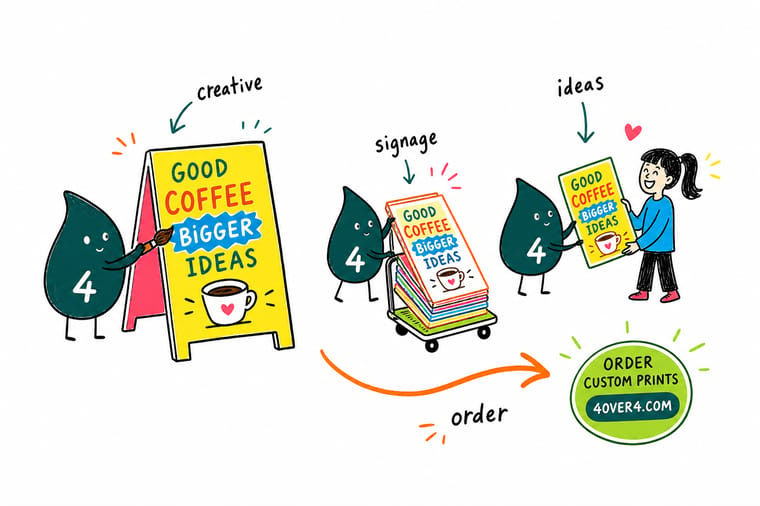
Great signage is a subtraction exercise. Pick the single thing you want a passerby to know, size the type for the distance they read from, and place the sign where they already pause. Then choose a format that fits the approach angle and the ceiling. A double sided banner across the aisle, a small sign at the table, a card in the hand. Wally can point you to the format that fits your space and your run length.
Order signage banners →Signage That Pays for Itself
Explore more
More ways to make print stop people
Blockout banners run from 2 x 3 to 4 x 10 feet on 15oz BlackOut Vinyl, one banner from $108.75 in 4 business days.
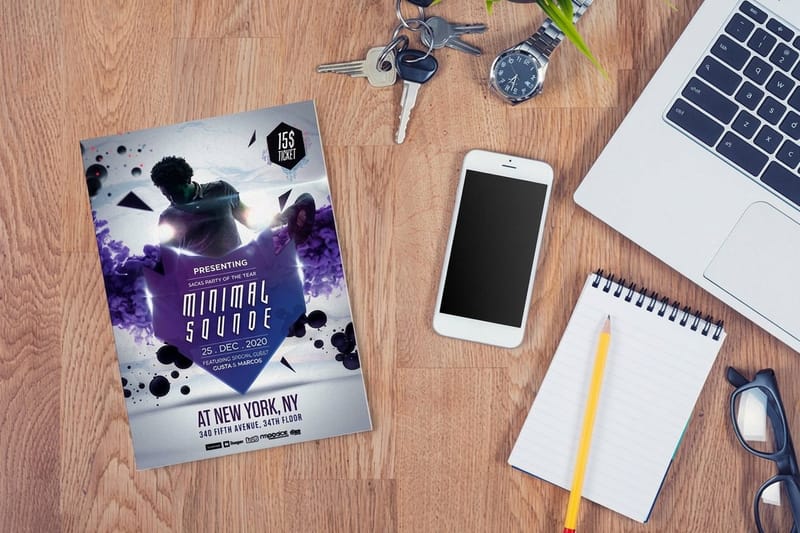 Article Creative Flyer Design Ideas Handout ideas that carry the same promise as your signs.
  Article Rack Card Design The counter format that keeps selling when you step away.
 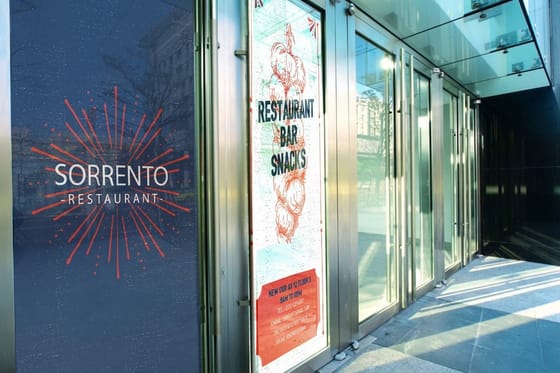 Article 10 Salon Signage Ideas Storefront signage built to convert sidewalk traffic.
  Article Vendor Table Display Ideas Lay out the table so the sign and the offer line up.
 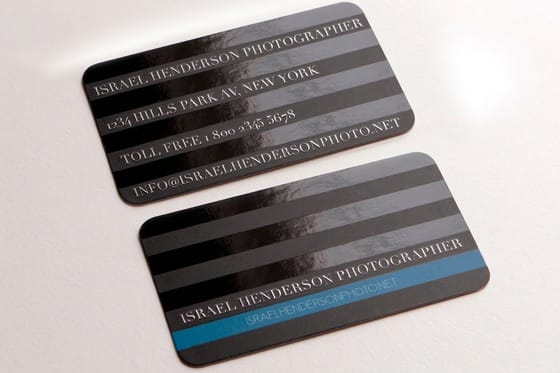 Article Spot UV Design Ideas Finishes that add contrast and catch venue lighting.
 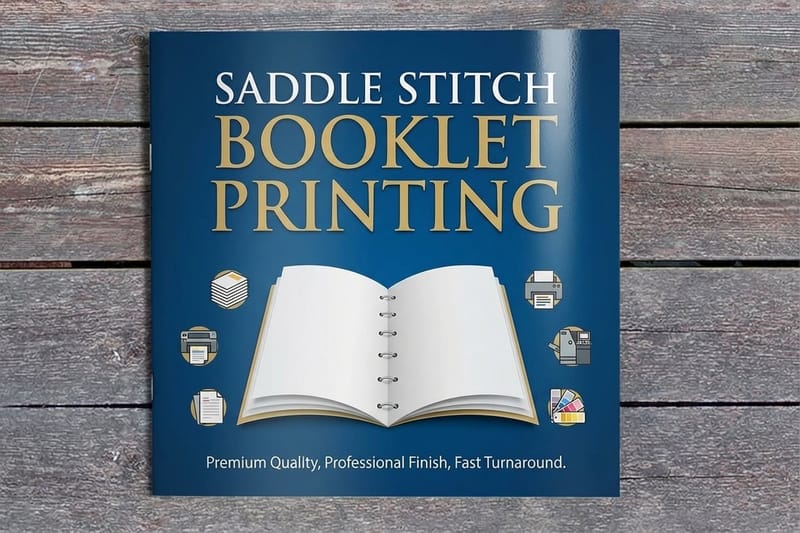 Article 7 Booklet Design Ideas The longer leave-behind for visitors who want detail.
 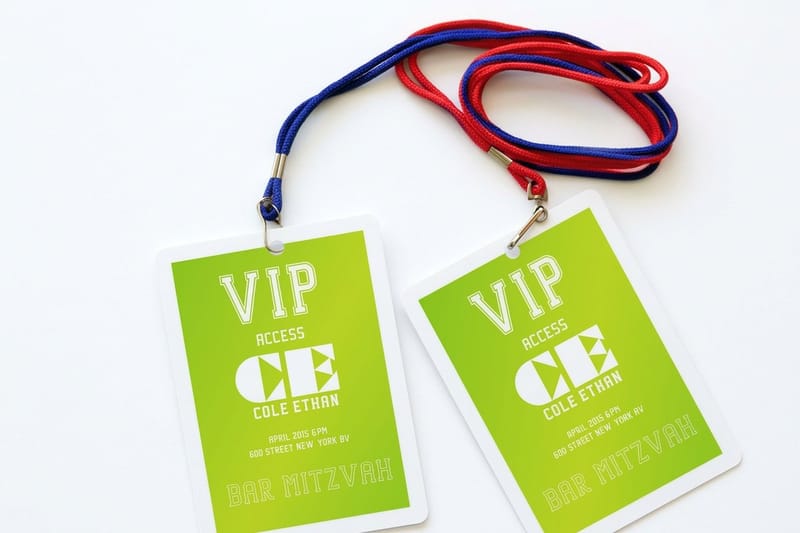 Article Name Badge Design Ideas Make the team as readable as the banner behind them.
  Alternative Signs Compared How 4OVER4 stacks up for custom sign printing. Product 2 Sided Blockout Banners Two sharp printed faces, no light bleed between them. Product Interior Design Business Cards The take-away that keeps the conversation alive. Product 3 in 1 Foldable Wireless Charger Desk hardware that outlives the event.
 Ready to put your best idea on a sign people cannot walk past?
Pick the format, upload your artwork or start from a template, and get a proof back fast. Print the banner, the cards, and the giveaway together so the whole moment matches.
Creative Signage FAQs
What is creative signage design?
Creative signage design is the practice of making a printed sign work as a piece of communication rather than decoration. It sets one promise and one instruction, sizes type for the distance people read it from, uses contrast and placement to interrupt a moving eye, and points the reader toward a next step. The creative part is not the illustration. It is the discipline of cutting everything that does not help someone decide in three seconds. For the handout version of the same thinking, see these creative flyer design ideas.
What are small but mighty event signage ideas?
Table tents on the registration desk, a mini banner clipped to a stanchion at the aisle entrance, arrow panels at the point where traffic splits, a counter sign that names one offer, and a small sign at seated eye level beside the demo. Each is cheap, each sits exactly where a visitor makes a decision, and each carries a single message. Small signs win on placement, not on size, so map the pause points in your space first and place from there.
What makes a dynamic display different from a normal sign?
A dynamic display changes what someone sees as they move past it. The simplest version is a double sided banner hung across the flow of traffic so both approaches see a full face of artwork instead of an edge. Add layered messaging, a headline that reads at twenty feet, a support line at eight feet, and detail that only rewards someone who has stopped, and the display gives a visitor a reason to take each step closer.
How do I choose the right creative signage design for my space?
Start with three measurements. The distance people read from, which sets your type size. The direction they approach from, which decides between one face and two. And the ceiling or mounting height, which rules formats in or out. Then decide how often the sign moves. Something that travels weekly needs a durable material and simple hardware, while a fixed lobby panel can carry a heavier build. Match those answers to a format before you open a design file.
What does a storefront or event sign cost?
Large format pricing is driven by material, finished size, finishing such as hems and grommets, and quantity. At 4OVER4.COM, 2 Sided Blockout Banners start at $108.75, Interior Design Business Cards start at $17.57, and 3 in 1 Foldable Wireless Chargers start at $15.00. Unit cost falls as the run grows, so a matched set ordered together is almost always cheaper than the same signs ordered one at a time over several months.
