
Career Fair Giveaway Ideas Students Actually Want and Keep


Jordan is our labels, packaging and sustainability voice, built from the knowledge of our production team, with over 20 years in printing.
The career fair giveaway ideas students keep are totes, notebooks, stickers and buttons, because students keep three things from a career fair: something reusable they already needed, something they got to choose for themselves, and one card that tells them exactly how to apply. Those four survive the walk home. Pens, foam toys and folded corporate brochures fill the bins outside the hall by four o’clock.
Career fair giveaways compared
| Giveaway | Starts at | Size, minimum and turnaround | Where it ends up | What it signals | Who to give it to |
|---|---|---|---|---|---|
| Cotton tote | Cotton Totes from $5.00 | 12 x 14 or 14 x 16 in, ready-made with no logo, from 1 bag, 1 business day | Grocery runs, gym, laundry | You thought about the walk back to the dorm | Everyone who stops at the table |
| Recycled tote | Recycled Tote Bags from $22.73 | 14.5 x 16 x 1 in, from 1 bag, 7 business days | Same, with a material story | The sustainability line on your careers page is real | Fairs where sustainability is the theme |
| Spiral notebook | Deluxe Spiral Notebook from $5.00 | 4.25 x 5.5 or 5 x 7 in, from 1, 1 business day | A full semester of lectures | You expect them to be doing serious work | Candidates who had a real conversation |
| Die-cut stickers | Die-Cut Stickers from $93.37 | 2 x 2 to 4 x 6 in, from 25, 5 business days | Years, on a laptop lid | You have a personality, not just a logo | Everyone, and they pick their own |
| Buttons | Standard Buttons from $93.15 | 1 to 3.5 in round, from 50, 5 business days | Backpack strap, tote strap | Pick the one that is you | Fairs with long queues to fill |
| Keychains | Standard Keychains from $53.55 | 1.38 x 1.97 in image, from 25, 5 business days | Daily, on the keys they never lose | Small, useful, no shelf space needed | Commuter and graduate-school crowds |
Each price covers the smallest run, not one item: one cotton tote at $5.00, 25 die-cut stickers at $93.37, 50 buttons at $93.15 and 25 keychains at $53.55. Work it back to the students you talk to: 100 die-cut stickers cost $99.95, about $1 for each student who stops at the table. See the whole swag table at promotional products printing.
What students actually take home
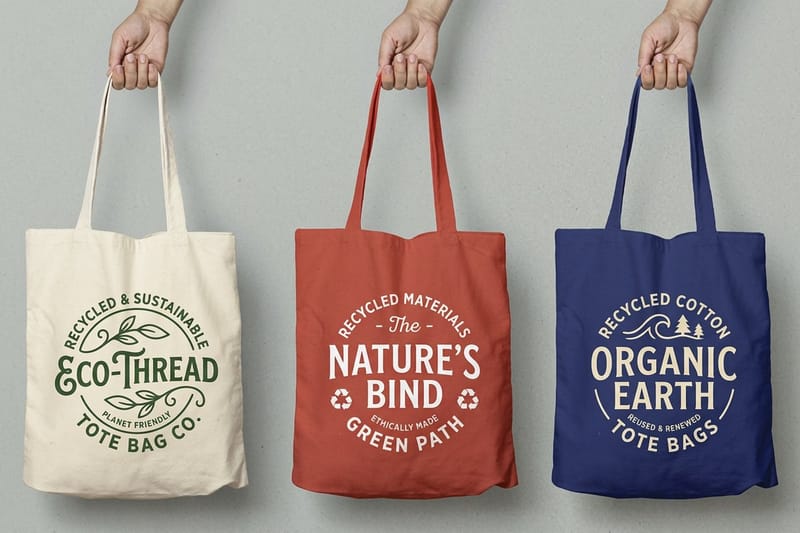
Watch the bins outside a career fair at the end of the afternoon. They fill with pens, foam stress balls, folded corporate brochures and lanyards nobody asked for. What leaves the building is narrow: a bag, something the student picked themselves, a notebook, and one card carrying the link to the actual job.
The reason is physical, not generational. A student covers forty tables in two hours with two hands and one bag. Every item you hand over has to earn the space it takes, and the ones that do are the ones with a use waiting for them at home. Utility is the filter, and it filters hard.
The second filter is proof. This group grew up reading employer branding the way older candidates read a job ad, which means a giveaway that says nothing specific about you says nothing at all. A tote with a logo is a tote. A tote with a logo and a QR code that opens the requisition they were just told about is a next step. Our roundup of swag bag items conference attendees keep reaches the same conclusion from the trade show side.
We cut the pen order entirely and put the money into 200 totes and a sticker table. Same budget, and for the first time students came back to the booth on day two.
University recruiting lead, mid-size engineering firm
Check the career center rules before you order anything
Every career center publishes an exhibitor pack, and most of them ban more than employers expect. Food and sweets are out at a lot of schools for allergy reasons. Latex balloons are out where there is a latex policy. Cash prizes and gift-card raffles are restricted on many campuses because they read as inducements, and a growing number of schools ban single-use plastic outright.
Read that document before the purchase order, not after the boxes land. A ban discovered on the morning of the fair turns an entire print run into storage, and there is no reprint fast enough to fix it at 8am.
The one item to print no matter what else you skip
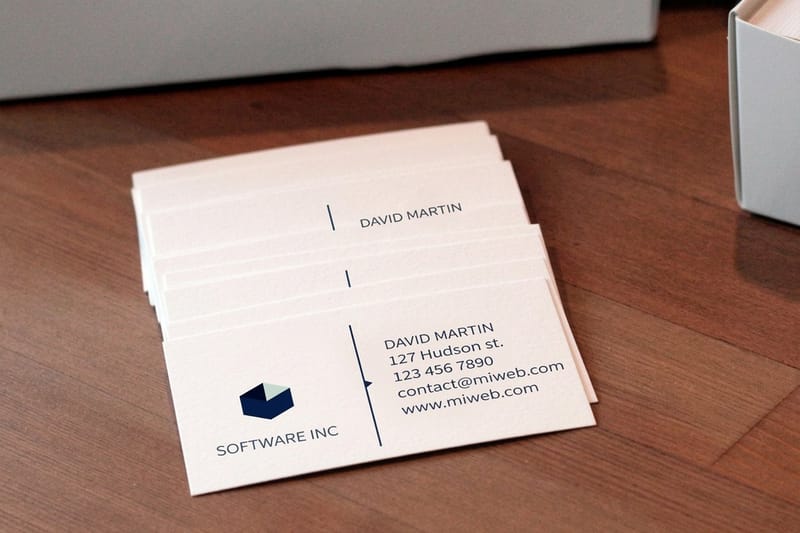
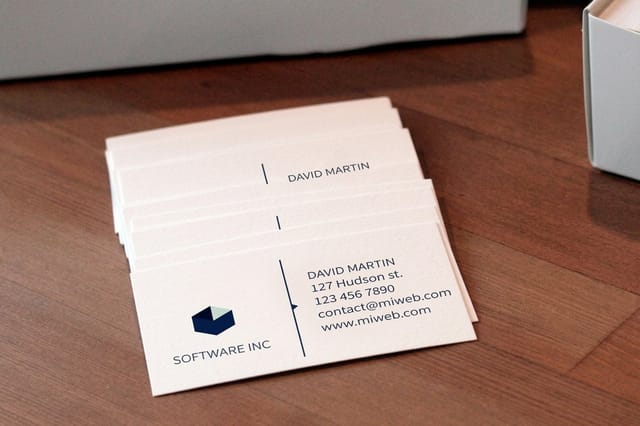
Print a card that gets the student from your table to the application. Not a corporate brochure, and not a folded leaflet that will be creased in a bag within ten minutes. A single card with the recruiter's name, the team, and a QR code pointing at the live requisition, on standard business cards from $17.57.
Give every recruiter at the table their own stack. A student who spoke to Maya wants to write to Maya, and a generic careers address loses that thread by the following Monday.
Sustainable swag that does not read as greenwashing
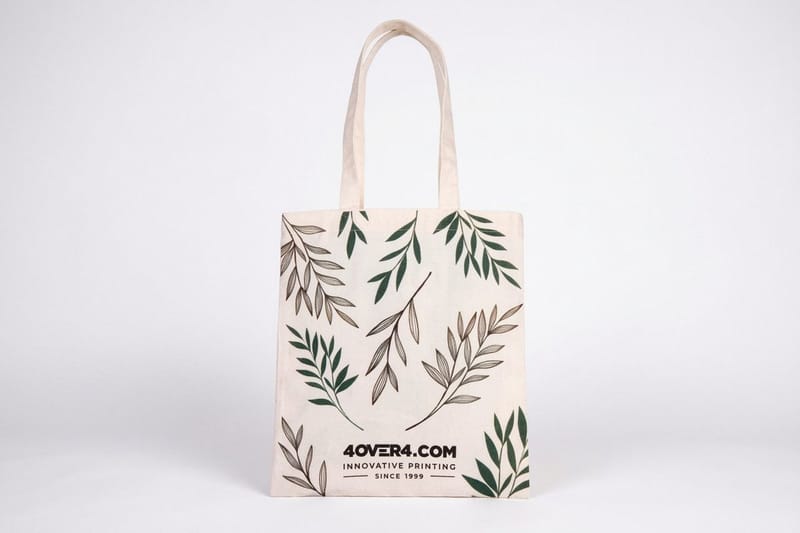
A tote is the highest-yield item at a career fair for one plain reason: it carries everyone else's giveaways for the rest of the day. Your logo walks the hall on somebody else's shoulder, past the tables you are competing with, and then it goes to a supermarket every week for a year.
Cotton Totes start at $5.00 and Recycled Tote Bags at $22.73. The gap is the material story, and the story is only worth paying for if you print the detail. "Eco-friendly" printed on a bag is the exact phrasing this audience has been trained to distrust. Naming the material, on the bag or on the card that goes inside it, is what makes the claim land. Compare both with our standard Tote Bags before you pick.
Here is the trade-off nobody at the budget meeting says out loud. Better material means fewer units for the same money, so the honest plan is to hand the good bag to students who actually spoke to a recruiter and stop trying to cover the whole hall. Browse the range at tote bag printing before you fix the quantity.
Reusable beats disposable, and the imprint decides which it becomes
A tote fails as swag when the print is a giant logo across the whole face, because then it is a billboard the student has to agree to wear. Keep the mark modest, put the interesting thing on the bag, and it gets used in public. That is the whole trick with reusable items: they only advertise for you if the owner is willing to be seen with them.
Water bottles, notebooks and keychains follow the same rule. The item has to work as an object first and as advertising second, or it lives in a drawer.
Experiences beat objects, if you staff them properly
The two things students queue for at a career fair are a decent headshot and ten minutes of honest feedback on their resume. Both cost you time rather than freight, and both leave the student with something they use in the application they send you a week later.
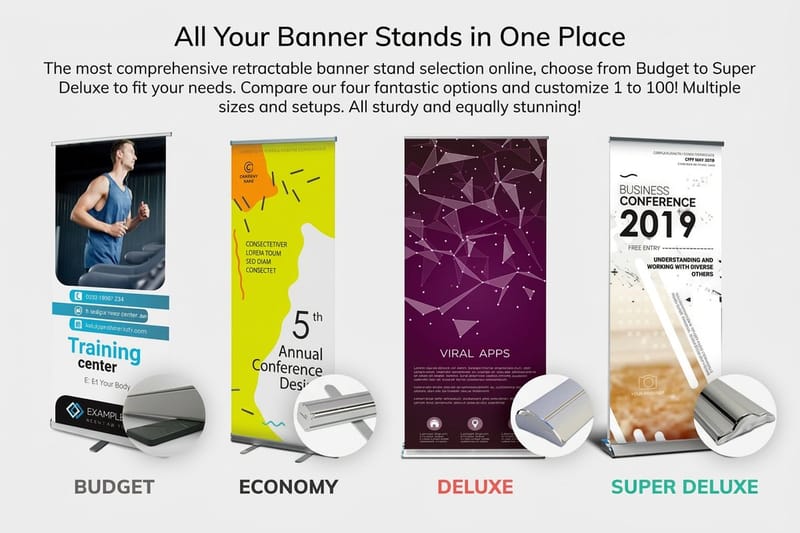
A headshot station needs less kit than people assume: a clean backdrop, one light, a phone on a tripod, and a way to deliver the file. A retractable banner stand from $139.00 gives you the backdrop and packs into a tube you can carry on a train. Print it plain, with the logo low and small, or every photo becomes an ad the student will not post.
Now the limit. A queue in front of your table blocks the recruiting conversations you came for, so the station has to sit at the far end of the stand and be run by somebody who is not a recruiter. Set a hard cap, five minutes for resume feedback and two for a photo, and hold to it. Our booth design guide covers the same flow problem for exhibition stands.
Deliver the file the same day or the goodwill evaporates
Collect an email at the tripod, send the retouched photo that evening, and put the requisition link in the same message. That email is opened, because it contains something the student wants. It is the single highest open rate you will get out of the whole fair.
If you cannot commit to sending files the same day, do not run the station. A headshot promised and never delivered is worse than no headshot.
Interactive ideas that do not block the table
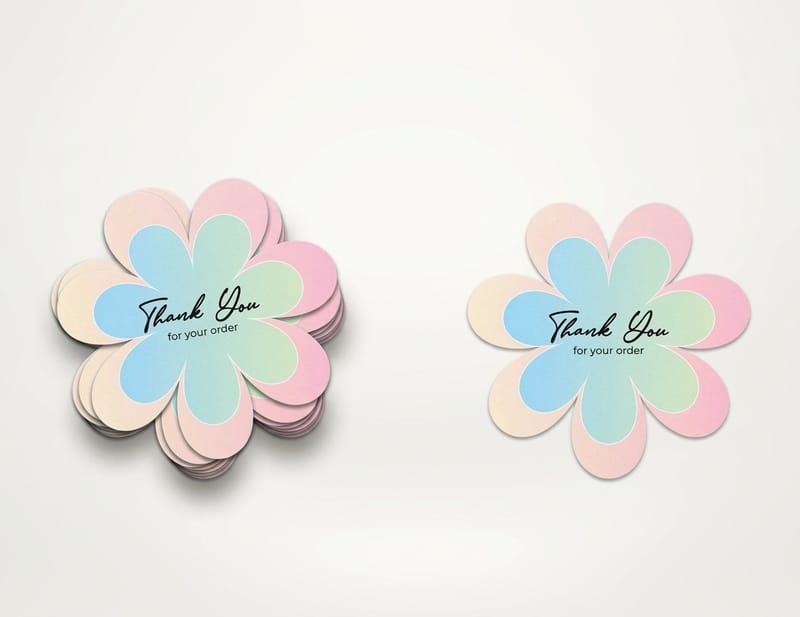
A sticker bar is the cheapest interaction that works. Lay out six or eight designs on the table, let the student pick one, and you have turned a handout into a choice. Die-Cut Stickers start at $93.37, they cost nothing to ship, and a laptop lid keeps them visible in every lecture and every library for years.
Design the sheet around what a student would actually put on a laptop. The team mascot, an inside joke from the engineering blog, the language or framework you build in, a campus-specific design for that one school. The company logo can be one of the eight. It should not be all eight.
Buttons work the same way and suit a long queue, because picking one takes ten seconds and gives the recruiter an opening question. Custom Buttons start at $93.15. The standard buttons video shows the pin up close. Whatever the mechanic, keep it under a minute. A spin wheel with a thirty-second wind-up creates a line of people who are there for the prize, not the job, and that line is what stops the candidate you wanted from reaching your table.
Make every slot a winner, or do not run the game
A wheel where four segments say "try again" teaches the hall that your table wastes their time. If you run a game, every outcome hands over something, even if the bottom tier is a sticker. The prize tiers are a way to route the good items to the people who engaged, not a way to create losers in public.
The raffle is the exception worth avoiding. Most career centers restrict prize draws, the entry form buries you in leads that have no intent, and the winner finds out by email three days later when the fair means nothing to them.
Quality over quantity, and the budget maths
A fixed budget buys either eight hundred cheap items or a hundred and fifty good ones. The hundred and fifty win, because the cheap eight hundred are a distribution problem and the good hundred and fifty are a memory.
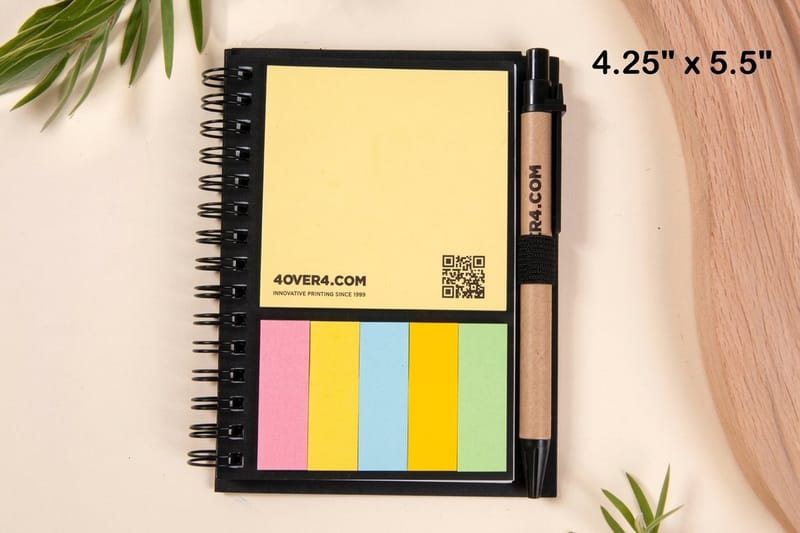
A Deluxe Spiral Notebook from $5.00 is the strongest example. It gets opened in a lecture hall every week, in front of thirty other students, for a semester. Leather Journals from $10.00 do the same job for a graduate or MBA fair where the audience is older and the table next door is handing out branded pens. The leather journals web story shows the options and price breaks. Keychains from $53.55 sit at the other end: small, carried daily, and they ask nothing of the student.
Run the tiers openly with your own team. Stickers and buttons to anyone who stops. Tote and notebook to anyone who has a real conversation and leaves contact details. The good item, whatever you chose, to the shortlist. Nobody is offended by this, and it stops you handing your best swag to the person collecting one of everything for the resale group chat.
Order for the fairs you have actually booked
Promotional print steps down in price as the run grows, which tempts recruiting teams into a year of stock before they know which campuses they will return to. Order for the events on the calendar plus one, then reorder. Leftover swag with last year's tagline is not a saving.
Set the artwork up so a reorder is a color change, not a redesign. One layout, one variable, a new campus name or year where it needs one. You can also earn coins on every order and put them against the next run.
Branding every giveaway so it still works in April
The giveaway is only half the job. What turns it into a hire is the route it carries back to you, and most recruiting swag carries none. A logo alone tells a student who you were. It does not tell them what to do next, and by the time they are applying in April they will not remember which of nine tables the tote came from.
Put three things on every item that has room: the company mark, one short URL that a person can type, and a QR code. Point the code at the requisition or a campus landing page, never at the careers homepage. A code that dumps somebody on a homepage with two hundred openings is worse than no code, because it teaches them your codes are not worth scanning.
On the print side, keep the artwork simple enough to survive a small imprint. Supply the logo as vector, build at 300 DPI in CMYK with 0.125 inch bleed on every side, and expect a single flat color on totes and buttons rather than a gradient. Fine gradients and hairline type are exactly what falls apart at the size these items give you. Free blank templates carry the trim and bleed already marked.
One tagline, held steady across everything on the table
Whatever line you use on the banner has to be the line on the tote, the card and the landing page. Three variations across three items reads as three companies to a student who saw all of them for eleven seconds each.
Print one of each item and put them on a table together before you approve the run. Mismatched greens, a logo two sizes apart, a tagline reworded by whoever laid out the banner: all of it shows up in that arrangement and none of it shows up on a screen.
The booth print that makes the giveaways work
A career fair table is a folding table, a paper tablecloth and a hall full of noise. Four printed pieces change that, and none of them are expensive. A printed table cover so the stand does not look borrowed. A retractable banner behind you so students read your name from across the aisle. A one-page role sheet, not a brochure. And business cards for each recruiter.
The role sheet is the one most teams get wrong. Students do not read a twelve-page corporate brochure, they photograph it and never open the photo. One page, three to six open roles, the team each sits in, the start dates, and the QR code per role. Print it on a heavier stock than office paper so it survives being folded into a tote with everything else.
Everything on the table should point at the same place. Our booth materials checklist lists what to pack, and the education printing collection and promotional products collection hold the pieces for both sides of a campus program.
What the swag table costs
Recycled totes are priced by the run, and the cost per bag drops as the quantity climbs: 50 bags cost $399.14, about $8 a bag, and 100 cost $630.31, about $6.30 a bag. The numbers below come from the live configurator, so you can set the recruiting budget before you commit to a campus schedule.
Quantity and price
Recycled tote pricing and specs
Real configurator numbers for the item that carries every other giveaway in the hall.
| Quantity | Price Per Unit | Total |
|---|---|---|
| 1 | $22.73 | $22.73 |
| 5 | $16.67 | $83.36 |
| 10 | $10.99 | $109.88 |
| 15 | $10.10 | $151.56 |
| 20 | $9.79 | $195.78 |
| 25 | $9.25 | $231.14 |

If the fair is one stop on a longer season, the same artwork covers exhibition stands too. The first-time exhibitor checklist and our list of trade show giveaway ideas both apply once you move from a folding table to a booth, and trade show and event printing holds the larger formats.
Matching the giveaway to the fair
An engineering fair and an MBA fair want different tables. This is how the mix changes by audience.
- Engineering and CS fairs. Stickers with the stack you build in beat anything with a logo on it. Pair them with a notebook for the students who stayed to talk, and a QR straight to the intern requisition.
- Business and finance fairs. The audience arrives with printed resumes and expects a card back. Leather journals and named business cards read correctly here; a foam stress ball does not.
- Sustainability-themed fairs. Recycled totes with the material named on the bag, and nothing single-use on the table. Check the plastic policy in the exhibitor pack first.
- Community college and commuter campuses. Keychains and totes carry better than desk items, because the audience is moving between a job and a class rather than sitting in a dorm.
- Graduate and MBA fairs. Smaller crowd, longer conversations. Spend on fewer, better items and on a headshot station rather than volume swag.
Print it
Cards for every recruiter at the table
A named stack per person, with the QR to the role they were just describing.
Whatever the audience, the printed pieces on the table do the work the swag cannot. A student who liked your conversation still needs a name to write to and a link that opens the right job. Recruiting brochures are the usual answer and the usual mistake; our piece on college brochures that stand out is worth reading before you print twelve pages nobody opens. If you are printing signage as well, the banner stands range covers everything from a table-top display to a full backdrop.
Blanks for the week nobody has a designer
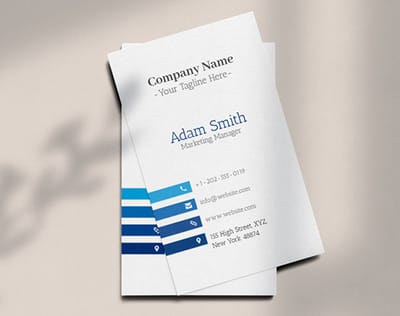
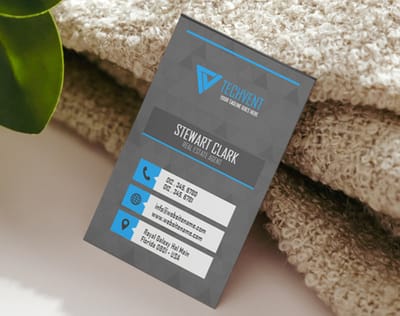
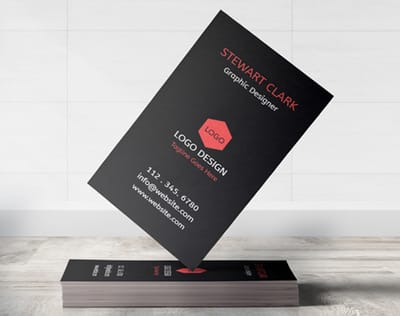
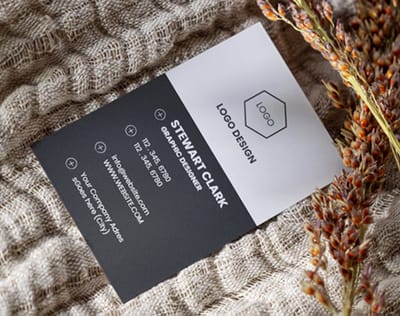
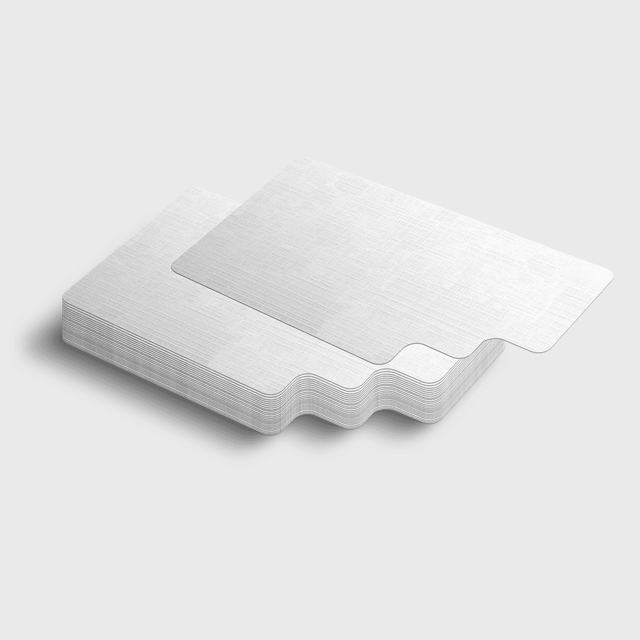
Recruiting teams rarely have a designer free the week before a fair. The card blank is 2 x 3.5 in with 0.125 inch of bleed already marked, so you add the recruiter's name, the team and the QR code to the role, export a 300 DPI CMYK file, and your artwork lands inside the cut line without a proofing round. Start from a design template or drop your own file onto a print-ready blank.
Start fast
Blanks for the week nobody has a designer
Card templates and exact-size blanks with trim and bleed already marked.





Wally packs the career fair table
Three tiers, one route back to the job
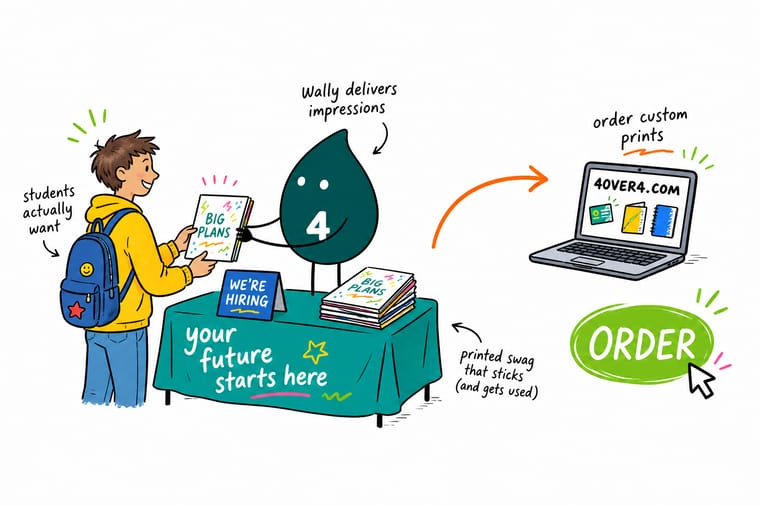
Stickers or buttons for anyone who stops, a tote and a notebook for anyone who talks, and the good item for the shortlist. Every piece carries the logo, one typeable URL and a QR code pointing at the live requisition, never the careers homepage. Supply vector artwork, build at 300 DPI in CMYK with 0.125 inch bleed, and keep the imprint to one flat color so it holds on a small print area.
Order recruiting swag →What a student actually carries home
How to plan the table
- Read the exhibitor pack before the purchase order. Food, latex, prize draws and single-use plastic are banned at more schools than most recruiting teams expect, and the rule always beats the plan.
- Tier the swag out loud. Stickers for a stop, tote and notebook for a conversation, the good item for the shortlist. It routes your budget to the people you want.
- Every item carries a route back. Logo, one typeable URL, one QR pointing at a real requisition. A code to the careers homepage wastes the print.
- Staff the experience separately. A headshot or resume queue run by a recruiter costs you the conversations you paid to have. Put a non-recruiter on it, at the far end of the table.
- Proof the whole table together. Print one of each piece and lay them out. Color drift, logo scale and a reworded tagline only show up in that arrangement.
Explore more
Print the table and the swag
Ready-made cotton totes and deluxe spiral notebooks both run 1 for $5.00 and ship in 1 business day.
Product Recycled Tote Bags The bag that carries every other giveaway in the hall. Product Deluxe Spiral Notebook Opened in a lecture hall every week for a semester. Product Die-Cut Stickers Cut to your shape, chosen by the student, kept for years. Product Retractable Banner Stands Your name across the aisle, and a backdrop for headshots. Product Standard Business Cards A named card per recruiter with the QR to the real role. 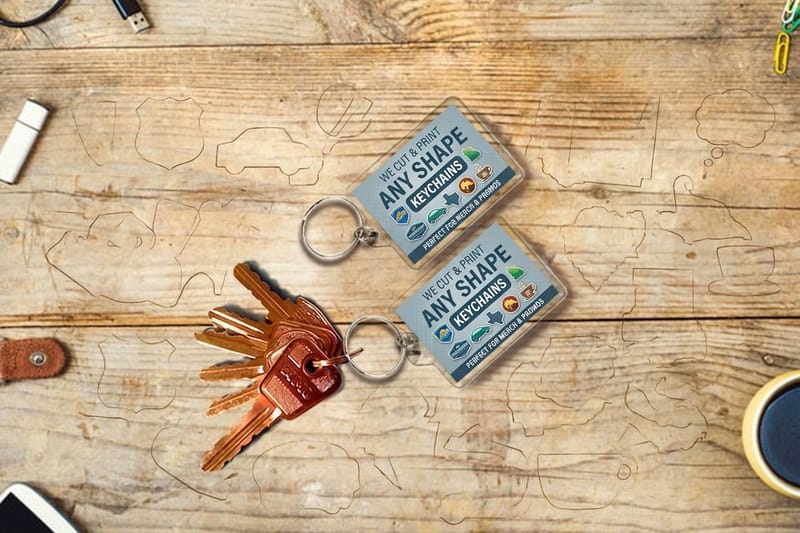 Category Promotional Products Totes, buttons, keychains and the rest of the swag table.
 Printing for a campus recruiting season?
Pick the swag, drop in your artwork or a free template, and 4OVER4.COM prints it sharp and ships it in time for the fair.
Common questions about career fair giveaways
What is the best giveaway for a career fair on a small budget?
Stickers and a tote. Die-Cut Stickers start at $93.37 for the run and cost nothing to carry, and letting students pick their own design turns a handout into a short conversation. Cotton Totes start at $5.00 and end up carrying the giveaways from every other table in the hall, which is free exposure for the rest of the afternoon and a weekly grocery bag afterwards. Between them you cover the whole floor and the students who stopped to talk, and you have spent less than a pallet of branded pens would have cost.
How many giveaways should we bring to a campus career fair?
Ask the career center for last year's attendance and how many employers were on the floor, then plan tiers rather than one number. Cheap, pickable items such as stickers or buttons should cover roughly a third of expected attendance, because not everyone stops. Totes and notebooks should match the number of real conversations you can physically have, which for two recruiters over four hours is closer to eighty than three hundred. The premium item is for a shortlist, so a couple of dozen is usually right. Ordering to the hall size rather than to your own capacity is how teams end up storing swag until it is out of date.
Do students still want branded pens and stress balls?
No, and the bins outside the hall at four o'clock make the case better than any survey. Pens and foam toys fail the two tests that matter at a fair: there is no use waiting for them at home, and they say nothing specific about the employer. The items that survive are the ones a student had already been meaning to acquire, such as a bag, a notebook, a bottle or a keychain, plus anything they got to choose for themselves. If the budget only stretches to one thing, make it the tote.
What should we print for the booth itself, not the giveaways?
Four pieces. A printed table cover so the stand does not look borrowed. A retractable banner stand from $139.00 so students read your name from across the aisle, which doubles as a backdrop if you run a headshot station. A one-page role sheet listing three to six open positions with a QR code each, printed on a stock heavy enough to survive being folded into a tote. And Standard Business Cards from $17.57, a named stack per recruiter, so a student who spoke to one person can write back to that person.
How do we connect a giveaway to an actual application?
Put a QR code on the item or on the card that goes with it, and point it at the specific requisition or a campus landing page, never the careers homepage. Add one short URL a person can type, because a phone camera fails often enough that a fallback matters. Then collect the email at the table and send something the same evening, whether that is the headshot you took or a two-line note with the role link. The evening after the fair is the last moment your table is a memory rather than a blur, and an email that arrives a week later competes with everyone else's.
