
6 Ways to Make Money With Calligraphy That Actually Pay

Emma is our prepress and print production voice, built from the knowledge of our production team, with over 20 years in printing.
How Calligraphers Actually Get Paid
Lettering turns into income once you decide what you are selling: an object, an hour, a file, or a lesson, and the objects start as printed pieces such as folded greeting cards, 50 for $56.02, or bookmarks, 50 for $16.48. Every calligrapher earning real money is doing one of those four things, usually two or three at once, and the six paths below are just the practical shapes those choices take.
The order matters more than most people expect. Selling a physical product teaches you pricing and packaging. Client work teaches you deadlines and contracts. Teaching only works once you can explain what your hand already knows. Skipping straight to courses is the most common way calligraphers stall out in their first year.
Print is the quiet multiplier under almost all of it. A single envelope suite you letter by hand earns once, but scanned and printed it becomes a card line, a market table, a wholesale order, and a wedding package add-on. Across its whole catalog, 4OVER4.COM has printed 10 billion+ print products since 1999 for more than 150,000 businesses, and the same short-run pricing that lets a startup test a business card lets a calligrapher test a card design without committing to a garage full of inventory.
Sell what your hand makes
Original pieces, printed reproductions, cards, signage, and merch. This is the fastest path to a first sale because the work already exists in your sketchbook and only needs to be scanned, cleaned up, and printed well.
Sell your hours
Wedding envelopes, place cards, live event lettering, logo work, and packaging scripts. Hourly and per-piece rates climb quickly once you have photographs of finished jobs rather than practice alphabets.
Sell what you know
Workshops, video, and structured courses. Teaching pays best after you have taught the same beginner three times and know exactly where their pen catches the paper and their confidence drops.
Stack two or three, never all six
Most working calligraphers run one product line, one service, and one teaching channel. Six at once splits your attention and none of them get the reps they need to compound.
Start here
The card that starts the conversation
Planners and couples keep a card long after they lose the link to your portfolio.
Way 1 Sell Physical Calligraphy Products
Physical goods are where lettering converts fastest, because a buyer can see the finish and hold the weight. Greeting cards, art prints, framed quotes, gift tags, bookmarks, and place-card sets are all one artwork printed at different sizes: a folded 5" x 7" card, a 2" x 6" bookmark, a 2" x 3.5" tag. Letter once, scan at high resolution, and let the press do the repetition your wrist should not.
The three formats below cover the practical side of a calligraphy business rather than the art itself: the card you hand a bride at a venue walkthrough, the banner behind your market table, and the branded object people keep on a desk long after the event.
- Cards and prints. Your strongest quote or monogram, printed in a small run to test which designs sell before you scale.
- Wedding stationery sets. Save the dates, menus, and place cards sold as a bundle rather than piece by piece.
- Market signage. A banner and price cards that make a folding table look like a brand instead of a hobby stall.
- Branded merch. Small useful objects carrying your studio mark, priced as an impulse buy next to the higher-ticket art.
- Wholesale packs. Twelve-card assortments for boutiques and florists who reorder on a schedule you can forecast.
Watch your margins on the first run. Price a card at three to four times its landed print cost, not twice, because packaging, shipping supplies, market fees, and the hours you spend at the table all come out of that gap. Short-run printing exists precisely so you can find out what sells before you tie up cash in inventory.
Print picks
Three formats a calligraphy business actually uses
Live prices, ready to customize with your own lettering and studio mark.
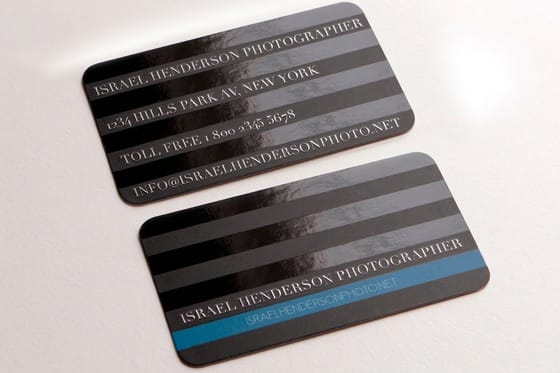
 Make Up Artist Business Cards 100 for $17.57 A compact card for your lettering samples, rates, and booking link.
 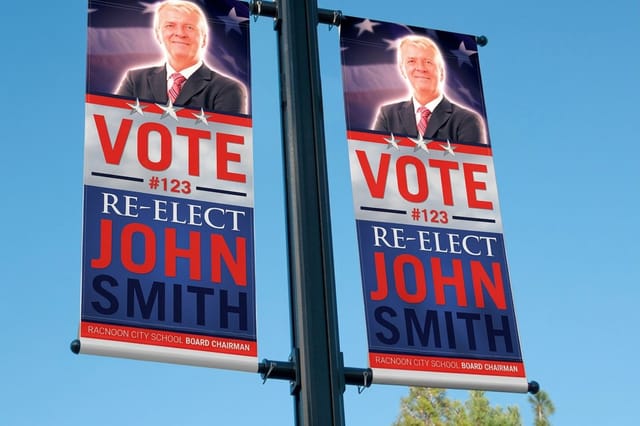 2 Sided Blockout Banners $108.75 each Blocked-out core so your studio name reads sharp from both sides.
 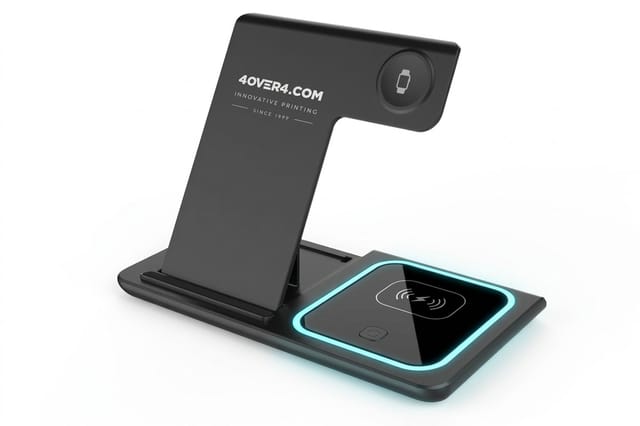 3 in 1 Foldable Wireless Charger $15.00 each Merch that pays for itself at markets and client handoffs.
 Way 2 Sell Digital Products Your Lettering Already Makes
Every finished piece leaves digital byproducts. Practice sheets, guide grids, downloadable quote prints, procreate brush sets, wedding menu templates, and full fonts built from your own alphabet all come out of work you have already done. They sell around the clock and cost nothing to duplicate.
Fonts are the highest-ceiling item on that list and the most misunderstood. Turning a hand alphabet into a working typeface means drawing a consistent set, spacing it, kerning the awkward pairs, and testing it at small sizes. It is a month of unglamorous work that can then sell for years. If you want a sense of how buyers judge a display face in real use, look at how lettering behaves on a card in 20 free fonts for fabulous business cards.
- Practice sheets and drills. Beginner-friendly PDFs priced low enough to be an impulse buy after a free tutorial.
- Editable templates. Menus, seating charts, and invitation layouts couples can fill in themselves.
- Brush and texture packs. Your pressure settings and paper grain, bundled for tablet lettering.
- Printable wall art. High-resolution files buyers print locally, with a print-ready version you also sell finished.
- Commercial licenses. A second, higher price tier for businesses using your alphabet on packaging or signage.
Sell the digital file and the printed object side by side. A surprising share of buyers who download a quote print come back for a properly printed version on heavier stock, and that second sale carries a far better margin than the file did.
Way 3 Client Lettering for Weddings, Events, and Brands
Client work is the most reliable money in calligraphy and the least visible from the outside. Envelope addressing, place cards, escort displays, vow books, live event lettering at a retail activation, packaging scripts for a small brand, and logo lettering all pay per piece or per hour, and they pay on a schedule.
Price per finished piece, not per hour, once you are fast. Charge for the extras separately: rush turnaround, ink color matching, guest list cleanup, and the inevitable reprints when a name is spelled three ways on the spreadsheet. Ask for fifty percent up front and put the spoilage allowance in writing before the first envelope.
- Envelopes. Priced per envelope, with a separate rate for return addresses and inner envelopes.
- Day-of pieces. Place cards, menus, table numbers, and signage, quoted as one package.
- Live lettering. An hourly on-site rate plus travel, booked by brands for launches and pop-ups.
- Brand lettering. Logos and packaging scripts, quoted as design work with a usage license attached.
- Planner referrals. A standing relationship with two or three planners fills a calendar faster than any ad.
Leave something behind at every venue walkthrough and vendor meeting. A well-printed card with one photograph of your envelope work does more than a portfolio link, because planners keep cards in a drawer and forget links in a browser tab.
Way 4 Teach In-Person Calligraphy Workshops
A three-hour beginner workshop with twelve seats is one of the highest-earning afternoons available to a calligrapher. Students pay for the kit, the guidance, and the excuse to sit somewhere pretty and make something, and a printed practice sheet plus a card of the class’s alphabet goes home with each of the twelve. Cafes, bookshops, wineries, and coworking spaces will often host for free because your students buy from them.
Your real cost per student is the kit: a nib, a holder, ink, and printed practice sheets. Print the sheets in a run rather than at home, because guide lines that are actually straight and paper that does not feather are the difference between a student who leaves proud and one who leaves frustrated.
- Beginner brush lettering. The easiest sell, the lowest kit cost, and the biggest repeat audience.
- Pointed pen basics. Higher price, smaller class, and students who tend to come back for level two.
- Private parties. Bridal showers and team events, quoted as a flat booking rather than per seat.
- Corporate sessions. Companies pay several times the retail rate for the same three hours.
- Seasonal workshops. Holiday card and gift-tag classes that sell out on timing alone.
Print a small run of everything the class touches: the practice sheets, the seat cards, and a card with your booking details tucked into the kit. Real numbers help here, so the price table and specs below show how per-unit cost drops as the run grows.
Quantity and price
Card pricing and specs for your workshop kits
Real configurator numbers. The more you print in one run, the less each piece costs.
| Quantity | Price Per Unit | Total |
|---|---|---|
| 100 | 17.6¢ | $17.57 |
| 200 | 11.5¢ | $23.07 |
| 300 | 9.15¢ | $27.46 |
| 400 | 7.96¢ | $31.86 |
| 500 | 7.25¢ | $36.26 |
| 600 | 6.77¢ | $40.64 |
Way 5 Build a Video Audience That Pays You Back
Lettering works well on video: the nib on paper is satisfying, a single word takes under a minute, and the format needs no face on camera. Ad revenue alone rarely replaces an income, but a steady channel feeds every other stream on this page: it sells the practice sheets, fills the workshops, and brings brands to your inbox.
Post consistently and keep the camera locked overhead. Sponsorships from ink, paper, and tablet brands start arriving well before the ad revenue is meaningful, and an audience that watched you letter a hundred envelopes trusts you enough to buy a course later.
- Satisfying process clips. Short, loopable, and the cheapest audience growth available to a calligrapher.
- Teaching breakdowns. Longer videos that pre-sell your paid material by proving you can explain the hard parts.
- Tool reviews. The format sponsors reach out about first, and the one your audience acts on fastest.
- Client project diaries. Behind the scenes of a wedding suite, which books more of the same work.
- Affiliate links. Small, steady income from the supplies you were recommending for free anyway.
Bring the channel into the physical world too. A banner behind your table at a market with the same handle people already follow turns online attention into sales you can count that afternoon.
Booth and studio signage
2 sided blockout banners
A blocked-out core stops light bleeding through, so your handle reads clean from either direction.

Way 6 Sell Online Courses and Memberships
Add a little something
Branded merch for course kits
A useful object carrying your studio mark keeps your name on a student desk long after the last lesson.
Courses are the last step, not the first. Once you have taught the same beginner content live a dozen times, you know the exact order that works, the three mistakes everyone makes, and the language that unlocks each one. Record that and you have a product that sells while you are lettering envelopes for someone else.
The strongest calligraphy courses ship something physical. A kit with nibs, ink, and printed practice sheets mailed to each student lifts your price, raises completion rates, and gives buyers a reason to choose you over the free tutorials they already ignored.
- Self-paced beginner course. Your live workshop, recorded once and sold indefinitely.
- Cohort programs. Higher priced, run a few times a year, with feedback on real student work.
- Membership. Monthly drills, new exemplars, and critiques for students who finished the beginner course.
- Physical course kits. Tools plus printed sheets that make the course feel like a real class.
- Business modules. Pricing, contracts, and client handling for students who want to earn from lettering.
Add something small and branded to the kit. A useful object with your studio mark on it stays on a student's desk long after the course ends, and it keeps your name in front of the people most likely to hire or refer you.
Selling Printed Cards, Invitations, and Prints
This is the thread running through five of the six paths. Hand lettering earns once. Printed lettering earns every time someone reorders. Scan the original at 600 dpi or higher, clean the edges, set your artwork with proper bleed, and you have turned an afternoon of work into a product line you can restock in a week.
Finish is where a printed card stops looking like a print and starts looking like calligraphy. Raised inks, foils, and spot gloss catch light the way wet ink does on paper, which is exactly the impression a buyer is paying for. See how other makers use that trick in 18 creatives who use spot UV designs to shine.
- Test small. Print a short run of four designs and let sales decide which two get reordered.
- Match the stock to the script. Heavier uncoated paper flatters pointed pen, coated stock flatters bold brush work.
- Bundle. Assortment packs move faster at markets than single cards at the same total price.
- Sell the suite. Couples who buy an invitation come back for menus, programs, and thank you cards.
- Keep the originals. Framed originals sell at a premium beside the prints they produced.
Interactive pieces are worth the extra step for gift lines and wedding favors. The build in amazing DIY scratch-off print and cut cards adapts cleanly to a lettered reveal card, and it gives customers a story to tell about your work.
Compare finishes
Popular card formats, side by side
Stock, finish, size, quantity, turnaround, and price for the formats calligraphers reorder most.
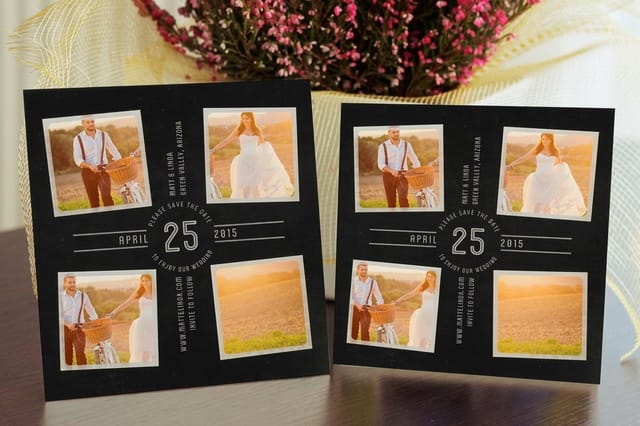 Save the Date Cards | 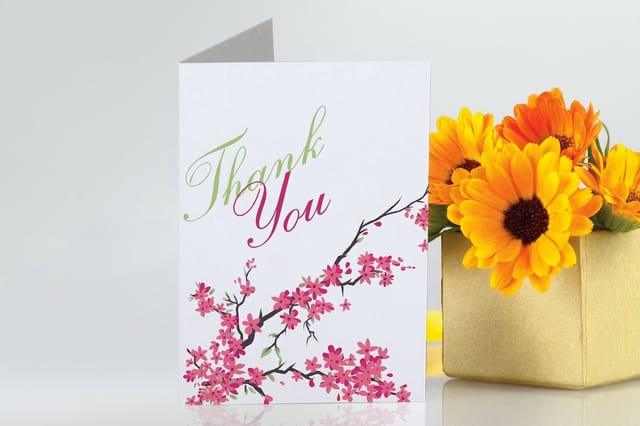 Greeting Cards | 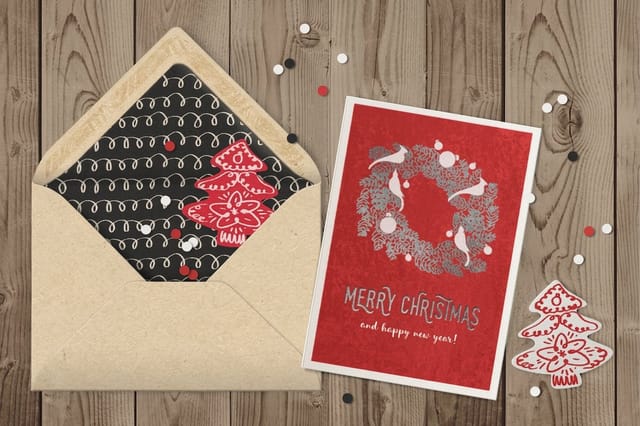 Velvet Greeting Cards | 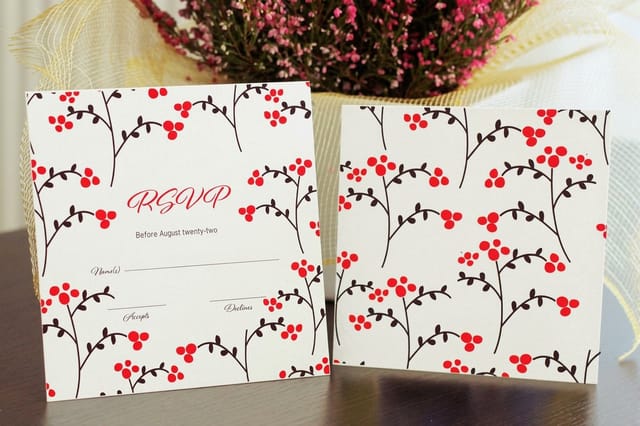 Response Cards | |
|---|---|---|---|---|
| Min price | $19.77 | $56.02 | $617.67 | $19.77 |
| Paper / stock | 14pt Gloss Cover | 14pt Gloss Cover | 16 Point Soft Velvet Laminated | 14pt Gloss Cover |
| Finish | Standard Finish | Standard Finish | - | Standard Finish |
| Size | 4.25" x 5.5" | 8.5" x 5.5" fold to 4.25" x 5.5" | 10" x 7" scored to 5" x 7" | 4.25" x 5.5" |
| Default qty | 25 | 50 | 500 | 25 |
| Turnaround | 5 business days | 5 business days | 7 business days | 3 business days |
| Rating | ||||
| View & customize | View & customize | View & customize | View & customize |
Pricing Your Calligraphy Work and Printing It Right
Underpricing is the most common reason calligraphy businesses close. Add your materials, your printing, your time at your target hourly rate, your platform and market fees, and your reprint allowance, then multiply. If the number makes you flinch, you are probably close to correct for the market.
On the print side, three things decide whether a design comes back looking like the file you sent: vector or high-resolution artwork, correct bleed and safe margins, and a stock chosen for the ink weight of your script. Get those right and reorders become routine instead of anxious.
Match the finish to the piece
- Wedding suites. Uncoated heavyweight stock so thin hairlines stay crisp and the paper feels like stationery.
- Retail cards. A light coating that keeps color rich while still taking a pen on the inside panel.
- Art prints. Matte finish that kills glare and lets fine pressure changes read from across a room.
- Business cards. Heavier stock with a raised or gloss accent, because a limp card undercuts the craft on it.
The same discipline applies to how you write about your work. Product descriptions and market signage sell far harder when the copy is specific, and the editing method in 10 easy ways to improve your brochure copy works just as well on a card listing as it does on a brochure.
Start fast
Card templates and print-ready blanks
Free layouts plus exact-size blanks so your artwork lands inside the bleed on the first try.

Wally maps your calligraphy income
Pick one product, one service, one lesson, then print what sells
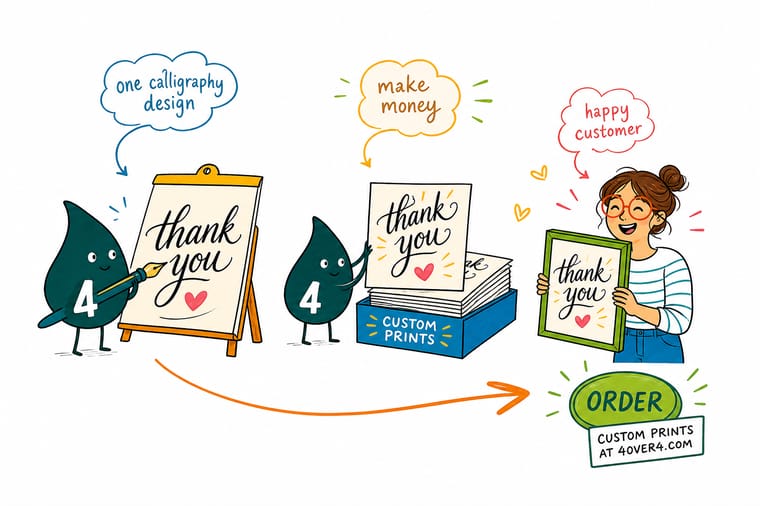
Six paths look like six businesses, but they are really four questions: are you selling an object, an hour, a file, or a lesson? Wally suggests starting with an object and an hour, because both sell before you have an audience. Scan your best piece, print a short run, take it to one market, and letter one real client job. Whatever earns, print more of it.
Print your calligraphy cards →Turning Practice Pages Into Paid Work
Keep reading
Design and print reading for makers
20 free fonts for business cards, creatives who use spot UV, 33 ways to use custom sticky notes and DIY scratch-off cards.
 Article 20 Free Fonts for Business Cards How display lettering behaves at card size and small print. Article 18 Creatives Who Use Spot UV Gloss accents that make lettering catch light like wet ink.
 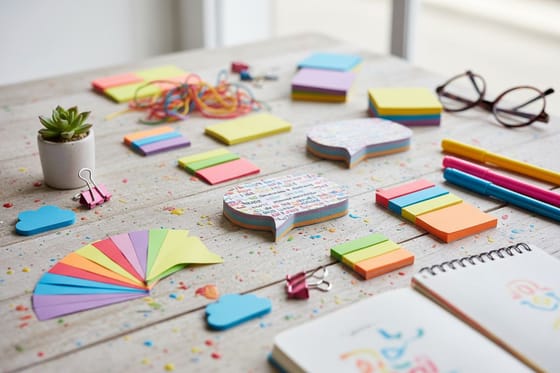 Article 33 Ways to Use Custom Sticky Notes A low-cost branded product for market tables and client kits.
  Article DIY Scratch-Off Print and Cut Cards An interactive card build that adapts to lettered reveals.
 Explore more
More ways to turn lettering into a business
Greeting cards run 50 for $56.02 and response cards 25 for $19.77, the two pieces lettering sells best on.
Product Make Up Artist Business Cards The leave-behind card for venue walkthroughs and vendor meetings. Product 2 Sided Blockout Banners Market and workshop signage that reads sharp from both sides. 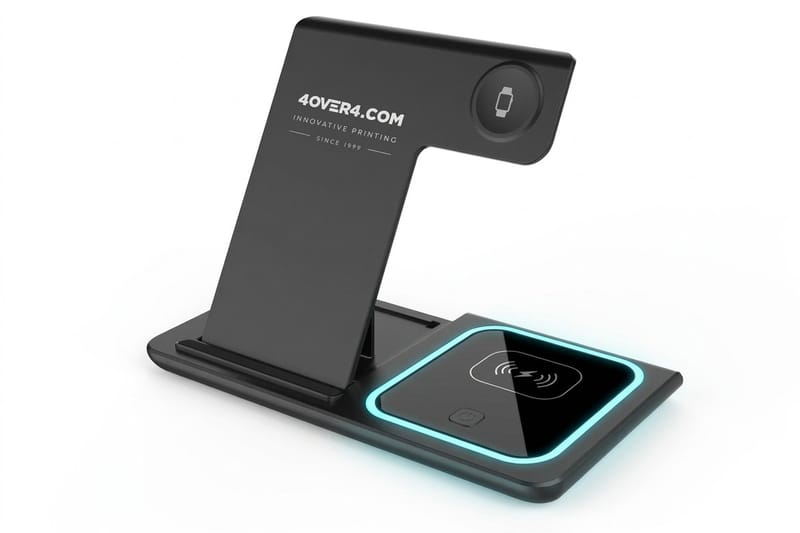 Product 3 in 1 Foldable Wireless Charger Studio merch that stays on a client desk for years.
  Article 12 Ways to Make Brochures Stand Out Layout moves that carry over to workshop and course brochures.
  Article 10 Ways to Improve Your Copy Tighter writing for product listings, signage, and class pages.
  Article 4 Best Ways to Hang Foamboard Prints Display your lettered prints cleanly at markets and shows.
  Article 8 Ways to Market to Baby Boomers Reaching the buyers who still send handwritten cards by mail.
  Articles All Printing Articles Design, print, and small business reading across every format.
 Ready to sell the lettering you already make?
Scan your strongest piece, print a short run, and take it to one market or one client meeting. Small runs keep the risk low while your best sellers reveal themselves.
Calligraphy Money Questions, Answered
What are the six best calligraphy business ideas?
Selling physical products such as cards, prints, and stationery sets; selling digital products such as practice sheets, templates, and fonts; taking client work for weddings, events, and brands; teaching in-person workshops; building a video audience that earns from sponsorships and affiliates; and selling online courses or a membership. Most working calligraphers run two or three of these at once rather than all six, and the printed product line is usually the one that ties the others together.
How do I make money with calligraphy as a beginner?
Start with client envelope work and a small printed card line, because both sell before you have any audience. Address a friend’s wedding envelopes at a fair per-piece rate to build photographs, then scan your strongest piece and print a short run of cards to test at a local market. Those two moves teach you pricing, deadlines, and packaging in a few weeks. Teaching and courses come later, once you have taught the same lesson live enough times to know where beginners struggle.
Do I want deadlines, solitude, or a room to teach?
Match the stream to your temperament and your calendar. If you like deadlines and direct contact, client lettering pays fastest and most reliably. If you would rather work alone, physical and digital products let you sell without meetings. If explaining things energizes you, workshops earn the most per afternoon. Try one from each group for a season, track what actually earned after materials and fees, and drop whichever one you avoided doing.
What does it cost to print calligraphy products and how are prices set?
Print pricing is driven by quantity, size, stock, and finish, and per-unit cost falls sharply as the run grows. Make Up Artist Business Cards start at $17.57, 2 Sided Blockout Banners start at $108.75, and 3 in 1 Foldable Wireless Chargers start at $15.00. Set your retail price at three to four times landed cost so packaging, shipping, market fees, and reprints are covered. The price table on this page shows exact quantity breaks before you commit to a run.
What sizes, stocks, and finishes work best for calligraphy printing?
Uncoated heavyweight stock suits pointed pen work because thin hairlines stay crisp and the sheet feels like real stationery. Coated stock holds color better for bold brush lettering and photography. Matte finishes kill glare on art prints, while raised ink, foil, and spot gloss mimic the way wet ink catches light on a card. Sizes run from standard card and postcard formats up to large banners, and the specs widget above lists the exact options for each product.
