
Falcon Board, the Recyclable Display Board That Replaces Foam Core


A paper honeycomb core, two printable liners, and no plastic in the middle. Here is what Falcon Board actually is, how it holds up against foam core and PVC, how much a rigid display panel costs, and which board to order for your job.
Falcon Board is a rigid display board made from a honeycomb paper core bonded between two printable paper liners. It was engineered as a recyclable replacement for plastic foam core in retail displays, trade show graphics, and event signage. Because there is no polystyrene layer inside, a used panel recycles with corrugated cardboard. It prints direct on a flatbed UV press, cuts to shape cleanly, and suits indoor short run work rather than outdoor or multi season signage, where PVC remains the better material.

Start here
Paper honeycomb in one paragraph
Falcon Board is a paper based rigid display board built for jobs that used to default to foam core. A honeycomb core carries the load, two smooth liners take the print, and the finished panel stays flat, cuts to shape, and stands on its own. The reason buyers switch is disposal. A foam panel is plastic bonded to paper and gets thrown away, while a honeycomb panel recycles with cardboard once you strip the hardware. The tradeoff is exposure, since paper stays indoors and PVC handles weather and long service.
Why the board under your graphic is now a purchasing decision
For twenty years the default answer for a rigid graphic was foam core. It was cheap, it was light, and nobody asked what happened to it after the promotion ended. That question now shows up in retailer packaging policies, in event venue waste rules, and in procurement forms that ask what a display is made of before they approve the order.
Falcon Board exists because of that question. It is a paper honeycomb display board built to slot into the same jobs as foam core, print on the same flatbed presses, and then leave with the cardboard instead of the trash. If you have been asked to make a display recyclable without making it flimsy, this is the material category you are being pointed at.
This guide defines what the board actually is, sets it against foam core and PVC honestly, and then shows which rigid panels you can order today. If the sustainability push in your business goes wider than signage, the same thinking applies to eco friendly packaging ideas and even to whether business cards are recyclable.
What is Falcon Board and what is it made of

Falcon Board is a rigid display substrate made from a honeycomb paper core bonded between two flat paper liners. Look at a cut edge and you see rows of small paper cells standing on end, the same geometry that lets a beehive carry weight with almost no material. Those cells carry compression across the face of the panel, which is what stops a large sheet from bowing under its own weight.
The liners are the part you print. They are smooth, bright, and receptive to UV curable ink, so a flatbed press lays the graphic straight onto the board with no mounting step and no adhesive layer. Nothing plastic is bonded inside, which is the single design decision that separates this material from every foam panel it competes with.
The result behaves like a board rather than a poster. It stands, it holds a die cut shape, and it takes a fold or a slot without tearing. If you are used to mounting prints onto panels yourself, the differences will show up in your choice of glue too, because paper honeycomb takes water based adhesive far better than a foam center does.
Falcon Board vs foam core, the honest comparison

Foam core is extruded polystyrene faced with paper. It is the lightest and usually the cheapest rigid option, and for a single indoor sign that lives on an easel for one afternoon it is hard to argue against. Its weaknesses are familiar to anyone who has shipped one. It dents from a thumbnail, the corners crush in transit, and warmth or humidity can leave the panel with a permanent bow.
Paper honeycomb trades a little weight for structure. The cells resist the point pressure that ruins foam, the edges stay square, and tall panels hold a straight line instead of leaning. At end of life the two materials are not comparable at all. A foam panel is a bonded plastic and paper laminate that most recyclers reject, while a paper honeycomb panel goes in with corrugated.
PVC sits on the other side. It is the durable choice for outdoor, wet, or multi season use and it will outlast both, but it is plastic and it costs more. The practical rule is simple. Indoors and short lived goes paper, outdoors and long lived goes PVC. If you are comparing suppliers rather than materials, our foam board alternative comparison lays out the stock and price differences.
How eco display boards are printed and finished
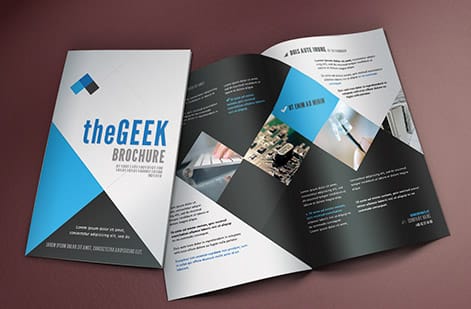
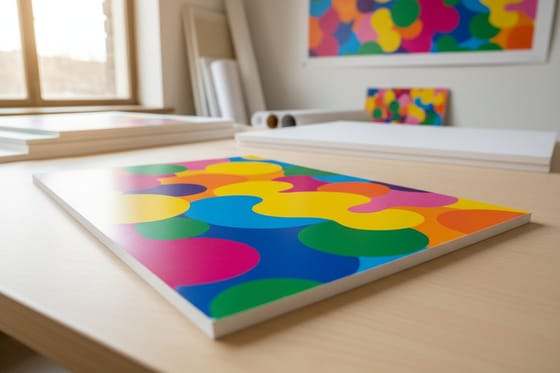
Rigid boards are printed on a flatbed UV press. The panel lies still on a vacuum bed and the printheads travel over it, curing ink instantly with UV light. Because the ink sets on contact there is no drying time and no chance for the paper liner to absorb moisture and cockle, which is why direct printing beats mounting a poster onto a panel with adhesive.
Set your files up the way you would for any large format job. Build at full size or at a clean fraction of it, keep artwork in CMYK, allow real bleed past the trim, and keep type and logos clear of the edges by a comfortable margin. Vector art stays crisp at any panel size, and photography should hold up at the viewing distance rather than at a hundred percent on your monitor.
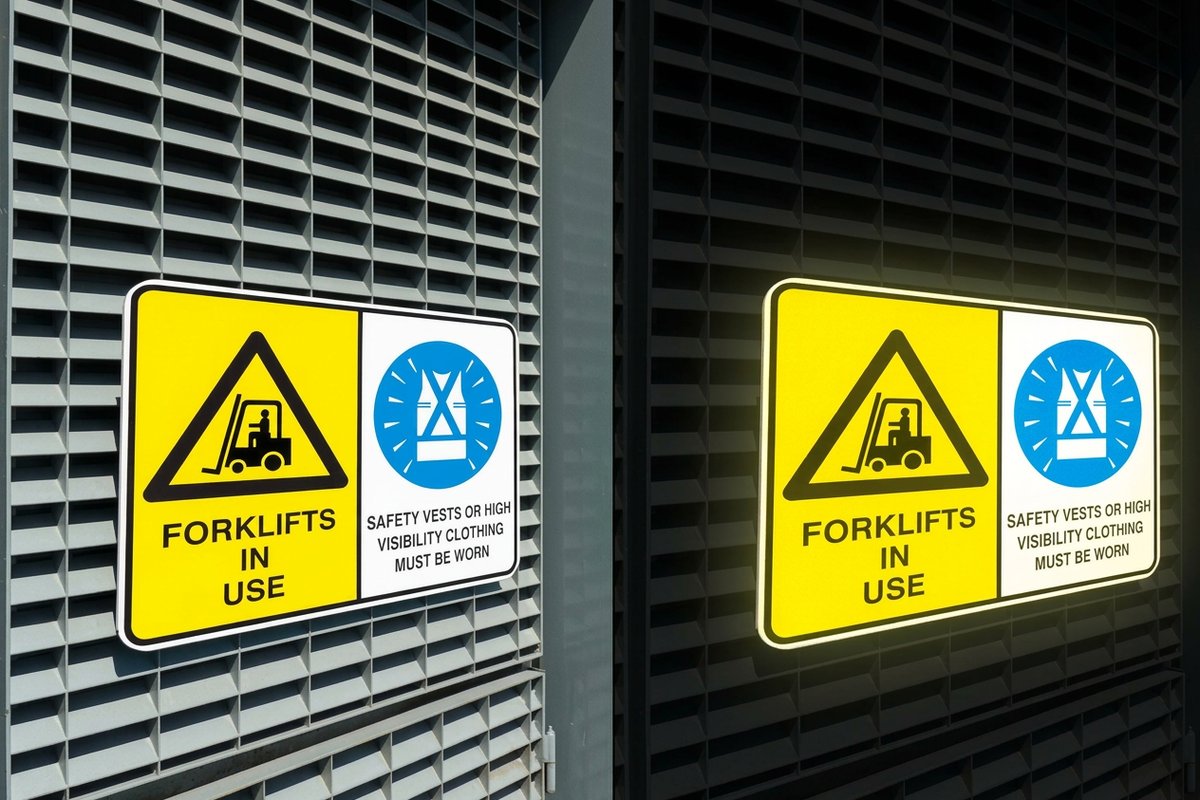
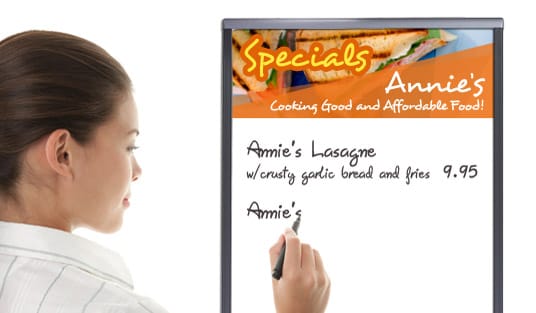
Finishing is where the board earns its keep. Panels can be cut to a shape, slotted so two pieces lock together into a free standing display, or drilled for hanging. A wipeable face turns the same panel into a working surface, which is the trick behind all that dry erase board art you have seen, and a reflective face keeps a sign readable when the venue lights go down.
Sizes, thicknesses, and how far a panel can span

Rigid boards are ordered by finished panel size rather than by a fixed paper series, so you are not choosing between named formats. The common retail sizes cluster around 18 by 24 inches for counter signage, 24 by 36 inches for the standard easel sign, and 48 inches and up for anything meant to be read across a room or a booth aisle.
Thickness is the second decision and it matters more than most buyers expect. A thin panel is fine at counter size and starts to flex as soon as you scale it up. A thicker board spans further without support, holds a slot cut for interlocking parts, and survives being carried by one corner. If the panel is going to be handled by staff rather than installed once, buy the extra thickness.
Plan the panel around where it will actually stand. Measure the fixture, the table, or the wall before you set the artboard, because a display that is two inches too wide for the shelf is scrap. Our roundup of vendor table display ideas is a useful sanity check on scale if you are outfitting a booth for the first time.
Where a recyclable display board is the right call
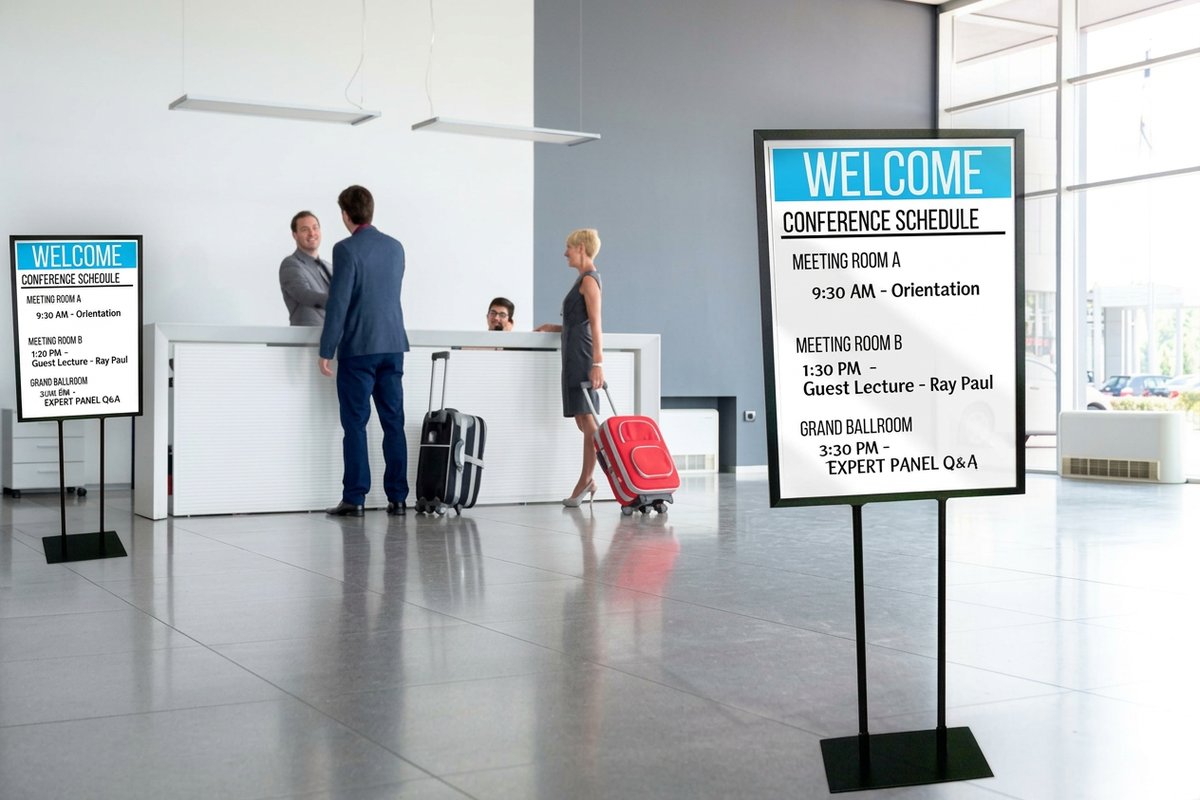
Paper honeycomb was built for the short campaign. Retail point of purchase units that change with the season, trade show graphics that fly to one show, product launch standees, in store wayfinding for a remodel, and event signage that comes down on Sunday night. In all of those the display has to look solid for a defined window and then disappear cleanly.
It is the wrong call in three situations. Outdoors, where rain will find the core. In humid rooms and near food service, where the liner will soften. And for anything that has to survive years of handling, where PVC pays for itself many times over. Choosing the wrong side of that line costs far more than the price difference between the boards.
There is a middle case worth naming. Some signage needs to change constantly rather than survive long, and for those a wipeable rigid face beats reprinting a panel every week. That is exactly what the Dry Erase PVC Board is for, and it starts at $33.99 for a printed rigid panel you can update by hand.
How to choose the right board in six steps
Work through these in order and the material picks itself. Skipping to price first is what produces displays that warp, peel, or get thrown away three days into a four week promotion.
- Set the environment. Indoors with stable humidity keeps paper honeycomb in play. Any exposure to weather, spray, or wash down moves you to PVC before you look at anything else.
- Set the lifespan. Under a month is short run territory. Multiple seasons of reuse means you are buying a fixture, not a display, and it should be priced that way.
- Set the size and the span. Write down the finished panel dimensions and how it will be supported. That number decides thickness, and thickness decides whether the panel stands straight.
- Decide what the surface has to do. Read only, written on and wiped, or visible in low light. A dry erase or reflective face is a specification, not an upgrade you add later.
- Decide the end of life. If the panel must recycle as paper, keep the finish simple and skip laminates and mounted vinyl that contaminate the stream.
- Price the real configuration. Put the exact size, quantity, and finishing into the configurator, because unit price on rigid stock moves sharply with panel area and count.
Run that list once and you will rarely revisit it. The same six questions work for a counter card, a booth backdrop, and a full retail rollout.
What actually happens to the board when the campaign ends
Recyclable is a claim about the material, not a promise about the outcome. A paper honeycomb panel is accepted by paper recycling because the fibers can be repulped, but three things can still disqualify it at the sorting line. Heavy plastic lamination, mounted vinyl graphics, and metal or plastic hardware left attached to the panel.
Keep the specification clean and the outcome follows. Print direct rather than mounting film, choose a matte or gloss finish that is part of the print rather than a bonded sheet, and pull grommets, brackets, and easel hardware before the panel goes in the bin. Flatten large pieces so a hauler can actually handle them.
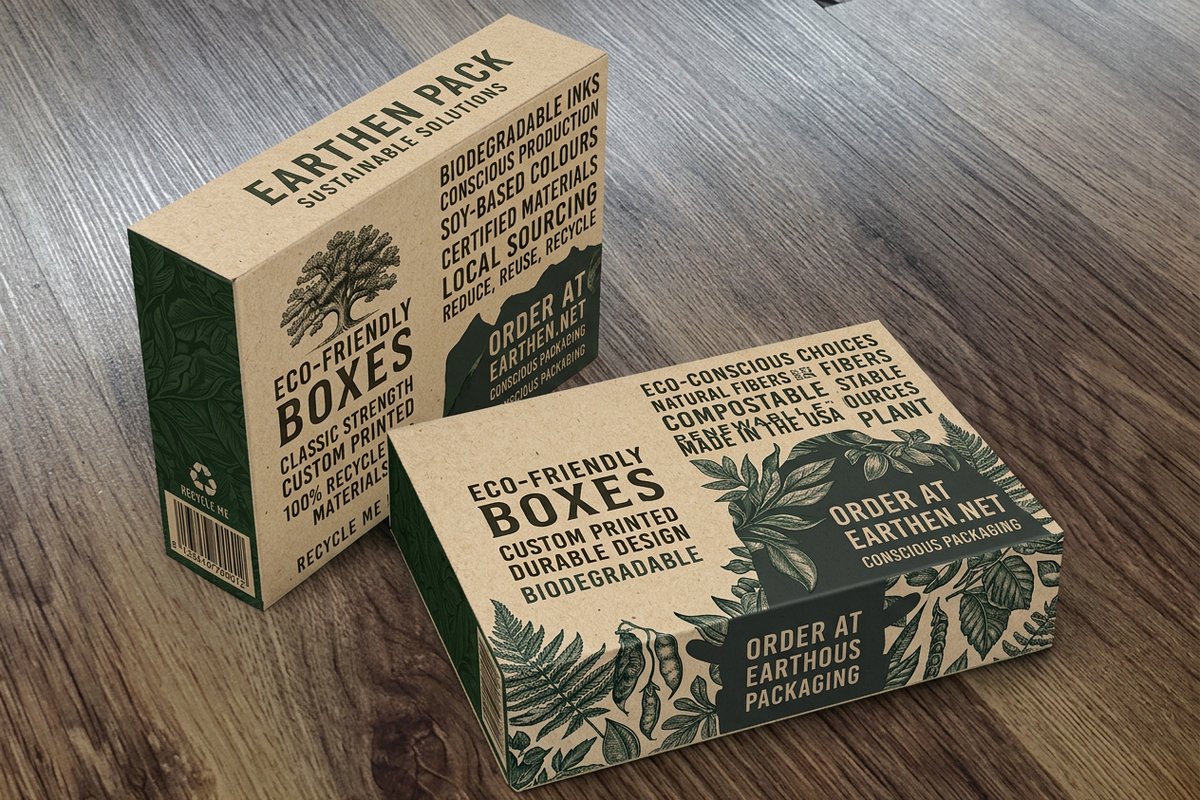
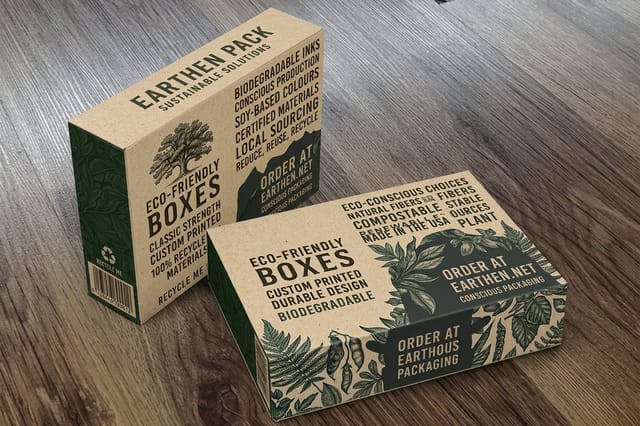
Signage is usually one line in a bigger footprint. If displays are your visible commitment, the packaging behind them should match, which is where Eco Friendly Boxes come in from $711.78 for a full custom run. Simple structural ideas like a kraft packaging box make the point without any coating at all.
What rigid display boards cost and what drives the number

Four inputs move the price on any rigid board. Panel area is the largest, because you are buying sheet material and press time. Quantity is next, since setup is amortized across the run and unit cost drops fast between one panel and twenty five. Thickness adds material cost, and finishing adds labor for every custom cut, slot, and drilled hole.
Turnaround is the fifth input and the one buyers forget. Rush production on a made to order panel costs real money, and oversized boards ship freight rather than parcel, so an eight foot display can carry a shipping line that rivals the print. Ordering three days earlier is usually cheaper than any material substitution you could make.
Concrete starting points help. The Reflective PVC Board starts at $29 and the Dry Erase PVC Board starts at $33.99, both for a printed rigid panel. Configure your real size and count to see the live number rather than working from a starting price.
Ordering an eco minded display board at 4OVER4
Falcon Board itself is a mill branded substrate with limited distribution, so the practical question for most buyers is which rigid board on an available stock list gets them closest to the same result. On our side that means matching the job to a printed rigid panel and being straight about where plastic is the better answer than paper.
Start with the surface the job needs. A wipeable face for signage that changes constantly, a reflective face for low light visibility, or a plain printed face for a straightforward sign. Then set your size and quantity in the configurator, upload artwork at full scale with bleed, and let preflight confirm the file before production starts.
Everything is printed in house, so a question about a cut, a thickness, or a ship date reaches the people running the press. Whether you are building a booth, a retail endcap, or something as simple and short lived as eco friendly graduation announcements, the specification process is the same and it takes about ten minutes.
Wally explains eco display boards
The middle of the board is the whole story
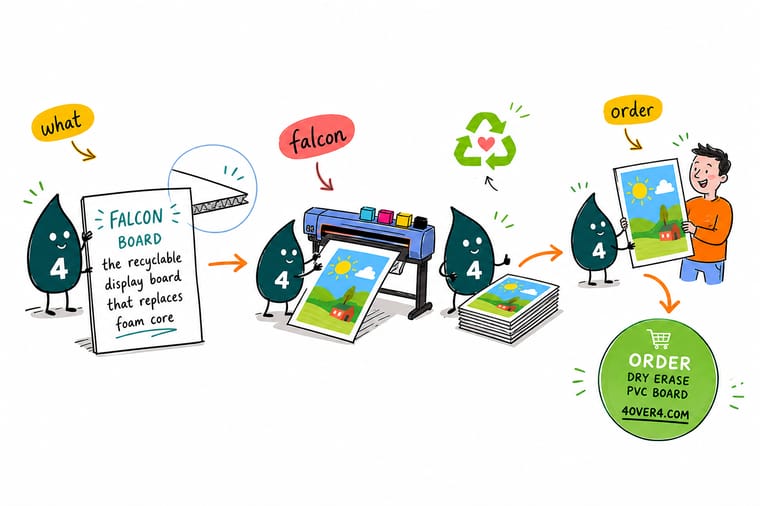
Wally cuts every display board in half before he trusts it. If the middle is plastic foam, the panel is landfill the day the promotion ends. If the middle is paper honeycomb, it goes out with the cardboard. His rule is short. Indoors and short lived, buy paper. Outdoors or built to last, buy PVC and keep it for years. Then price the real size before you decide anything.
Configure a rigid board →Infographic
Falcon Board at a glance, seven things to know
One frame covering what the material is, how it behaves, and where it belongs. Save it for the next time a client asks whether a display can be recycled.
Seven facts, one decision. Environment and lifespan choose the material, size and finishing set the price, and the hardware you leave attached decides whether the panel actually gets recycled.
Specs and pricing
Dry Erase PVC Board specs and live pricing
Once the size and quantity are settled, the price stops being a guess. Here are the live specifications and price breaks for our closest rigid display board, so you can compare a real number against a foam quote.

| Quantity | Price Per Unit | Total |
|---|---|---|
| 1 | $33.99 | $33.99 |
Print it
Rigid boards and eco packaging you can order now


See it in use
Real rigid board work, printed in house







Explore more
Where to go next





By the numbers
Display printing you can count on at 4OVER4
Common Questions
Common questions about Falcon Board and eco display boards
What is Falcon Board?
Falcon Board is a rigid graphic display board made almost entirely from paper. A honeycomb paper core is sandwiched between two smooth printable liners, which gives the panel the stiffness of foam core at a similar weight without the polystyrene layer inside. It was engineered for retail point of purchase displays, trade show graphics, standees, and short run signage that needs to look solid for a few weeks and then be recycled with ordinary cardboard.
Is Falcon Board really recyclable?
Yes, and that is the whole point of the material. Traditional foam core fuses a plastic foam center to paper liners, so a recycler has to separate two very different materials and usually does not bother. A paper honeycomb panel has no plastic core, so a curbside or commercial paper stream can take it whole. Inks, laminates, and mounted vinyl still matter, so keep the finish simple if recycling is the goal.
How is Falcon Board different from foam core?
The difference is the middle. Foam core uses extruded polystyrene, which is light, cheap, and dents under a fingernail. Paper honeycomb uses folded cells that resist crushing along the panel face and hold a straight edge on tall pieces. Foam core is still the cheaper option for a single indoor sign, while honeycomb wins on stiffness, disposal, and how it looks after a week of handling.
How do I choose the right eco display board?
Answer four questions in order. Where does it live, indoors or outdoors. How long does it need to survive, days or seasons. Does it need to be written on, wiped, or lit. And what happens to it afterward. Outdoor and long life pushes you to a PVC board, a written surface pushes you to a dry erase face, and a short indoor run with a recycling requirement is where paper honeycomb earns its place.
What does a rigid display board cost and how are prices set?
Price follows size, thickness, quantity, and finishing. At 4OVER4 the Reflective PVC Board starts at $29 and the Dry Erase PVC Board starts at $33.99, and both climb as the panel gets bigger or the count goes up. Custom cutting, drilled holes, and rush turnaround are separate line items. The live configurator prices your exact panel before you commit.
What sizes, stocks, and finishes are available for rigid boards?
Rigid boards are ordered by finished panel size rather than a fixed paper series, so a 24 by 36 inch retail sign and a 48 inch standee come off the same stock. Thickness is the second choice and drives how far a panel can span without support. Finishes range from a plain matte print for indoor signage to a reflective face for visibility in low light and a dry erase face for boards that get updated by hand.
How long does a printed display board take to print and ship?
Rigid boards are made to order, so the clock starts when your artwork clears preflight. Flatbed printing and cutting typically run a few business days, then transit is added on top and depends on panel size, since oversized boards ship freight rather than parcel. Every turnaround option and its cutoff is shown live in the product configurator before you check out.
Get Started
Ready to print a display board that does not end up in landfill?
Set your size, pick the surface your signage actually needs, and let our team print and finish it in house. Order a sample first if you want to feel the stock.
Legal Disclaimer
Gold Standard guarantees apply to all standard orders placed through 4over4.com. Price match requires verifiable proof of a competitor's published price for an equivalent product with matching specifications and turnaround time. Satisfaction guarantee covers manufacturing defects and print quality issues. Contact support with order number and documentation. On-time delivery rate based on tracked orders 1999 to 2026. Individual results may vary based on shipping carrier performance.
