
What Dye Sublimation Printing Is and When to Choose It


Dye sublimation turns solid dye into gas that bonds into polyester, so the color becomes part of the fabric instead of sitting on top. That is why sublimated prints feel soft, never crack, and can run edge to edge. The process and the comparison with screen printing follow.
Dye sublimation printing uses heat and pressure to turn solid dye into a gas that bonds permanently into polyester fibers or poly-coated surfaces. Because the dye becomes part of the material, prints are vivid, soft to the touch, and never crack or peel. It only works on polyester and light-colored substrates, and it cannot print white. It suits all-over designs and low-to-mid runs; screen printing wins for high volume and cotton.
Start here
Why the color never sits on top
Dye sublimation printing uses a heat press to turn solid dye into gas that bonds permanently into polyester, making the color part of the fabric. The result is vivid, soft, all-over prints that never crack, with the trade-offs that it needs polyester, works only on light colors, and cannot print white. The diagram below shows the heat-transfer process step by step.
What dye sublimation printing is
Dye sublimation is a printing method where solid dye skips the liquid stage and turns straight into a gas, then bonds into the fibers of a polyester fabric under heat and pressure. That word, sublimation, is the physics term for a solid becoming a gas, and it is the whole trick. Instead of laying ink on top of the material, the dye becomes part of the material itself.
That single difference explains everything people like about it. Because the color is embedded in the fibers rather than printed on the surface, a sublimated design has no feel to it, does not crack or peel with washing, and can cover a garment from seam to seam. The fabric stays soft and breathable because there is no ink layer sitting on top.
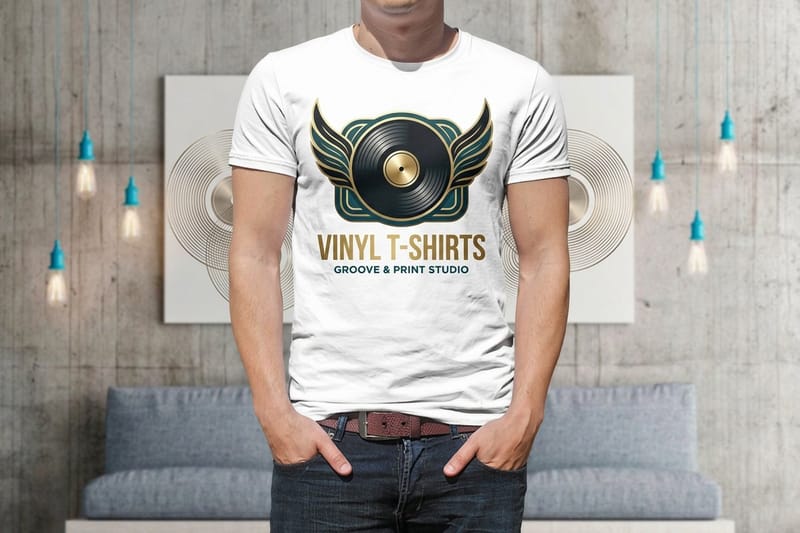
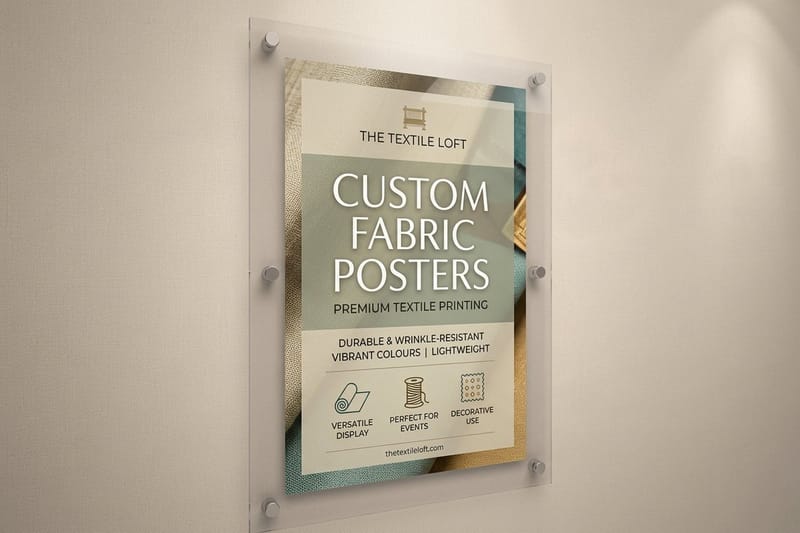
It is the go-to method for full-color polyester apparel and fabric goods, from performance shirts to fabric posters and banners. Our t-shirt printing and the wider fabric collection use it where a vivid, durable, all-over print is the goal.
How dye sublimation works
The process starts on paper, not fabric. Your design is printed in reverse onto a special sublimation transfer paper using sublimation dyes. That printed sheet is then placed against the polyester garment and run through a heat press at roughly 380 to 400 degrees Fahrenheit under firm pressure. The heat is what makes the magic happen.
Under that heat, the solid dye on the paper sublimates into a gas. The heat simultaneously opens the pores of the polyester fibers, the gas moves into them, and as everything cools the fibers close and trap the dye inside. The color is now chemically part of the fabric, not a coating on top of it, which is why it will not wash out or crack.
The whole transfer takes under a minute per press, but the setup, printing the transfer and prepping the garment, is where the time goes. Because each transfer can carry a completely different full-color image, sublimation makes one-off and short-run custom pieces practical in a way that other methods do not.
Equipment and materials it needs

Sublimation depends on a specific chain of gear and materials. You need a printer loaded with sublimation dyes, sublimation transfer paper to carry the design, and a heat press that reaches and holds the right temperature and pressure evenly. Each part matters: the dyes are what sublimate, the paper releases them cleanly, and the press supplies the consistent heat that drives the gas into the fibers.
The substrate is just as particular. Sublimation only bonds to polyester or to hard goods with a special polymer coating, which is why sublimated products include not just polyester shirts but mugs, fabric posters, mousepads, and phone cases with a poly coating. A natural cotton shirt will not hold a sublimated image, because there are no polyester fibers for the gas to bond into.
For most people the practical takeaway is that sublimation is a system, not a single machine. Rather than assemble all of it yourself, you can order sublimated apparel and fabric goods directly, and our apparel range and fabric collection handle the equipment side for you.
Sublimation on fabric, step by step
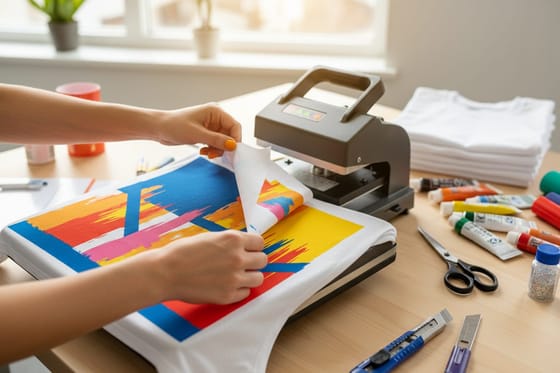
On a polyester garment, the sequence is consistent. First the artwork is printed in mirror image onto sublimation paper with sublimation dyes. The garment is pre-pressed briefly to remove moisture and wrinkles, since either can cause a flawed transfer. The printed paper is positioned face down on the fabric and taped so it cannot shift during pressing.
Then the loaded garment goes into the heat press. Held at around 380 to 400 degrees under firm, even pressure for the specified time, the dye sublimates and bonds into the fibers. When the timer ends, the press is opened and the paper is peeled away while still warm, revealing the finished, vivid design already fused into the fabric.
The result needs no curing or drying like a printed ink would, because there is no ink sitting on the surface. The garment is ready to wear immediately, and because the color lives in the fibers, it survives washing without fading, cracking, or peeling the way a surface print can.
The pros and cons of sublimation
The strengths are real. Sublimation produces vivid, photographic full-color prints with unlimited colors and gradients at no extra cost, since it is a full-color process. The print has no hand, meaning you cannot feel it, so the fabric stays soft and breathable. It is exceptionally durable, resisting cracking, peeling, and fading because the dye is in the fibers. And it can print all over a garment, edge to edge and across seams.
The limitations are just as real, and they come from the same chemistry. It only works on polyester or poly-coated substrates, so cotton is out. It only works on light-colored materials, because the translucent dye relies on the fabric beneath showing through. And it cannot print white, since there is no white sublimation ink; any white in a design is simply the substrate left unprinted.
Those constraints are why sublimation is not a universal answer. It is superb for full-color polyester goods and short runs, and a poor fit for a plain one-color logo on a dark cotton tee. Knowing which side of that line your job falls on is the whole decision, which the comparison below makes concrete.
Which method is best for your job
The practical choice is usually sublimation against screen printing, and the table below scores them on the factors that matter. In short: choose sublimation when you want full-color or photographic designs, all-over prints, soft durable results, and low-to-mid quantities on polyester. Choose screen printing when you have a high-volume run, a design with just a few solid colors, cotton garments, or a need to print on dark fabrics.
Fabric decides a lot of it. Sublimation demands polyester and light colors, while screen printing handles cotton, blends, and dark garments with the help of an underbase. Quantity matters too: screen printing has a per-color setup cost that pays off across large runs, whereas sublimation has no color limit and no setup penalty for a single unique piece, which suits one-offs and short runs.
If you are still weighing methods, our guides on what screen printing is and how to make custom t-shirts go deeper on the alternatives. When your job is full-color polyester, order it as custom t-shirt printing or explore the fabric collection.
Wally presses the color into the fabric
Dye becomes the shirt, no ink on top
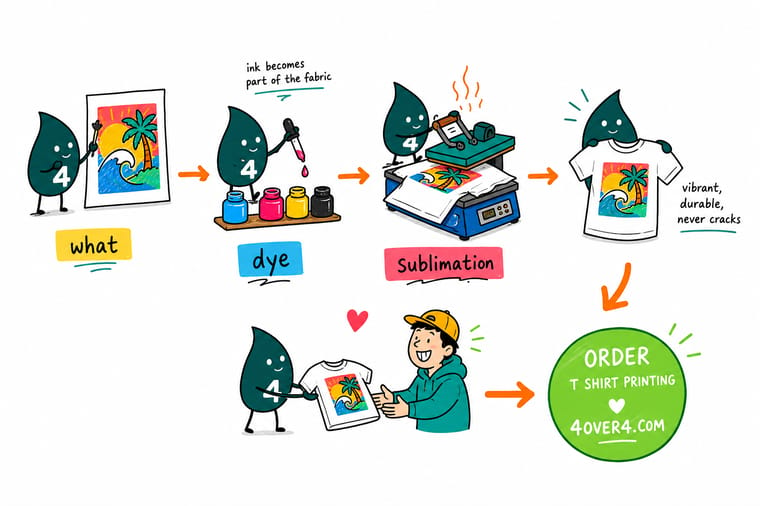
Wally shows the trick: heat turns solid dye into gas, the polyester fibers open, the gas moves in, and as it cools the color is locked inside the fabric. That is why sublimated prints feel soft, never crack, and run edge to edge. It needs polyester and light colors and cannot print white, so for full-color apparel and fabric, 4OVER4 sublimates it.
Order sublimated apparel →Method comparison
Dye sublimation versus screen printing, scored
The two methods compared on the ten factors that actually decide which one fits your job.
| Factor | Dye sublimation | Screen printing |
|---|---|---|
| Material | Polyester or poly-coated only | Cotton, blends, and most fabrics |
| Design complexity | Unlimited colors, photos, gradients | Best with a few solid colors |
| Fabric color | Light colors only | Any color, including dark with an underbase |
| Quantity | Great for one-offs and short runs | Most economical at high volume |
| Cost | No per-color or setup penalty | Per-color setup, cheaper per unit at scale |
| Production time | Fast setup, quick per piece | Longer setup, fast once running |
| Durability | Dye in the fibers, will not crack | Ink on the surface, can crack over time |
| Texture | No hand, soft and breathable | A slight raised ink layer you can feel |
| Customization | Each piece can be fully unique | Same design repeated economically |
| All-over print | Yes, edge to edge across seams | Limited to the screen area |
Quick reference
Dye sublimation at a glance
The essentials of the process and where it fits, so you know at a glance whether it suits your job.
| Aspect | Detail | Why it matters |
|---|---|---|
| Process | Dye turns to gas, bonds into fiber | The color becomes part of the fabric, not a layer on top. |
| Heat and pressure | About 380 to 400 F, firm pressure | Opens the fibers and drives the dye in, then traps it as it cools. |
| Substrate | Polyester or poly-coated, light colors | The dye only bonds to polyester and relies on a light base showing through. |
| White | Cannot be printed | There is no white sublimation ink; white is the unprinted substrate. |
| Feel | No hand, soft print | Nothing sits on the surface, so the fabric stays soft and breathable. |
| Durability | Resists cracking, peeling, fading | Dye in the fibers survives washing far better than a surface print. |
| Best for | Full-color, all-over, short runs | Unlimited color and per-piece uniqueness with no setup penalty. |
Step by step
How a sublimated garment is made in 6 steps
- Print the design on transfer paper The artwork is printed in mirror image onto sublimation paper using sublimation dyes.
- Pre-press the garment The polyester garment is briefly pressed to remove moisture and wrinkles that could flaw the transfer.
- Position and secure the transfer The printed paper is placed face down on the fabric and taped so it cannot shift during pressing.
- Heat press it The garment is pressed at about 380 to 400 degrees under firm, even pressure so the dye sublimates and bonds into the fibers.
- Peel the paper warm When the timer ends, the paper is peeled away while warm, revealing the vivid design fused into the fabric.
- Wear it right away No curing is needed because there is no surface ink, so the garment is ready to use and wash without fading.
Specs and pricing
Custom apparel specs and live pricing
Once your design and garment are set, the print decisions come down to size, style, and quantity. Here are the live specs and price-per-unit for t-shirt printing at 4OVER4, straight from the configurator.

| Quantity | Price Per Unit | Total |
|---|---|---|
| 1 | $21.96 | $21.96 |
| 2 | $16.47 | $32.93 |
| 3 | $16.46 | $49.39 |
| 4 | $15.93 | $63.71 |
| 5 | $15.93 | $79.63 |
| 6 | $15.93 | $95.56 |
| 7 | $15.85 | $110.94 |
| 8 | $15.38 | $123.02 |
Order it
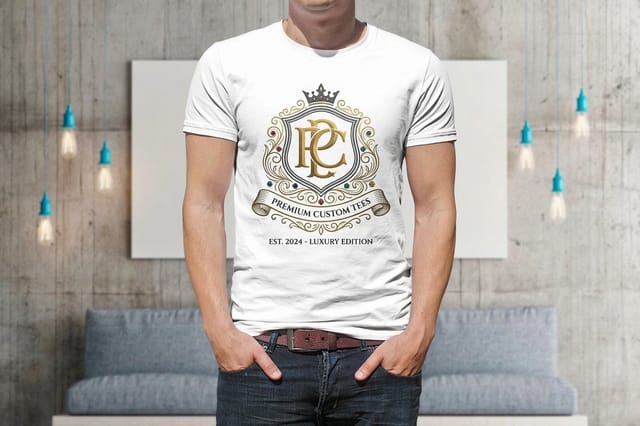
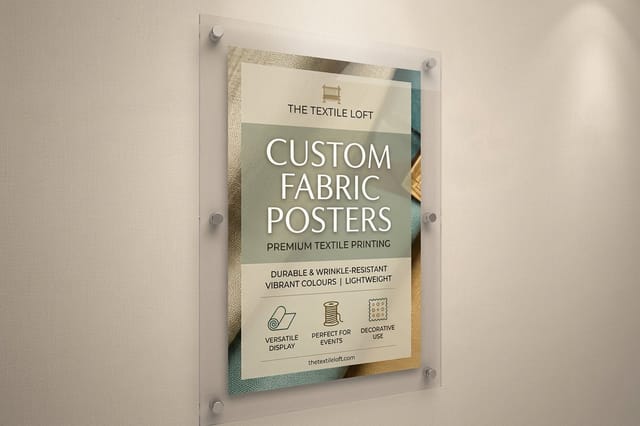
Order your sublimated apparel and fabric at 4OVER4
See it in use
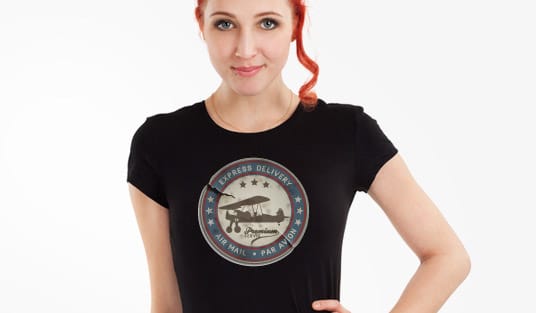
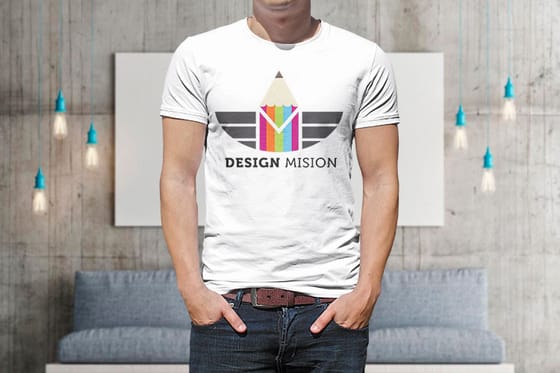
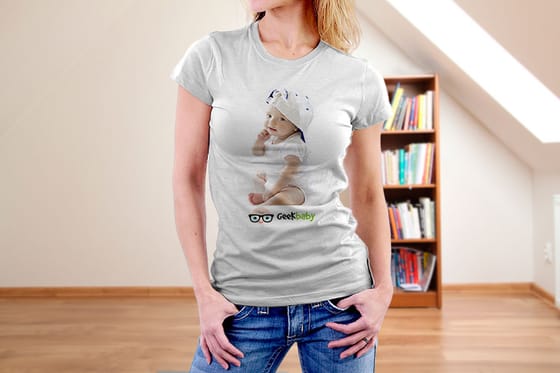
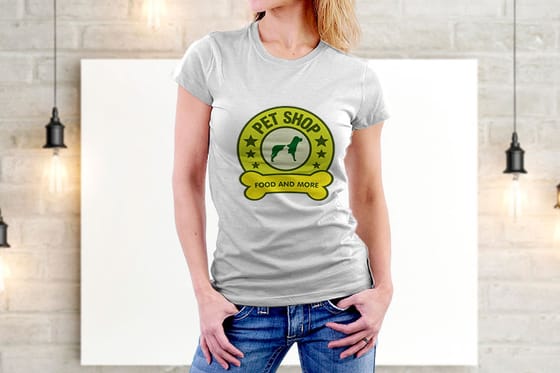
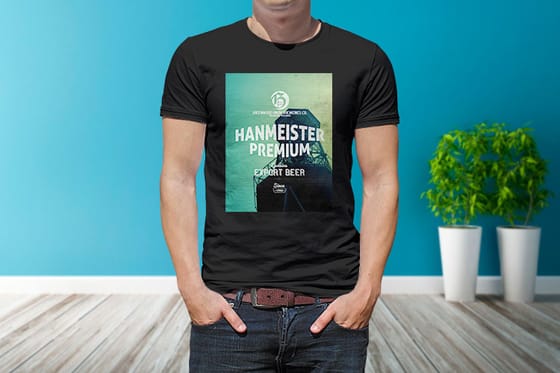
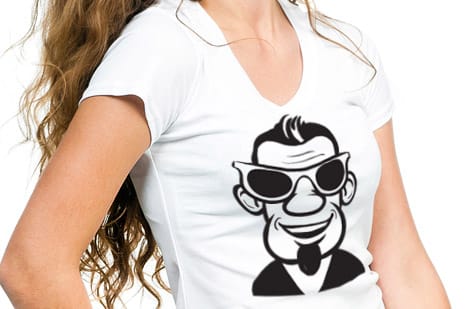
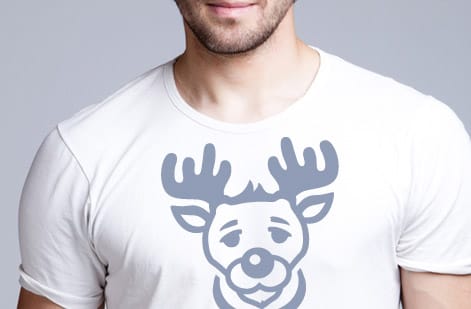
Sublimated apparel and fabric our customers received

Explore more
Where to go next
By the numbers
Sublimation sits inside a catalog of 1,000+ products
Common Questions
Common questions about dye sublimation
What is dye sublimation printing?
Dye sublimation printing is a method that uses heat and pressure to turn solid dye into a gas that bonds permanently into polyester fibers or poly-coated surfaces. Because the dye becomes part of the material rather than sitting on top of it, the print is vivid, soft to the touch, and highly durable, resisting cracking, peeling, and fading. It is the standard method for full-color polyester apparel and fabric goods, as well as poly-coated hard goods like mugs and mousepads, and it excels at all-over designs.
How do I choose between sublimation and screen printing?
Match the method to the job. Choose dye sublimation for full-color or photographic designs, all-over prints, a soft feel, and low-to-mid quantities on light polyester. Choose screen printing for high-volume runs, designs with just a few solid colors, cotton garments, or dark fabrics. Sublimation has no color limit and no per-color setup, which suits unique and short-run pieces, while screen printing has a setup cost that pays off across large identical runs. Fabric type is often the deciding factor: polyester points to sublimation, cotton to screen printing.
What does sublimation printing cost and how is it priced?
Because sublimation is a full-color process with no per-color charge, price scales mainly with the product, the size of the print, and the quantity rather than the number of colors in your design. That makes it cost-effective for vivid, multi-color, or all-over designs and for short runs, since there is no setup penalty for a unique piece. You set the options in the configurator and the price updates live, so you can see how quantity and product choice change the total before ordering.
What materials can you print on with sublimation?
Sublimation bonds only to polyester fabrics or to hard goods with a special polymer coating, and it works only on light-colored substrates because the translucent dye relies on the base showing through. That includes polyester apparel, fabric posters and banners, and poly-coated items like mugs, mousepads, and phone cases. It cannot print on untreated cotton or on dark materials, and it cannot print white, since any white in a design is simply the light substrate left unprinted. The product page notes which items are sublimation-ready.
How long does sublimated apparel take to print and ship?
The heat-press transfer itself takes under a minute per piece, but the overall timeline depends on the product, the quantity, and the design prep. Each product page shows the production and shipping options at checkout so you can choose a timeline that fits your needs. Because sublimated prints need no curing or drying after pressing, the goods are finished as soon as they come off the press, which keeps short-run and custom orders moving quickly.
What is dye sublimation printing best for?
It is best for full-color and photographic artwork on light polyester: all-over prints that run edge to edge across a garment, gradients and photo backgrounds that would need far too many screens, event and team apparel where every piece carries a different name or number, and fabric goods such as fabric posters, banners and table covers. Because there is no per-color setup, one piece is priced on the same logic as fifty, so it also suits samples, prototypes and short repeat orders. It is the wrong tool for cotton, for dark garments, and for a two-color logo repeated across a thousand shirts, which belongs on a screen printing press.
Does sublimation work on cotton?
No. Sublimation dye bonds to polyester and poly-coated surfaces only. On cotton the gas has nothing to bond with, so the color sits weakly on the fibers and washes out instead of staying put. Blends fade in proportion to their cotton content: the more polyester in the fabric, the more saturated and permanent the print, which is why sublimated apparel is normally 100 percent polyester or a high-polyester blend in a light color. If the job has to be cotton, or the garment is dark, use screen printing instead; that is the same decision the fabric-type rule points to elsewhere on this page.
How long does a sublimated print last?
As long as the garment does. The dye is inside the fiber rather than in a layer on the surface, so there is nothing to crack, peel or flake off, and no curing was needed to hold it there in the first place; in practice the fabric wears out before the print does. Wash cool and inside out, and keep it away from bleach and hot dryers, since heat is exactly what drove the dye in at 380 to 400 F. Long, direct sun is the one real enemy, so outdoor fabric goods soften in tone over a long season while apparel keeps its color wash after wash.
Get Started
A sublimated t-shirt costs $21.96 and ships in 5 business days
Choose dye sublimation for soft, durable, all-over prints on polyester, and let us handle the equipment. Adjust every option and watch your price update live at 4OVER4.
Legal Disclaimer
Gold Standard guarantees apply to all standard orders placed through 4over4.com. Price match requires verifiable proof of a competitor's published price for an equivalent product with matching specifications and turnaround time. Satisfaction guarantee covers manufacturing defects and print quality issues. Contact support with order number and documentation. On-time delivery rate based on tracked orders 1999 to 2026. Individual results may vary based on shipping carrier performance.
