
What Falconboard Signs Are and When Honeycomb Paper Board Beats Foam Core


Falconboard is the honeycomb board retail display printers reach for when the client asks for something recyclable. It is built from a honeycomb core, it beats foam core in specific places, and it fails in others.
Falconboard is a rigid display board made entirely of paper, a kraft honeycomb core glued between two printable paper facings, with no foam and no plastic sheet anywhere in it. That single material construction is why a used panel goes out with the corrugated cardboard instead of being pulled apart first, and it is also why the board belongs indoors: the paper core wicks water and delaminates. It is a Hexacomb brand, not a generic stock, and we do not print it by name at 4OVER4.COM. The closest boards we run are foam core signs from $49.99, coroplast from $25, PVC signs from $25 and styrene signs from $29.

Quick answer
Paper skins, a paper core, and one recycling bin
Falconboard replaces the plastic center of a display board with kraft paper honeycomb. The cells stand upright through the panel, so it resists face pressure better than foam core of the same thickness, and because skins and core are the same fiber the whole panel recycles with cardboard. The trade is water: paper honeycomb wicks, so this is an indoor board with a working life of months, not a substrate for anything that faces weather. The diagram below cuts all three boards open so you can see what actually differs.
What a Falconboard Panel Is Made Of
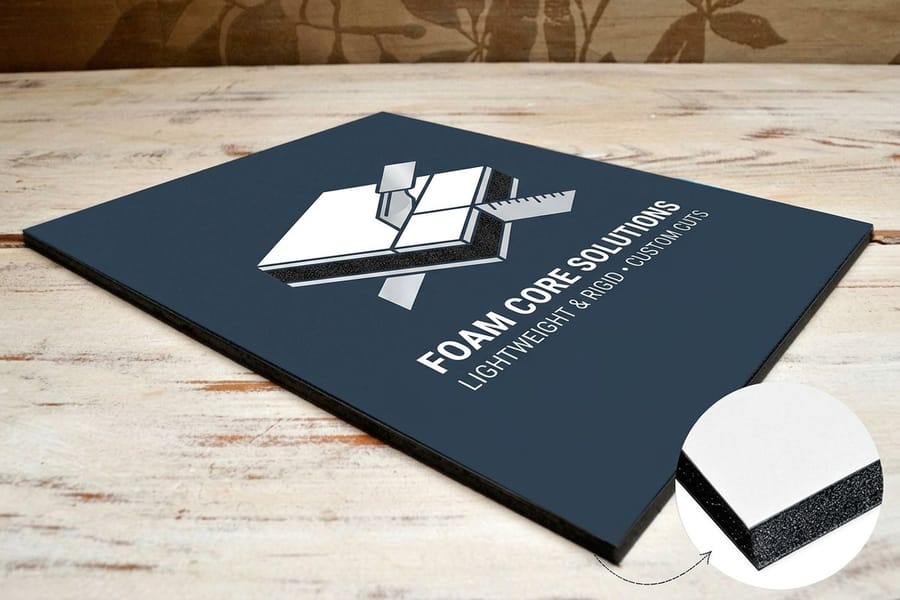
Falconboard is a brand, not a generic board, which is why quotes for it vary so much. Hexacomb, part of Pregis, makes it, and the construction is three layers: a smooth paper facing on the front, a kraft paper honeycomb in the middle, a matching facing on the back.
The honeycomb is the part that matters. Its cells stand upright through the thickness of the panel, so a push on the printed face is carried down the cell walls rather than squashing a soft center. That is why a honeycomb board takes a thumbnail without keeping the dent, and why it holds a straight edge across a wide span better than a foam panel of the same thickness.
It is sold in a spread of thicknesses, roughly 8mm for flat wall panels up to about 16mm for freestanding pieces that have to carry their own weight. Flatbed UV presses print straight onto the facing, and a router cuts the panel to shape cleanly because there is no plastic to melt against the bit. The cut edge shows the honeycomb, which some designers hide with an edge wrap and others deliberately leave open.
If you have only ever ordered foam core signs, picture the same sandwich with the plastic center swapped for cardboard cells. Everything else about handling the board is familiar.
Why Printers Call It the Eco Rigid Board
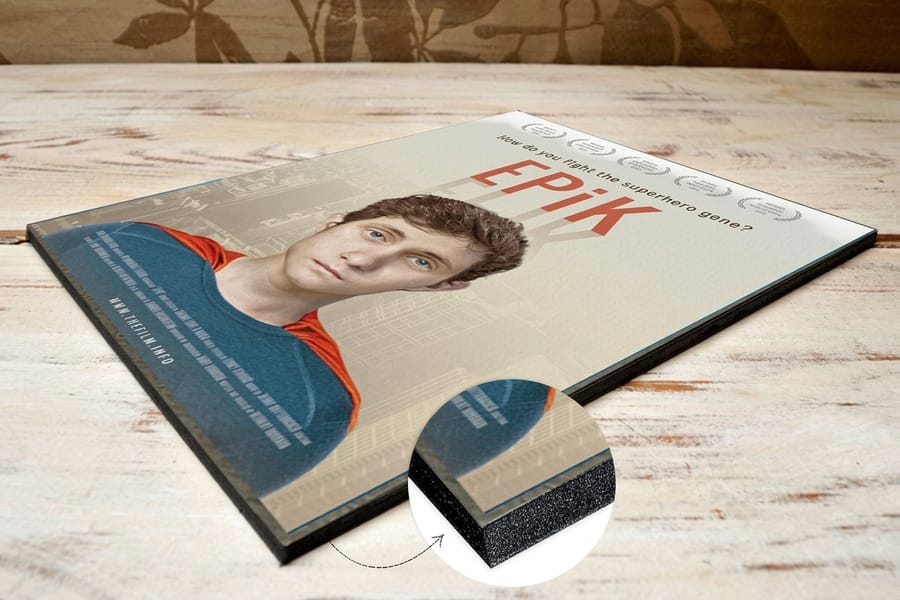
The green claim rests on one fact rather than a list of them: the board is a single material. Skins and core are both paper, so a used panel is flattened and put out with corrugated cardboard. Nobody has to separate a plastic center from a paper face first, and that separation step is exactly where most display boards fall out of the recycling stream.
Compare that with the alternatives. Foam core has a polystyrene middle bonded to paper liners, which makes it a mixed material that most municipal programs decline. PVC is a plastic that plenty of recyclers will not take at all. Coroplast is technically a number 5 polypropylene and technically recyclable, but only where a facility accepts that number, and most curbside programs do not.
One limit is worth naming. The board is recyclable; the finished sign might not be. A flood of UV ink is generally fine, but a gloss laminate, a mounted vinyl graphic, packing tape across the back or a plastic easel foot puts the panel straight back into the mixed pile. If a client is buying the recycling story, keep the finishing plain and say so on the quote. Our green printing practices page covers what we do at the press end, and the eco friendly printing collection lists the products that carry the same logic through to the stock.
Falconboard vs Foam Core vs Coroplast vs PVC
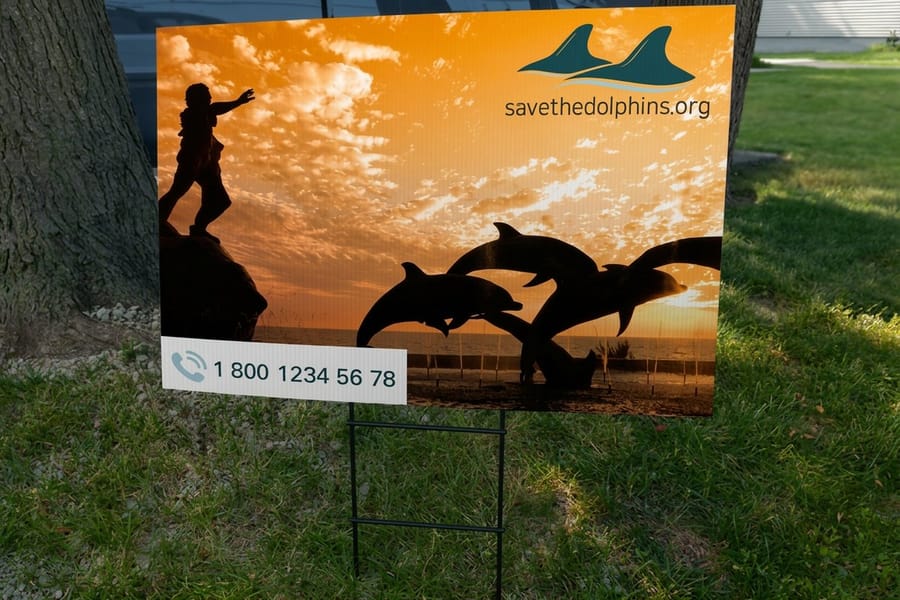
Four boards, four different cores, and the core decides almost everything. Read the water column first, because it eliminates two of the four for most jobs before price ever comes up.
| Board | Core | Common thickness | Water | Recycling | Starting price |
|---|---|---|---|---|---|
| Falconboard | Kraft paper honeycomb between paper facings. | About 8mm to 16mm. | Indoor only. Wicks and delaminates. | Paper stream, with the cardboard. | Not stocked at 4OVER4.COM. |
| Foam core | Extruded polystyrene between paper liners. | 3/16 inch and 1/2 inch. | Indoor only. Liner bubbles and lifts. | Mixed material, usually declined. | $49.99 |
| Coroplast | One piece of fluted polypropylene. | 4mm, sometimes 10mm. | Rain, sprinklers, a full season outside. | No. 5 plastic where accepted. | $25 |
| PVC | Solid expanded plastic sheet, no core. | 3mm and 6mm. | Outdoor rated, holds shape when wet. | Rarely accepted anywhere. | $25 |
Weight is the other quiet difference. Falconboard sits between foam core and PVC, so a large panel is still a one person lift but it will not float off a display easel the way a thin foam board does. For the outdoor half of this table, our full breakdown of aluminum signs against coroplast and PVC takes the comparison further, and coroplast signs and PVC signs both start at $25.
Where a Honeycomb Board Earns Its Place
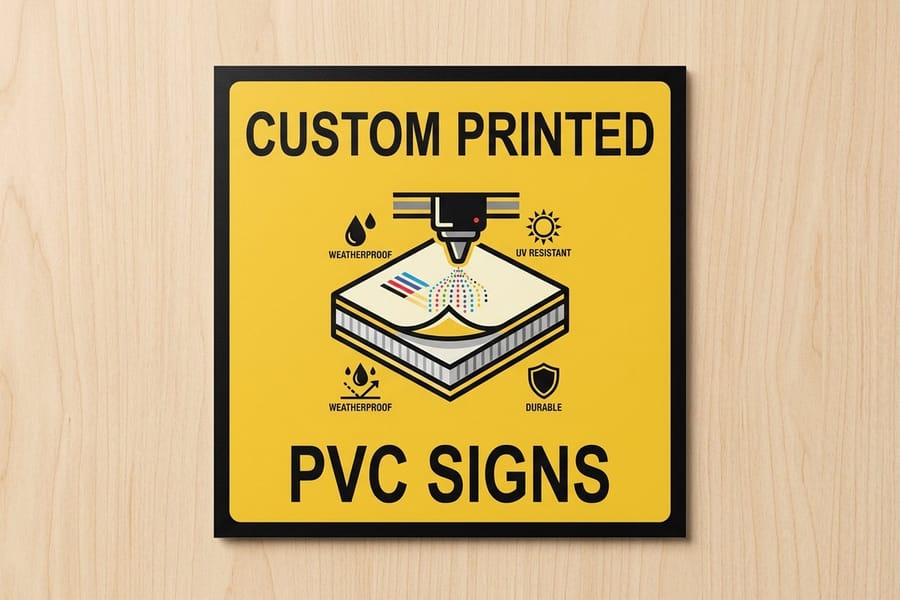
The board is built for retail. Point of purchase headers, shelf talkers on a stiff panel, aisle blades, product standees and end cap displays are the volume use, because a chain can run a promotion for six weeks and then flatten the whole set into a cardboard bale. Trade show exhibitors use it for the same reason, since a booth panel gets shipped once, stood up for three days and discarded rather than stored.
Events are the second home. Directional signs, table numbers, sponsor boards and welcome panels all live indoors, get handled by volunteers and go away when the event does. Window and in store displays follow the same pattern. So do gallery labels, museum interpretive panels and mounted photographic prints where a paper backing is preferred to a plastic one.
A die cut standee is where the honeycomb shows off. A shaped figure routed from a 16mm panel with a folded foot stands on its own without a plastic strut, which no foam board of the same thickness will do reliably. For anything that needs a stake in the ground instead of a foot on the floor, coroplast signs are the right answer and the flutes have to run vertically so the stake follows a channel.
Indoor Life, and What Happens the Moment It Rains
Say it plainly: this is an indoor board. Paper honeycomb wicks water along the cell walls, and it does it faster than the printed face lets on, so the first sign of trouble is usually a soft corner rather than a stain. A humid loading dock or an unconditioned storeroom softens the edges over a couple of days. Real rain lifts the facings off the core and the panel is finished.
Indoors and dry, the working life is measured in months rather than years, and the thing that ends it is handling rather than age. Corners crush when panels are stacked without slip sheets. Facings scuff. Repeated setup and takedown wears the edges. That is fine for a six week promotion and wrong for permanent wayfinding, which is exactly what the material was designed around.
When a sign has to survive weather, change substrate rather than trying to protect the honeycomb. Coroplast takes a full outdoor season for $25. PVC holds its shape when wet and takes screws and standoffs. Aluminum signs at $36 are the ones still readable after several winters. Our guide to the best colors for advertising signs covers the other half of outdoor life, which is fading, and cardboard signs explained walks through how far paper based signage goes before the weather takes it back.
How to Choose a Rigid Sign Material in Five Questions
Every rigid sign quote starts with the same short interrogation. Answer these in order and the substrate picks itself.
- Will it get wet, ever? If yes, paper cored boards are out on the first question. Go straight to coroplast, PVC or aluminum.
- How long does it need to live? Weeks means the cheapest board that looks right. Years means metal, and the price difference stops mattering once you divide it across the seasons.
- How big is the panel? Span is what causes bowing. Past 24 by 36 inches, step up in thickness or add support along the top edge before you blame the material.
- How does it mount? Easel, wall, stake, standoff or hanging cable all pull differently. Stakes need flutes running vertically, standoffs need a board that holds a drilled hole, and hanging needs a panel that will not sag in the middle.
- What happens to it afterwards? If the client wants a single stream disposal, a paper honeycomb board is the only one on the list that gives it, provided nobody laminates it.
For reusable indoor work, styrene signs at $29 are the quiet favorite, because styrene flexes instead of creasing and survives being packed and unpacked for a season of trade shows. Set your artwork up at final size in the blank template library before you commit to a substrate, and if you are still weighing a rigid panel against a flexible one, banners versus signs settles it.
Wally explains Falconboard
Cardboard cells instead of a foam center
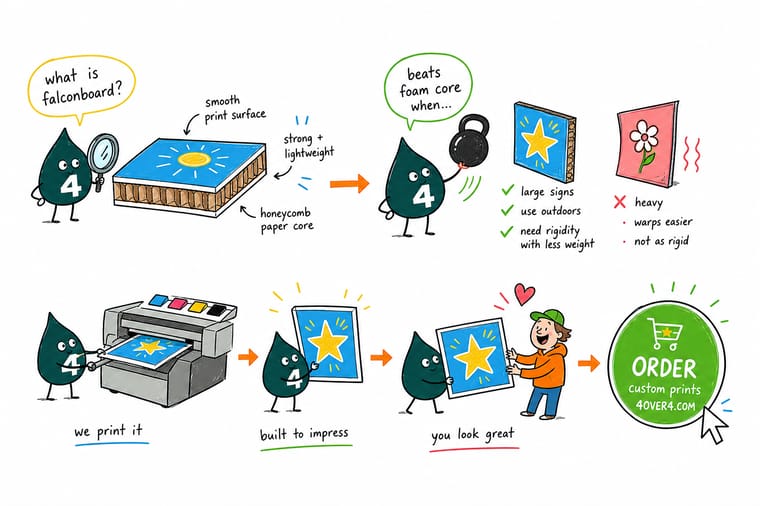
Wally saws a Falconboard panel in half and shows you the middle. It is not foam, it is a honeycomb of kraft paper standing on end, which is why a thumb pressed into the face does not leave a dent. Skins and core are the same fiber, so the whole panel flattens into the cardboard bale when the promotion ends. Then he tips a bucket of water over it, and that is the end of the demonstration. Indoors it is a smart board. Outdoors it lasts about one rain shower.
Shop eco friendly printing →Specs and pricing
Rigid sign boards, sizes, and starting prices
The boards we actually print, with live size and quantity options and starting prices straight from the 4OVER4.COM configurator.


Print it
Order the rigid board your job actually needs

Explore more
Where to go next



By the numbers
Twenty five years of rigid board printing
Common Questions
Your Falconboard questions, answered
What is Falconboard made of?
Falconboard is a rigid display board built entirely from paper. A kraft paper honeycomb core, with the cells running through the thickness of the panel, is glued between two smooth paper facing sheets. Those facings are what the press prints on. Hexacomb, part of Pregis, makes it, and the name is a brand rather than a generic material, in the same way Coroplast is a brand of fluted polypropylene sheet. The construction is the whole point: no polystyrene center and no plastic skin, so the finished panel is a single fiber stream.
Is Falconboard the same as foam board?
No. They look similar from the front and behave differently everywhere else. Foam board, also sold as foam core, has an extruded polystyrene center between two paper liners, so it is light, very smooth and easy to cut with a blade. Falconboard replaces that plastic center with paper honeycomb, which makes it slightly heavier, stiffer against face pressure, and recyclable as paper. Dent a foam board with your thumbnail and the mark stays. Falconboard spreads the load across the cell walls instead.
Can Falconboard signs go outside?
Treat it as an indoor board. The core is paper, and paper wicks water along the cell walls faster than the printed face suggests. A humid loading dock will soften the edges within a day or two, and real rain delaminates the facings from the core. If the sign has to face weather, print it on coroplast, PVC or aluminum instead. Coroplast handles a season of yard duty for $25, and aluminum signs at $36 handle years.
Is Falconboard actually recyclable?
The board is, and that is the honest limit of the claim. Because the skins and the core are the same fiber, a panel can be flattened and put out with corrugated cardboard rather than pulled apart first. What complicates it is what gets added afterwards. A flood coat of UV ink is fine in most mills, but a laminate, a mounted vinyl print, adhesive tape or a plastic standee foot puts the panel back into the mixed pile. Keep the finishing simple if the recycling story matters to the client.
What can I print instead of Falconboard at 4OVER4.COM?
It depends on where the sign lives. Indoors and short term, foam core signs from $49.99 give you the same light, flat panel look. Indoors and reusable, styrene signs from $29 bend rather than crease and survive being packed and unpacked. Outdoors and cheap, coroplast from $25 is the standard yard and event board. Outdoors and permanent, aluminum signs from $36. If the low waste angle is the priority, the eco friendly printing collection lists the products we run on recycled and recyclable stocks.
How thick should a rigid sign be?
Match thickness to span, not to budget. Under about 18 by 24 inches, a thin board holds itself flat on an easel or a wall. Past that, a thin panel bows visibly in the middle and looks cheap from ten feet away, which is the whole reason the sign exists. Falconboard is sold in a range of roughly 8mm to 16mm for that reason, and the same logic applies to our own boards: step up in thickness before you step up in size, and support any panel over 36 inches along its top edge.
Get Started
Need a rigid sign that suits where it will stand?
Tell us whether it lives indoors or outdoors and how long it has to last. We print foam core, coroplast, PVC, styrene and aluminum panels and ship them from Queens.
Legal Disclaimer
Gold Standard guarantees apply to all standard orders placed through 4over4.com. Price match requires verifiable proof of a competitor's published price for an equivalent product with matching specifications and turnaround time. Satisfaction guarantee covers manufacturing defects and print quality issues. Contact support with order number and documentation. On-time delivery rate based on tracked orders 1999 to 2026. Individual results may vary based on shipping carrier performance.
