
How to Size a Stretch Table Cloth for 6 ft and 8 ft Trade Show Tables


Tobias is our voice for cutting, binding and large format, built from the knowledge of our production team, with over 20 years in printing.
Stretch covers are named after the table they grip, not the cloth you unfold. Here are the table measurements that matter, how stretch differs from fitted and throw, and how to build artwork that holds up under tension.
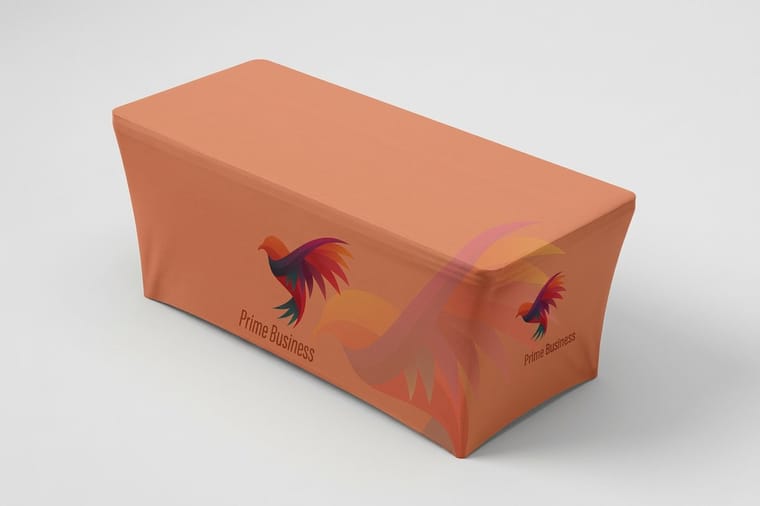
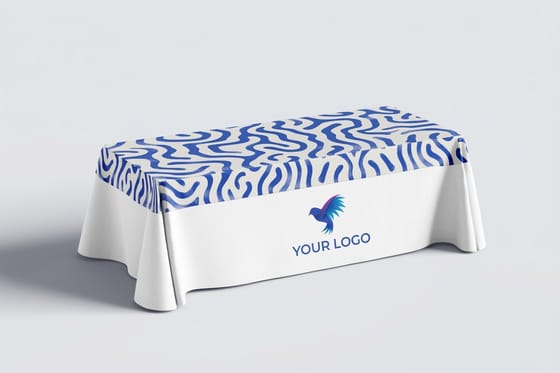
Order a stretch table cloth by the table, not by the fabric: the 6 ft size fits a 72 by 30 inch table standing 30 inches high, and the 8 ft size fits a 96 by 30 inch table at the same height. The panel is deliberately cut an inch or two under those dimensions so the knit pulls itself flat, which is why a 6 ft cover cannot be forced onto an 8 ft table and an 8 ft cover sags on a 6 ft one. Most stretch covers close all four sides, so anything you need during the show goes under the table before the cover does.
Quick answer
The size on the label is the table, and the panel is cut smaller
A 6 ft stretch cover fits a 72 by 30 inch table 30 inches high, and an 8 ft cover fits a 96 by 30 inch table at the same height. The sewn panel is an inch or two under those numbers on every face, and that shortfall is the whole mechanism: tension is what holds the graphic drum flat and pulls the travel creases out. Depth is the measurement people forget, and a 24 inch classroom table leaves a 30 inch cover rippling straight through the logo. Print is dye sublimated into the polyester so it stretches with the fabric instead of cracking off it. Cocktail rounds take round table covers instead, sized by table diameter from 31.5 to 60 inches.
Measure the Table First, Then Pick the Size
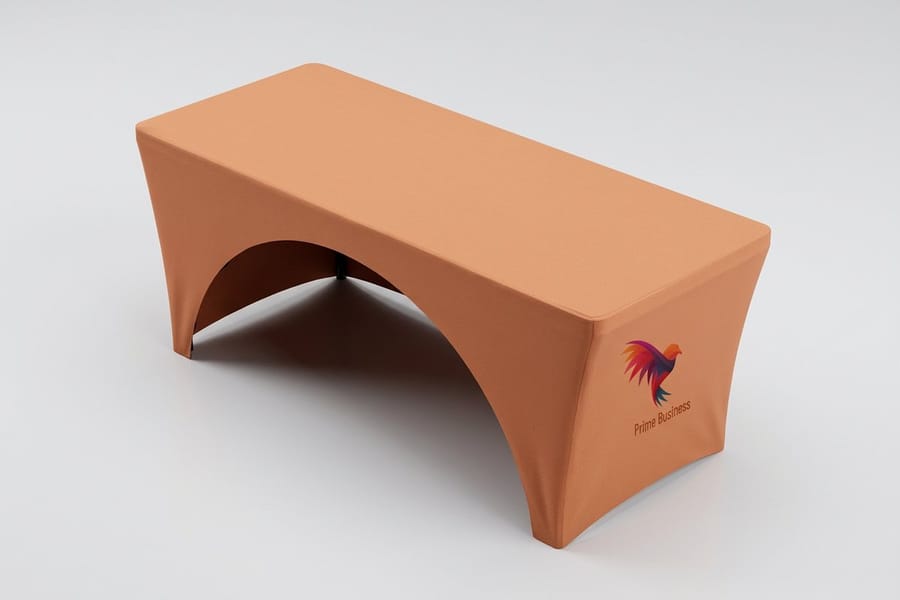
Every sizing mistake we see starts the same way, with someone measuring the cloth they already own instead of the table the show will provide. Stretch sizes are named after the table.
| Table | Top size | Height | Where it turns up |
|---|---|---|---|
| 6 ft banquet | 72 by 30 in | 30 in | The default rented table at conventions, hotels and most 10 by 10 booths. |
| 8 ft banquet | 96 by 30 in | 30 in | Larger booths, registration desks, and school or church halls. |
| 4 ft utility | 48 by 24 or 30 in | 30 in | Farmers markets, sampling stations, tight aisle ends. |
| Classroom | 72 by 24 in | 30 in | Campus events and training rooms. The shallow 24 in depth is the trap. |
| Cocktail round | 30 or 32 in across | 42 in bar, 30 in seated | Receptions and hospitality areas beside the booth. |
Three numbers decide the order: length, depth and height. Length is the one people check. Depth is the one that ruins the result, because a cover cut for a 30 inch deep table goes slack across the top of a 24 inch classroom table and the slack lands right where your logo sits. Height matters at the cocktail rounds, where a 42 inch bar table and a 30 inch seated table take completely different covers.
Get the spec in writing from the show kit before you print. If nobody will confirm it, measure the table with a tape at load in and plan for a table throw, which forgives an inch or two, rather than a stretch cover, which does not. The table cover sizes and fit guide works through the same measurements for every other cover style.
Stretch, Fitted and Throw Do Different Jobs
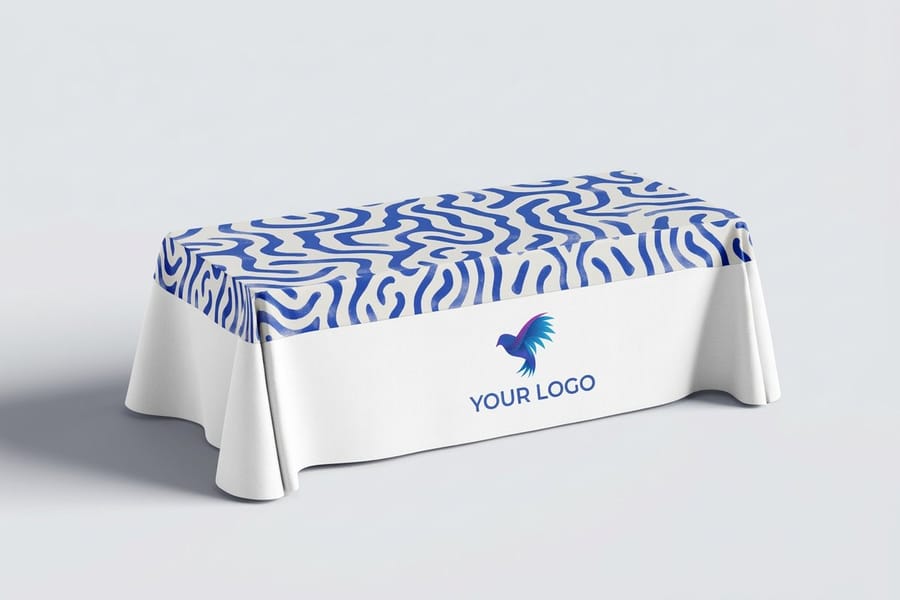
The three styles are sold side by side and chosen almost at random, which is a shame, because they behave nothing alike once the show floor gets busy.
| Style | How it fits | Back of the table | Best for |
|---|---|---|---|
| Stretch | Four way knit cut under the table, foot pockets over the legs, tension holds it flat. | Closed. Load your cases before it goes on. | A drum tight, wrinkle free graphic and a modern look with no folds. |
| Fitted | Sewn corners in woven polyester, tailored to one table size, hangs straight. | Open or closed, your choice at order time. | Crisp edges and a layout that must hold its exact proportions. |
| Throw | Loose drape over the top, no sewn corners, soft folds at the ends. | Open by default. Easy access all day. | Mixed venues where the table size is not confirmed until you arrive. |
The trade off is access against appearance. Stretch gives you the flattest print surface in the category, because the fabric is under constant tension and pulls its own travel creases out within an hour of going on. It also seals the back, so anything you did not put under the table before the cover went on stays out of reach until you lift it. Exhibitors who restock from under the table all day usually regret that.
Fitted sits in the middle, and a standard tablecloth is the forgiving option that will still look right if the venue swaps a 6 ft table for an 8 ft one overnight. Covers versus runners covers the cheaper route where a plain cloth carries a printed table runner instead.
The Fabric and What Dye Sublimation Does To It
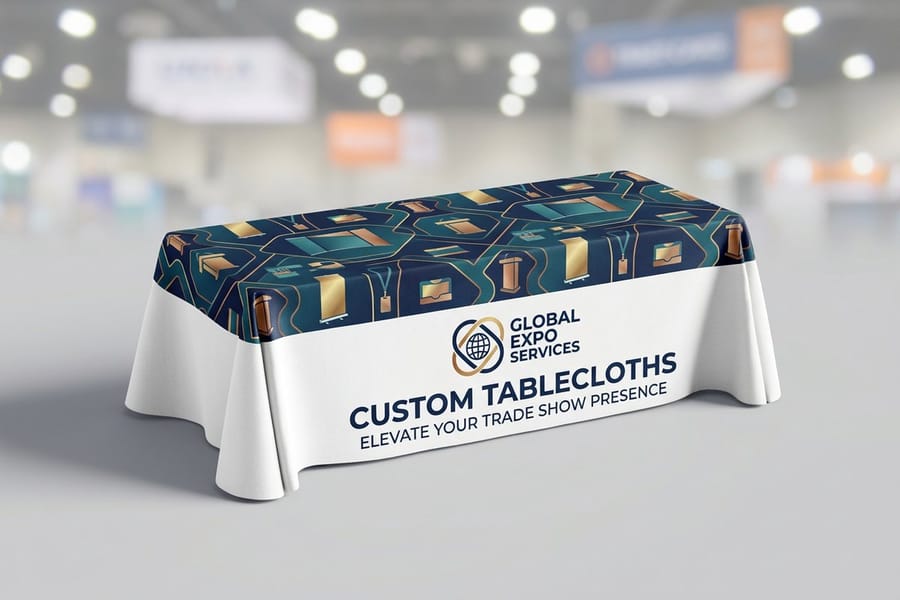
A stretch cover is a polyester knit with elastane blended in, which is what lets it give in four directions and snap back. That blend is also the reason the printing method is fixed rather than optional.
Dye sublimation heats disperse dye until it turns straight from solid to gas, and the gas enters the open polyester fiber and locks in as the fabric cools. The color ends up inside the yarn. Nothing sits on the surface, so the panel keeps its stretch, the graphic does not crack when the corners pull over the table legs, and a cold wash will not lift it. Screen printing or vinyl transfer on the same knit would stiffen a patch of the panel and split the first time it stretched. Our dye sublimation guide follows the full heat cycle if you want the detail.
One honest limit: elastane does not take disperse dye the way polyester does. On a high stretch knit the color reads a shade softer than the same file on a woven polyester throw, and it softens a little further once the fabric is pulled taut over the table. Deep navy and black hold up well. A precise corporate red is the one to proof, and it is worth ordering the cover early enough to see it before the show rather than the week of. Polyester versus stretch versus vinyl puts the three fabrics side by side on color, cleaning and durability.
Setting Up Artwork That Survives Being Pulled Tight
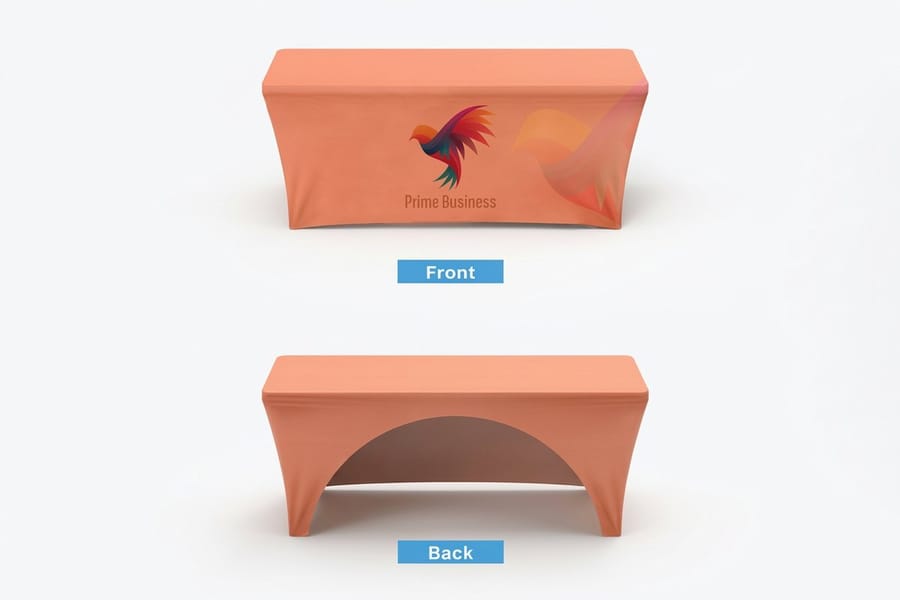
Design for the stretched cover, not for a flat rectangle, and most of the usual disappointments never happen. The fabric widens whatever is printed on it, and it widens the front face more than the top.
- Keep the mark central. The middle of the front panel moves least. Logos and the company name belong there, roughly 6 to 10 inches down from the table edge where they sit at the eye level of someone standing in the aisle.
- Leave the corners quiet. The fabric works hardest where it wraps the legs and the foot pockets. Type, rules and any hard edge placed within a few inches of a corner will bow.
- Avoid perfect geometry at the edges. A circle near the corner becomes an oval, and a thin border becomes an uneven one. If the identity depends on an exact circle, put it on a fitted cover instead.
- Build at full size at 100 to 150 dpi. A table cover is viewed from a few feet away, and a file built at photo resolution is huge for no gain. Supply vector artwork for the logo and type wherever you can.
- Remember the back is a fourth panel. On a closed back stretch cover it exists whether you use it or not, so give it a color that matches rather than leaving it to default.
Start from a correctly proportioned layout in the blank template library, and treat the cover as one part of a booth that reads as a set. The table graphic, the upright behind it and the counter piece should share one palette. The first time exhibitor checklist lays out the rest of what has to be ordered and by when.
Wally explains stretch sizing
Measure the table, not the cloth
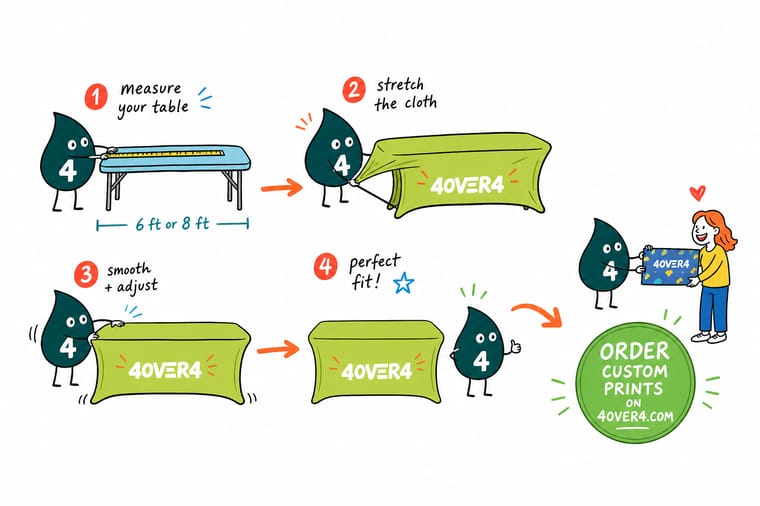
Wally puts the tape on the table first: 72 inches long, 30 deep, 30 high is the 6 ft size, and 96 inches long is the 8 ft. He orders the cover by those numbers because the panel itself is sewn smaller on purpose, and that shortfall is what snaps the print flat and pulls the fold lines out. He loads the cases underneath before the cover goes on, since stretch closes the back. Then he keeps the logo in the middle of the front face, where the fabric moves least.
Order stretch table covers →
Specs and pricing
Table cover sizes and starting prices
The stretch cover comes in one 6 ft and one 8 ft size on 8.8oz tension fabric. The throw and the standard tablecloth share 9oz premium polyester with a 1 inch hem on all sides, cut 84 by 126.5 inches for a 6 ft table and 84 by 150.5 inches for an 8 ft one. Compare the three side by side, with live configuration choices and starting prices straight from the 4OVER4.COM configurator.
Print it
Cover the table in your own colors
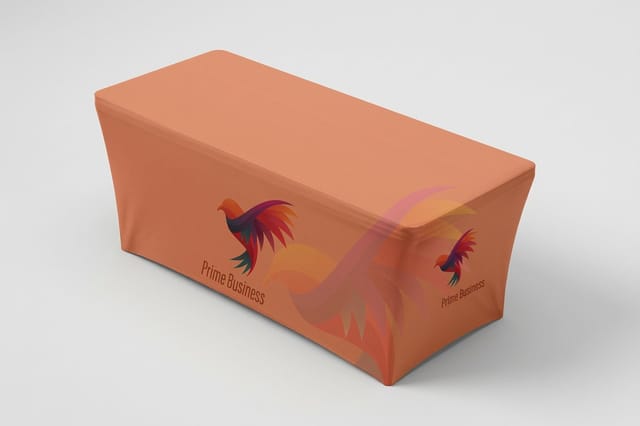
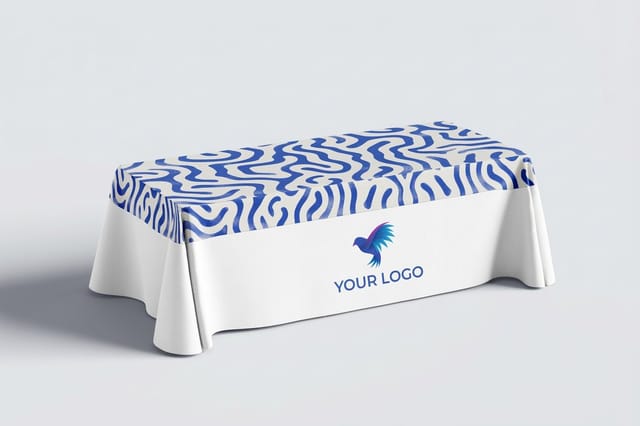
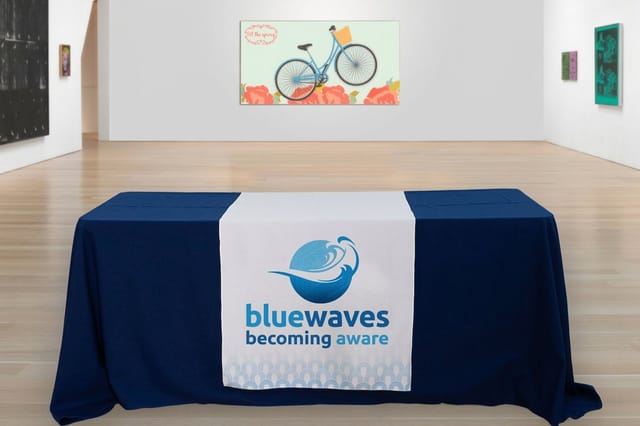
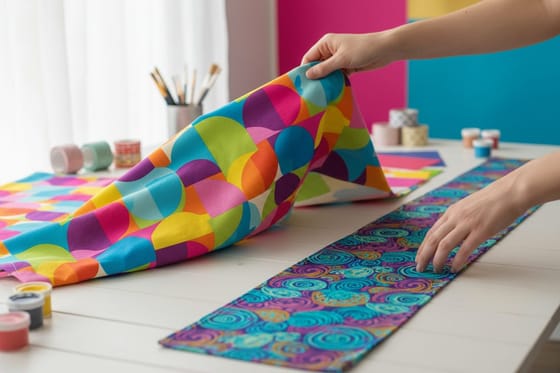
The stretch cover grips a 6 ft or 8 ft table in 8.8oz tension fabric, the throw drapes 9oz polyester over the top with the back left open, and the runner comes in 18 sizes from 24 by 72 to 60 by 90 inches to lay over a plain cloth you already own.

Explore more
Where to go next
Open the table cover sizes and fit guide when the venue has not confirmed a 6 ft or 8 ft table, and the dye sublimation guide before you proof a precise brand red on a stretch knit.

By the numbers
Stretch covers, throws and runners for booth tables
Common Questions
Your stretch table cover questions, answered
What size stretch table cloth do I need for a 6 ft table?
The 6 ft stretch size, built for a table measuring 72 inches long, 30 inches deep and 30 inches high. That is the standard banquet table almost every convention center and hotel supplies. Do not order by the flat fabric measurement, because a stretch cover is cut smaller than the table it fits and the flat panel is meaningless to you. The only measurement that matters is the table, so take a tape to it if the venue kit does not state the size in writing.
Will a 6 ft stretch cover fit an 8 ft table?
No. Twenty four inches of extra length is far beyond what the knit can give, and forcing it either pulls the foot pockets off the legs or distorts the graphic into an unreadable stretch. It fails the other way too: an 8 ft cover on a 6 ft table sags in loose folds along the front because there is nothing to hold the tension. If you exhibit at venues that supply both, buy the size you meet most often and keep a table throw for the other.
What if the venue table is 24 inches deep instead of 30?
A stretch cover cut for a 30 inch deep table will be slack across the top of a 24 inch classroom table, and the slack shows as a soft ripple down the middle of your logo. Six inches is enough to matter. Ask the show for the table spec in advance, and if the answer is 24 inches, order a fitted or throw style cover that drapes rather than a stretch cover that has to grip.
How much fabric does a loose full drape need instead?
A floor length drape on a 6 ft table needs about 132 by 90 inches of cloth, because you add the 30 inch drop on each end to the 72 inch length and the 30 inch drop on each side to the 30 inch depth. The 8 ft table works out to roughly 156 by 90 inches. Those are the numbers behind a full drape tablecloth, and they explain why a throw uses noticeably more fabric than a stretch cover of the same nominal size.
Can I wash a printed stretch table cover?
Yes, and this is where dye sublimation earns its cost. The dye is inside the polyester fiber, not laid on the surface, so a cold machine wash and a low tumble will not lift the graphic. Skip bleach and skip the hot iron, since heat is what moved the dye in the first place. Most creases pull themselves out once the cover is back under tension on the table, which is the practical reason exhibitors carry stretch rather than a pressed throw.
How much does a printed stretch table cover cost?
Stretch table covers start at $250.00 at 4OVER4.COM with full color dye sublimation across the panel. A table throw starts at $225.00 and a standard tablecloth at $225.00, so the spread between the styles is smaller than most exhibitors expect and the decision is about fit and access rather than price. A table runner over a plain cover is the low cost route at $97.76 when the booth graphic is carried by a banner instead.
Get Started
Stretch covers cost $250.00, table throws $225.00
Give us the table size and your artwork, and we dye sublimate the graphic into wrinkle free stretch fabric that pulls itself flat on the show floor.
Legal Disclaimer
Gold Standard guarantees apply to all standard orders placed through 4over4.com. Price match requires verifiable proof of a competitor's published price for an equivalent product with matching specifications and turnaround time. Satisfaction guarantee covers manufacturing defects and print quality issues. Contact support with order number and documentation.
