
Restaurant Poster Sizes That Get Read From Table, Wall and Window


Four sizes cover a whole restaurant. Here is which one belongs on the table, the wall, the window and the A-frame, the type size each distance demands, and the stock that lasts in each spot.
Use 11 x 17 on tables and counters, 12 x 18 beside the register, 18 x 24 on a dining-room wall, and 24 x 36 in the window or an A-frame. Size by reading distance rather than by wall space: allow roughly one inch of capital-letter height for every 10 feet the reader stands away, then take the smallest sheet that still holds that headline plus one photo. Match the material to the spot, because glass, grease and hands each destroy a different stock.

Quick answer
Pick the size from the reading distance, then pick the stock from the spot
Reading distance sets the size and the environment sets the material. One inch of capital-letter height per 10 feet of viewing distance gives you the headline, and the headline gives you the sheet: 11 x 17 at a table, 12 x 18 at a counter, 18 x 24 across a room, 24 x 36 through glass. After that, match the stock to what the poster has to survive. Grease and hands want lamination, sun and condensation want a mounted print or a vinyl cling, and an A-frame wants a rigid board rather than paper.
Restaurant Poster Sizes and Where Each One Fits
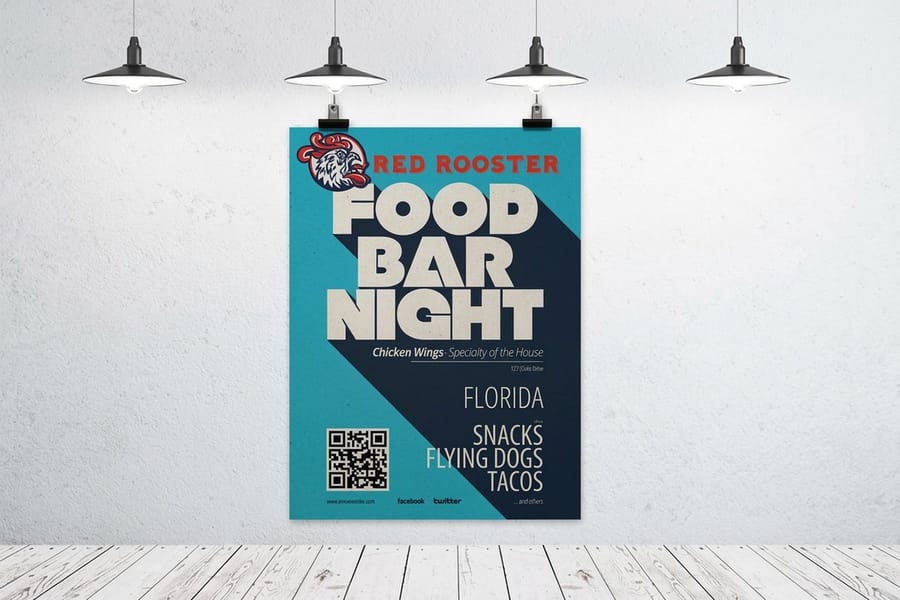
Start from the reader, not from the wall. A card on a two-top is read from three feet, a poster beside the register from about six, a dining-room feature from ten, and a window poster from the pavement at fifteen to twenty. Once you know the distance, the size stops being a matter of taste.
| Size | Where it goes | Read from | Minimum cap height | What actually fits |
|---|---|---|---|---|
| 11 x 17 | Table card, counter, host stand | 2 to 3 ft | 0.3 in | One dish, one photo, three lines of copy |
| 12 x 18 | Wall beside the register or order line | 5 to 6 ft | 0.6 in | A short special board, five items with prices |
| 18 x 24 | Dining-room wall, entry vestibule | 8 to 10 ft | 1 in | A headline, a photo, and up to eight items |
| 24 x 36 | Window, A-frame, sidewalk | 15 to 20 ft | 2 in | A headline and one image, and nothing else |
The cap-height column is the one people skip and then regret. It comes from the sign trade rule of one inch of capital-letter height per ten feet of viewing distance, and it is unforgiving. A 24 x 36 window poster with half-inch capitals reads as a grey rectangle to anyone walking past at normal speed. Print the headline at final size on a single sheet, tape it where the poster will hang, then walk to where the customer stands. Thirty seconds of that beats an afternoon of guessing.
Most independent restaurants need only two of these. Order 11 x 17 for tables and the counter, 24 x 36 for the window, and add 18 x 24 later if a queue forms in front of a blank wall. All four run from identical file setup, and the poster printing range carries them next to custom dimensions for awkward frames.
Sizing a Menu Poster People Can Actually Read
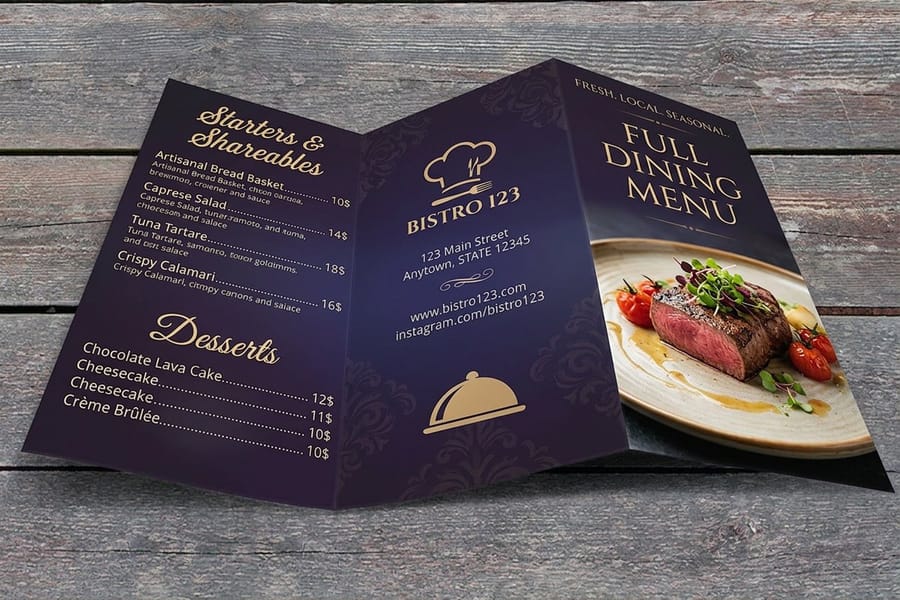
A menu poster is not a menu. A menu is held at fourteen inches and read at leisure. A poster is read standing up, in a line, while somebody talks to you, and it fails the moment it carries more than a person can scan in about fifteen seconds.
That gives you hard limits. Eight items is the practical ceiling on an 18 x 24 sheet, five on a 12 x 18. Set section headings at roughly 1.5 times the item type so the eye can find the salads without reading the burgers. Put prices in their own right-aligned column, because a price chasing the end of a dish name forces the reader to hunt. Keep dark type on a light field: light type on a dark photo loses two or three points of effective size to the background noise behind it.
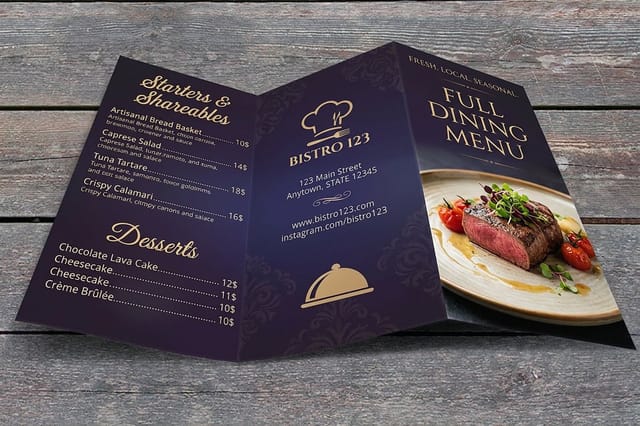
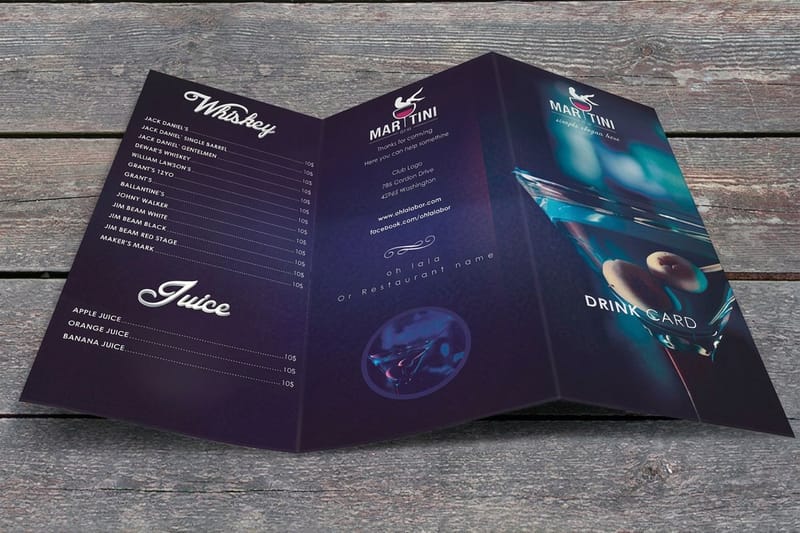
What goes on the poster is the short list, the specials, and the thing you want ordered tonight. The full inventory belongs in the hand on restaurant menus, which start at $57.11, and a takeaway version people carry home. If the poster sits near a coffee station or a service counter, order it laminated so a wipe cloth does not take the ink with it. More menu formats live under menu printing.
Promotional and Seasonal Posters for Specials That Change

Promotional posters have a different economy from permanent ones. They live for two weeks to three months, so the money goes into the run length and the swap, not into the finish.
Three habits save real money here. Print at 11 x 17 or 12 x 18 rather than 24 x 36, since a special is read close up by someone already inside and already sold. Leave the year off the artwork, so a Halloween or a patio-season poster comes back next year instead of going in the bin. And do not laminate anything you plan to replace before the season ends, because film adds cost to a sheet whose whole job is to be thrown away on time.
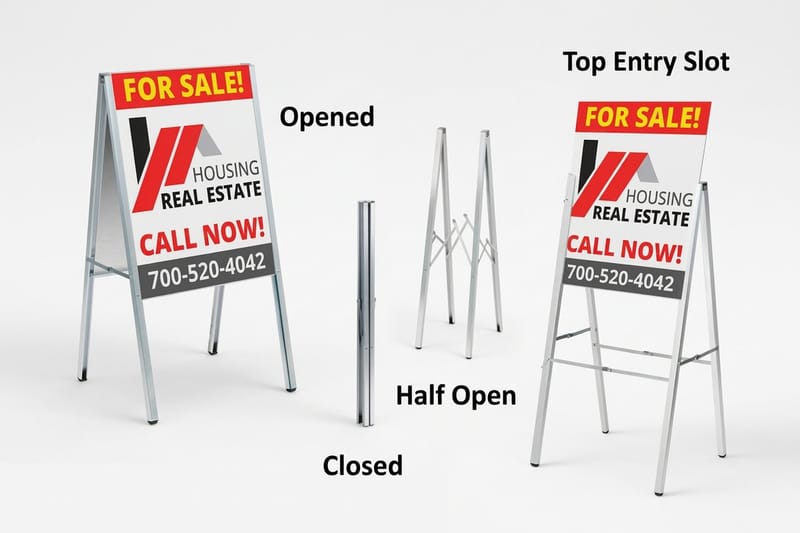
Table-level promotion works differently again. A flat card on a table gets covered by cutlery within a minute, which is why restaurant table tents outperform a flat 5 x 7 for anything you actually want ordered. Outside, a 24 x 36 insert in an A-frame stops people at the door. Use a rigid insert rather than a paper poster there, because paper flaps, creases at the corners, and looks tired after one wet morning. Signicade A-frames start at $182.32 and take a standard 24 x 36 panel, with the full range under A-frame sign printing.
Window Display Posters: Size, Glass and Materials
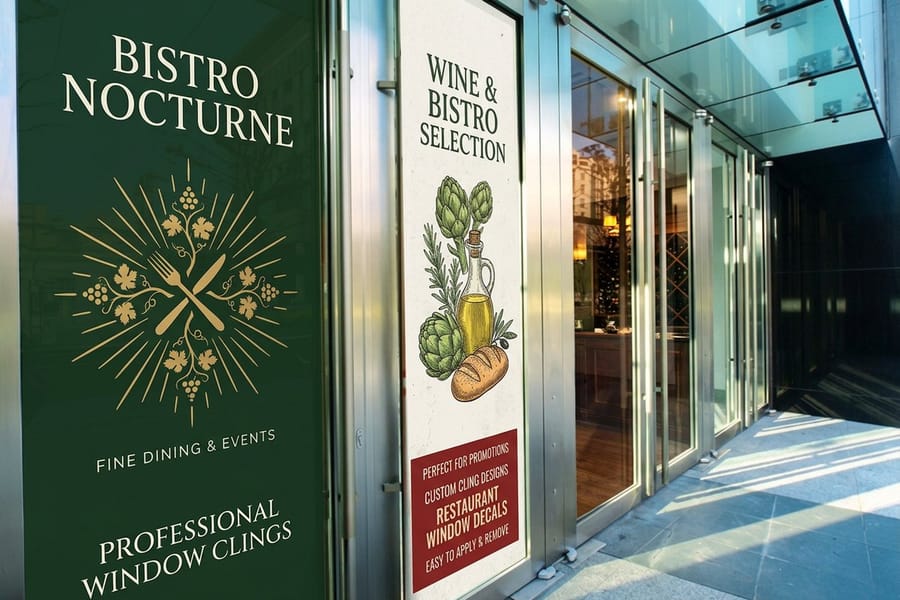
Glass is the harshest place in the building for a printed sheet, and the most valuable. Get the size and the material right and the window sells to people who were not going to come in.
Measure the pane before you pick a size. Work from the visible opening, not the outside of the frame, and keep 2 to 3 inches of clear glass on every side so the poster is not half hidden behind a bar or a mullion. Standard storefront glass takes a 24 x 36 comfortably. Wide, low panes read better with a horizontal sheet, which the horizontal poster sizes guide covers size by size, and the measuring routine is in the window graphics templating guide.
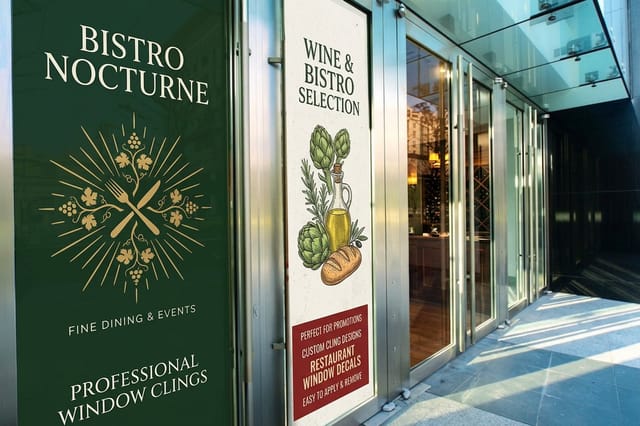
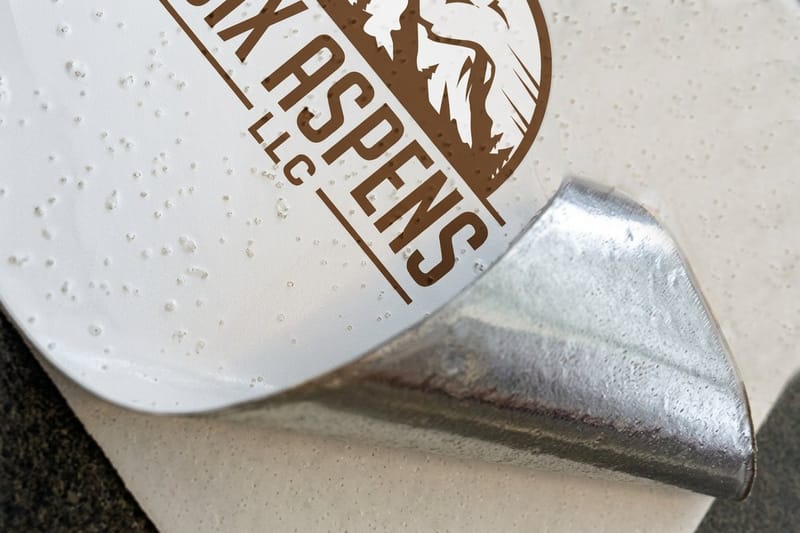
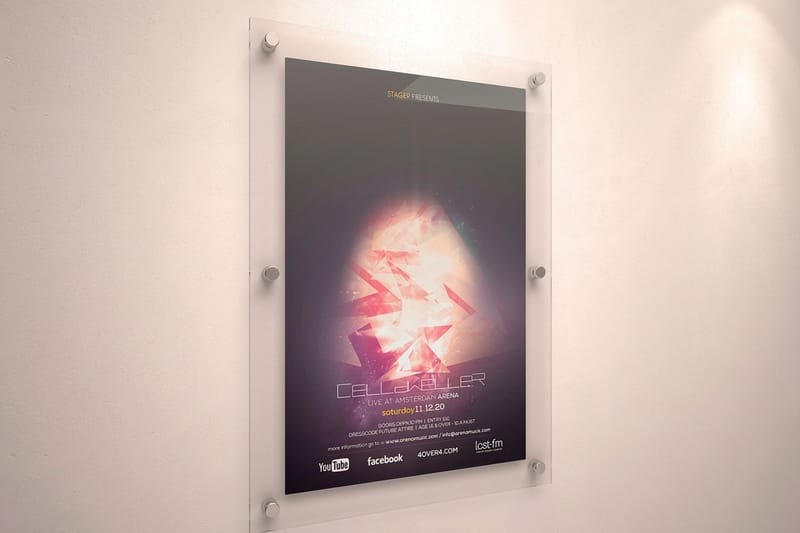
Then decide what the sheet is made of, because plain poster paper against glass has a short life. Direct sun fades an unlaminated print in a matter of weeks, and condensation on a cold morning curls the edges. Three answers work: a mounted poster from $39.99 that stays rigid and hangs on a rail inside the pane, a laminated poster from $25 that shrugs off moisture, or restaurant window clings from $30 that peel off and go back up with no tape marks. One more thing people forget: a poster facing out is blank from inside, so if the display matters to seated guests, run a second sheet inward or choose a cling that reads from both sides. The full glass range sits under window cling printing.
Food Photography That Survives Being Blown Up
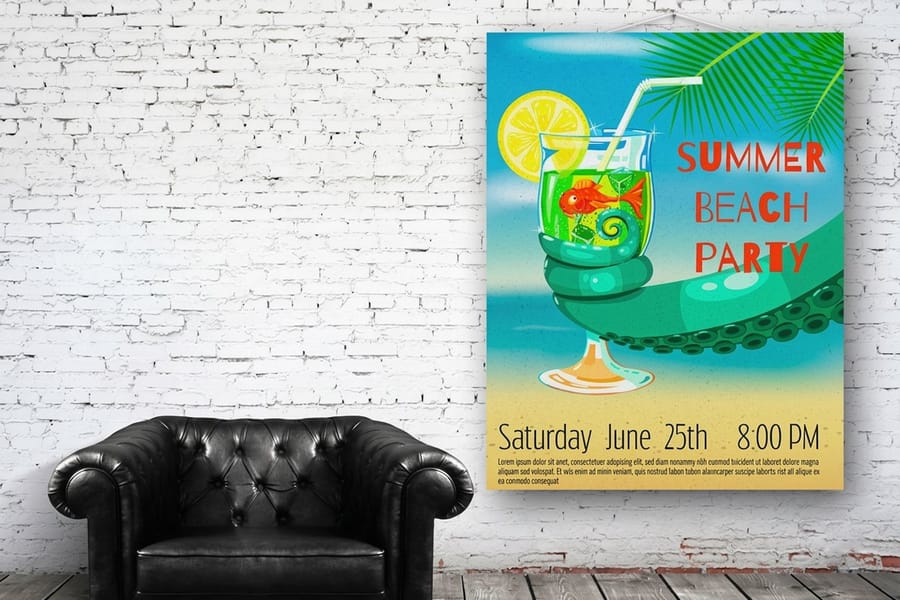
Enlargement is honest. A photo that looks appetising on a phone can fall apart at 24 x 36, and the two ways it fails are resolution and contrast.
The arithmetic is simple. A 24 x 36 poster at 150 ppi needs roughly 3,600 x 5,400 pixels, and 150 ppi really is enough for something nobody reads from closer than several feet. A 12-megapixel phone photo is about 4,000 pixels on its long edge, so across 36 inches it lands near 111 ppi. Acceptable in a window. Soft on a table card, where the eye is fourteen inches from the sheet and 300 ppi is the honest target, which for 11 x 17 means about 3,300 x 5,100 pixels.
Contrast is where most food shots lose. Shoot with light coming from the side or behind the plate so sauce and crumb catch a highlight, because flat frontal light turns everything a uniform brown. Crop tight, one dish per poster, and leave a plain area for the headline instead of dropping type on a busy plate. Then the rule that costs restaurants the most: photograph the dish you actually serve, at the portion you actually serve. A customer holding the plate next to the poster is the fastest way to lose a return visit.
Build the file at final size with 1/8 inch of bleed on every edge and all type at least 1/4 inch inside the trim. Start from a correctly sized layout in the blank template library and you skip the two most common file rejections.
Choosing the Material and Getting the Posters Printed
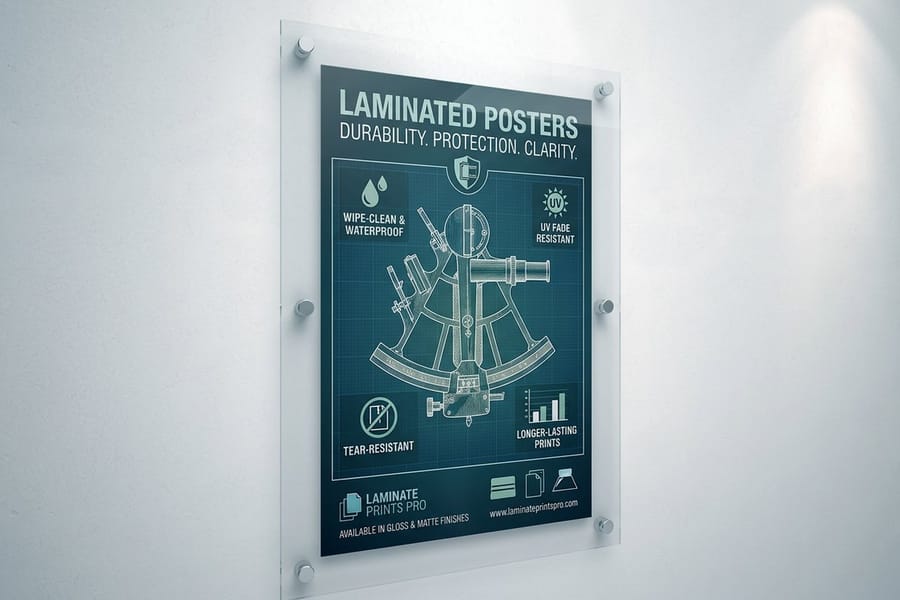
Material matters more than size once the poster leaves a quiet wall. Grease, sun, hands and wind each rule out a different stock.
| Product | What it is | Where it earns its place | Starts at |
|---|---|---|---|
| Standard Posters | Poster stock, rolled and shipped in a tube | Interior walls, frames, anything protected | $108.75 |
| Laminated Posters | Print with a protective film over the face | Counters, coffee stations, greasy air, sunlit glass | $25.00 |
| Foam Core Posters | Print bonded to a lightweight rigid board | Easels, A-frames, displays with no frame | $49.99 |
| Mounted Posters | Print bonded to a stiff backer that stays flat | Windows and long-run displays | $39.99 |
| Restaurant Window Clings | Vinyl that goes on and off the glass cleanly | Weekly specials and seasonal artwork | $30.00 |
Read those starting prices as a floor, not a comparison. Each product has its own minimum size and quantity, so a from-price on a small laminated sheet and a from-price on a large rolled poster are not the same job. Put your real size and run into the configurator on each product page and compare the totals.
Two limits are worth naming before you order. Foam core is rigid and needs no frame, but a knocked corner is permanent, so it is a poor choice anywhere staff carry trays past it. Mounted posters cannot be rolled, which makes them heavier to ship and impossible to store flat behind the bar. If your frame is an odd dimension, print to it rather than trimming a standard sheet by hand: the how to print any size guide covers the measurement and the ordering.
Wally sizes the poster
Stand where the customer stands, then choose the sheet
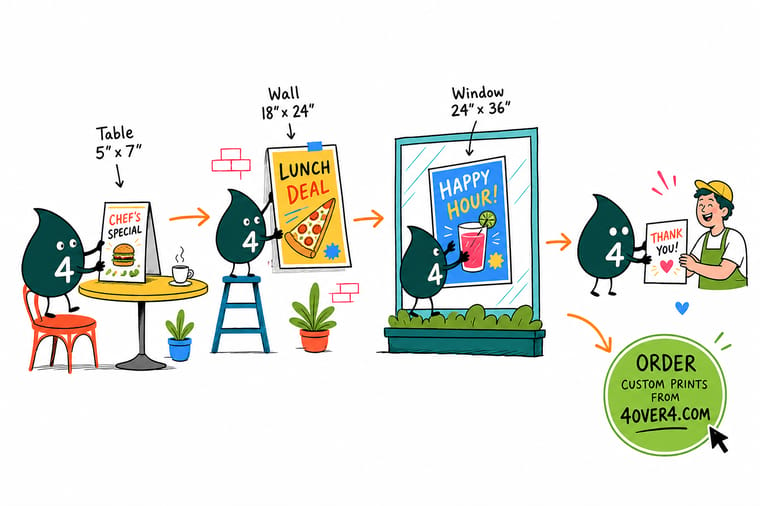
Wally never starts at the wall. He walks to the spot the customer reads from, counts the feet, and allows one inch of capital-letter height for every ten of them. Three feet at a table gives him small capitals and an 11 x 17 card. Twenty feet through the front glass gives him two-inch capitals, which only fit on a 24 x 36 with one photo and nothing else. Then he checks what the poster has to survive: grease gets lamination, sun and condensation get a mounted print or a cling, and an A-frame gets rigid board because paper flaps.
Shop poster printing →Specs and pricing
Poster sizes, stocks and starting prices
Configure the size and quantity you actually need. Each widget pulls live options and starting prices straight from the 4OVER4.COM configurator.

Print it
Print the set: window poster, wall menu, table card

Explore more
Where to go next
By the numbers
Large format printing you can count on at 4OVER4
Common Questions
Your restaurant poster questions, answered
What size poster should a restaurant put in the window?
24 x 36 inches is the working default, because the reader is on the sidewalk 15 to 20 feet away and that distance wants a headline with capitals around 2 inches tall. Anything smaller reads as decoration rather than a message. Measure the pane first and keep 2 to 3 inches of clear glass inside the frame and the mullions, so the poster does not sit half behind a bar. Wide storefront glass sometimes suits a horizontal 36 x 24 instead, which is covered in the horizontal poster sizes guide.
What is the best size for a menu poster on the wall?
18 x 24 for a queue that forms 8 to 10 feet back, 12 x 18 when people order at a counter from about 6 feet. Cap the list at roughly eight items on the larger sheet and five on the smaller one. Prices right-aligned in a column, section headings at about 1.5 times the item type, and dark text on a light field. If the list will not fit inside those limits, the answer is a printed menu, not a bigger poster.
What resolution does a food photo need for a 24 x 36 poster?
About 3,600 x 5,400 pixels, which is 150 ppi at final size, and that is genuinely enough for a poster nobody reads from closer than several feet. A 12-megapixel phone photo is roughly 4,000 pixels on its long edge, so it lands near 111 ppi across 36 inches. That holds up in a window and looks soft on a table card, where you are looking at the print from 14 inches and want closer to 300 ppi.
Can I print a restaurant poster to the exact size of my frame?
Yes. Custom sizes print from the same file setup as the standard ones, so an odd frame or an awkward alcove is not a reason to compromise. Measure the visible opening rather than the frame outside, subtract nothing, and let the frame lip overlap the edge of the sheet. The how to print any size guide walks through the measurement and the ordering step.
Do restaurant posters need lamination?
Only where they get touched, splashed, or sunlit. A laminated poster wipes clean, which matters near a counter, a coffee station, or anywhere grease travels, and it survives months in glass that a plain sheet does not. The cost is glare: film bounces spotlights straight back at the reader, so use a matte laminate under directional lighting. A special that changes in three weeks does not need laminating at all.
Poster or window cling for the glass?
A cling if the message changes often, a poster if it stays put. Clings peel off and go back up without residue and without tape marks on the glass, which suits weekly specials and seasonal artwork. A mounted or laminated poster holds a heavier image and a longer life, and it can hang inside on a rail rather than sitting against the pane where condensation collects. Many restaurants run both: a permanent poster in one pane, a swappable cling in the next.
Get Started
Ready to put the special where people see it?
Pick your size, choose a stock that suits the spot, and we print posters that read from the sidewalk and hold up beside a busy counter.
Legal Disclaimer
Gold Standard guarantees apply to all standard orders placed through 4over4.com. Price match requires verifiable proof of a competitor's published price for an equivalent product with matching specifications and turnaround time. Satisfaction guarantee covers manufacturing defects and print quality issues. Contact support with order number and documentation. On-time delivery rate based on tracked orders 1999 to 2026. Individual results may vary based on shipping carrier performance.
