
Standard vs Glossy vs Soft Touch Business Cards Compared


Emma is our prepress and print production voice, built from the knowledge of our production team, with over 20 years in printing.
Three business card lines, compared the way a printer would compare them: price per card, stock thickness, turnaround, and how each surface behaves under a pen and under a light.
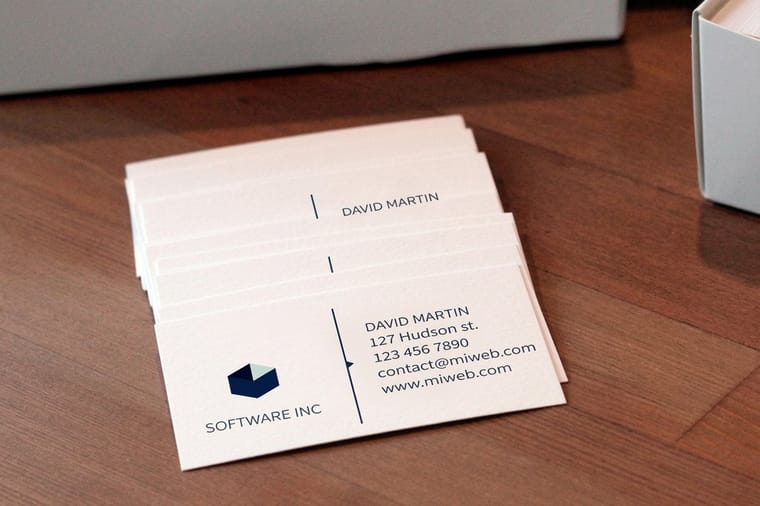
Standard business cards are the configurable line, 73 stocks from 14pt to 80pt with the coating up to you, and the cheapest at about 17.6 cents a card. Glossy is one fixed 16pt stock sealed under a clear laminate at about 74.5 cents a card, and soft touch is a velvety uncoated stock starting at 32pt at about 80.6 cents a card. Order standard when volume or stock choice matters, glossy when the artwork is photographic, soft touch when the card is handed over one at a time.
Quick answer
One line is configurable, two are decided for you
Standard buys you choice, glossy buys you shine, soft touch buys you the feel. Standard is the only one of the three where you select the stock and the coating yourself, and it is the cheapest by a wide margin at the entry tier. Glossy is a single 16pt laminated stock that makes photographs look their best and refuses a pen. Soft touch starts at 32pt, twice the glossy thickness, kills glare completely, and costs the most per card at the smallest run. Turnaround follows the same order: 3 business days, then 4, then 5.
These Three Are Not the Same Kind of Choice
Most comparisons treat matte, gloss and soft touch as three buttons on the same product. In our catalog they are not, and knowing that saves you an hour of clicking.
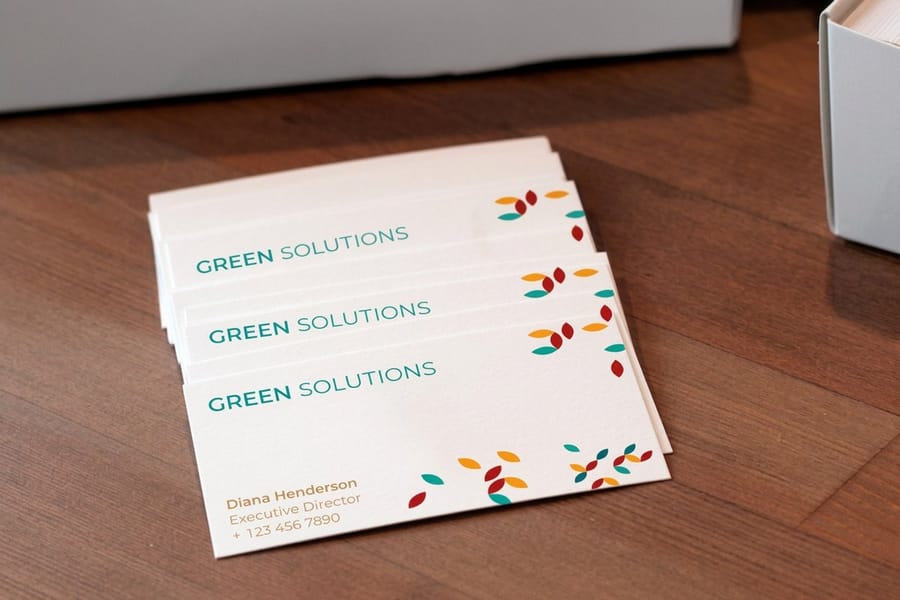
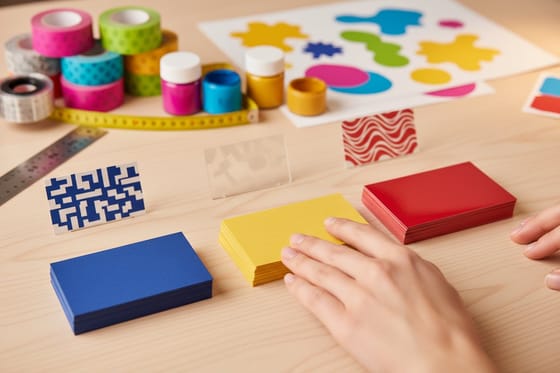
Standard business cards are a configurable line. You choose from 73 stocks, coated, uncoated, linen and metallic pearl, in weights from an everyday 14pt to a heavy 80pt, and the coating is one of the choices you make. Matte lives inside that line rather than being its own product. A box of 100 starts at $17.57.
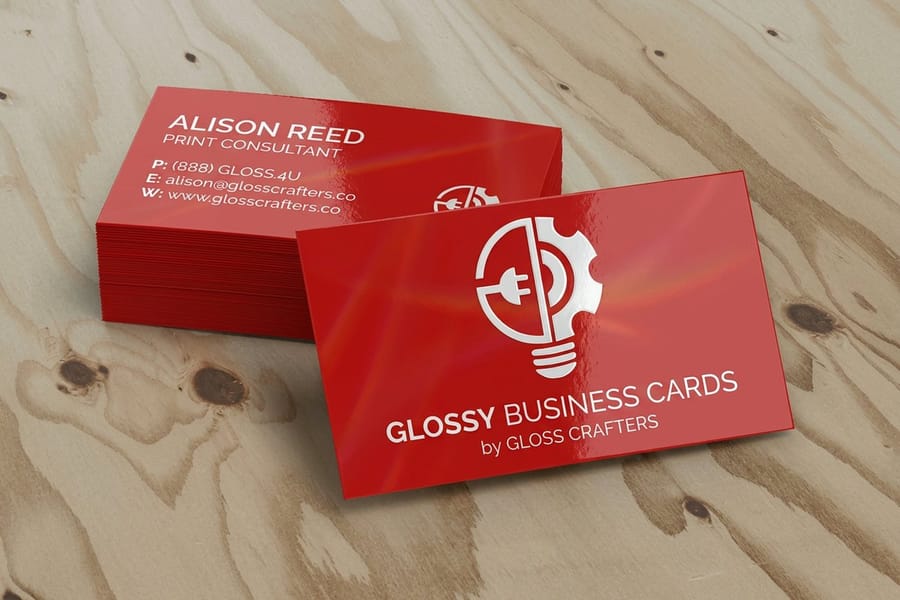
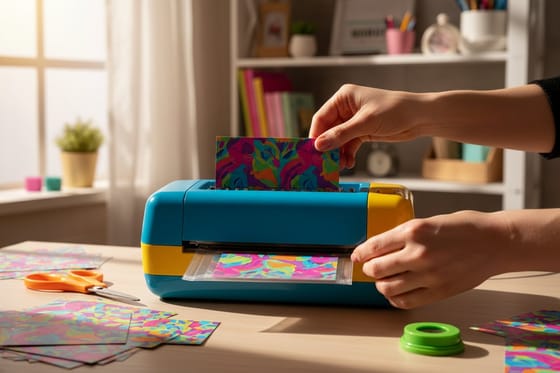
Glossy business cards work the other way. There is one stock, a 16pt sheet with a clear gloss laminate bonded over the print, and nothing to configure on the finish. You set the size and whether the back prints. A set of 50 starts at $37.24.
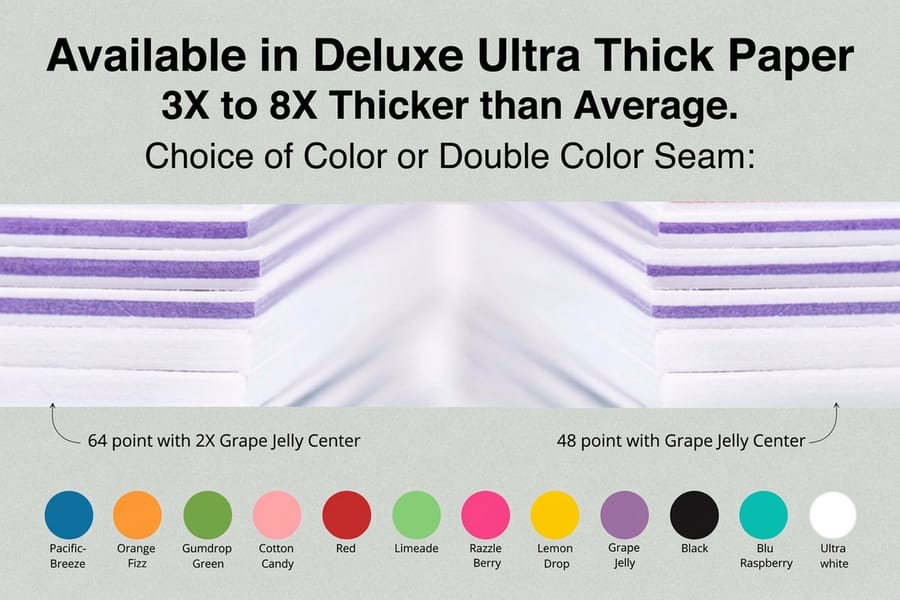
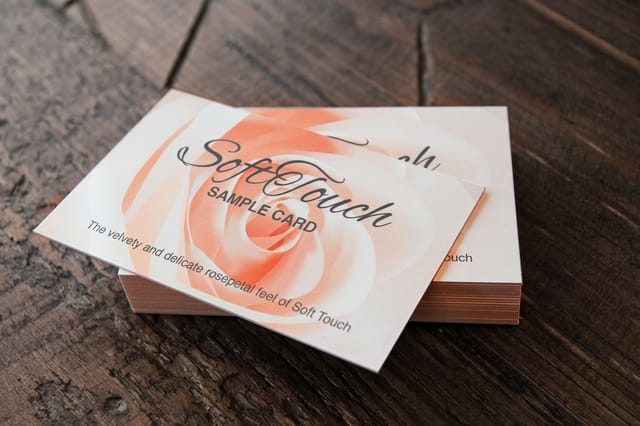
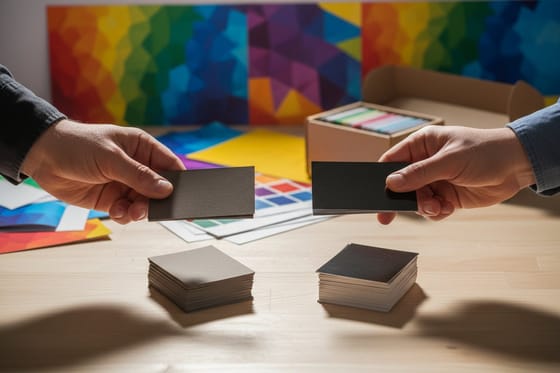
Soft touch business cards sit between those two habits. The surface is fixed, a velvety uncoated finish with a suede drag to it, but you still choose the weight across four stocks: 32pt, 48pt, 64pt and 80pt. A set of 50 starts at $40.28.
So the real question is rarely which finish looks best in a photo. It is whether you want the freedom of the standard line, or a card where the surface has already been decided for you and decided well. If you want to browse every option in one place first, business cards printing lists all of them together.
Price, Thickness and Turnaround, Side by Side
The whole comparison sits in one table below. The per card figures are the entry tier, which is the worst price each product will ever show you: $17.57 for 100 standard cards against $37.24 and $40.28 for 50 glossy or soft touch cards.
| Standard | Glossy | Soft touch | |
|---|---|---|---|
| Entry price | $17.57 per 100 | $37.24 per 50 | $40.28 per 50 |
| Per card at entry | About 17.6 cents | About 74.5 cents | About 80.6 cents |
| Stock | 73 stocks, 14pt to 80pt, coated, uncoated, linen and metallic pearl | One 16pt gloss laminated stock | Four soft touch uncoated weights: 32pt, 48pt, 64pt, 80pt |
| Finish choice | You pick it | Fixed, built into the stock | Fixed surface, you pick the weight |
| Sizes | 3.5 x 2 inches, 2 x 2, 1.5 x 3.5, plus custom | 2 x 3.5 inches, 2 x 2, 1.5 x 3.5, custom up to 2 x 4 | 2 x 3.5 inches, 2 x 2, 1.5 x 3.5, custom up to 2 x 4 |
| Backs | Blank or full color | Blank or full color | Blank, solid black, or full color |
| Standard turnaround | 3 business days | 4 business days | 5 business days |
| Takes a pen | Yes on uncoated stocks | No, ink beads on the film | Yes, with a slightly soft edge |
Two rows do most of the deciding. The per card row explains why a startup handing out 5,000 cards at trade shows almost always lands on standard, and the stock row explains why an architect ordering 200 cards a year almost never does. Quantity flips this comparison completely: at the smallest run the gap is roughly four to one, and it narrows hard as the count climbs. Our guide to what business cards cost and why walks through the tiers.
How Each Surface Behaves Once the Card Leaves Your Hand
Every finish looks good on a screen. What separates them is the next two weeks, in a pocket, a card holder, and under whatever light the room happens to have.
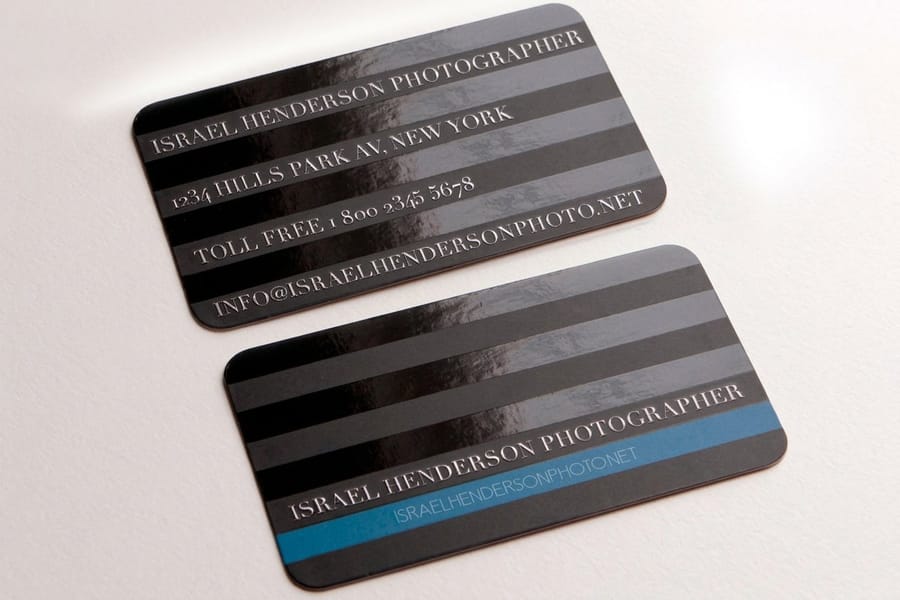
Glare and legibility. A gloss laminate reflects a light source back as a single bright patch. That is exactly what you want under photography and deep, saturated color, because the film raises contrast and makes blacks look blacker. It is not what you want behind 7 point contact details, since a person tilting the card under an overhead light will hit a spot where the type disappears. Matte and soft touch scatter that light instead, so small type stays readable at any angle.
Marks and wear. The laminate on a glossy card protects the print underneath, so edges and ink survive handling well, but the surface holds skin oil and it shows. Soft touch is the reverse: it hides ordinary handling beautifully and then picks up shiny rub marks on heavy dark solids, which is where a full bleed black soft touch card, the most impressive one in the box, is also the one most likely to look tired first. A standard card with a dull aqueous coating is undramatic in both directions.
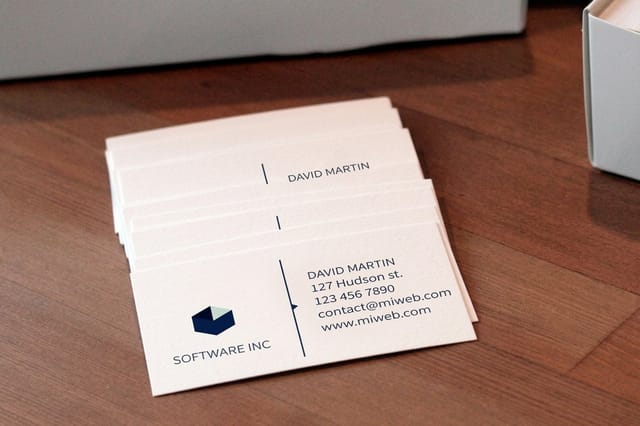
Writing. This decides more orders than people expect. A contractor who writes a quote on the back, a stylist who writes the next appointment, a rep who adds a mobile number all need an absorbent surface. Uncoated standard stocks take pen cleanly. Soft touch takes it with a slightly soft edge. Gloss does not take it at all.
Thickness read. Weight is felt before finish is noticed. Glossy is a fixed 16pt, which is solid but ordinary. Soft touch starts at 32pt, double that, and the 48pt and above weights feel like a chip rather than a card. If you want the pause when someone takes it, the weight is doing more work than the coating. Business card basics covers how stock weight and size interact before you commit to a file.
Which One to Order, by the Job
The honest verdict is that these three are aimed at different budgets, not at different tastes, so match the card to how it gets used.
- High volume handouts, trade shows, flyers on a counter. Standard, on a 16pt coated stock. At about 17.6 cents a card at the smallest box and far less in the thousands, it is the only one that survives being given away by the handful.
- Photography, food, real estate, anything where the image is the argument. Glossy. The laminate deepens color and sharpens detail in a way no matte surface can, and it shrugs off the scuffing that a card carried loose in a bag picks up.
- Consulting, design, law, luxury services, small runs handed over one at a time. Soft touch, at 48pt or heavier. Someone gets one card from you a year, so pay for the moment they hold it.
- You want people to write on the card. Uncoated standard stock. Skip both laminates entirely.
- You want one detail to shine and the rest to stay quiet. Spot UV business cards, where gloss is applied only over the logo or a single line of type against a matte field. For a thicker uncoated feel with a different texture, suede business cards take a similar approach to the surface.
If you are still torn between two of them, order the plainer one and spend the difference on stock weight. A 32pt standard card in the right hands beats a 16pt glossy card almost every time, and that ranking holds until the artwork itself needs the shine. When the file is ready, start from a correctly sized layout in our blank template library so the bleed and safe zone are already right.
Wally holds all three up to the light
Shine, quiet, or velvet

Wally tilts the glossy card and a bright patch runs across it, so the photo on it looks deep and the small type vanishes for a second. He tilts the standard matte card and nothing flares, so every line stays readable. Then he runs a thumb across the soft touch card, twice the thickness of the glossy one, and stops talking for a moment. That pause is the thing you are paying for. If somebody needs to write on the back, hand them the uncoated one.
Order soft touch business cards →%22%2F%3E%3Ccircle%20cx%3D%2240%22%20cy%3D%2249%22%20r%3D%2225%22%20fill%3D%22%232dd4bf%22%20opacity%3D%220.15%22%2F%3E%3Ccircle%20cx%3D%2278%22%20cy%3D%2258%22%20r%3D%2214%22%20fill%3D%22%232dd4bf%22%20opacity%3D%220.1%22%2F%3E%3Crect%20x%3D%2270%22%20y%3D%2228%22%20width%3D%2225%22%20height%3D%2234%22%20rx%3D%224%22%20fill%3D%22%232dd4bf%22%20opacity%3D%220.08%22%20transform%3D%22rotate(35%2080%2030)%22%2F%3E%3C%2Fsvg%3E)
Specs and pricing
Stocks, sizes and starting prices for all three
Standard cards run 73 stocks from 14pt to 80pt, from 100 for $17.57 in 3 business days. Glossy cards run one 16pt gloss laminated stock, from 50 for $37.24 in 4. Soft touch cards run 32pt, 48pt, 64pt or 80pt, from 50 for $40.28 in 5. Configure each line the way a customer would, with live sizes, stock weights and starting prices straight from the 4OVER4.COM configurator.


Standard, glossy or soft touch
Order the card that suits the handshake

%22%2F%3E%3Ccircle%20cx%3D%2236%22%20cy%3D%2220%22%20r%3D%2231%22%20fill%3D%22%23a78bfa%22%20opacity%3D%220.15%22%2F%3E%3Ccircle%20cx%3D%2233%22%20cy%3D%2229%22%20r%3D%2210%22%20fill%3D%22%23a78bfa%22%20opacity%3D%220.1%22%2F%3E%3Crect%20x%3D%2276%22%20y%3D%2210%22%20width%3D%2221%22%20height%3D%2220%22%20rx%3D%224%22%20fill%3D%22%23a78bfa%22%20opacity%3D%220.08%22%20transform%3D%22rotate(16%2080%2030)%22%2F%3E%3C%2Fsvg%3E)
Business card finish guides
Where to go next


Cards printed in our NYC plant
Business cards printed to a schedule you can plan around
Common Questions
Your business card finish questions, answered
Is soft touch the same as matte?
No, and the difference is easy to feel with your eyes shut. Matte on a standard card is a thin dull coating sprayed over the ink, so the card still feels like paper. Soft touch is a velvety uncoated surface with a suede-like drag under a fingertip, closer to the cover of an expensive paperback than to a coated sheet. Both kill glare. Only soft touch changes how the card feels in the hand, which is the reason it costs more.
Can you write on a glossy business card with a pen?
Not reliably. The clear laminate bonded over a glossy card is plastic, and ballpoint ink sits on top of it in beads that smear when the card goes into a pocket. Permanent marker holds better but bleeds. If people are going to write a date, a name, or a quote on the back of your card, order an uncoated standard stock, or leave one side uncoated and print the front in full color.
Which finish shows fingerprints and marks the most?
A gloss laminate holds skin oil visibly, especially on dark artwork under a ceiling light, though the film itself resists scuffing. Soft touch does the opposite: it hides light handling but a heavy black or navy solid will pick up shiny marks where a thumbnail or a card holder rubs it. Standard cards with a dull aqueous coating sit between the two and are the least dramatic in either direction. If the design is a full bleed black, expect any premium finish to show more wear than a light one.
Can I get spot UV on a soft touch card?
Spot gloss only reads as an effect when the surrounding surface is dull, so it is applied over a matte or soft touch base rather than over a gloss laminate. That is how spot UV business cards are built: a flat matte field with the logo or one line of type sealed in gloss so it catches light and the rest does not. Putting a gloss varnish on an already glossy card gives you almost nothing to see.
Why do glossy and soft touch cost more than standard business cards?
Both add a lamination pass after printing, and both are sold in smaller entry runs. A standard card can go straight from press to cutting with nothing but an inline coating, and the smallest box is 100 cards. Glossy and soft touch pass through a laminator, which is an extra handling stage and an extra material, and their smallest set is 50. That is why the per card number roughly quadruples at the entry tier even though the difference narrows sharply at higher quantities.
Which business card finish ships fastest?
Standard business cards, at 3 business days on the regular schedule. Glossy runs 4 business days and soft touch runs 5, because each laminated card carries a finishing pass that the standard card skips. All three offer paid rush tiers down to Next Day and Same Day, so a deadline does not force the plain card on you, but it does change what the rush costs.
Get Started
Pick the surface, we will print the rest
Standard for volume, glossy for photographs, soft touch for the cards you hand over one at a time. Set the size, the stock and the quantity, and see the live price before you commit.
Legal Disclaimer
Gold Standard guarantees apply to all standard orders placed through 4over4.com. Price match requires verifiable proof of a competitor's published price for an equivalent product with matching specifications and turnaround time. Satisfaction guarantee covers manufacturing defects and print quality issues. Contact support with order number and documentation.
