
How Wooden Logo Signs Are Made, From Engraved Beech to Wood-Look Rigid Panels


Two builds hide behind one phrase. What a laser does to real beech, what UV ink does on a grain, and which one belongs on your wall are all below.
A wooden logo sign is made one of two ways: a laser burns or etches the mark into a genuine wood panel, or a wood grain image and the logo are UV printed together in full color onto a rigid panel of PVC, aluminum or foam board. At 4OVER4.COM the genuine wood route is small format, meaning 65 point beech and cherry business cards and an 18 by 36 inch poster hanger frame. Anything wall sized is the printed route, from $25 on an 11 by 17 inch PVC panel and $36 on a 12 by 18 inch aluminum one.
Quick answer
Wood the material, or wood the picture
Engraving removes wood to make the mark. UV printing adds ink to imitate it. That one difference decides everything downstream. Engraved wood gives you real grain, real weight and one burn color, in hand sized formats on a fifteen business day build. Printed wood gives you full color, any grain you supply, sizes to 36 by 40 inches, and four business days, on a panel that is plastic or metal underneath. Neither is better. They answer different questions, and the question is usually how far away the sign gets read from.
The Two Builds Behind Every Wooden Logo Sign
Ask five suppliers for a wooden logo sign and you will get two completely different objects back. Knowing which one you are buying settles the quote before it is written.
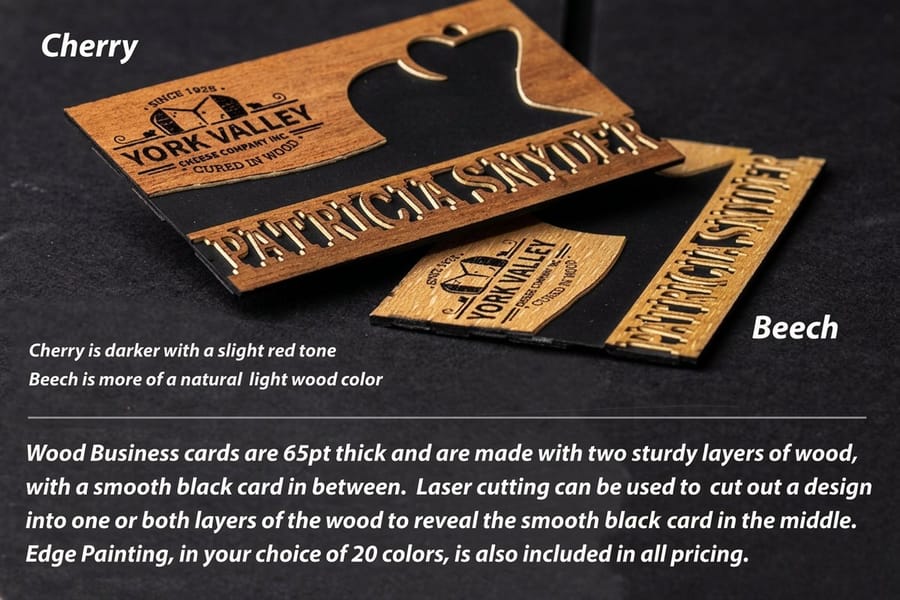
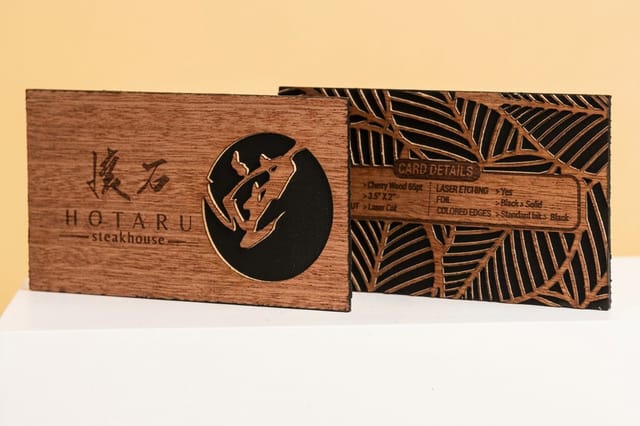
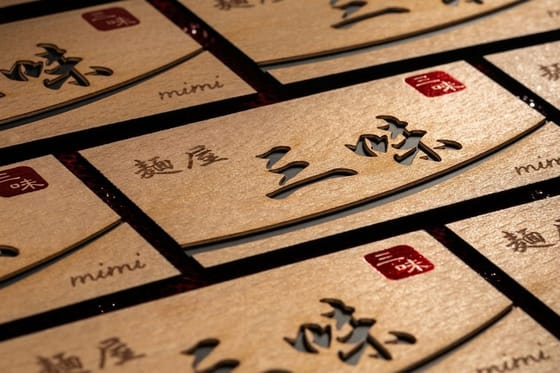
Build A puts the mark into real wood. A laser burns through the surface, or a foil stamp presses metal leaf into it, and the logo becomes part of the panel. The grain is genuine, no two pieces match, and the color is whatever the burn tone gives you. Wood business cards are the clearest example: 65 point beech or cherry, engraved, etched or foil stamped, made to order in house.
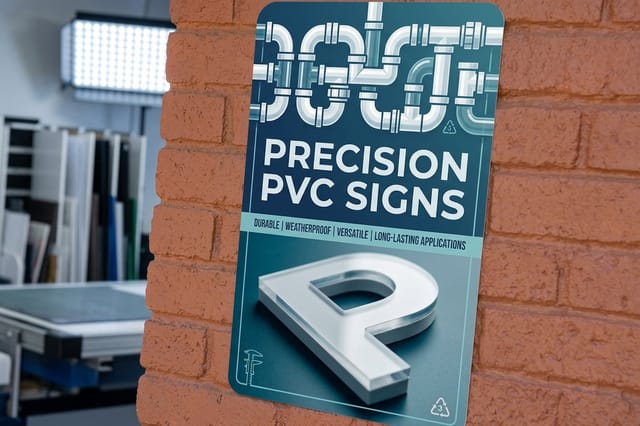
Build B puts wood onto a rigid panel. The grain is a photograph in your artwork, printed in full color alongside the logo onto PVC, aluminum or foam board. Nothing about it is wood, and that is the point when the sign has to be four feet wide, weatherproof, and ready this week. PVC signs start at $25 for a single 11 by 17 inch panel.
| Build A: real wood | Build B: printed wood look | |
|---|---|---|
| Material | 65pt beech or cherry, made to order. | Rigid PVC, .040" aluminum, 3/16" foam core. |
| How the logo lands | Laser engraved, laser etched or foil stamped into the surface. | UV printed full color on the surface, with a white base where needed. |
| Color range | The burn tone, plus foil. One color per method. | Full CMYK, photographs, gradients, any grain you supply. |
| Largest we make | 18" x 36" wood poster hanger frame. | 36" x 40" custom PVC, 24" x 36" aluminum, 40" x 60" custom foam. |
| Entry price | $32.75 hanger frame, $470.11 per 250 wood cards. | $25 PVC, $36 aluminum, $49.99 foam core. |
| Turnaround | 15 business days for wood cards, 4 for the hanger frame. | 4 business days standard, rush down to same day on aluminum. |
Read the bottom two rows together. Real wood is a fifteen day, high value, hand sized purchase. Printed wood is a four day, wall sized, low cost one. Browse the wood printing collection for everything we build on genuine wood, and treat the rigid panels as a separate decision.
What UV Printing Actually Does on a Wood Surface
UV printing means the ink is cured by ultraviolet lamps at the moment it lands, rather than left to dry into the material. On paper that produces a slightly raised, very sharp image. On wood it does something more useful: the ink stays on the surface instead of wicking along the grain and going fuzzy at the edges.
The complication is that wood is not white, and every printing process assumes it is. Lay cyan over pale beech and you get cyan warmed by the wood. That is often exactly what people want, and dark inks, black type, deep greens and navy all hold up well against a light grain. Light colors are the problem. A pastel or a photograph printed straight onto wood loses its lightest tones to the substrate, so a white ink base layer goes down first and the color prints on top of that. You get accurate color and you lose the grain wherever the white sits, which is a trade rather than a fix.
The practical move is to design around it: let the wood be the background, keep the printed area to the logo and the type, and do not fill the panel edge to edge with a photograph. If you are supplying artwork, build it at final size with fonts outlined, and start from a correctly sized layout in the blank template library rather than scaling something up afterwards. The wood poster hanger frame takes the opposite approach and is worth knowing about: the print is on semi gloss canvas and the wood is the hanger, so you get full color and real wood without either one compromising the other.
Sizes, and the Reading Distance That Should Pick Them
Most people choose a sign size by looking at the wall. Choose it by standing where the customer stands. The old sign shop rule is one inch of capital letter height per ten feet of reading distance, and it holds up: three inch caps read across a thirty foot lobby, one inch caps do not.
Work that backwards and the size chart stops being a list of options. A reception logo read from fifteen feet needs roughly one and a half inch caps, which fits comfortably on a 12 by 18 inch panel. A storefront name read from sixty feet needs six inch caps, and six inch caps plus a logo do not fit on anything smaller than 24 by 36 inches.
| Product | Sizes | From | Where it fits |
|---|---|---|---|
| Wood business cards | 2" x 3.5", 1.5" x 3.5" slim, 2.5" x 2.5" square, custom to 3" x 4". | $470.11 / 250 | Handed over, not hung. The one place real wood is unbeatable. |
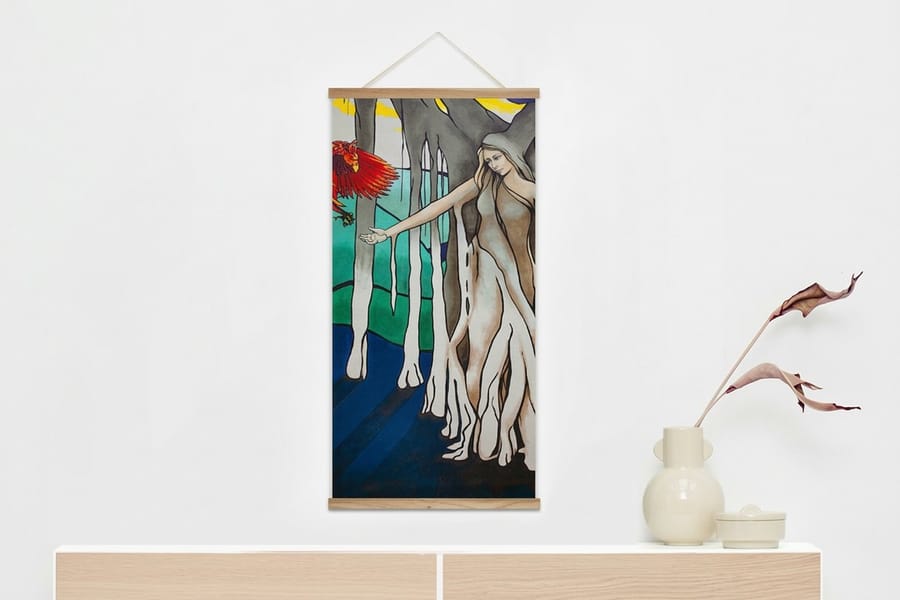
| Wood poster hanger frame | 18" x 24" and 18" x 36". | $32.75 | Interior walls where you want visible timber holding the print. |
| PVC signs | 14 sizes from 11" x 17" up to a custom 36" x 40". | $25 | Storefront, wayfinding, real estate, anywhere a poster would curl. |
| Aluminum signs | 12" x 18", 18" x 24", 24" x 36". | $36 | Outdoors, on a post or a wall, for years. |
| Foam core signs | 10 sizes from 16" x 20" to 20" x 30", custom to 40" x 60". | $49.99 | Indoor events and presentations you have to carry there. |
One caution on the custom sizes. A 36 by 40 inch PVC panel is made to order and priced accordingly, so if a standard 24 by 36 does the job, the standard size is cheaper and ships sooner. Compare the substrates directly on PVC signs printing before you commit to a custom cut.
Mounting: Grommets, Drilled Holes, Standoffs and One Nail
How a sign hangs is decided at the order screen, not at the wall, and it is the step people skip. Each substrate has its own answer.
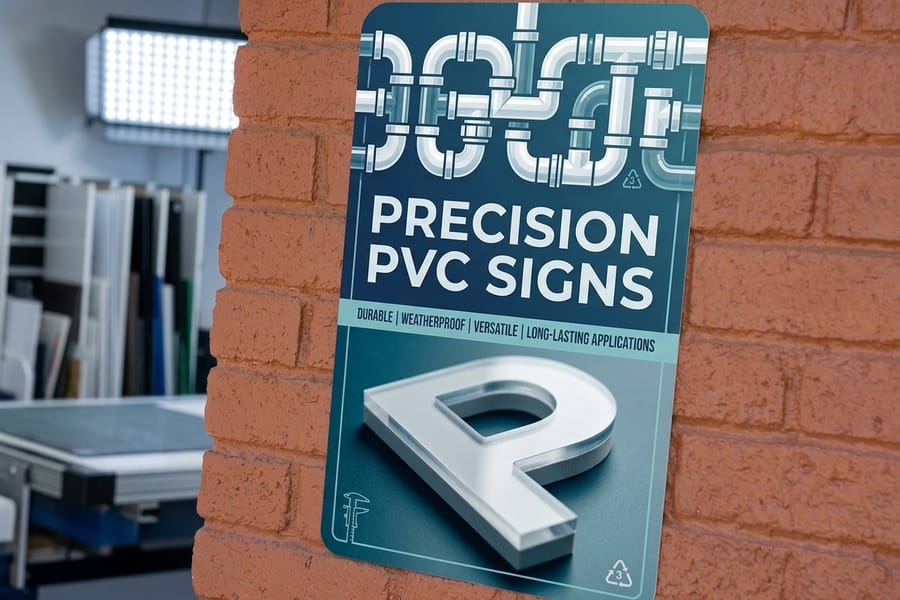
- PVC. Optional grommets and 1 inch rounded corners are configuration choices. Grommets let you hang, zip tie or wire the panel; rounded corners stop the point of a rigid sheet catching a sleeve at head height.
- Aluminum. Drilled mounting holes and 0.75 inch rounded corners are the options here. Ask for the holes in the order, because drilling .040 inch aluminum afterwards with a hand drill tends to burr the face and lift the print around the hole.
- Foam core. There is nothing to screw into. It leans on an easel, hangs from tape or clips, and a 3 mil single sided gloss lamination protects the face from handling on the way there.
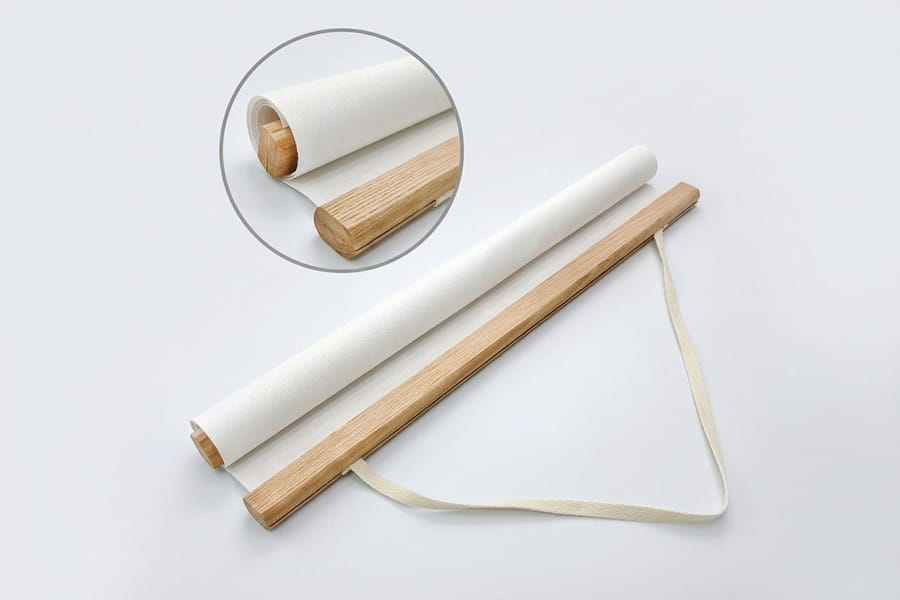
- Wood poster hanger frame. The hanger holds the canvas top and bottom and the whole piece hangs from a single nail. No glass, no assembly.
- Real wood panels. Pilot drill, always, and leave the fixing holes slightly oversized so the panel can move seasonally without splitting around the screw.
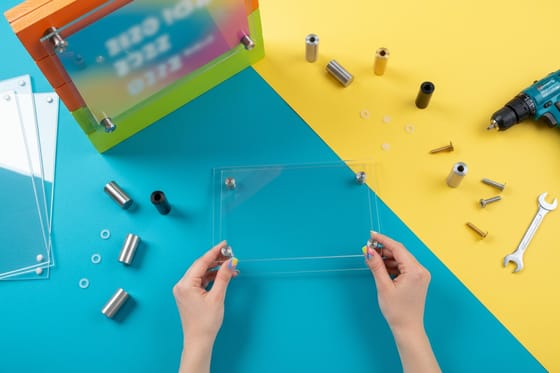
If you want the panel to float off the wall with a shadow line under it rather than sit flat, that is a standoff mount, and our guide to standoff screws covers the barrel sizes and hole placement. Standoffs suit rigid substrates. They do not suit foam core signs, because the foam crushes under the collar.
Indoor or Outdoor, and Where Each Build Fails

This is the section that saves the reorder. Every material on this page fails somewhere, and the failures are predictable.
Real wood outdoors is a maintenance commitment. Wood absorbs moisture and releases it, so an unsealed panel cups and the joints open. Ultraviolet light bleaches the exposed surface toward gray within a season or two, faster on a south facing wall. Sealing slows both, and the seal has to be renewed. None of that is a defect. It is what wood does, and it is why a genuine wood sign belongs indoors or under cover.
Foam core outdoors fails fast. The face is paper laminated to foam. One wet week and water gets under an edge, the paper lifts, and the board is finished. Keep it for indoor events and presentation boards, where its weight is the whole advantage.
PVC is the covered outdoor answer. It stays rigid, wipes clean, and does not care about a rain shower, which is why it dominates storefront and open house signage. It will soften in sustained direct heat, so it is not the pick for a west facing wall in July.
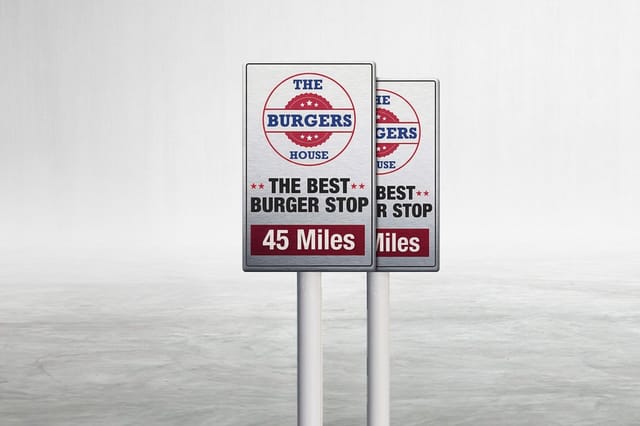
Aluminum is the uncovered one. A .040 inch panel will not rust, warp or fade, it takes screws, and it holds its edge for years. That is the material to specify for a wood look logo sign that lives on a post or an exterior wall, and it is worth the $36 over the $25. Compare finishing and mounting choices across aluminum signs printing and the wider rigid signs range, or start from the beginning with our guide to making custom signs.
Wally explains wooden logo signs
Burn it into the grain, or print the grain on
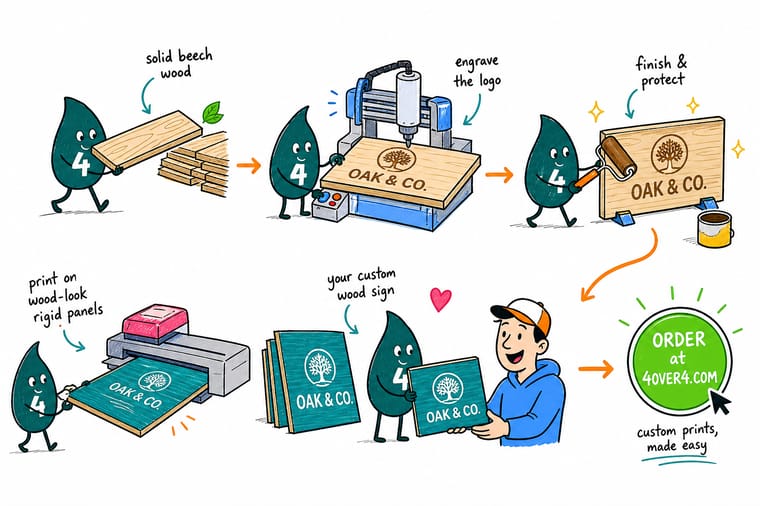
Wally has two panels on the bench. On the left, real beech: he runs a laser across it, the mark burns in below the surface, and the color is whatever the burn gives him. On the right, a sheet of rigid PVC: he prints the grain and the logo together in full color, and it comes out four feet wide in four days. He keeps the real wood for things people hold and the printed panel for things people read from across the street. Outdoors he reaches for aluminum, because wood moves and foam board dies in the rain.
Shop the wood printing collection →Specs and pricing
Wood and wood-look panels, sized and priced live
Real wood on the left, the two rigid substrates that carry a wood look at wall size next to it, each with live configuration choices and starting prices straight from the 4OVER4.COM configurator.

Print it
Order the build that suits the wall
Explore more
Where to go next


By the numbers
Wood look signage across 25 years of press work
Common Questions
Your wooden logo sign questions, answered
What is a wooden logo sign?
It is any sign that shows a logo on wood or on a wood surface, and the phrase covers two builds that behave nothing alike. In the first, the wood is real: a laser burns the mark into a beech or cherry panel, or a foil stamp presses metal leaf into the grain, so the logo is part of the material. In the second, the wood is an image: a wood grain photograph and the logo are printed together in full color onto a rigid panel of PVC, aluminum or foam board. Both read as wood on a wall. Only one of them is wood.
Can you print a logo directly onto wood?
Yes, with UV printing, and 4OVER4.COM prints straight onto the wood surface rather than onto a label stuck to it. UV lamps cure the ink the instant it lands, so it sits on the grain instead of soaking in and blurring. The catch is that wood is not white, so the grain tints whatever colors you lay over it. Dark ink on pale beech reads beautifully. For light colors, pastels and photographs, a white ink base layer goes down first, which restores the color but hides some of the grain you paid for.
Do you make large signs out of solid wood?
No. The largest genuine wood item we make is the 18 by 36 inch wood poster hanger frame, and the wood there is the hanger holding a canvas print. For anything storefront sized, order the wood look on a rigid substrate: PVC signs go to a custom 36 by 40 inches and aluminum signs to 24 by 36 inches. Supply the grain as part of your artwork at full size, and the panel arrives looking like a plank and behaving like plastic or metal, which outdoors is an advantage.
Will a wooden sign survive outside?
Real wood outside is a maintenance job, not a purchase. Untreated wood takes on moisture and gives it back with every weather change, so it cups, and ultraviolet light bleaches the surface gray within a season or two. Sealing slows both down and has to be redone. If the sign lives outdoors, order the wood look on .040 inch aluminum, which will not rust, warp or fade, and skip foam core entirely because the paper face lifts off the foam once water gets into an edge.
How big should the letters be on a wooden logo sign?
Work back from where people read it. The old sign shop rule is one inch of capital letter height for every ten feet of reading distance, so a name read from thirty feet across a lobby needs three inch caps, and a 12 by 18 inch panel will not hold much more than that plus a logo. Reading distance, not wall space, is what should pick the size. It is also why an engraved wood business card and a storefront panel are not scaled versions of the same design.
What does a wooden logo sign cost?
The two builds sit far apart. A wood look panel starts at $25 for a single 11 by 17 inch PVC sign and $36 for a 12 by 18 inch aluminum sign, both full color and both ready in four business days. Genuine wood costs what a made to order material costs: wood business cards start at $470.11 for 250 cards, which works out at $1.88 a card and falls toward $0.99 as the run climbs to 1,000, on a 15 business day production schedule. The wood poster hanger frame starts at $32.75.
Get Started
Order 250 beech wood business cards from $470.11
Pick genuine beech or cherry for the pieces people hold, or a wood-look panel on PVC or aluminum for the ones people read from the sidewalk. Both configure and price in the same place.
Legal Disclaimer
Gold Standard guarantees apply to all standard orders placed through 4over4.com. Price match requires verifiable proof of a competitor's published price for an equivalent product with matching specifications and turnaround time. Satisfaction guarantee covers manufacturing defects and print quality issues. Contact support with order number and documentation. On-time delivery rate based on tracked orders 1999 to 2026. Individual results may vary based on shipping carrier performance.
