
How to Design Corporate Name Tags Your Team Will Wear Every Day


Reusable or single use, plastic or laminated, slot or pin. Four choices decide whether a corporate name tag survives a year of shifts or ends up in a drawer by March.
Set the first name in the largest type on the tag, put one short role line under it, and keep the logo small in a corner: at 2 by 3 inches the name is the only thing anyone reads from more than a few feet away. Then match the build to the lifespan. A badge worn every shift wants 18pt PVC vinyl and a magnet or clip back; a badge worn once wants 30pt gloss laminated stock with a lanyard slot, or an adhesive name label. Event Badges start at $49.88 with a 25 piece minimum, and Standard Name Labels start at $23.88.
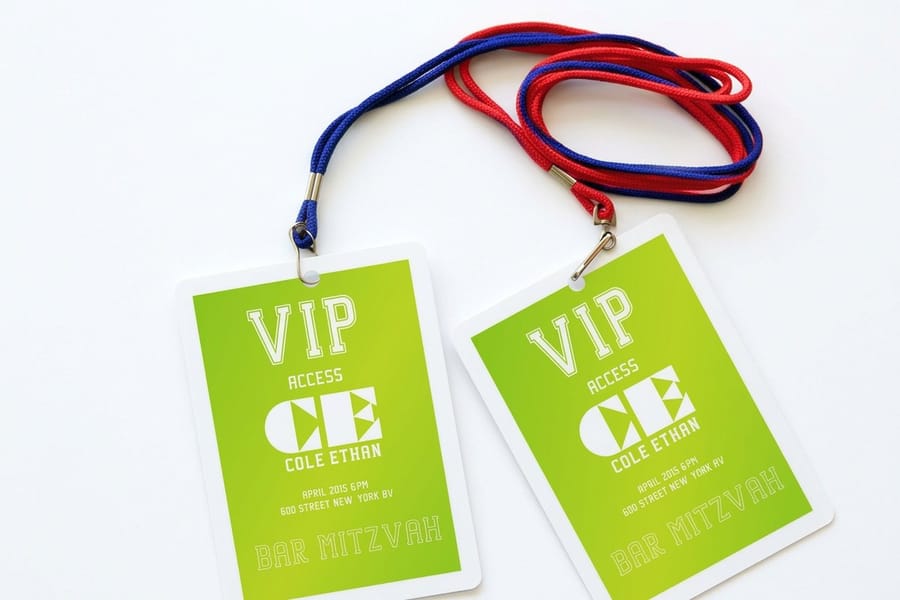
Quick answer
Name big, role small, logo in the corner, opening chosen up front
A corporate name tag has one job: make the wearer nameable from across a counter. The first name takes the largest type, the role sits under it at about half that size, and the logo goes small in a corner. Choose the stock by how long the badge lives, not by what looks premium in a proof, and choose the opening at the same time as the lanyard, because a flat lanyard will not thread a round drilled hole and the cut happens at finishing.
Decide First Whether the Badge Lives a Day or a Year
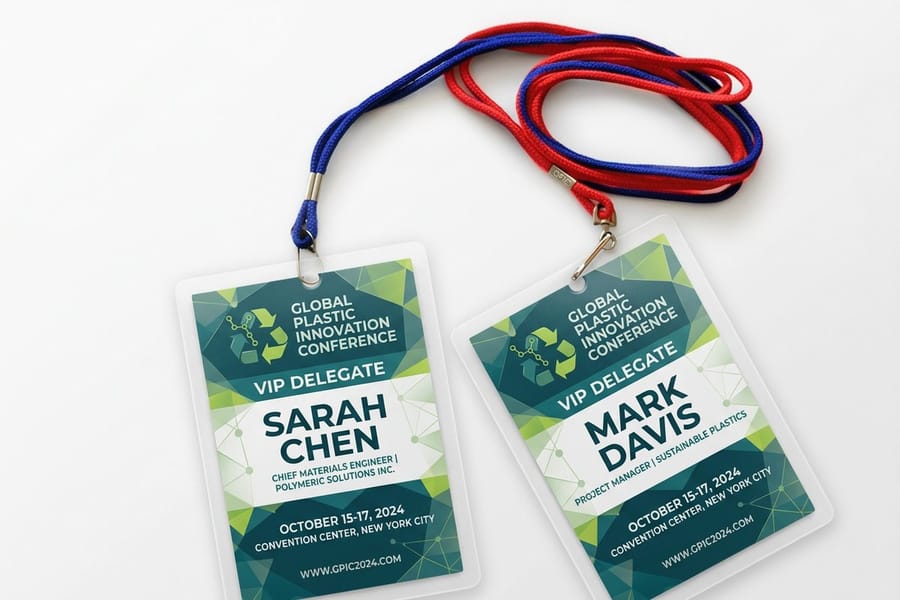
Every other choice follows from this one, and most bad name tag orders come from getting it backwards.
A reusable staff badge belongs to a person, gets worn on a shift, and goes back in a drawer at close. It needs to survive being clipped and unclipped a few hundred times, wiped down, dropped, and sat on. That means a plastic body: 18pt PVC vinyl on plastic event badges, or the heavier route of a 30mil white plastic card at credit card thickness.
A single event tag belongs to the day. Nobody is going to wipe it down. It needs to be legible, cheap, and produced in a hurry, which is what 30pt gloss laminated stock is for, and what printed name labels are for when there is no lanyard at all.
The mistake is ordering the cheap build for the daily job. Laminated stock does not fail across the face; it fails at the punched hole, which tears once a lanyard has been pulled through it for a month. Twenty replacement badges four times a year costs more than twenty plastic ones printed once, and it costs a manager an afternoon each time. Minimums help here: Event Badges start at 25, so a single department can order its own run without carrying stock for the whole company. If the badges are for a conference rather than a staff room, our conference badge design guide covers the different job that badge has to do.
PVC Vinyl, Laminated Stock, Plastic Card or Adhesive Label
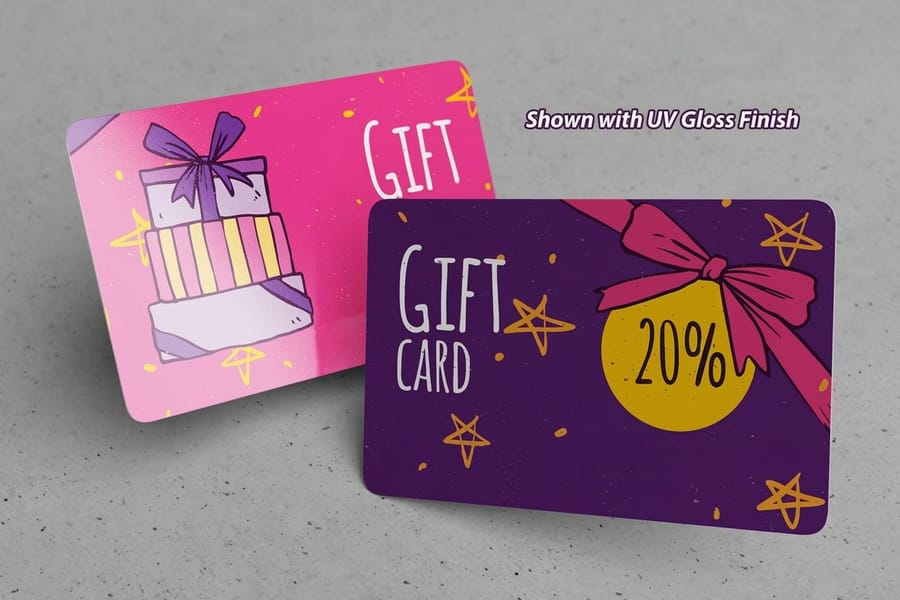
Four builds cover almost every corporate name tag, and they separate cleanly on lifespan and on whether the tag needs to do a second job.
| Build | What it is | Lifespan | Starts at | Where it belongs |
|---|---|---|---|---|
| 18pt PVC vinyl badge | A thin, flexible plastic badge, 30 percent thinner than the laminated option. | Months of daily wear. | $49.88 | Retail, hospitality and clinic staff who wear the same badge every shift. |
| 30pt gloss laminated | Thick card with a laminate face, printed on the same configurator. | An event, or a few weeks. | $49.88 | Conferences, open days, temporary staff and contractors. |
| 30mil plastic card | Credit card thickness plastic, 2.125 by 3.375 inches, UV gloss or matte silk. | Years. | $226.11 | Badges that also carry a magnetic stripe, a barcode or a serial number. |
| Adhesive name label | A printed sticker cut to size, no holder and no hardware. | One wearing. | $23.88 | Training days, inductions, store events, anywhere a lanyard is overkill. |
Read the lifespan column against your reorder habit. The two badge stocks cost the same to print, so choosing laminated over PVC vinyl only makes sense when the badge genuinely ends its life that week.
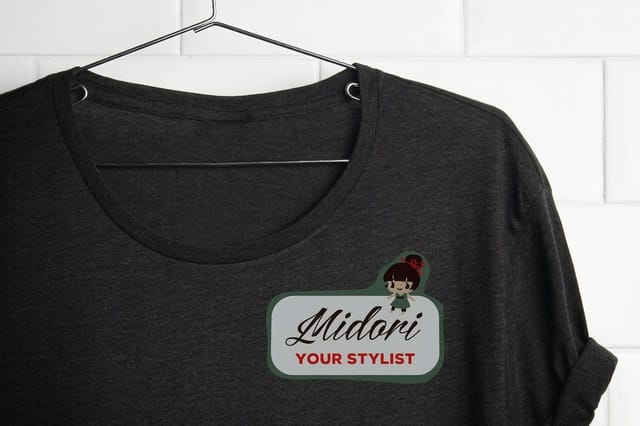
Labels are the underrated option for internal use. Standard name labels start at $23.88 and run from half inch circles to 4 by 4 inch squares. Premium name labels at $29.16 open up more than 25 label materials and any size from 2 by 2 inches up to 11 by 17 inches in quarter inch increments, and they arrive cut to size as individual stickers rather than on a sheet you have to peel around. For a two hour induction with forty new starters, that beats forty lanyards you will never see again. The full range sits on the name label printing page.
Slot, Hole, Pin or Magnet: Pick the Opening Before You Print

The attachment is the part people get wrong, because it is decided at file setup and cut at finishing, not chosen when the box arrives.
| Attachment | Opening in the badge | What it costs the wearer |
|---|---|---|
| Lanyard slot | A tab shaped rectangular cut, sized for a flat lanyard or a badge clip. | Nothing, but the badge swings and can turn to face backwards. |
| Double lanyard slot | Two tab shaped cuts instead of one. | The badge hangs level and resists twisting. Available on conference and event badges. |
| Drilled hole | A small round hole. | Takes string, ribbon or a split ring. A flat lanyard will not go through it. |
| Pin or magnet back | No opening in the printed face at all. | A pin leaves two holes in the garment daily. A magnet leaves none. |
Two things follow. First, buy the lanyard and cut the opening together. Event Badges carry seven lanyard choices, including a breakaway hook that releases when the cord is tugged, which is the one to pick for crowded floors, warehouses and anywhere children are present. A standard string lanyard has no release and is fine for a seated conference.
Second, think about the uniform. Where a company issues polos or aprons, a pin back is acceptable because the holes land in company property. Where staff wear their own clothes, a pin through a knit blazer every morning is the reason badges end up in pockets. Magnet backs cost more per unit and win the argument anyway. If you want a low cost pin on option for temporary staff, custom buttons start at $93.15 and come in round, square, diamond and rectangle shapes with a 50 piece minimum, which suits a volunteer crew better than a badge and lanyard set.
For a wider look at name tag formats, holders and insert sizes, the printed name tag sizing guide lays out how each type pairs with hardware.
Laying Out 2 by 3 Inches So the Name Actually Reads
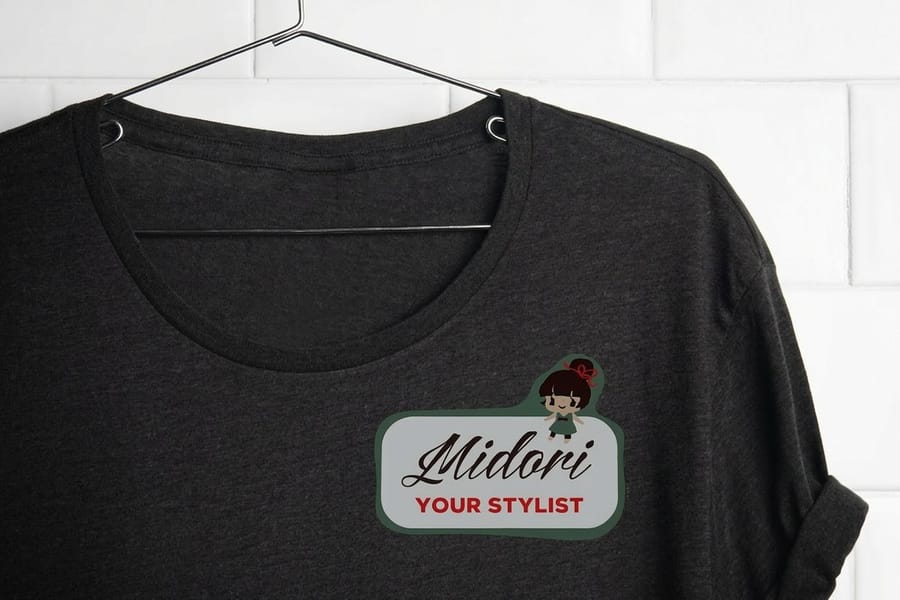
You have six square inches, an audience that glances rather than reads, and a marketing team that wants the logo bigger. Here is the order of operations that survives all three.
- Set the first name first, and set it large. Fill the width of the safe area with it. If the name is long, reduce the type until it fits on one line rather than breaking it onto two, because a broken name reads as two words and stops looking like a name.
- Add one role line at roughly half the name size. Front Desk. Pharmacist. Shift Lead. Two words beats four, and a job title from the HR system is almost always the wrong string to print.
- Put the logo in a corner, small. The wearer is standing in your building wearing your uniform. Nobody needs the logo at 40 percent of the badge to work out where they are.
- Leave the bottom strip for the optional line. Store number, department, pronouns, a license number where the role requires it. Small, quiet, and skippable.
- Keep every element clear of the trim and the opening. Pull artwork back from the edge and leave the top strip empty where the slot or hole is cut, or the punch will land through your logo.
Two habits keep the batch consistent. Build the badge as one file with the name on its own text layer, so the same layout carries 200 different names without anything else shifting. And check the longest name in your list before you approve the proof, not the shortest, because the layout that works for Ann breaks for Konstantinos.
Start from a correctly sized layout in the blank template library rather than building a 2 by 3 inch document from scratch. If the badges are for a company event, the corporate event planning guide covers when the name list has to be locked, which is earlier than most teams expect. And if the badge is doubling as an access card, the 30mil plastic card material guide explains what the stock takes and what it does not.
Wally sizes up a name tag
One name, one role line, one corner logo

Wally holds the badge at arm's length and squints. If he can read the first name from there, the tag works. If the logo is the first thing he sees, the design lost. He cuts the lanyard slot before printing, never after, and he checks the longest name on the list rather than the shortest, because the layout that fits Ann falls apart on Konstantinos.
Configure your event badges →Specs and pricing
Badge stocks, sizes and starting prices
Compare the badge and label options side by side, with live configuration choices and starting prices straight from the 4OVER4.COM configurator.


Print it
Order name tags your team will keep wearing
Explore more
Where to go next



By the numbers
Name tags off a floor that has served 150,000+ businesses
Common Questions
Your corporate name tag questions, answered
What size should a corporate name tag be?
Start at 2 by 3 inches. That is the default size on Event Badges and it is the size most badge holders, clip backs and reel clips are built around, so hardware you buy separately will fit. Event Badges run in six sizes if you need something wider for a two line job title. If you are printing a badge that also has to sit in a wallet or a card reader tray, use the credit card size instead: 30mil White Plastic Cards are 2.125 by 3.375 inches. Adhesive name labels are the odd one out, with sizes from 2 by 2 inches up to 11 by 17 inches in quarter inch increments, because a label has no holder to match.
Should a staff name tag show the full name or just the first name?
First name, in the biggest type you can fit. A customer is reading the badge across a counter while they are already speaking to the person, so the surname does nothing and it steals the space that makes the first name legible. Surnames earn their place in three situations: regulated roles where a license number or full legal name is required, a large head office where two people share a first name on the same floor, and any badge that doubles as a building pass. Put the surname on the second line at the same size as the role, never at the same weight as the first name.
What is the difference between a lanyard slot and a drilled hole?
Only the shape of the opening, and that shape decides what threads through it. A drilled hole is a small round opening that takes string, ribbon or a split ring. A lanyard slot is a tab shaped rectangular opening cut to fit a flat lanyard or a badge clip. Both are order options on Event Badges under the Hole and Slot choice, and both are cut at finishing rather than added later. There is also a double lanyard slot for conference and event badges: two attachment points instead of one, which stops the badge spinning to face backwards on a moving wearer.
Are plastic name tags worth it over laminated paper?
For a badge that gets worn daily, yes, and the arithmetic is straightforward. Event Badges print on two stocks: 18pt PVC vinyl, which is a plastic that flexes and shrugs off a coffee spill, and 30pt gloss laminated, which is thicker paper with a laminate face. The laminated stock looks the same on day one. It is the punched hole that fails first, tearing after a few weeks of being pulled on and off a lanyard. If you are reprinting the same twenty badges every quarter to replace torn ones, plastic is cheaper by the second reprint.
How do we get 200 different names printed rather than writing them by hand?
Choose Personalization on the Event Badges configurator and supply the list. The names print as part of the run, so every badge arrives finished and spelled the way you sent it. For plastic cards, the equivalent option is Variable Data, which also covers sequential numbering, and Barcoding with Numbering if each card needs a scannable unique code. Send the list as a single spreadsheet with one column per line of the badge, and check the spellings before you send it, because a reprint of a misspelled name is a new job rather than a correction.
Can a corporate name tag double as a door access card?
It can carry the hardware, with one limit worth knowing before you order. 30mil White Plastic Cards take a magnetic stripe, a signature panel, sequential numbering and barcoding, and they take a lanyard slot so the same card hangs from a badge reel. What we do not do is encode the stripe with your access control data, so the card arrives printed and striped, and your facilities team or your access system vendor writes the credential. Plan that step into the timeline, because a box of beautiful cards nobody has encoded opens no doors.
Get Started
Order 25 event badges from $49.88
Pick PVC vinyl or laminated stock, choose the slot or the drilled hole, send your name list, and we print every badge already personalized. Minimums start at 25.
Legal Disclaimer
Gold Standard guarantees apply to all standard orders placed through 4over4.com. Price match requires verifiable proof of a competitor's published price for an equivalent product with matching specifications and turnaround time. Satisfaction guarantee covers manufacturing defects and print quality issues. Contact support with order number and documentation. On-time delivery rate based on tracked orders 1999 to 2026. Individual results may vary based on shipping carrier performance.
