
How to Design and Apply Car Vinyl Graphics That Last for Years


Letter heights that survive traffic, the cast versus calendered decision, the prep step everyone skips, and the hinge method that lets you fix a crooked graphic before it is too late.
Car vinyl graphics are printed or contour-cut adhesive film laid onto clean, fully cured paint or glass. Size the type for a three second read, choose cast film for curved panels and calendered for flat ones, and apply it with a center hinge at a panel temperature between 60 and 80 degrees Fahrenheit. Laminated cast film runs five to seven years, calendered three to four. What fails first is rarely the vinyl. It is the surface it went onto, which is why the alcohol wipe matters more than the brand of squeegee.
Quick answer
Two layers stay on the car, and one step is the only one you can redo
A vehicle graphic is a thin stack: transfer tape on top, laminate, printed film, adhesive, backing liner. The liner peels before application and the transfer tape peels after, so only the film and its adhesive end up on the paint, at a total thickness thinner than a sheet of copy paper. That thinness is why prep decides the outcome, since anything left on the panel shows through as a lump. And because pressure-sensitive adhesive grabs on contact, positioning is the only part of the job you can take back.
Design It to Be Read From the Car Behind You

Start from the reading distance, not from the artwork. The trade rule of thumb is one inch of capital letter height for every ten feet of comfortable reading distance, so a phone number set at 2 inches is legible from about twenty feet and invisible from the lane behind you at a light. Three inches is the practical floor for anything a stranger has to act on, and five inches is better on a tailgate.
That constraint forces the real design decision, which is what to leave out. A vehicle carries three pieces of information well: what you do, who you are, and one way to reach you. The address, the second phone line, the license number and four social handles all fit on the door, and together they guarantee nobody reads any of it. Put the trade first in the largest type, the name second, and one contact method third.
Place by traffic pattern. The rear door, tailgate and rear quarter are what drivers stare at in stopped traffic, so the phone number or the URL belongs there. Side panels get read from the sidewalk and from parking lots, at a standstill, which is where a logo and a service list can afford more detail. Contrast beats brand purity every time: mid-tone artwork on a mid-tone silver or grey vehicle disappears at fifty feet, and the fix is usually a white or black knockout behind the mark rather than a different color.
Then respect the panel. Keep hard edges an inch or two back from door seams, handles, the gas flap and any deep body line, because film bridged across a recess releases there first and a lifted corner spreads. If the artwork is cut lettering rather than a printed decal, keep strokes above roughly an eighth of an inch at final size and avoid scripts with hairline joins, which either weed out on the bench or lift on the road. Our guide to cut vinyl lettering covers the weeding limits in detail, and the car decal size chart gives you real panel dimensions to lay out against. Build the file as vectors with fonts outlined, add an eighth of an inch of bleed on printed work, and start from a correctly proportioned file in the blank template library instead of guessing the aspect ratio.
Cast, Calendered, Perforated, Reflective or Magnet
The one material fact worth learning is the difference between cast and calendered vinyl, because it explains most failed installs. Cast film is made by pouring liquid vinyl onto a casting sheet, so it has almost no built-in tension and finishes around 2 mil thick. It conforms into recesses and around curves and stays where you put it. Calendered film is squeezed between rollers, which stretches it, and the stretch is remembered. It runs 3 to 4 mil, costs less, and slowly tries to return to flat, which is why a calendered graphic pushed into a rivet or a deep body line tents back out weeks later.
Buy calendered for flat door panels, tailgates and rear glass on a two or three year run. Buy cast when the graphic crosses a curve, a corrugation or a mirror housing, or when you want the full life out of it. Nothing else in the material spec matters as much.
| Option | How it behaves on a vehicle | Where it belongs | Starting price |
|---|---|---|---|
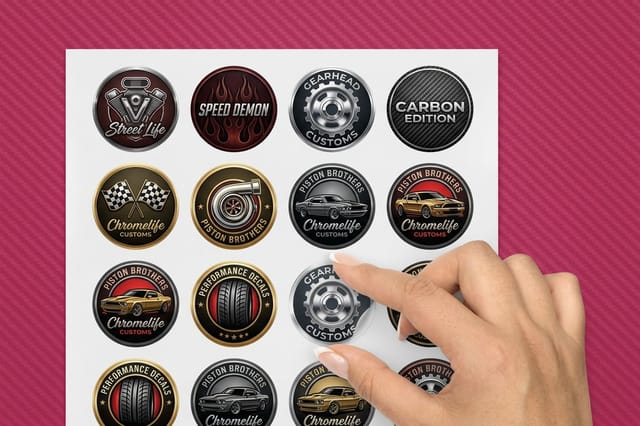
| Car decals | Printed and contour cut, laminated, adhesive bonds permanently to cured paint. | Doors, tailgates, quarter panels on a vehicle that is always the business vehicle. | from $93.37 |
| Gloss vinyl graphics | Reflects light, deepens color, shows every speck of dirt trapped underneath. | Panels where the graphic should read as painted-on and pop in daylight. | from $25.00 |
| Matte vinyl graphics | Kills glare and hides minor surface texture, but scuffs show as shiny marks. | Dark vehicles and any layout photographed a lot, where glare ruins the shot. | from $25.00 |
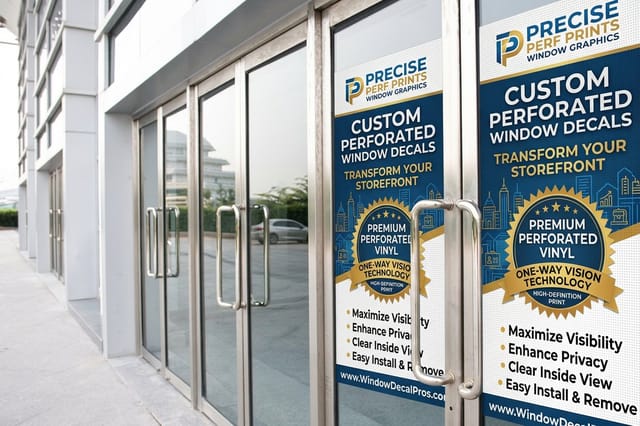
| Perforated window decals | Half the surface is holes, so you see out from inside while the print faces the street. | Rear window and rear side glass only, never the windshield or front side windows. | from $30.00 |
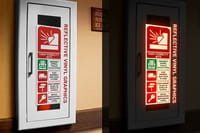
| Reflective vinyl graphics | Returns headlight beams straight back at the driver behind you. | Night work, service vehicles parked roadside, trailer edges and rear markings. | from $29.00 |
| Car magnets | Removable in seconds, holds by magnetism, needs flat steel and a flat area. | Personal cars, leased vehicles, weekend-only branding. | from $47.50 |
Magnets carry one constraint people discover the hard way: they only hold on flat steel. A plastic bumper, an aluminum door skin, a fiberglass box and any panel with a body line running through it will all reject them, so measure a flat steel area before you size the artwork. The car magnet size guide lists the sizes that actually fit common doors, and decals versus magnets versus bumper stickers works through the choice by use case. Everything in the table lives in the vinyl printing collection.
Prep and Application, Where Most Jobs Are Won or Lost
Almost every graphic that fails early failed in the first fifteen minutes. Two things decide it: how clean the panel really is, and how warm it is.
Clean, then clean again. Wash the panel with detergent and dry it completely, then wipe it down with 70 percent isopropyl alcohol on a lint-free cloth. The wash removes dirt. The alcohol removes what the wash leaves behind, which is wax, quick detailer, and the fine mist of tire shine that drifts onto the lower third of every door. Adhesive cannot grip through any of it, and the result is a corner that lifts within a month while the rest of the graphic looks perfect.
Work in the window. Between 60 and 80 degrees Fahrenheit, measured on the panel and not on your phone. Below 50 the adhesive is too stiff to flow into the paint texture and the edges release in days. Above 90 the film goes soft and stretches under the squeegee, then contracts overnight and pulls its own corners loose. A black door in direct sun will run far hotter than the air, so put the vehicle in shade for twenty minutes before you start.
Hinge, then work outward. Position the graphic with masking tape, step back and sight the top edge against a body line rather than against the ground, because a vehicle is rarely level. Tape a hinge down the vertical center. Peel the liner off one half, cut the freed liner away, and squeegee from the hinge outward in overlapping strokes at about 45 degrees to the edge. Repeat on the other half. Then pull the transfer tape back on itself, almost flat against the panel, never straight up, or it lifts the fine parts of the letters with it.
Wet or dry. Dry application is faster and bonds immediately, and it is the right call for anything under about a foot. For large panels, a few drops of baby shampoo in a spray bottle floats the film and buys you repositioning time, at the cost of waiting 24 to 72 hours before washing while the water migrates out. Recesses and rivets need heat: warm the area with a heat gun, press the film in, then post-heat the same spot to reset the film memory or it will tent back out within a week. Modern air-egress adhesive pushes most trapped air to the edge on its own. For a bubble that will not move, prick one edge of it with a pin and press the air toward the hole, and never slit the middle. The full squeegee technique is in our vinyl decal application guide, and glass work follows a slightly different order covered in how to apply window clings.
How Long It Lasts, How It Comes Off, and Where Not to Put It

Plan on five to seven years from laminated cast film on a vertical panel and three to four from calendered. Position matters more than brand: a hood, a roof and a trunk lid take direct sun for most of the day, so they chalk and lose saturation long before the doors do. If a design wraps onto a horizontal surface, expect to reprint that piece on its own schedule.
Washing rules are short. Give it two weeks before the first wash while the adhesive finishes bonding, then hand wash when you can. Keep a pressure washer nozzle at least a foot back, hold the spray under 40 degrees to the surface, and never aim square into a cut edge, because water driven under one corner will travel the length of the graphic. Waxing over vinyl is fine on the laminate and pointless on the print itself.
Removal is a heat job, not a strength job. Warm the film to roughly 120 to 150 degrees Fahrenheit with a heat gun and pull at a shallow angle, close to the panel, taking a section at a time. Adhesive residue comes off with a citrus-based remover and a microfiber cloth, then a light polish evens out the gloss difference where the graphic sat. Sun-baked calendered film that has been up for six years is the exception: it shatters into flakes instead of peeling, and that is a long afternoon with a heat gun.
Three places to keep graphics off. Windshields and front side windows, because state visibility rules treat them like tint, which is why perforated window decals are a rear-glass product. Anything that has to stay visible or reflective, meaning lights, reflectors and the license plate. And fresh paint, where anything under 30 days old will bubble as the solvents finish leaving and can lift when the vinyl comes off. If the vehicle is leased or shared, skip decals and use car magnets, pulling them off and drying both faces about once a week so grit and water do not haze the clearcoat underneath. For the film choice itself, choosing outdoor materials that survive sun and rain covers what laminates buy you.
Wally explains car vinyl graphics
Hinge it in the middle, then work outward
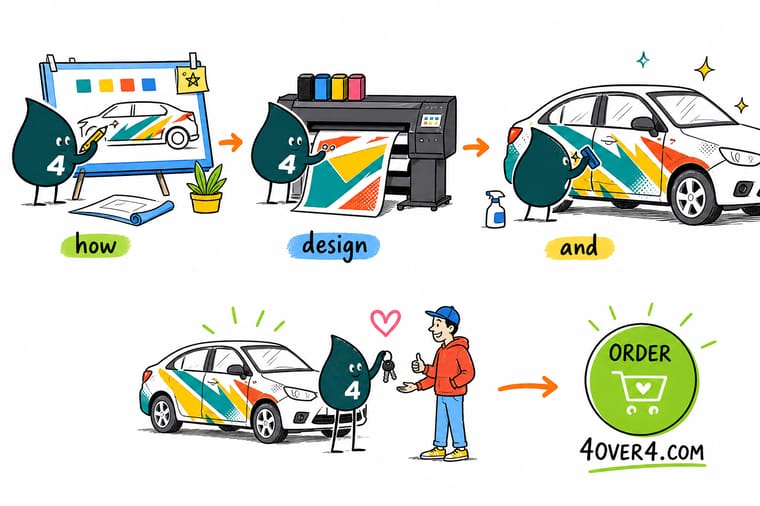
Wally washes the door, wipes it with alcohol so the tire shine on the lower panel cannot ruin his day, and waits until the metal is warm rather than hot. He tapes a hinge straight down the middle of the graphic and sights the top edge against the body line, because the parking lot is never level. Then he peels the liner off one half and squeegees from the hinge outward, and only then does the other side. The transfer tape comes off last, pulled back on itself almost flat. Straight up and the thin parts of the letters come with it.
Order custom car decals →Specs and pricing
Vehicle graphics, sizes, and starting prices
Compare the three vehicle options side by side, with live configuration choices and starting prices straight from the 4OVER4.COM configurator.


Print it
Put your name on the road this week

Explore more
Where to go next



By the numbers
Vehicle graphics you can count on at 4OVER4
Common Questions
Your car vinyl questions, answered
Will car vinyl graphics damage my paint?
On factory paint in sound condition, no. Automotive vinyl uses a removable pressure-sensitive adhesive designed to release under heat, and panels come back clean after a heat gun and a shallow-angle peel. Two situations do cause damage. The first is a repaint that has not fully cured, because solvents still leaving the paint will bubble under the film and the vinyl can lift the new coat when it comes off, so wait at least 30 days after body work. The second is paint that is already failing, where the clearcoat is chalky or crazed. Vinyl does not cause that, but it will take flakes of it with it on removal.
How long do car vinyl graphics last?
Laminated cast vinyl on a vertical panel typically runs five to seven years before the color noticeably shifts. Calendered film gives about three to four. What shortens both is exposure angle rather than the film itself: hoods, roofs and trunk lids face straight up into the sun all day and will chalk and fade well before the doors do. A UV laminate is the single cheapest thing you can add, and it also protects the print from brush washes and road grit.
Can I put vinyl graphics on my windshield or front side windows?
In most states, no. Windshields and the front side windows are covered by the same visibility rules that govern window tint, and perforated graphics reduce light transmission through the glass they cover. Perforated window vinyl belongs on the rear window and rear side glass, where the perforation pattern lets you see out while the printed side faces the street. Check your own state vehicle code before printing, because the limits vary and enforcement is a roadside decision, not a mail-in one.
Should I get decals or magnets?
Decals if the vehicle is always the business vehicle, magnets if it is your personal car on weekends or a leased vehicle you must return clean. Magnets come off in seconds and leave nothing behind, but they only stick to flat steel, so they will not hold on a plastic bumper, an aluminum panel, a fiberglass box, or across a body line. They also need to be pulled off and dried on both sides about once a week. Grit and trapped moisture under a magnet will haze the clearcoat, and that damage is on the magnet, not the paint.
Can I run the car through a car wash?
Wait two weeks after application, then hand wash whenever you can. The adhesive keeps building bond for several days, and an automatic brush wash catches edges before it has finished. Pressure washers are the bigger risk: keep the nozzle at least a foot back, keep the spray under 40 degrees to the surface, and never aim square into an edge or a cut line. Water driven under one corner will run the length of the graphic.
What file do I need to send for car graphics?
Vector artwork, with all fonts converted to outlines, built at full size or at a clean scale you state in the file name. Include an eighth of an inch of bleed on printed decals and put the contour cut line on its own path so the cutter knows where the edge is. Photographs and gradients are fine on a printed decal but not on cut lettering, which has no background at all. If you are laying out to a specific size, start from a correctly proportioned file in our blank template library rather than guessing the aspect ratio.
Get Started
Ready to turn the work truck into a billboard?
Upload vector artwork, pick your film and finish, and we print contour-cut vehicle graphics laminated to survive sun, brushes and road grit.
Legal Disclaimer
Gold Standard guarantees apply to all standard orders placed through 4over4.com. Price match requires verifiable proof of a competitor's published price for an equivalent product with matching specifications and turnaround time. Satisfaction guarantee covers manufacturing defects and print quality issues. Contact support with order number and documentation. On-time delivery rate based on tracked orders 1999 to 2026. Individual results may vary based on shipping carrier performance.
