
How to Choose an Outdoor Banner Holder That Stays Standing in Wind


Frames, fillable bases and flag poles compared by what actually anchors them, what each one costs, and which surface rules half the list out before you shop.
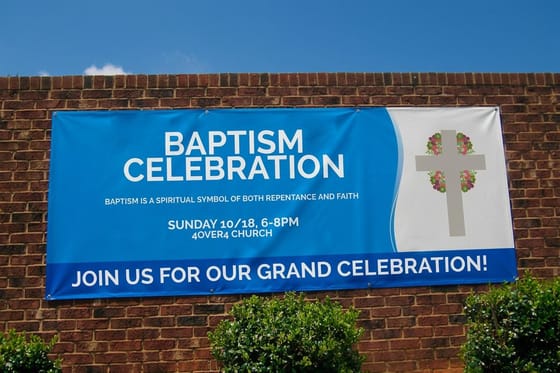
Choose an outdoor banner holder by the surface under it: stake a metal rod A-frame into turf, use a water or sand fillable Signicade base on pavement, and switch to a feather flag anywhere the wind is constant. Retractable banner stands are indoor hardware and tip in gusts that the other three shrug off. Wind force rises with the square of wind speed and with the face area you present, so the banner spec matters as much as the frame: mesh on anything exposed, solid vinyl only where it is sheltered.
Quick answer
Anchor it, ballast it, or let it bend
Every outdoor holder answers the same push in one of three ways. Stakes borrow holding power from soil, which makes a staked metal rod A-frame the cheapest thing that genuinely works on turf. A fillable base carries its own weight instead, which is the only workable answer on concrete. A feather flag refuses the fight altogether: the pole bends and the flag swivels downwind, so it gets calmer as the gust builds while a rigid frame gets worse. Pick the strategy that suits the ground first, then pick the product.
Start With What Is Under the Sign
Before you compare frames, look down. Every outdoor holder resists wind in one of three ways, and the surface rules two of them out immediately.
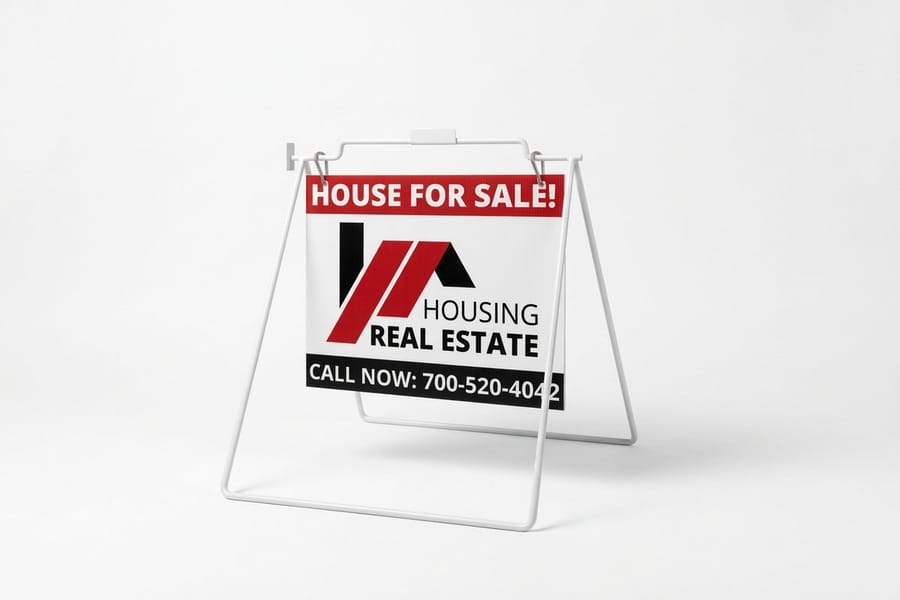
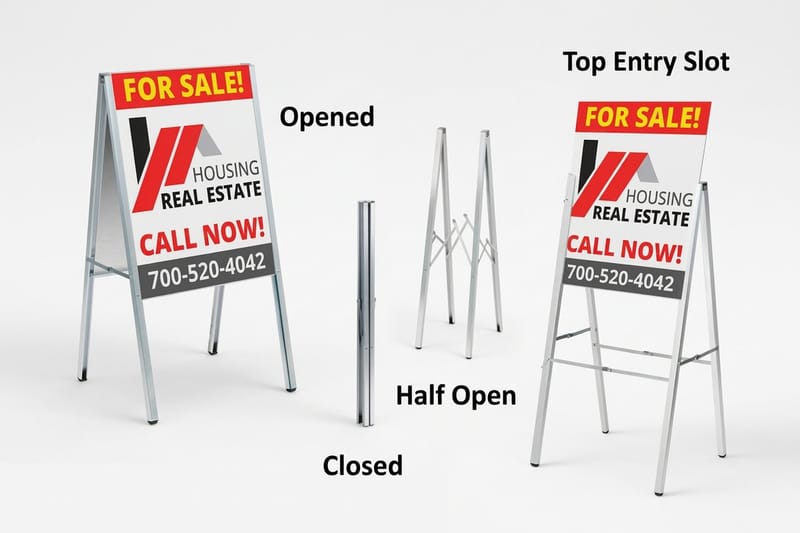
Soil, turf or gravel lets you anchor. Stakes drive in and the frame borrows the ground for holding power, which is why the cheapest option is also a serious one here. A metal rod A-frame starts at $65.90 and staked into damp turf it stays put through weather that walks a heavier unstaked frame across a parking lot.
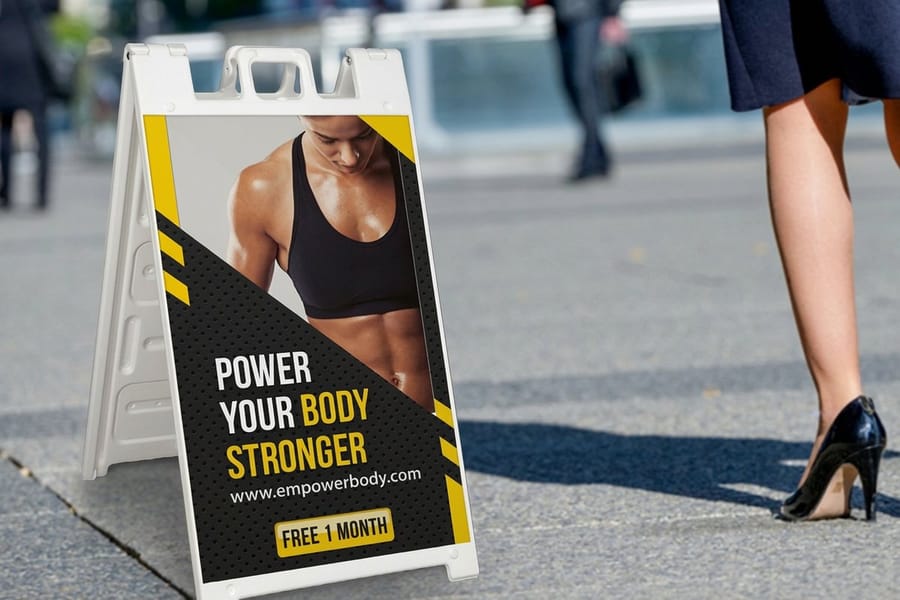
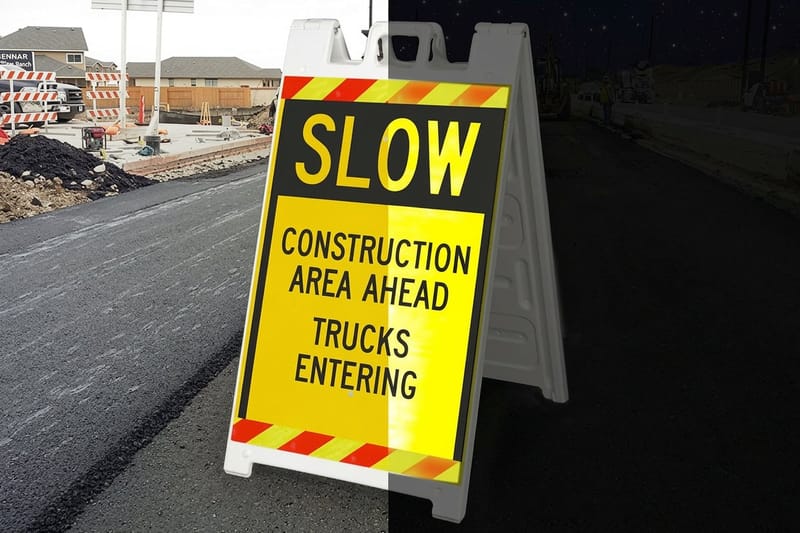
Concrete, asphalt or a tiled plaza gives you nothing to bite into, so weight has to come with you. That is the whole reason the hollow fillable base exists. A Signicade A-frame at $182.32 arrives light, and you fill the base on site with water or sand once it is standing where you want it.
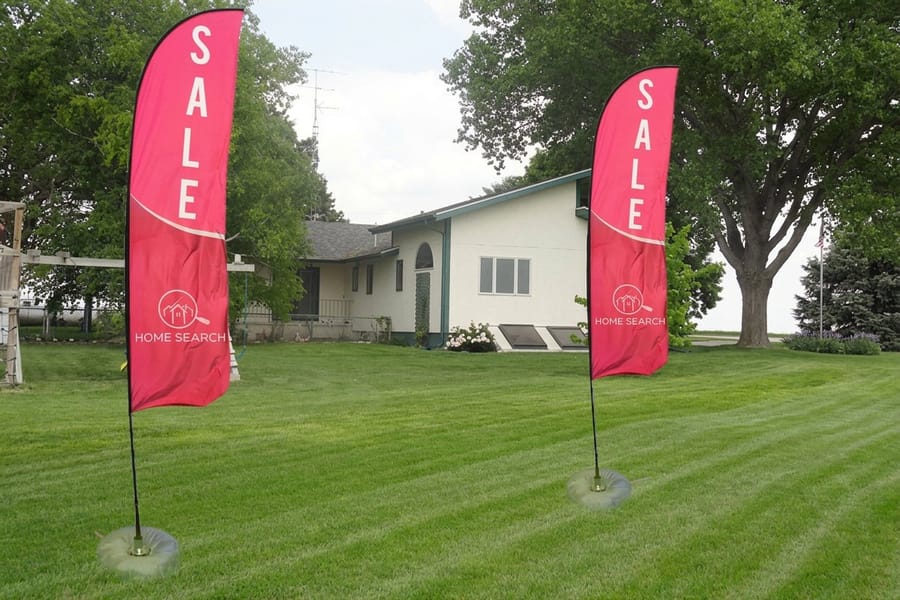
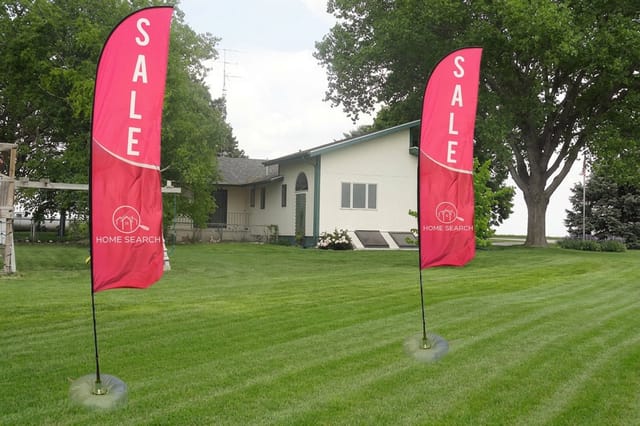
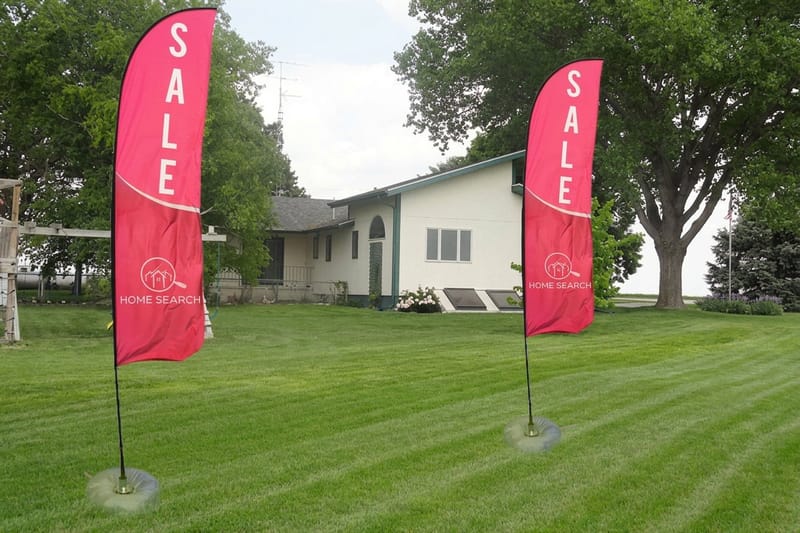
Anywhere the wind never stops, stop trying to hold a rigid rectangle still. A feather flag on a flexible pole gives with the gust and swivels away from it, which is a different strategy rather than a stronger version of the same one.
Get this order right and the rest of the decision is small. Get it backwards, buy the frame first and then discover the venue is all concrete, and you end up stacking sandbags on a stand that was never meant to carry them. If you are still choosing the sign itself rather than the hardware, our guide to choosing outdoor advertising signs covers that half.
A-Frame, Ballasted Base, Flag Pole or Retractable
These four get quoted against each other constantly, usually on price alone, and price is the least useful column. What matters is what holds each one down and what happens to it when the wind picks up.
| Holder | What holds it down | Surface it needs | How it behaves in wind | Starts at |
|---|---|---|---|---|
| Metal rod A-frame | Ground stakes through the frame feet. | Soil, turf, gravel. | Solid once staked. Light and skittish if it is not. | $65.90 |
| Signicade A-frame | Water or sand poured into the hollow base. | Any hard surface. | Stays where you put it. Also becomes a two-hand carry once filled. | $182.32 |
| Aluminum A-frame | Its own frame weight plus add-on weights. | Any hard surface. | Rigid and tidy, but an exposed corner still wants ballast. | $146.07 |
| Feather flag | A ground spike, or a cross base you weight. | Both, with the right base. | Bends and swivels downwind. The only one that calms down as wind rises. | $108.75 |
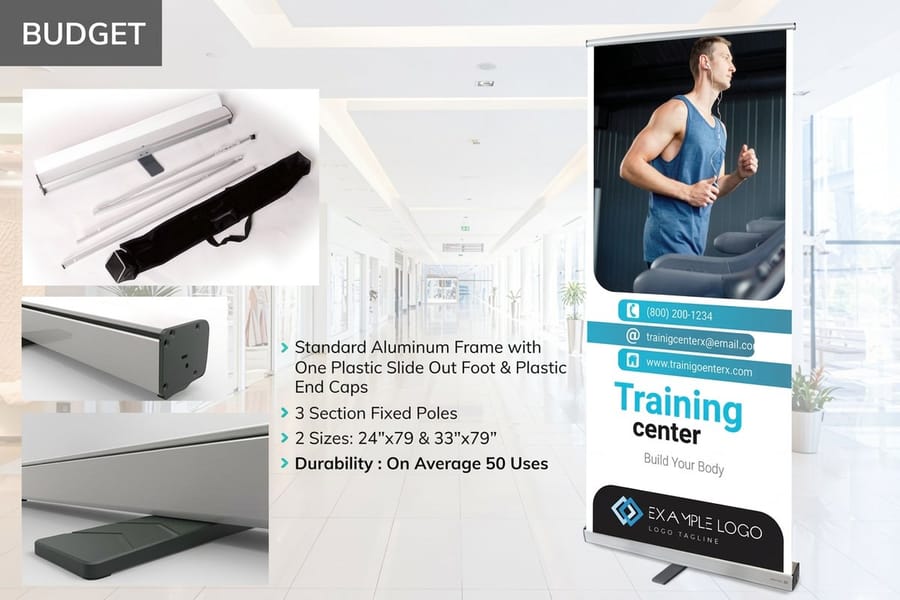
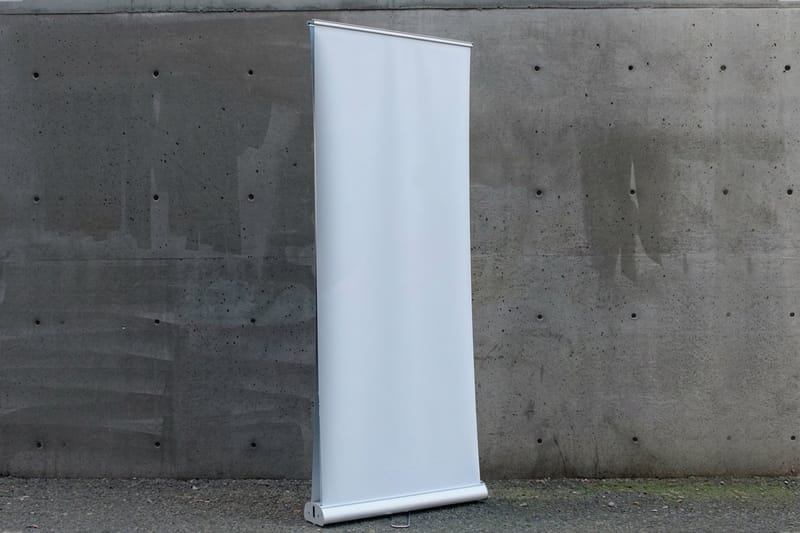
| Retractable stand | A narrow aluminum foot, a few pounds. | Indoor floor. | Goes over in a gust that barely moves the others. | $139.00 |
Read the last two columns together. The metal rod frame is a quarter of the price of the Signicade and, on grass, arguably the better buy, because a stake into soil beats ballast sitting on top of it. Reverse the surface and that same frame is the worst choice on the list. The aluminum A-frame sits in between: it looks sharper at a storefront and holds a rigid panel flatter, though it is still resisting wind with mass alone.
If you want more on the frames themselves rather than the anchoring, A-frame sign boards explained goes through the panel types each one accepts, and the full range sits in A-frame signs.
Why Retractable Stands Keep Ending Up on the Ground
Somebody asks for an outdoor banner holder, gets sent a retractable, and it is on its face by lunchtime. The stand is not defective. It was built for a different room.
A retractable is a spring cassette in a narrow aluminum foot, with a support pole up the back and a full graphic clipped at the top. It works indoors because the base only has to stop the banner tipping, and indoors nothing pushes on the banner. Take it outside and that banner becomes a taut sail, several feet tall, presenting its entire face to the wind, with a base that is a fraction of the ballast an A-frame carries. Nothing about that geometry is fixable with a sandbag on the foot, because the wind pushes at the top and the base sits far below it.
The damage is the part people underestimate. A fall on pavement scuffs the print, and the cassette lip takes the impact, and a bent lip means the banner rewinds off-square and jams for the rest of its life. That is a $139 stand turned into scrap by one gust.
Retractables still earn their place at outdoor events under a tent, at a registration table with a wall behind them, and anywhere they are watched and taken down between sessions. Just size them for that job. Our guides on choosing retractable signs and choosing a banner stand backdrop cover the indoor use they were made for, and every model is listed under banner stands.
Match the Banner to the Holder, Not the Other Way Round
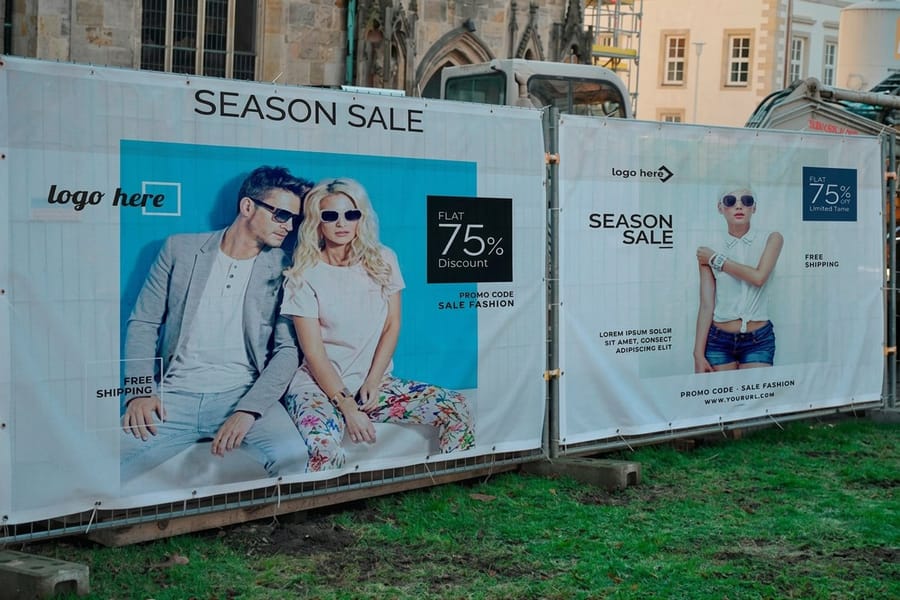
Hardware fails less often than the print stretched across it. Once you know how the holder is anchored, the banner spec follows.
On anything rigid and open to wind, drop the solid vinyl and print on mesh banners, which start at $75. Mesh is perforated, so part of the air passes through the face instead of pushing on all of it, and the load on the frame or fence drops with it. The honest trade is appearance: because light comes through, mesh reads slightly lighter and less dense than the same artwork on vinyl, and it is the wrong choice indoors or against a dark wall. Solid outdoor banners at $79 stay the right call in a sheltered spot where you want full color density.
Finishing matters as much as material. Ask for hemmed edges and grommets along the hem rather than corners only, then use every grommet you were given. Four ties on a large banner put the whole wind load through four small holes, and that is where the first tear appears. On a light pole, a top and bottom pole pocket keeps the banner flat instead of flapping, which is how pole banners at $97.76 are set up.
Sizing is its own decision, since face area drives the whole wind problem. Banner dimensions explained walks the standard sizes, and banner material types compares the substrates side by side. The full range sits under vinyl banners.
Setting It Up So It Is Still There Tomorrow
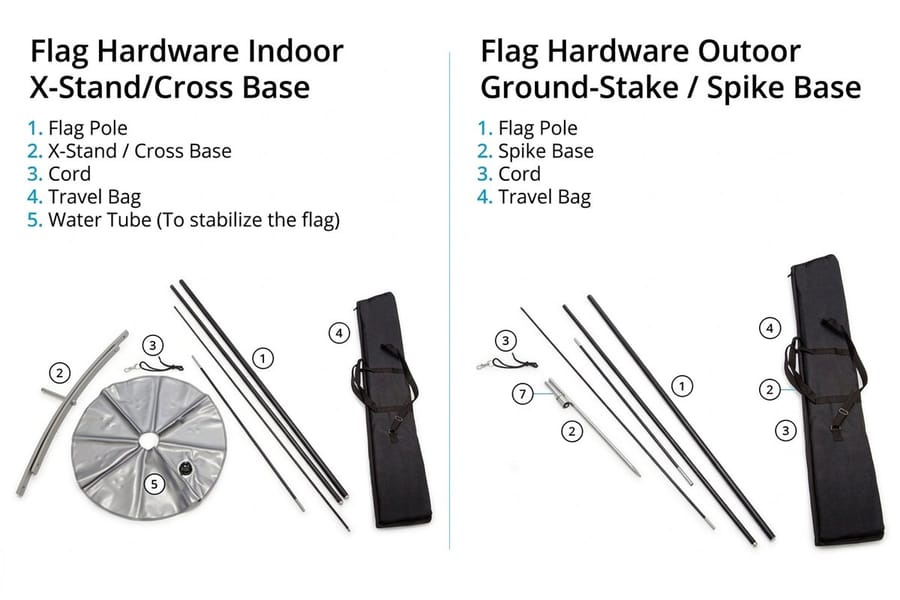
Most outdoor sign failures happen in the first ten minutes of setup, not during the storm.
Fill the base after the frame is standing in its final position, not before. A filled Signicade base is awkward to shift and the temptation is to drag it, which scrapes the base and loosens the panel clips. Use sand rather than water once nights go below freezing, because water expands when it freezes and a hollow base has nowhere to give.
Give a feather flag room to turn. The flag rotates around its spike so it can point downwind, and if a wall, a van or a second flag blocks that arc it stops weathervaning and starts flogging against the obstruction, which shreds the trailing edge. Clear space is the whole reason a flag copes with wind that flattens a rigid frame. Assembling a feather flag step by step covers the pole sections and the sleeve order, and every size lives under flags.
Then plan the takedown before you need it. Nothing outdoors is truly unattended hardware: a frame that gets folded flat when the forecast turns will outlive three that were left standing. Set a rule about who brings the sign in, or accept that you are buying replacement graphics on a schedule. If you are hanging rather than standing the banner, ten ways to hang a banner covers the fixings, and the whole outdoor range sits in the banners collection.
Wally picks the holder
Look at the ground before you look at the frame
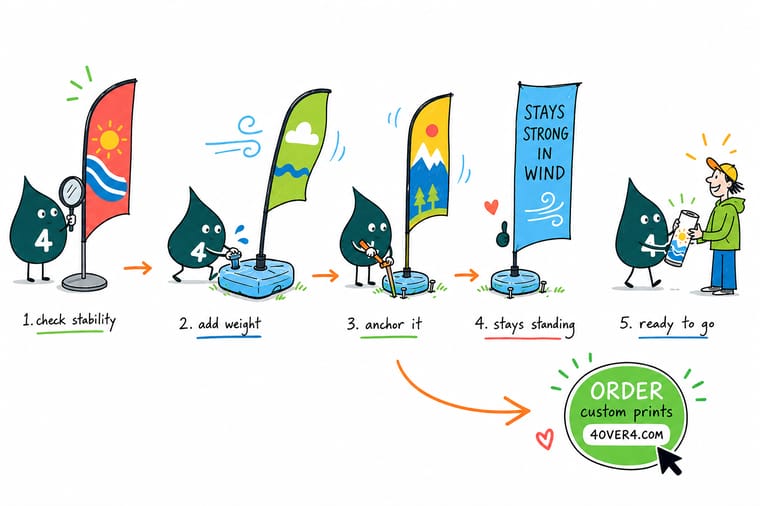
Wally never starts with the frame. He stands where the sign is going and checks what is under his boots. Soil means stakes, so the cheap metal rod A-frame wins. Concrete means dead weight, so he fills a Signicade base on site and marks how much went in. Constant wind means stop fighting it, so up goes a feather flag that bends and turns downwind. Then he prints on mesh if the spot is exposed, and ties through every grommet instead of just the corners.
Shop A-frame signs →Specs and pricing
Frames, bases and flags with live starting prices
Configure each holder against the surface you are working on, with sizes and starting prices straight from the 4OVER4.COM configurator.

Print it
Order the holder that suits your ground
Explore more
Where to go next
By the numbers
Outdoor banner work across 25 years
Common Questions
Your outdoor banner holder questions, answered
What is the best banner holder for outdoors?
There is no single winner, because the ground decides. On grass, dirt or gravel, a staked metal rod A-frame is the cheapest thing that genuinely holds, starting at $65.90 at 4OVER4.COM. On concrete or asphalt, you need dead weight instead of anchors, which is where a Signicade A-frame with a water or sand fillable base comes in at $182.32. If the spot is windy every single day, skip rigid frames and use a feather flag at $108.75, since the pole bends and the flag swivels downwind rather than fighting the gust.
Will a retractable banner stand work outside?
For a calm morning under a canopy, sometimes. As a plan, no. A retractable is a spring-loaded cassette on a narrow aluminum foot, engineered for an indoor aisle, and the whole banner acts as one solid sail with nothing anchoring the base. When it goes over, the graphic scuffs on pavement and the cassette lip usually bends, after which the banner rewinds crooked and jams. If you want the retractable look outdoors, put the stand under a tent, weight the feet, and take it down before you leave the site.
How much weight do I need to hold a banner stand down outside?
Work from the face area rather than a rule of thumb, because wind force rises with the square of the wind speed and in direct proportion to the area you present to it. A 2 by 3 foot A-frame panel and a 3 by 8 foot banner are not in the same argument. The practical move is to use a base you can fill and measure: water at 8.34 pounds per gallon tells you exactly what is holding the sign down, and dry sand runs noticeably heavier for the same volume. In freezing weather use sand, since water expands as it freezes and can split a hollow base.
Can I just zip-tie the banner to a fence instead of buying a holder?
Yes, and on a chain link fence it is often the better answer. A fence gives you a rigid frame you already own, so the only question becomes airflow. Use mesh banners, which start at $75, because a solid vinyl banner on a chain link fence turns a see-through barrier into a wall and puts the load onto the fence posts. Tie through every grommet rather than the corners only, since four ties concentrate the whole load on four small holes and that is where a banner tears first.
Should I cut wind slits in a vinyl banner?
No. Cutting half-moon slits into solid vinyl is a habit from an era before mesh was cheap, and it trades one problem for a worse one. Each cut ends in a point, and a point in a tensioned sheet is where the next tear begins, so a slit banner usually fails along the slit line within a season. If wind is the problem, print on mesh instead of mutilating vinyl, or reduce the face area and mount the smaller banner properly.
Can I leave an outdoor banner holder up year round?
The hardware usually outlives the graphic. Steel rod frames and aluminum frames handle weather fine, but a water-filled base is the one thing to watch, because it should be drained before a hard freeze. The print is the shorter-lived part: constant sun fades outdoor banner ink, and a graphic that is up permanently in full southern exposure will read tired long before the frame does. A cheap habit that buys months is to bring the panel or banner in during storms and swap the graphic on a schedule.
Get Started
Order an aluminum A-frame from $146.07
Tell us the surface and the exposure, pick the frame or flag that suits it, and we print the graphic to match on vinyl or mesh.
Legal Disclaimer
Gold Standard guarantees apply to all standard orders placed through 4over4.com. Price match requires verifiable proof of a competitor's published price for an equivalent product with matching specifications and turnaround time. Satisfaction guarantee covers manufacturing defects and print quality issues. Contact support with order number and documentation. On-time delivery rate based on tracked orders 1999 to 2026. Individual results may vary based on shipping carrier performance.
