
Hotel Room Signage, ADA Door Numbers and the Materials That Last


Tobias is our voice for cutting, binding and large format, built from the knowledge of our production team, with over 20 years in printing.
Room numbers, corridor arrows, pool hours and exit signs follow four different rule sets. Here is which is which, what ADA actually measures at a guest room door, and the materials that survive a housekeeping cart.
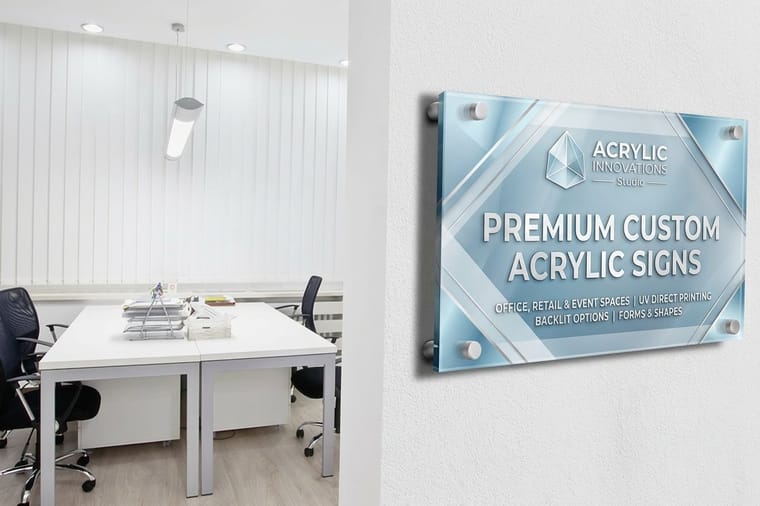
Hotel room signage splits into four layers: tactile room identification, directional wayfinding, informational panels and code-required exit signs. The guest room number is the regulated one. ADA puts it on the latch-side wall rather than the door, with raised uppercase characters between 5/8 and 2 inches tall, Grade 2 Braille below them, and the baseline of the lowest line between 48 and 60 inches off the floor. Everything else on the floor is a printed panel, and the material call is acrylic indoors, aluminum outdoors, vinyl on glass.
Quick answer
The room number is the regulated sign, the rest are printed panels
Only one sign on a guest floor carries a legal specification, and it is the number beside the door. It mounts on the latch-side wall inside a 48 to 60 inch band, in raised uppercase characters with Grade 2 Braille under them, on a non-glare face that contrasts strongly with its background. The directory in the elevator lobby, the junction arrows, the pool hours and the amenity plates are visual signs, judged on legibility and durability rather than code, which is where acrylic, aluminum and vinyl each earn a specific spot.
The Four Signage Layers Inside a Hotel
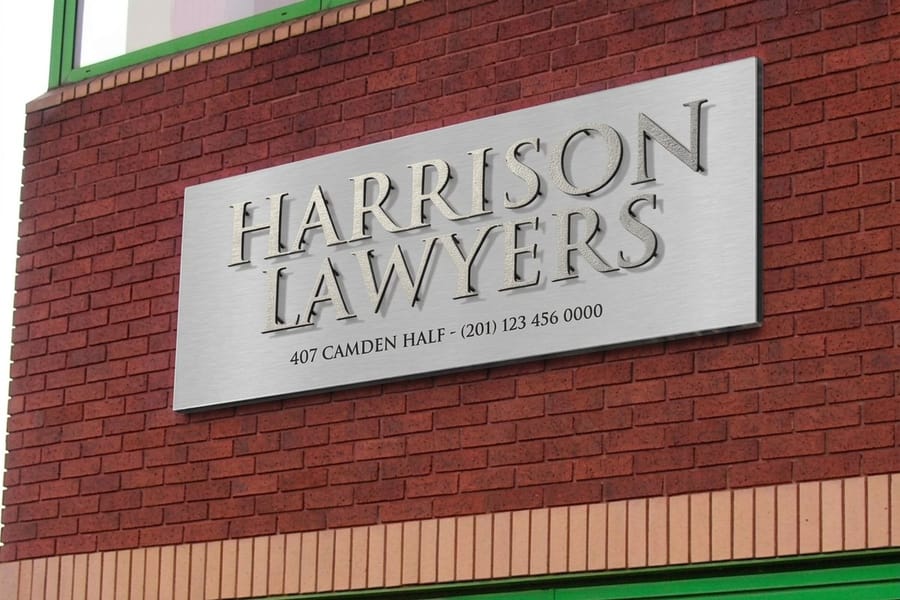
A hotel does not have one signage system. It has four, stacked on top of each other, and they follow different rules.
- Identification. The room number beside each door, plus fitness room, business center, ice and laundry. These are permanent room designations, so they carry raised characters and Braille.
- Directional. Elevator lobby directories and corridor junction arrows. Visual only, and their job is to be legible from a walking distance of about 20 feet.
- Informational. Pool hours, breakfast times, wifi, parking rules. These change, which is the whole argument for making them replaceable panels rather than permanent installations.
- Regulatory. Exit signage, occupancy notices and the evacuation map inside the guest room door. Your local fire code, usually tracking NFPA 101, is the authority here, not the brand standard.
The mistake that costs money is ordering all four as one batch of matching printed panels. The directional and informational layers can be printed on aluminum sign panels and swapped whenever the breakfast hours change. The identification layer cannot, because a printed sheet has nothing to feel. If you are still working out where each panel goes, our wayfinding signage planning guide covers the decision-point method that produces the sign count in the first place.
What ADA Requires at a Guest Room Door
Guest room identification signs fall under the tactile and visual rules of the 2010 ADA Standards, and the specifics are unusually concrete for a code.
The characters. Uppercase, sans serif, no italic or script, between 5/8 inch and 2 inches tall measured on the uppercase I, and raised at least 1/32 inch off the face. Grade 2 Braille sits directly below the last line of raised characters, at least 3/8 inch clear of them, with rounded dots.
The finish. Characters and background have to be non-glare, and they have to contrast, light on dark or dark on light. The code does not give a number. The industry rule of thumb is a difference of about 70 percent in light reflectance value between the two, which is why a brushed silver number on a light gray plate keeps failing a walkthrough even though it looks smart in the brand deck.
The position. Latch side of the door, on the wall. Baseline of the lowest tactile line at 48 inches minimum above the floor, baseline of the highest at 60 inches maximum. Keep an 18 by 18 inch square of floor clear in front of the sign, centered on it and outside the door swing.
Here is the part that catches properties out: a printed panel cannot satisfy any of this. Raised characters and Braille are a fabrication step, not an ink step, so the guest room plaque is a separate line item from the rest of the order. What we print handles the layers around it, and it is worth reading the seven types of signage before splitting the purchase order.
Acrylic, Aluminum, Vinyl and What Fails Where
Material choice inside a hotel is mostly a question of what will hit the sign. Housekeeping carts hit corridor walls at roughly trolley height, chlorine attacks anything near a pool deck, and sunlight through a lobby window will fade a panel on one side of a doorway and not the other.
| Material | Where it belongs | Realistic life | Watch out for |
|---|---|---|---|
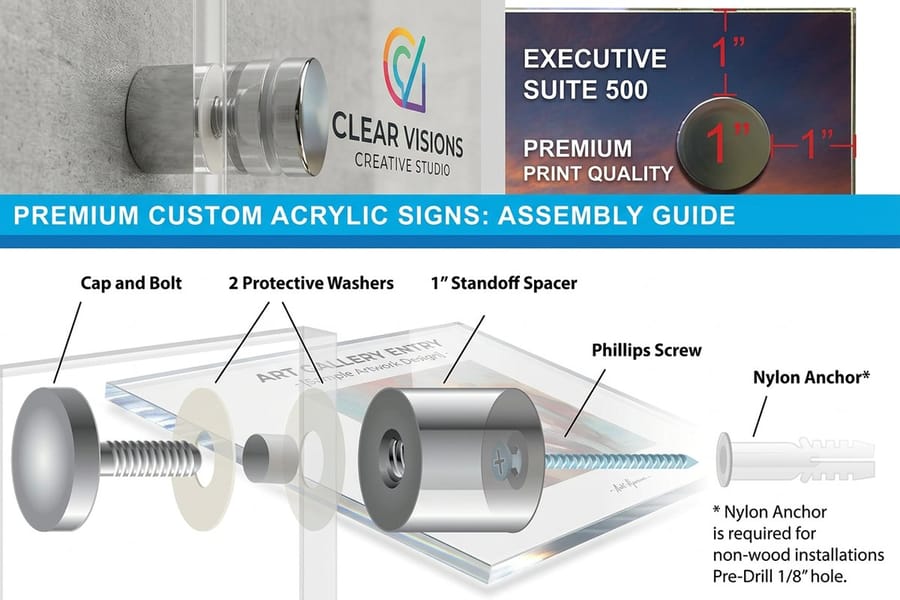
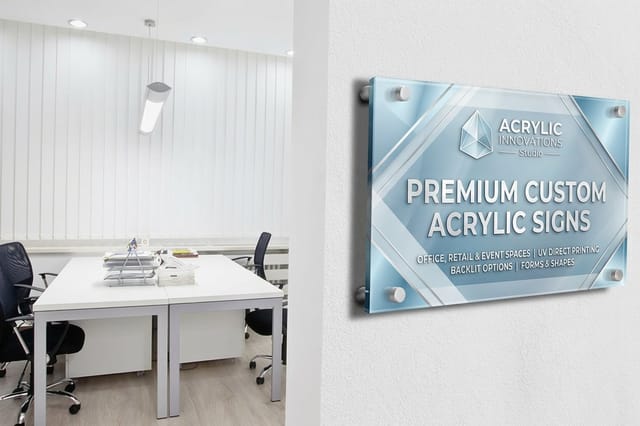
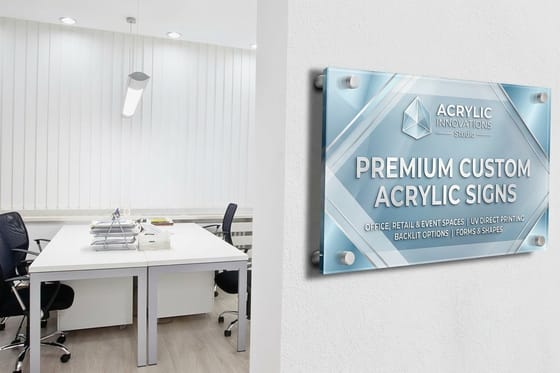
| Acrylic | Lobby directories, meeting room plates, standoff-mounted panels people stand close to. | Years indoors. | Chips at a corner if it takes a hard knock, and scratches show under downlights. |
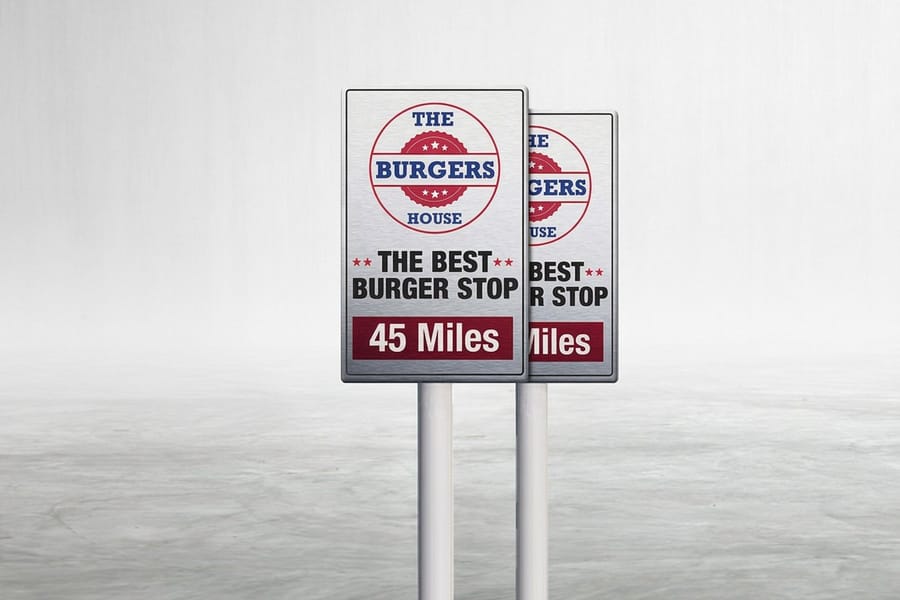
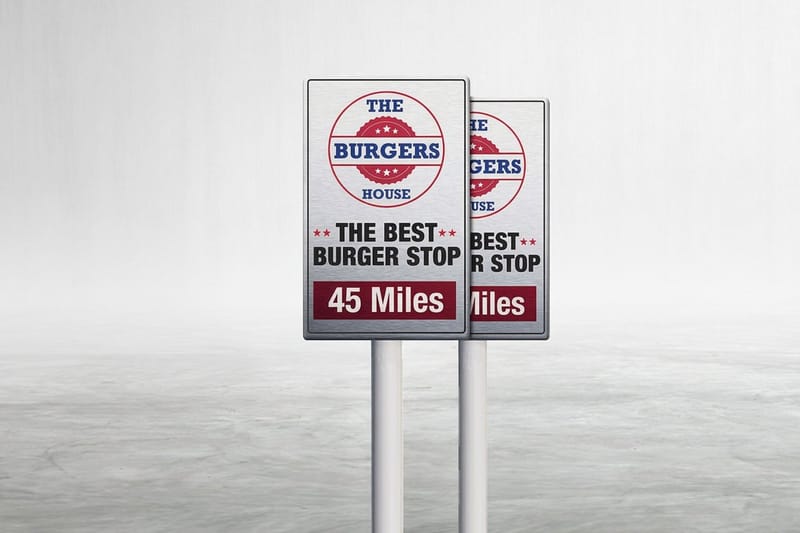
| Aluminum | Pool, parking, entrance, loading bay, anything outdoors or wet. | Years outdoors. | Dents rather than breaks, so a low-mounted panel in a service corridor will carry its history. |
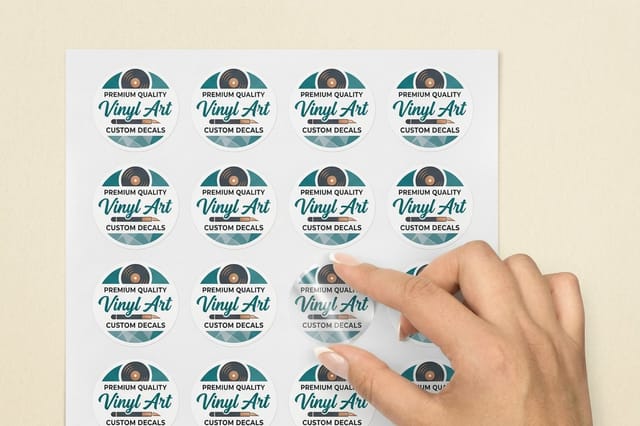
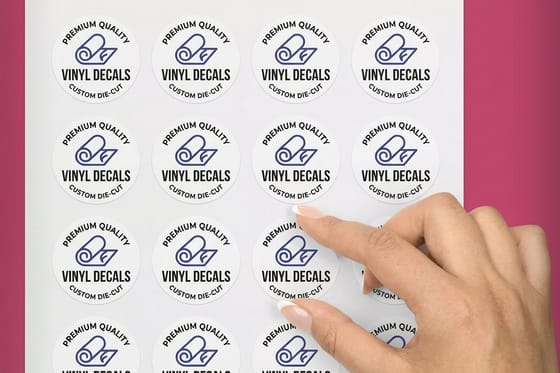
| Vinyl decals | Glass doors, elevator jambs, floor graphics, hours on a fitness room door. | Seasons to a few years. | Edges lift on textured surfaces, and removal from painted drywall can pull the paint. |
| Styrene and foam board | Event boards, conference direction, seasonal notices. | Weeks to months. | Not a corridor material. It warps in humidity and creases on the first knock. |
For a typical property the split is straightforward. Acrylic signs at $152.72 for the interior panels guests stand in front of, aluminum signs at $36.00 for exterior and wet areas, and vinyl decals at $93.37 for glass and jamb numbers. The full range sits in the rigid signs and decals categories, and the aluminum signage guide goes deeper on gauges if you are specifying an exterior set.
Turned into an order, those hotel signage guidelines come down to four menus:
| Where it hangs | What to order | Sizes | Starts at |
|---|---|---|---|
| Lobby directory, meeting room plates | Acrylic signs on 1/4 inch plexiglass | 16 x 24, 20 x 30 or 24 x 36 in | $152.72, 4 business days |
| Pool, parking, entrance | Aluminum signs on .040 inch aluminum | 12 x 18, 18 x 24 or 24 x 36 in | $36.00, 4 business days |
| Exterior sets that must match | Aluminum sign panels, 1/8 inch, gloss or matte laminate | 11 x 17 to 30 x 40 in, or any size | $29.00, 4 business days |
| Glass doors, jamb numbers, hours | Vinyl decals, permanent or repositionable white vinyl, or clear | 2 x 2 to 11 x 11 in | 25 for $93.37, 5 business days |
Pick the matte laminate on anything read under corridor downlights, since it keeps the face non-glare. Upload each panel at its final size with the corridor typeface embedded, and approve a free online proof of the whole set together so the numbers and arrows match before any of them are cut.
Keeping 200 Signs Looking Like One Hotel
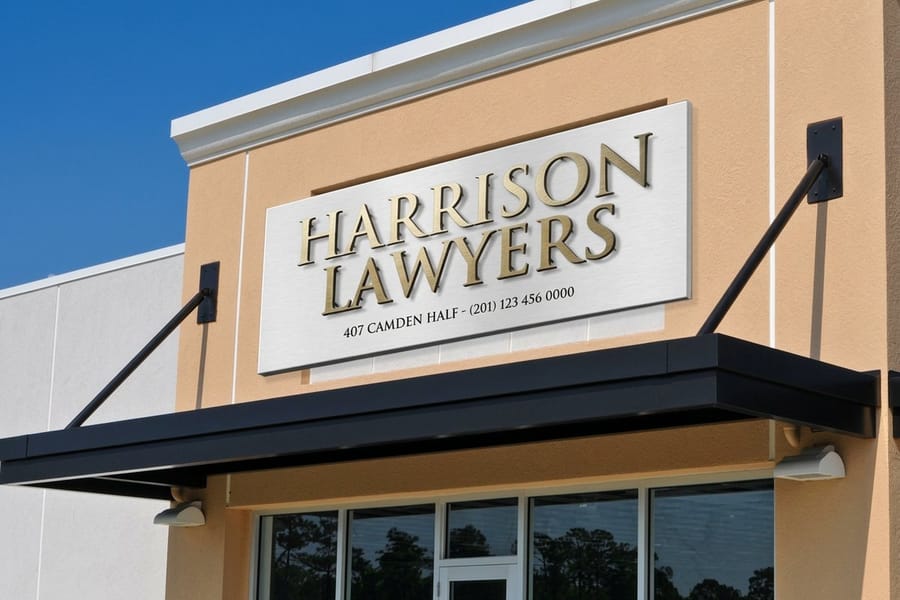
Signage drifts. Not all at once, but a panel gets damaged, a manager reprints it from whatever file is on the desktop, and eighteen months later a corridor holds three typefaces and two grays. The fix is boring and it works: write the spec down before the first order.
Four decisions carry the whole system. One typeface, a clean sans serif, since the ADA rules already force a sans serif on the room plaques and matching it everywhere else is free. One contrast pair, chosen for reflectance difference rather than for how it looks on a monitor. One numbering logic, floor first, so 412 is unmistakably floor four. One panel geometry, meaning a small set of sizes and a fixed margin, so the directory, the junction arrow and the amenity plate look like siblings.
Record it as a one-page sheet: typeface and weight, the two color values, sign sizes by type, material by location, mounting height, and the file names. Keep it with the reorder contact. That sheet is what makes a replacement panel two years from now match the corridor instead of announcing itself.
Two smaller wins sit alongside it. Guest-facing paper should follow the same rules, so hotel stationery and the door pieces guests actually pick up carry the corridor typeface. And for the pieces that hang on the handle rather than the wall, hotel door hangers take the same typeface, which is the cheapest way to make the do-not-disturb card look like it belongs to the corridor. The hotel door hangers video shows the product up close. The indoor signage guide covers sight lines and sizing for the shared spaces.
Wally explains hotel room signage
Measure from the floor, mount on the latch side
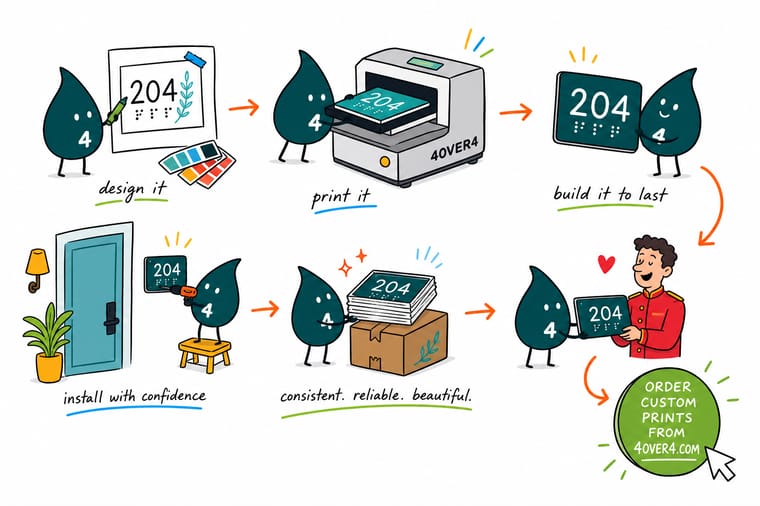
Wally does not hang the room number on the door, because a door swings away from the person reading it. He puts it on the wall by the latch, measures up from the finished floor rather than off the frame, and lands the lowest line of raised type between 48 and 60 inches. Braille goes underneath, a little clear of the characters. Then he steps back and leaves an 18 by 18 inch patch of floor free so a guest can actually stand there. Everything else on the floor, the arrows and the directories and the pool hours, is a printed panel, and those he chooses by what is going to hit them.
Price acrylic signs →
Specs and pricing
Sign substrates, sizes and starting prices
Acrylic signs print on 1/4 inch plexiglass in three sizes from 16 by 24 inches, from $152.72. Aluminum signs print on .040 inch aluminum from 12 by 18 to 24 by 36 inches, from $36.00, and aluminum sign panels on 1/8 inch aluminum in eight sizes or any size, from $29.00. Compare the three substrates a hotel package usually draws on, with live configuration choices and starting prices straight from the 4OVER4.COM configurator.

Print it
Order the panels behind the room numbers
Acrylic for the lobby, aluminum for the pool and parking, and vinyl decals from 25 for $93.37 for glass doors and elevator jambs. The rigid signs ship after 4 business days of standard production, the decals after 5.

Explore more
Where to go next
Six next reads: mapping decision points before you order, acrylic lobby signs and standoffs, aluminum gauges and coatings, hotel key cards, interior sight lines and sizing, and the rigid sign range.
By the numbers
Acrylic, aluminum and vinyl panels cut to order
Common Questions
Your hotel signage questions, answered
Does a hotel room number sign have to be ADA compliant?
Yes. Under the 2010 ADA Standards, signs that identify guest rooms have to carry raised characters and Grade 2 Braille and meet the visual character rules for contrast and finish. That is stricter than the treatment for a purely directional sign, which only has to be readable. In practice it means the number beside each door is a tactile plaque, while the arrow panel at the end of the corridor can be a printed panel.
How high should a guest room sign be mounted?
Set the baseline of the lowest tactile line at least 48 inches above the finished floor and the baseline of the highest tactile line no more than 60 inches. Mark that band once on a story pole and use it for the whole floor. Doors get hung at slightly different heights across a corridor, so an installer who measures off the door frame instead of the floor will drift out of the band by the tenth room.
Which side of the door does the sign go on?
The latch side, at the same height for every room. If the latch side has no wall, because of a recessed entry or a double door, the sign moves to the nearest adjacent wall. Keep an 18 by 18 inch patch of floor clear in front of it and outside the arc of the door swing, so somebody reading the Braille is not standing where the door will hit them.
Can you just print room numbers on vinyl and stick them to the doors?
For the tactile identification sign, no, because a printed decal has no raised characters and no Braille. Vinyl earns its place elsewhere in a hotel: elevator jamb numbers, glass door numbers on a business center, hours on a fitness room door, floor graphics during a renovation. Those are visual signs, and a printed decal is the right tool for them.
What is the best material for hotel corridor and lobby signs?
Acrylic for interior panels that people stand close to, because the depth and the edge finish read as considered, and aluminum for anything exposed to weather, chlorine or a housekeeping cart. Acrylic Signs start at $152.72 and Aluminum Signs at $36.00 at 4OVER4.COM. Styrene and foam board are for temporary notices only, since a corridor sign in a busy property will be knocked at trolley height within a season.
How many signs does a floor actually need?
Count in decision points rather than in rooms. Each elevator lobby needs a directory panel showing the room ranges left and right, each corridor junction needs a directional panel, each stair and exit door needs its code sign, and each guest room door needs a tactile plaque. A 40 room floor with a single central corridor typically lands around 40 room plaques and six to eight shared panels.
Get Started
Order 250 hotel door hangers from $252.51
Pick the substrate for each layer, upload one artwork set, and we print corridor panels, directories and amenity plates that still match when you reorder.
Legal Disclaimer
Gold Standard guarantees apply to all standard orders placed through 4over4.com. Price match requires verifiable proof of a competitor's published price for an equivalent product with matching specifications and turnaround time. Satisfaction guarantee covers manufacturing defects and print quality issues. Contact support with order number and documentation.
