
Educational Printing Services for Schools, Districts and Campuses


The five formats a campus actually prints, which department needs which one, and how to order them so one budget covers a full year instead of a single term.
Educational printing services cover the five formats a school runs on: saddle stitched booklets for programs and course catalogs, flyers for event promotion, posters for hallways, pocket folders for admissions packets, and yard signs or vinyl banners for outdoor announcements. At 4OVER4.COM those are ordered online at bulk pricing, with flyers from $39.54, yard signs from $25, vinyl banners from $79, posters from $108.75, booklets from $240.55 and education presentation folders from $844.54. The saving comes from one combined order, not from a cheaper stock.

Quick answer
Five formats, one order date, and a page count that lands on four
Nearly everything a school prints is a booklet, a flyer, a poster, a folder or a sign. Match the request to one of those five and the format, quantity and deadline follow. Two rules do most of the budget work after that: bound pieces count pages in multiples of four, because one folded sheet carries four pages, and quantity price breaks apply per order rather than per school year, so four departmental runs of the same flyer always cost more than one combined run.
What a School Actually Prints Across a Year

Strip away the department names and a school year produces the same five print jobs on repeat. Knowing which of the five you are dealing with tells you the format, the quantity and the deadline before anyone opens a design file.
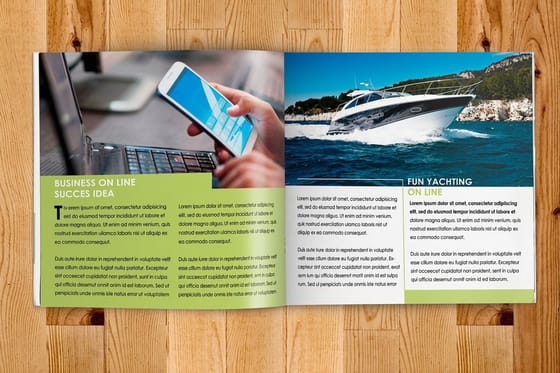
Bound documents. Course catalogs, student handbooks, athletic programs, concert programs, graduation orders of service, annual reports to the board. These are standard booklets, saddle stitched, and they start at $240.55. The page count has to land on a multiple of four, which is the rule most first-time school printers meet the hard way.
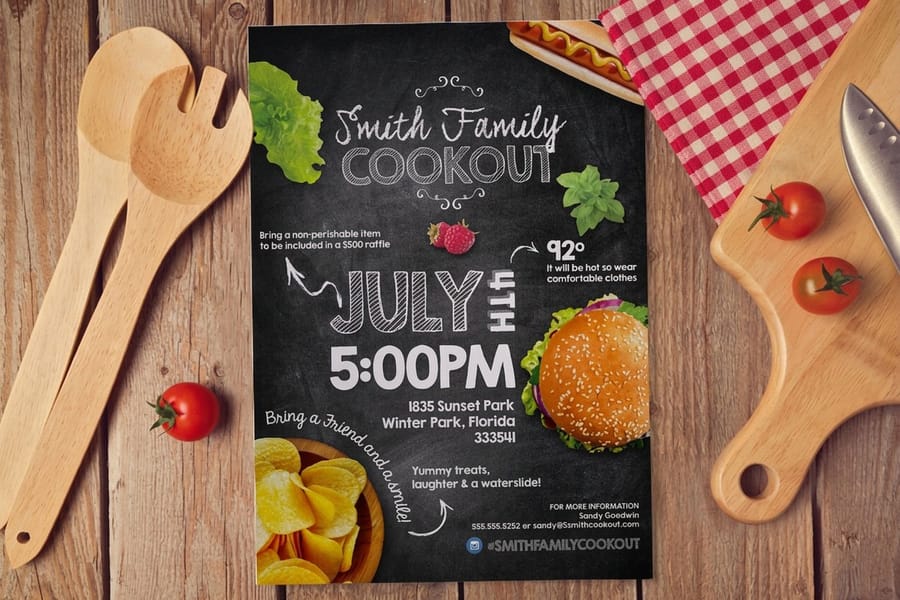
Loose promotion. Fundraiser announcements, club sign-ups, parent evening notices, bus route changes. These are flyers from $39.54, printed in the hundreds, read once and recycled. Print them cheap and print them close to the date.
Wall work. Hallway campaigns, library reading promotions, cafeteria menus, science fair boards. Standard posters start at $108.75 and hold up under tape and thumbtacks better than office paper enlarged on a copier.
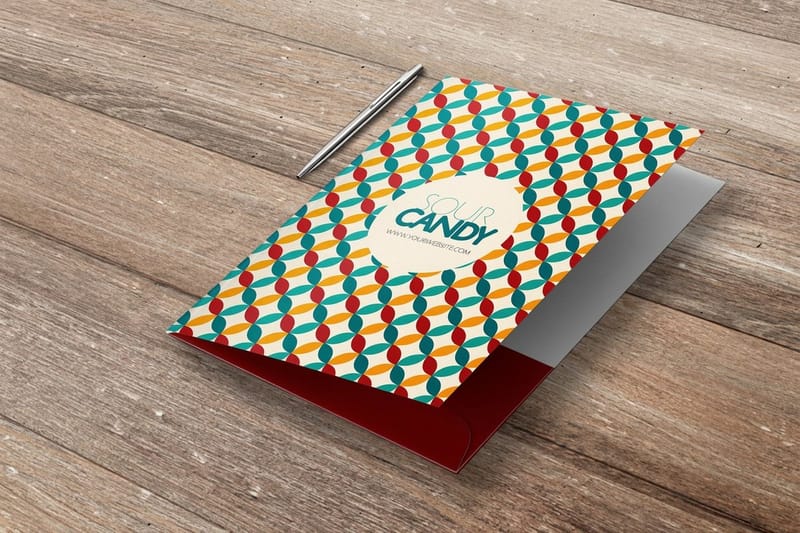
Handouts that carry other paper. Admissions packets, orientation kits, board meeting sets. A pocket folder keeps a stack of loose sheets together and gives the school a cover. Our education presentation folders start at $844.54, so they are a plan-ahead purchase rather than a same-week one.
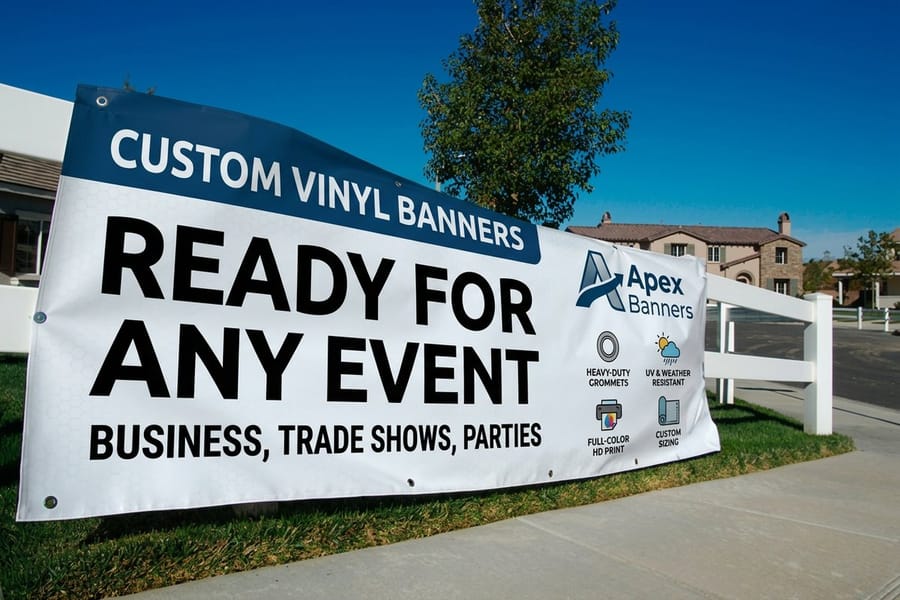
Outdoor announcements. Open house directions, registration week, championship banners, parking guidance. Yard signs from $25 handle the temporary version and vinyl banners from $79 handle the part that stays up. The full range sits in booklets and catalogs and posters if you want to compare stock and size options side by side.
What schools over-print, consistently, is the loose promotion category. A 500 flyer run for an event that draws 90 families leaves 400 in a supply closet. What schools under-print is the bound document, because nobody counts the alumni, the substitute teachers and the grandparents who all want a graduation program.
Print by Department, and Where Each One Goes Wrong
Departments fail in different ways, and the failure is predictable enough to plan around. Front offices order too late. Athletics dates artwork that should have been reusable. Admissions orders a quantity built for a bigger applicant pool than it has.
| Department | Prints most | Format that works | Where it goes wrong |
|---|---|---|---|
| Admissions | Enrollment packets, viewbooks, campus tour handouts | Pocket folder holding loose inserts, so a single sheet can be reprinted without redoing the set | Printing the whole packet as one bound piece, then reprinting everything when tuition changes |
| Athletics | Season schedules, gym banners, field fence signage, game programs | Undated vinyl banners plus a small dated program run per season | Putting the year on a banner that would otherwise hang for five seasons |
| Front office | Parent notices, calendars, forms, registration flyers | Flyers in one consolidated monthly run rather than weekly one-offs | Ordering on the Friday for an event the following Tuesday |
| Arts and music | Concert programs, play bills, recital orders of service, exhibition posters | Saddle stitched booklets at 8 to 16 pages, with a poster run for the foyer | Finalizing the cast list after the print deadline, which forces a rush charge |
| Development | Annual reports, donor thank-you pieces, gala programs, pledge cards | Booklet plus a folder for the ask packet, with notepads as the leave-behind | Treating a donor piece like a classroom handout and printing it on the cheapest stock available |
The pattern in the last column is the same each time: a decision made for one term applied to a piece that lives longer, or a deadline set by a meeting rather than by production. Neither is a printing problem. Both are fixed at the point the request is written.
If you run several departments through one budget, the fastest structural fix is a shared print calendar with one order date a month. It removes rush charges, collapses four small runs into one large one, and gives whoever handles artwork a fixed cutoff to point at. Standard notepads from $93.37 are worth adding to that consolidated run, since staff rooms and development offices both order them separately otherwise.
Ordering in Bulk Without Burning the Budget
Print pricing steps down at quantity thresholds, and every threshold applies to one order. That single fact decides whether a school print budget stretches or leaks, and it is the reason the biggest saving available to most campuses costs nothing to implement.
Four departments each ordering 500 identical parent notices pay four entry prices. One office ordering 2,000 pays one, at a lower cost per sheet. The mechanics of those thresholds are set out in our guide to how bulk price breaks work, and they behave the same whether the piece is a flyer, a poster or a booklet.
Now the honest limit, because consolidation is not free. It costs coordination. Somebody has to gather artwork from five people before a fixed cutoff, and one department missing the deadline delays the whole run. It also costs flexibility: a large run of a dated piece cannot be corrected if a detail changes after ordering. So consolidate the evergreen material, which is most of it, and keep the volatile material in small separate runs.
Three habits do the rest of the work:
- Split the dated from the undated. Print the reusable banner once without a year and refresh the dated yard signs each season. A single undated vinyl banner outlasts five dated ones.
- Standardise sizes across departments. One flyer size and one poster size across the whole school means artwork can be swapped between requests and quantities merge cleanly. Mixed sizes cannot be combined into one run at all.
- Count the real audience before rounding up. Enrollment plus staff plus an honest guess at guests, then add ten percent. Rounding a 90 family event up to 500 flyers is the most common waste in a school supply closet.
For artwork, start in the blank template library, where the trim, bleed and safe margins for each size are already set. Two problems account for almost every reprint we see from schools: images pulled from a website at screen resolution, which print soft, and text placed within an eighth of an inch of the trim, which the cutter removes.
Timing Print Against the Academic Calendar

Schools miss print deadlines for a reason that has nothing to do with printing: approval. A flyer waits for a principal, a program waits for a final cast list, a viewbook waits for a board vote. Production time is predictable. Approval time is not, and it is where the schedule actually goes.
So plan backwards from the event and put the approval step first. Decide who signs off, give that person a named date, and treat the print order as the step that follows rather than the step that absorbs the delay. For a graduation program the sequence is content locked, then proofread, then ordered, then shipped, then delivered on campus with days to spare, not hours.
A few dates are worth fixing permanently in a school year. Enrollment packets and viewbooks belong to the term before admissions opens, not the week of the first tour. Athletics banners belong to the off-season, when there is no game to hang them for. Course catalogs are the one bound document with a hard external deadline, since families need them before selection week, and they are also the longest to proofread.
When the plan fails anyway, rush production exists, and it compresses some steps and not others. Our guide to ordering rush printing sets out what can genuinely be shortened, and planning event signage covers the placement decisions that are easier to get right early than to fix on the morning. Before you commit a bound piece, read booklet page counts and creep, because discovering the multiple-of-four rule during the approval window is a much smaller problem than discovering it the night before the order.
Wally explains school printing
Five formats, one order date, pages in fours

Wally folds one sheet and gets four pages, which is why a school program runs 8, 12 or 16 and never 14. Then he collects every department request onto one order, because the price break belongs to the order and not to the school year. He leaves the year off the gym banner so it hangs for five seasons, and puts the date on the yard signs instead, since those come down in a week anyway.
Order education presentation folders →Specs and pricing
Booklets, flyers and posters, with live school quantities
The three formats a campus orders most, with sizes, stock choices and starting prices straight from the 4OVER4.COM configurator. Set the quantity to the combined school total rather than one department to see the price break move.



Print it
Order the pieces a school year runs on



Explore more
Where to go next




By the numbers
School printing you can schedule around
Common Questions
School printing questions, answered
What are educational printing services?
Educational printing services are commercial print runs produced for schools, districts, colleges and training programs. In practice that means saddle stitched booklets for course catalogs and event programs, flyers and posters for anything the school wants attended, presentation folders for admissions and enrollment packets, vinyl banners for gyms and fields, and yard signs for open houses and registration weeks. It is ordinary commercial printing bought against an academic calendar, which is why the useful advice is about quantities, dating and timing rather than about exotic materials.
How many pages should a school program booklet be?
A multiple of four. Saddle stitched booklets are built from folded sheets, and one folded sheet carries four pages, so the count runs 8, 12, 16, 20 and upward. If your concert program comes to 14 pages of content it prints as a 16 page booklet, and the two spare pages either sit blank or carry sponsor credits, a school song or a thank-you list. Deciding what goes on those pages beats letting the printer decide for you. The mechanics are covered in our guide to booklet page counts and creep.
Is it cheaper for each department to order separately?
No, and this is where school budgets leak. Print pricing steps down at quantity thresholds, and those thresholds apply to a single order, not to the school across a year. Four departments ordering 500 flyers each pay four separate entry prices. One office ordering 2,000 of the same flyer pays one, at a lower unit cost. The trade-off is coordination: someone has to collect artwork before the deadline, and one late department holds the whole run. Most schools solve it with a fixed monthly print day.
What should a school never put a year on?
Anything reusable. Vinyl banners for the gym, the field fence and the front railing survive several seasons, and a printed year retires them early. The same applies to reusable directional signage and to generic welcome posters. Put the year on the flyers, the programs and the yard signs, which are consumed within weeks anyway. This one habit typically saves more than any paper downgrade.
Can a school order printing without a design department?
Yes. Start from a correctly sized layout in the blank template library so the trim, bleed and safe margins are already right, then place your text and logo inside the safe area. The two failures we see most from school submissions are artwork built at screen resolution, which prints soft, and text sitting within an eighth of an inch of the trim edge, which gets cut. Both are avoided by starting from the template rather than from a blank document.
How far ahead should a school order printing?
Work backwards from the event, not forwards from the meeting. Give yourself time for artwork approval, which is usually the slow step in a school, then production, then shipping. For anything tied to a fixed date such as graduation, registration or an open house, being a week early costs nothing and being a day late costs the whole run. Rush production exists for the times that plan fails, and our rush printing guide sets out what can genuinely be compressed.
Get Started
250 education presentation folders cost $844.54, or $3.38 each
Pick your formats, set the quantity to the combined school total, and we print the programs, flyers, posters, folders and signs a campus runs on.
Legal Disclaimer
Gold Standard guarantees apply to all standard orders placed through 4over4.com. Price match requires verifiable proof of a competitor's published price for an equivalent product with matching specifications and turnaround time. Satisfaction guarantee covers manufacturing defects and print quality issues. Contact support with order number and documentation. On-time delivery rate based on tracked orders 1999 to 2026. Individual results may vary based on shipping carrier performance.
